TagAir Traffic Control(102)
-
 2024-07-15
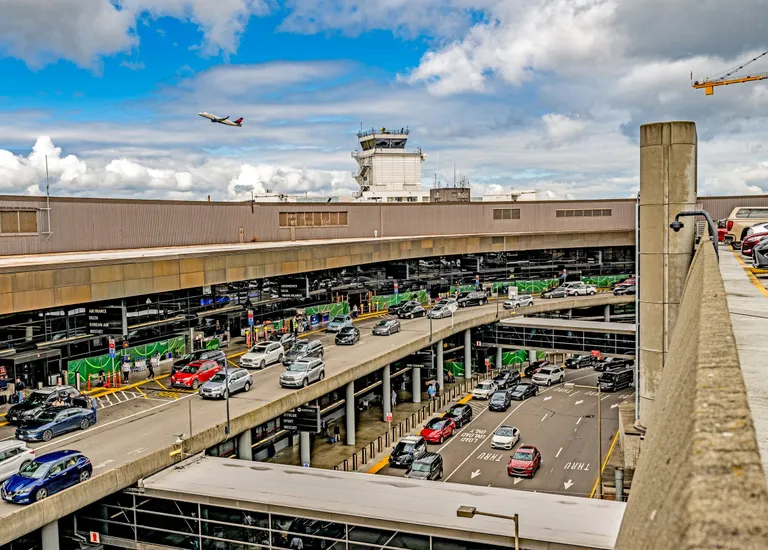
Airport Terminal and Parking Structure
Aerial view of the Seattle-Tacoma International Airport (Sea-Tac) upper and lower departure roadways, showing vehicle traffic at the terminal curb. Visible signage references Air France and Korean Air check-in areas; the airport air traffic control tower is prominent in the background, and a departing aircraft is visible in the sky above. -
 2024-07-12
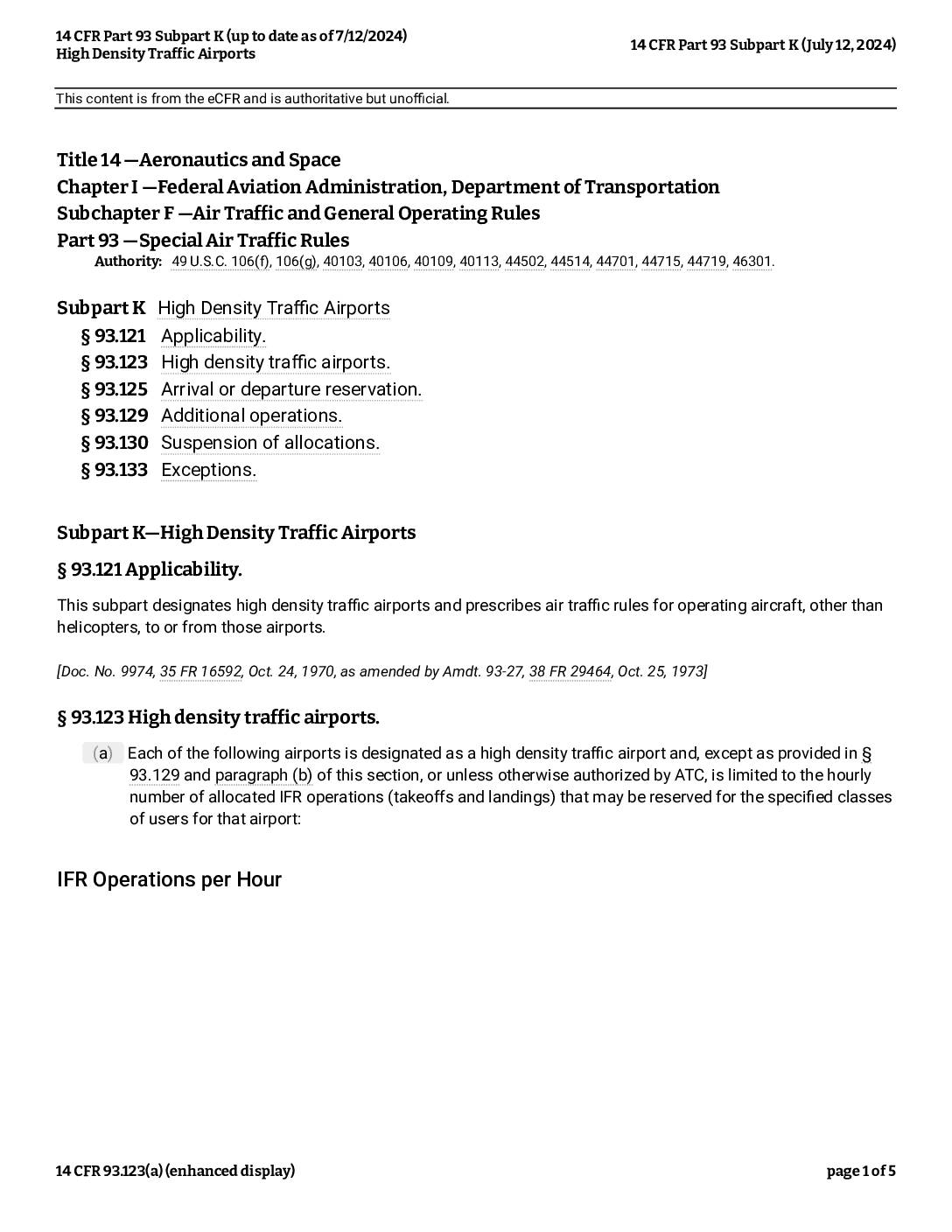
14 CFR part 93 subpart K — High density traffic airports
This federal regulation identifies certain U.S. airports as 'high density traffic airports' and sets hourly limits on the number of IFR (instrument flight rules) takeoffs and landings allowed there. The designated airports include LaGuardia, Newark, O'Hare, Ronald Reagan National, and John F. Kennedy, with specific caps assigned to air carriers, commuter airlines, and other users. Note that this regulation does not apply to Sea-Tac Airport and pertains to air traffic slot management rather than noise policy. -
 2024-05-14
FAA still short about 3,000 air traffic controllers, new federal numbers show
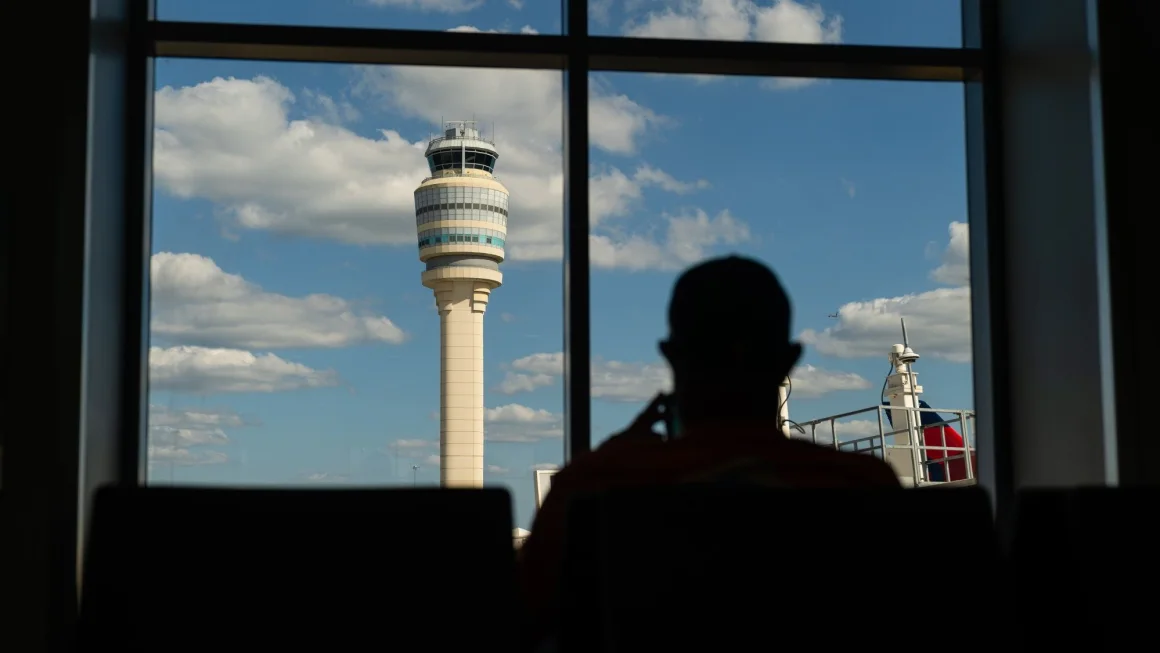
The air traffic control tower at Hartsfield-Jackson Atlanta International Airport (ATL) in Atlanta, Georgia, US, on Monday, Oct. 2, 2023. Elijah Nouvelage/Bloomberg/Getty Images Gregory Wallace, CNN Updated 3:38 PM EDT, Tue May 14, 2024 Despite a surge in hiring last year, air traffic control stations nationwide are still about 3,000 controllers short, according to new -
 2024-05-07
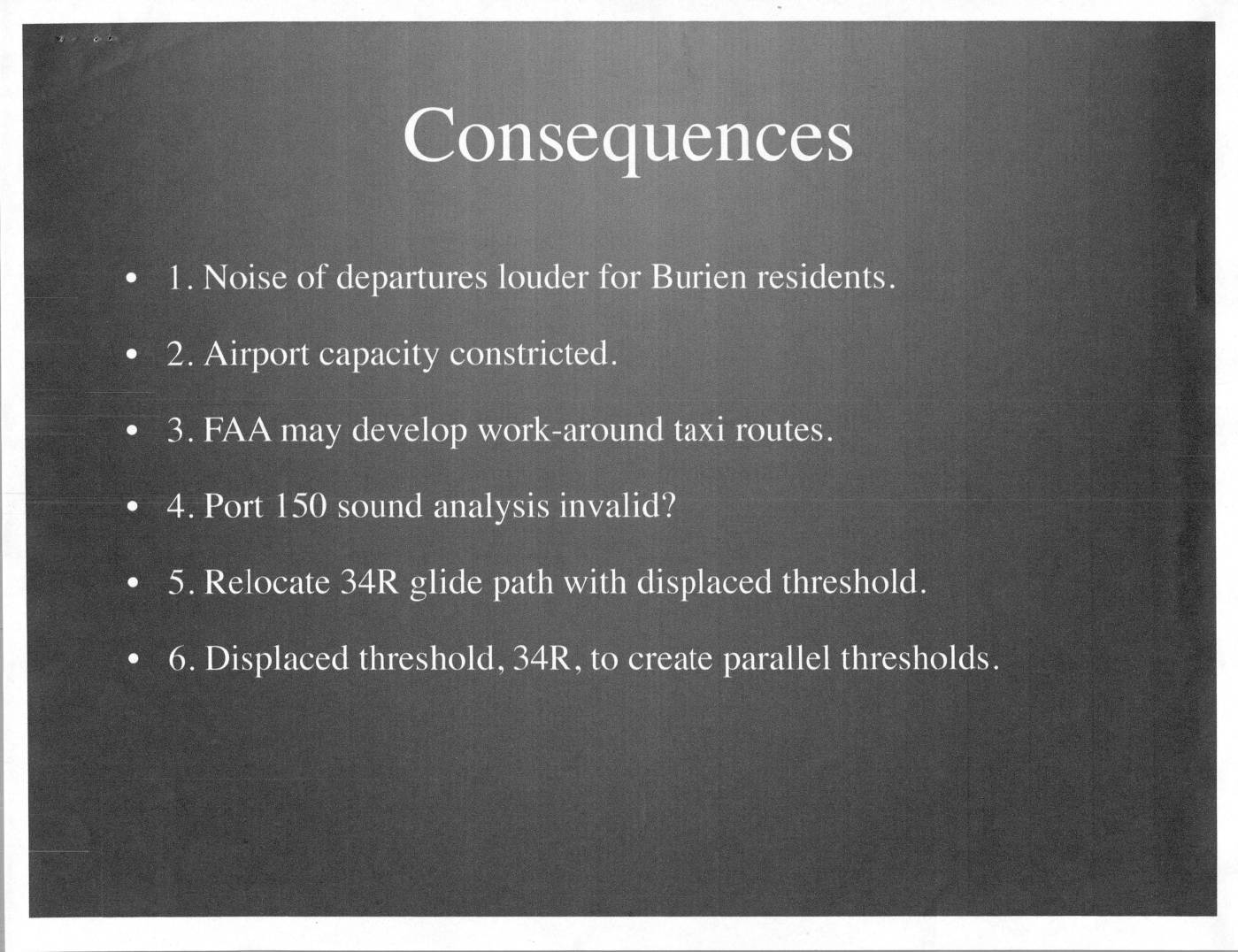
Consequences of parallel runway operations at Sea-Tac Airport
This presentation examines the consequences of runway configuration changes at Seattle-Tacoma International Airport (Sea-Tac), including louder departure noise for Burien residents, reduced airport capacity, and potential FAA workaround taxi routes. It references Seattle Air Traffic Control Tower standard operating procedures for opening and closing runways, and analyzes the feasibility of simultaneous parallel runway operations under FAA Order JO 7110.65. Key technical challenges identified include the need to relocate the Instrument Landing System, extreme ramp congestion, and the possibility of displacing the Runway 34R threshold by approximately 3,400 feet to achieve parallel threshold alignment. -
 2024-04-30
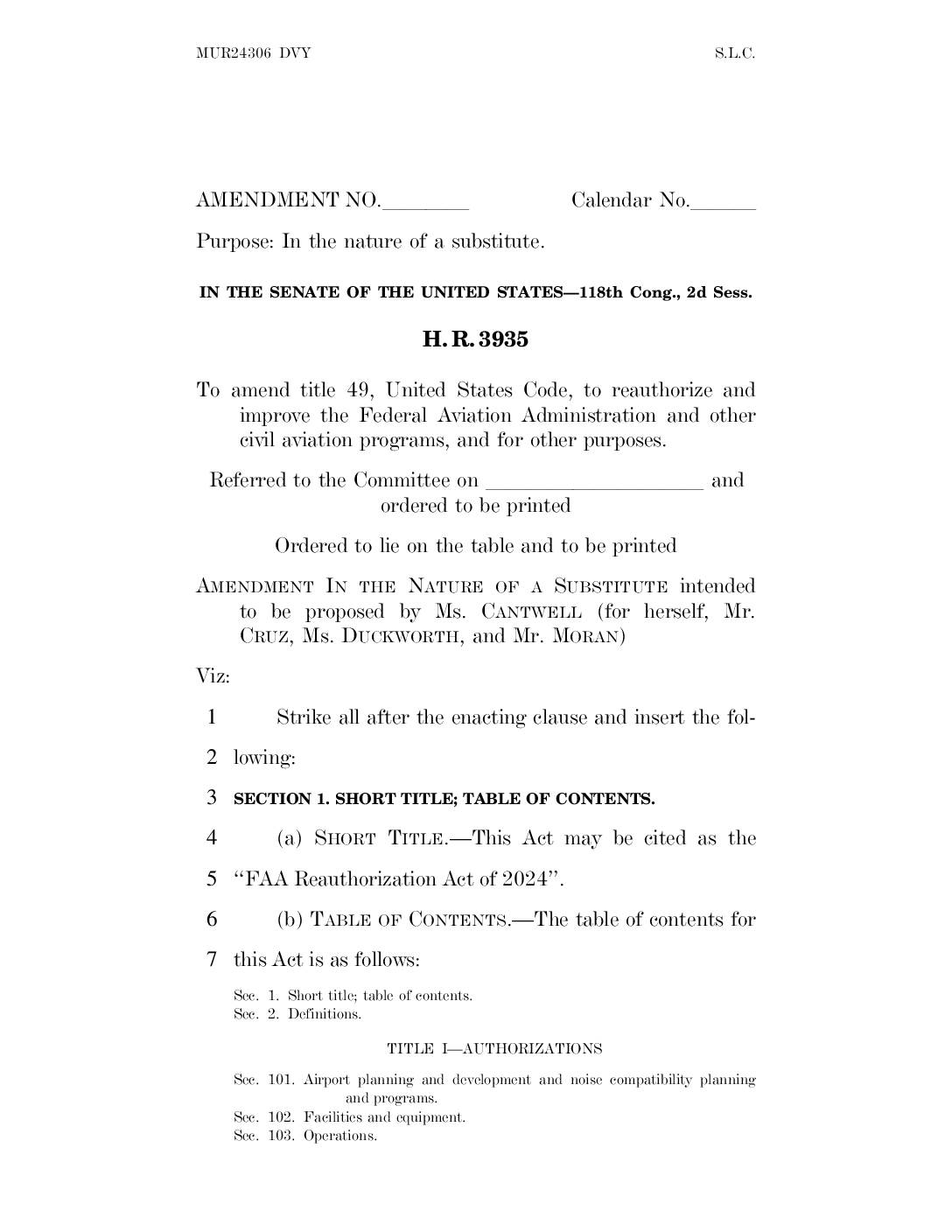
FAA Reauthorization Act of 2024
The FAA Reauthorization Act of 2024 (H.R. 3935) is a comprehensive Senate bill proposing to reauthorize and reform the Federal Aviation Administration and civil aviation programs. It covers a wide range of topics including airport planning and noise compatibility programs, FAA organizational oversight, and numerous aviation safety improvements. Of particular relevance to airport communities, the bill includes provisions addressing noise compatibility planning, airspace modernization, and safety standards that may affect operations at airports like Sea-Tac. -
 2024-03-21
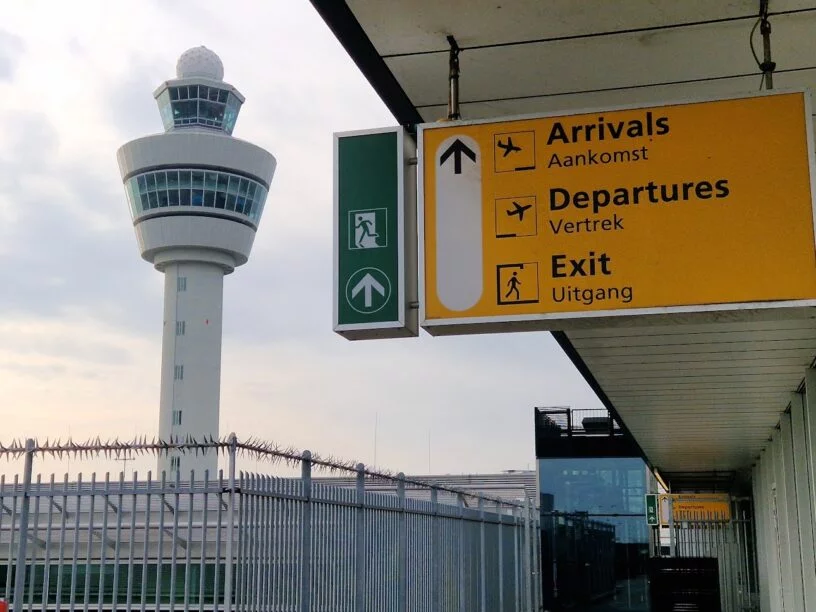
Airport Directional Signage
Directional signage at Amsterdam Airport Schiphol displays 'Arrivals/Aankomst,' 'Departures/Vertrek,' and 'Exit/Uitgang' in English and Dutch, consistent with Schiphol's branded yellow-and-black wayfinding system. The distinctive Schiphol air traffic control tower is visible in the background. This image does not appear relevant to Sea-Tac Airport noise-policy documentation. -
 2024-02-22
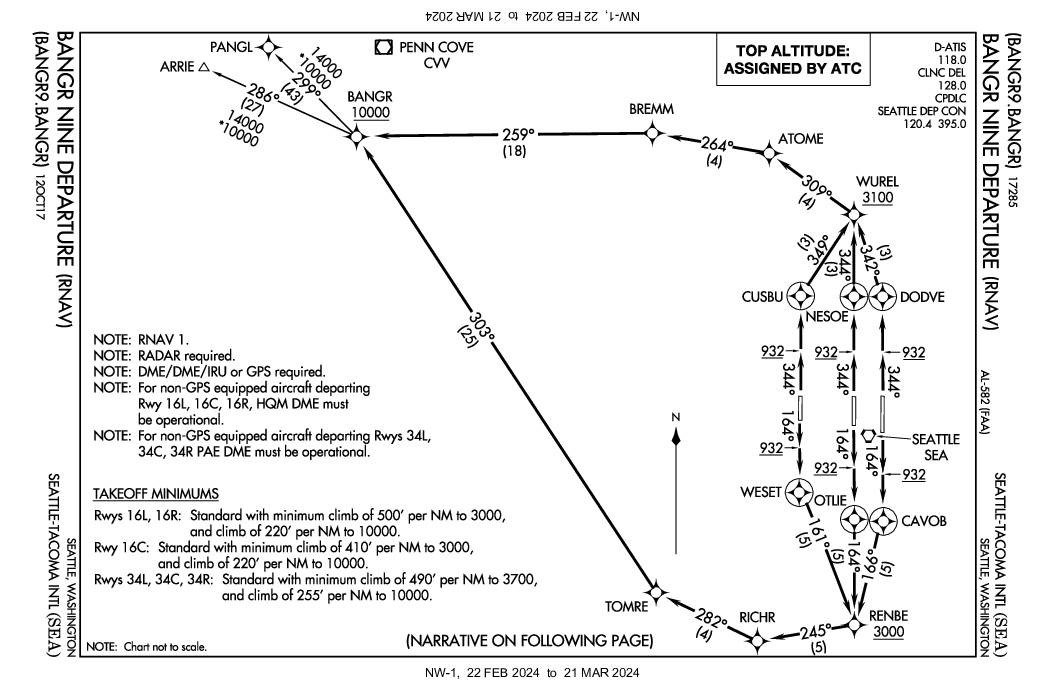
BANGR Nine Departure (RNAV) — Seattle-Tacoma International Airport (SEA)
The BANGR Nine Departure is a standardized instrument departure procedure (SID) for pilots flying out of Seattle-Tacoma International Airport (SEA), directing aircraft on specific headings and altitudes depending on which runway they use. Aircraft departing on northbound runways (34L, 34C, 34R) climb to at least 932 feet before routing through waypoints like CUSBU, NESOE, or DODVE, crossing WUREL at or above 3,100 feet, while southbound runway departures (16L, 16C, 16R) follow similar climb profiles through waypoints like CAVOB, OTLIE, or WESET, crossing RENBE at or above 3,000 feet. All routes converge at the BANGR waypoint, which must be crossed at or above 10,000 feet, with specific minimum climb gradients established to manage aircraft noise and terrain clearance in the surrounding communities. -
 2024-02-22
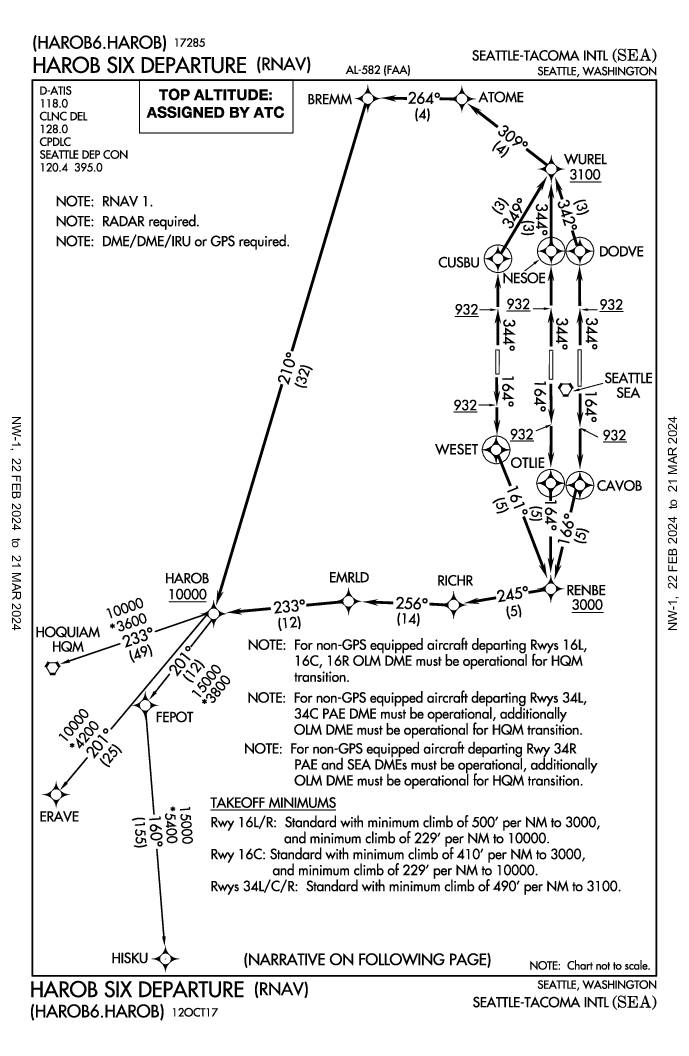
HAROB Six Departure (RNAV) — Seattle-Tacoma International Airport Standard Instrument Departure
The HAROB Six Departure (RNAV) is a standard instrument departure procedure for Seattle-Tacoma International Airport (SEA) that defines specific climbing routes and altitude requirements for aircraft departing on runways 16L, 16C, 16R, 34L, 34C, and 34R. Aircraft must follow prescribed headings, reach minimum altitudes at designated waypoints, and cross the HAROB fix at or above 10,000 feet before proceeding on one of four available transitions toward destinations such as Hoquiam or Hisku. The procedure requires RNAV 1 navigation capability, radar contact, and DME/DME/IRU or GPS equipment, with specific minimum climb gradients designed to manage aircraft noise and obstacle clearance in the Seattle area. -
 2024-02-22
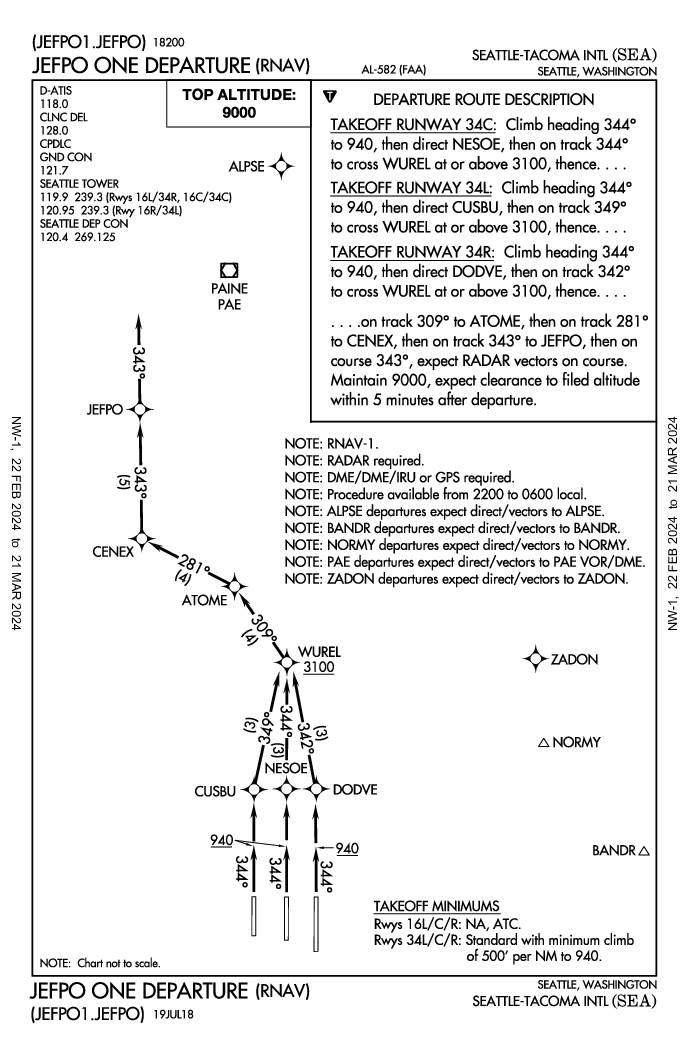
JEFPO One Departure (RNAV) — Seattle-Tacoma International Airport Standard Instrument Departure Procedure
The JEFPO One Departure is an RNAV instrument departure procedure at Seattle-Tacoma International Airport (SEA), available only between 10 PM and 6 AM local time, designed to route departing aircraft northwestward via a series of waypoints toward JEFPO. Aircraft departing runways 34L, 34C, and 34R must climb on a heading of 344° and maintain a minimum climb rate of 500 feet per nautical mile up to 940 feet, then follow specific tracks depending on their runway. Departures from runways 16L, 16C, and 16R are not authorized under this procedure, reflecting noise abatement and air traffic control considerations for the surrounding communities. -
 2024-02-22
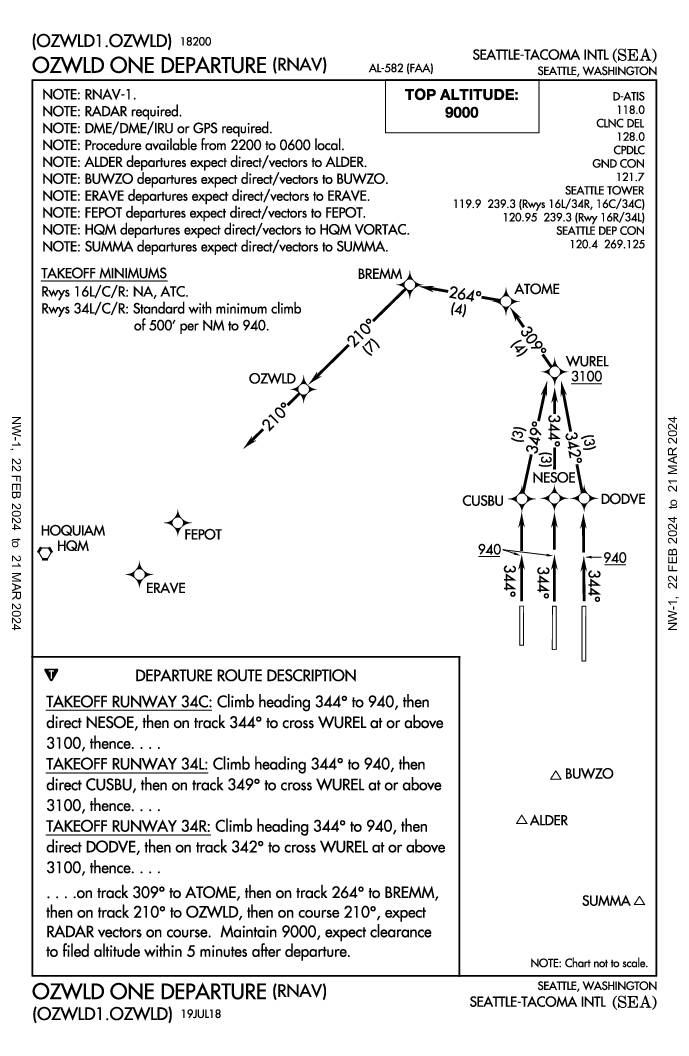
OZWLD One Departure (RNAV): Seattle-Tacoma International Airport Standard Instrument Departure Chart
The OZWLD One Departure (RNAV) is an instrument departure procedure for Seattle-Tacoma International Airport (SEA) that routes aircraft departing from runways 34L, 34C, and 34R northwestward through a series of waypoints—including NESOE, CUSBU, DODVE, WUREL, ATOME, BREMM, and OZWLD—before continuing on course. The procedure is only available between 2200 and 0600 local time, a restriction that reflects noise-mitigation efforts limiting certain departure routes to overnight hours. Aircraft must maintain a minimum climb gradient of 500 feet per nautical mile to 940 feet, cross WUREL at or above 3,100 feet, and maintain 9,000 feet until cleared to their filed altitude.