TagThird Runway(1084)
-
 2002-02-06
PCHB Doc 01-160: Denial of Summary Judgment — ACC v. Ecology and Port Of Seattle (Water Right for Third Runway §401 Certification)
Pollution Control Hearings Board (PCHB) case 01-160 denial of summary judgment filed by Airport Communities Coalition (ACC) against Washington State Department of Ecology and Port Of Seattle. ACC sought a ruling that Ecology’s §401 certification lacked reasonable assurance that Port Of Seattle had legal means to permanently mitigate low stream flow impacts of the Third -
 2002-02-05
EXH 254: Declaration Dyanne Sheldon Supporting ACC Motion Stay PCHB No. 01-133/01-160 Cert. No. 1996-4-02325
This document is a declaration by environmental scientist Dyanne Sheldon, submitted in support of the Airport Communities Coalition's motion for a stay in a Washington State Pollution Control Hearings Board case challenging permits issued to the Port of Seattle. Sheldon outlines her extensive background as a wetland ecologist and land-use planner, including her role in creating King County's pioneering wetland management program in the early 1980s. The case centers on a Section 401 Water Quality Certification and Coastal Zone Management Act concurrency statement issued to the Port of Seattle in connection with Sea-Tac Airport expansion activities. -
 2002-02-05
EXH: AR019096 ACC First Supplemental Response to Request for Production No. 2 and Interrogatory No. 5
This legal document is part of a Pollution Control Hearings Board case in which the Airport Communities Coalition (ACC) challenged the Port of Seattle and the Washington State Department of Ecology over environmental concerns related to Seattle-Tacoma International Airport. The document lists scientific references and studies relied upon by ACC's expert witnesses, covering topics such as the effects of airport deicing chemicals on water quality, dissolved oxygen levels in receiving streams, toxicity to aquatic life including salmon and trout, and fluoride impacts on fish. The referenced research was used to support ACC's claims about the environmental impact of airport operations on surrounding waterways and ecosystems. -
 2002-02-05
EXH 245: Decl. William A. Rozeboom Support ACC Reply Motion Stay PCHB 01-133 01-160
This legal declaration by William A. Rozeboom, filed before Washington State's Pollution Control Hearings Board, challenges the Port of Seattle and the Department of Ecology over their environmental review of Sea-Tac Airport expansion. Rozeboom disputes the adequacy of water flow modeling used to assess impacts on Walker and Des Moines Creeks, argues that wastewater system effects on stream flow were improperly ignored, and contends that the proposed mitigation conditions in Ecology's 401 Certification are insufficient. He also challenges claims that the Port fully complied with King County's Surface Water Design Manual, noting the Port exempted itself from key drainage review requirements. -
 2002-02-05
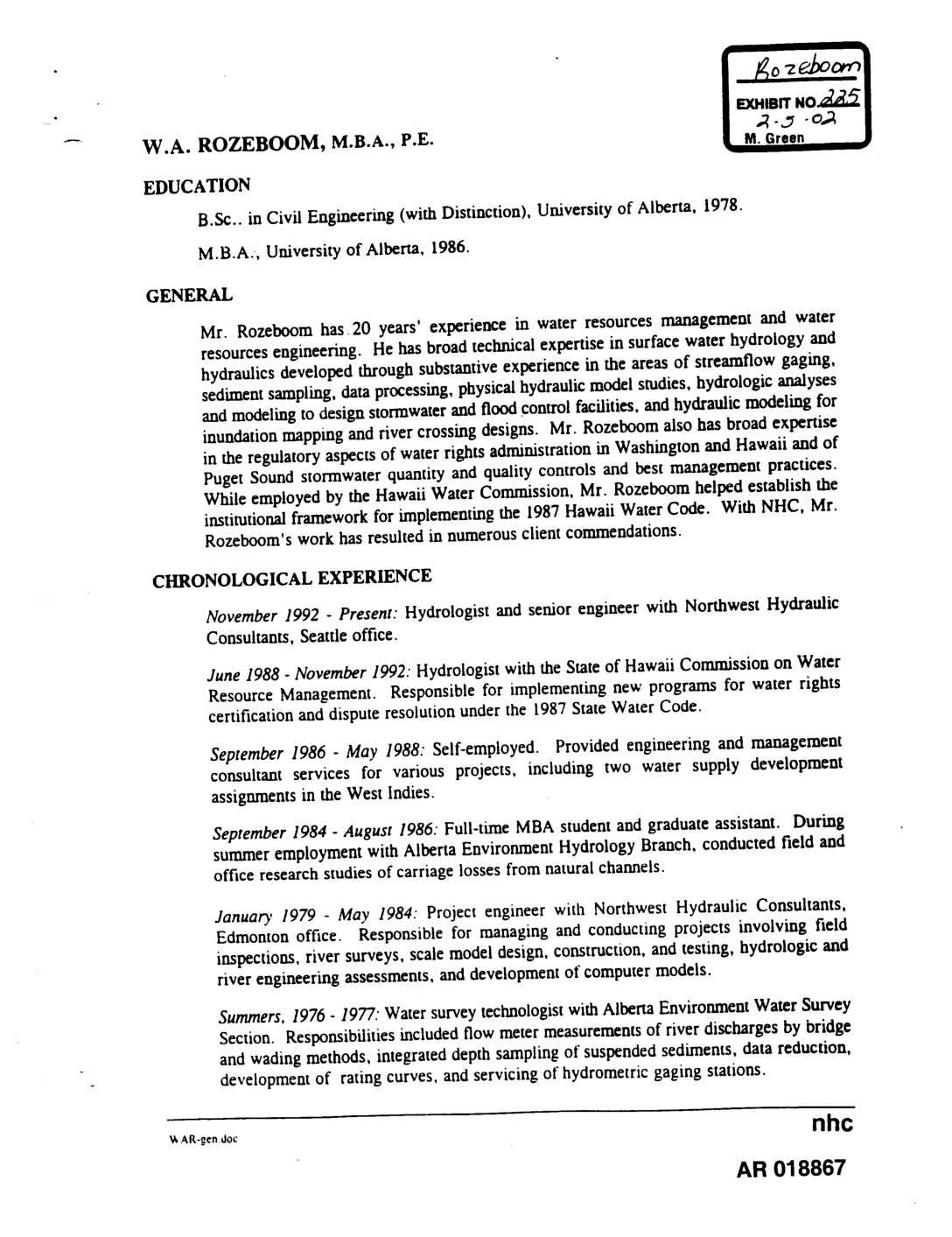
Exhibit 225: Curriculum Vitae of W.A. Rozeboom, M.B.A., P.E. — Northwest Hydraulic Consultants
This document is a professional resume for W.A. Rozeboom, a civil engineer and hydrologist with 20 years of experience in water resources management, surface water hydrology, and hydraulic modeling. His work has focused primarily on flood control, stormwater management, floodplain mapping, and water rights administration in Washington State, Hawaii, and other regions. This document does not appear to contain content directly relevant to Sea-Tac Airport noise policy. -
 2002-02-05
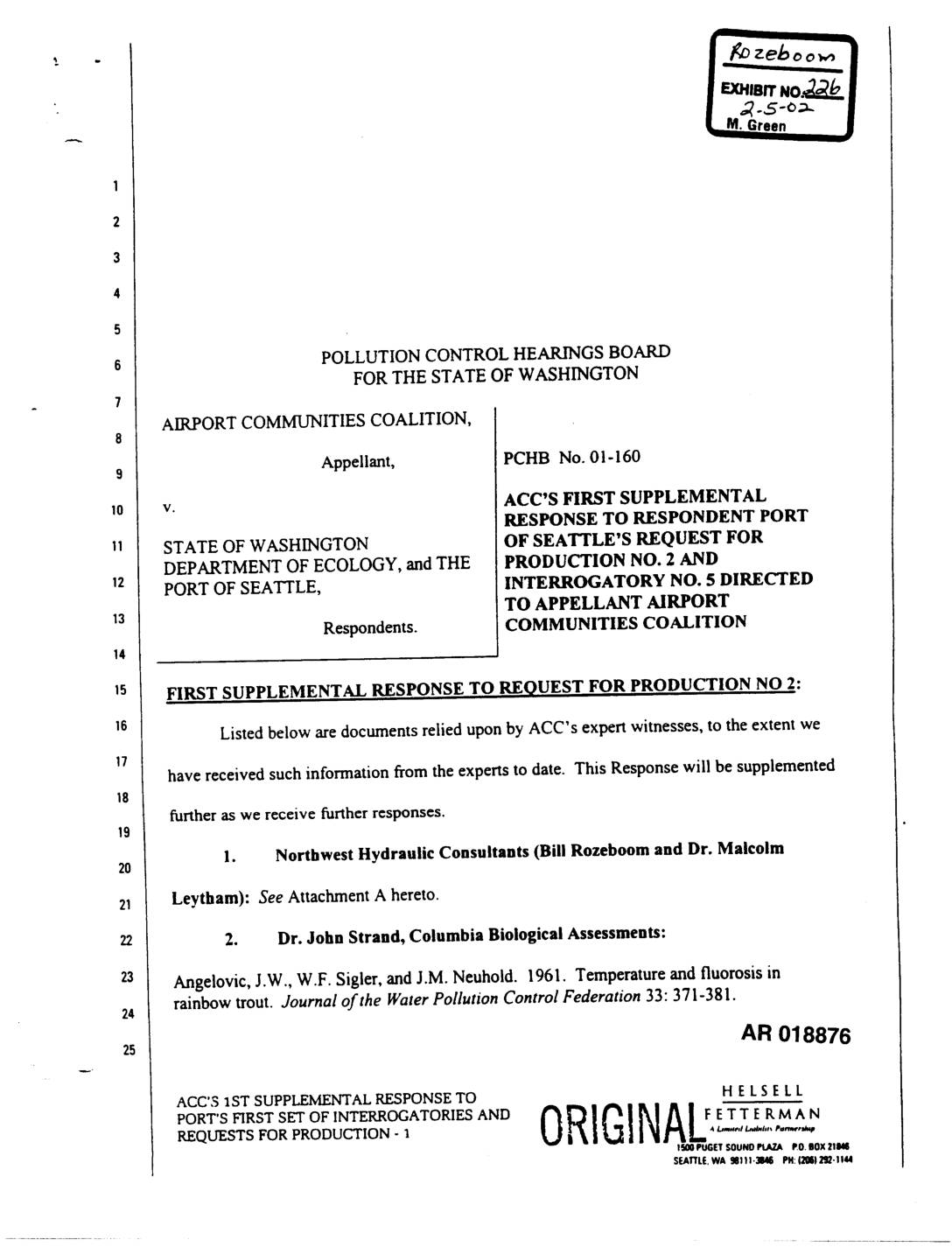
Exhibit 226: ACC’s First Supplemental Response to Port Of Seattle’s Request for Production No. 2 and Interrogatory No. 5 — Expert Witness Reference List (PCHB No. 01-160)
This legal document is a supplemental response filed by the Airport Communities Coalition (ACC) in a Washington State Pollution Control Hearings Board case against the Port of Seattle and the Department of Ecology. It lists scientific references and studies relied upon by ACC's expert witnesses, covering topics such as water quality, dissolved oxygen levels from runway de-icing at Seattle-Tacoma International Airport, and the effects of airport-related chemicals on aquatic life including salmon and trout. The document reflects ongoing litigation over the environmental impact of Sea-Tac Airport operations on surrounding waterways. -
 2002-02-04
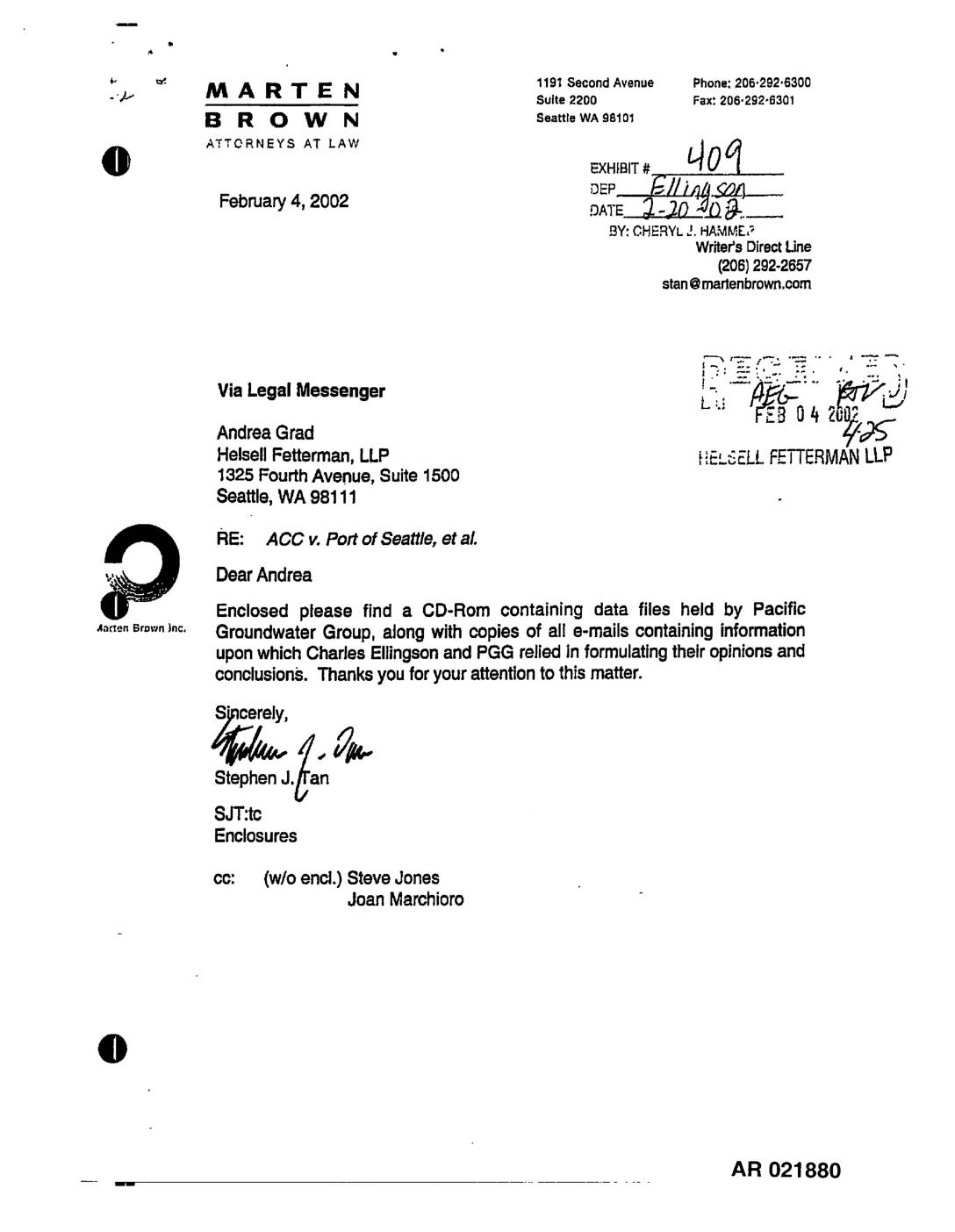
EXH 409: Marten Brown Letter Transmitting Pacific Groundwater Group Data Files E-mails ACC v. Port
A February 2002 letter from Marten Brown attorneys transmits a CD-ROM of data files and related emails from Pacific Groundwater Group (PGG) to opposing counsel in the case ACC v. Port of Seattle. The materials include technical data and correspondence relied upon by expert Charles Ellingson and PGG in forming their opinions and conclusions. Supporting emails from October 2001 detail groundwater inflow and surface runoff modeling data exchanged between consultants Joe Brascher and PGG. -
 2002-02-04
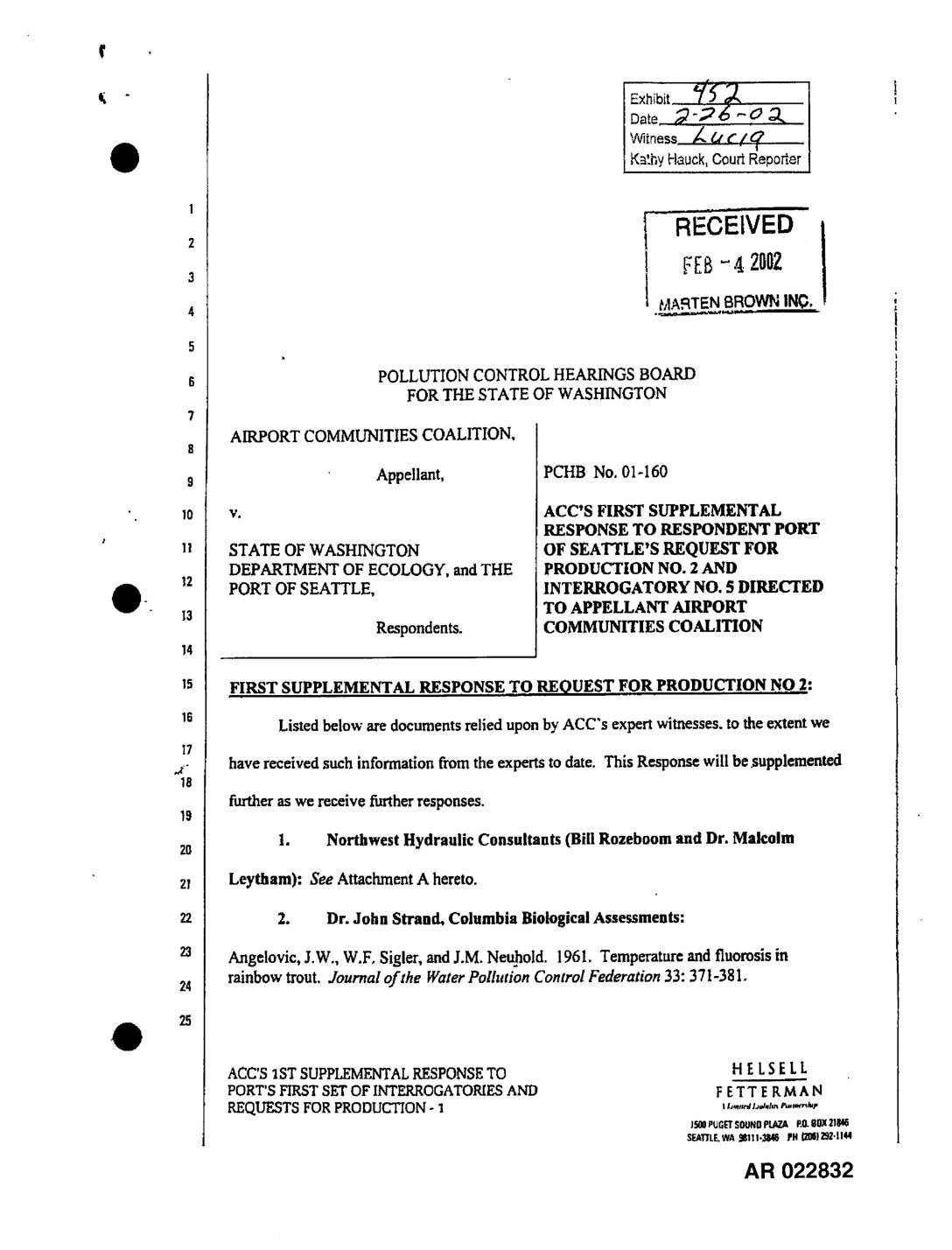
EXH 452: ACC First Supplemental Response to RFP No. 2 and Interrogatory No. 5
This 2002 legal document is a supplemental response filed by the Airport Communities Coalition (ACC) in a Pollution Control Hearings Board case against the Washington State Department of Ecology and the Port of Seattle, related to the expansion of Seattle-Tacoma International Airport. It lists technical documents and expert references relied upon by ACC's witnesses, covering topics such as hydraulics, biology, and geotechnical engineering related to the proposed third runway project. The filing also summarizes the prior trial testimony experience of expert witnesses retained by the ACC. -
 2002-01-31
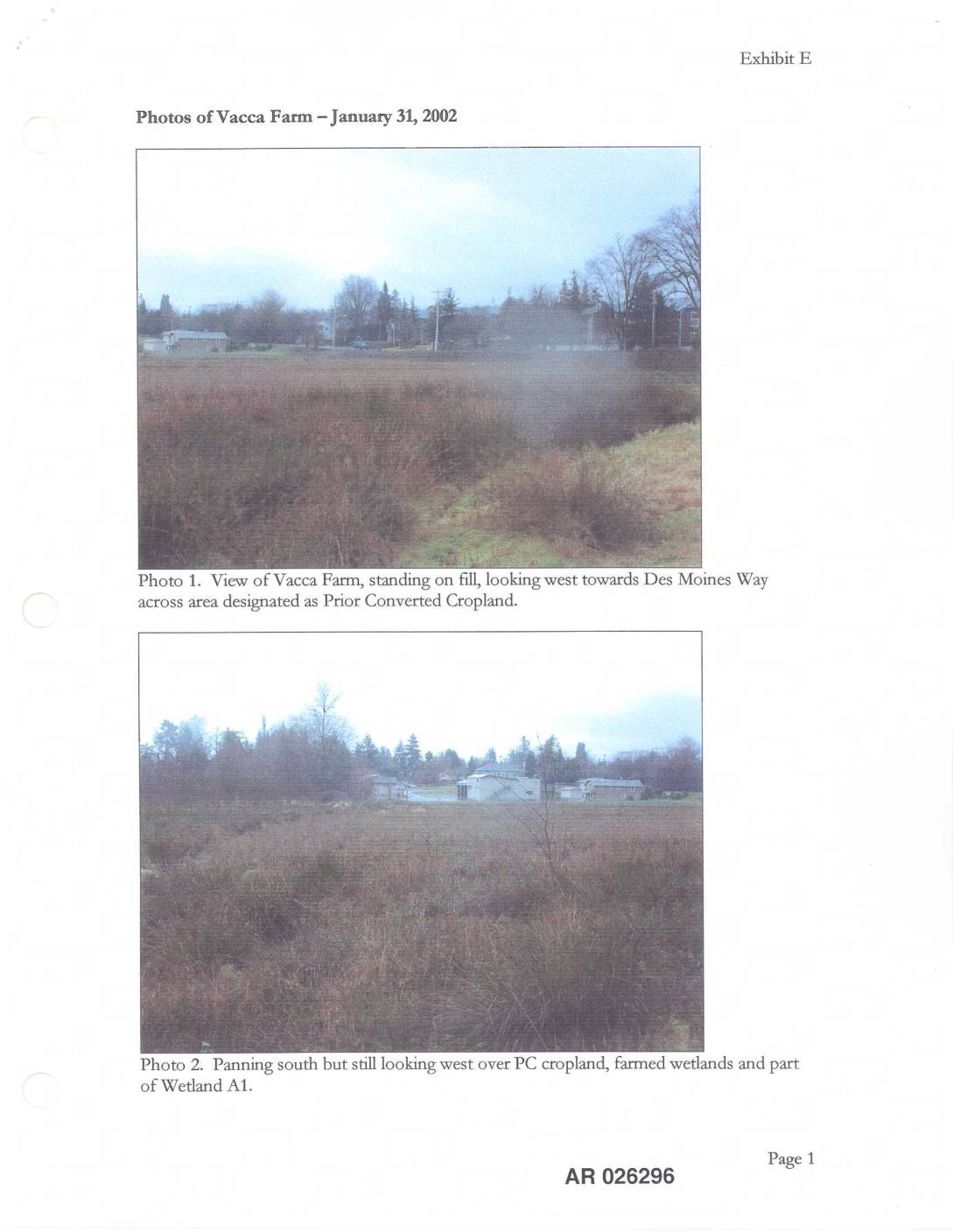
EXH E: Photos Vacca Farm — January 31, 2002
This document, labeled Exhibit E, contains photographs taken on January 31, 2002 of the Vacca Farm site, showing various land features including areas designated as Prior Converted Cropland, farmed wetlands, and Wetland A1. The photos document the site's vegetation and water features, including a close-up of wetland plants and a view of Miller Creek looking west across Wetland A1. The images appear to be part of an environmental or land-use assessment record related to the Vacca Farm property near Des Moines Way. -
 2002-01-30
EXH 411: NHC Letter to US Army Corps Engineers Low Streamflow Analysis Miller Creek Walker Creek Des Moines Creek
A January 2002 letter from Northwest Hydraulic Consultants to the U.S. Army Corps of Engineers challenges the Port of Seattle's December 2001 Low Streamflow Analysis related to Sea-Tac Airport's third runway development. The letter identifies critical flaws in hydrologic modeling of Miller, Walker, and Des Moines Creeks, including double-counting of groundwater discharges, flawed seepage modeling methodology, and failure to account for construction impacts on stream low flows. The consultants argue these errors cause the Port to substantially underestimate the project's negative impacts on local stream flows.