TagSAMP(650)
Articles tagged with the Sustainable Airport Master Plan.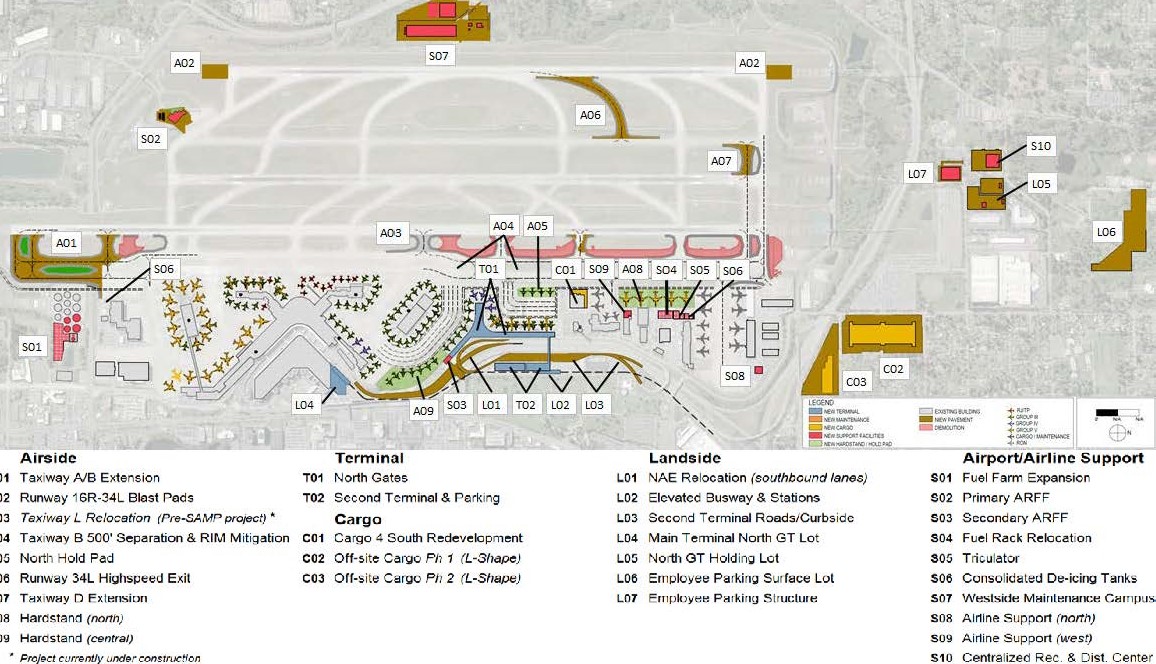
-
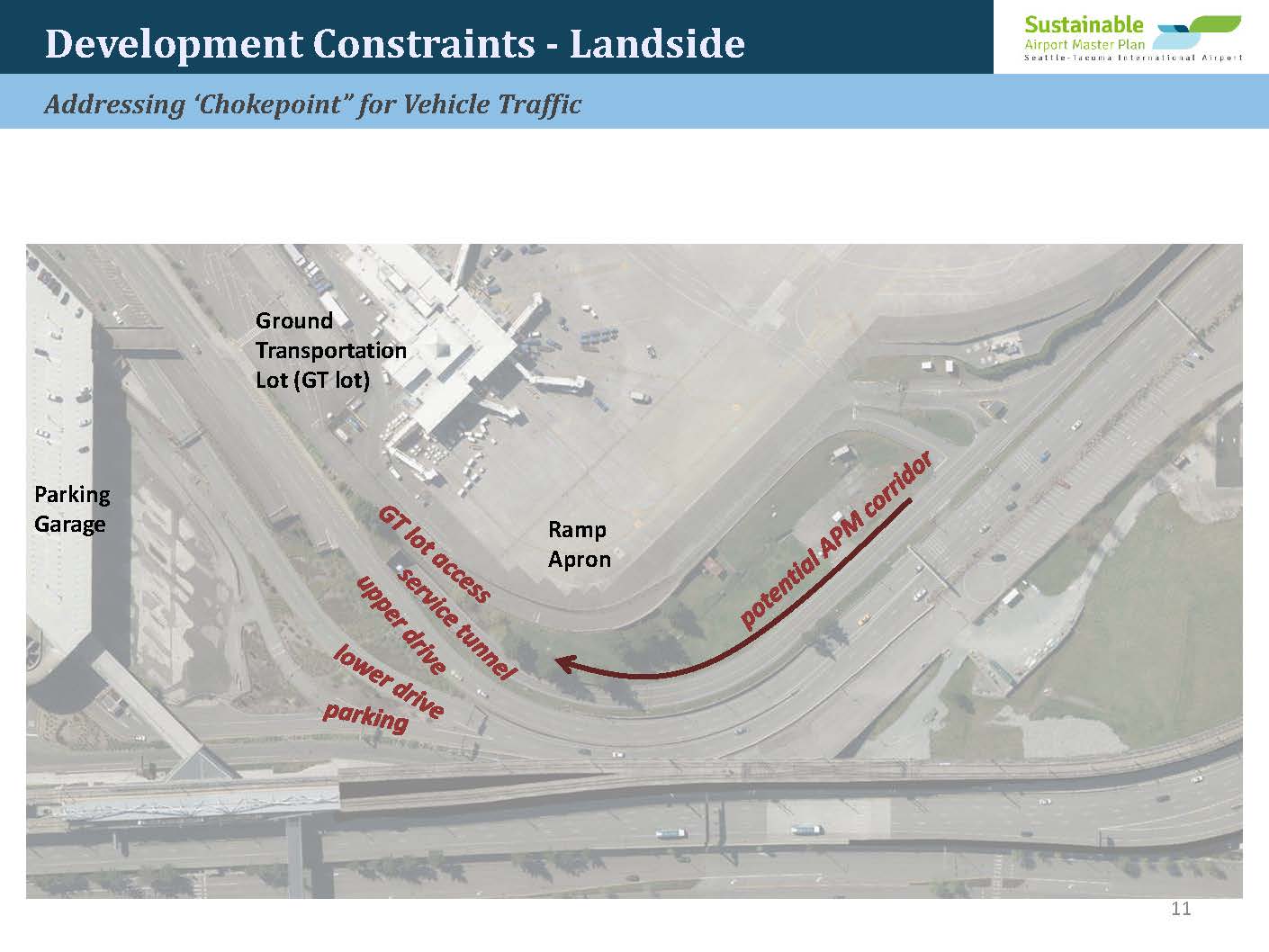
SAMP-2015-0519-BP12-PortofSeattle Page 11
Slide 11 from Seattle-Tacoma International Airport's Sustainable Airport Master Plan presentation, showing an aerial photograph annotated with landside vehicle traffic chokepoints including the Ground Transportation Lot (GT lot), Ramp Apron, Parking Garage, service tunnel, upper and lower drives, and a potential APM (Automated People Mover) corridor. -
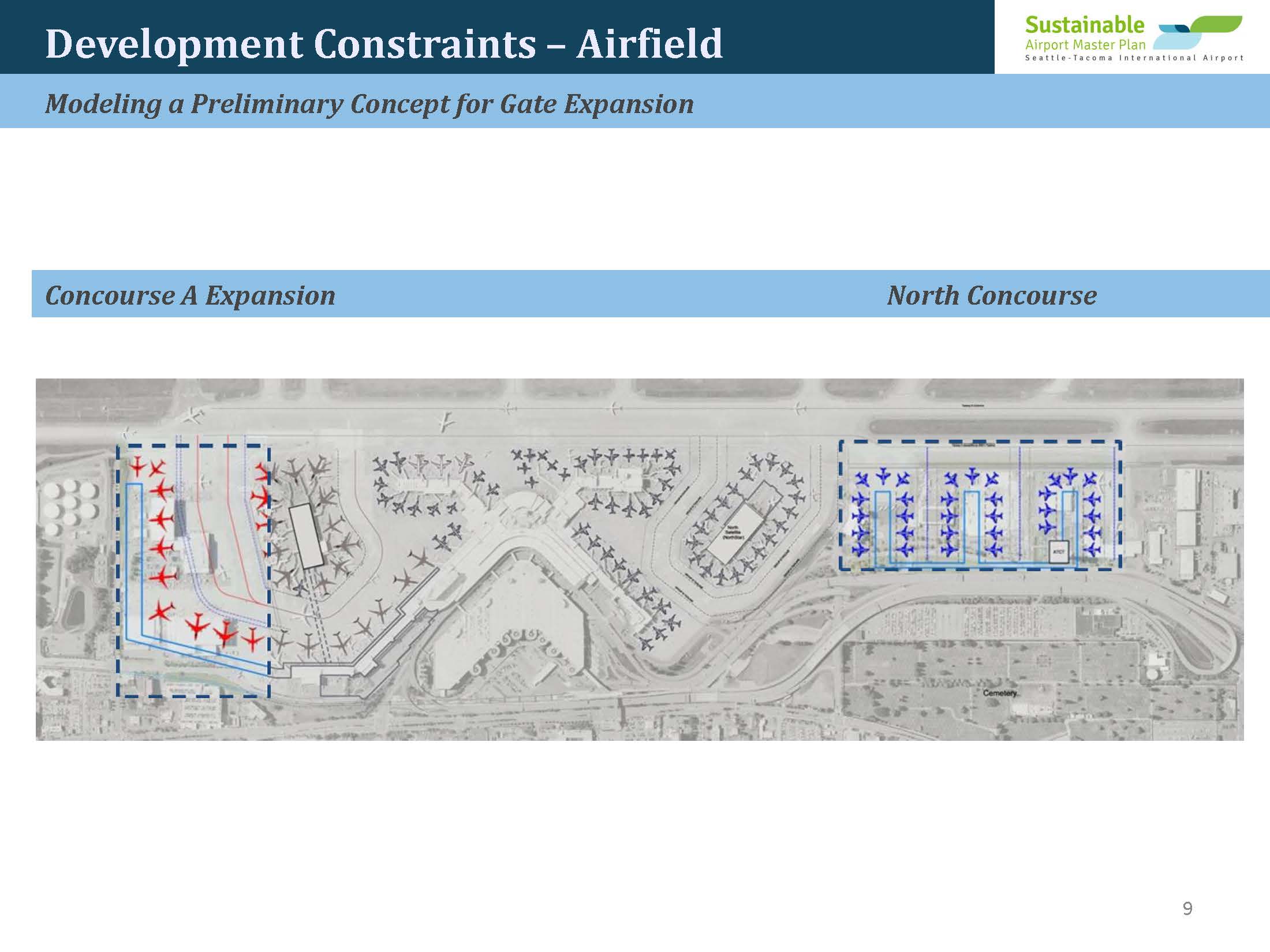
SAMP-2015-0519-BP12-PortofSeattle Page 09
Slide 9 from the Seattle-Tacoma International Airport Sustainable Airport Master Plan presentation, titled 'Development Constraints – Airfield: Modeling a Preliminary Concept for Gate Expansion.' The slide shows an aerial diagram comparing two proposed expansion areas: Concourse A Expansion (left, with red conflict markers indicating airfield constraints) and a North Concourse concept (right, shown in blue dashed outline). -
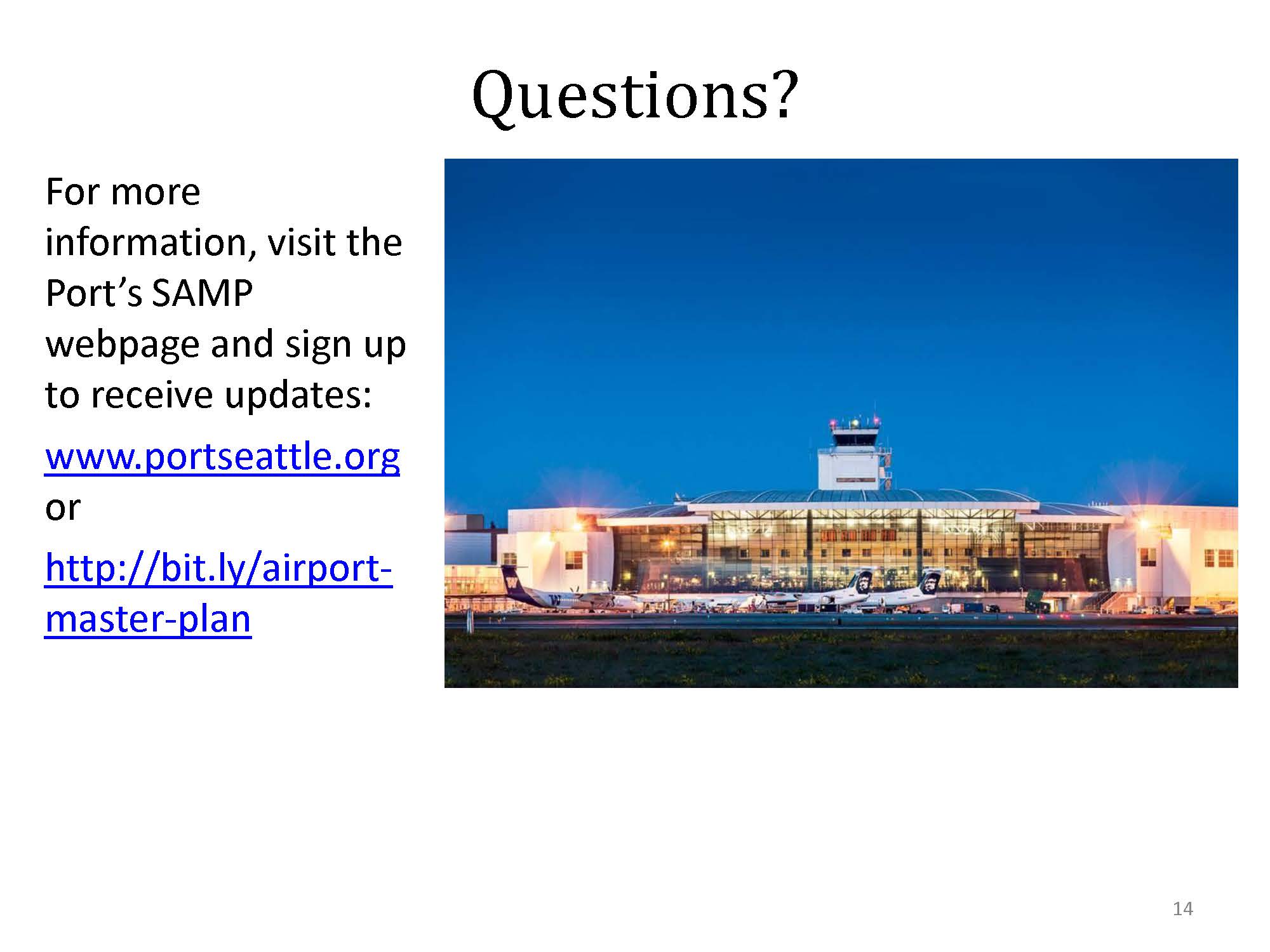
SAMP-2015-0519-BP12-PortofSeattle Page 14
Final slide (page 14) of a Port of Seattle Sea-Tac Airport SAMP (Sustainable Airport Master Plan) presentation, directing viewers to www.portseattle.org or http://bit.ly/airport-master-plan for more information and updates. The slide includes a nighttime exterior photograph of Seattle-Tacoma International Airport terminal with aircraft at gates and the air traffic control tower visible. -
SAMP-2015-0519-BP12-PortofSeattle Page 13
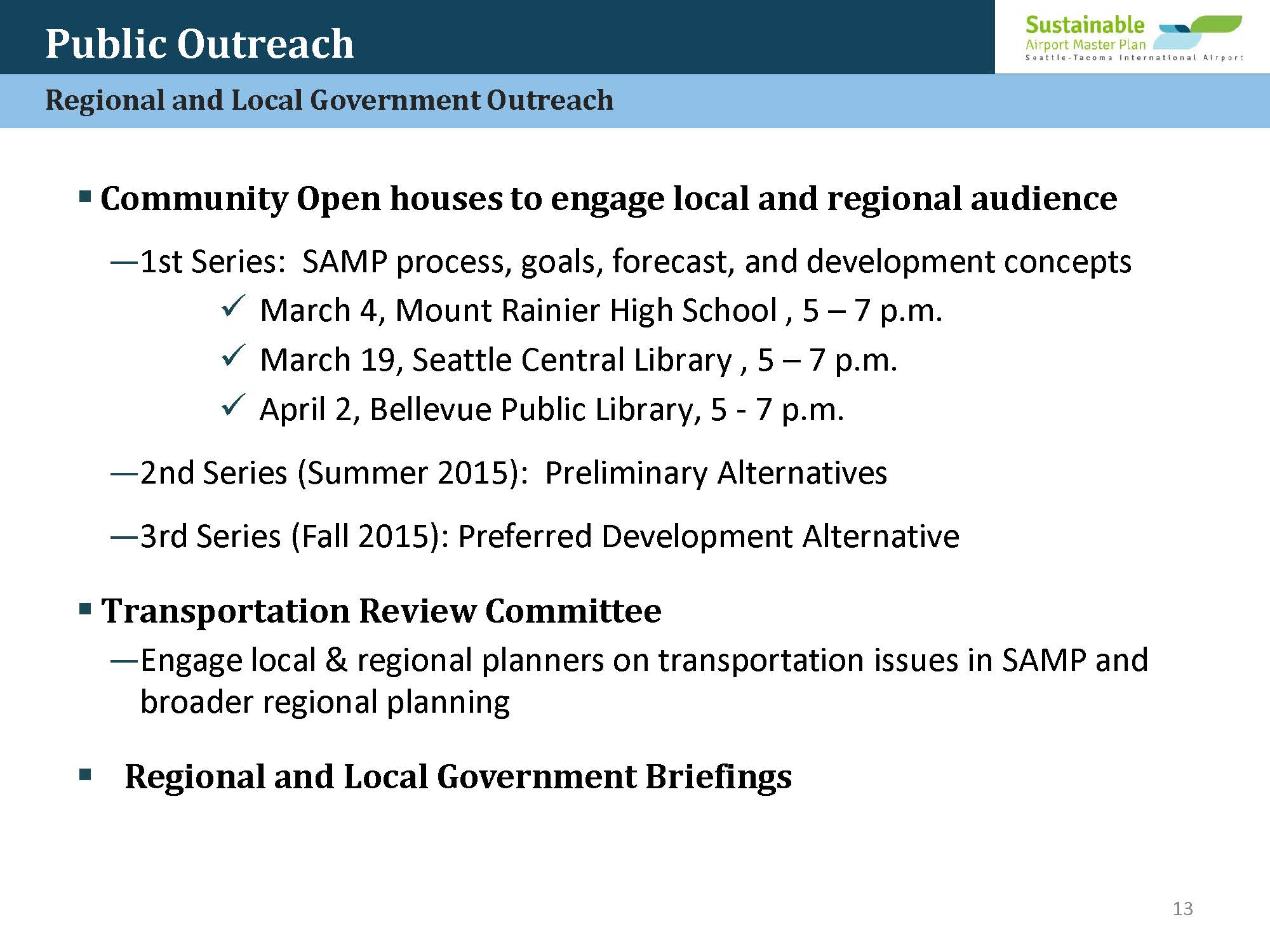
Slide 13 from the Seattle-Tacoma International Airport Sustainable Airport Master Plan (SAMP) presentation detailing public outreach activities, including three series of Community Open Houses (1st series dates: March 4 at Mount Rainier High School, March 19 at Seattle Central Library, and April 2 at Bellevue Public Library, all 5–7 p.m.), a Transportation Review Committee, and Regional and Local Government Briefings. The 2nd and 3rd open house series were planned for Summer and Fall 2015 respectively. -
SAMP-2015-0519-BP12-PortofSeattle Page 12
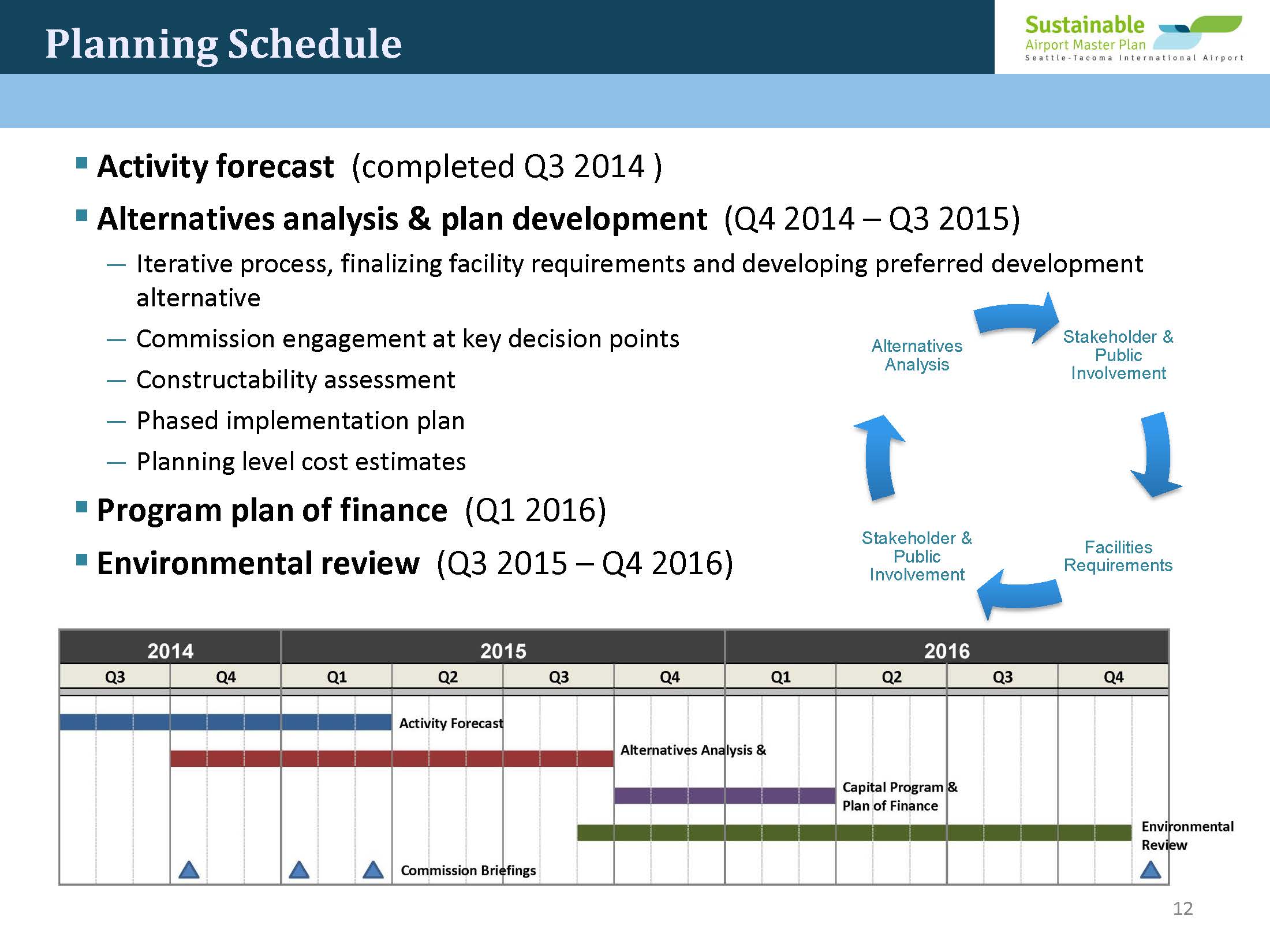
This slide from the Seattle-Tacoma International Airport Sustainable Airport Master Plan presents the planning schedule, including Activity Forecast (completed Q3 2014), Alternatives Analysis & Plan Development (Q4 2014–Q3 2015), Program Plan of Finance (Q1 2016), and Environmental Review (Q3 2015–Q4 2016). A Gantt chart at the bottom shows task timelines across 2014–2016, with Commission Briefing milestones marked. -
180620-SAMP-Presentation-Public-Meeting 14 LTP-cropped
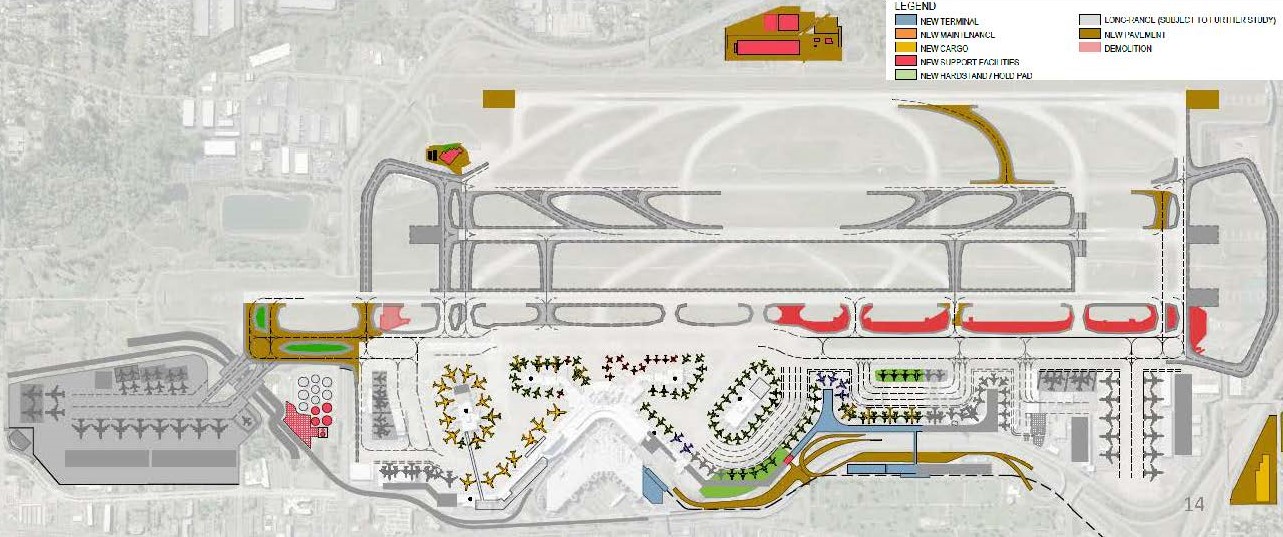
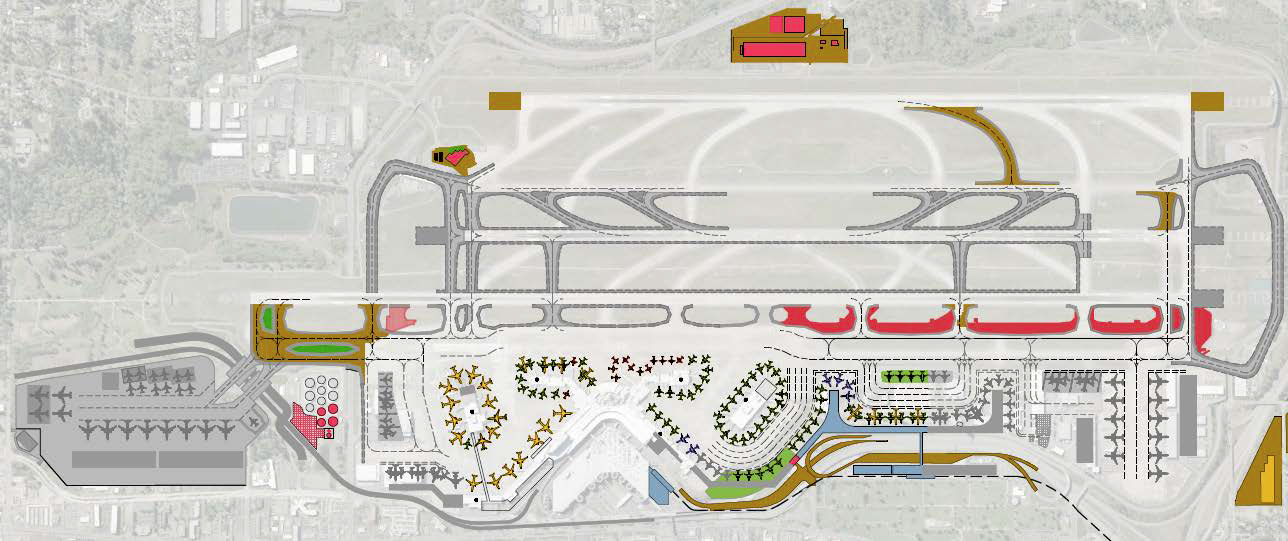
A color-coded airport master plan layout showing proposed development elements including new terminal, new main entrance, new cargo facilities, new support facilities, new hardstand/hold pad, long-range study areas, new pavement, and demolition zones. The legend distinguishes elements by color, and the drawing appears to be page 14 of a planning document, depicting a large airfield with multiple concourses and gate areas. -
180620-SAMP NTP Presentation-Public-Meeting 16-NTP-Environmental Review-cropped
An aerial planning map of Seattle-Tacoma International Airport (Sea-Tac) showing proposed capital improvement projects categorized into Airside, Terminal, Cargo, Landside, and Airport/Airline Support elements. Projects are color-coded by type (new terminal, new pavement, new cargo, new support facilities, demolition, new hardstand/hold pad) and labeled with alphanumeric identifiers including runway extensions, taxiway relocations, new terminal gates, cargo redevelopment areas, and employee parking structures. -
180620-SAMP-Presentation-Public-Meeting 12 NTP Major Improvements-cropped
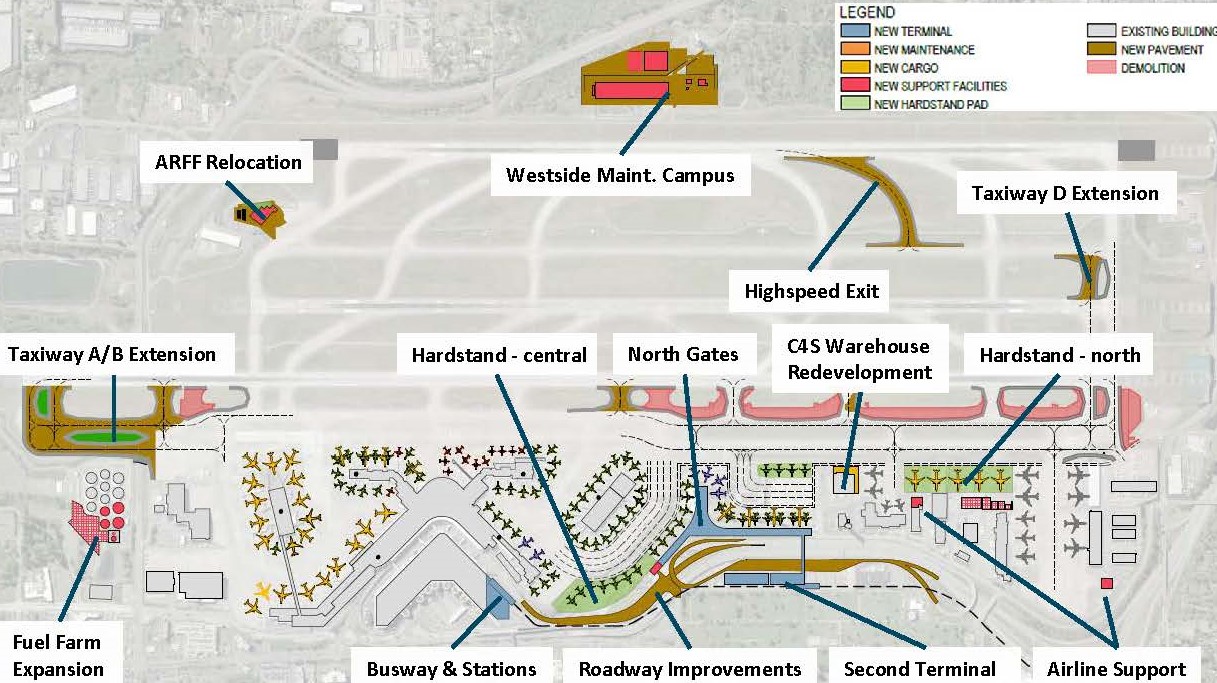
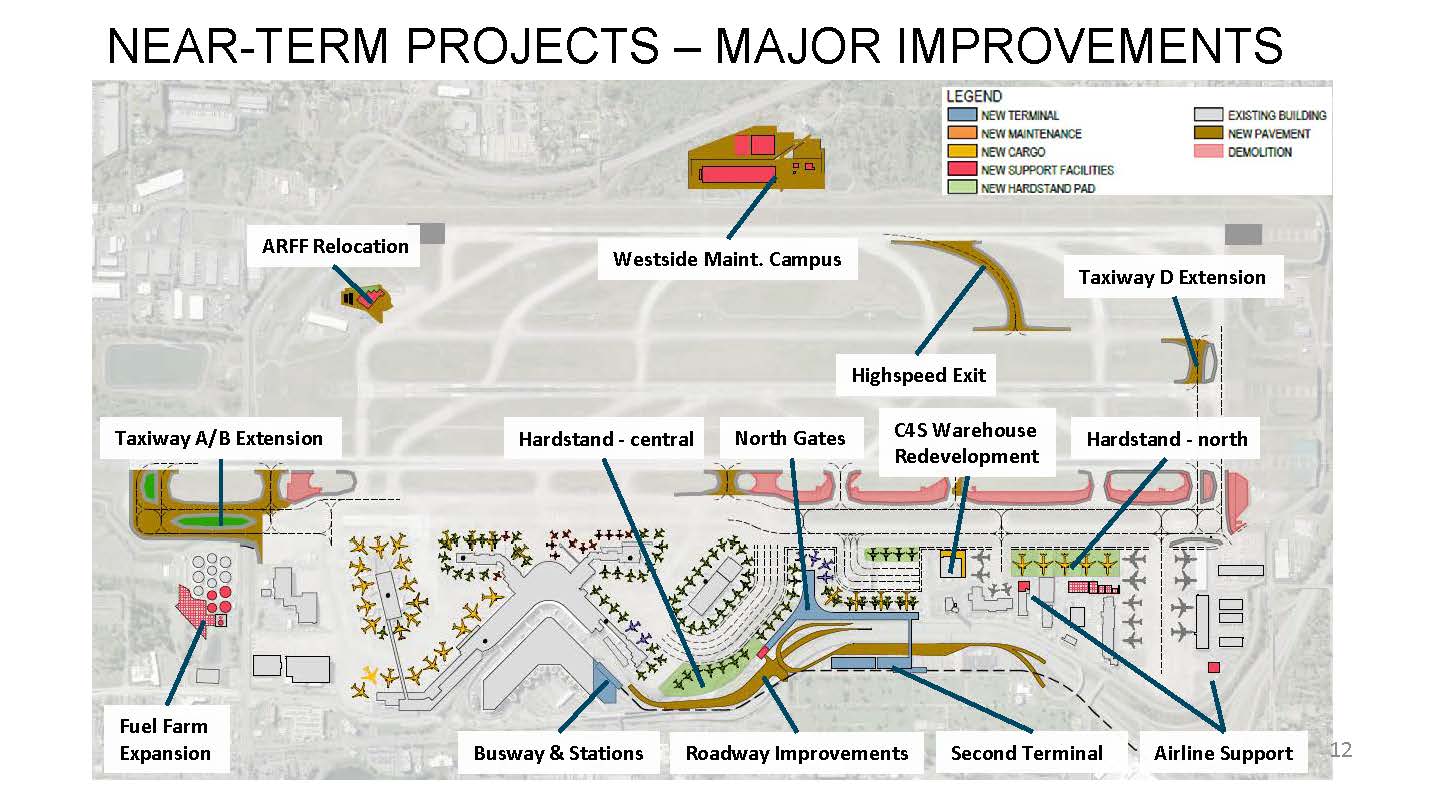
An aerial planning map of Seattle-Tacoma International Airport showing proposed capital improvements including a Second Terminal, North Gates, Busway & Stations, Taxiway A/B and D Extensions, Westside Maintenance Campus, Fuel Farm Expansion, C4S Warehouse Redevelopment, Hardstand pads, ARFF Relocation, and Roadway Improvements. The legend distinguishes new terminal, maintenance, cargo, support facilities, hardstand pads, existing buildings, new pavement, and demolition areas. -
180620-SAMP-Presentation-Public-Meeting 12 NTP Major Improvements
A planning slide titled 'Near-Term Projects – Major Improvements' showing an aerial map of an airport with labeled infrastructure projects including a Second Terminal, Taxiway A/B and D Extensions, Westside Maintenance Campus, Fuel Farm Expansion, Busway & Stations, Roadway Improvements, North Gates, Hardstand areas, ARFF Relocation, Highspeed Exit, C4S Warehouse Redevelopment, and Airline Support facilities. The map uses a color-coded legend distinguishing new terminal, maintenance, cargo, support facilities, hardstand pads, existing buildings, new pavement, and demolition areas. -
180620 SAMP Presentation Public Meeting
SAMP 7286 Description