TagSAF(52)
Content concerning a variety of biomass replacements and/or blends for commercial Jet-A fuel. These are referred to broadly as Sustainable Aviation Fuel.
-
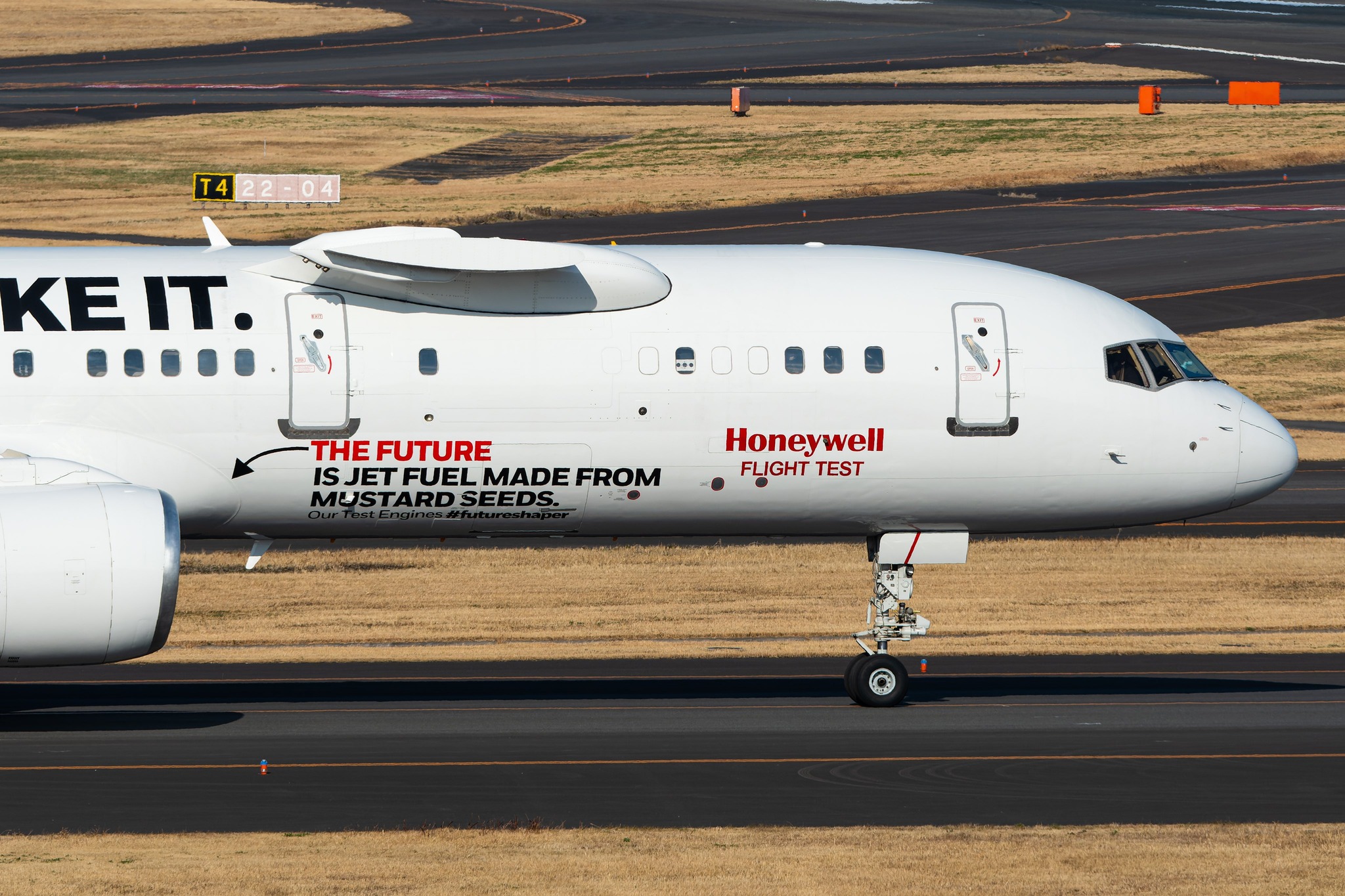
Honeywell Flight Test Boeing 757 Taxiing at Sea-Tac Airport with SAF Campaign Livery
A Honeywell Flight Test Boeing 757 aircraft taxis at Seattle-Tacoma International Airport (taxiway sign T4, runway 22-04 visible). The fuselage displays a campaign message reading 'THE FUTURE IS JET FUEL MADE FROM MUSTARD SEEDS' with the hashtag #futureshaper, promoting Honeywell's sustainable aviation fuel research using their test engines. -
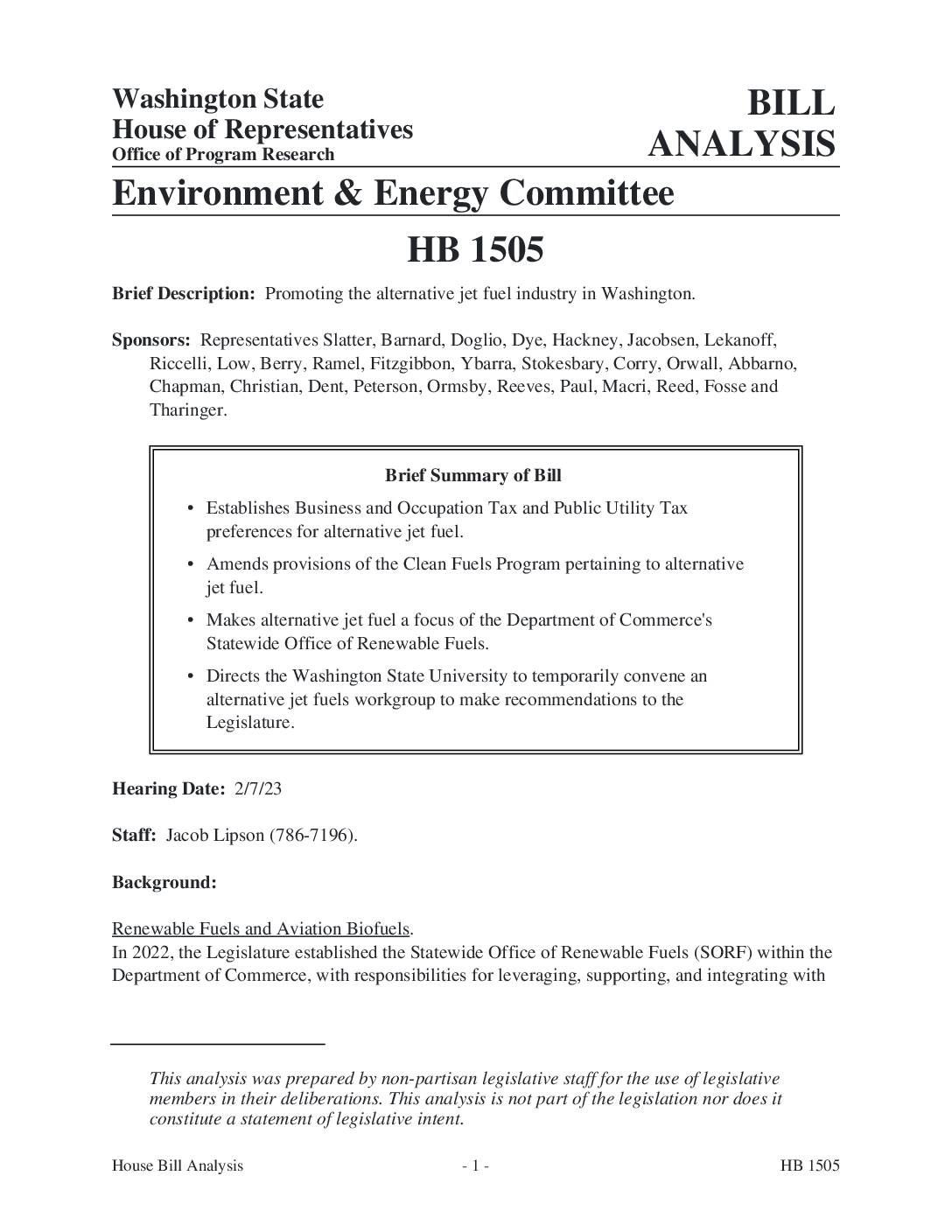 2023-02-07
HB 1505: Promoting the alternative jet fuel industry in Washington
Washington State House Bill 1505 aims to promote the alternative jet fuel industry by establishing tax breaks for businesses that produce or sell alternative jet fuel, updating the state's Clean Fuels Program to better support aviation fuels, and directing Washington State University to convene a workgroup to study and make recommendations on alternative jet fuel policy. The bill also expands the Department of Commerce's Statewide Office of Renewable Fuels to include alternative jet fuels as a focus area. While the bill primarily addresses fuel economics and climate goals rather than airport noise directly, it is relevant to Sea-Tac Airport operations as it could influence the types of fuels used by aircraft flying in and out of the region. -
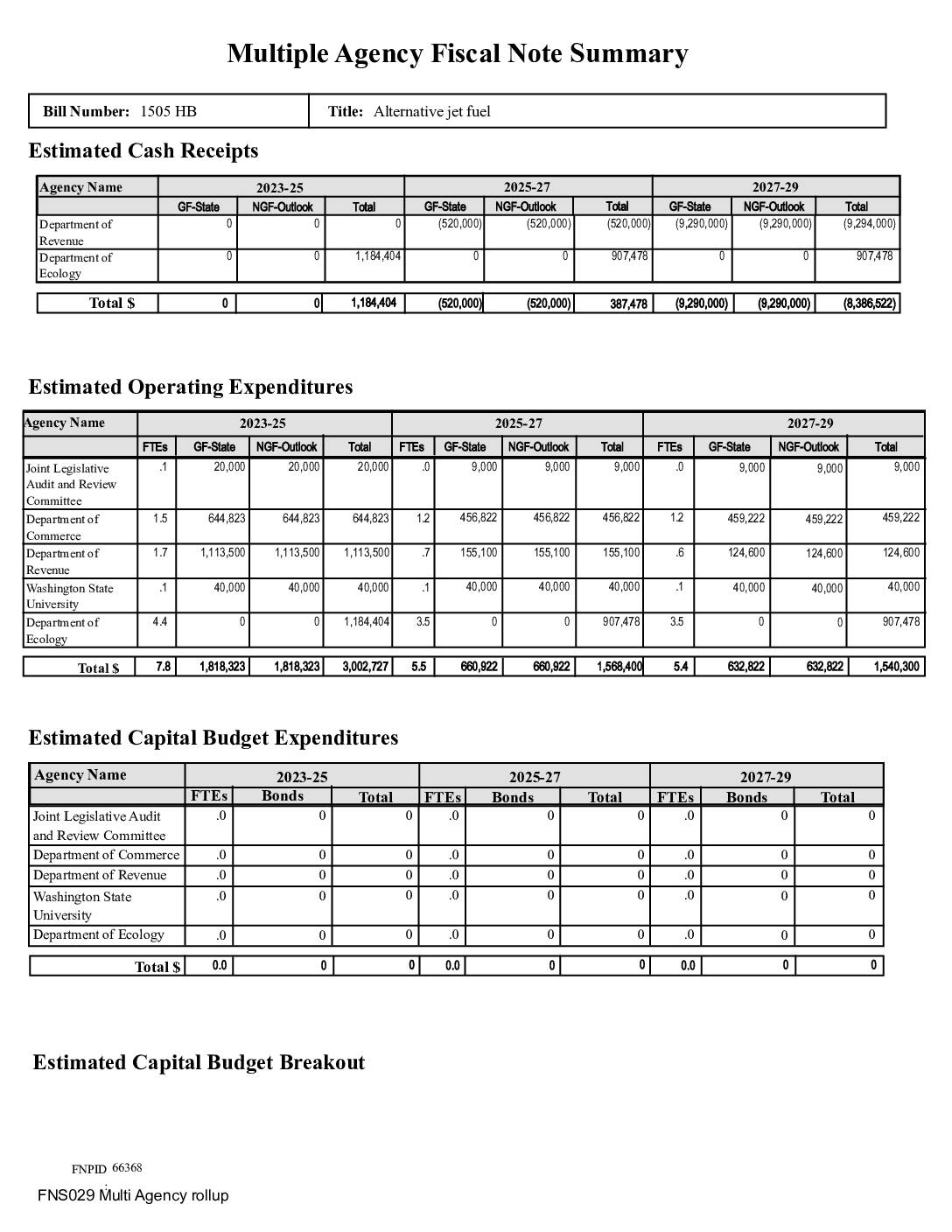 2023-01-25
Multiple Agency Fiscal Note Summary – Alternative Jet Fuel Bill 1505 HB
This fiscal note summarizes the estimated financial impact of Washington State House Bill 1505, which concerns alternative jet fuel. The bill is projected to generate costs across multiple state agencies—including the Departments of Revenue, Commerce, and Ecology—totaling over $3 million in operating expenditures for the 2023-25 biennium, while also reflecting growing tax revenue reductions reaching over $9 million by 2027-29 as alternative jet fuel incentives take effect. No capital budget expenditures are anticipated across any of the involved agencies. -
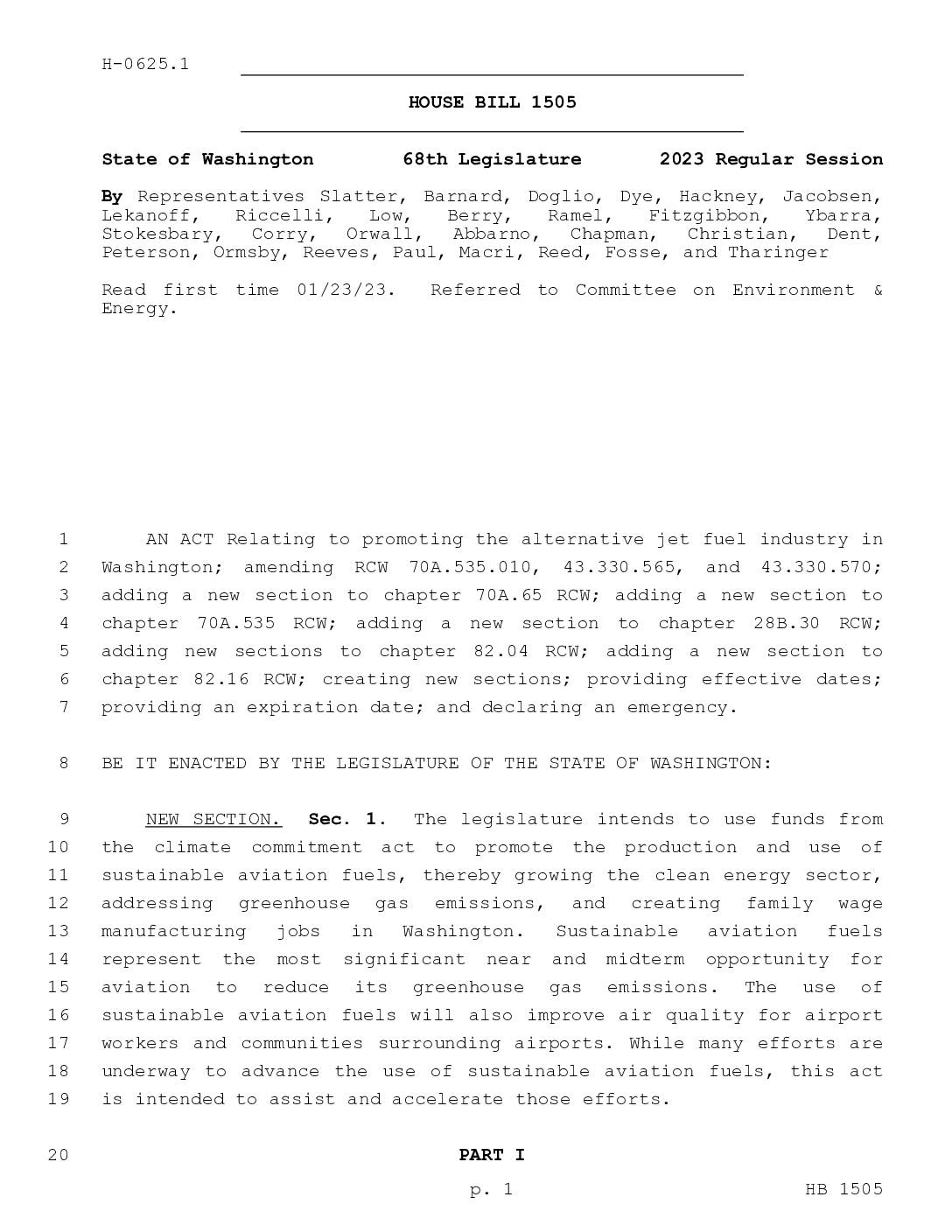 2023-01-23
House Bill 1505 – Alternative Jet Fuel Industry Promotion Act
Washington House Bill 1505 (2023) aims to promote the production and use of sustainable aviation fuels (SAF) by establishing tax incentives, clean fuel credits, and research initiatives to grow the alternative jet fuel industry in the state. The bill defines 'alternative jet fuel' as lower-carbon fuels that can be blended with conventional jet fuel without modifying aircraft engines or existing infrastructure. Beyond reducing greenhouse gas emissions, the legislation highlights improved air quality benefits for airport workers and communities surrounding airports like Sea-Tac. -
What is SAF? Some say sustainable aviation fuel is the key to a greener airline industry
Key Points More sustainable fuel sources are a key to reducing the carbon footprint of flying. Sustainable aviation fuel comes in many forms including plant- and cooking oil-based products. SAF still emits CO2 but is less carbon-intensive over its lifecycle than traditional fossil fuel. Flying isn’t great for the environment – it’s just a fact. -
 2022-10-26
Delta Air Lines Sustainability Overview
Delta Air Lines has committed to reaching net zero carbon emissions by 2050, with shorter-term goals including using 10% Sustainable Aviation Fuel (SAF) by 2030 and setting science-based emissions targets aligned with aviation industry guidance. To reduce its environmental footprint, Delta has retired over 200 older aircraft and replaced them with newer, more fuel-efficient models that burn 20-25% less fuel. The airline's emissions reduction strategy relies on three main levers: fleet renewal, operational improvements, and increased use of SAF. -
 2022-07-01
Making Net-Zero Aviation Possible: An Industry-Backed, 1.5°C-Aligned Transition Strategy
This July 2022 report from the Mission Possible Partnership outlines a global strategy for reducing aviation's greenhouse gas emissions to net zero by 2050, in line with the 1.5°C climate target. It identifies key milestones, technologies, and investments needed across the aviation value chain, including sustainable aviation fuels and new propulsion systems. The strategy is intended to guide airlines, policymakers, and financial institutions in taking coordinated action this decade. -
 2022-03-22
Sustainable Aviation Fuels (SAF): Update to FAA REDAC E&E Subcommittee
This March 2022 FAA presentation to the REDAC Energy & Environment Subcommittee provides an overview of Sustainable Aviation Fuels (SAF), highlighting both opportunities—such as drop-in compatibility with existing aircraft and infrastructure, and the potential to reduce lifecycle carbon emissions—and challenges including high production costs, limited incentives, and blend limits capped at 50%. The FAA's SAF program focuses on three areas: testing and accelerating fuel development, analyzing environmental and economic sustainability, and coordinating with public-private partnerships and international bodies like ICAO. While primarily focused on aviation decarbonization broadly, the program's emissions-reduction goals have indirect relevance to noise and environmental policy discussions at major airports like Sea-Tac. -
 2022-01-11
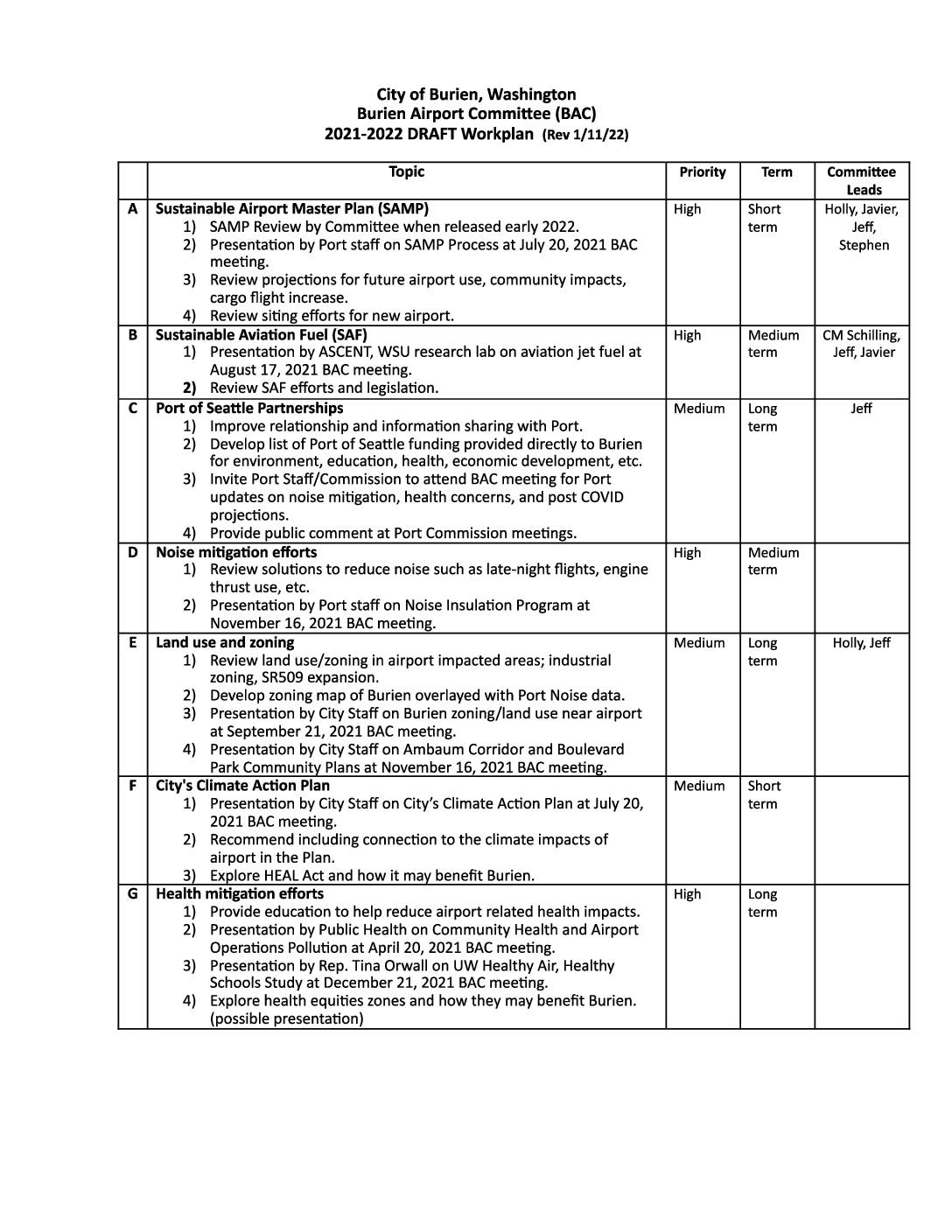
City of Burien, Washington Burien Airport Committee (BAC) 2021-2022 DRAFT Workplan
The Burien Airport Committee's 2021-2022 Draft Workplan outlines the city's priorities for addressing impacts from Seattle-Tacoma International Airport, with a focus on noise mitigation, health impacts, land use, and sustainable aviation. High-priority items include reviewing the Sustainable Airport Master Plan, exploring noise reduction solutions such as limiting late-night flights, and providing community health education to reduce airport-related health impacts. The committee also aims to strengthen partnerships with the Port of Seattle and advocate for policies around sustainable aviation fuel and climate action. -
Our Commitment to Fly Net Zero by 2050
Fly Net Zero is the commitment of airlines to achieve net zero carbon by 2050. At the 77th IATA Annual General Meeting in Boston, USA, on 4 October 2021, a resolution was passed by IATA member airlines committing them to achieving net-zero carbon emissions from their operations by 2050. This pledge brings air transport