TagPSRC(154)
-
 2024-10-24
Overview of the 2025-2028 Regional Transportation Improvement Program
The 2025-2028 Regional Transportation Improvement Program (TIP), published by the Puget Sound Regional Council (PSRC) on October 24, 2024, outlines planned transportation projects and investments across the greater Puget Sound region for a four-year period. It covers project selection processes, funding plans, air quality requirements, and federal performance measures for roads, transit, ferries, and active transportation infrastructure. This document does not specifically address Sea-Tac Airport noise policy. -
 2024-10-01
Sustainable Airport Master Plan: Near-Term Projects Environmental Review — Release of the FAA NEPA Draft Environmental Assessment and Public Comment Period
Jan 16 2025 presentation to PSRC by Dave Kaplan, Clare Gallagher. Port of Seattle presentation covering the Sustainable Airport Master Plan (SAMP) Near-Term Projects (NTPs) Environmental Review, released October–November 2024. Covers the FAA NEPA Draft Environmental Assessment (Draft EA) and public comment period for Sea-Tac Airport (SEA). Includes historical passenger growth data from 1949 (130,600 -
 2024-09-05
Draft 2025-2028 regional transportation improvement program: Appendix A detailed project listings
This draft document from the Puget Sound Regional Council outlines the 2025-2028 Regional Transportation Improvement Program (TIP) for the greater Seattle-Tacoma region, listing federally, state, and locally funded transportation projects scheduled between 2025 and 2028. Projects are organized alphabetically by jurisdiction and include details on funding phases such as planning, design, construction, and equipment. The document was prepared as of September 5, 2024, with final updates expected by October 2024. -
 2023-10-25
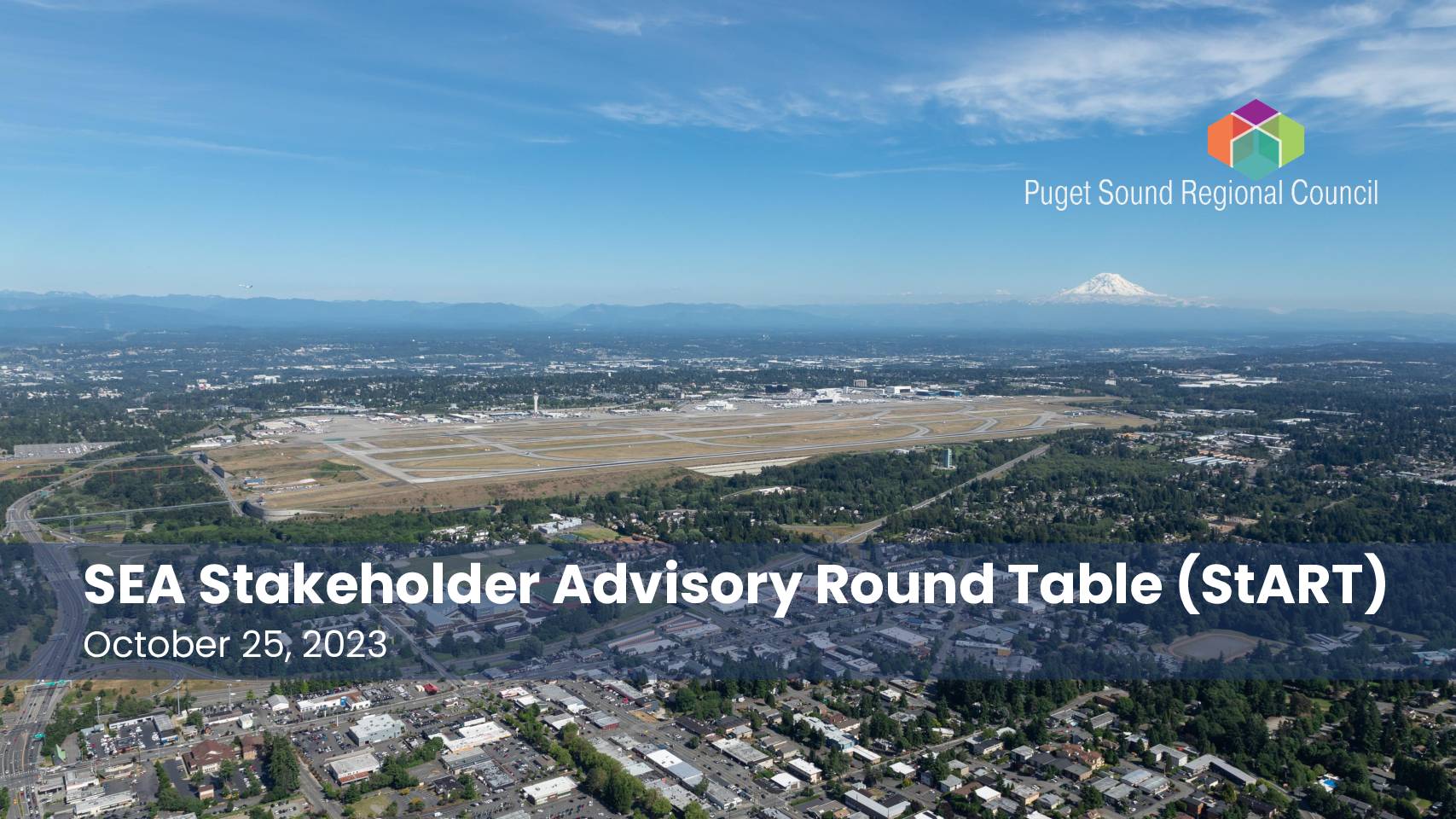
SEA Stakeholder Advisory Round Table (StART): October 25, 2023 Meeting Presentation
The SEA Stakeholder Advisory Round Table (StART), convened on October 25, 2023 by the Puget Sound Regional Council, brought together stakeholders to discuss regional planning around Seattle-Tacoma International Airport in the context of the Vision 2050 plan, which guides growth for 5.8 million people across the Central Puget Sound region. The meeting covered key planning priorities including mobility, housing, equity, climate, and environment. It also outlined a regional planning timeline from 2020 to 2025, encompassing transportation plans, economic strategies, countywide growth targets, and local comprehensive plan updates leading to plan certification. -
Regional planning agency to leave longtime space for 1201 Third tower
By Joey Thompson – Reporter, Puget Sound Business Journal Aug 28, 2023 The Puget Sound Regional Council is moving its headquarters to one of Seattle’s largest Class A office buildings — at an apparent discount. The government-funded metropolitan planning organization has signed a 13.5-year lease at 1201 Third Avenue, filling 21,000 square feet on the -
 2023-05-01
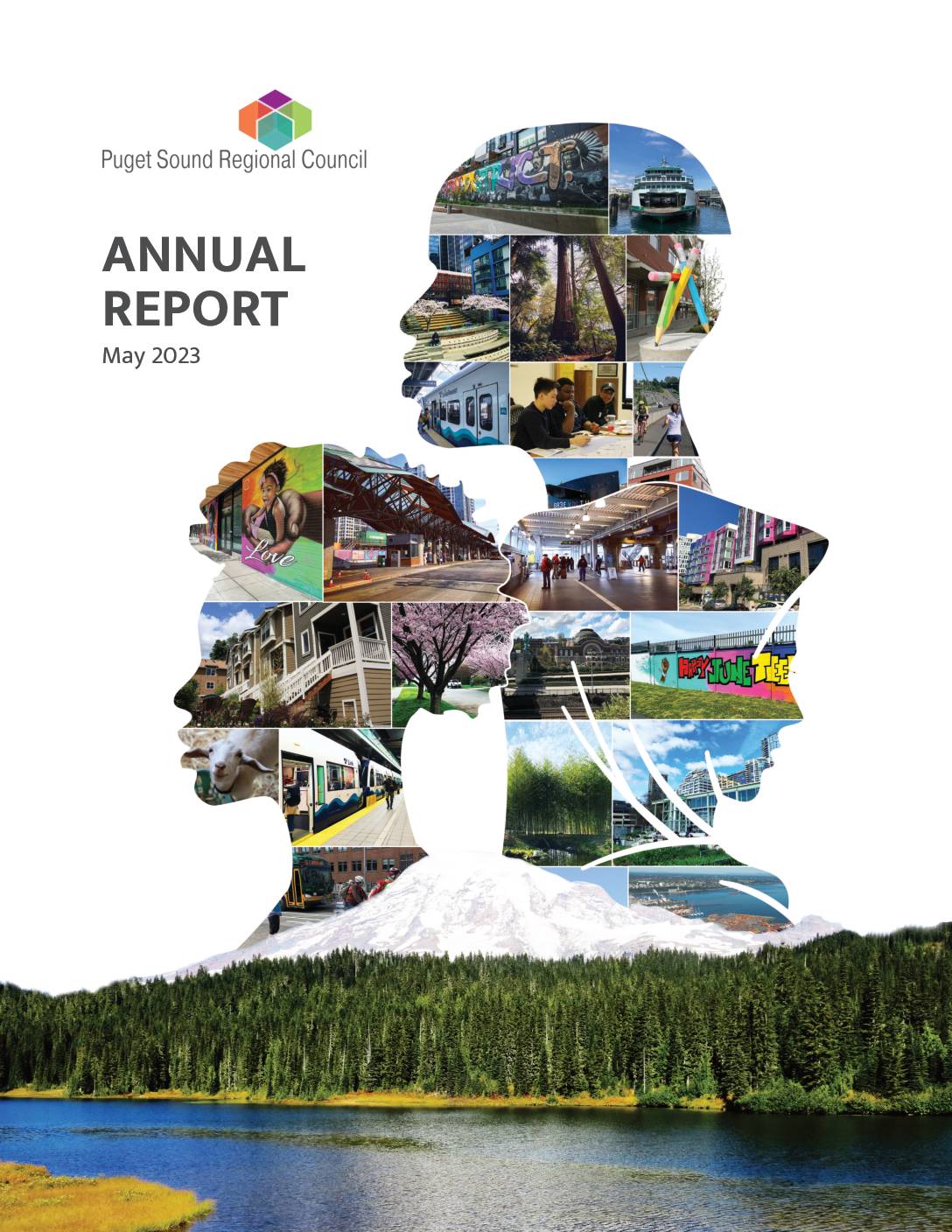
Puget Sound Regional Council Annual Report 2023
The Puget Sound Regional Council (PSRC) 2023 Annual Report highlights regional planning achievements including the adoption of a Regional Transportation Plan, a new Regional Housing Strategy, and Washington State's passage of House Bill 1110 to expand middle housing supply by an estimated 75,000 to 150,000 units over 20 years. The report also notes a $4.9 million grant secured for a Regional Safety Plan, progress on a Regional Equity Strategy, and efforts to support local comprehensive plan updates across the greater Puget Sound area. -
 2022-12-14
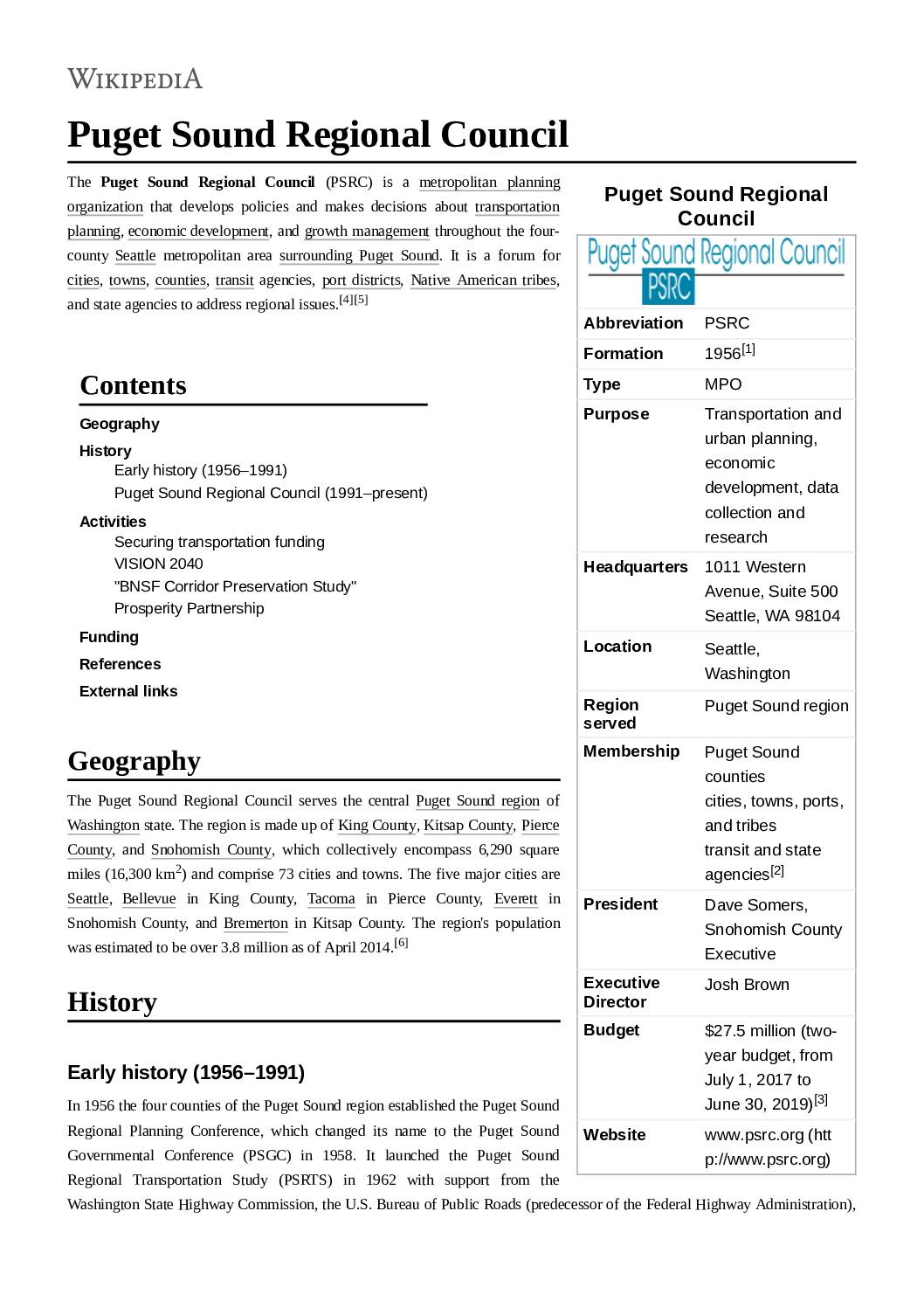
Puget Sound Regional Council
The Puget Sound Regional Council (PSRC) is a metropolitan planning organization founded in 1956 that oversees transportation planning, economic development, and growth management across King, Kitsap, Pierce, and Snohomish counties in the greater Seattle area. It serves as a collaborative forum for cities, counties, transit agencies, port districts, and tribal governments to address regional infrastructure and land-use issues. The PSRC maintains a regional Transportation Improvement Program and develops long-range strategies, such as VISION 2040, to guide the area's growth as its population approaches 5 million. -
 2022-09-01
Guidance for plan amendment and capacity investment decisions
This appendix from the Puget Sound Regional Council's long-range transportation plan, Destination 2030, outlines the process for amending the plan and making major capacity investment decisions. It explains that the plan must be reviewed every three years under federal law and every two years under Washington State law, with air quality conformity statements required when amendments are made. The document also provides guidance on evaluating transportation corridor investments, assessing benefits and costs, and classifying projects as either 'Candidate' or 'Approved' for implementation. -
 2022-09-01
Regional high occupancy vehicle system policies
This document outlines regional policies for High Occupancy Vehicle (HOV) lanes in the central Puget Sound region, covering rules for lane operation, enforcement, and public education. It establishes that HOV lanes should be reserved 24 hours a day, seven days a week for buses, carpools, and vanpools, and calls for increased fines for violations and better use of technology to improve compliance. The policies were developed by the Regional HOV Policy Advisory Committee in 1998-1999 and are intended to reduce traffic volumes, lower vehicle emissions, and improve overall transportation efficiency. -
 2022-09-01
Destination 2030: The metropolitan transportation system
This document describes the central Puget Sound region's Metropolitan Transportation System (MTS), a multi-modal network of roads, ferries, transit, rail, and aviation facilities serving King, Kitsap, Pierce, and Snohomish counties. It outlines how regionally significant transportation facilities and services are identified and planned in accordance with federal and state requirements, including nine categories of statewide transportation significance. The document also provides a detailed breakdown of the region's approximately 16,790 miles of roadways by county, ownership, and functional classification as of 1999.