TagPart 150(269)
-
 2002-07-01
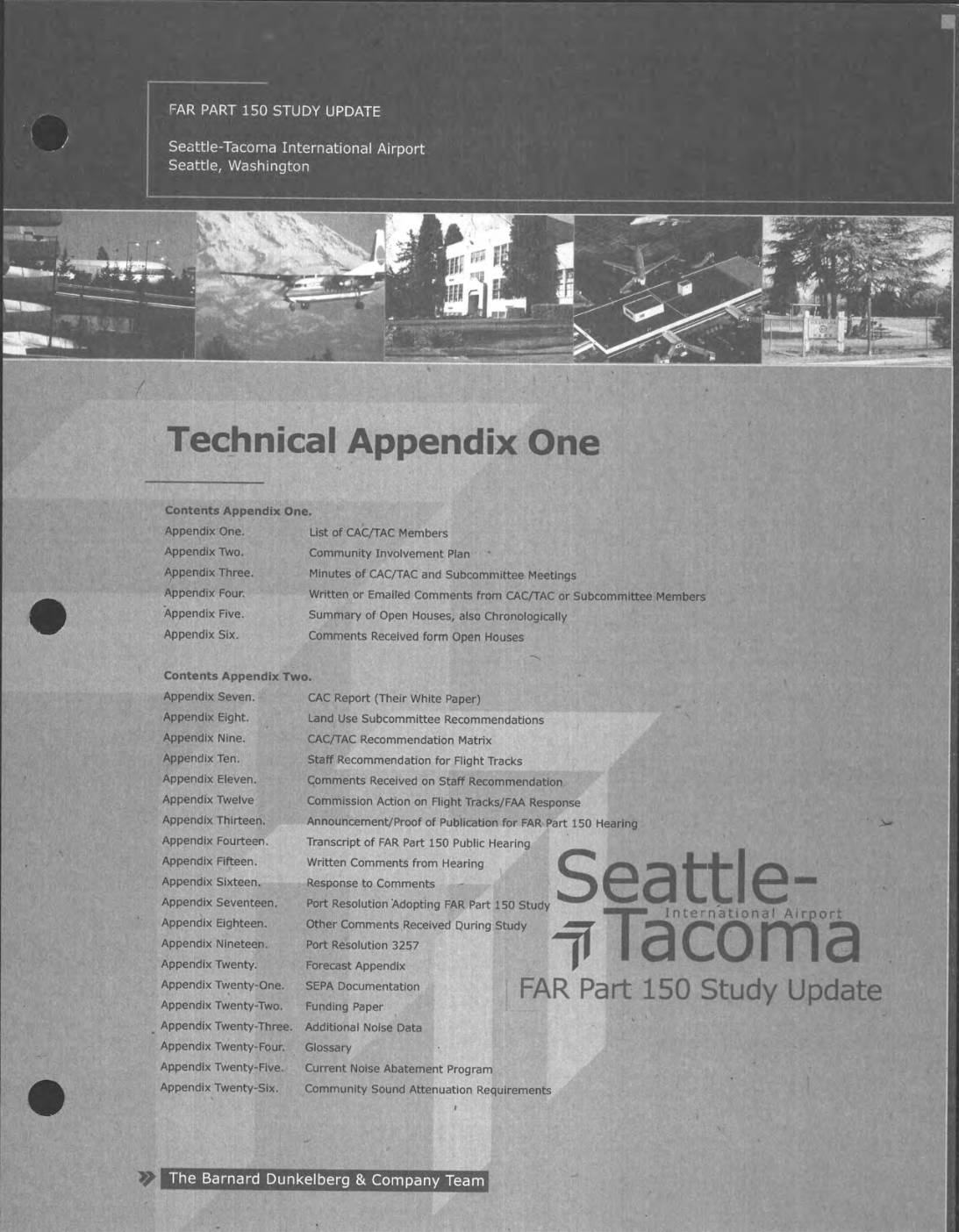
Seattle-Tacoma International Airport FAR Part 150 Study Update: Technical Appendix One (Final Report, July 2002)
This document is the Technical Appendix One of the Seattle-Tacoma International Airport FAR Part 150 Study Update Final Report, completed in July 2002. It compiles community and technical advisory committee records, public hearing transcripts, noise abatement recommendations, and land use findings gathered during the airport's noise compatibility study. The report was produced by the Barnard Dunkelberg & Company Team on behalf of the Port of Seattle's Noise Abatement Office. -
 2002-06-03
Record of approval: Federal Aviation Regulation Part 150 noise compatibility program, Seattle-Tacoma International Airport, Seattle, Washington
This document is the FAR Part 150 Noise Compatibility Program Study Update for Seattle-Tacoma International Airport (Sea-Tac), approved by the FAA in June 2002. It outlines a series of measures aimed at reducing aircraft noise, including establishing a public oversight committee, exploring noise barriers and ground run-up enclosures, and encouraging the voluntary phase-out of older, louder Stage 2 jet aircraft. The FAA approved some measures outright, while others—such as revised maintenance run-up regulations and the voluntary aircraft phase-out—were disapproved pending submission of additional supporting information. -
 2002-06-03
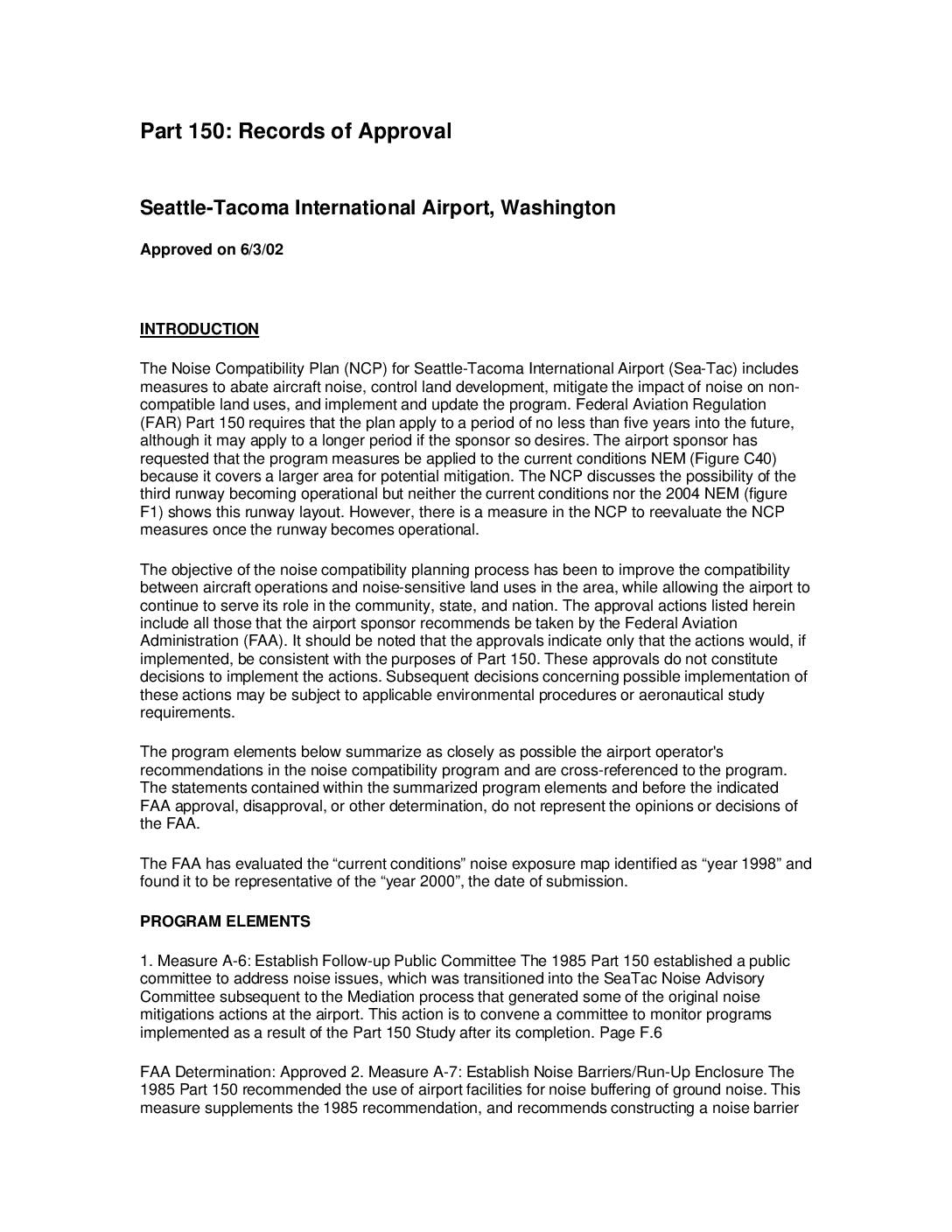
Part 150: Records of Approval — Seattle-Tacoma International Airport, Washington
This document outlines the FAA's approval decisions on the Noise Compatibility Plan (NCP) for Seattle-Tacoma International Airport (Sea-Tac), as reviewed in June 2002. It covers a range of proposed measures to reduce aircraft noise, including public oversight committees, noise barriers, runway use preferences, and a Fly Quiet Program, with some measures approved, others partially approved, and several disapproved pending additional information. The plan aims to balance noise reduction for surrounding communities with the safe and efficient operation of the airport. -
 2002-05-16
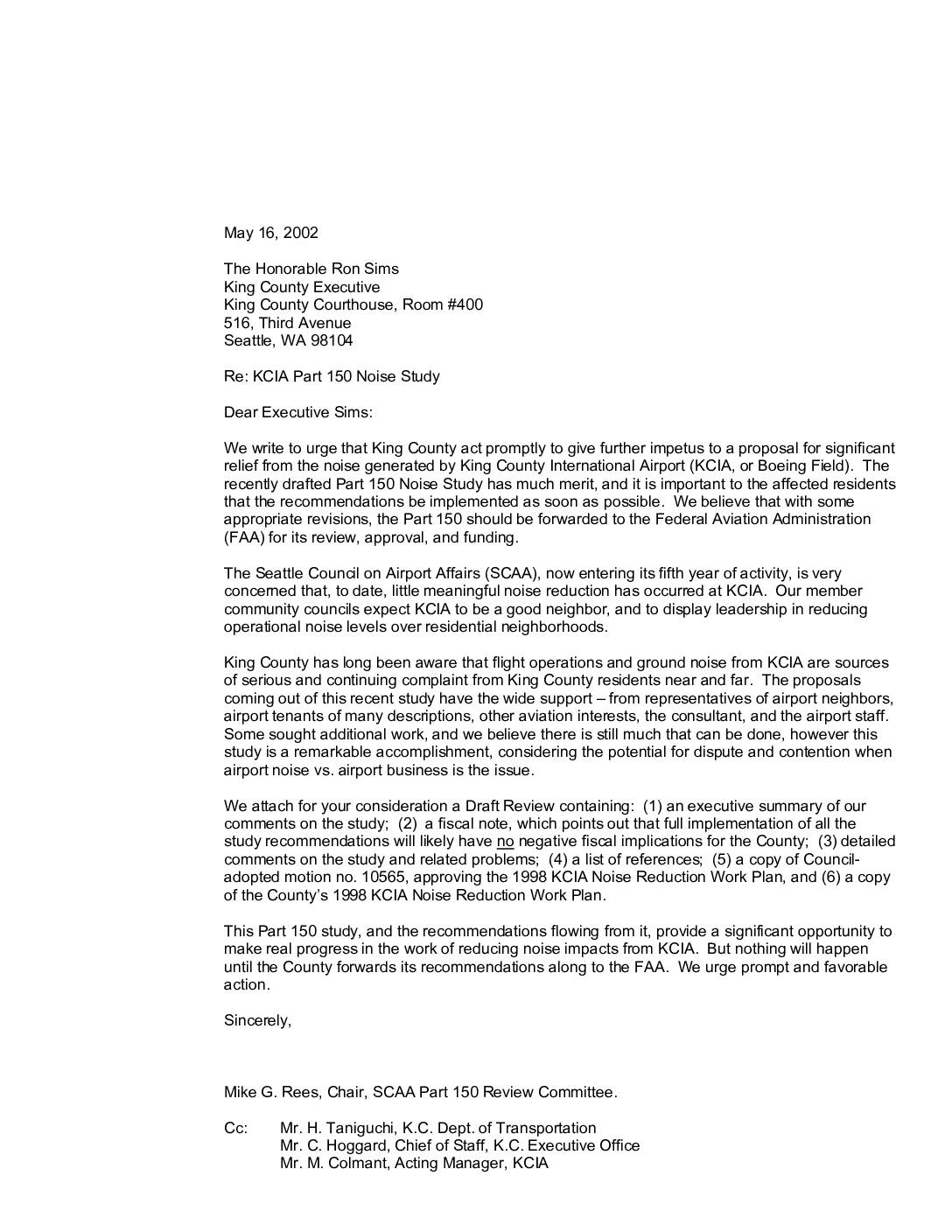
SCAA draft comments to the King County International Airport proposed Part 150 noise study
In May 2002, the Seattle Council on Airport Affairs (SCAA) urged King County Executive Ron Sims to advance the King County International Airport (Boeing Field) Part 150 Noise Study to the FAA for review, approval, and federal funding. The letter highlights years of unresolved noise complaints from nearby residents and outlines a draft review covering fiscal impacts, detailed comments, and prior noise reduction plans. The SCAA emphasized that implementing the study's recommendations would likely carry no negative fiscal implications for the county, but that progress depended on the county promptly forwarding its proposals to the FAA. -
 2002-02-12
Resolution No. 3482: Authorizing Port staff to implement Section 3: Land Use Alternatives: (3) Mobile Homes prior to final FAA approval of the FAR Part 150 Study Update
Resolution No. 3482, adopted by the Port of Seattle Commission on February 12, 2002, authorized the acquisition of two mobile home parks in Burien — Burien Gardens and Flora Vista — located within the 70 DNL aircraft noise contour near Seattle-Tacoma International Airport. Because noise-insulating mobile homes is not cost-effective, the resolution directed Port staff to develop a plan for purchasing both properties and relocating their approximately 102 tenants in accordance with federal guidelines. The resolution amended an earlier measure (Resolution No. 3443) and allowed the Port to proceed before receiving final FAA approval of the FAR Part 150 Study Update. -
 2002-01-01
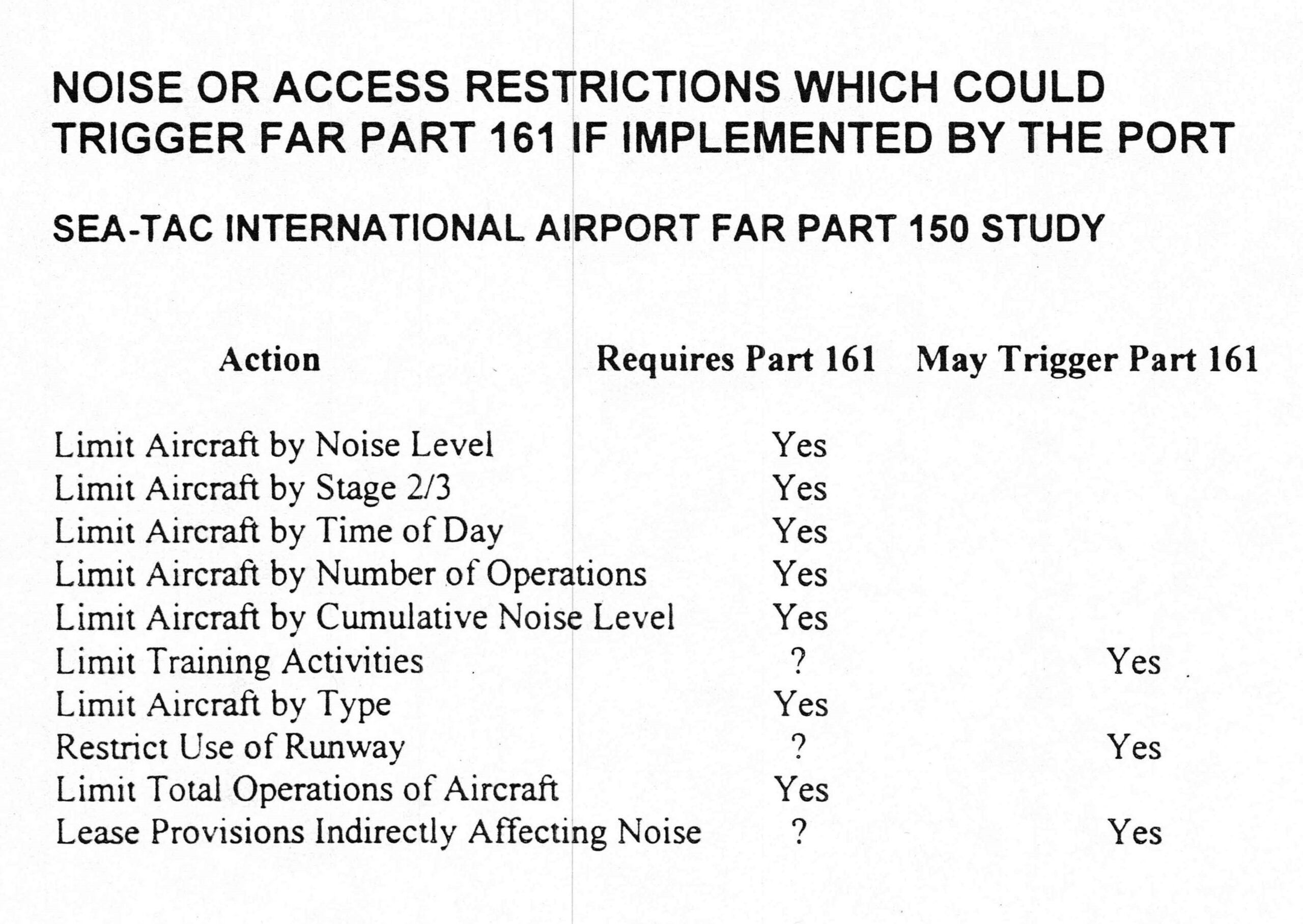
FAR Part 150 Study Table: Airport Noise Restrictions and FAR Part 161 Compliance Requirements
A table from the Sea-Tac International Airport FAR Part 150 Study listing airport actions (such as limiting aircraft by noise level, time of day, type, and runway use) and indicating whether each action definitively requires FAR Part 161 compliance or may potentially trigger it. Actions including limiting training activities, restricting runway use, and lease provisions indirectly affecting noise are marked with '?' under 'Requires Part 161' but 'Yes' under 'May Trigger Part 161.' -
 2000-11-14
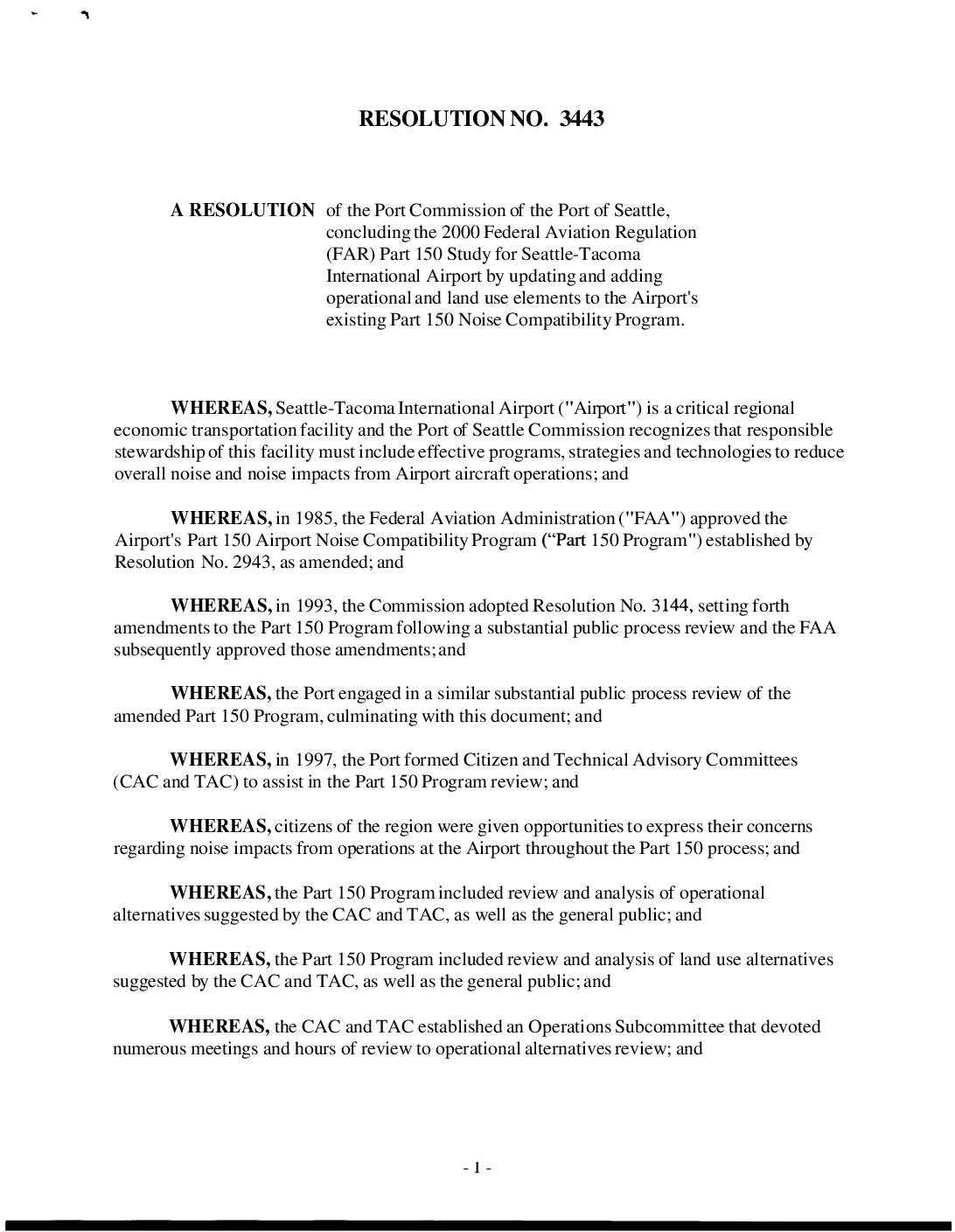
Resolution No. 3443: Concluding the 2000 FAR Part 150 Study for Seattle-Tacoma International Airport
Resolution No. 3443 is a Port of Seattle Commission decision that updates the Seattle-Tacoma International Airport's Noise Compatibility Program following a multi-year public review process. It adopts a range of measures to reduce aircraft noise impacts on surrounding communities, including restrictions on nighttime engine maintenance run-ups, exploration of a Ground Run-up Enclosure, noise barriers, and preferential nighttime runway use. The resolution also directs Port staff to submit these changes to the FAA for approval and to begin implementation once approved. -
 2000-04-13
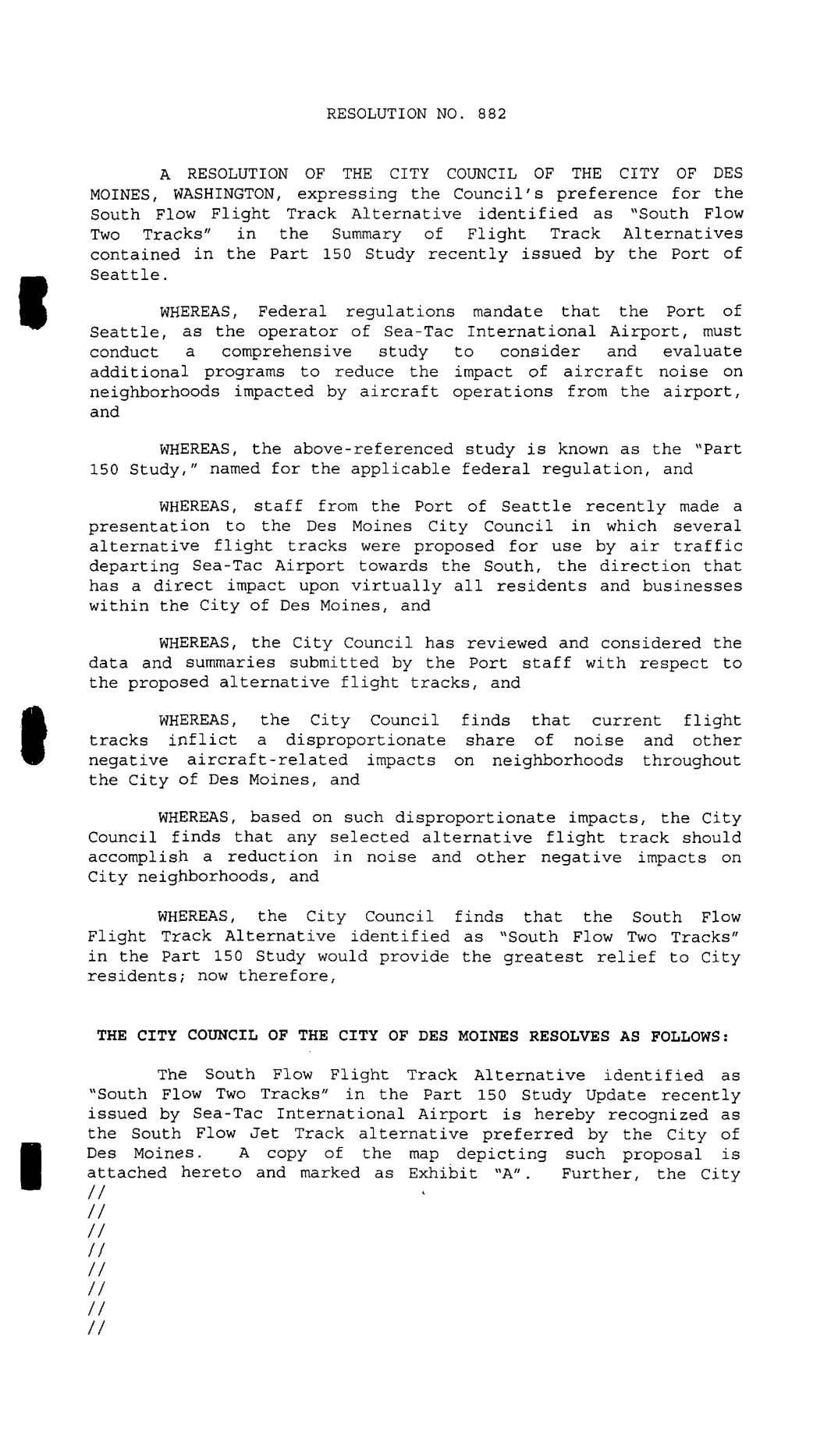
Resolution No. 882: Expressing the Council’s preference for the South Flow Two Tracks flight track alternative
In April 2000, the Des Moines, Washington City Council adopted Resolution No. 882, formally expressing its preference for the 'South Flow Two Tracks' flight path alternative proposed in the Port of Seattle's Part 150 Study. The Council found that existing flight tracks placed a disproportionate share of aircraft noise on Des Moines residents and businesses, and determined that the two-track alternative would provide the greatest noise relief. The City Manager was directed to submit the resolution to the Port of Seattle as the city's official position on southbound departure routes from Sea-Tac International Airport. -
 1999-12-07
Use restrictions and noise study at Bradley International Airport
99-R-1271 USE RESTRICTIONS AND NOISE STUDY AT BRADLEY INTERNATIONAL AIRPORT By: James J. Fazzalaro, Principal Analyst You asked what authority the Department of Transportation (DOT) has to restrict the use of Bradley International Airport through means such as a late night curfew in order to reduce the negative effects the noise of these aircraft may -
 1998-11-18
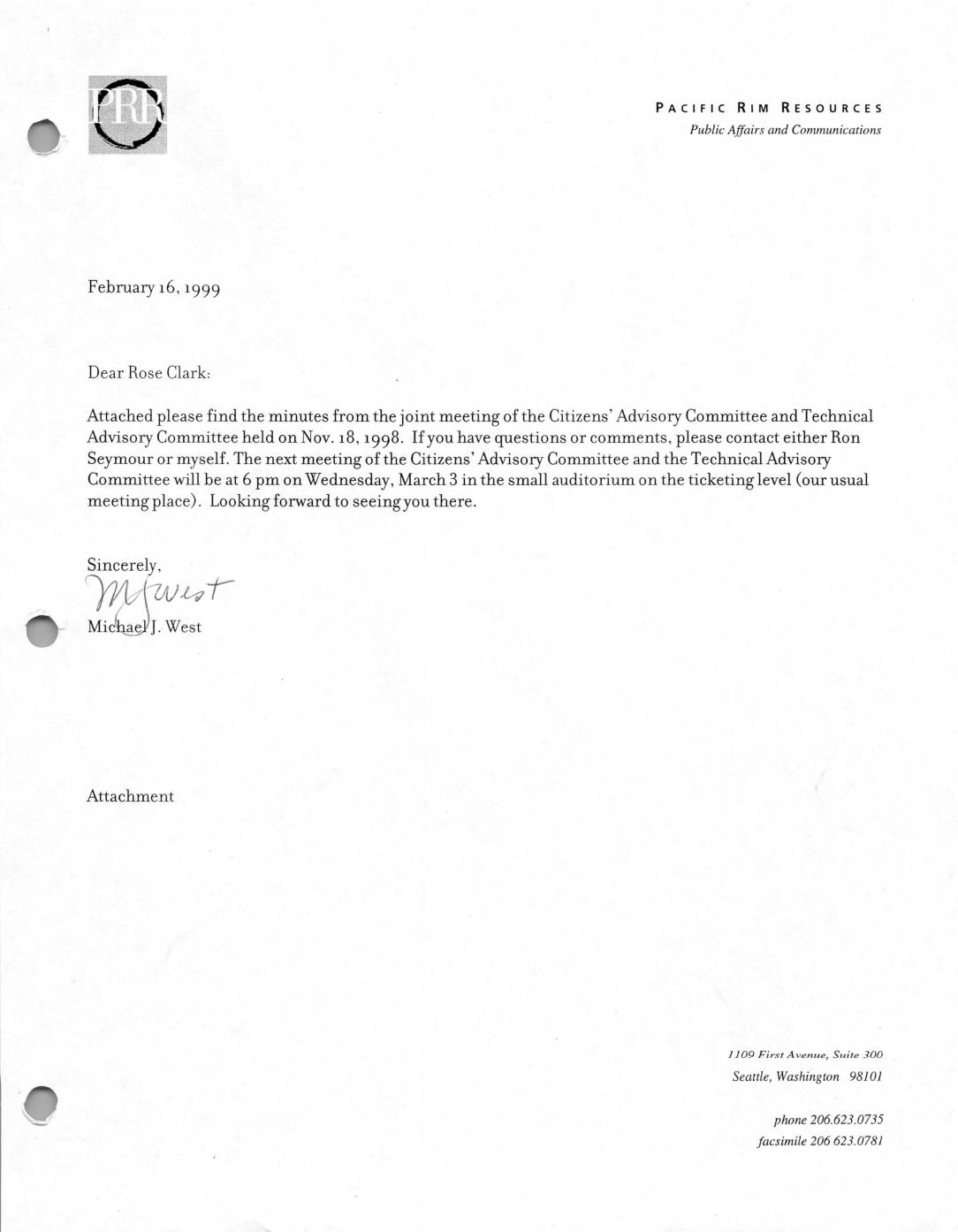
Sea-Tac Part 150 Noise Study: Minutes of the Joint Meeting of the Citizens’ Advisory Committee and Technical Advisory Committee, November 18, 1998
These are the minutes from a November 18, 1998 joint meeting of the Citizens' Advisory Committee and Technical Advisory Committee for the Sea-Tac Airport Part 150 Noise Study, held at Sea-Tac International Airport. The meeting covered the presentation of a preliminary noise contour map, updates on subcommittee activities related to airport operations and noise data analysis, and announcements about upcoming public events. Key discussion topics included run-ups, adherence to flight tracks, Fly Quiet programs, and how noise data would be measured and presented to the public.