Tagnon-aviation transportation(43)
-
 2023-08-14
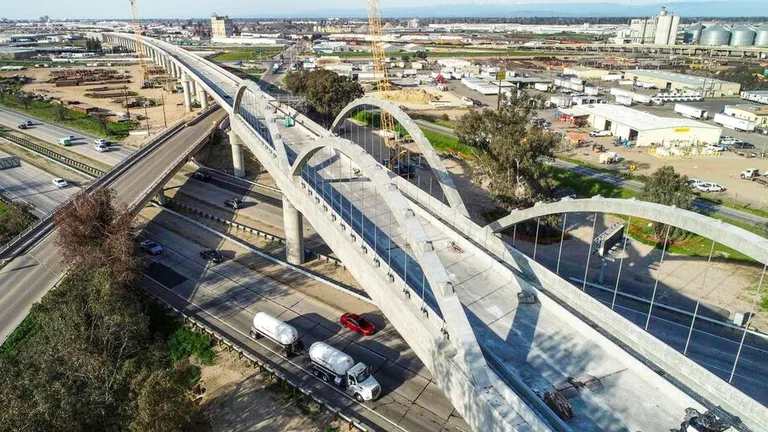
California High-Speed Rail Project Construction in Fresno
Aerial photograph showing a modern concrete arch bridge spanning over multiple highway lanes and transportation infrastructure. The image captures the intersection of major roadways with industrial and commercial development visible in the background. -
 2023-03-15
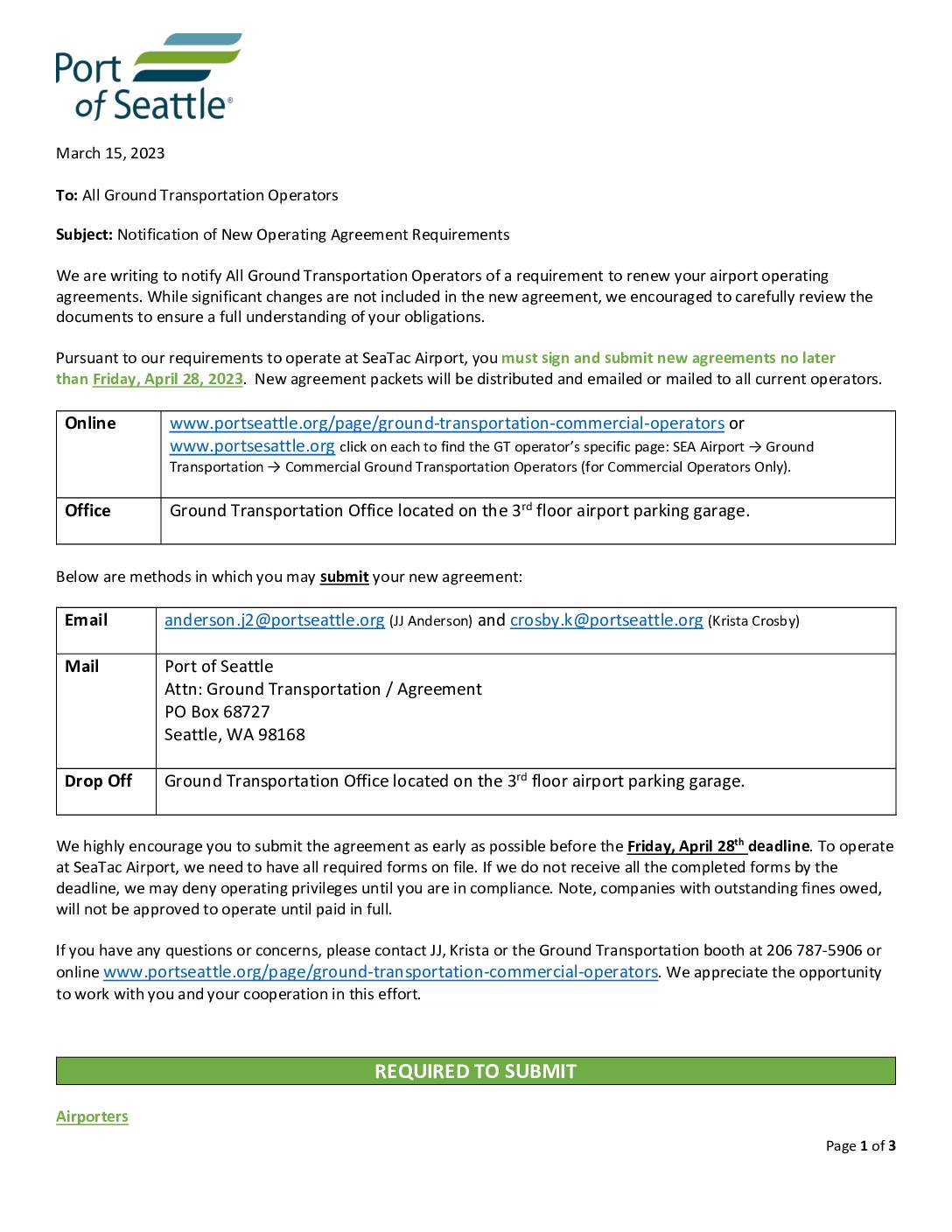
Notification of new operating agreement requirements
The Port of Seattle issued a March 2023 notice requiring all ground transportation operators at Seattle-Tacoma International Airport to sign and submit renewed operating agreements by April 28, 2023. Operators can submit agreements by email, mail, or in person at the Ground Transportation Office on the third floor of the airport parking garage. Required documents vary by operator type—such as airporters, charter buses, crew vans, and limousines—but generally include a signed agreement, proof of insurance, vehicle registrations, and a company information form. -
 2022-11-16
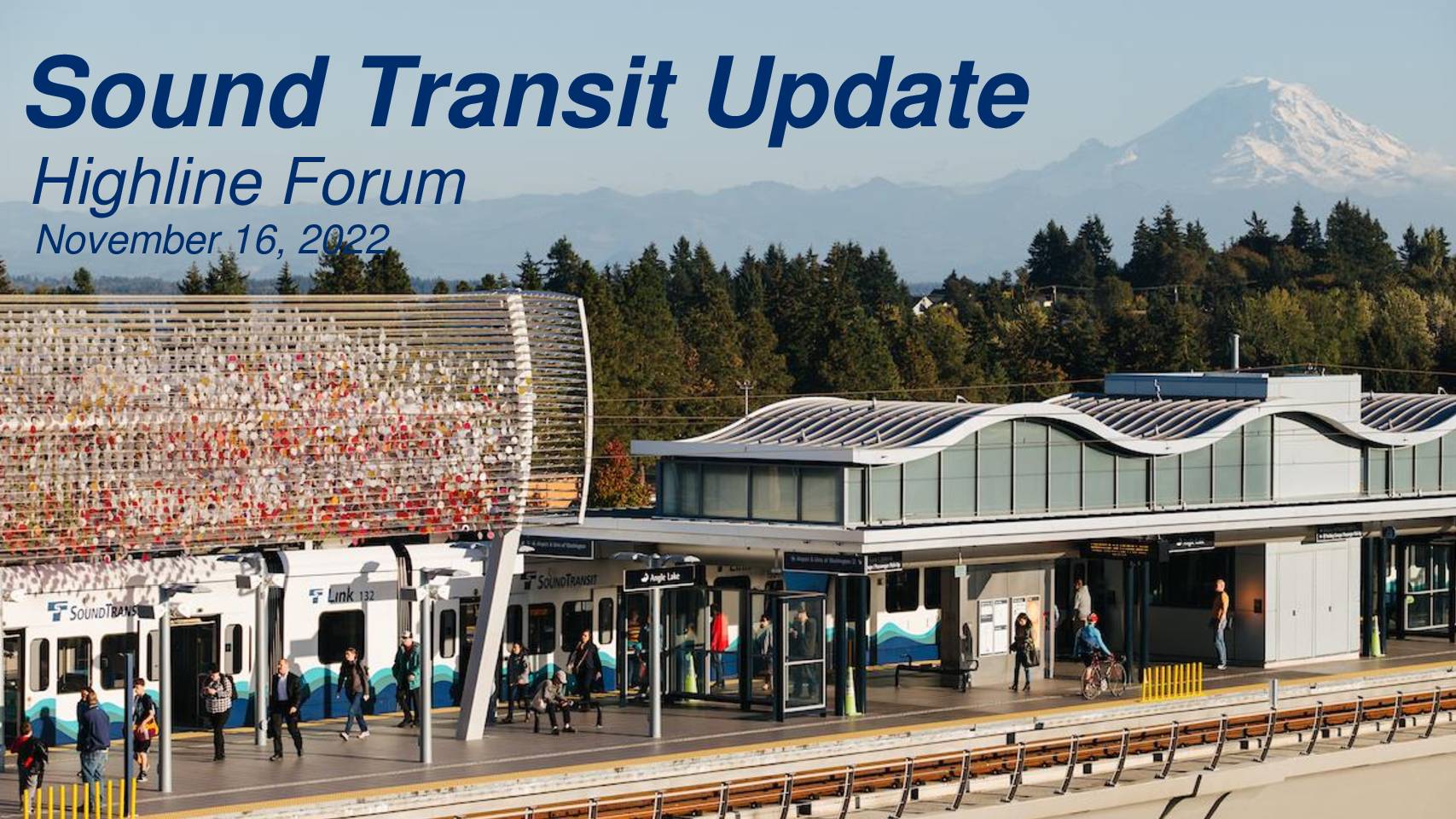
Sound Transit update: Highline Forum
A November 2022 Sound Transit presentation to the Highline Forum outlines planned transit expansions in South King County, including the Federal Way Link Extension (SeaTac to Federal Way), the Tacoma Dome Link Extension, and the Stride S1 bus rapid transit route connecting Burien to Bellevue via Tukwila. The update also introduces new CEO Julie Timm and highlights additional improvements such as a new S Boeing Access Road Station, Sounder parking upgrades, and track and platform enhancements. While focused on regional transit growth, the projects have direct relevance to communities near Sea-Tac Airport affected by transportation and land-use planning. -
EVs Start With a Bigger Carbon Footprint. But That Doesn’t Last.
Oct. 20, 2022 at 4:25 pm Updated Oct. 26, 2022 at 5:59 pm 1 of 3 | Studies have found that although the production of a battery electric vehicle causes more pollution than a gasoline-powered counterpart, that greenhouse gas emission difference is erased as the vehicle is driven. (Matt Williams / The New York Times) -
Fewer drivers in Seattle’s Highway 99 tunnel could create need for bailout
1 of 2 | Downtown Seattle looms behind the south portal of the Highway 99 tunnel, which isn’t generating enough toll income to pay for maintenance and $200 million in construction debt. (Ken Lambert / The Seattle Times) By Mike Lindblom Seattle Times staff reporter Washington state’s new Highway 99 tunnel lost so much traffic because -
 2022-09-01
Regional high occupancy vehicle system policies
This document outlines regional policies for High Occupancy Vehicle (HOV) lanes in the central Puget Sound region, covering rules for lane operation, enforcement, and public education. It establishes that HOV lanes should be reserved 24 hours a day, seven days a week for buses, carpools, and vanpools, and calls for increased fines for violations and better use of technology to improve compliance. The policies were developed by the Regional HOV Policy Advisory Committee in 1998-1999 and are intended to reduce traffic volumes, lower vehicle emissions, and improve overall transportation efficiency. -
 2022-09-01
Destination 2030: The metropolitan transportation system
This document describes the central Puget Sound region's Metropolitan Transportation System (MTS), a multi-modal network of roads, ferries, transit, rail, and aviation facilities serving King, Kitsap, Pierce, and Snohomish counties. It outlines how regionally significant transportation facilities and services are identified and planned in accordance with federal and state requirements, including nine categories of statewide transportation significance. The document also provides a detailed breakdown of the region's approximately 16,790 miles of roadways by county, ownership, and functional classification as of 1999. -
 2022-09-01
Destination 2030 glossary of terms
This document is a glossary of transportation planning terms from the Puget Sound Regional Council's long-range transportation plan, Destination 2030. It defines key concepts such as accessibility, congestion management, transit services, and land use strategies used to guide regional transportation policy in the greater Seattle metropolitan area. While not focused specifically on airport noise policy, it does include definitions related to airport ground access and commercial aviation as part of its broader multi-modal transportation framework. -
 2022-09-01
Destination 2030: Chapter 6 – Finance
Destination 2030 is a regional transportation financial plan for the Puget Sound area that outlines funding principles and strategies for meeting local, state, and regional transportation needs through 2030. The plan acknowledges that rising infrastructure costs, insufficient public revenues, and a growing maintenance backlog require new and enhanced funding sources beyond traditional tax bases such as motor fuel and vehicle sales. It recommends use-based financing, multi-modal investment support, and the creation of a regionally managed transportation fund to better coordinate planning, prioritization, and implementation of transportation improvements. -
 2022-09-01
Destination 2030: Implementation guidance and actions
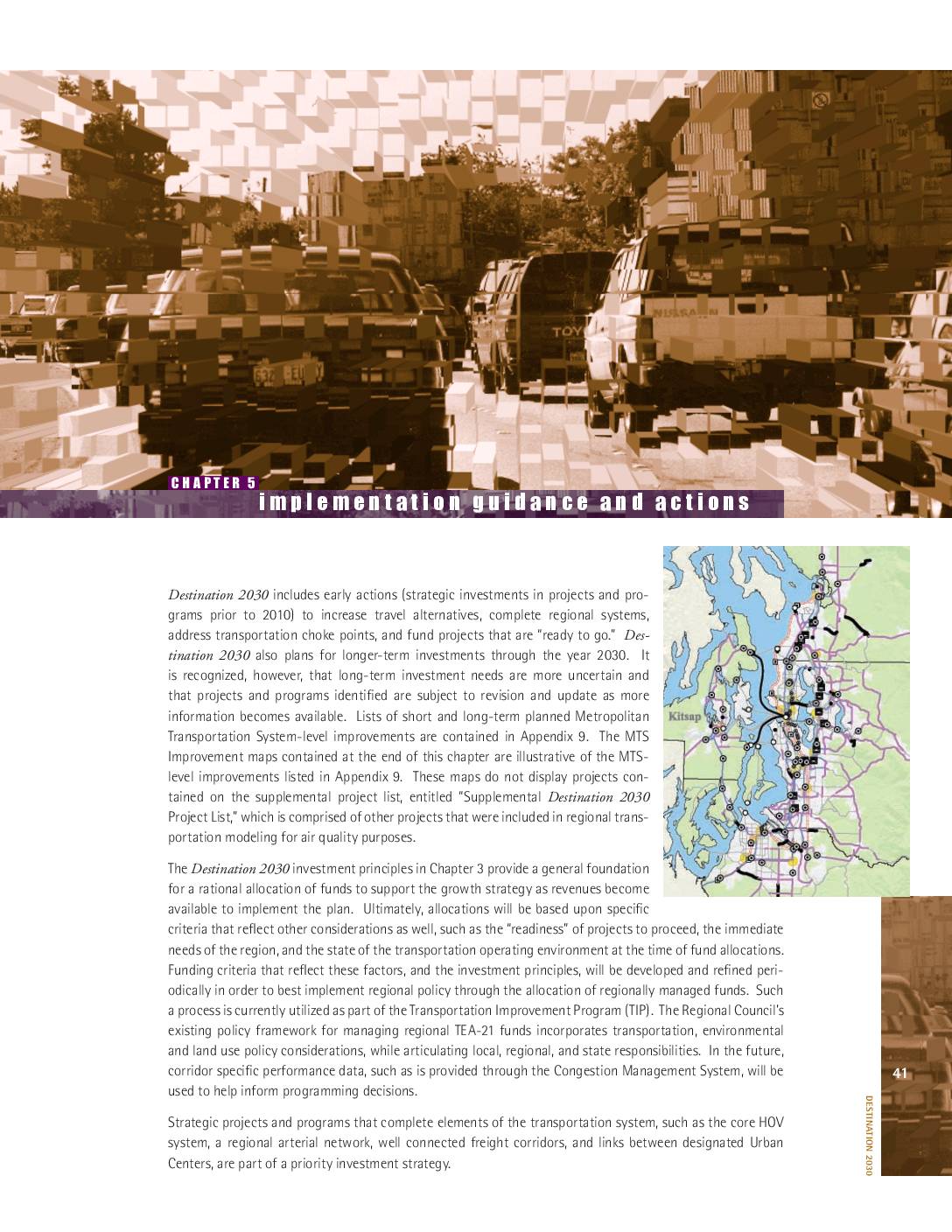
Destination 2030 is a long-term regional transportation plan for the greater Seattle area that outlines both short-term investments (prior to 2010) and longer-term improvements through 2030, focusing on roadway expansions, HOV lane completions, freight network connections, and reduced traffic congestion. The plan prioritizes safety, maintenance, and optimization of existing roads before pursuing new capacity projects, while also emphasizing travel alternatives and pedestrian and bicycle improvements. Fund allocations are guided by project readiness, regional need, and consistency with local growth management policies.