TagNEPA(390)
-
Samp NTP Final NEPA EA FAA Record of Decision and SEPA Next Steps 10 22 25 Page 14
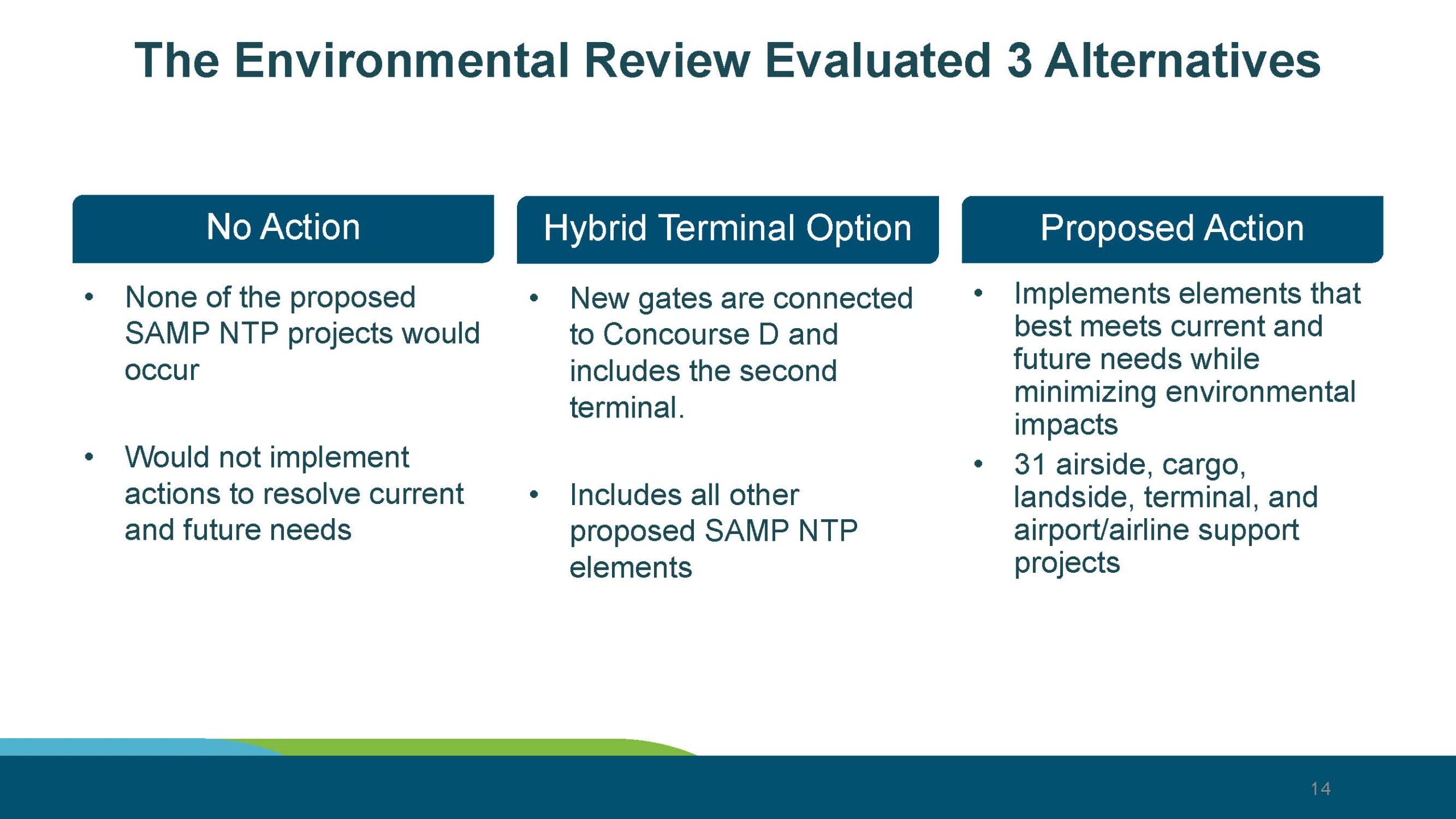
Slide 14 from a Sea-Tac Airport presentation outlining three alternatives evaluated in the environmental review for the Seattle-Tacoma International Airport Master Plan (SAMP) Near-Term Projects (NTP): No Action, Hybrid Terminal Option, and Proposed Action. The Proposed Action includes 31 airside, cargo, landside, terminal, and airport/airline support projects designed to meet current and future needs while minimizing environmental impacts. -
Samp NTP Final NEPA EA FAA Record of Decision and SEPA Next Steps 10 22 25 Page 13
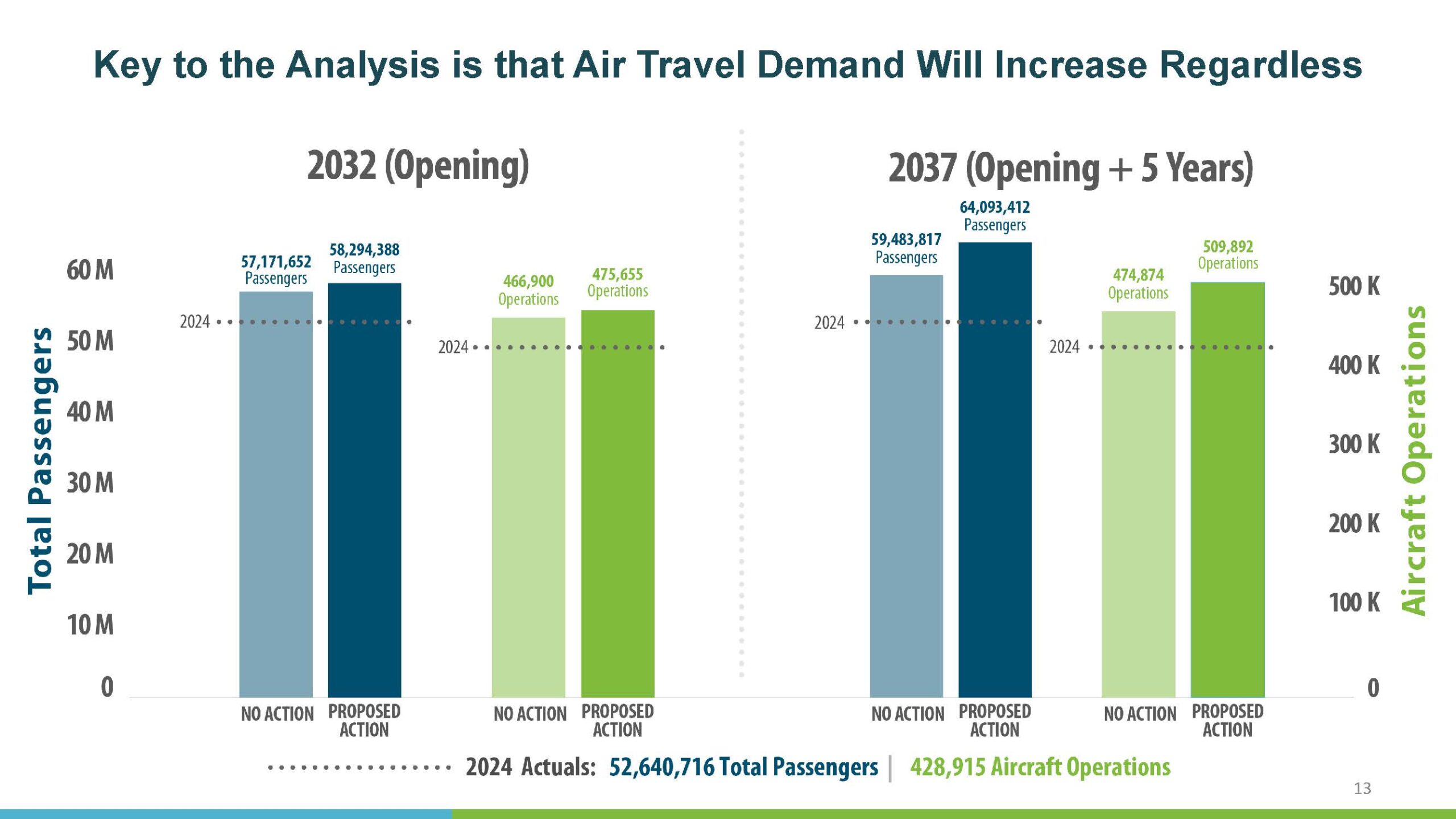
A bar chart slide projecting total passengers and aircraft operations at Seattle-Tacoma International Airport under 'No Action' and 'Proposed Action' scenarios for 2032 (opening year) and 2037 (opening plus five years). 2024 actuals are noted as 52,640,716 total passengers and 428,915 aircraft operations, with projected passengers reaching up to 64,093,412 and operations up to 509,892 by 2037 under the Proposed Action scenario. -
Samp NTP Final NEPA EA FAA Record of Decision and SEPA Next Steps 10 22 25 Page 12
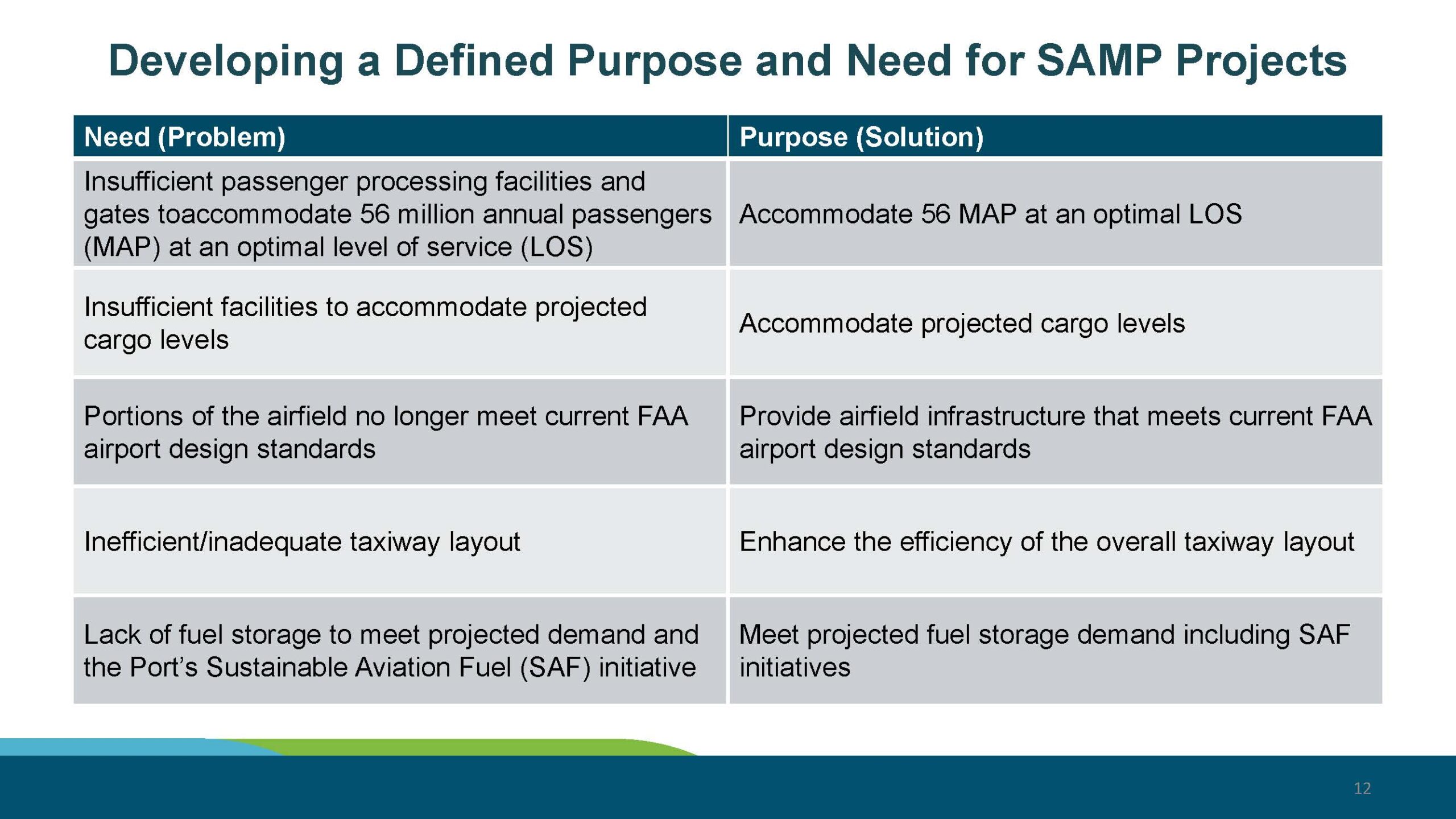
A slide from a Seattle-Tacoma International Airport Strategic Airport Master Plan (SAMP) presentation outlining five project needs and corresponding purposes, including accommodating 56 million annual passengers at optimal level of service, meeting FAA airport design standards, improving taxiway efficiency, and supporting Sustainable Aviation Fuel (SAF) initiatives. -
Samp NTP Final NEPA EA FAA Record of Decision and SEPA Next Steps 10 22 25 Page 11
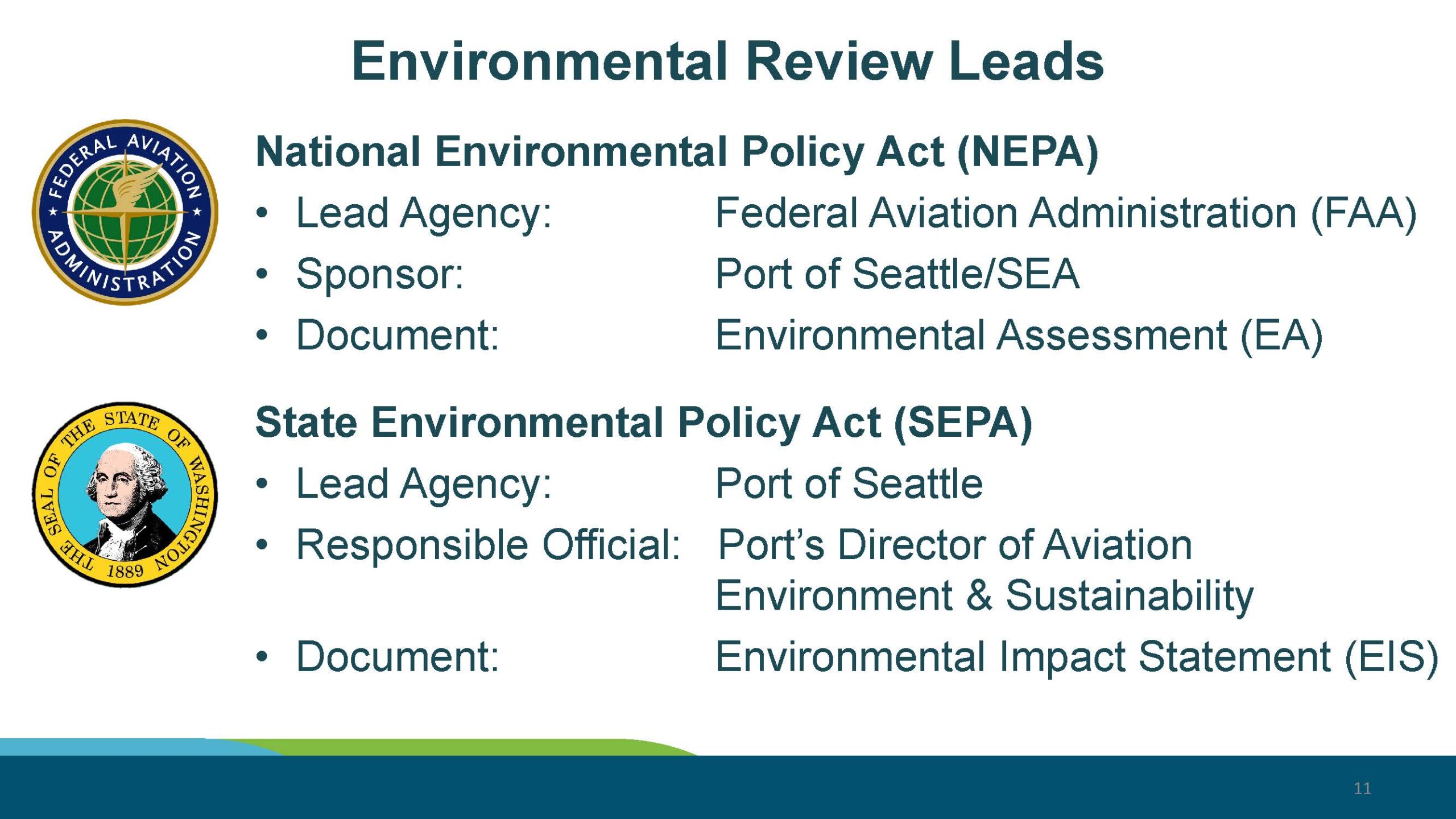
Slide 11 from a Sea-Tac Airport (SEA) environmental review presentation outlining lead agencies for both federal and state environmental review processes. Under NEPA, the FAA serves as lead agency with the Port of Seattle/SEA as sponsor, producing an Environmental Assessment (EA); under SEPA, the Port of Seattle is lead agency with its Director of Aviation Environment & Sustainability as responsible official, producing an Environmental Impact Statement (EIS). -
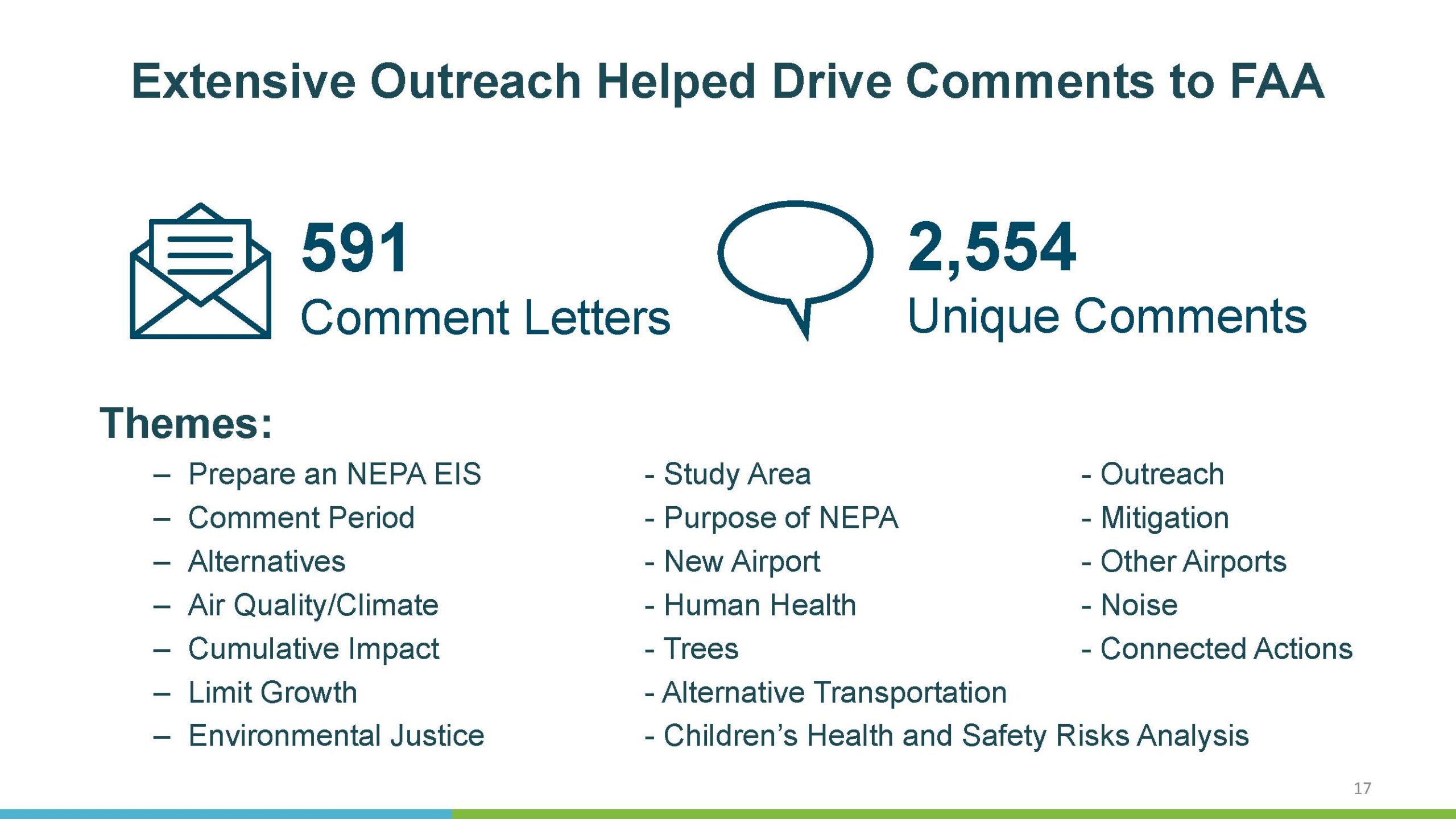
Samp NTP Final NEPA EA FAA Record of Decision and SEPA Next Steps 10 22 25 Page 17
This slide, numbered 17, reports that extensive public outreach generated 591 comment letters and 2,554 unique comments submitted to the FAA regarding Sea-Tac Airport. Comment themes included preparing a NEPA EIS, alternatives, air quality/climate, environmental justice, noise, human health, children's health and safety risks analysis, and other NEPA-related topics. -
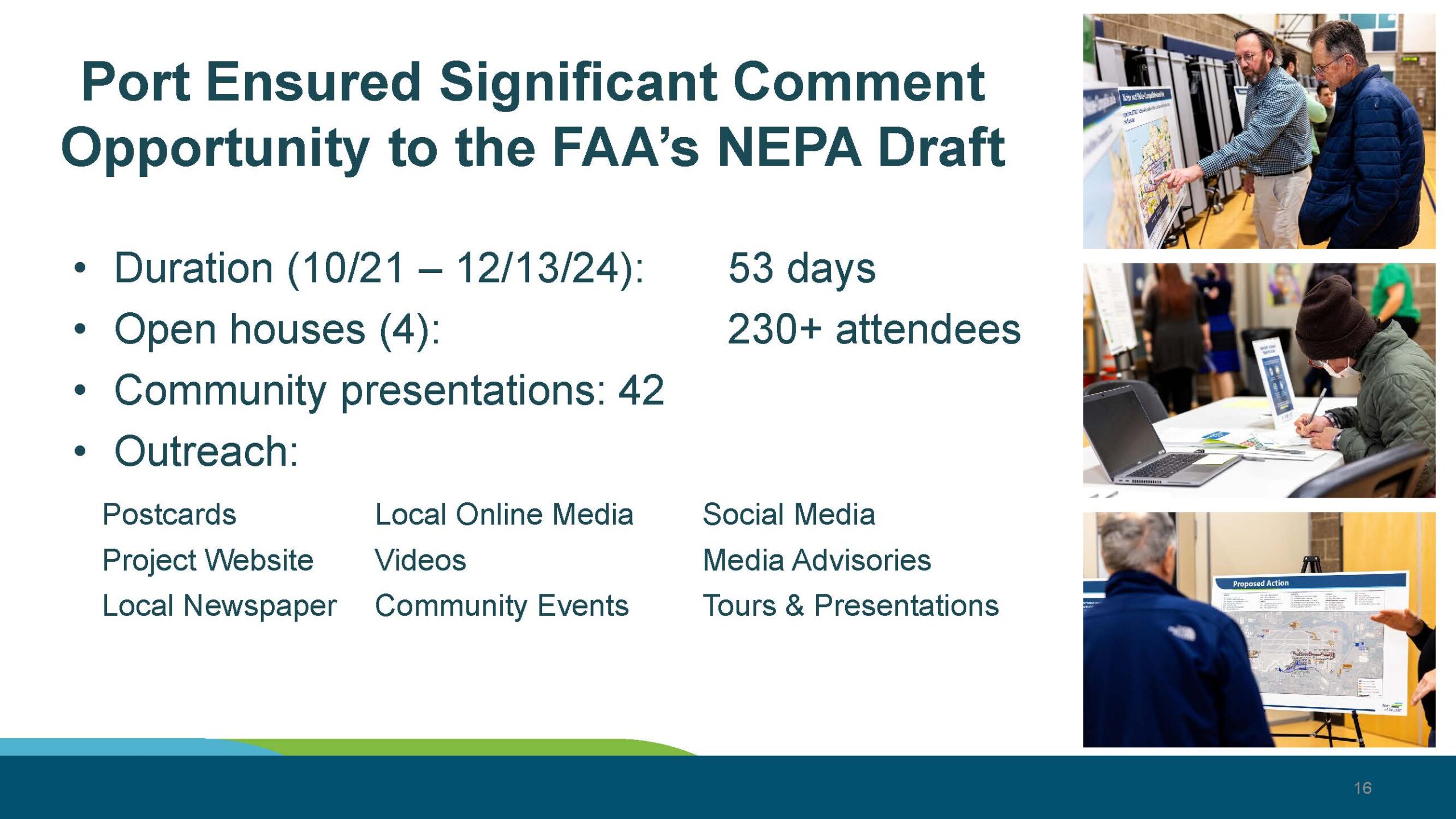
Samp NTP Final NEPA EA FAA Record of Decision and SEPA Next Steps 10 22 25 Page 16
Slide 16 from a Port of Seattle presentation documents the public comment opportunity for the FAA's NEPA Draft, covering 53 days (10/21–12/13/24), four open houses with 230+ attendees, 42 community presentations, and outreach via postcards, project website, local newspaper, online media, videos, community events, social media, media advisories, and tours. Three photos show community members reviewing display boards and materials at open house events. -
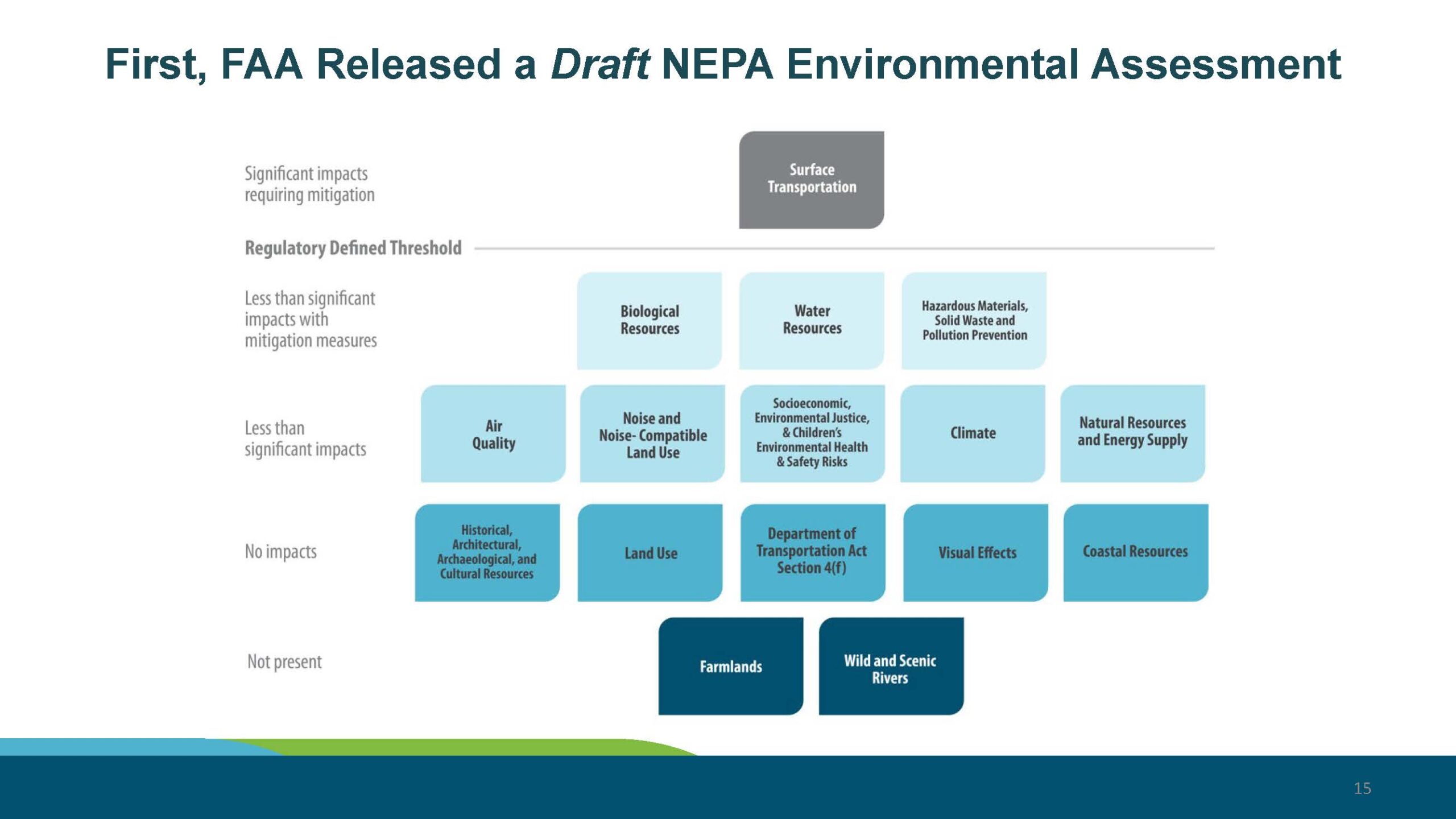
Samp NTP Final NEPA EA FAA Record of Decision and SEPA Next Steps 10 22 25 Page 15
This slide from an FAA presentation summarizes the findings of a Draft NEPA Environmental Assessment, categorizing environmental impact areas by severity level. Surface Transportation is identified as having significant impacts requiring mitigation, while categories such as Farmlands and Wild and Scenic Rivers are listed as 'not present,' and others like Air Quality and Climate fall below significant impact thresholds. -
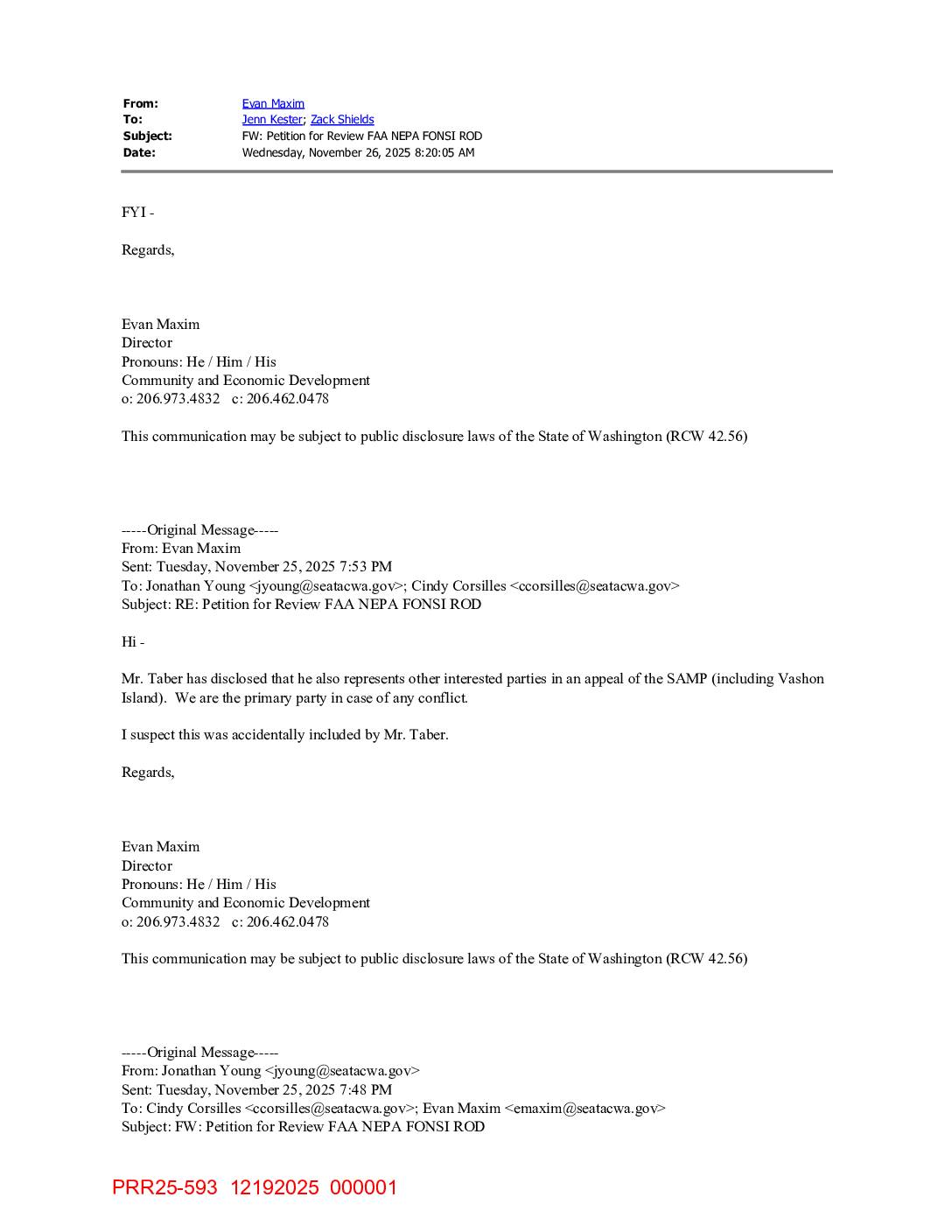 2025-11-26
Petition for Review FAA NEPA FONSI ROD email chain
City of SeaTac officials exchanged emails in November 2025 regarding a Petition for Review filed to appeal the FAA's NEPA Finding of No Significant Impact (FONSI) and Record of Decision, coordinated under an Interlocal Agreement (ILA) with the cities of Burien and Des Moines. A council member raised concern about the petition listing 'Attorneys for Vashon Island Fair Skies' rather than the three cities, to which Director Evan Maxim clarified that outside legal counsel Mr. Taber also represents other parties including Vashon Island in a related SAMP appeal, and that the reference was likely included by mistake. SeaTac is identified as the primary party in the event of any conflict of interest among the represented parties. -
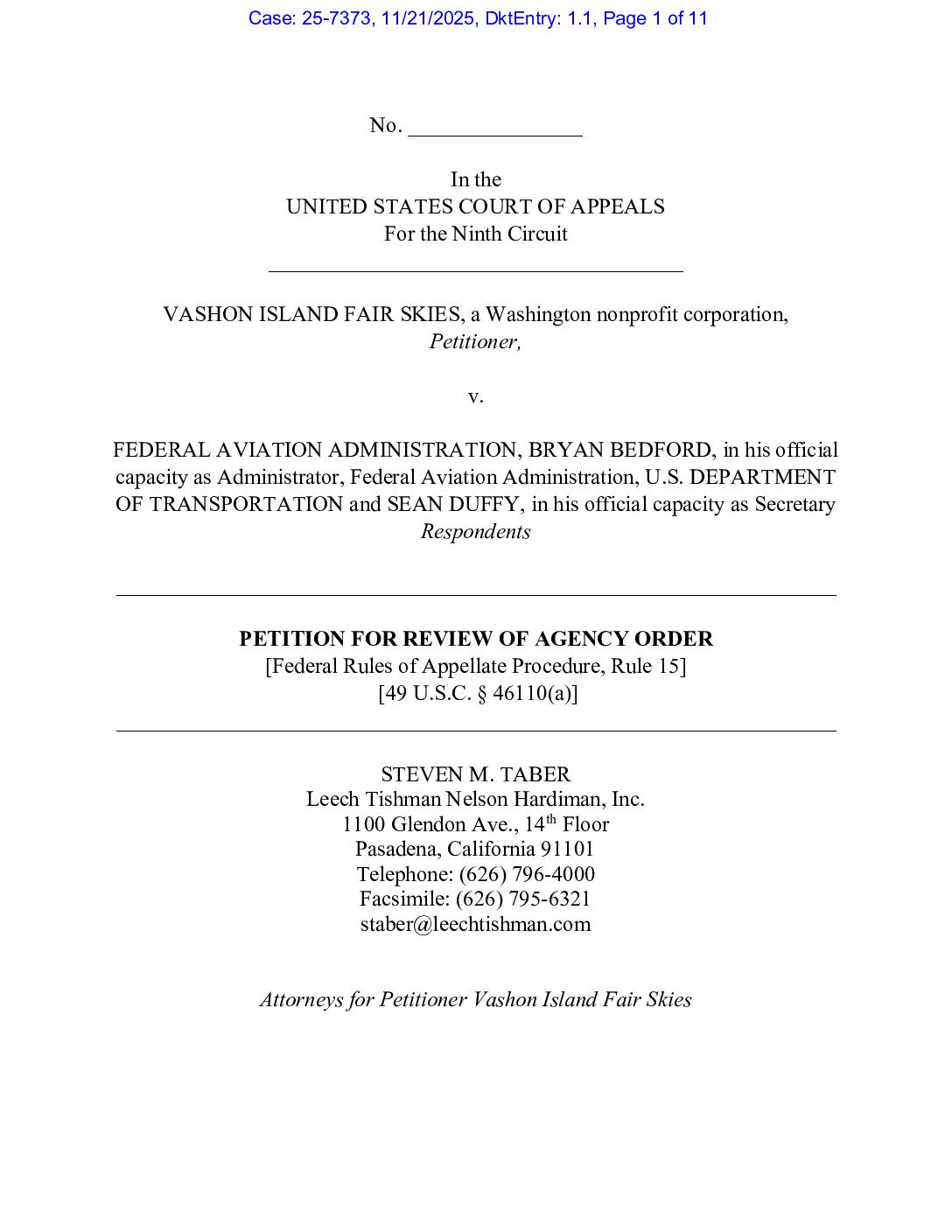 2025-11-21
Petition for Review of Agency Order: Vashon Island Fair Skies v. Federal Aviation Administration
Vashon Island Fair Skies (VIFS), a Washington nonprofit representing residents affected by aircraft noise, has filed a petition in the Ninth Circuit Court of Appeals challenging a September 2025 FAA decision approving near-term expansion projects at Seattle-Tacoma International Airport. The group argues that the FAA's environmental review failed to adequately address the significant noise impacts on Vashon and Maury Islands resulting from concentrated, low-altitude flight paths introduced under the FAA's NextGen navigation program. VIFS has been actively opposing these flight path changes since 2018, when new Performance-Based Navigation procedures began routing more aircraft directly over the islands at lower altitudes. -
 2025-11-20
Engagement Letter – Special Environmental Counsel Services: Cities of Burien, Des Moines, and Sea-Tac
In November 2025, the law firm Ogden Murphy Wallace (OMW) agreed to jointly represent the cities of Burien, Des Moines, and SeaTac as special environmental counsel in matters related to the Port of Seattle's Sustainable Airport Master Plan. The firm's scope of work covers environmental review processes under federal (NEPA) and state (SEPA) law, as well as any potential litigation against the Port of Seattle or the Federal Aviation Administration. Attorneys are billed at hourly rates ranging from $300 to $535 depending on role and experience, with no advance fee deposit required.