TagMTCA(83)
-
 2002-10-22
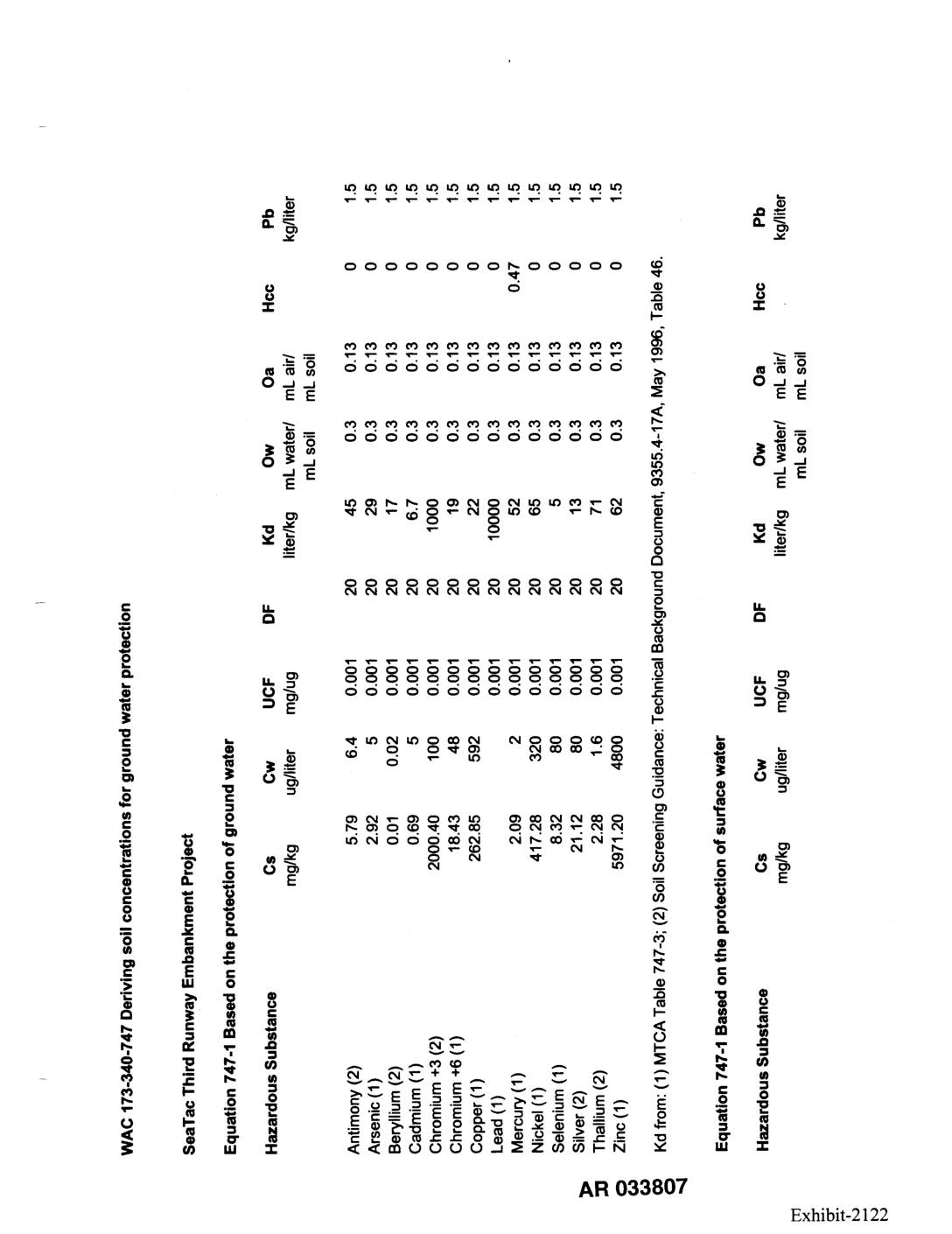
EXH AR033807: WAC 173-340-747 Deriving Soil Concentrations for Ground Water Protection — Sea-Tac Third Runway Embankment Project
Exhibit AR033807, WAC 173-340-747 soil concentration calculations for ground water and surface water protection under the Model Toxics Control Act (MTCA), SeaTac Third Runway Embankment Project. Tables derive cleanup levels for hazardous substances including antimony, arsenic, beryllium, cadmium, chromium +3, chromium +6, copper, mercury, nickel, selenium, silver, thallium, zinc, and lead using Equations 747-1 and -
 2002-10-22
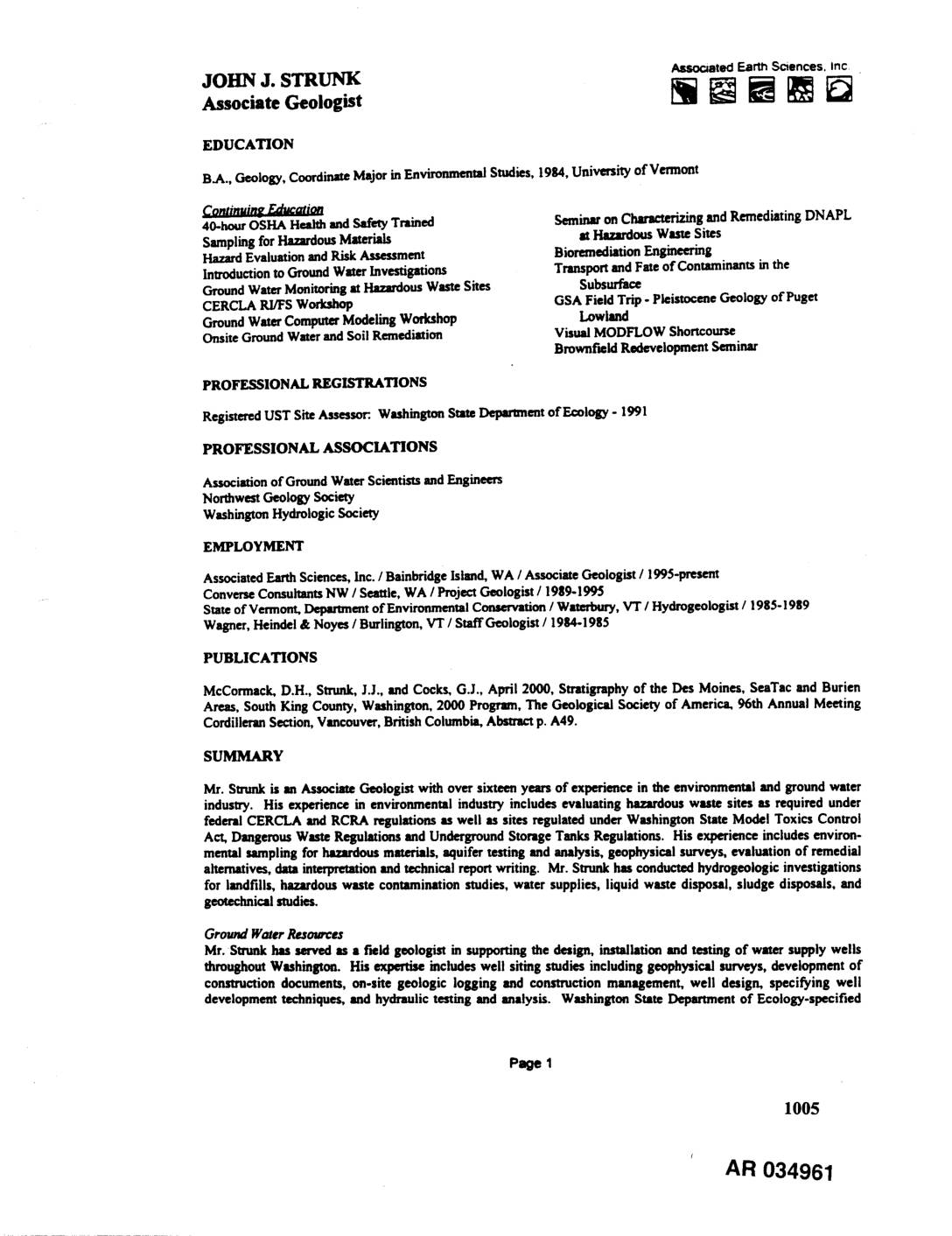
EXH AR034961: John J. Strunk, Associate Geologist — Resume, Associated Earth Sciences, Inc.
Resume of John J. Strunk, Associate Geologist at Associated Earth Sciences, Inc. (AESI), Bainbridge Island, WA. Over sixteen years of experience in environmental and ground water industry. Projects include Area-Wide Ground Water Study at Seattle-Tacoma International Airport (Sea-Tac Airport) under MTCA Agreed Order between Ecology and Port Of Seattle; Third Runway project support regarding ground -
 2002-10-20
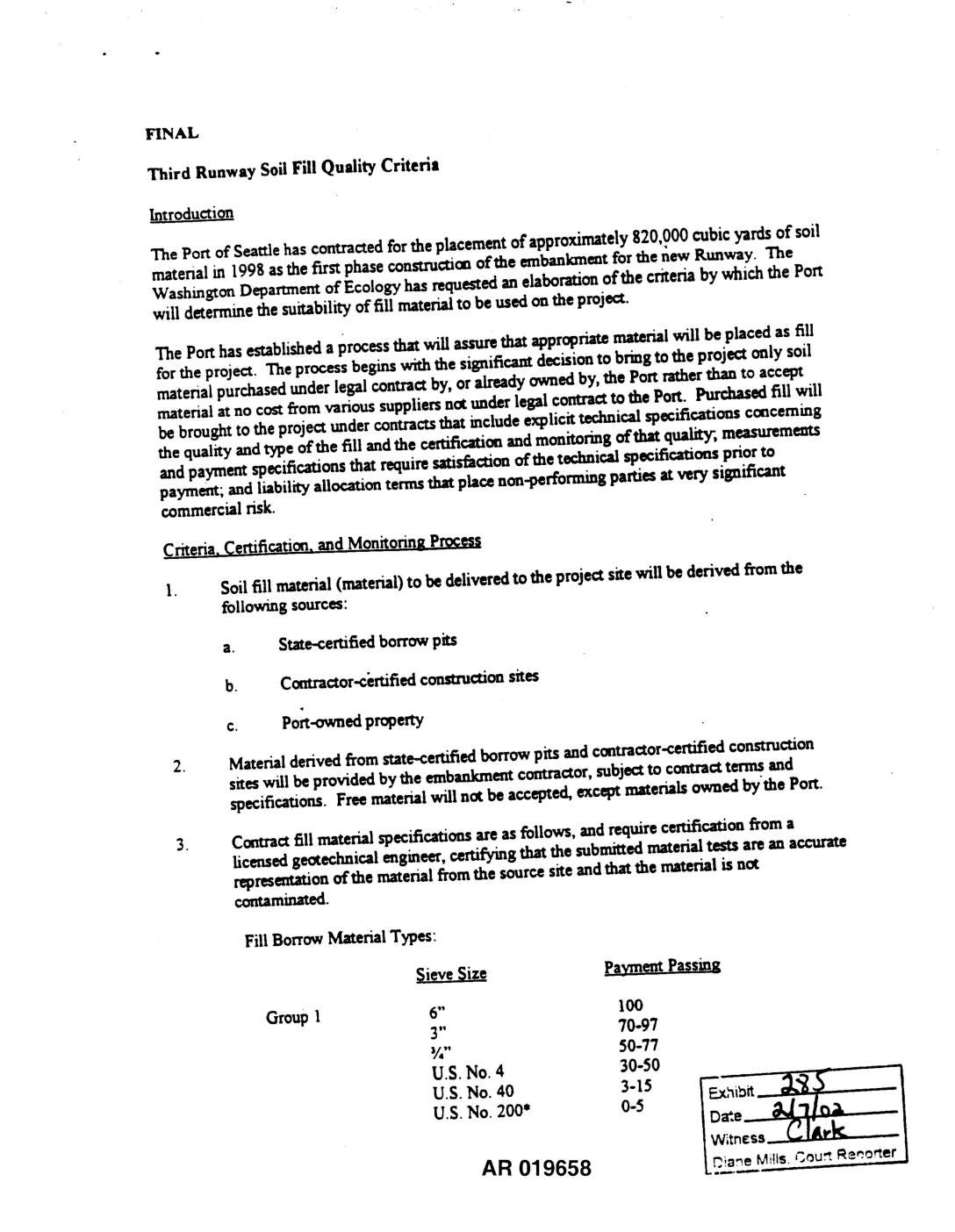
EXH AR019658: Third Runway Soil Fill Quality Criteria
This document outlines the Port of Seattle's soil fill quality criteria for the first phase of construction of a new runway embankment, involving approximately 820,000 cubic yards of material placed in 1998. It details the approved sources for fill material, technical specifications for soil gradation and contamination standards, and the certification and monitoring processes required of contractors. Independent soil technicians and Port consultants were tasked with overseeing material delivery, placement, and compliance testing throughout the project. -
 2002-10-20
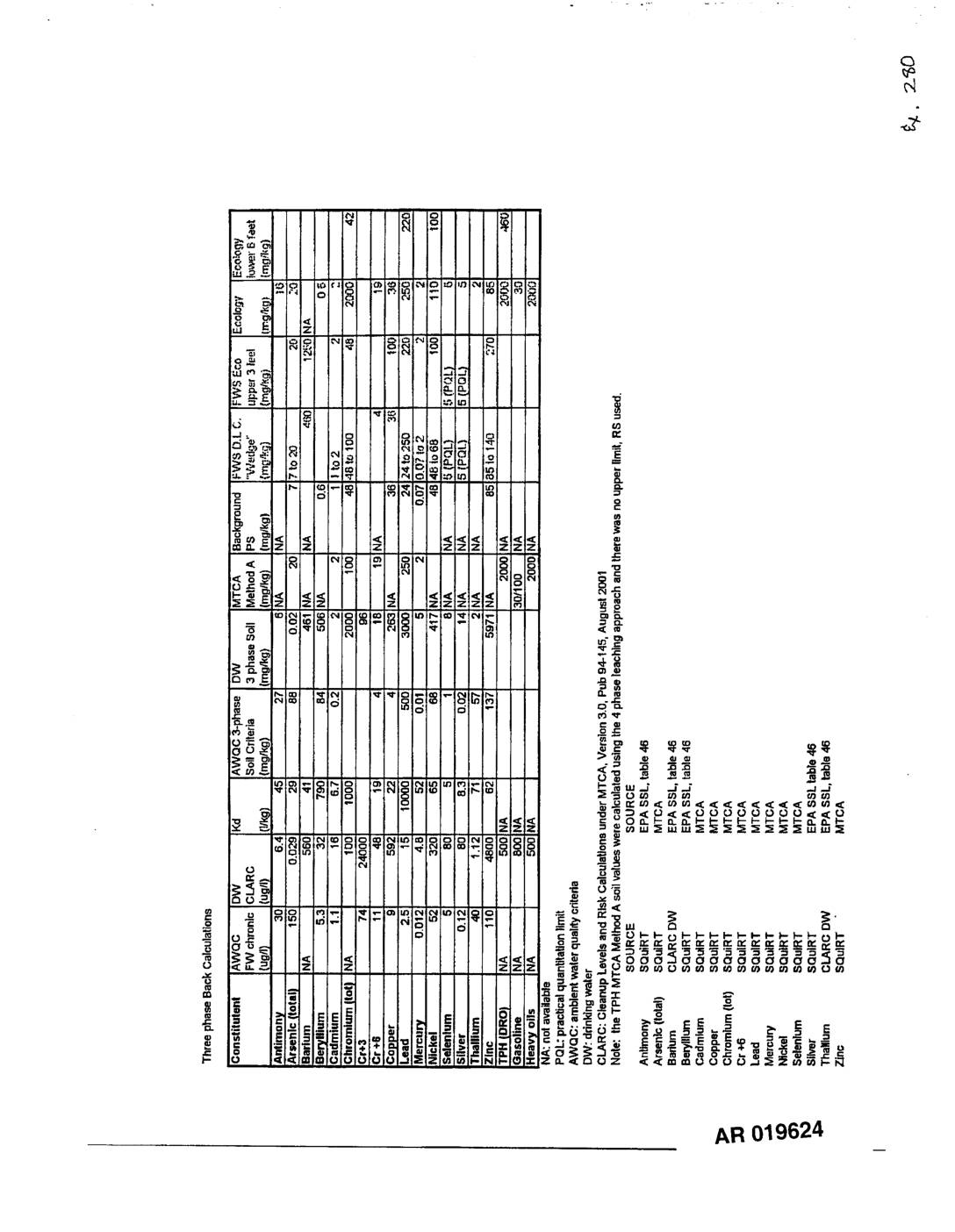
EXH AR019624: Three Phase Back Calculations Table — Soil Cleanup Levels
This document presents three-phase back calculations for soil contamination levels at a site, listing various chemical constituents including heavy metals (arsenic, cadmium, chromium, lead, mercury, zinc) and petroleum products (TPH, gasoline, heavy oils). The table compares cleanup criteria from multiple regulatory frameworks including ambient water quality criteria (AWQC), drinking water standards, Model Toxics Control Act (MTCA) methods, and Fish and Wildlife Service ecological screening levels. The calculations were used to evaluate soil remediation thresholds based on leaching potential and ecological risk, with source references including EPA and MTCA SSL tables dated August 2001. -
 2002-08-22
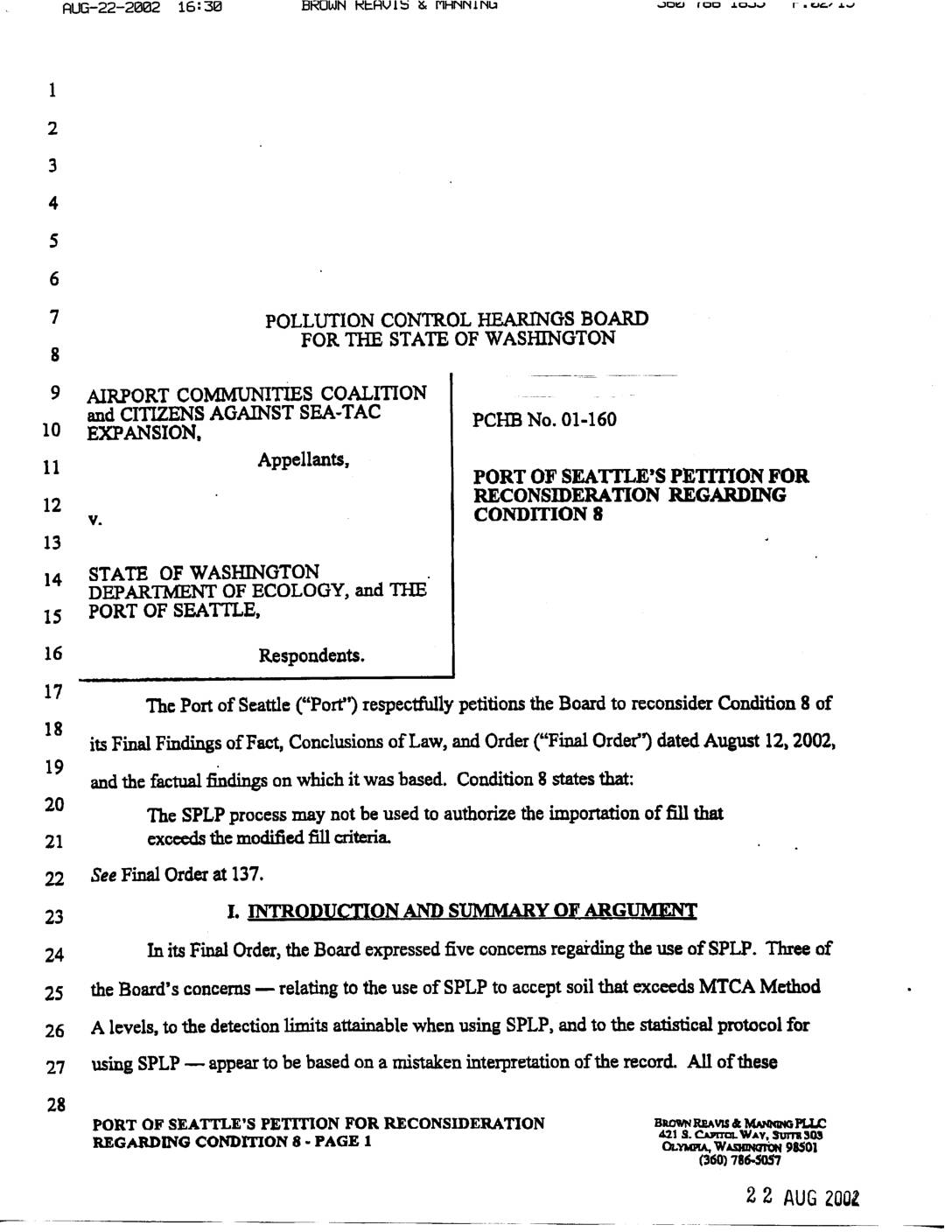
Port Of Seattle’s petition for reconsideration regarding Condition 8
The Port of Seattle filed a petition in August 2002 asking the Pollution Control Hearings Board to reconsider Condition 8 of its Final Order, which prohibited the use of a soil-testing method called SPLP (Synthetic Precipitation Leaching Procedure) to approve fill material for the Third Runway expansion project at Sea-Tac Airport. The Port argued that banning SPLP made it nearly impossible to find acceptable fill soil, since up to 78% of naturally occurring, uncontaminated soils would fail the Board's strict numeric criteria when tested across multiple constituents. The Port maintained that proper use of SPLP poses no environmental threat to water quality and requested the Board allow its use under specific conditions so the runway project could proceed. -
 2002-02-26
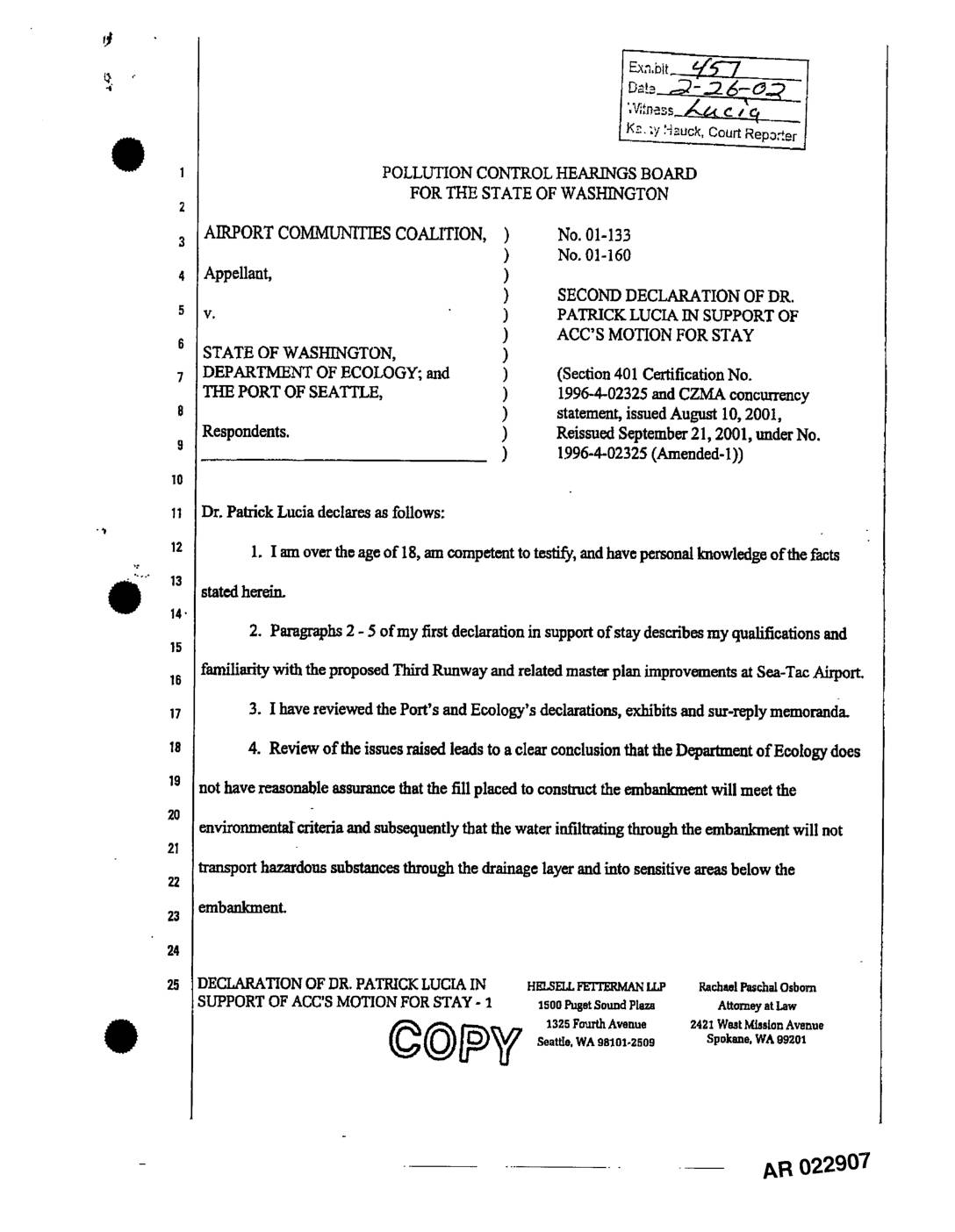
EXH 457: Second Declaration Dr. Patrick Lucia Supporting ACC Motion for Stay (PCHB Nos. 01-133, 01-160)
This legal declaration by Dr. Patrick Lucia, filed in a Washington State Pollution Control Hearings Board case, argues that the Department of Ecology lacks reasonable assurance that fill material used to construct the Sea-Tac Airport Third Runway embankment meets environmental safety standards. Dr. Lucia contends that the certification allows soil concentrations of arsenic and other metals — including cadmium, chromium, lead, mercury, and nickel — that significantly exceed Puget Sound natural background levels. He also criticizes the Port of Seattle's soil sampling approach as arbitrary and unscientific, asserting it fails to meet accepted environmental engineering standards for contaminant testing. -
 2002-02-15
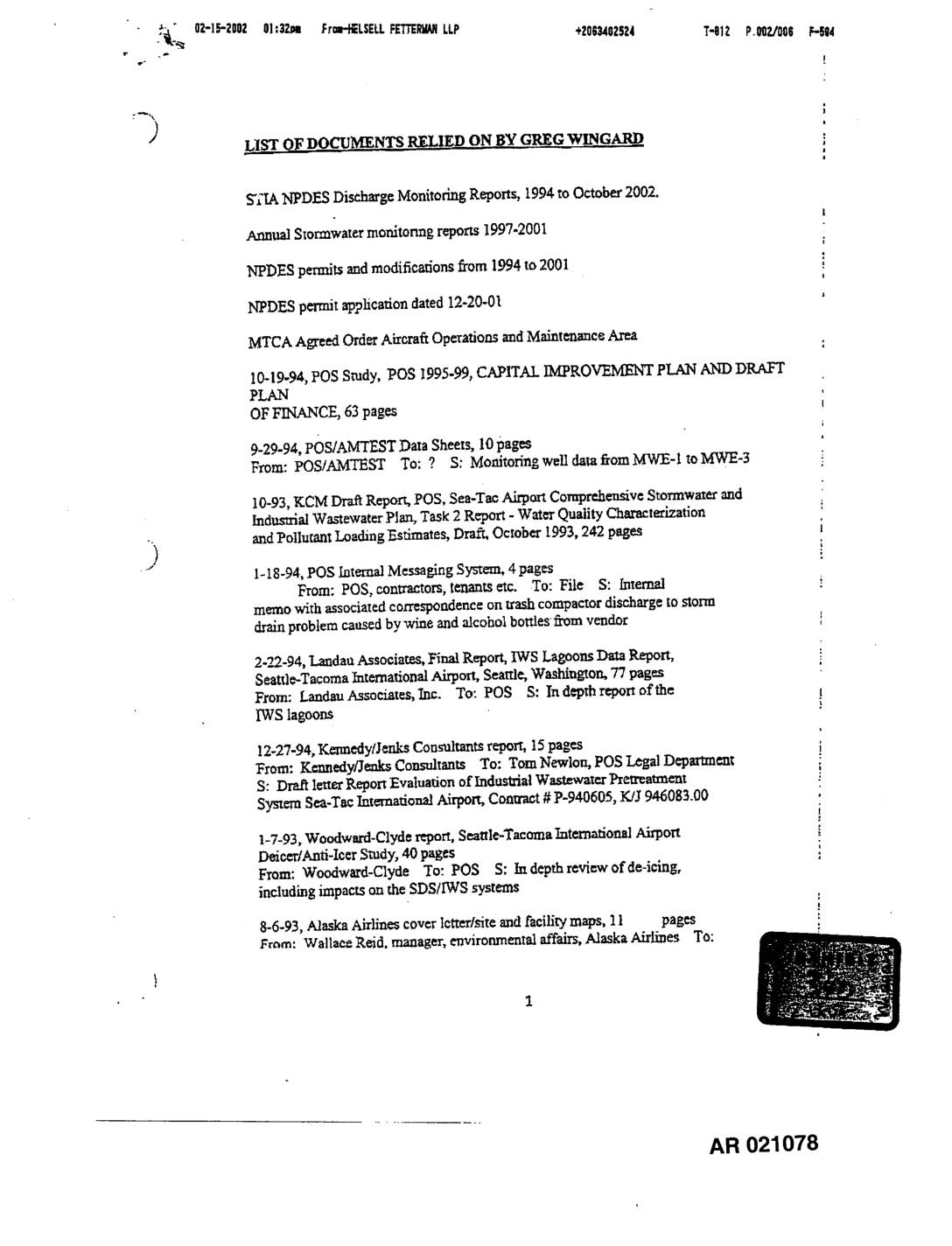
EXH AR021078: Documents Relied On by Greg Wingard
This document is a list of environmental and regulatory records relied upon by Greg Wingard, covering Seattle-Tacoma International Airport (Sea-Tac) operations from the 1980s through 2002. It includes NPDES discharge monitoring reports, stormwater management plans, groundwater contamination assessments, and industrial wastewater treatment evaluations involving the Port of Seattle (POS) and various airline tenants such as Alaska Airlines and Northwest Airlines. The records primarily address water quality, stormwater runoff, fuel spills, and environmental compliance at the airport. -
 2002-01-22
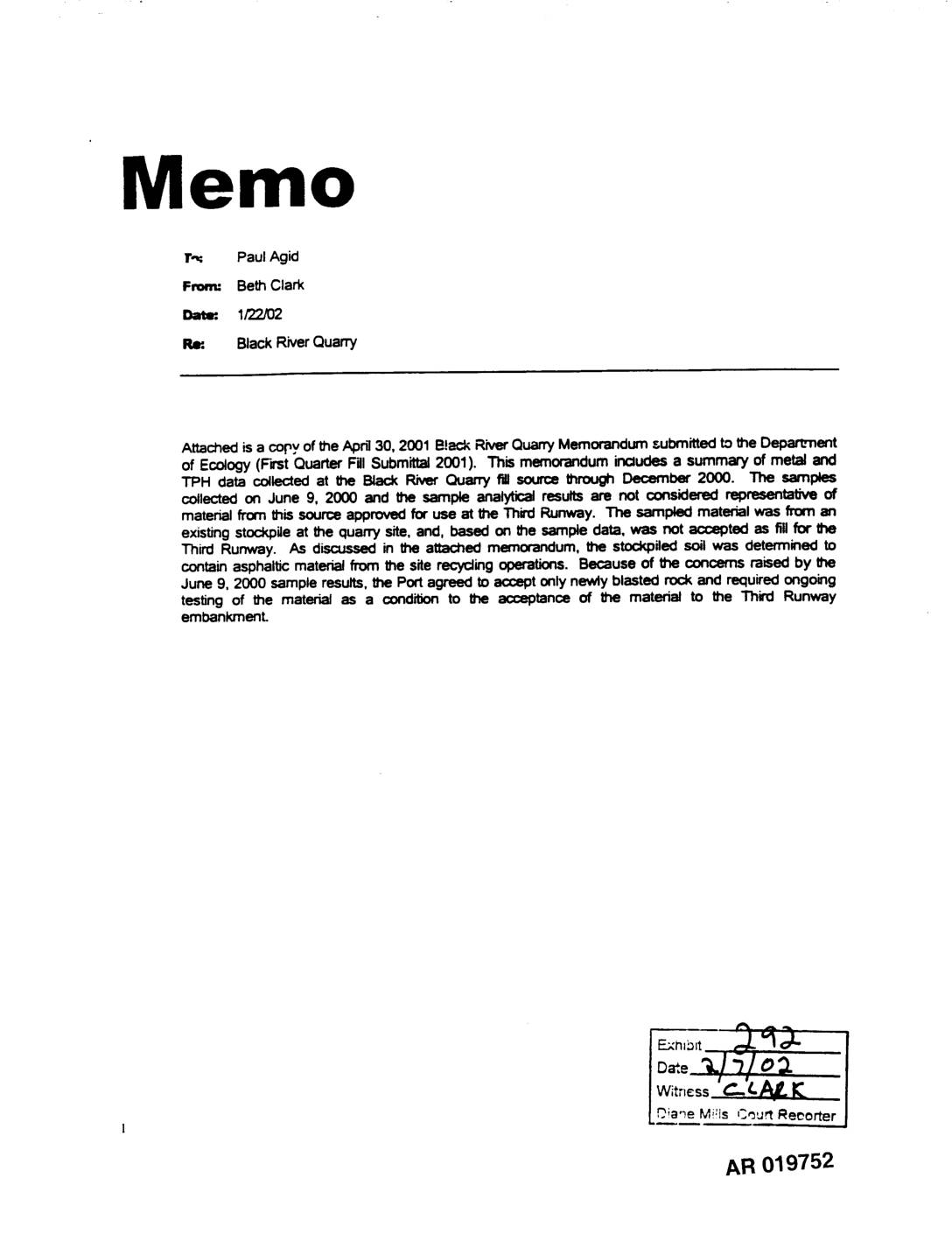
EXH 292: Memo — Black River Quarry Fill Material Testing TPH Metals Third Runway Embankment
This memo from Port of Seattle environmental staff describes chemical testing of rock aggregate imported from Black River Quarry for use in the Third Runway embankment at Sea-Tac Airport. Testing revealed petroleum hydrocarbons (TPH) and elevated copper levels in some samples, traced to contamination from on-site asphalt recycling operations. As a result, the Port restricted material acceptance to newly blasted rock only and halted imports from the quarry in mid-October 2000 pending operational changes and additional testing. -
 2002-01-10
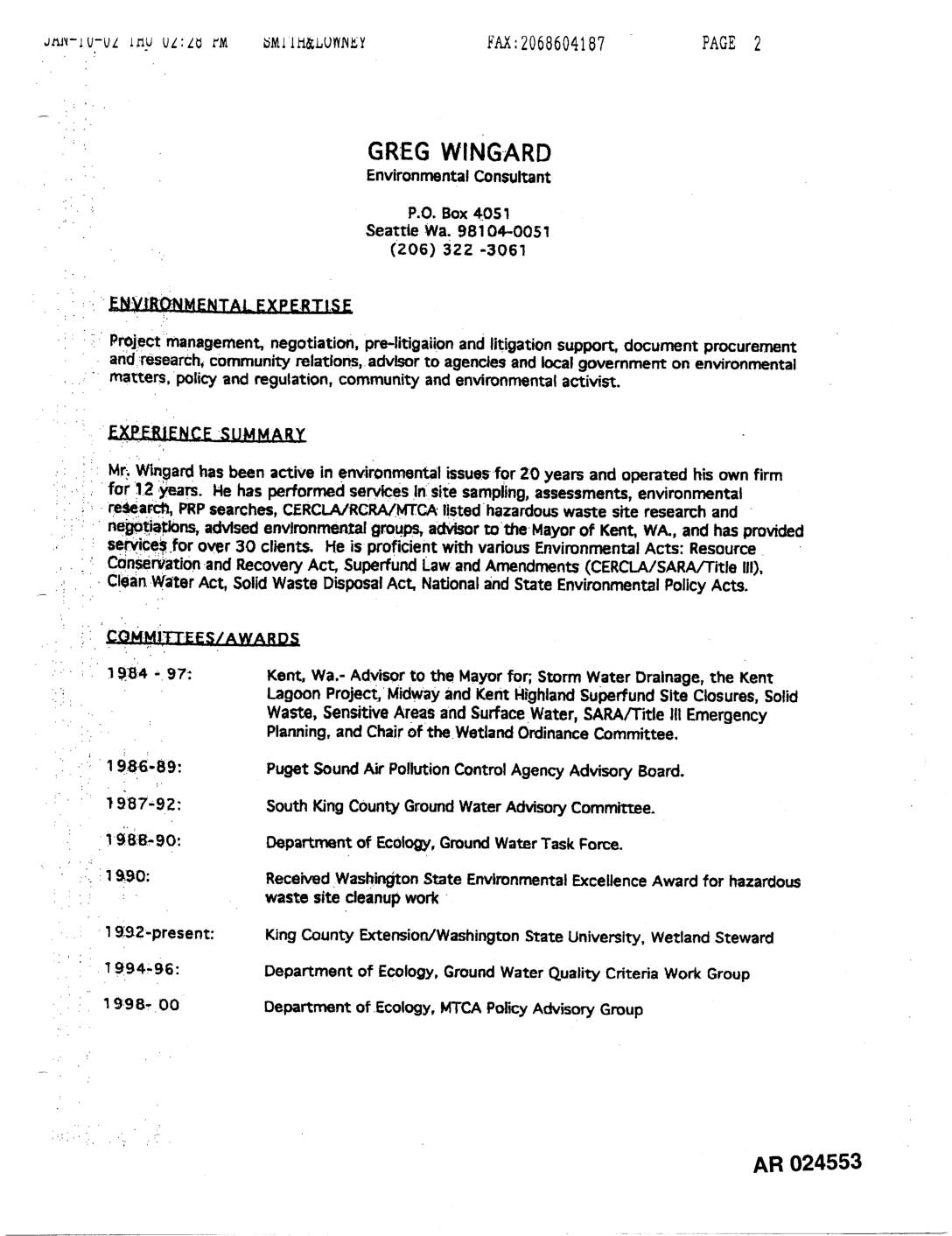
EXH 628: Greg Wingard Environmental Consultant Resume
This document is the professional resume of Greg Wingard, an environmental consultant based in Seattle, Washington, with 20 years of experience in environmental issues including hazardous waste site research, regulatory negotiations, and litigation support. Among his listed projects, he advised the Airport Communities Coalition, Regional Coalition on Airport Affairs, and Citizens Against SeaTac Expansion on environmental matters, including site inspection, environmental regulation and policy, and negotiation with government agencies. He also served on numerous advisory committees and received the 1990 Washington State Environmental Excellence Award for hazardous waste site cleanup work. -
 2001-12-19
EXH AR017502: Guidance for the Use of Tables — Practical Quantitation Limits (PQLs), Method Detection Limits (MDLs), and PQL Comparisons to Method B Cleanup Levels
Ecology guidance document (AR017502, Part II of IV) explaining how to use PQL and MDL tables under the Model Toxics Control Act (MTCA). Covers Practical Quantitation Limits (PQLs), Method Detection Limits (MDLs), and comparisons to MTCA Method B cleanup levels for water and soil. Describes analytical methods from US EPA SW-846 (3000, 7000, 8000-8100, 8310,