TagFill Dirt(72)
-
 2000-02-08
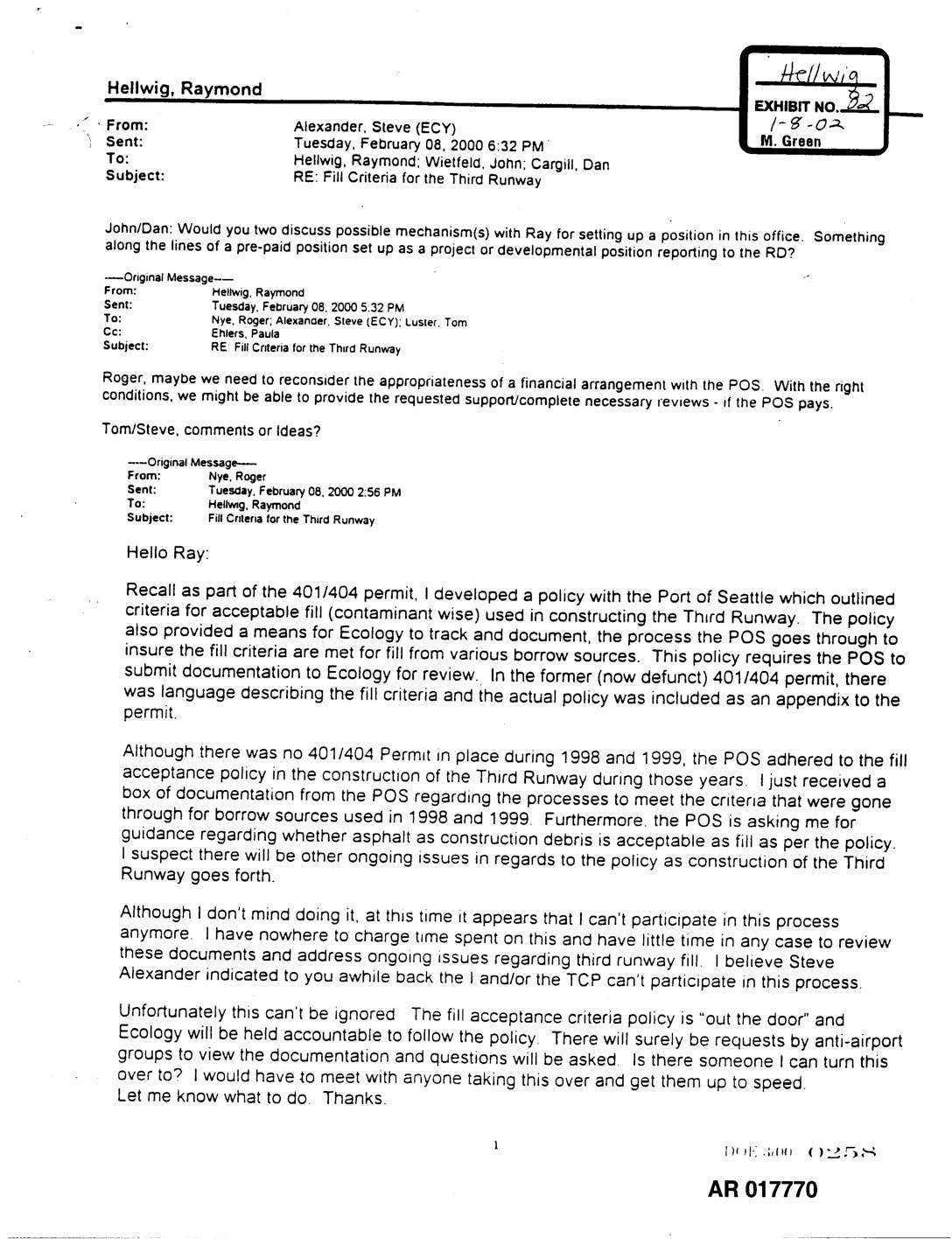
Exhibit 82: Email Chain RE Fill Criteria for the Third Runway — Ecology/Port Of Seattle Financial Arrangement Discussion
Email chain dated February 8, 2000 among Washington State Department of Ecology staff (Roger Nye, Raymond Hellwig, Steve Alexander) regarding fill criteria compliance for the Third Runway at Sea-Tac Airport. Roger Nye describes the 401/404 permit fill acceptance policy developed with Port Of Seattle governing contaminant criteria for borrow sources used in Third Runway construction -
 1999-11-29
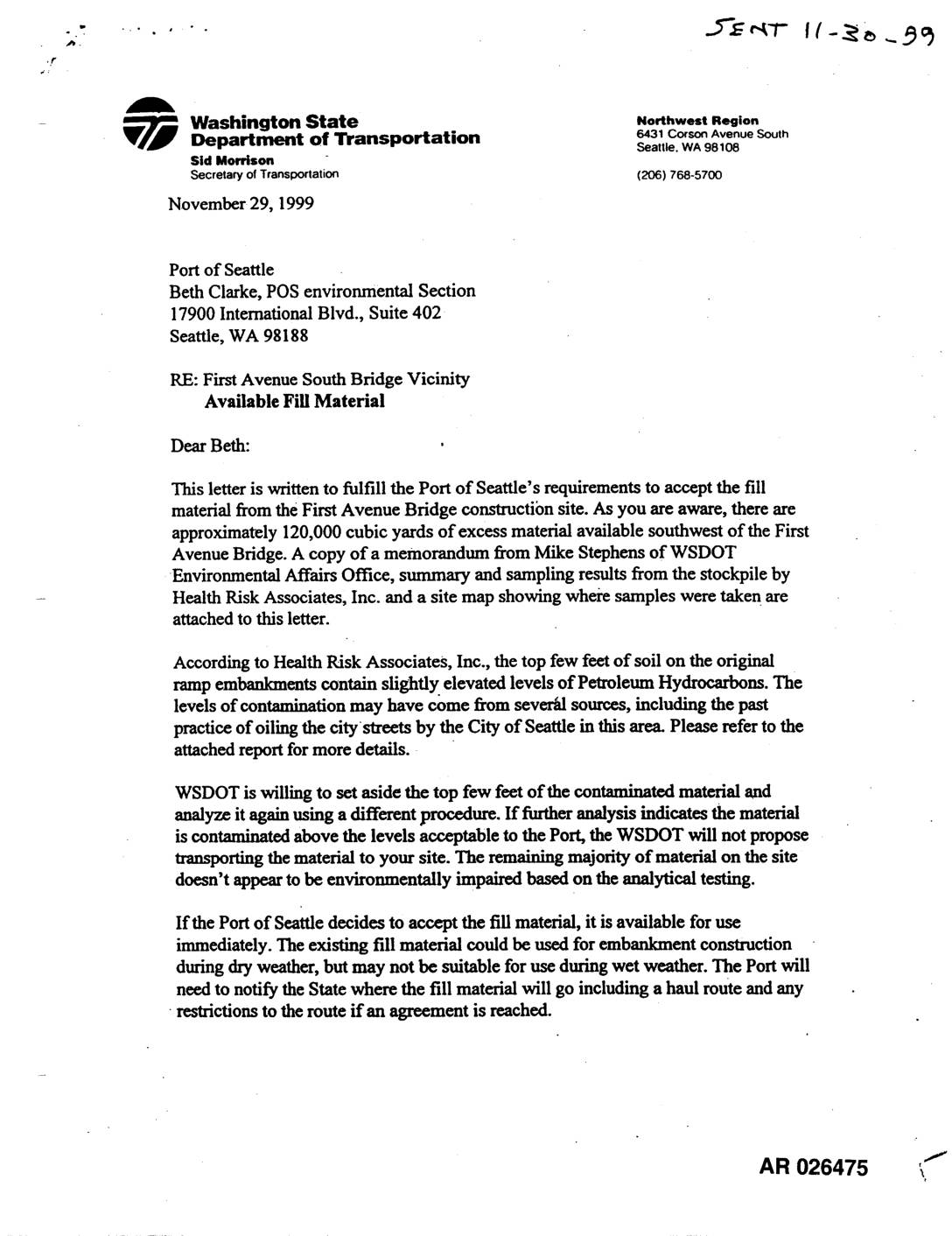
EXH AR026475: WSDOT Letter — Available Fill Material, First Ave S Bridge Construction Site
In November 1999, the Washington State Department of Transportation (WSDOT) wrote to the Port of Seattle offering approximately 120,000 cubic yards of excess fill material from the First Avenue South Bridge construction site for use in the Sea-Tac Airport third runway project. While most of the material was found to be environmentally sound, the top few feet of soil showed slightly elevated levels of petroleum hydrocarbons, which WSDOT offered to retest using a different procedure before any transfer. The Port was asked to confirm environmental acceptability and provide a haul route before an agreement could be finalized. -
 1999-11-12
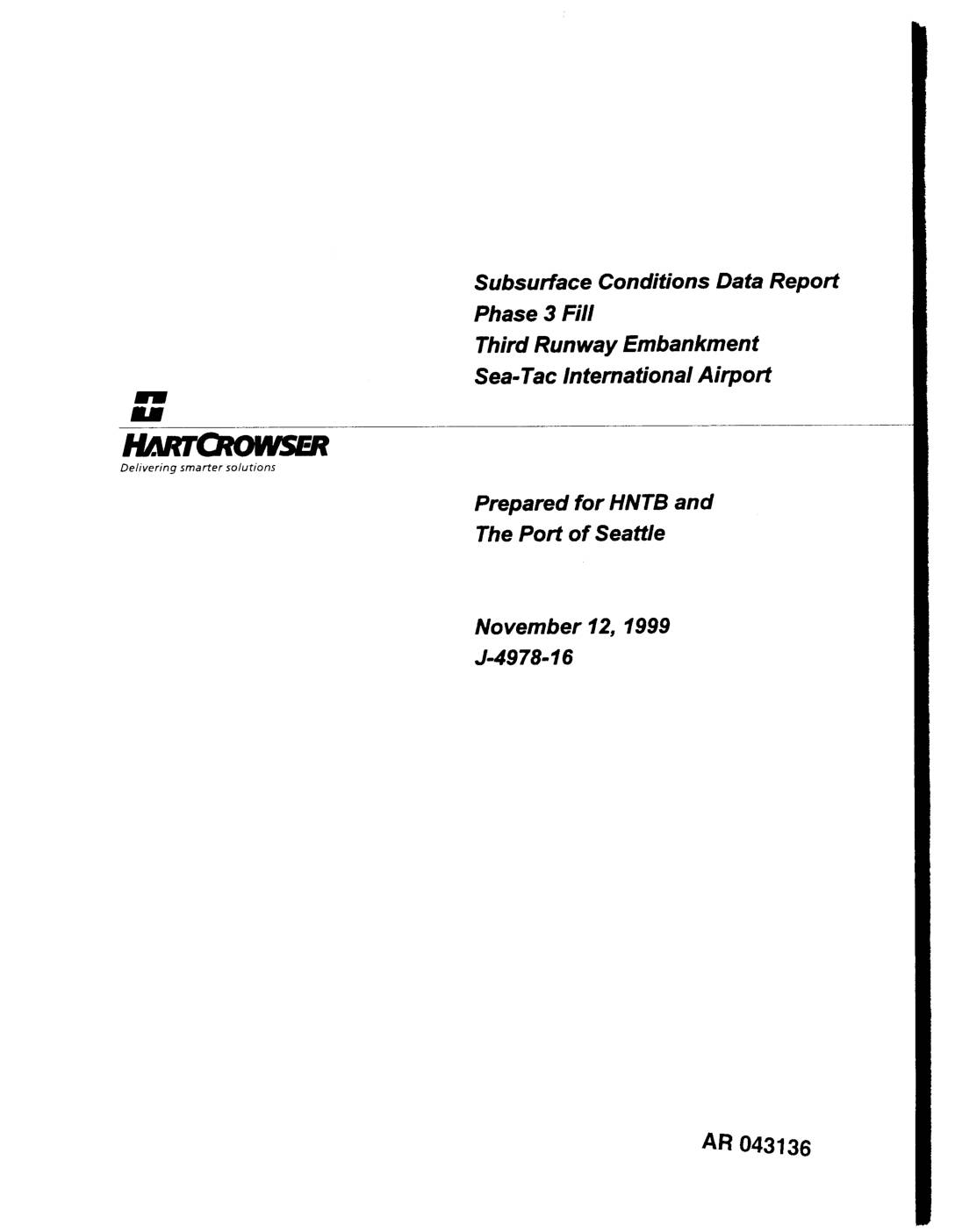
EXH AR043136: Subsurface Conditions Data Report, Phase 3 Fill, Third Runway Embankment, Sea-Tac Airport
Hart Crowser subsurface conditions data report (J-4978-16) prepared for HNTB and Port Of Seattle, dated November 12, 1999, regarding Phase 3 Fill for the Third Runway embankment at Seattle-Tacoma International Airport. Report covers generalized geologic and subsurface soil conditions, hydrogeologic conditions, field explorations (auger borings HC99-B61, HC99-B63, HC99-B65, HC99-B71, HC99-B73), test pits HC99-TP26 through HC99-TP44, -
 1999-04-30
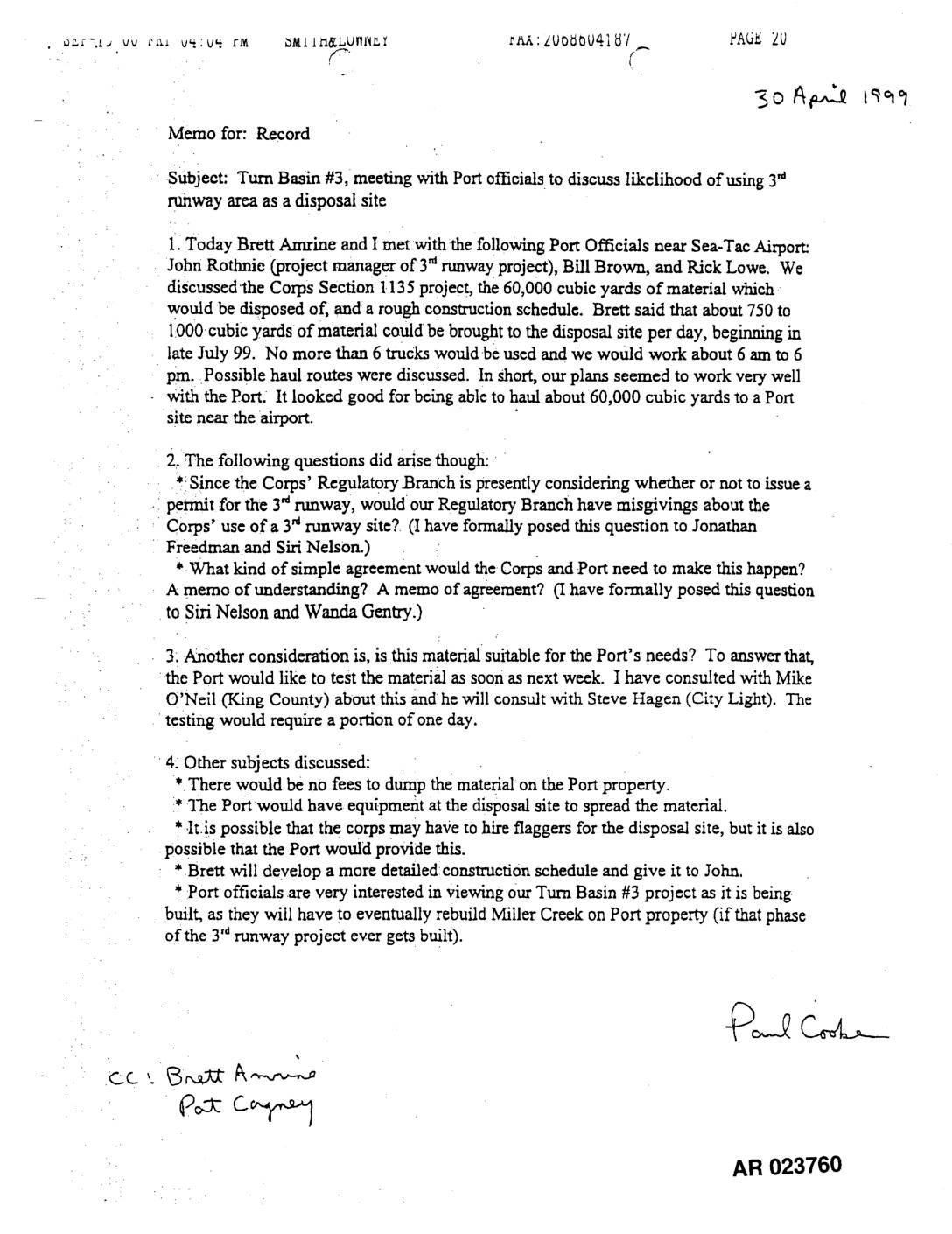
EXH AR023760: Turn Basin #3 — Memo on Meeting with Port Of Seattle Officials Regarding 3rd Runway Area as Disposal Site
A April 30, 1999 memo documents a meeting between Corps of Engineers staff and Port of Seattle officials to discuss using land near Sea-Tac Airport's proposed 3rd runway as a disposal site for approximately 60,000 cubic yards of material from the Corps' Turn Basin #3 project. Key logistics covered included hauling up to 1,000 cubic yards per day starting in late July 1999 using no more than six trucks, with no fees charged for dumping on Port property. Outstanding questions included whether the Corps' Regulatory Branch — which was simultaneously reviewing a permit for the 3rd runway — might have conflicts of interest in using that same site, and what formal agreement would be needed between the two agencies. -
 1999-04-14
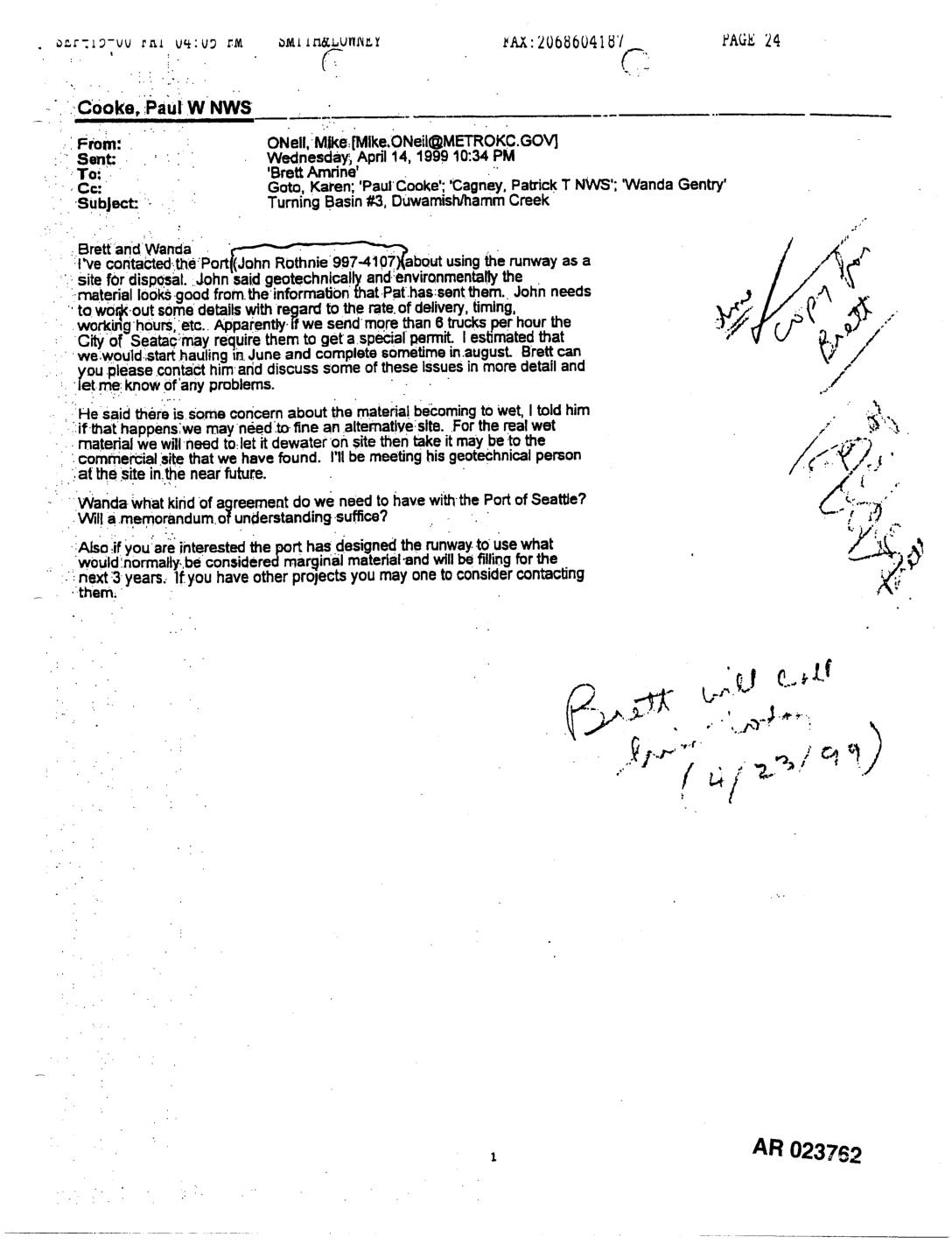
EXH AR023762: Email Turning Basin #3 Duwamish/Hamm Creek Disposal Site Runway Coordination
A April 14, 1999 email from Mike O'Neil of Metro King County discusses plans to use a Port of Seattle runway at Sea-Tac Airport as a disposal site for dredged material from Turning Basin #3 on the Duwamish/Hamm Creek project. The Port's contact, John Rothnie, found the material geotechnically and environmentally acceptable, but noted that sending more than 6 trucks per hour could trigger a special permit requirement from the City of SeaTac. Hauling was estimated to begin in June 1999 and conclude in August, with contingency plans for dewatering especially wet material at an alternative commercial site. -
 1999-04-05
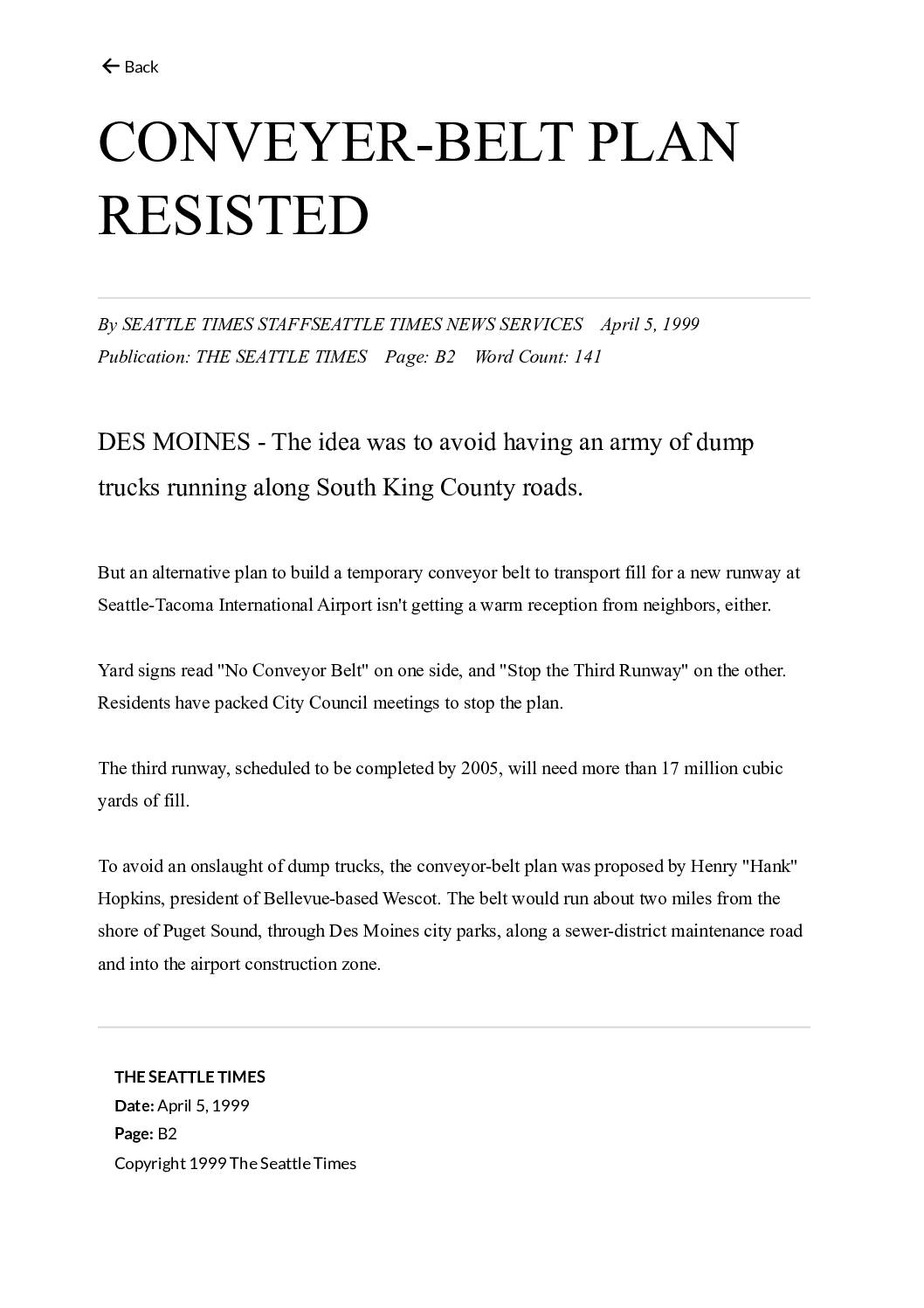
Conveyor-belt plan resisted
In April 1999, a proposal to build a temporary two-mile conveyor belt to transport fill material for Sea-Tac Airport's planned third runway met strong resistance from Des Moines residents. The belt was intended to reduce heavy dump truck traffic on South King County roads, but neighbors opposed both the conveyor plan and the runway project itself, packing City Council meetings in protest. The third runway, requiring over 17 million cubic yards of fill, was scheduled for completion by 2005. -
 1999-03-24
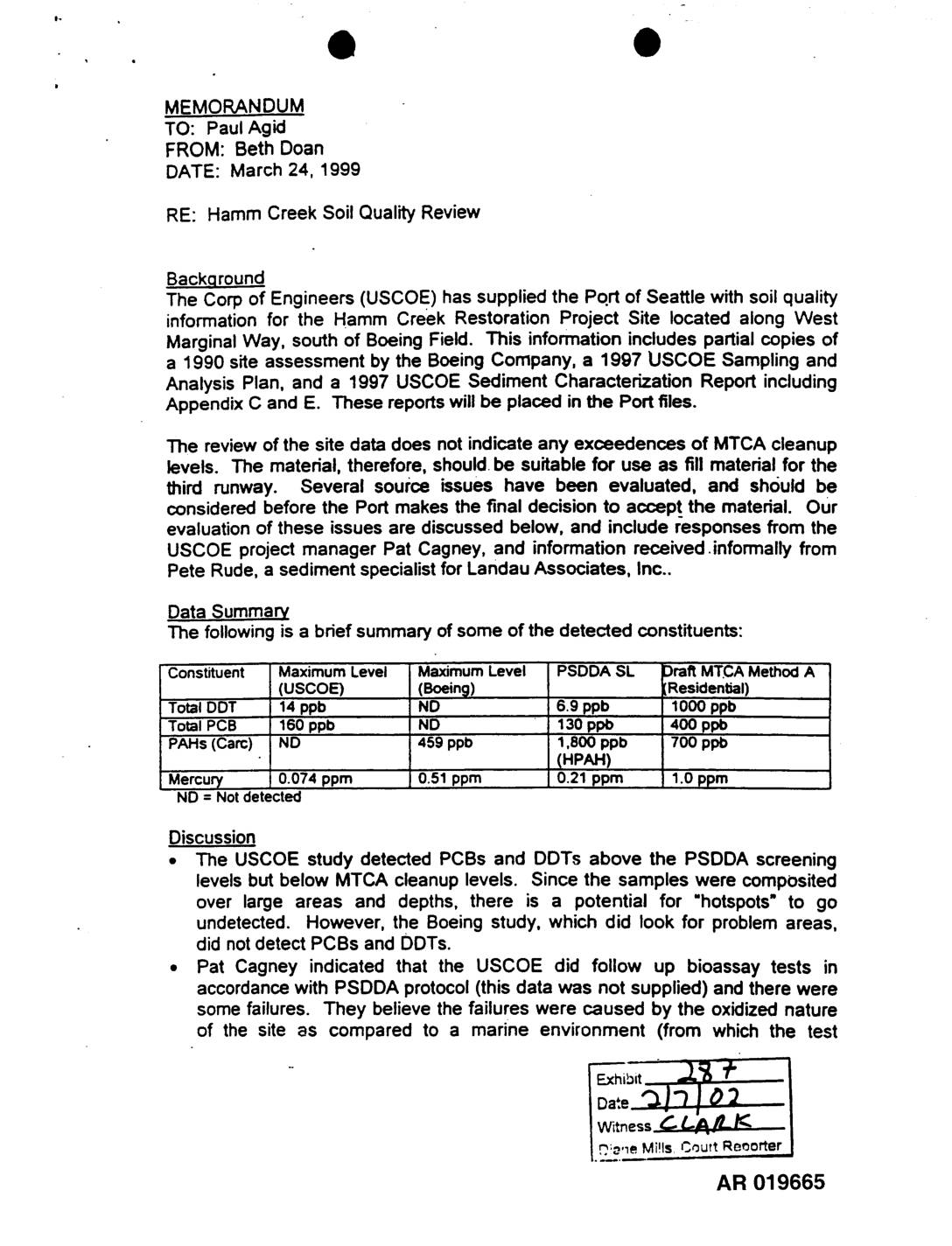
EXH AR019665: Hamm Creek Soil Quality Review — Memo Doan to Agid
A 1999 internal Port of Seattle memorandum reviews soil quality data for the Hamm Creek Restoration Project site near Boeing Field, evaluating whether the material is safe to use as fill for a proposed third runway. The review found that detected contaminants — including PCBs, DDTs, mercury, and PAHs — fell below MTCA cleanup levels, leading to the conclusion that the material is suitable for upland fill use. While the soil did not meet PSDDA standards for open-water disposal, the memo notes that this distinction is not technically relevant given its intended use as runway fill. -
 1999-03-17
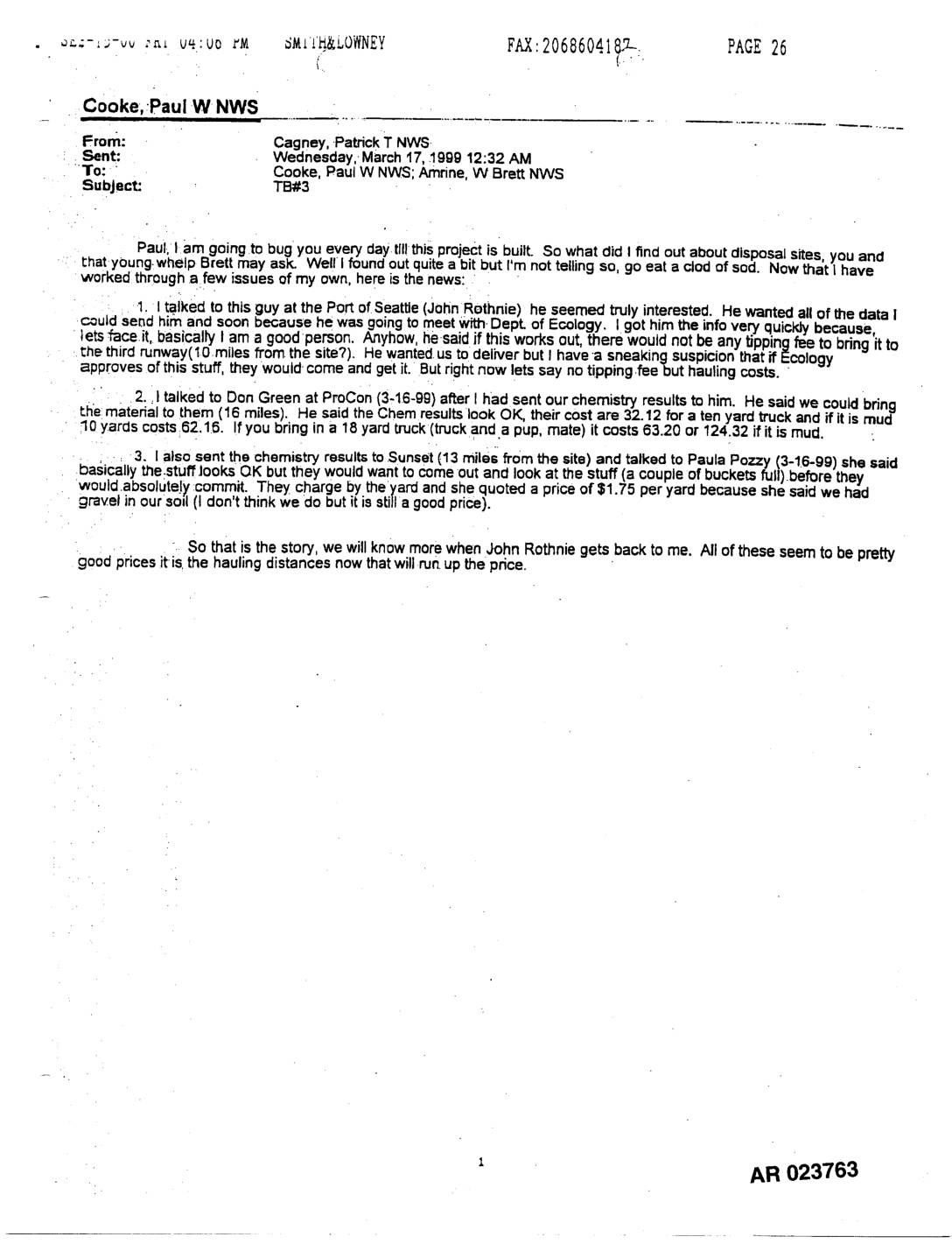
EXH AR023763: Internal Email – Third Runway Excavation Material Disposal Site Options
A March 1999 internal email from Patrick Cagney of the U.S. Army Corps of Engineers discusses potential disposal sites for excavated soil material related to a construction project near Seattle. Three options were identified: the Port of Seattle's third runway project (no tipping fee, hauling costs only), ProCon at 16 miles away (costs ranging from $32–$124 depending on truck size and material wetness), and Sunset at 13 miles away ($1.75 per yard). The email notes that hauling distances would be the primary cost driver across all options. -
 1999-01-01
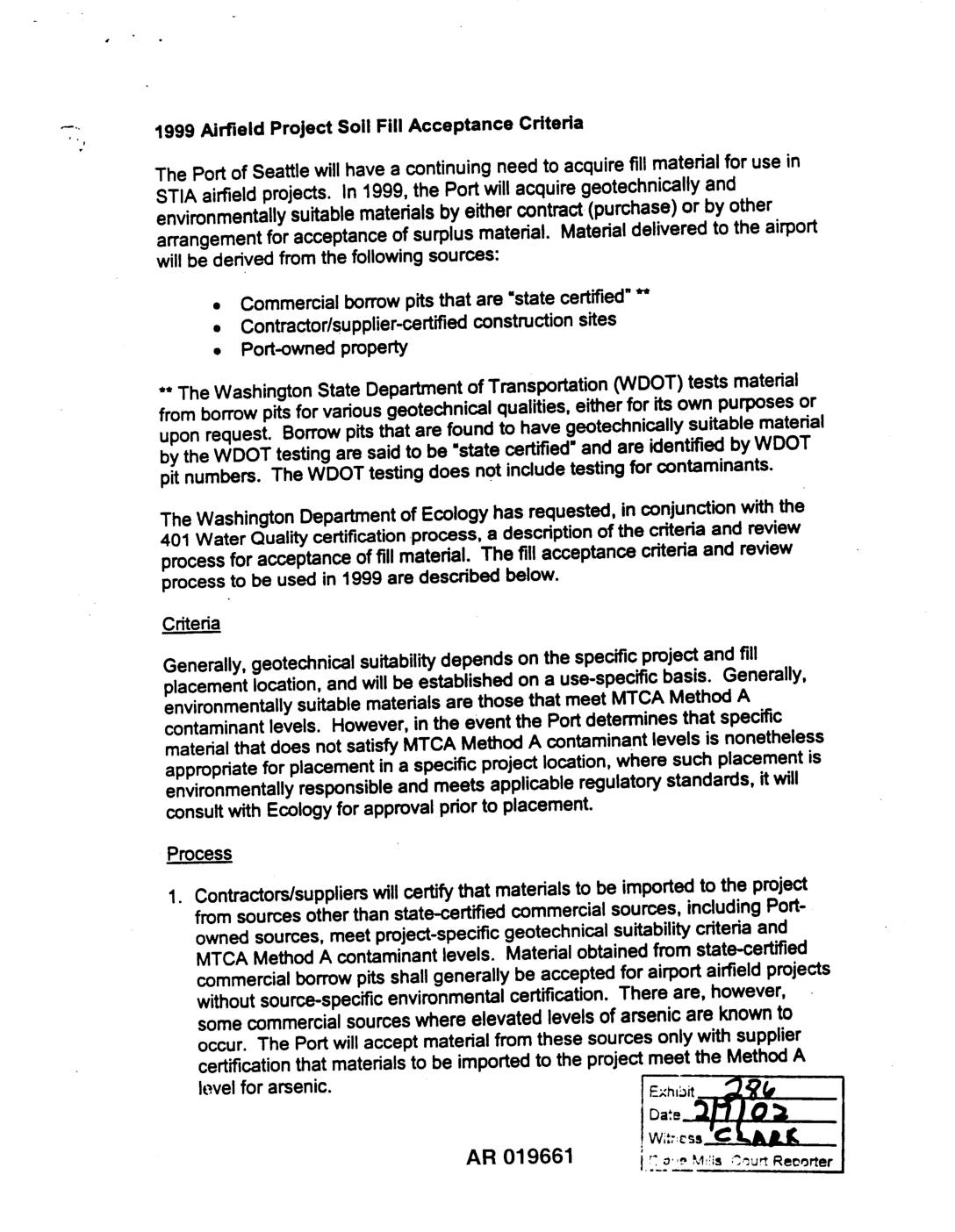
EXH 286: 1999 Airfield Project Soil Fill Acceptance Criteria
This 1999 Port of Seattle document outlines the criteria and review process for accepting soil fill material used in Sea-Tac International Airport (STIA) airfield construction projects. Fill material must come from approved sources—such as state-certified commercial borrow pits, contractor-certified construction sites, or Port-owned property—and generally must meet Washington State MTCA Method A environmental contamination standards. Contractors and suppliers are required to certify the quality of their materials, and independent soil technicians monitor all deliveries to ensure only safe, suitable fill is placed on airport grounds. -
 1999-01-01
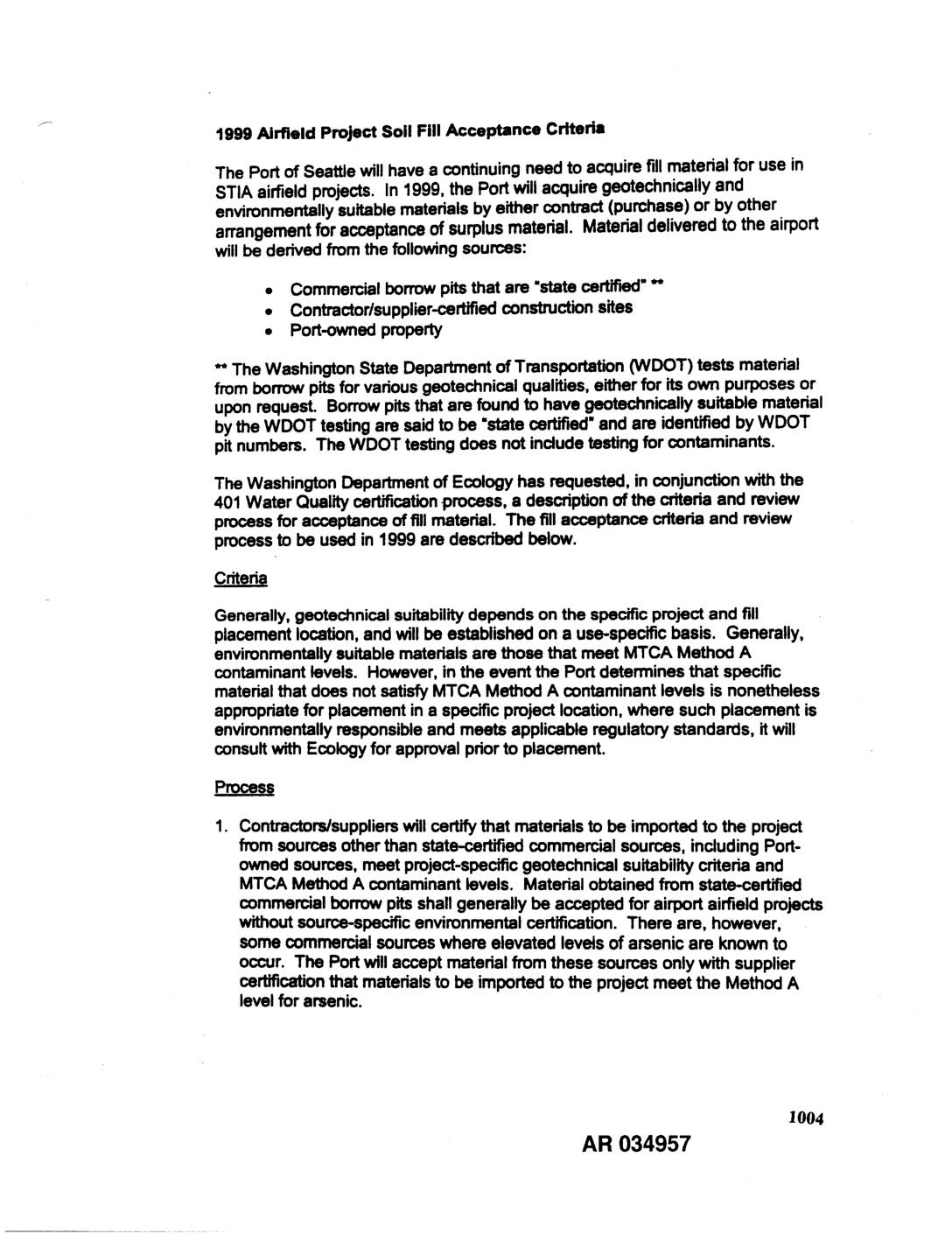
EXH AR034957: 1999 Airfield Project Soil Fill Acceptance Criteria
Port Of Seattle 1999 Airfield Project Soil Fill Acceptance Criteria for STIA airfield projects, describing criteria and review process for acceptance of fill material requested by Washington Department of Ecology in conjunction with 401 Water Quality certification. Covers geotechnical and environmental suitability standards including MTCA Method A contaminant levels, arsenic, TPH and metals analyses. Details