TagFAA(687)
-
 1998-04-15
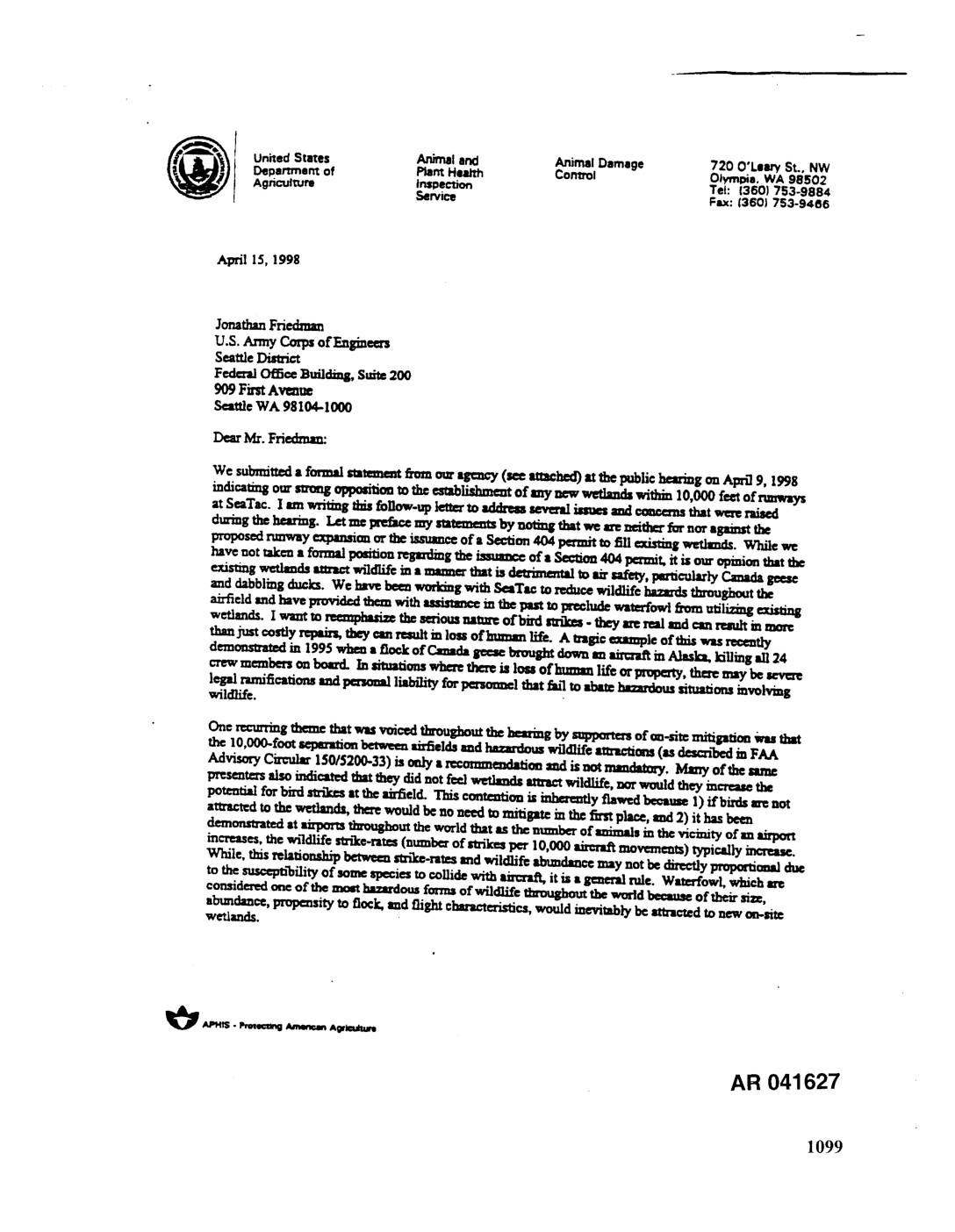
EXH AR041627: USDA APHIS Animal Damage Control Letter to U.S. Army Corps of Engineers Opposing New Wetlands Within 10,000 Feet of Sea-Tac Airport Runways
Letter dated April 15, 1998 from J. Gary Oldenburg, USDA Animal and Plant Health Inspection Service (APHIS) Animal Damage Control, State Director WA/AK/HI/Pacific Islands, to Jonathan Friedman, U.S. Army Corps of Engineers Seattle District, follow-up to public hearing of April 9, 1998. Strongly opposes establishment of any new wetlands within 10,000 feet of runways at -
 1998-04-09
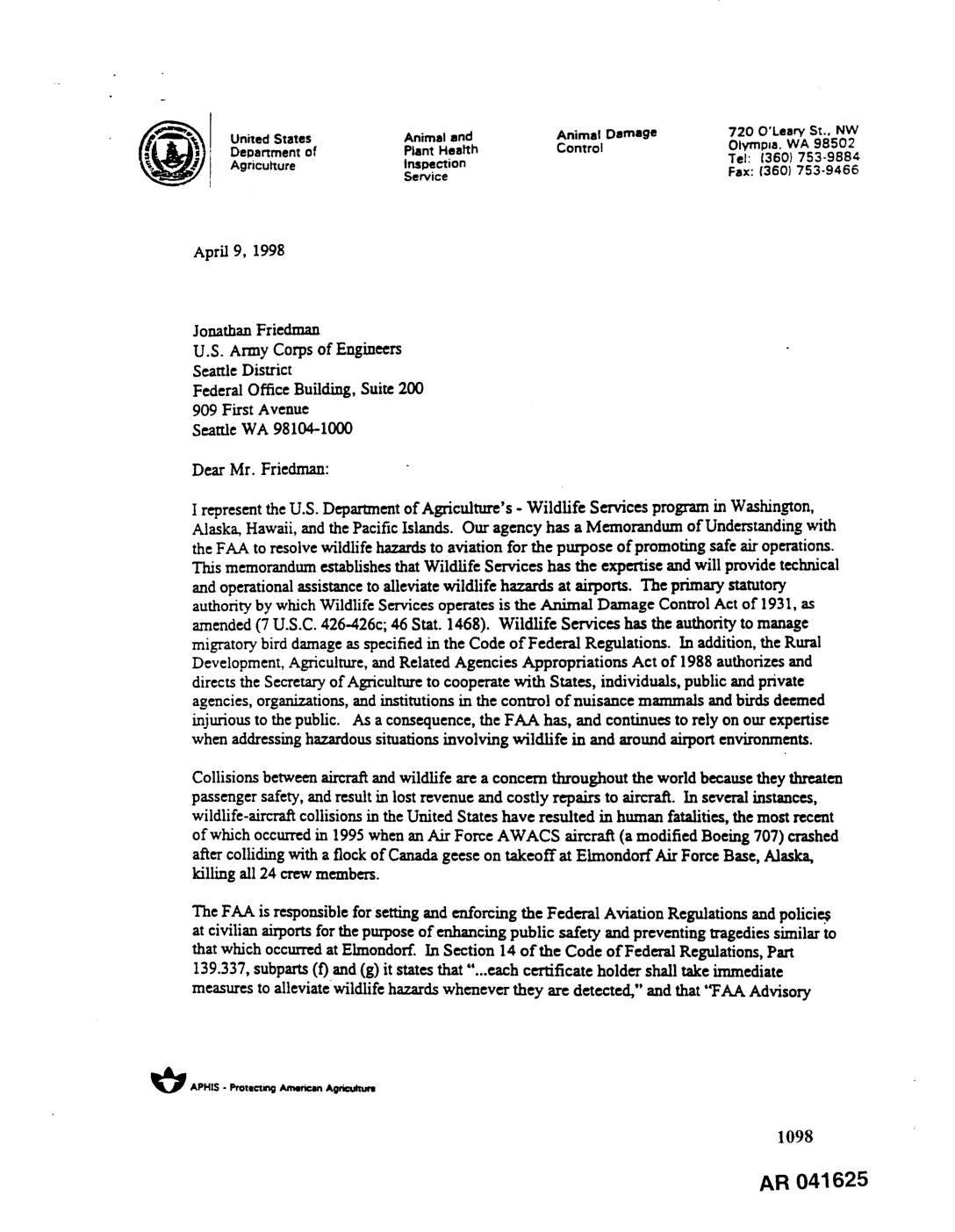
EXH AR041625: Letter from USDA Wildlife Services to U.S. Army Corps of Engineers Regarding Wetland Mitigation at Sea-Tac Airport
April 9, 1998 letter from Gary Oldenburg, USDA Animal and Plant Health Inspection Service (APHIS) Wildlife Services State Director for WA/AK/HI/Pacific Islands, to Jonathan Friedman, U.S. Army Corps of Engineers Seattle District, regarding wildlife hazards at Sea-Tac Airport. Argues that wetland mitigation measures at SeaTac Airport should be conducted off-site, citing FAA Advisory Circular 150/5200-33 -
 1997-07-03
EXH AR041146: FAA Record of Decision for Sea-Tac Airport Master Plan Update Development Actions
FAA Northwest Mountain Region Record of Decision (ROD) dated July 3, 1997, providing final Federal Aviation Administration approval for Sea-Tac International Airport Master Plan Update development actions adopted by Port of Seattle (POS) Commission Resolution #3212 (August 1, 1996) and amended by Resolution No. 3245 (May 27, 1997). Approves a new 8500-foot dependent air carrier -
 1997-07-03
Record of Decision for the Master Plan Update development actions, Sea-Tac International Airport, Seattle, Washington
This 1997 Federal Aviation Administration Record of Decision granted final approval for major development actions at Seattle-Tacoma International Airport, including construction of a new 8,500-foot third parallel runway, a 600-foot extension of an existing runway, and various landside facility improvements planned through 2010. The decision followed years of environmental review, public comment, and regional planning studies aimed at addressing growing passenger demand and significant air traffic delays, particularly during poor weather conditions. -
 1997-05-13
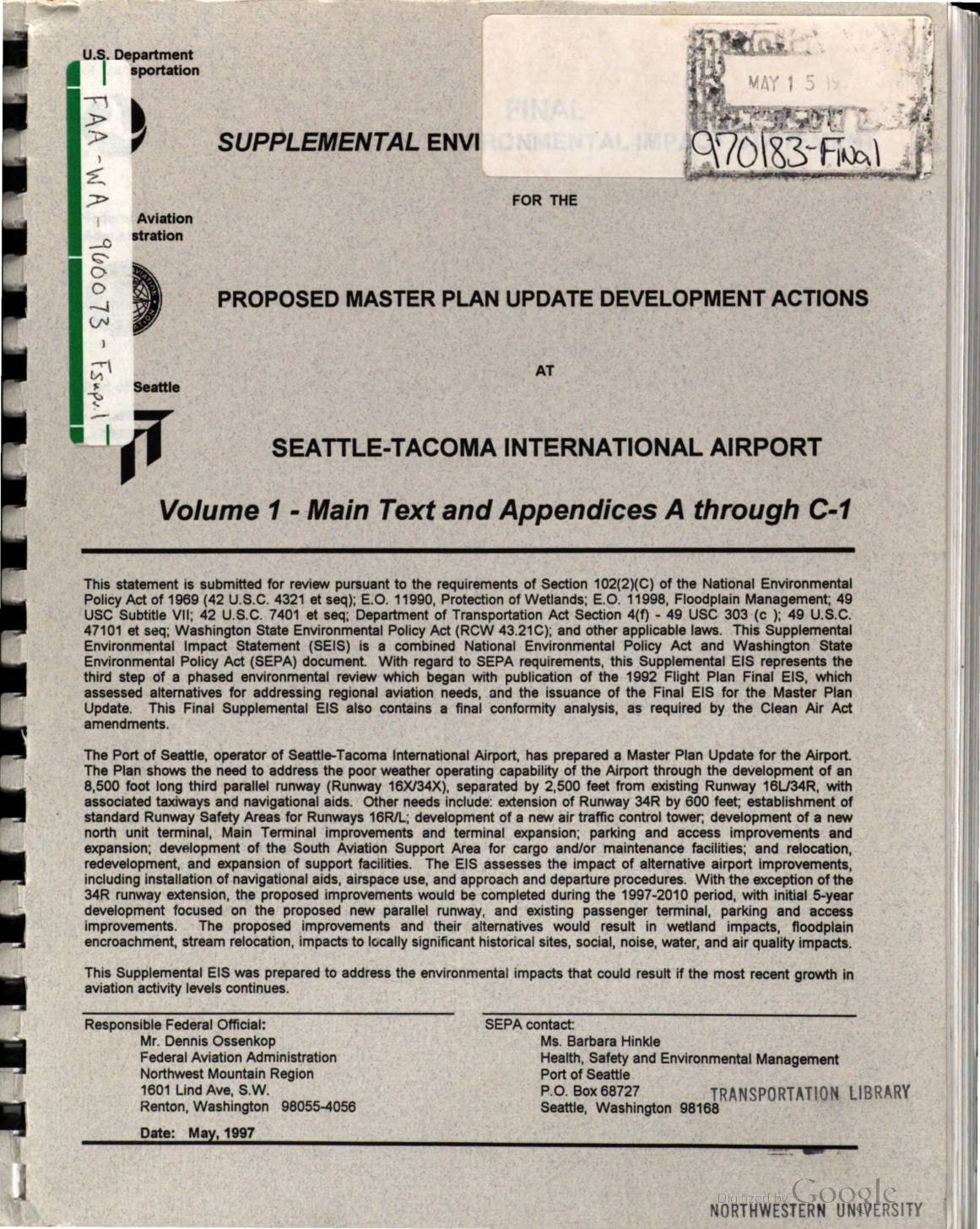
Final Supplemental Environmental Impact Statement for the Proposed Master Plan Update Development Actions at Seattle-Tacoma International Airport, Volume 1: Main Text and Appendices A through C-1
This 1997 Final Supplemental Environmental Impact Statement (SEIS) examines the environmental effects of proposed expansion plans at Seattle-Tacoma International Airport, including construction of a new third parallel runway, terminal improvements, and parking upgrades. The study was prompted by faster-than-expected growth in air travel demand during the mid-1990s, which exceeded earlier forecasts and required updated analysis of noise, air quality, wetland, and community impacts. The document was jointly prepared by the FAA and the Port of Seattle to ensure the proposed developments met federal and Washington State environmental policy requirements. -
 1997-05-01
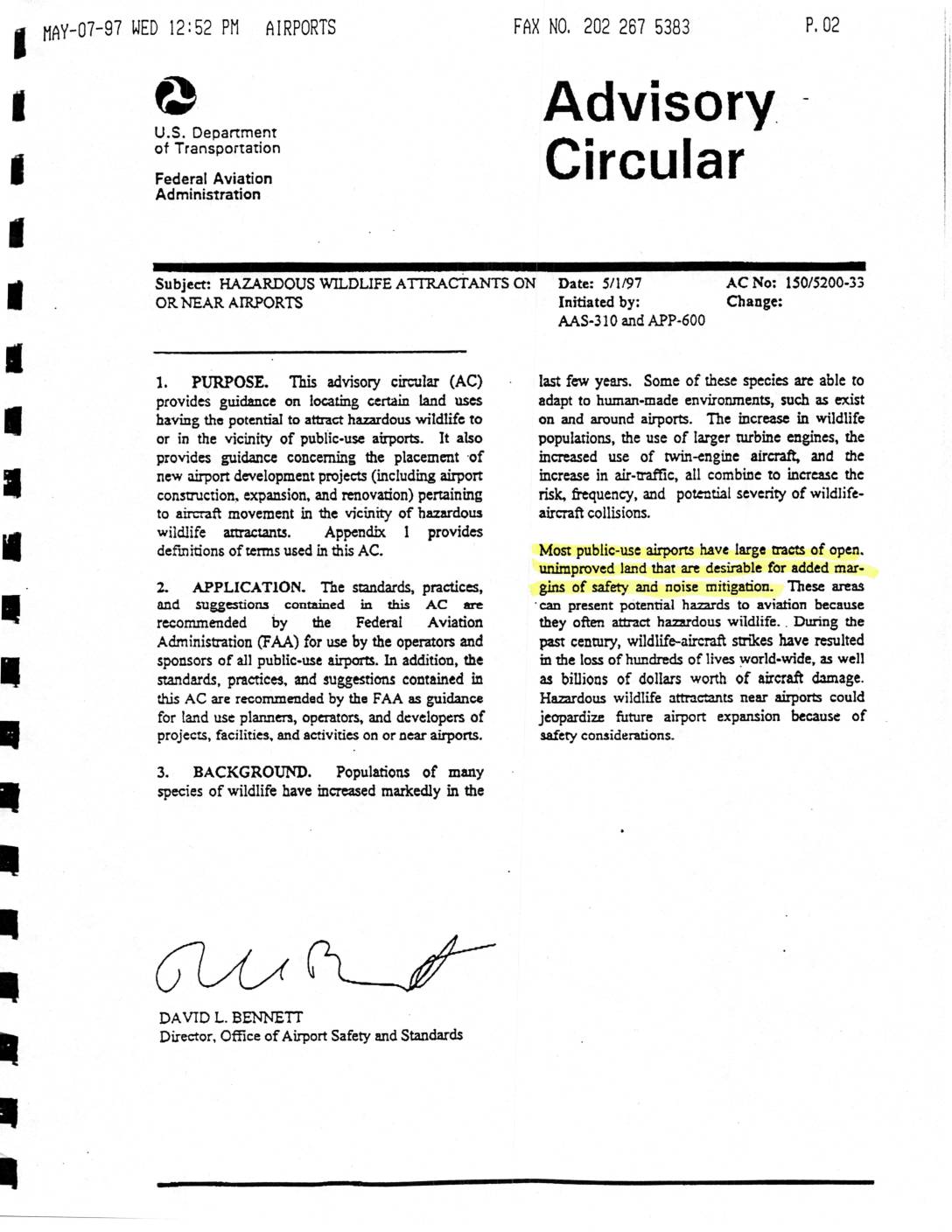
Advisory circular: Hazardous wildlife attractants on or near airports
This 1997 FAA Advisory Circular provides guidance on identifying and managing land uses near public airports that attract hazardous wildlife, such as waste disposal sites, wastewater treatment facilities, and wetlands. It recommends minimum separation distances — 5,000 feet for piston-powered aircraft airports and 10,000 feet for turbine-powered aircraft airports — between wildlife attractants and aircraft movement areas. The document notes that gulls, waterfowl, and raptors are among the most common wildlife involved in damaging aircraft strikes, and urges airport operators, land use planners, and developers to avoid practices that increase wildlife hazards near airports. -
 1997-05-01
Appendix D: Environmental Evaluation of Year 2020 Impacts and a Forecast Greater Than the New Forecast
This appendix from Seattle-Tacoma International Airport's Final Supplemental Environmental Impact Statement evaluates potential environmental impacts through the year 2020 under three scenarios, including the new Port forecast and cases where aviation demand grows 10% faster than projected. Key findings indicate that noise impacts are expected to remain below current levels in all scenarios, with 'With Project' improvements producing roughly 53% of current noise conditions by 2020. The analysis also examines air quality, enplanement levels, and aircraft operations across both Do-Nothing and preferred alternatives to guide long-term airport planning. -
 1997-05-01
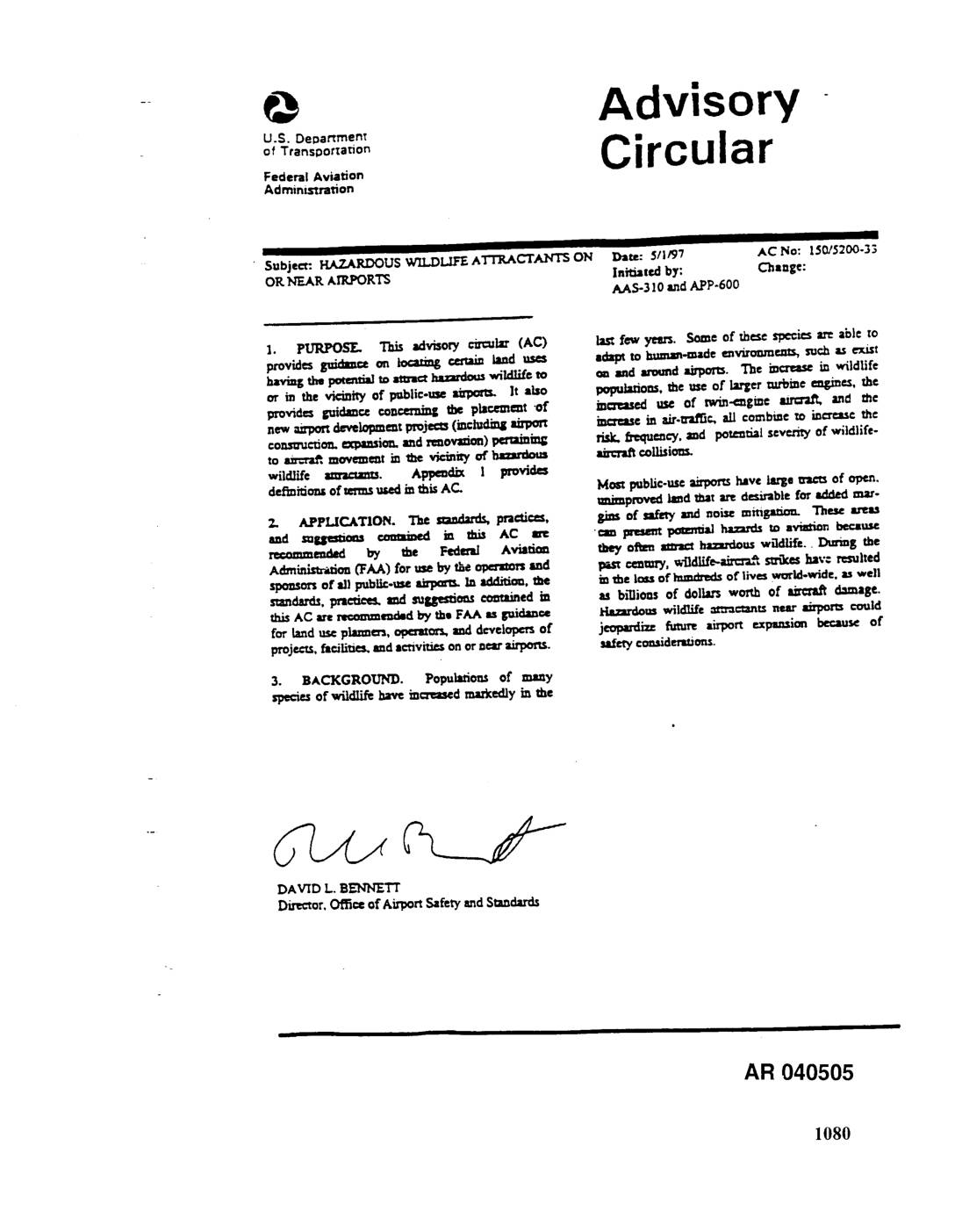
EXH AR1080: Advisory Circular AC 150/5200-33 — Hazardous Wildlife Attractants On or Near Airports
FAA Advisory Circular AC 150/5200-33, dated 5/1/97, initiated by AAS-310 and APP-600, signed by David L. Bennett, Director of Office of Airport Safety and Standards. Provides guidance on locating land uses that attract hazardous wildlife to or near public-use airports. Covers siting criteria: 5,000 feet separation for piston-powered aircraft airports, 10,000 feet for turbine-powered aircraft -
 1997-05-01
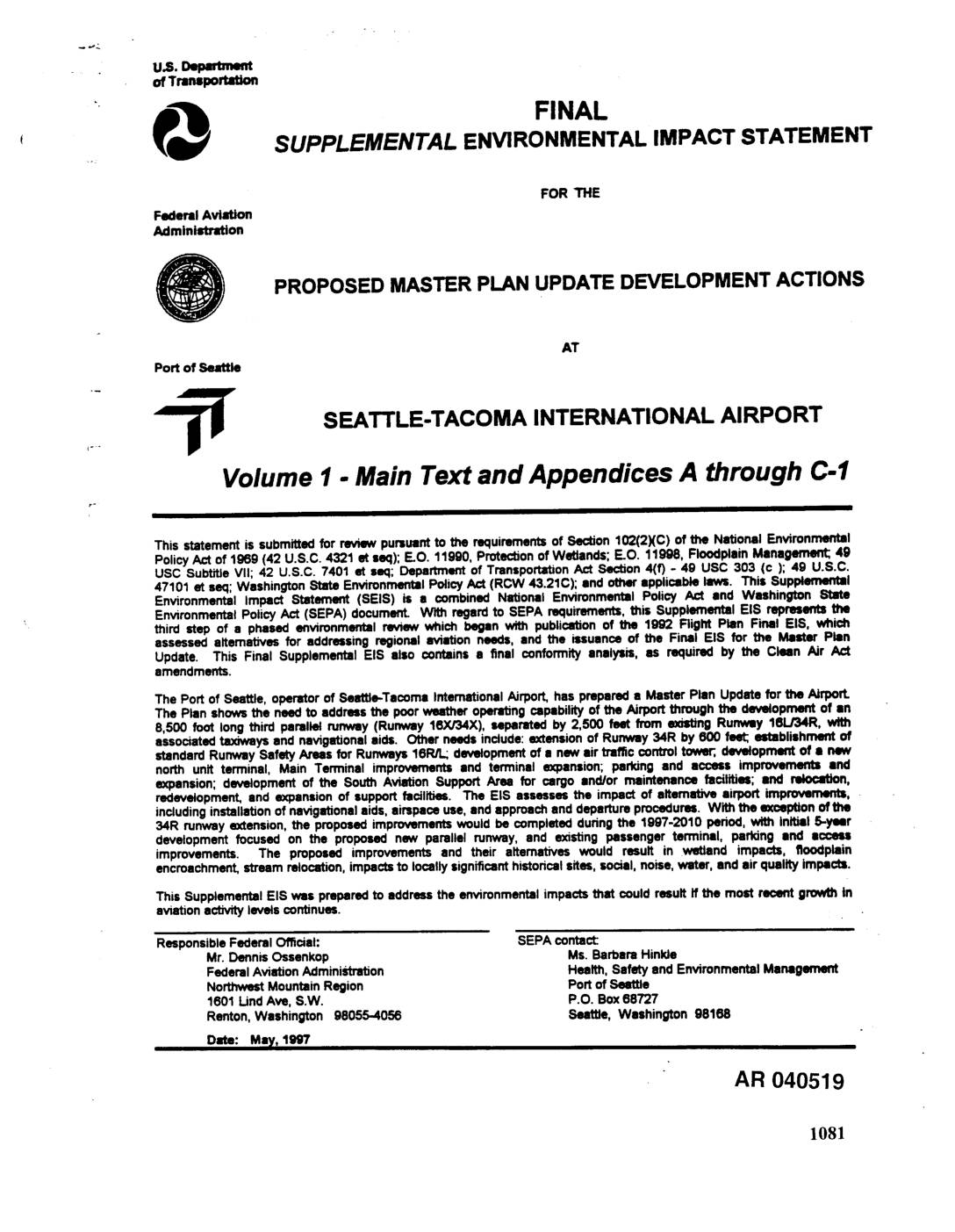
EXH AR040519: Final Supplemental Environmental Impact Statement for Proposed Master Plan Update Development Actions at Seattle-Tacoma International Airport
Final Supplemental Environmental Impact Statement (SEIS) dated May 1997, prepared jointly by the FAA Northwest Mountain Region (responsible official Dennis Ossenkop) and Port Of Seattle (SEPA contact Barbara Hinkle), for proposed Master Plan Update development actions at Seattle-Tacoma International Airport. Covers proposed 8,500-foot third parallel runway (Runway 16X/34X) located 2,500 feet west of existing Runway -
 1997-04-21
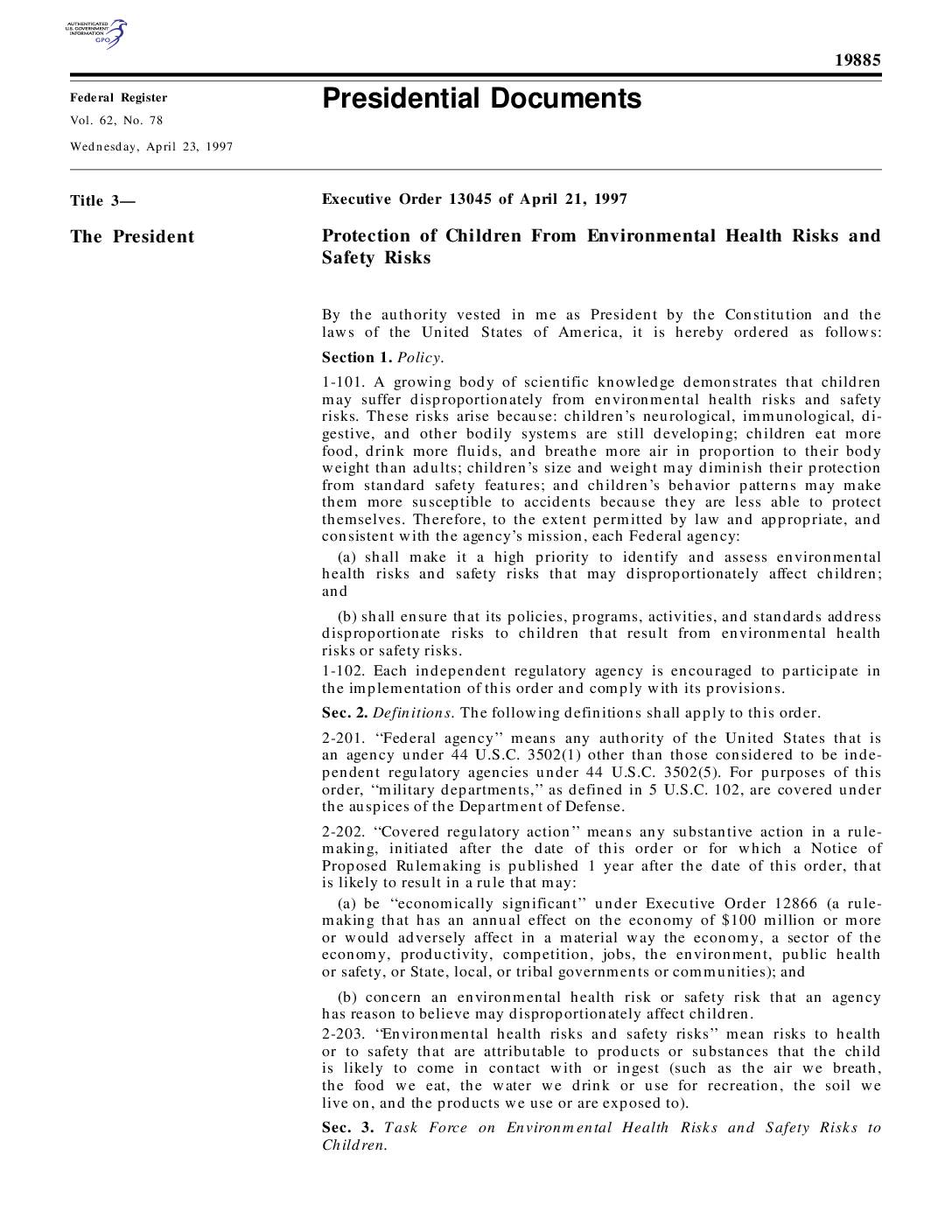
Executive order 13045 protection of children from environmental health risks and safety risks
Executive Order 13045, signed by President Clinton in April 1997, directs federal agencies to identify and address environmental health and safety risks that disproportionately affect children, recognizing that children are more vulnerable due to their developing bodies and behaviors. The order establishes a Task Force co-chaired by the Secretary of Health and Human Services and the EPA Administrator to coordinate federal research and recommend protective strategies. It also requires agencies to evaluate the effects of significant regulations on children's health and safety before those rules take effect.