TagEnvironmental Justice(99)
-
2025-02-24
Trump Administration Environmental-Justice-Related Executive Orders: Potential Implications for EPA Programs
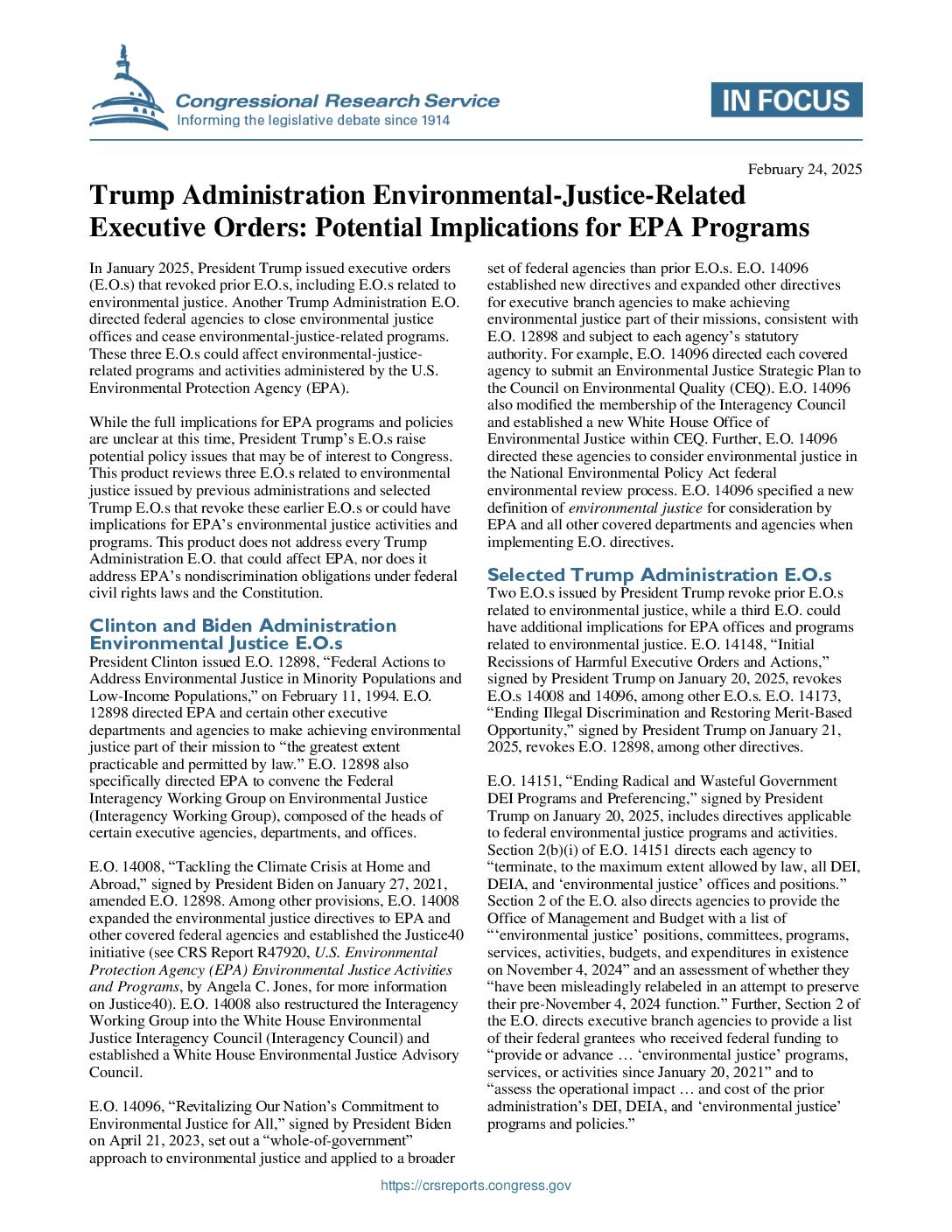
Download PDF (415KB) | PDF Version History IF12922.5 In January 2025, President Trump issued executive orders (E.O.s) that revoked prior E.O.s, including E.O.s related to environmental justice. Another Trump Administration E.O. directed federal agencies to close environmental justice offices and cease environmental-justice-related programs. These three E.O.s could affect environmental-justice-related programs and activities administered by the -
 2025-02-24
Trump administration environmental-justice-related executive orders: potential implications for EPA programs
This Congressional Research Service report explains how President Trump's 2025 executive orders revoked earlier Clinton and Biden administration environmental justice policies and directed federal agencies, including the EPA, to close environmental justice offices and end related programs. The report outlines which specific EPA programs and activities may be affected, such as grant programs, screening tools, and interagency councils. It also notes that while the executive orders change agency priorities, they do not override existing federal pollution control laws that Congress has established. -
 2025-02-17
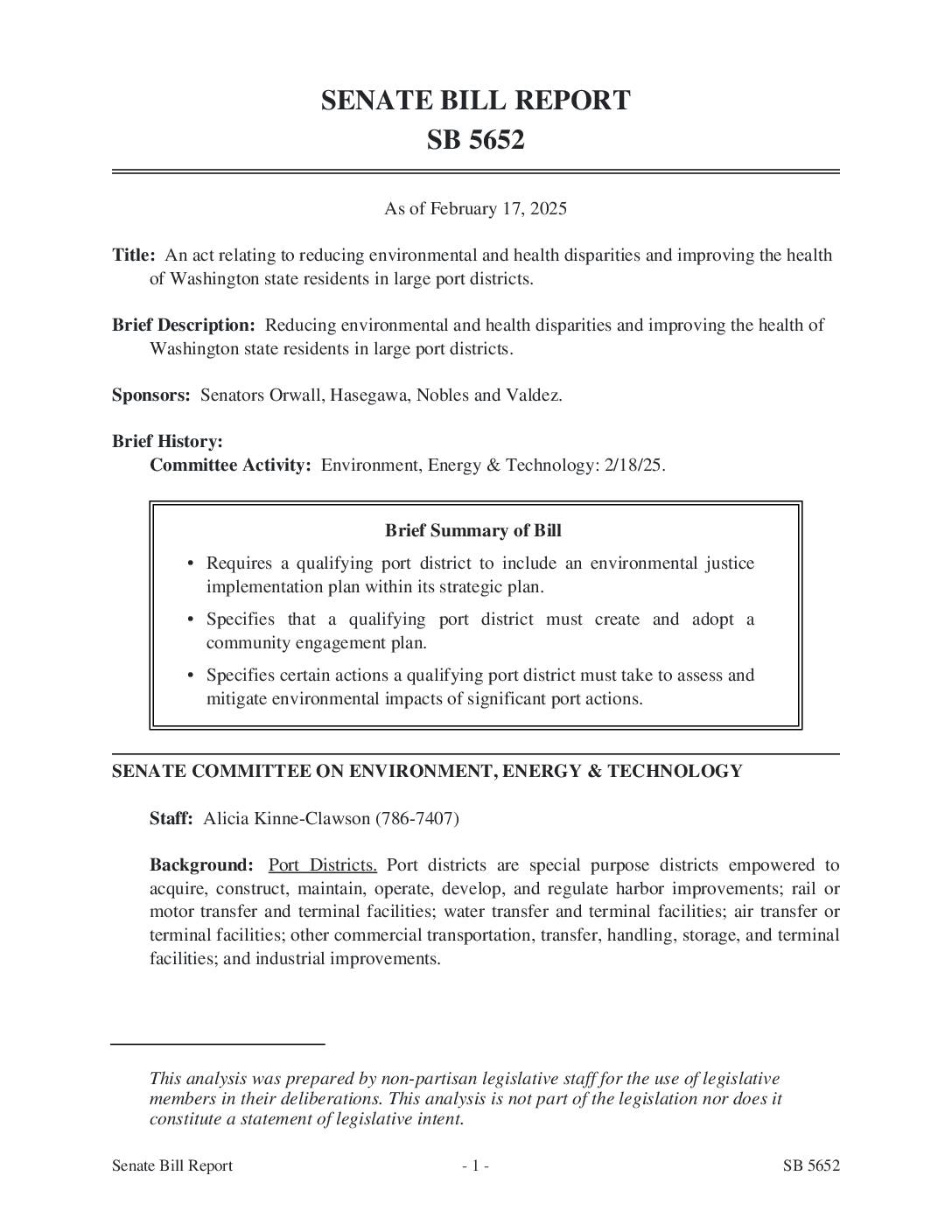
Senate Bill Report SB 5652: Reducing Environmental and Health Disparities in Large Port Districts
Washington Senate Bill 5652 would require large port districts — primarily the Port of Seattle, which operates Sea-Tac Airport — to develop environmental justice plans, community engagement strategies, and impact assessments aimed at reducing health and environmental disparities for residents affected by airport and port operations. For major capital projects valued at $8 million or more, or any action adding airport gates, the port would need an independent assessment from the University of Washington on cumulative health impacts to overburdened communities, along with a plan to mitigate those impacts. The bill was introduced in February 2025 and referred to the Senate Committee on Environment, Energy & Technology. -
 2025-02-12
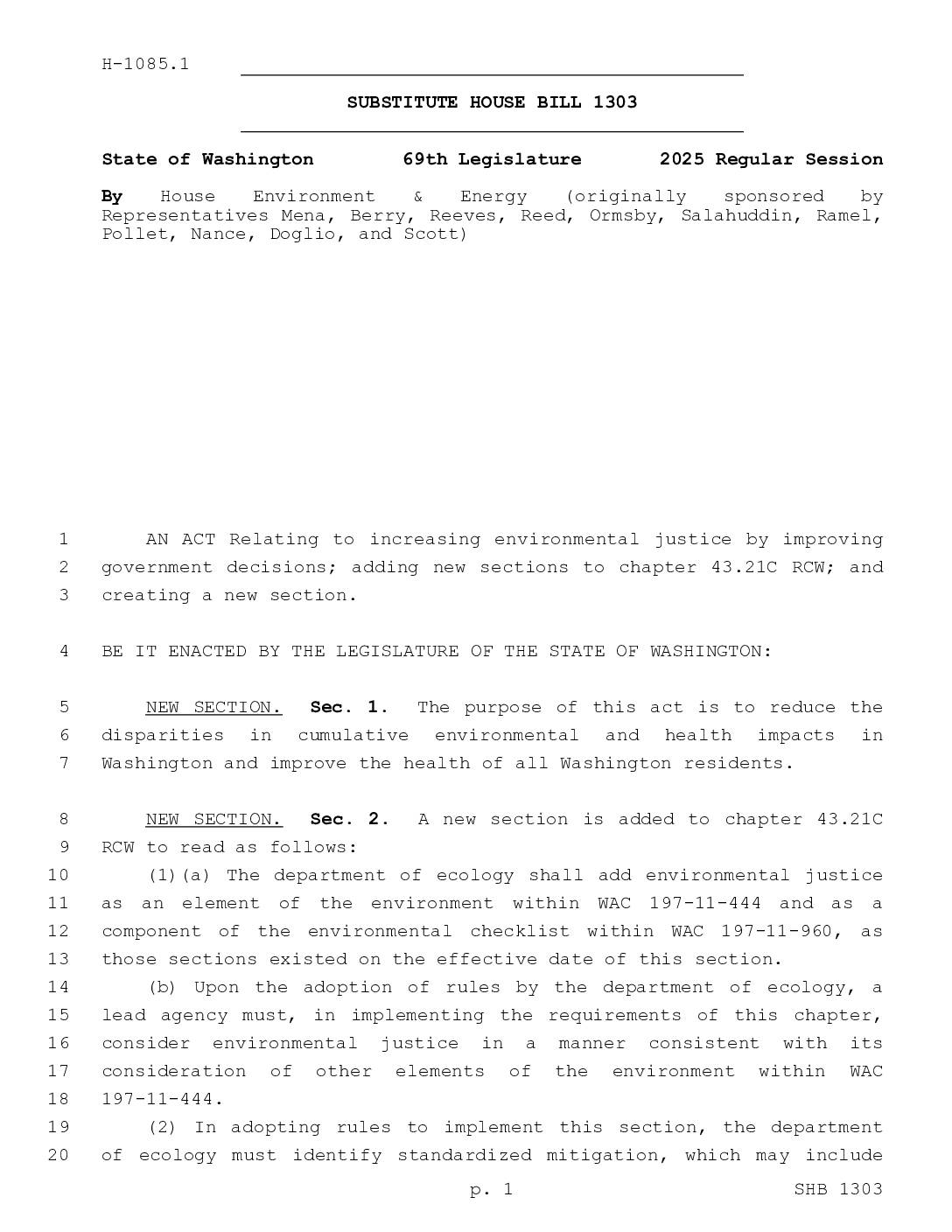
Substitute House Bill 1303: Increasing environmental justice by improving government decisions
Washington State Substitute House Bill 1303 requires the Department of Ecology to add environmental justice as a formal element of environmental review under the State Environmental Policy Act (SEPA), including updates to environmental checklists and impact assessments. The bill directs the agency to develop standardized mitigation measures for potential environmental justice impacts, which must be factored into project threshold determinations. These new requirements are intended to reduce disparate environmental and health burdens on overburdened communities across Washington State. -
 2025-02-11
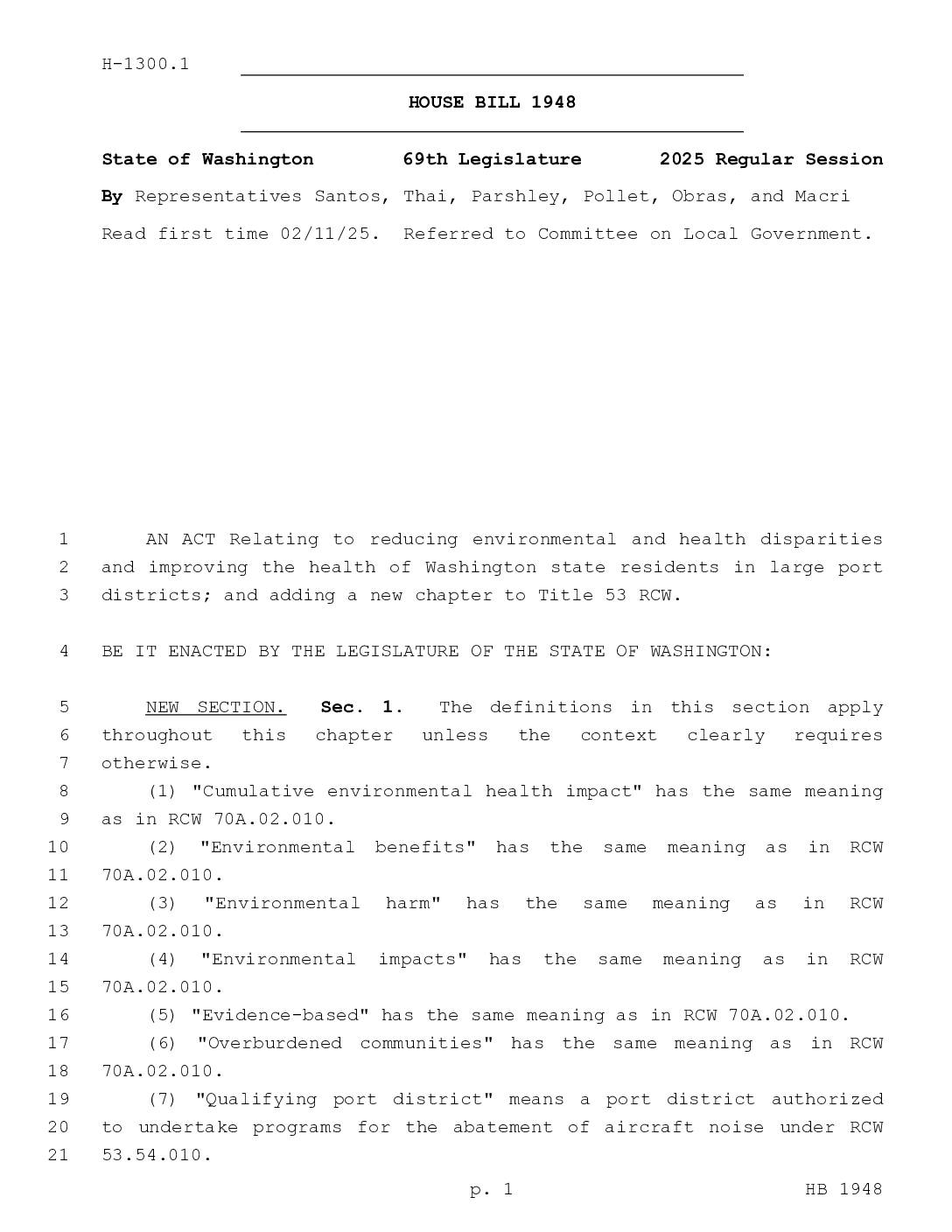
House Bill 1948 – Environmental Justice for Large Port Districts
Washington House Bill 1948 (2025) would require large port districts — such as the Port of Seattle, which operates Sea-Tac Airport — to develop environmental justice implementation plans and community engagement plans aimed at reducing health and environmental disparities for overburdened communities affected by airport noise and other port activities. The bill mandates that these plans include specific goals, measurable metrics, and outreach strategies to ensure meaningful participation from vulnerable populations, including people with limited English proficiency. Port districts would also be required to conduct environmental justice reviews for major capital projects valued at $8 million or more, or any action that increases the number of airport gates. -
 2025-02-06
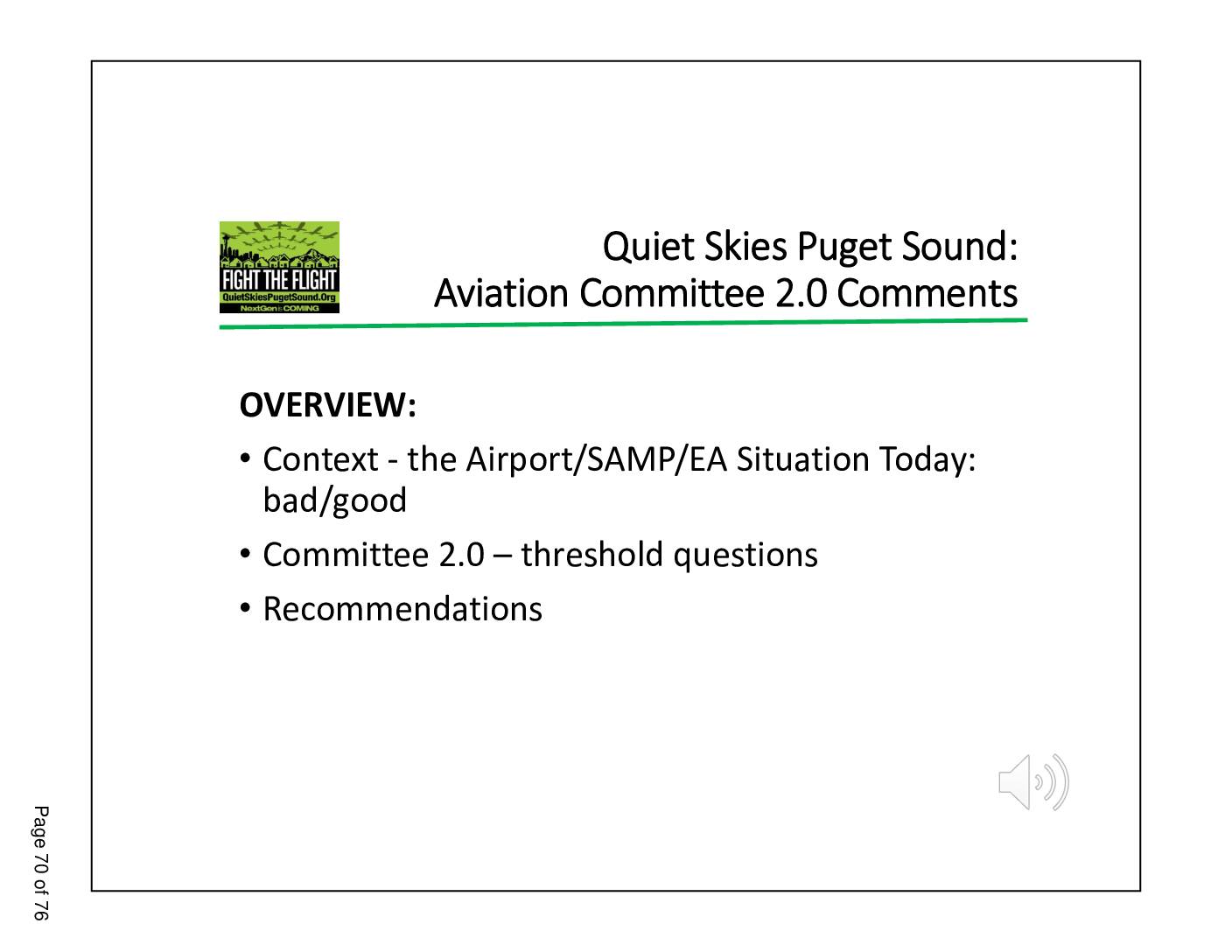
Quiet Skies Puget Sound: Aviation Committee 2.0 Comments
Quiet Skies Puget Sound presented concerns to the Aviation Committee 2.0 about the Sea-Tac Airport Master Plan (SAMP) draft Environmental Assessment, warning that 87,000 additional annual flights would pose serious public health risks to children, the elderly, and environmental justice communities. The group criticized the Port for failing to provide meaningful collaboration or mitigation across 4,600 pages of documentation, and argued that community forums like StART and the Highline Forum have been treated as mere formalities. On a positive note, the group highlighted growing opposition to the SAMP from the EPA, local cities, advocacy groups, and elected officials, as well as a favorable legal and regulatory environment for challenging the airport's expansion plans. -
 2025-01-29
Bill request S-0809.1/25: Reducing environmental and health disparities and improving the health of Washington state residents in large port districts
This proposed Washington State bill would require large port districts — such as those operating major airports like Sea-Tac — to develop and adopt environmental justice implementation plans aimed at reducing health and environmental disparities in surrounding communities. The plans must include specific goals, measurable metrics, community engagement strategies, and timelines for incorporating environmental justice considerations into port activities. It also establishes oversight for major capital projects valued at $8 million or more, or any actions that increase the number of airport gates. -
 2025-01-28
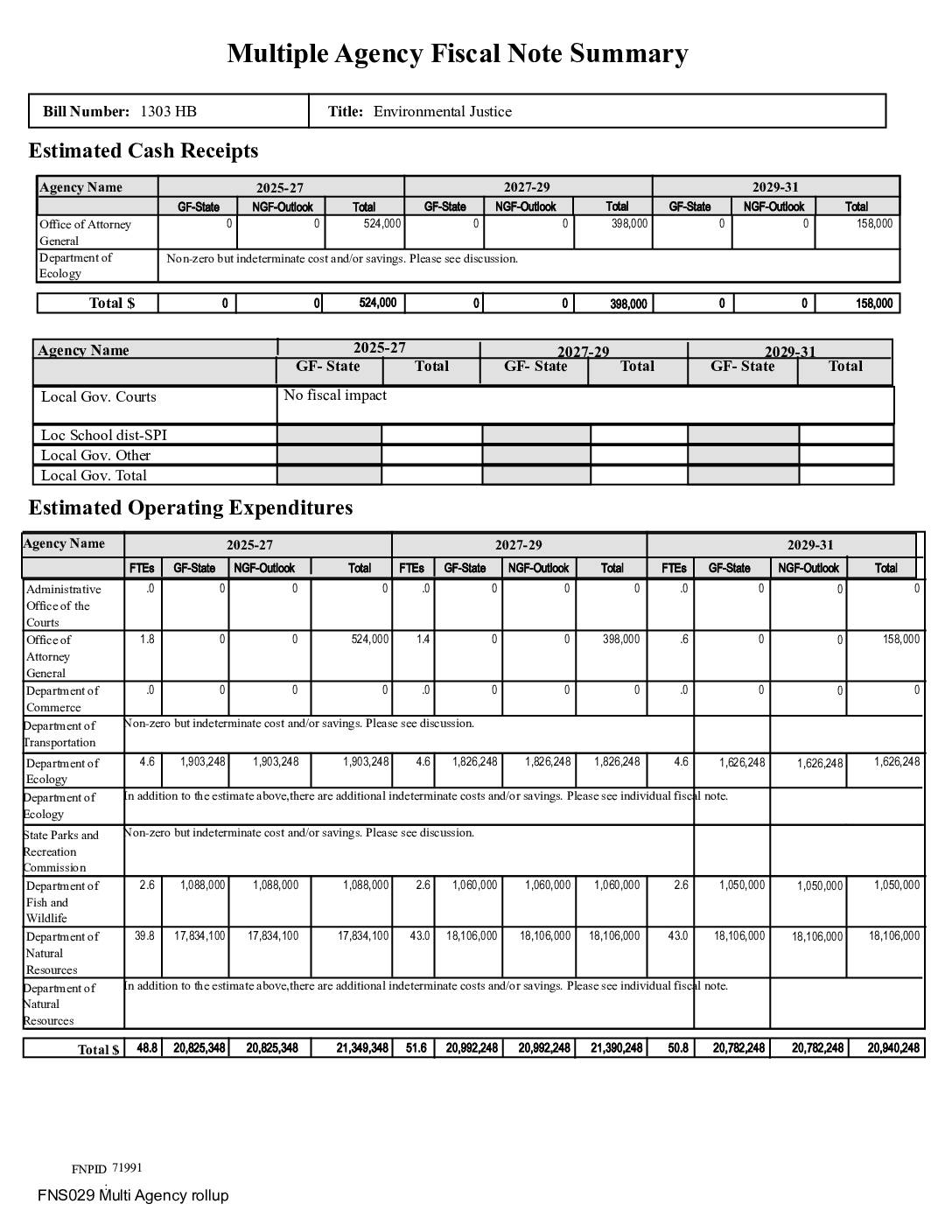
Multiple agency fiscal note summary: HB 1303 Environmental Justice
House Bill 1303, titled 'Environmental Justice,' is a Washington State legislative proposal whose fiscal note estimates total operating expenditures of approximately $21.3 million across multiple state agencies for the 2025–27 biennium, with similar costs projected through 2031. The largest spending impacts fall on the Department of Natural Resources (~$17.8 million) and the Department of Ecology, while agencies such as the Administrative Office of the Courts report no fiscal impact. Several agencies, including the Department of Transportation and State Parks and Recreation Commission, report non-zero but indeterminate costs that require further review. -
 2025-01-23
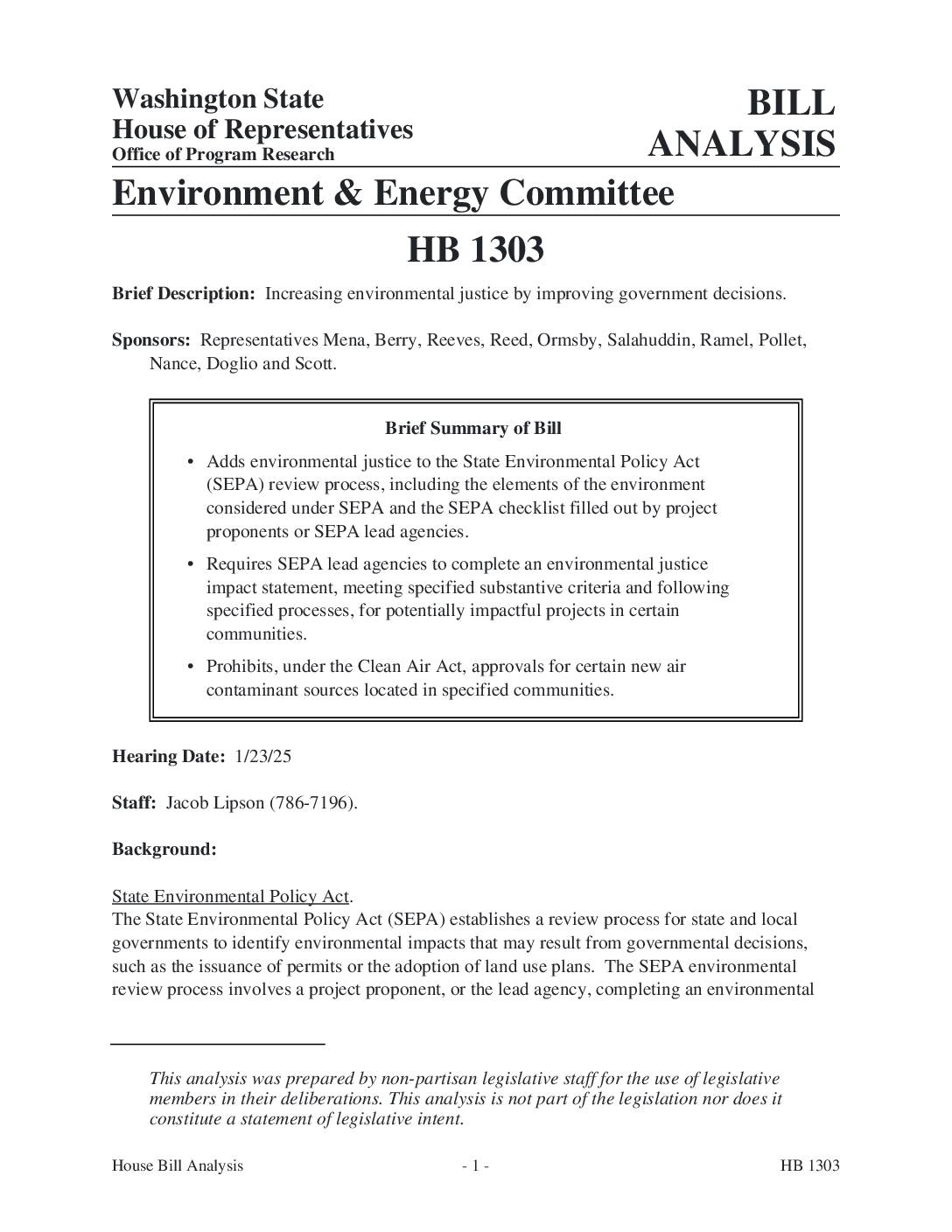
Bill analysis: HB 1303 — Increasing environmental justice by improving government decisions
HB 1303 is a Washington State bill focused on environmental justice, not Sea-Tac Airport noise policy. It proposes adding environmental justice considerations to the State Environmental Policy Act (SEPA) review process and prohibiting certain air pollution permits in overburdened communities. This document does not contain relevant content for a Sea-Tac Airport noise policy archive. -
 2025-01-21
Senate Bill 5380: Increasing environmental justice by improving government decisions
Washington Senate Bill 5380 (2025) requires state agencies to evaluate environmental justice impacts when reviewing permits for industrial or potentially harmful projects located in pollution-burdened communities. It mandates the completion of an Environmental Justice Impact Statement and a public hearing within affected communities before project approvals can move forward. The bill aims to reduce cumulative environmental and health disparities across Washington State.