TagDes Moines Creek(162)
-
 2000-12-01
EXH AR049788: Supplement Biological Assessment — Master Plan Update Improvements, Seattle-Tacoma International Airport
Supplement Biological Assessment prepared by Parametrix, Inc. (December 2000) for the Federal Aviation Administration and Port Of Seattle for reinitiation and initiation of ESA Section 7 consultation on STIA Master Plan Update Improvements. AR 049788. Document covers hydrologic impacts and mitigation for Miller Creek, Walker Creek, and Des Moines Creek watersheds, including stormwater detention facility -
 2000-12-01
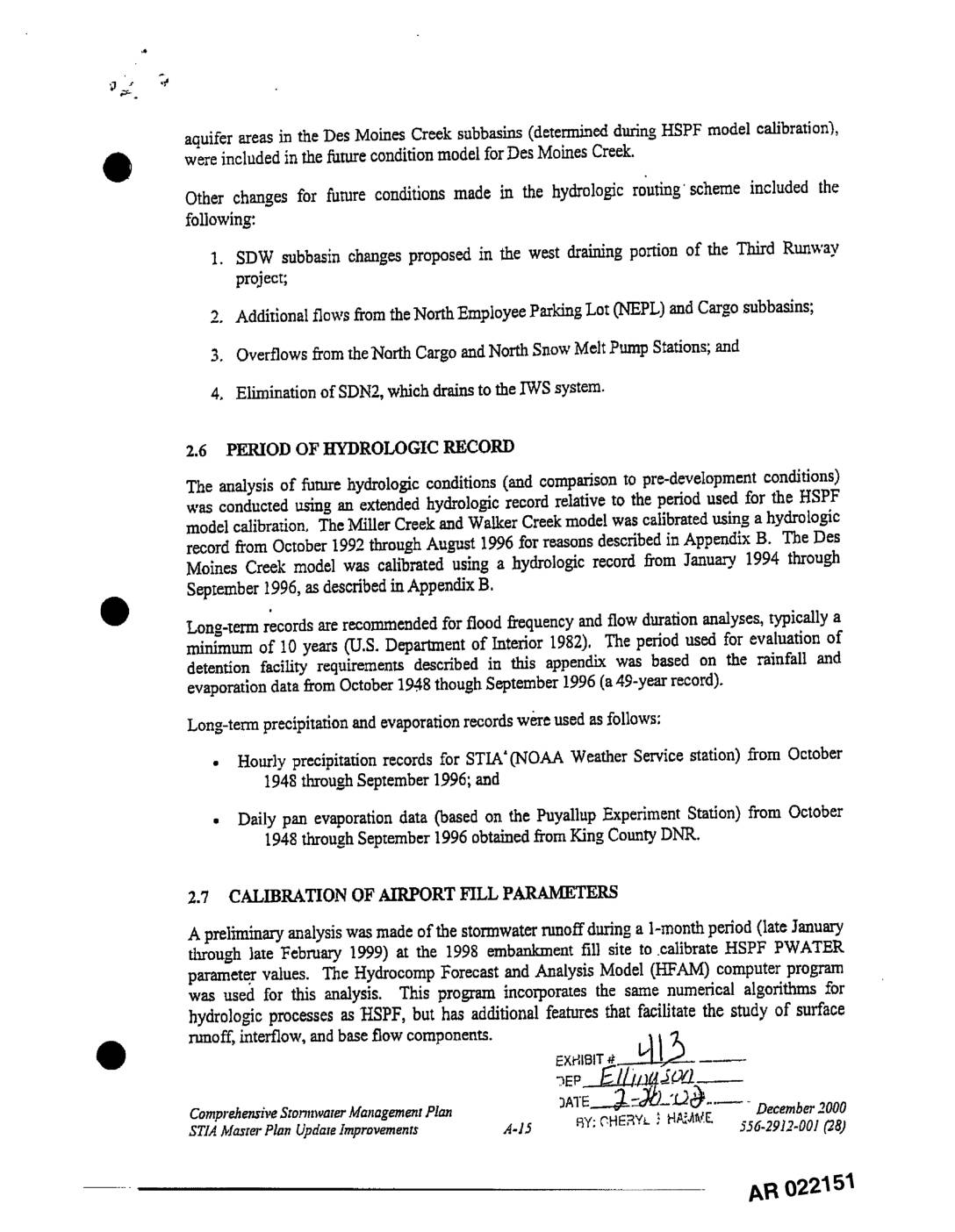
EXH 413: Comprehensive Stormwater Management Plan STIA Master Plan Update Improvements App A §§2.6–2.7 Airport Fill Parameter Calibration
This technical document describes hydrological modeling conducted for the Seattle-Tacoma International Airport (Sea-Tac) Master Plan Update, focusing on stormwater runoff analysis for Des Moines Creek, Miller Creek, and Walker Creek subbasins. It details the calibration of computer models using rainfall and evaporation data spanning October 1948 through September 1996, along with parameters for airport embankment fill materials. The analysis was used to evaluate future stormwater detention facility requirements associated with airport expansion projects, including the Third Runway. -
 2000-11-29
EXH AR029054: Sea-Tac Airport Third Runway 401 Permit Negotiations — Final Draft Meeting Notes, November 29, 2000
Final draft meeting notes from November 29, 2000 (9:30am–2:00pm) prepared by Kate Snider of Floyd & Snider Inc. for Sea-Tac Airport Third Runway 401 permit negotiations between Port Of Seattle (Elizabeth Leavitt, Michael Cheyne, Keith Smith) and Washington State Department of Ecology (Kevin Fitzpatrick, Ann Kenny, Dave Garland), with King County (David Masters, Kelly Whiting) -
 2000-11-01
EXH AR043696: Examining the Effects of Runway Deicing on Dissolved Oxygen in Receiving Waters: Results of the 1999-2000 Winter Season, STIA
Port Of Seattle report (AR 043696, Volume 1) examining effects of runway deicing chemicals on dissolved oxygen in receiving waters at Seattle-Tacoma International Airport for the 1999-2000 winter season. Documents ground deicing chemical applications including potassium acetate (PA, Cryotech E36 LRD), sodium acetate (SA), and calcium magnesium acetate (CMA) on airfield, ramp, and landside roadways. -
 2000-10-31
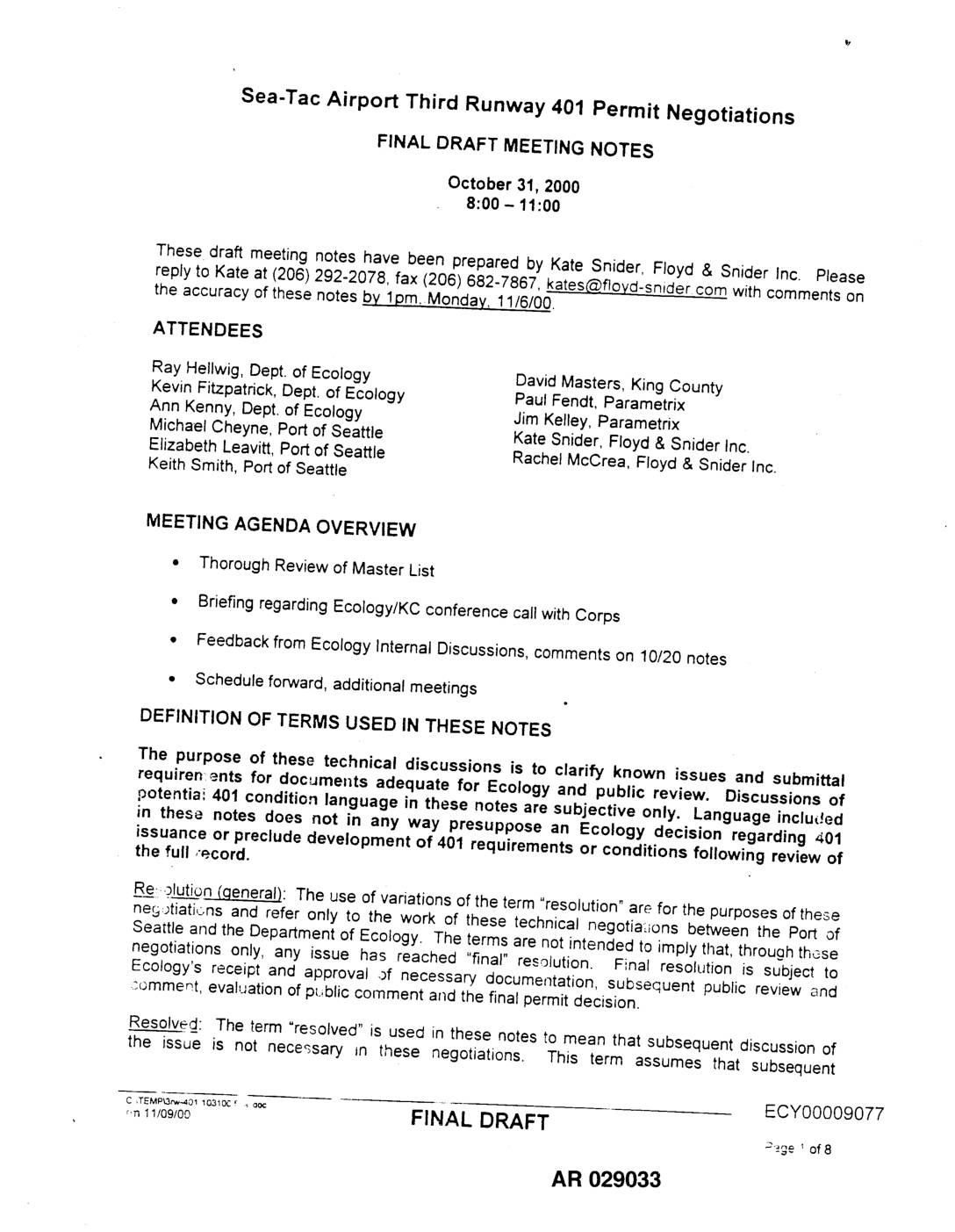
EXH AR029033: Sea-Tac Airport Third Runway 401 Permit Negotiations — Final Draft Meeting Notes, October 31, 2000
Final draft meeting notes prepared by Kate Snider of Floyd & Snider Inc. for the Sea-Tac Airport Third Runway 401 Permit Negotiations meeting held October 31, 2000, 8:00–11:00 AM. Attendees included representatives from Washington State Department of Ecology (Ray Hellwig, Kevin Fitzpatrick, Ann Kenny), Port Of Seattle (Michael Cheyne, Elizabeth Leavitt, Keith Smith), King County -
 2000-10-31
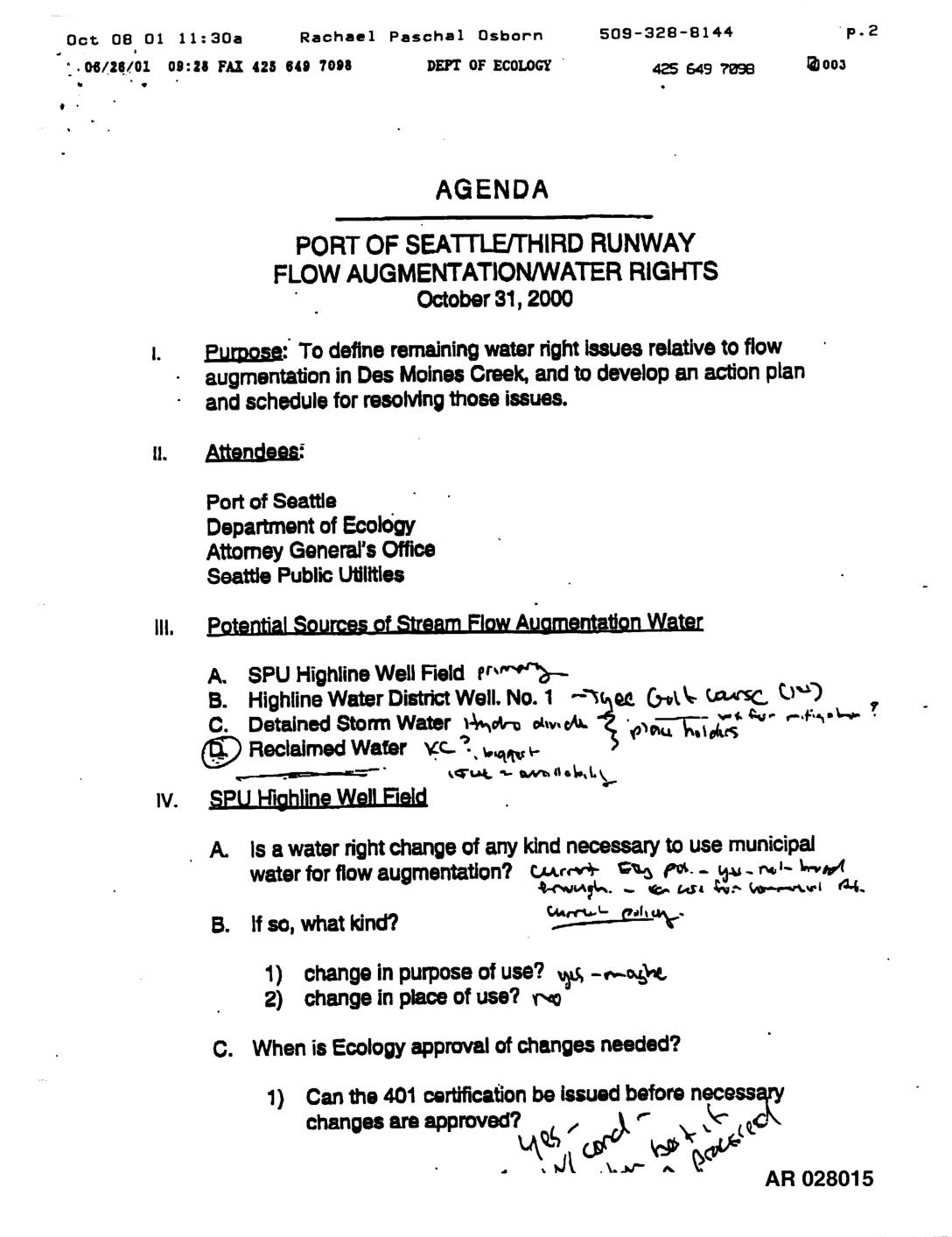
EXH AR028015: Port Of Seattle Third Runway Flow Augmentation/Water Rights Agenda — October 31, 2000
Agenda for Port Of Seattle Third Runway Flow Augmentation/Water Rights meeting dated October 31, 2000, with handwritten notes. Attendees included Port Of Seattle, Department of Ecology, Attorney General’s Office, and Seattle Public Utilities (SPU). Topics covered potential sources of stream flow augmentation water for Des Moines Creek: SPU Highline Well Field, Highline Water District Well -
 2000-10-31
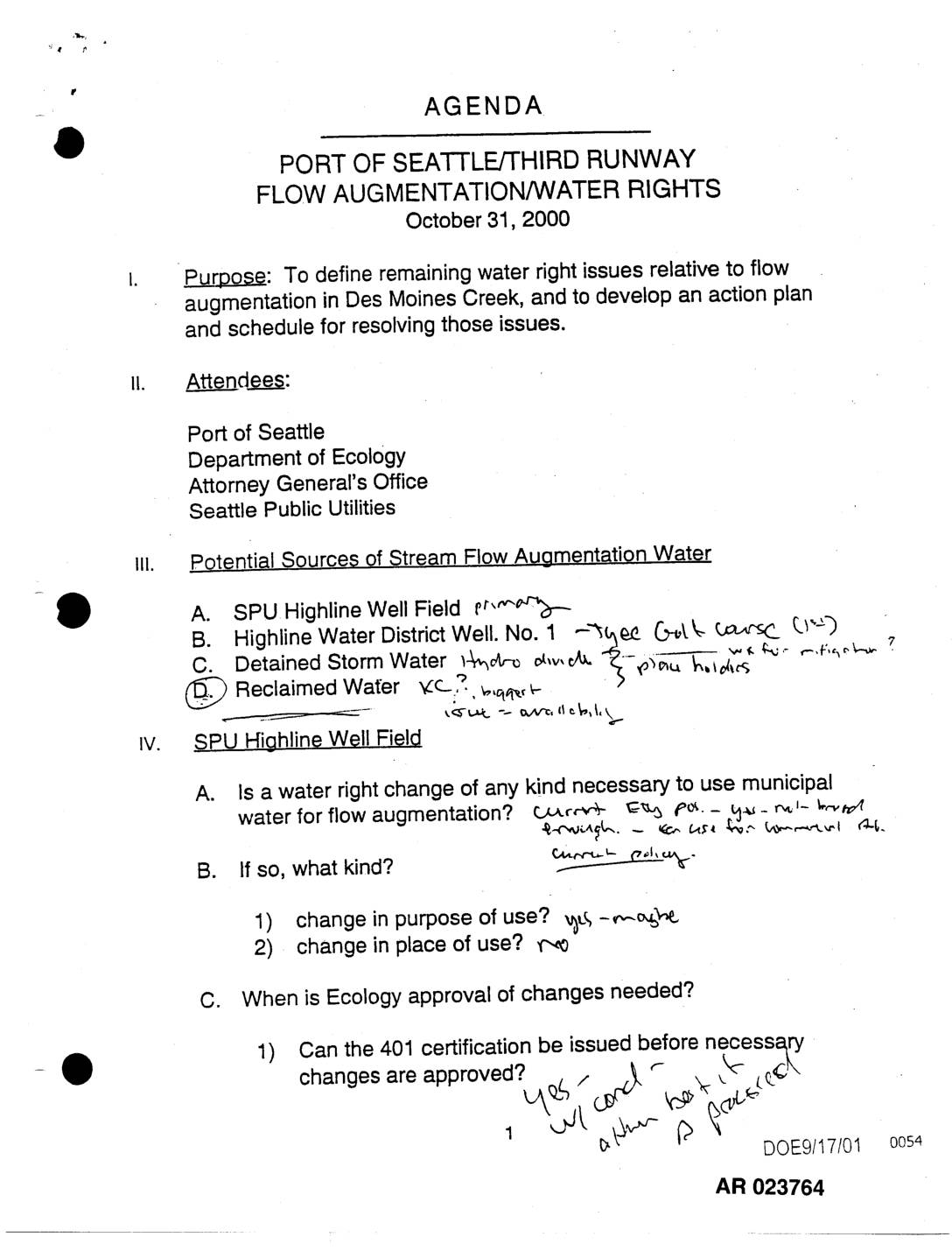
EXH AR023764: Agenda — Third Runway Flow Augmentation/Water Rights Meeting
This October 31, 2000 agenda document outlines a meeting between the Port of Seattle, the Department of Ecology, the Attorney General's Office, and Seattle Public Utilities to address water rights issues related to flow augmentation in Des Moines Creek, connected to the Sea-Tac Airport Third Runway project. The meeting focused on identifying potential sources of stream flow augmentation water, including the SPU Highline Well Field, Highline Water District wells, detained stormwater, and reclaimed water. Key discussion points included whether water right changes were necessary, what approvals were required from the Department of Ecology, and how to develop an action plan for resolving outstanding legal and regulatory issues. -
 2000-10-27
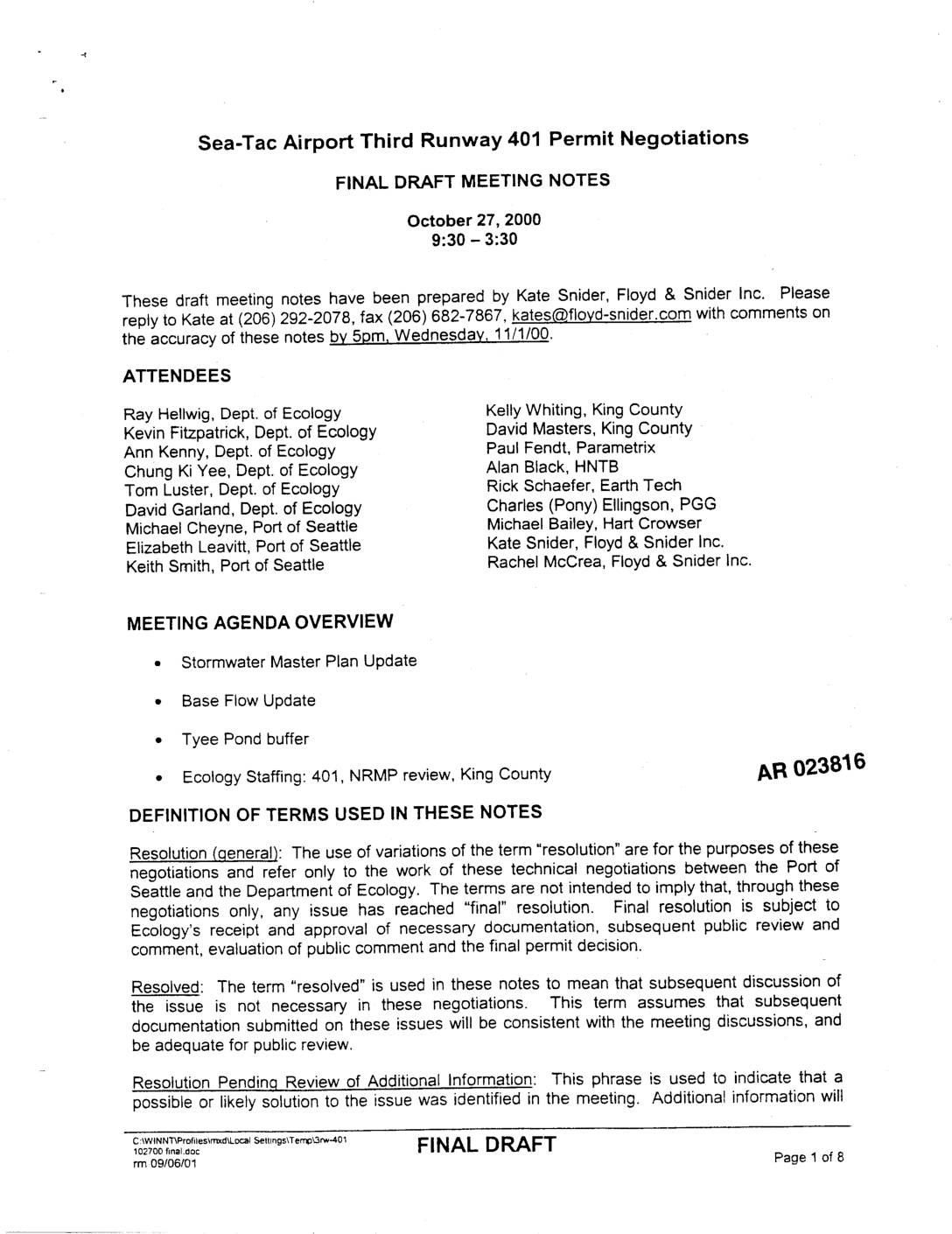
EXH AR023816: STIA Third Runway 401 Permit Negotiations Final Draft Meeting Notes Oct 27 2000
These are meeting notes from a October 27, 2000 negotiation session between the Port of Seattle and the Washington Department of Ecology regarding the 401 Water Quality Permit for Sea-Tac Airport's Third Runway project. The meeting covered technical issues including stormwater management planning, base flow impacts, and the Tyee Pond buffer, with participants tracking the resolution status of dozens of environmental compliance items. A jointly maintained master list of issues was used to document which technical concerns had been resolved, were pending additional information, or required further discussion before the permit could be issued. -
 2000-10-26
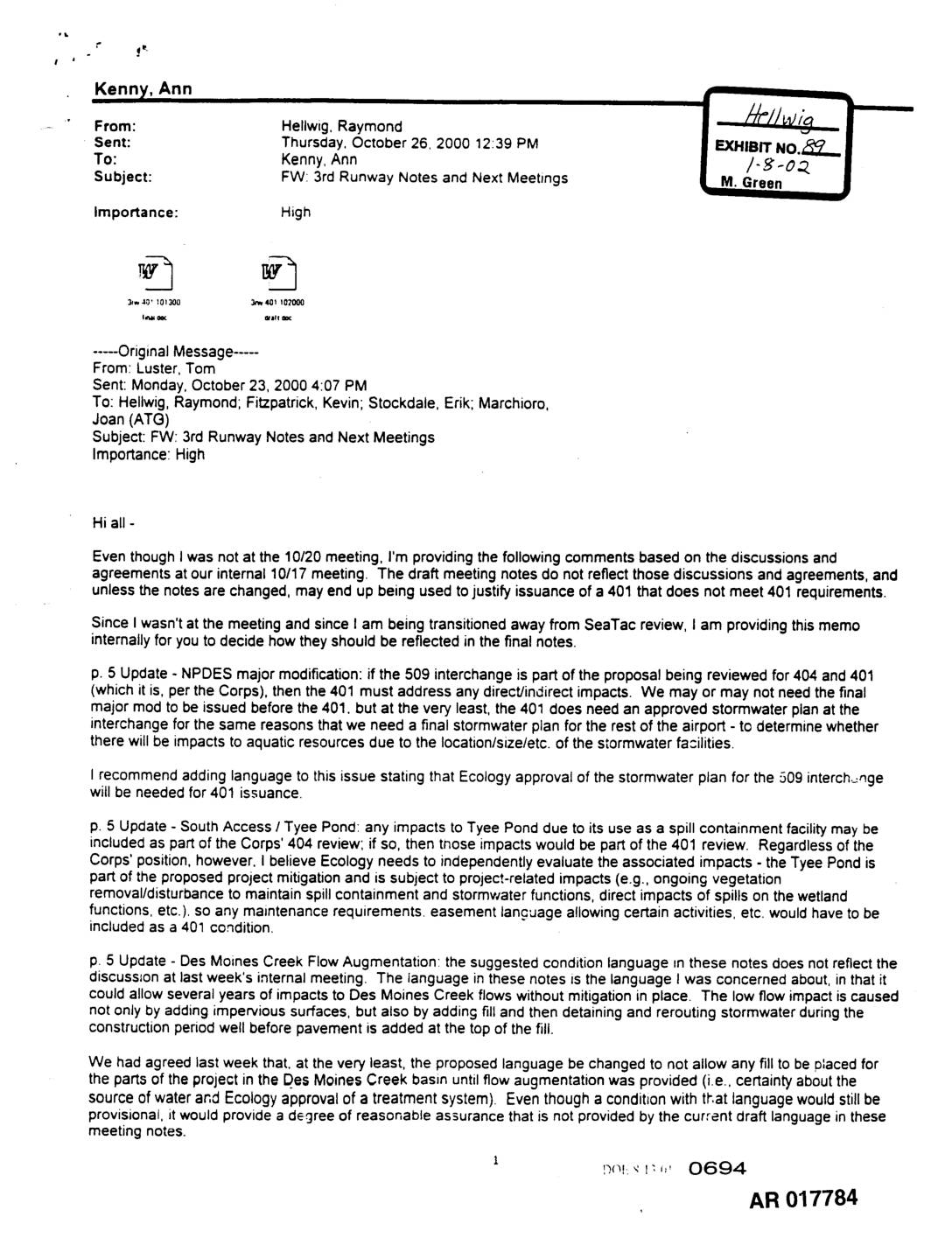
Exhibit 89: FW: 3rd Runway Notes and Next Meetings — Ecology Internal Comments on 401 Certification Issues
Exhibit 89 (AR 017784-017785). Email chain forwarded by Raymond Hellwig (Ecology) to Ann Kenny on October 26, 2000, containing internal comments by Tom Luster (Ecology) on draft 10/20/2000 meeting notes for the Sea-Tac Airport third runway 401/404 review. Luster raises concerns about: NPDES major modification and stormwater plan for SR-509 interchange; South Access/Tyee Pond spill -
 2000-10-24
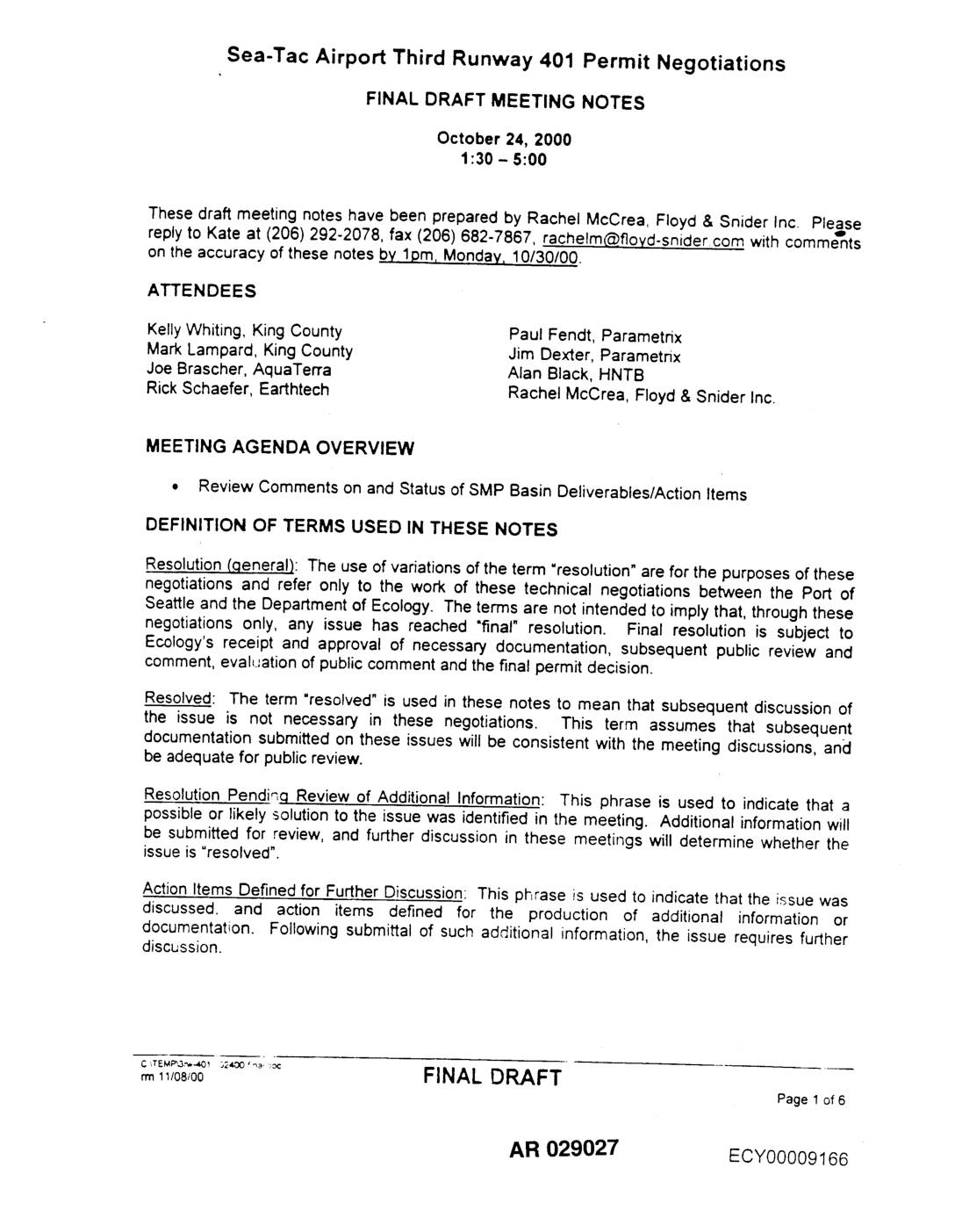
EXH AR029027: Sea-Tac Airport Third Runway 401 Permit Negotiations — Final Draft Meeting Notes, October 24, 2000
Final draft meeting notes prepared by Rachel McCrea of Floyd & Snider Inc. for the Sea-Tac Airport Third Runway 401 Permit Negotiations meeting held October 24, 2000, 1:30–5:00 PM. Attendees include representatives from King County (Kelly Whiting, Mark Lampard), AquaTerra (Joe Brascher), Earthtech (Rick Schaefer), Parametrix (Paul Fendt, Jim Dexter), HNTB (Alan Black), and Floyd