TagACC(1548)
-
 1999-08-09
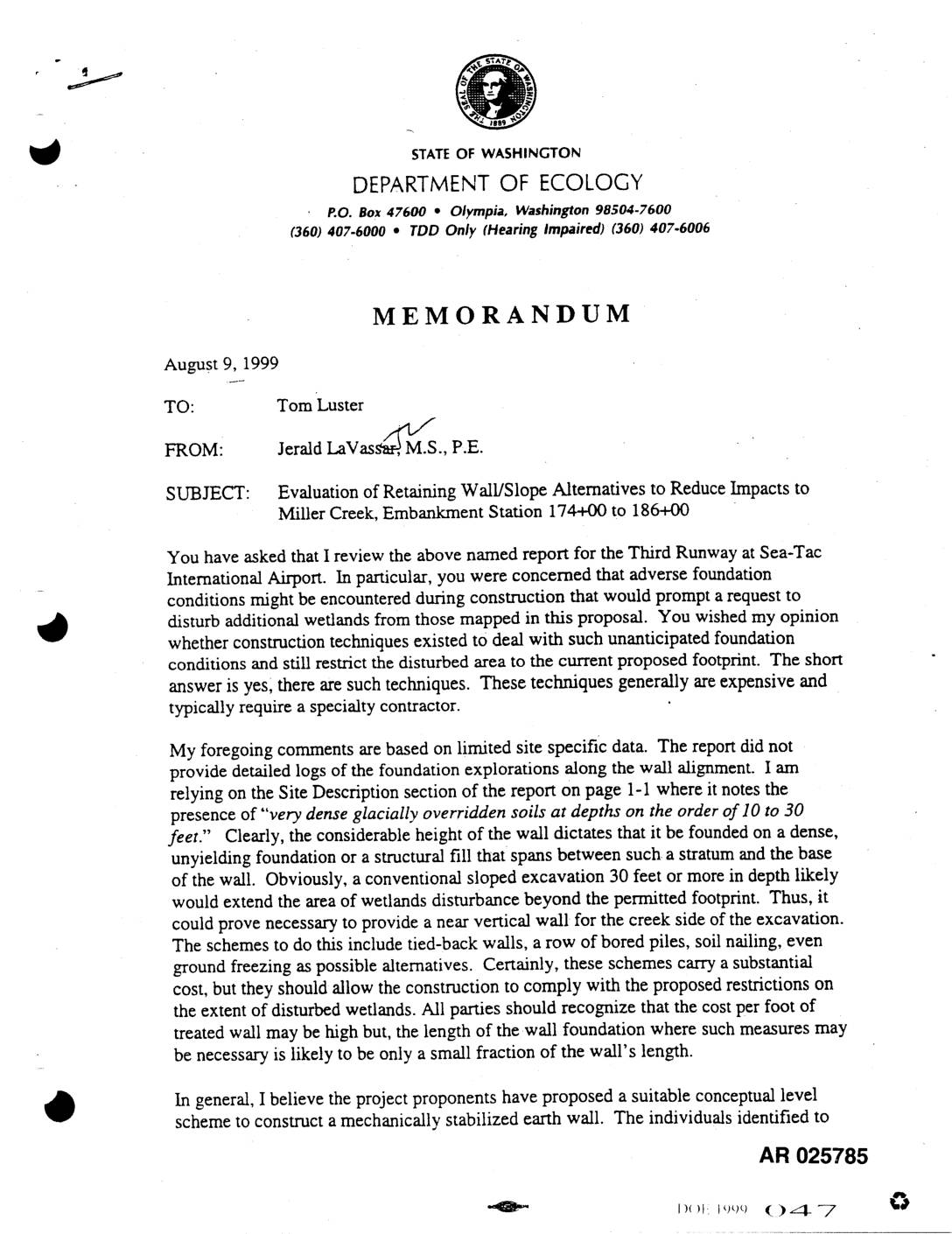
EXH AR025785: Ecology Memo — Retaining Wall/Slope Alternatives, Miller Creek, Sta 174+00–186+00
A 1999 memo from the Washington State Department of Ecology evaluates construction techniques for a retaining wall near Miller Creek at Sea-Tac International Airport's Third Runway project. The memo concludes that specialized methods such as tied-back walls, bored piles, soil nailing, or ground freezing can address difficult underground soil conditions while keeping construction within the approved wetlands disturbance footprint, though at significant cost. The author also recommends installing monitoring devices in the wall and backfill to confirm the structure performs as designed throughout its service life. -
 1999-08-01
EXH AR042630: Draft Wetlands Re-Evaluation Document — STIA Master Plan Update Improvements
Draft Wetlands Re-Evaluation Document prepared by Port Of Seattle in August 1999 for Seattle-Tacoma International Airport (STIA) Master Plan Update Improvements. Addresses new information on wetlands and aquatic resources affected by the planned new third runway and related improvements, not available during preparation of the 1996 Final Environmental Impact Statement (FEIS) or 1997 Final Supplemental -
 1999-07-13
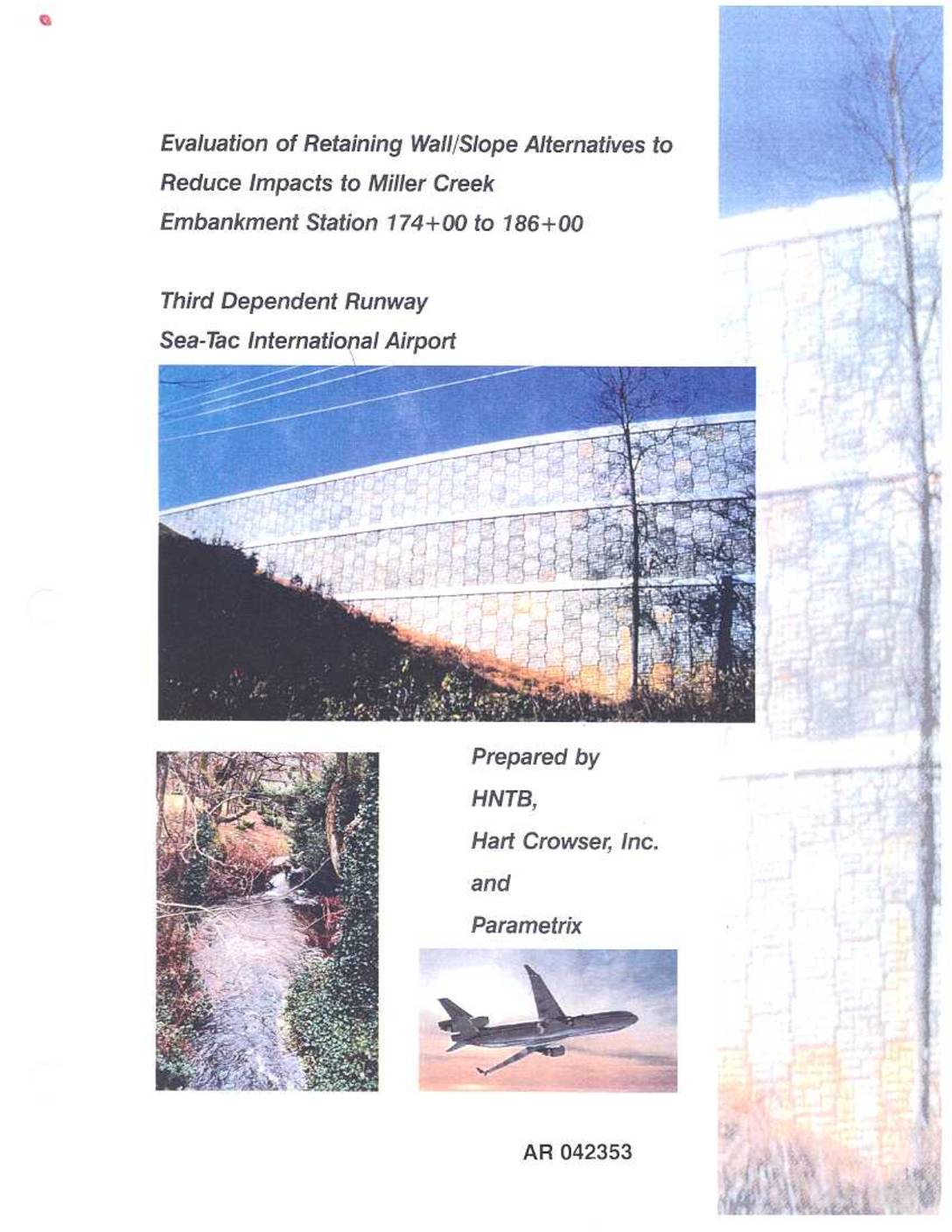
EXH AR042353: Evaluation of Retaining Wall/Slope Alternatives to Reduce Impacts to Miller Creek, Embankment Station 174+00 to 186+00, Third Runway, Sea-Tac International Airport
Report AR042353 prepared by HNTB, Hart Crowser Inc., and Parametrix for Port Of Seattle Aviation Program Management Group, evaluating retaining wall and slope alternatives to reduce impacts to Miller Creek at embankment station 174+00 to 186+00 for the Third Dependent Runway project at Sea-Tac International Airport. Transmitted July 13, 1999 by Barbara Hinkle to Tom -
 1999-07-09
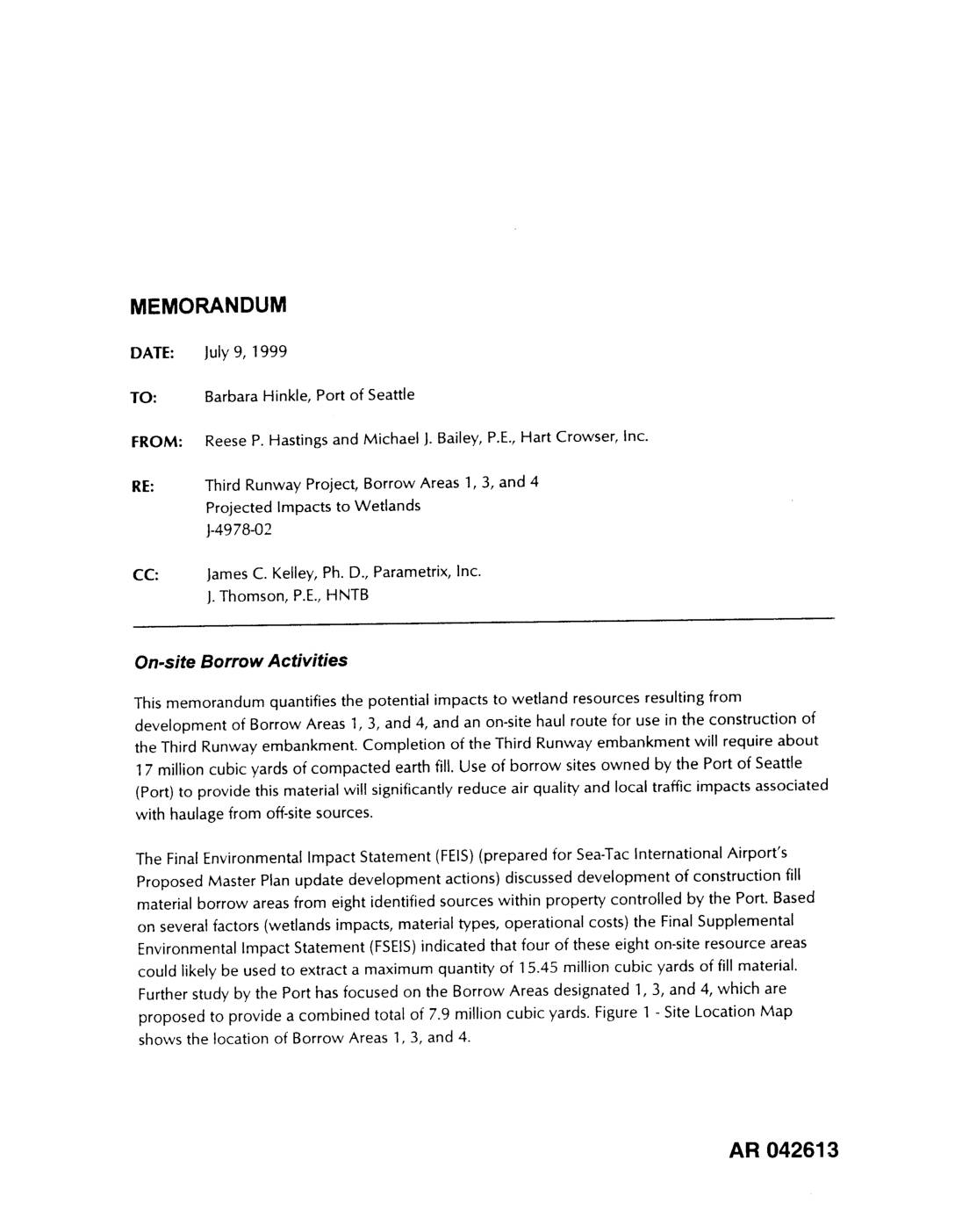
EXH AR042613: Third Runway Project, Borrow Areas 1, 3, and 4 — Projected Impacts to Wetlands
Memorandum dated July 9, 1999 from Reese P. Hastings and Michael J. Bailey, P.E. (Hart Crowser, Inc.) to Barbara Hinkle, Port Of Seattle, regarding Third Runway Project Borrow Areas 1, 3, and 4 and projected impacts to wetlands. Document J-4978-02 quantifies potential wetland resource impacts from excavation of borrow areas providing 7.9 million bank cubic -
 1999-07-01
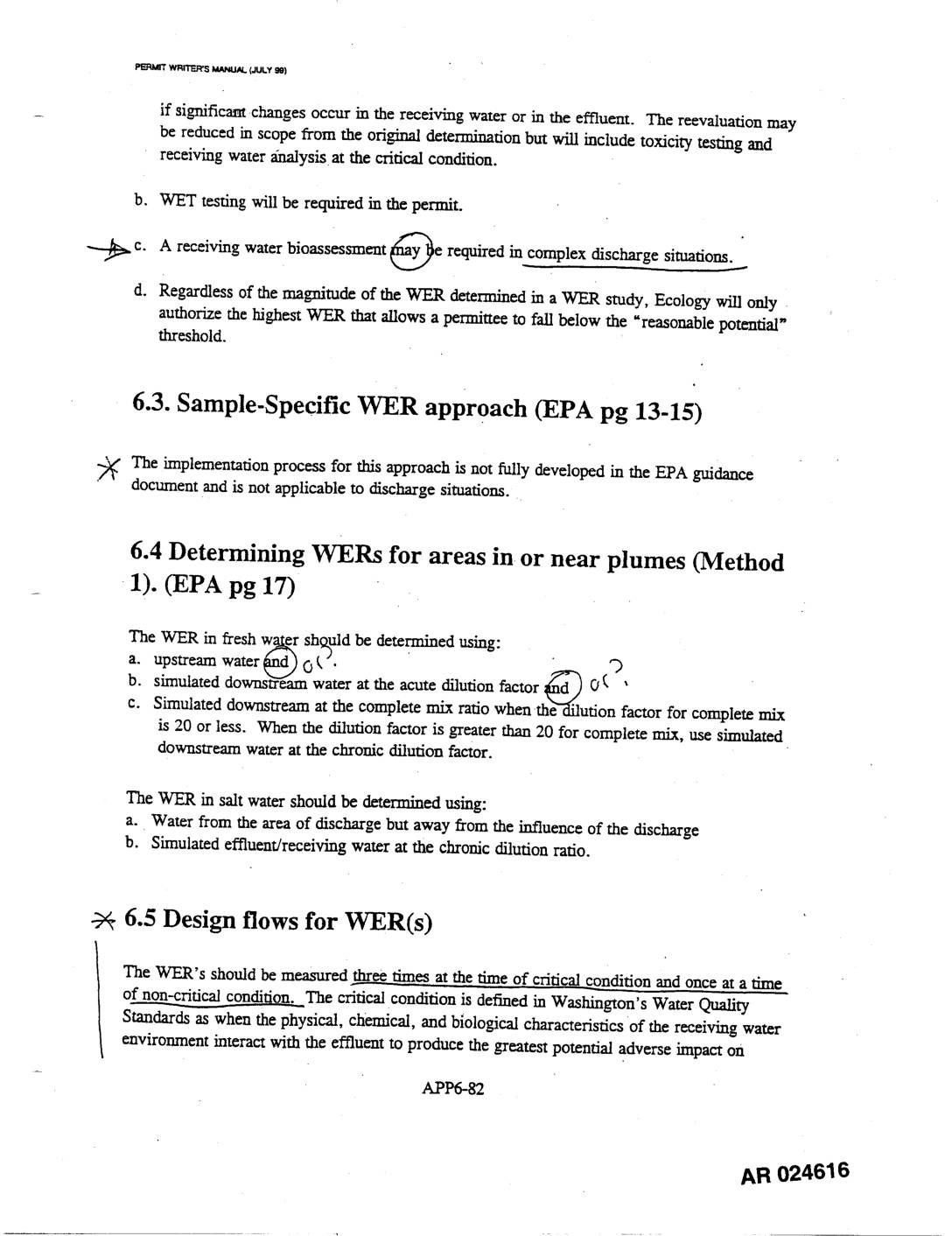
EXH AR024616: Permit Writer’s Manual (July 1999) WER Methodology Sections 6.3–6.7
This document is a section of Washington State's Permit Writer's Manual covering Water Effect Ratio (WER) methodology for water quality permitting. It outlines procedures for determining how receiving water conditions affect the toxicity of discharged effluents, including required toxicity testing species, sampling schedules at critical and non-critical flow conditions, and guidelines for freshwater and saltwater discharge situations. The document is unrelated to Sea-Tac Airport noise policy. -
 1999-07-01
EXH AR042527: Subsurface Conditions Data Report — 404 Permit Support, Third Runway Embankment
Hart Crowser subsurface conditions data report prepared for HNTB Corporation and Port Of Seattle, project J-4978-06, July 1999, supporting 404 permit for Third Runway embankment at Sea-Tac Airport. Covers generalized geologic and hydrogeologic conditions, subsurface soil conditions, hydraulic conductivity estimates, slug testing, water level data, SPT borings (HC99-B31 through HC99-B47), test pits (HC99-TP1 through HC99-TP21, -
 1999-06-30
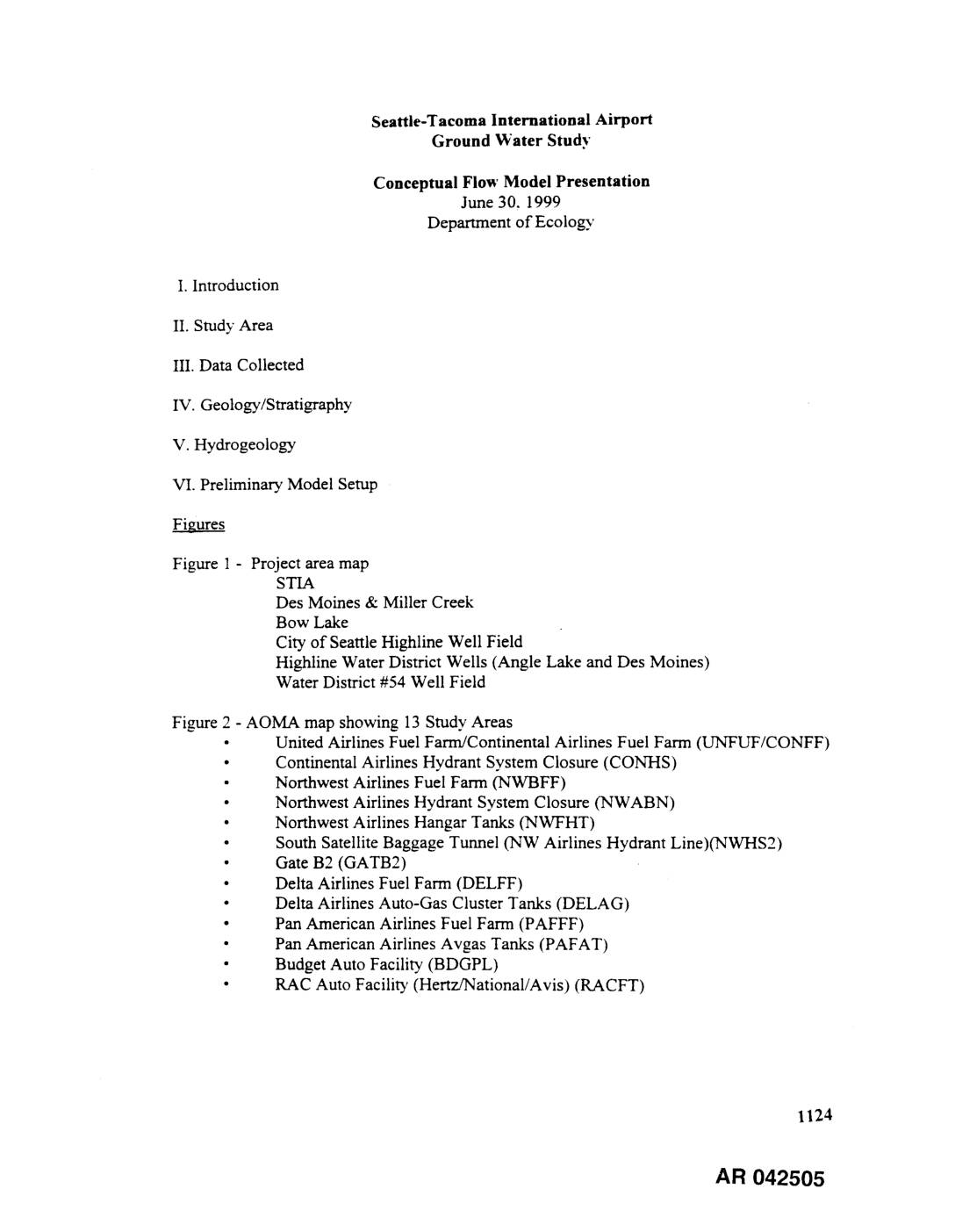
EXH AR042505: STIA Ground Water Study — Conceptual Flow Model Presentation
Conceptual Flow Model Presentation for the Seattle-Tacoma International Airport (STIA) Ground Water Study, prepared by Associated Earth Sciences, Inc. and S.S. Papadopulos and Associates, Inc. for the Port of Seattle, presented to the Washington State Department of Ecology on June 30, 1999. Document outlines study area including Des Moines Creek, Miller Creek, Bow Lake, City -
 1999-06-29
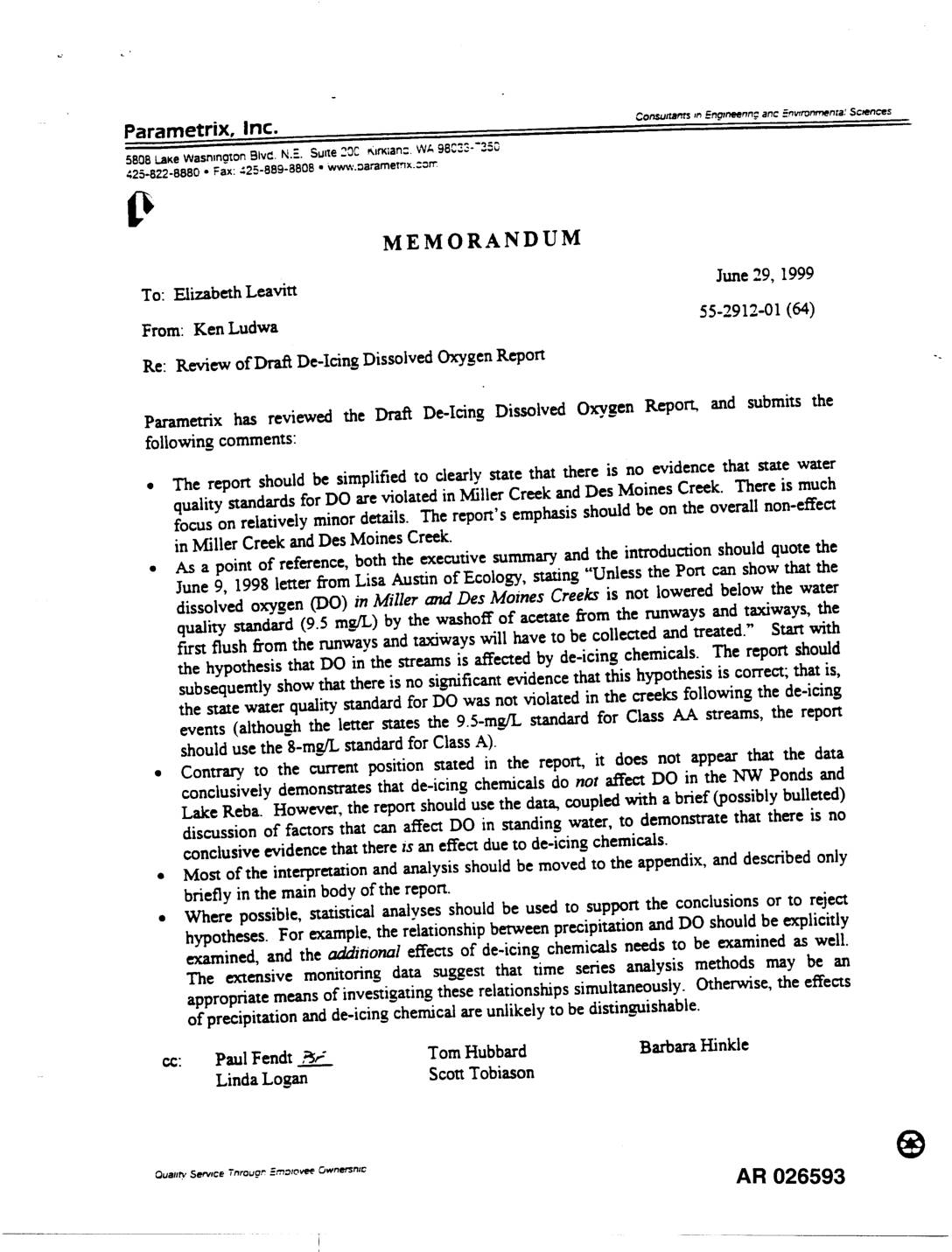
Exhibit 026593: Memorandum — Review of Draft De-Icing Dissolved Oxygen Report
Memorandum from Ken Ludwa of Parametrix, Inc. to Elizabeth Leavitt, dated June 29, 1999, reviewing the Draft De-Icing Dissolved Oxygen Report related to Sea-Tac Airport runway and taxiway acetate washoff. Comments address dissolved oxygen (DO) water quality standards (8 mg/L Class A, 9.5 mg/L Class AA) in Miller Creek and Des Moines Creek, NW Ponds, -
 1999-06-17
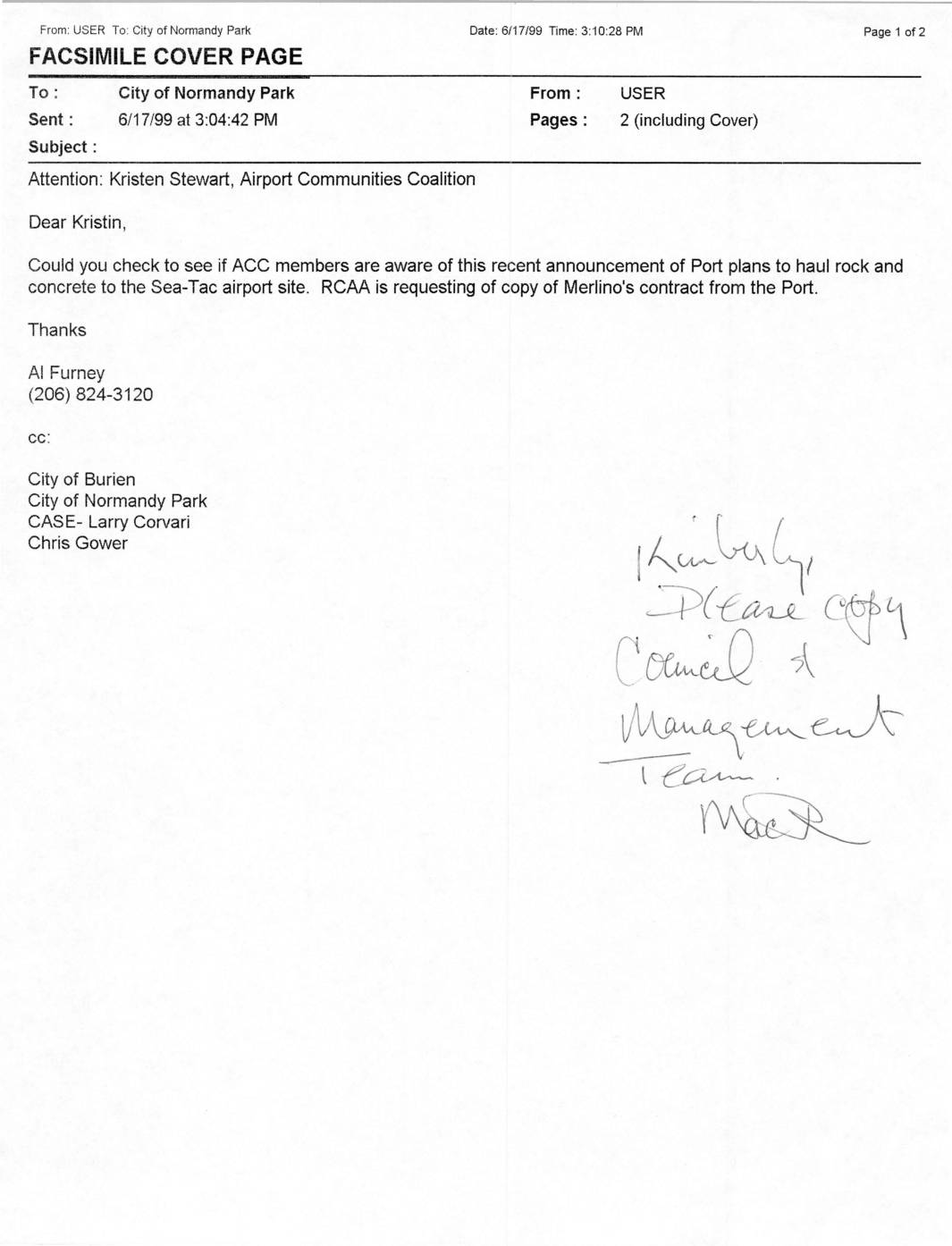
Fax to ACC: Port Of Seattle Plans to Haul Rock and Concrete to Sea-Tac Airport Site
A June 1999 fax from Al Furney to Kristen Stewart of the Airport Communities Coalition (ACC) asks whether ACC members are aware of the Port of Seattle's announced plans to haul rock and concrete to the Sea-Tac Airport site. Furney notes that RCAA (Residents Against Airport Noise, or a related community group) is seeking a copy of Merlino's contract with the Port. The fax was copied to the City of Burien, City of Normandy Park, CASE representative Larry Corvari, and Chris Gower. -
 1999-06-16
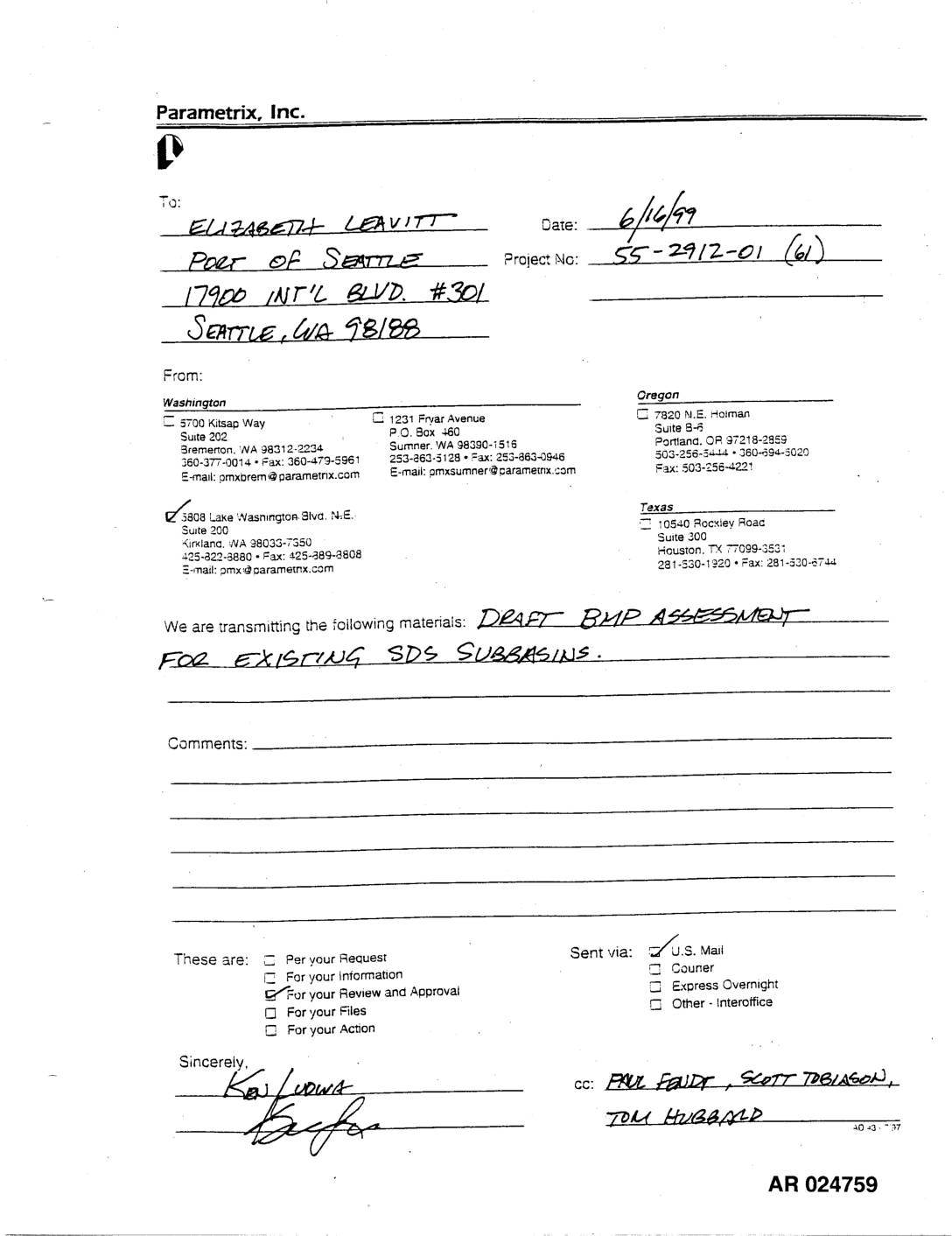
EXH AR024759: Draft BMP Assessment Existing SDS Subbasins — STIA
A 1999 draft assessment prepared by Parametrix, Inc. for the Port of Seattle outlines best management practices (BMPs) for managing stormwater runoff at Seattle-Tacoma International Airport as part of its Master Plan Upgrades. The document describes how the Port plans to implement water quality treatment measures—including filter strips, bioswales, and wet-vaults—across existing and newly developed stormwater drainage subbasins to meet Washington State Department of Ecology redevelopment requirements. Note that while archived alongside airport planning documents, this report focuses on stormwater and water quality compliance, not noise policy.