TagUFP(23)
-
 2021-12-01
MATES V draft report, chapter 5: Ultrafine particles and black carbon measurements
This report chapter examines measurements of ultrafine particles (UFPs) — very tiny airborne particles smaller than 0.1 micrometers — and their potential health effects, including risks to neurological, respiratory, and cardiovascular health. UFPs make up roughly 90% of all airborne particles and are primarily produced by fuel combustion sources such as diesel engines, gasoline engines, and jet engines. People living near heavily trafficked roads, airports, refineries, and railyards may face elevated exposure to these particles. -
 2021-04-20
Community health and airport operations-related noise and air pollution
A 2021 presentation by Public Health Seattle and King County examines how noise and air pollution from Seattle-Tacoma International Airport (SeaTac) affect nearby communities. It covers community health profiles, the current strength of scientific evidence, a University of Washington study on ultrafine particles (UFP), and recommendations for addressing health impacts. The affected communities are notably diverse, with people of color — particularly Native Hawaiian/Pacific Islander and Black/African American residents — making up a disproportionately large share of the airport-area population compared to King County as a whole. -
 2020-07-01
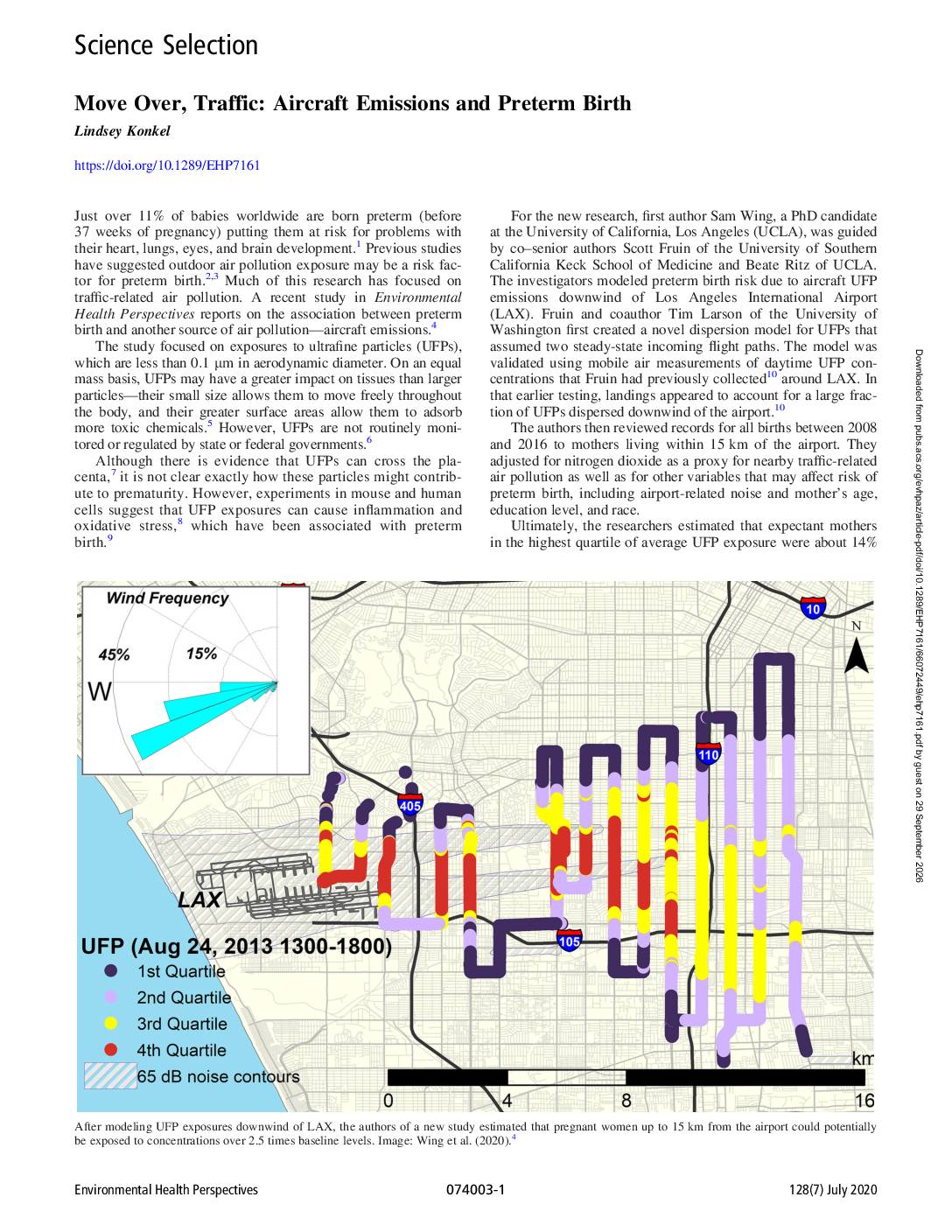
Move Over, Traffic: Aircraft emissions and preterm birth
Science selection article by Lindsey Konkel published in Environmental Health Perspectives (July 2020, vol. 128, no. 7, doi:10.1289/EHP7161) summarizing a UCLA/USC study by Sam Wing, Scott Fruin, and Beate Ritz on preterm birth risk associated with ultrafine particle (UFP) aircraft emissions downwind of Los Angeles International Airport (LAX). The study modeled UFP dispersion from LAX -
 2020-07-01
Mobile ObserVations of Ultrafine Particles (MOV-UP)
Researchers at the University of Washington conducted the MOV-UP study to measure ultrafine particle (UFP) pollution around Seattle-Tacoma International Airport and the neighborhoods affected by its air traffic. The study aimed to determine how much of the UFP exposure in surrounding communities comes specifically from jet aircraft, which emit extremely tiny particles (under 30 nanometers) along flight paths, versus other sources like diesel vehicles on nearby roads. Findings and community feedback were shared with local governments to inform air quality and noise policy decisions. -
 2020-04-02
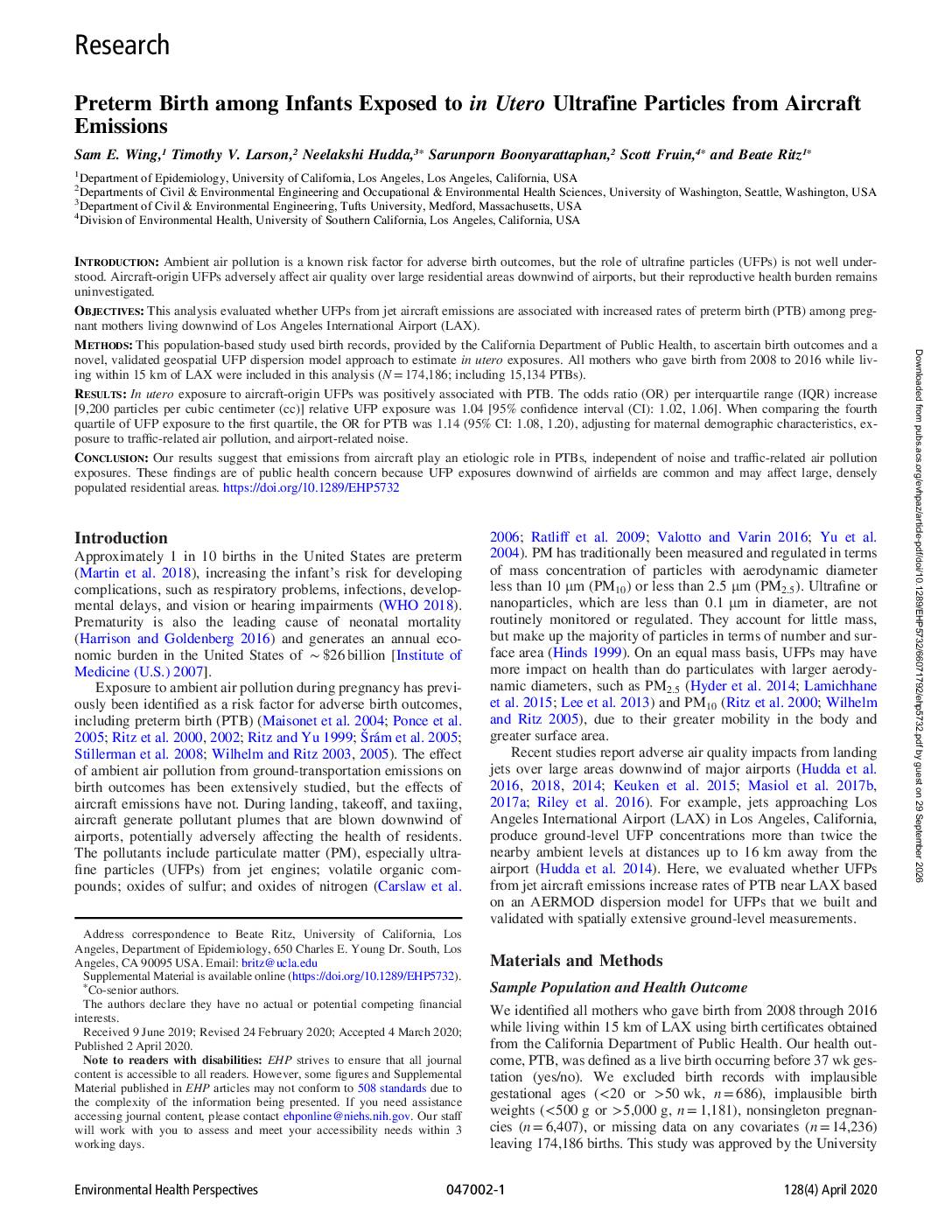
Preterm Birth among Infants Exposed to in Utero Ultrafine Particles from Aircraft Emissions
Academic journal article published in Environmental Health Perspectives (April 2020, Vol. 128(4)) by Wing, Larson, Hudda, Boonyarattaphan, Fruin, and Ritz examining whether ultrafine particles (UFPs) from jet aircraft emissions at Los Angeles International Airport (LAX) are associated with increased preterm birth (PTB) rates. Study used California Department of Public Health birth records (2008–2016) for 174,186 -
 2020-03-17
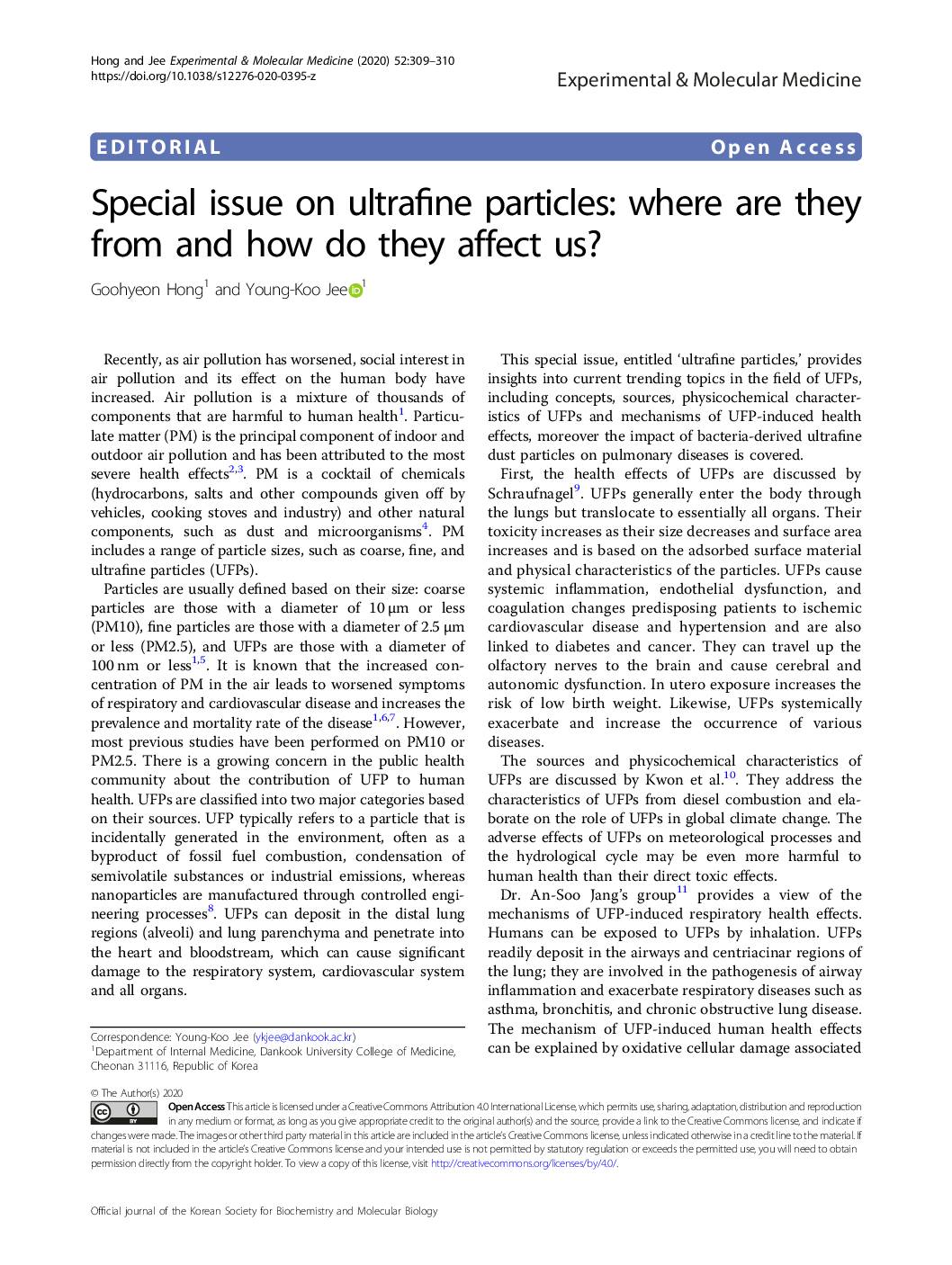
Special issue on ultrafine particles: where are they from and how do they affect us?
This editorial introduces a special journal issue examining ultrafine particles (UFPs) — tiny airborne pollutants less than 100 nanometers in diameter produced by fossil fuel combustion, industrial emissions, and other sources. The articles covered explain how UFPs can enter the body through the lungs and travel to virtually all organs, contributing to respiratory disease, cardiovascular problems, diabetes, cancer, and neurological effects. The editors emphasize that while UFPs pose significant health risks, their precise role in many illnesses remains poorly understood, calling for urgent global research into their sources and health impacts. -
 2020-01-01
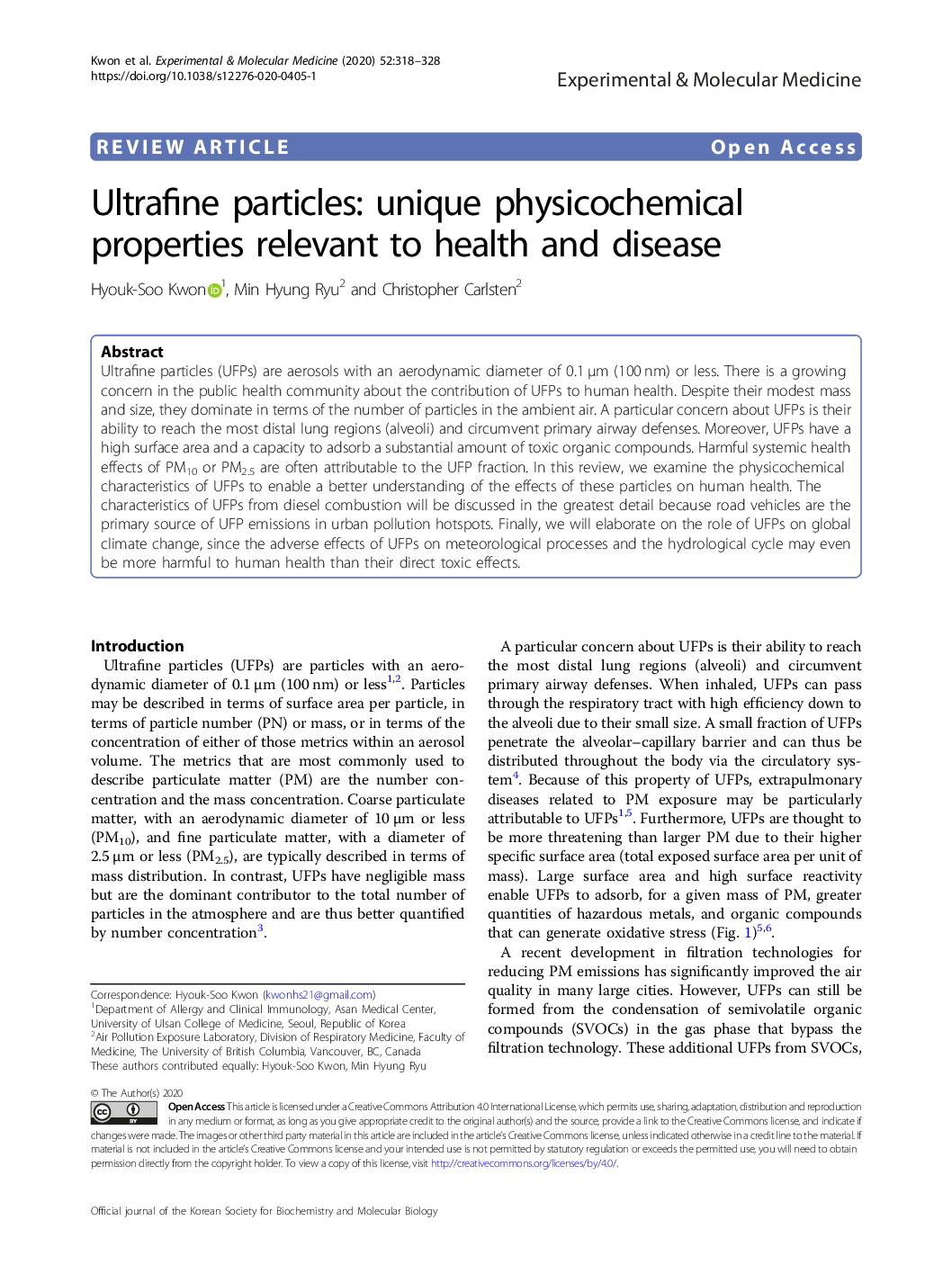
Ultrafine particles: unique physicochemical properties relevant to health and disease
Ultrafine particles (UFPs) are tiny airborne particles 100 nanometers or smaller, produced primarily by diesel combustion from road vehicles. Despite their negligible mass, they vastly outnumber larger particles in the air, can penetrate deep into the lungs and enter the bloodstream, and carry toxic compounds that pose serious health risks. Their emissions also affect rainfall patterns and climate, potentially causing broader public health impacts beyond their direct effects on the human body. -
 2019-12-01
Mobile ObserVations of Ultrafine Particles: The MOV-UP study report
★ 32The MOV-UP (Mobile ObserVations of Ultrafine Particles) study was a two-year University of Washington research project, funded by the State of Washington, that measured air quality impacts from aircraft traffic on communities living near and beneath the flight paths of Seattle-Tacoma International Airport. Researchers used mobile monitoring methods to collect ultrafine particle data across the affected neighborhoods, working alongside local governments, community members, and an advisory group of agency and city representatives. The findings are intended to inform policymakers and the public about the air pollution risks associated with airport operations in the Seattle-Tacoma region. -
The toxic killers in our air too small to see
Current pollution meters don’t count the very smallest pollutants – nanoparticles. Recent research suggests these tiny toxic substances could be a major cause of illness and death. By Tim Smedley 15th November 2019 A After years of headlines about air pollution, we’ve been misled on a few things about the world’s biggest environmental health problem. -
 2019-01-23
Mobile ObserVations of Ultrafine Particles (MOV-UP) advisory
The MOV-UP (Mobile ObserVations of Ultrafine Particles) study, presented at the Highline Forum in January 2019, was commissioned under a Washington State proviso to investigate air quality impacts from Sea-Tac Airport traffic. Researchers from the University of Washington measured ultrafine particle (UFP) concentrations in communities surrounding the airport, aiming to distinguish aircraft-related pollution from other sources. A final study report was due to local governments and the community by December 1, 2019.