TagThird Runway(1084)
-
 1996-02-01
Final Environmental Impact Statement for proposed Master Plan Update development actions at Seattle-Tacoma International Airport
This 1996 Final Environmental Impact Statement, prepared jointly by the FAA and the Port of Seattle, evaluates proposed expansion plans at Seattle-Tacoma International Airport through the year 2020, including the construction of a third parallel runway up to 8,500 feet long, a new north terminal, and various landside improvements. The document assesses environmental consequences across 24 categories—including noise, air quality, water quality, and human health—for a range of alternatives, from building a new regional airport to a no-build option. Ultimately, the Port of Seattle selected Alternative 3 as the preferred option, concluding that Sea-Tac was the only feasible site to address the region's growing air transportation needs. -
 1996-02-01
Final environmental impact statement for proposed master plan update development actions at Seattle-Tacoma International Airport, Volume 2 of 7: Appendices C-F
This 1996 Final Environmental Impact Statement, prepared by the Port of Seattle and the Federal Aviation Administration, evaluates the environmental effects of proposed development projects at Seattle-Tacoma International Airport, including the construction of a third parallel runway, terminal expansions, and parking improvements planned for completion between 1996 and 2020. The document assesses a range of impacts such as noise, air quality, wetlands, and floodplains affecting surrounding communities. Appendix C specifically addresses noise impacts resulting from the proposed airport expansion alternatives. -
 1996-02-01
Final Environmental Impact Statement for proposed master plan update development actions at Seattle-Tacoma International Airport, Volume 3 of 7
This 1996 Final Environmental Impact Statement, prepared jointly by the FAA and the Port of Seattle, evaluates the environmental effects of proposed expansion and improvement projects at Seattle-Tacoma International Airport, including the construction of a third parallel runway, terminal upgrades, and expanded parking and cargo facilities. The document examines a range of impacts such as wetland disturbance, floodplain encroachment, stream relocation, and noise, water, and air quality effects on surrounding communities. The proposed improvements were planned for completion between 1996 and 2020, with early phases prioritizing the new runway and existing terminal and access enhancements. -
 1996-02-01
Final environmental impact statement for proposed master plan update development actions at Seattle-Tacoma International Airport, Volume 4 of 7: Appendices Q-A – S
This 1996 Final Environmental Impact Statement, prepared by the Port of Seattle and the Federal Aviation Administration, evaluates proposed improvements at Seattle-Tacoma International Airport through the year 2020, including the construction of a third parallel runway, terminal expansions, and parking upgrades. The document assesses a range of environmental impacts such as noise, air and water quality, wetlands, and floodplain encroachment resulting from the planned development. It was prepared in compliance with both the National Environmental Policy Act and Washington State Environmental Policy Act. -
 1996-02-01
Final Environmental Impact Statement for proposed Master Plan Update development actions at Seattle-Tacoma International Airport, Volume 5 of 7, Appendix T
This 1996 Final Environmental Impact Statement, prepared jointly by the FAA and the Port of Seattle, evaluates proposed development actions at Seattle-Tacoma International Airport as part of a Master Plan Update. Key proposals include building a third parallel runway up to 8,500 feet long, extending an existing runway, improving passenger terminals, and expanding cargo and support facilities. The document assesses potential environmental impacts such as noise, wetland disruption, air and water quality changes, and floodplain encroachment associated with these planned improvements through the year 2020. -
 1996-02-01
Final Environmental Impact Statement for proposed Master Plan Update development actions at Seattle-Tacoma International Airport, Volume 6 of 7, Appendix T: Public comments
This document is Volume 6 of the Final Environmental Impact Statement for the proposed Master Plan Update at Seattle-Tacoma International Airport, published in February 1996. It covers planned airport improvements from 1996 to 2020, including the construction of a third parallel runway, terminal expansions, and parking upgrades, while assessing impacts on noise, air quality, wetlands, and surrounding communities. The appendix compiles public hearing transcripts and approximately 250 written comments submitted in response to the Draft EIS, addressing key concerns such as aircraft noise, air pollution, and surface transportation impacts. -
 1996-01-01
Resolution No. 3212, as amended
★ 32Resolution No. 3212, adopted by the Port of Seattle in 1996, approved the construction of a new third runway at Seattle-Tacoma International Airport (Sea-Tac) to address growing air traffic demand and reduce delays caused by poor weather conditions. The resolution followed years of regional studies, environmental impact reviews, and public involvement, including findings that no feasible alternative airport sites existed in the four-county area. It also committed the Port to fulfilling additional noise reduction measures as required by Puget Sound Regional Council Resolution A-96-02. -
 1995-08-16
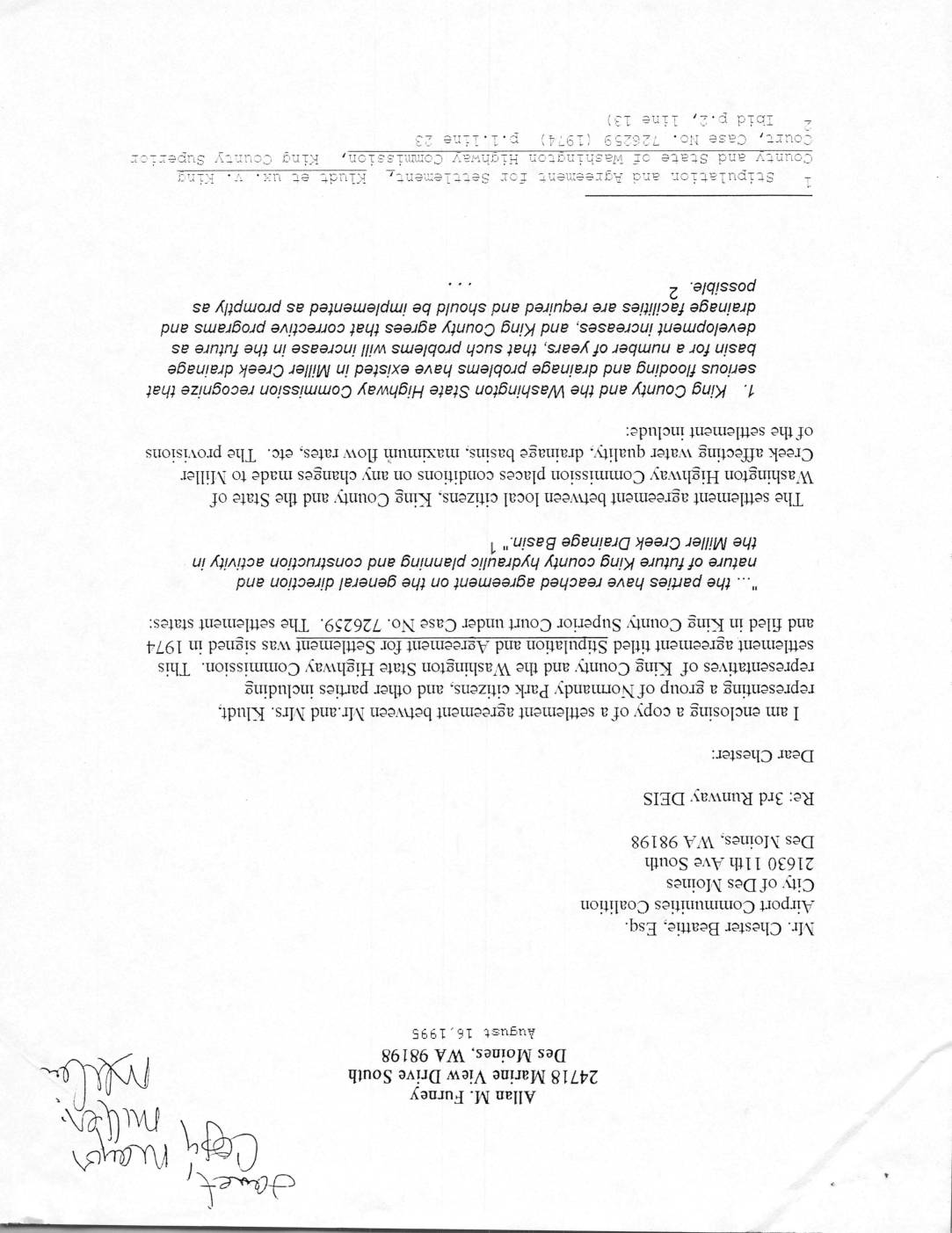
Letter regarding 3rd Runway DEIS and Miller Creek drainage settlement agreement
A 1995 letter from Allan M. Furney to Chester Beattie of the Airport Communities Coalition summarizes a 1974 settlement agreement between King County, the Washington State Highway Commission, and local citizens regarding flooding and drainage problems in the Miller Creek watershed. The settlement requires King County to improve water quality, prevent excess stormwater runoff into Miller Creek, and construct appropriate drainage facilities, while prohibiting full channelization of the creek. The letter raises concerns that proposed SeaTac Airport third-runway expansion plans, as outlined in the Draft EIS, would violate these settlement provisions by significantly increasing impervious surface area and stormwater flows into the Miller Creek drainage basin. -
 1995-07-21
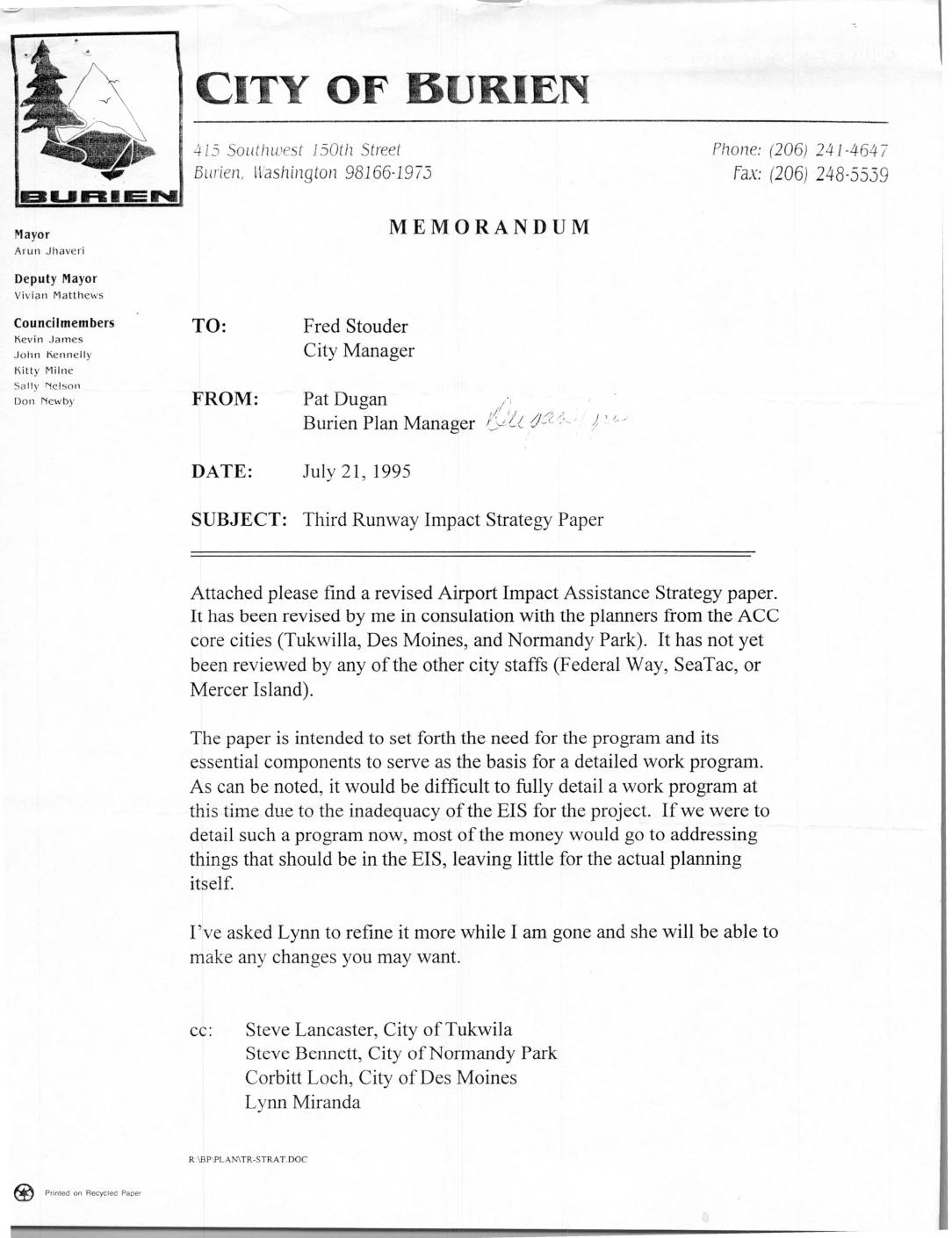
Airport Impact Assistance Strategy: Work Program Draft, City of Burien
A 1995 City of Burien memorandum and accompanying draft strategy paper outline concerns about the negative impacts of constructing a third runway at Seattle-Tacoma International Airport on surrounding communities, including increased noise, traffic, and neighborhood blight. The document warns that heavy truck traffic, expanded air traffic noise 'shadow,' and construction disruption could drive down property values, destabilize local businesses, and accelerate community deterioration. It calls for proactive planning and mitigation efforts, while criticizing the Environmental Impact Statement (EIS) for inadequately addressing these impacts. -
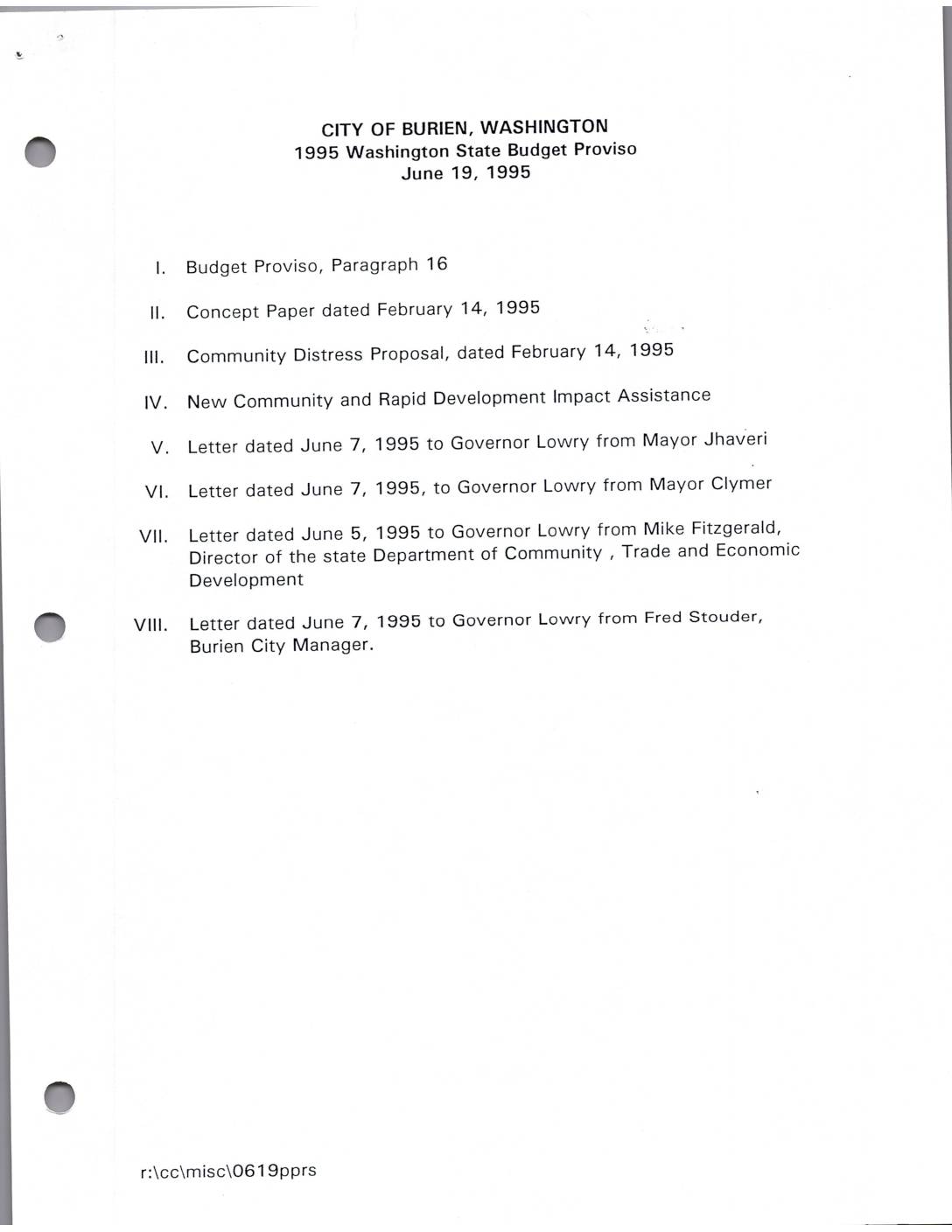 1995-06-19
City of Burien: 1995 Washington State Budget Proviso — Third Runway Impact Assistance
Background material on the 1997 HOK Study. This document packet from City of Burien, Washington dated June 19, 1995, concerns the 1995 Washington State Budget Proviso, Paragraph 16 which appropriated $500,000 of general fund-state funds solely for distribution to the City of Burien for analysis of the proposed Port of Seattle third runway at Sea-Tac