TagPort Packages(186)
-
Why did the City of Des Moines rescind its sound code in 2012?
At their April 26, 2012 meeting, the Des Moines City Council voted to remove any sound reduction requirements from its building code via (Ordinance #1539). This is exceptional given the fact that the two other cities in the area which had similar building code did not follow suit. At the time, the City Council would -
2024-01-25
Restoring sound code in Des Moines on hold
Economic Development Committee told another study necessary? At Thursday’s Economic Development Committee meeting, staff informed the council committee that plans to restore sound reduction requirements to the building code, which had been removed in 2012, had been put on hold indefinitely. In discussing the Planning Department’s calendar for 2024, staff said there were a large -
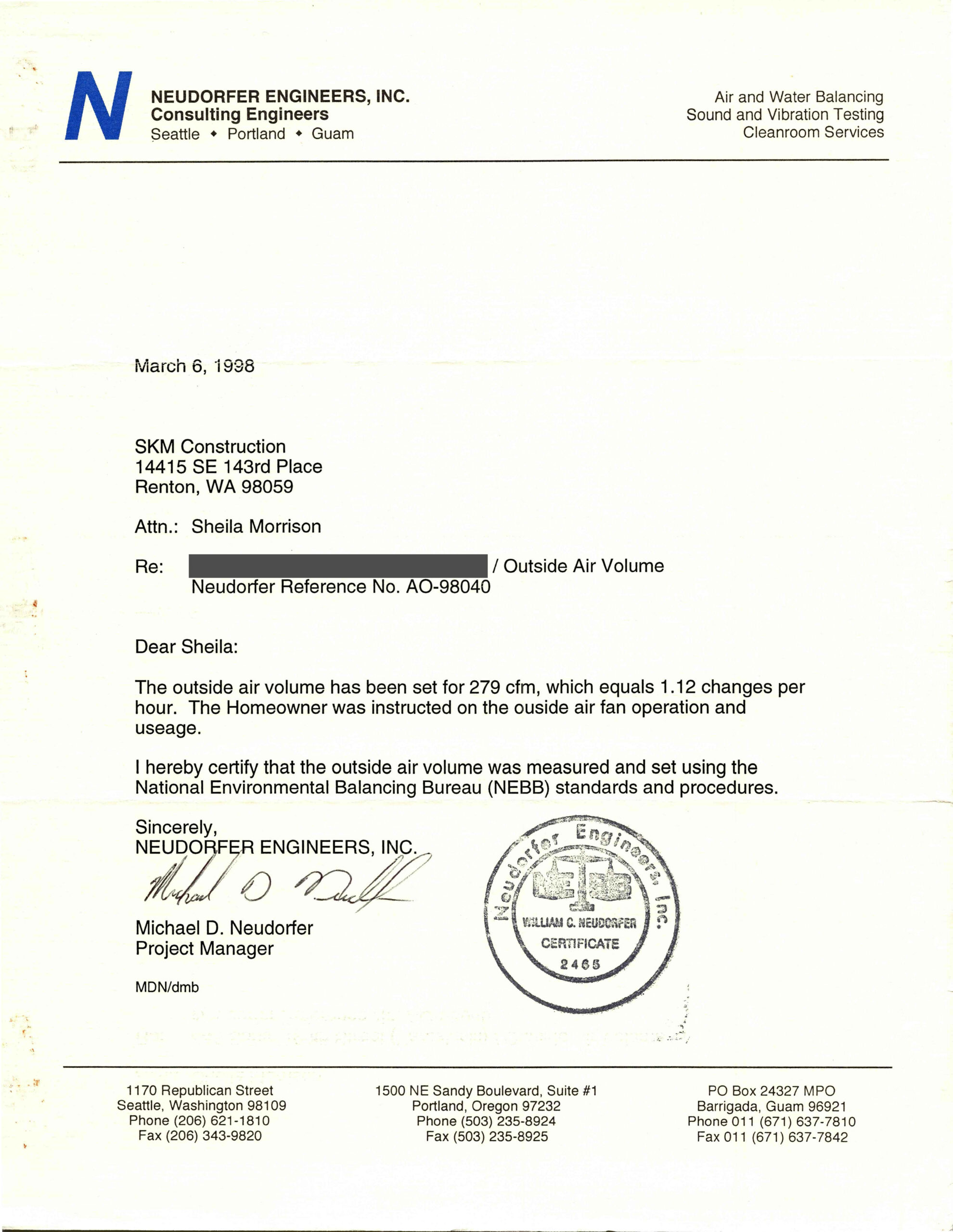
Example Port Package air changes per hour NEBB
A March 6, 1998 letter from Neudorfer Engineers, Inc. to SKM Construction (Attn: Sheila Morrison) certifying that outside air volume was set at 279 cfm (1.12 changes per hour) per NEBB standards, signed by Project Manager Michael D. Neudorfer, bearing William C. Neudorfer Certificate No. 2465. -
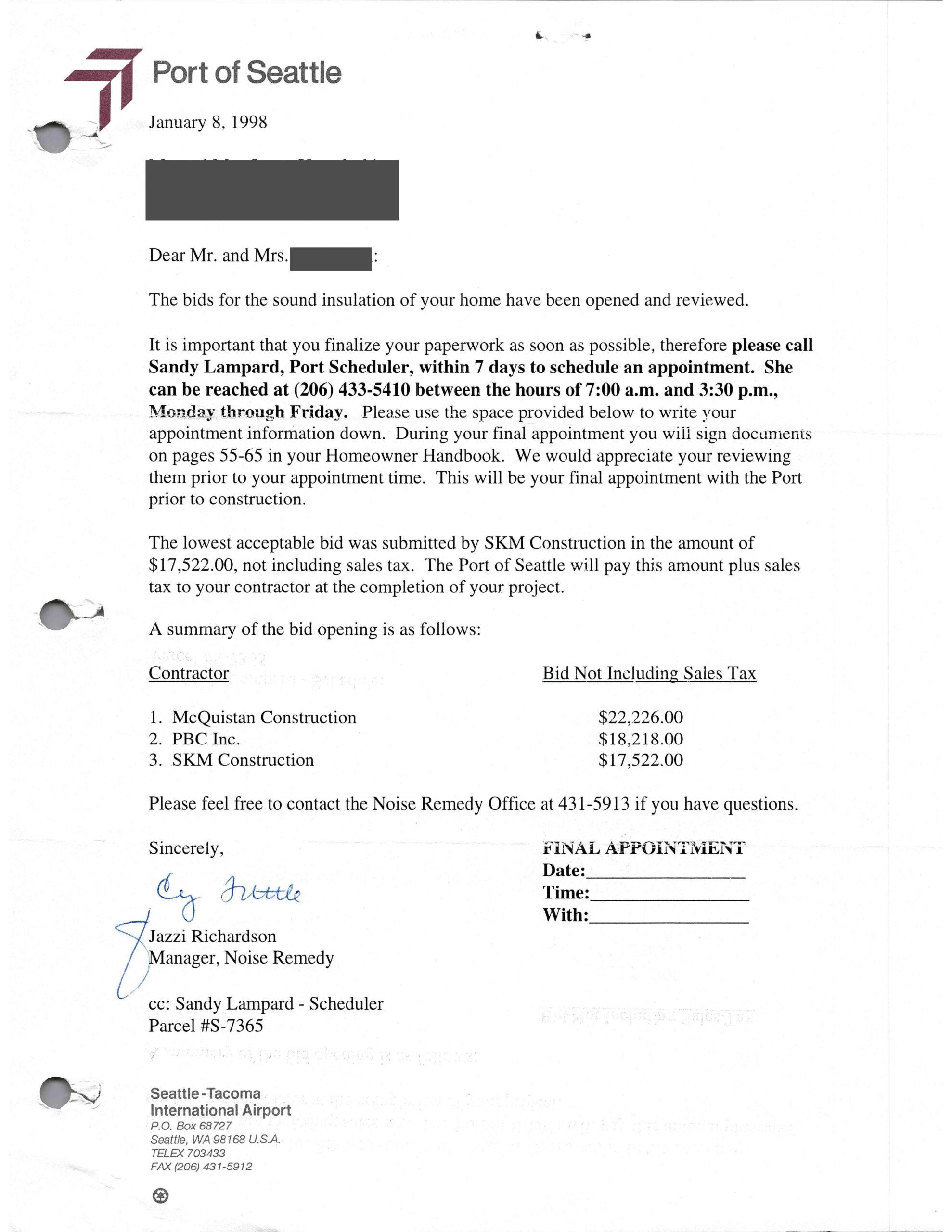
Three Bids packet end redacted
A January 8, 1998 letter from Port of Seattle's Jazzi Richardson, Manager of Noise Remedy, notifying a homeowner (name redacted) that bids for sound insulation of their home have been reviewed, with SKM Construction submitting the lowest acceptable bid of $17,522.00 (excluding sales tax). The letter instructs the homeowner to contact Port Scheduler Sandy Lampard at (206) 433-5410 within 7 days to schedule a final appointment prior to construction, referencing Parcel #S-7365. -
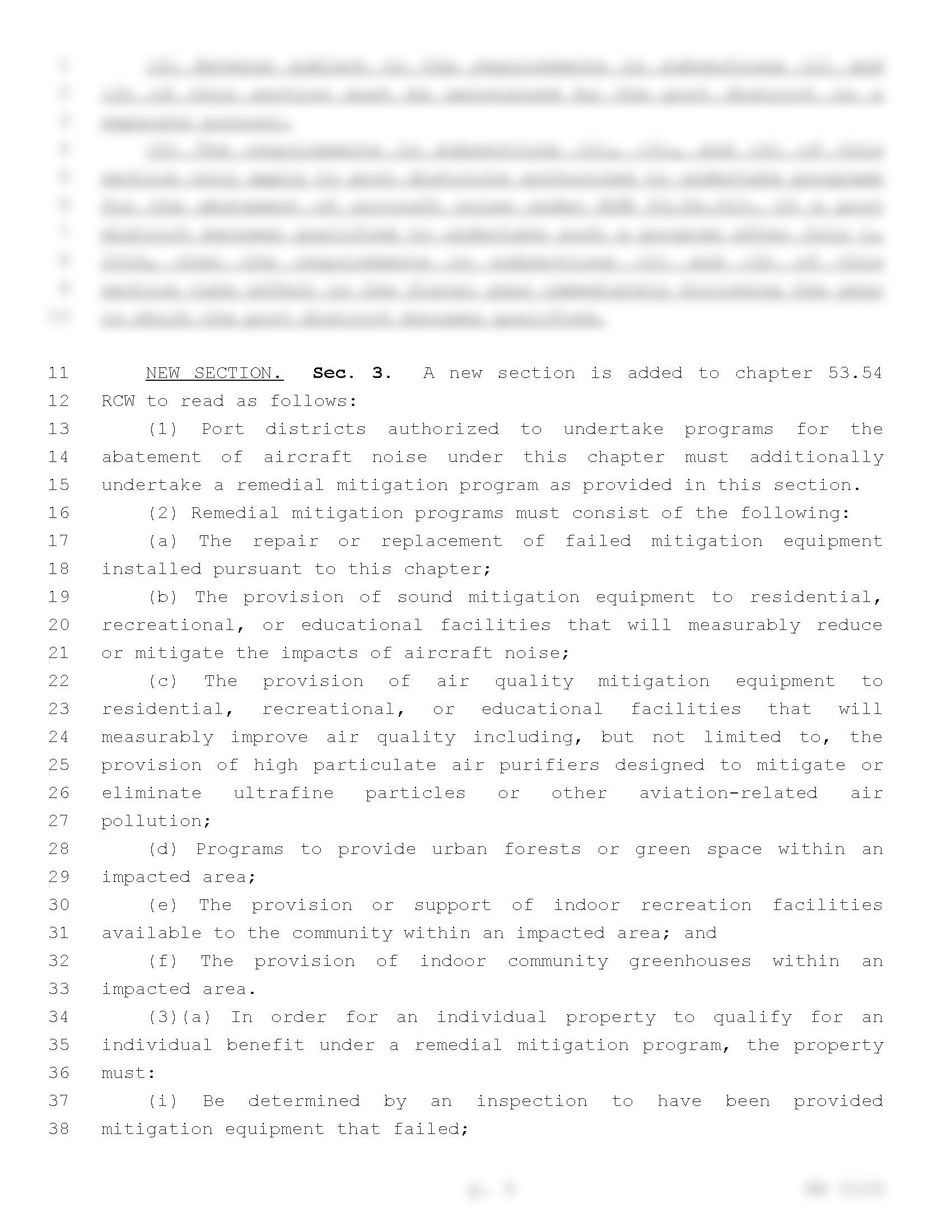
HB2103-2023-prefile
This is a page from a Washington State legislative bill adding a new section to chapter 53.54 RCW, requiring port districts authorized to undertake aircraft noise abatement programs to also implement remedial mitigation programs. The programs must include repair or replacement of failed mitigation equipment, sound and air quality mitigation equipment for residential/recreational/educational facilities, urban forests or green space, indoor recreation facilities, and indoor community greenhouses within impacted areas. -
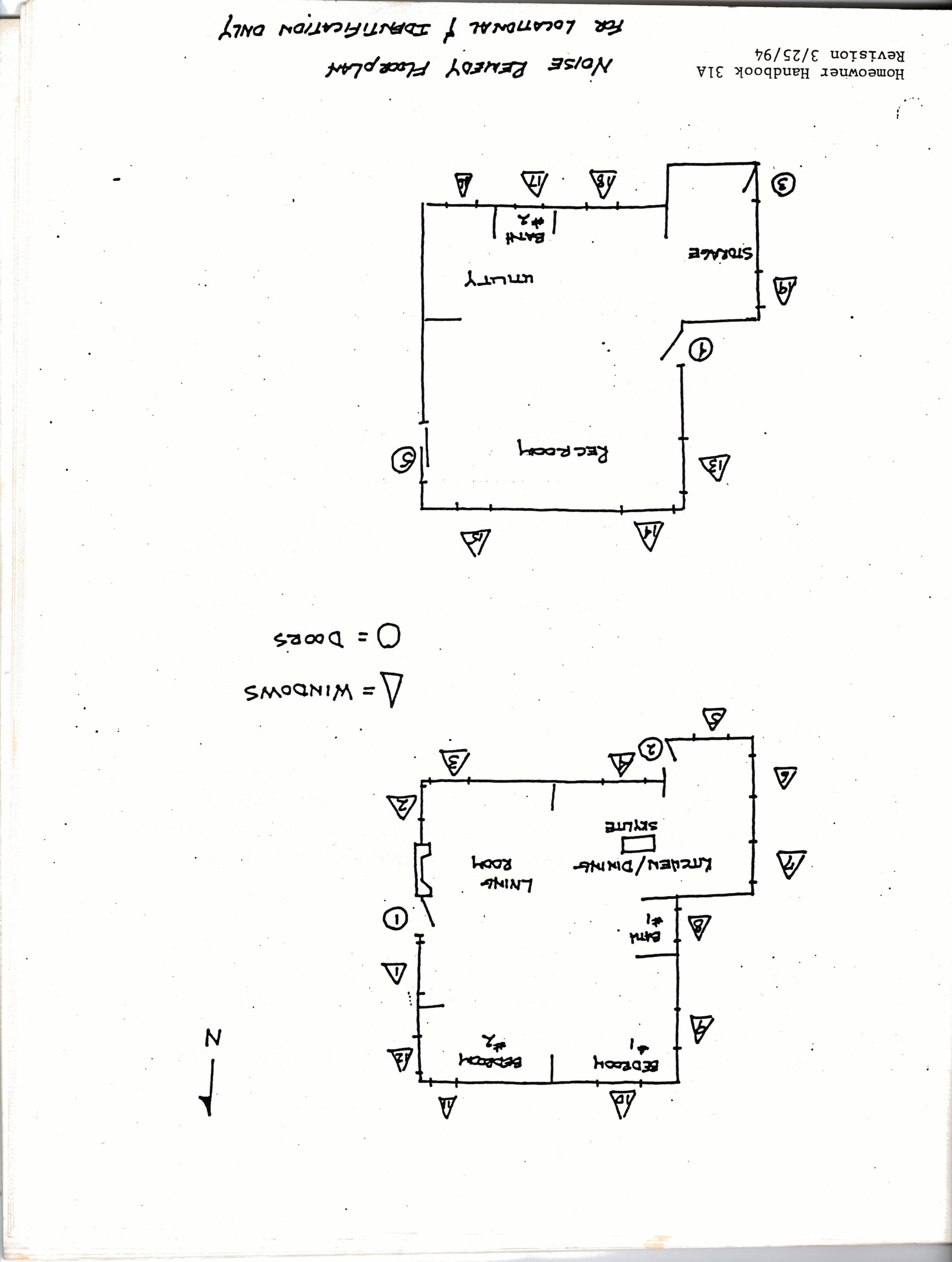
Port Package Homeowners Handbook Design Example_0001
A noise remedy floor plan from Homeowner Handbook 31A, revised 3/25/94, showing two levels of a residential home with rooms labeled (Bedroom 1, Bedroom 2, Bath #1, Living Room, Kitchen/Dining Room, Rec Room, Utility, Storage) and numbered windows and doors identified for locational identification only in connection with an airport noise remedy program. -
2023-05-09
Letter to Commission: Port Package Updates 3 Easy Steps
An open letter to the Port of Seattle Commission It’s been almost three and a half years since the Accelerated Sound Insulation program was passed by the Port Commission in 2020. The primary goal was to get all units not started from 1996, which are now inhabited by mostly BIPOC families, (finally) completed by 2026. -
2023-04-10
Port Package Update Letter – Spring 2023
Greetings, As always, this is behind schedule. However, in addition to the the usual procrastination, things change all the time. Sorry, but for newcomers we always start with some background. If you’ve heard all this, just skip down… Your original Port Package was almost certainly financed through FAA funding called the Airport Improvement Program (AIP). -
-
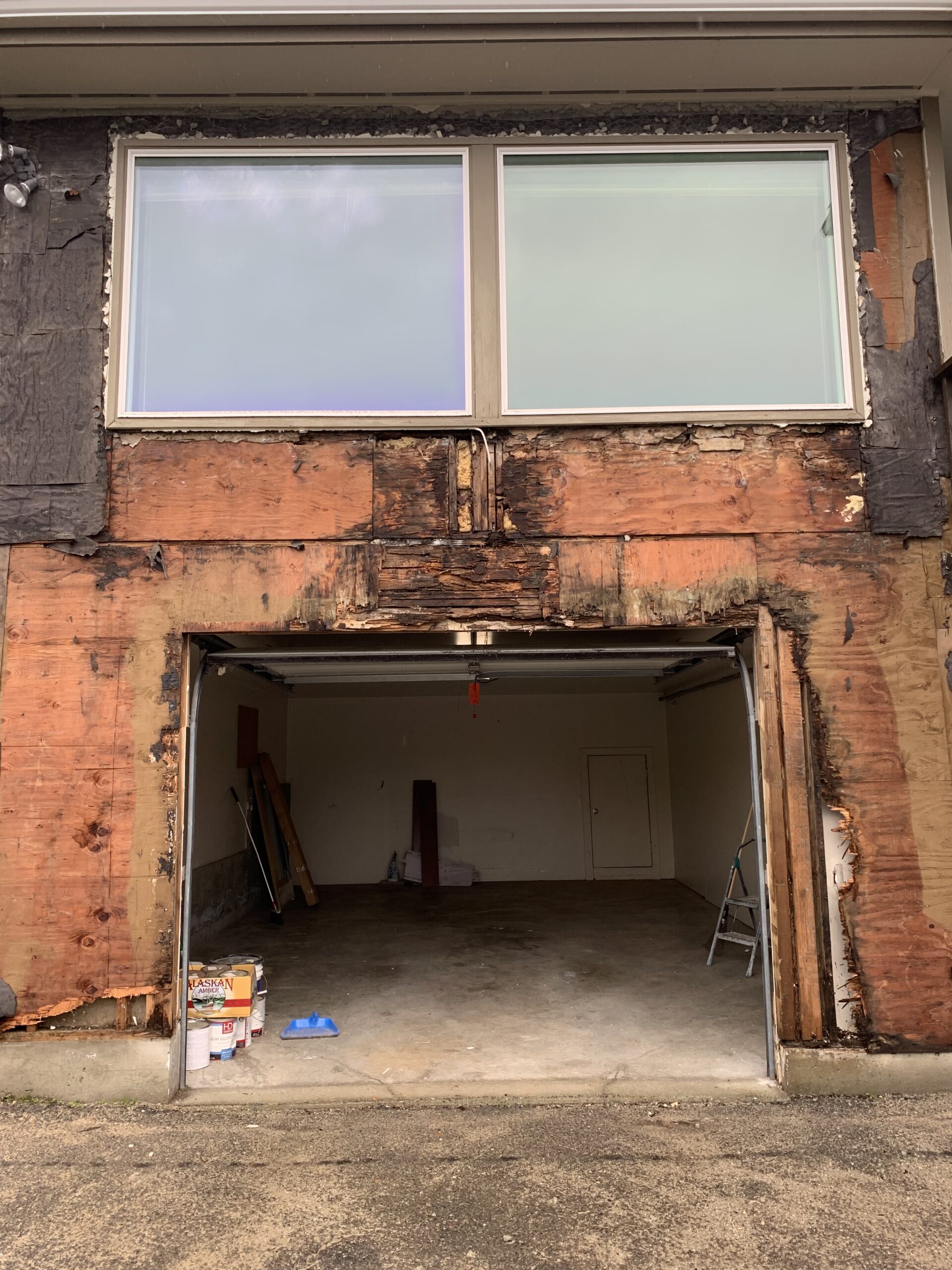
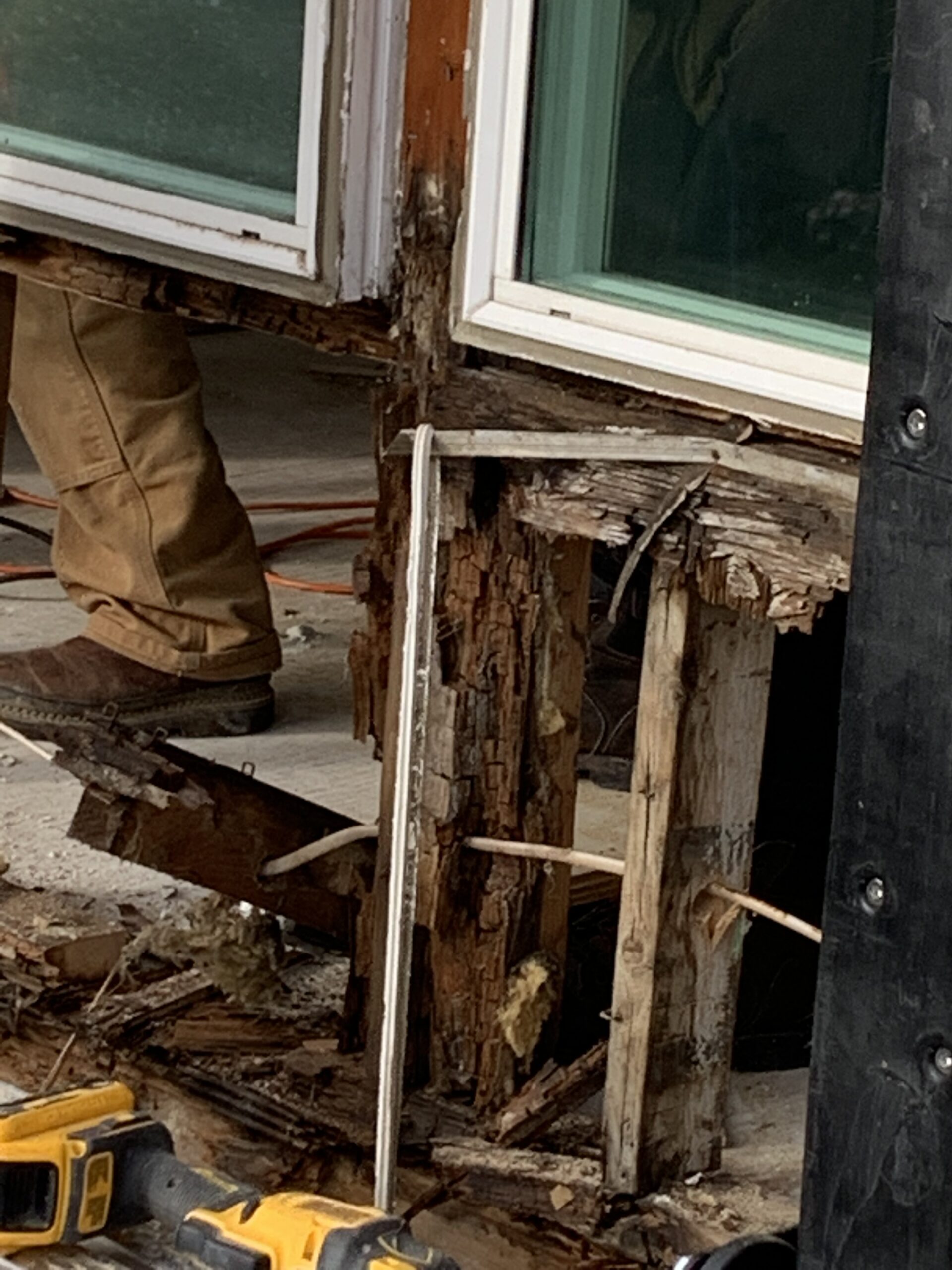
Residential Garage Facade With Severe Water Damage And Siding Removal
A garage opening shows exposed plywood sheathing with extensive rot, mold, and moisture damage after exterior siding was removed. Paint cans visible at lower left include a product labeled 'Alaskan Amber,' suggesting a Pacific Northwest location consistent with the Sea-Tac region.