TagPort Packages(186)
-
2022-10-12
Port Package updates are essential to the American Dream
A letter to the Commissioners of the Port of Seattle: explaining the history of Port Packages and their place in environmental justice. The American Dream is a safe, healthy home, at an affordable price, where you can raise your children, in one of the most beautiful areas in the world. But with so many Port Package failures and fewer and fewer new homes being eligible for sound insulation, that dream is becoming harder to achieve under the flight path. -
-
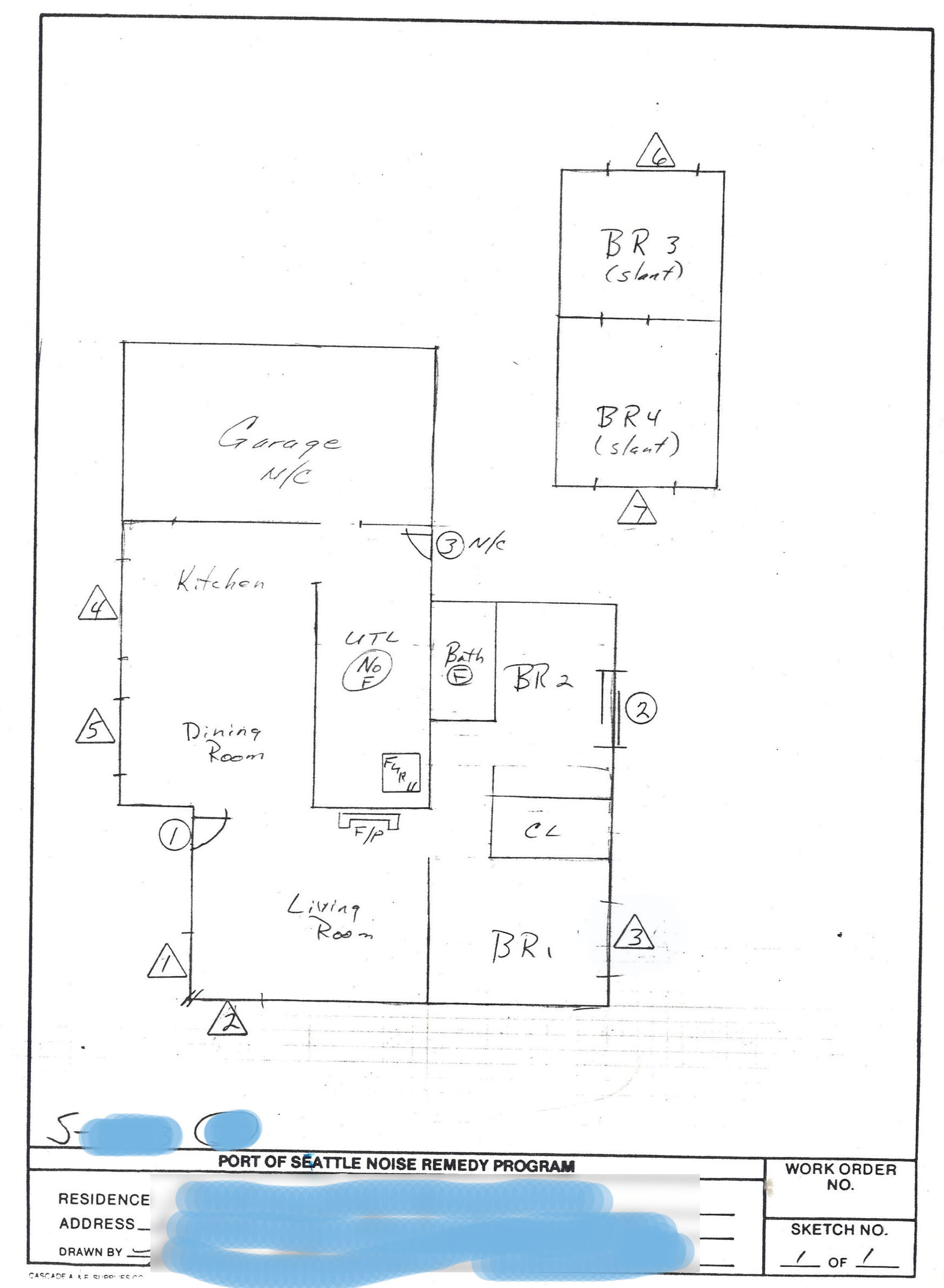
Port Of Seattle Noise Remedy Program — Hand-Drawn Floor Plan for Single-Family Residence
A hand-drawn floor plan sketch produced under the Port of Seattle Noise Remedy Program, showing a single-family residence with labeled rooms including a garage (N/C), kitchen, dining room, living room, utility room, bathroom, and four bedrooms (BR1–BR4, with BR3 and BR4 noted as 'slant' roof areas). Numbered triangular symbols throughout the plan indicate window or door treatment locations; the address and drawn-by fields are redacted. -
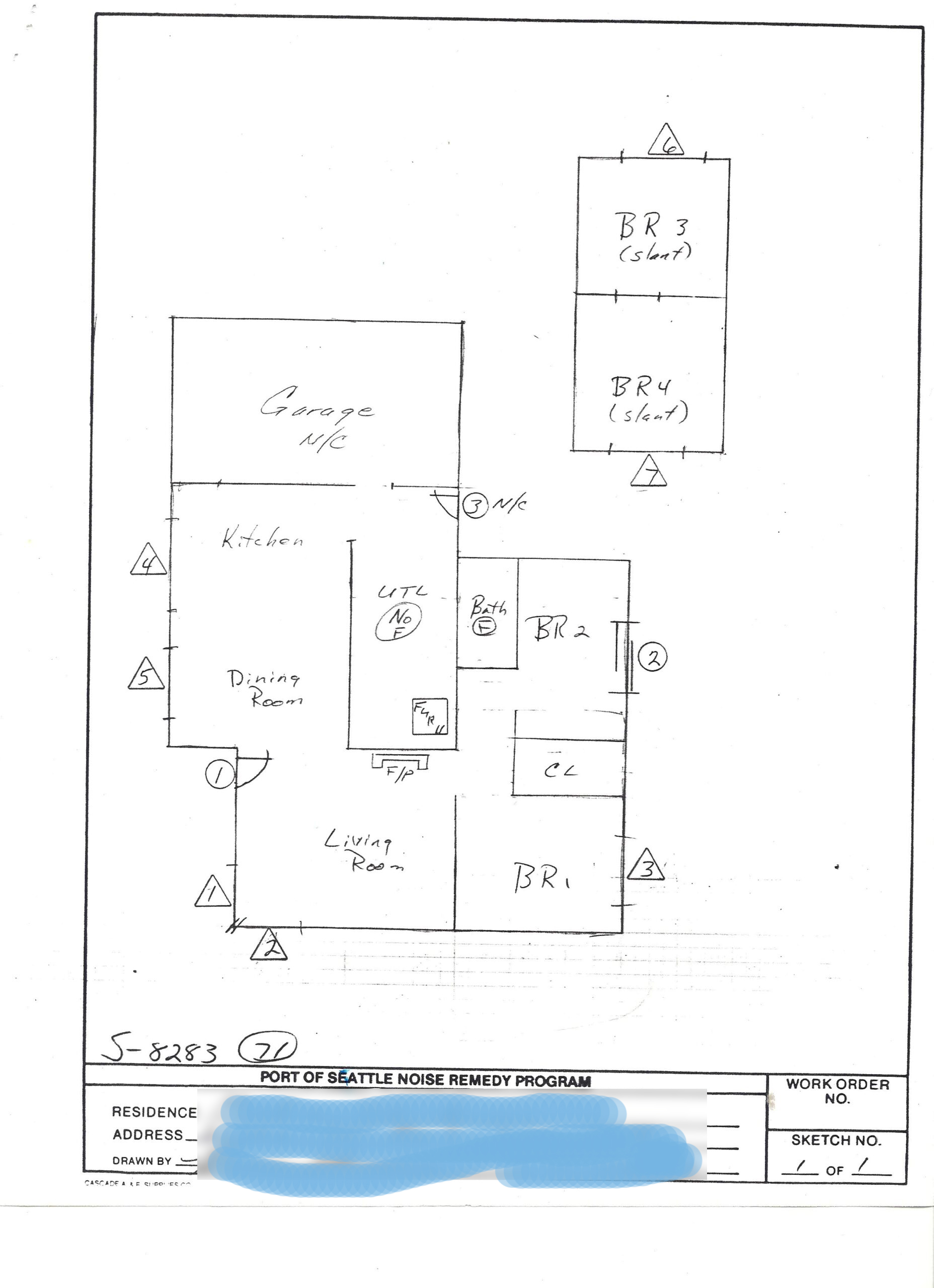
Port Of Seattle Noise Remedy Program Floor Plan Sketch (No. S-8283)
A hand-drawn floor plan sketch (No. S-8283, Sheet 1 of 1) produced under the Port of Seattle Noise Remedy Program. The residence contains four bedrooms (BR1–BR4, with BR3 and BR4 noted as 'slant' ceiling), a living room, dining room, kitchen, utility room, bathroom, closet, fireplace, and an attached garage marked 'N/C' (not conditioned); numbered triangular symbols indicate window/door treatment locations. -
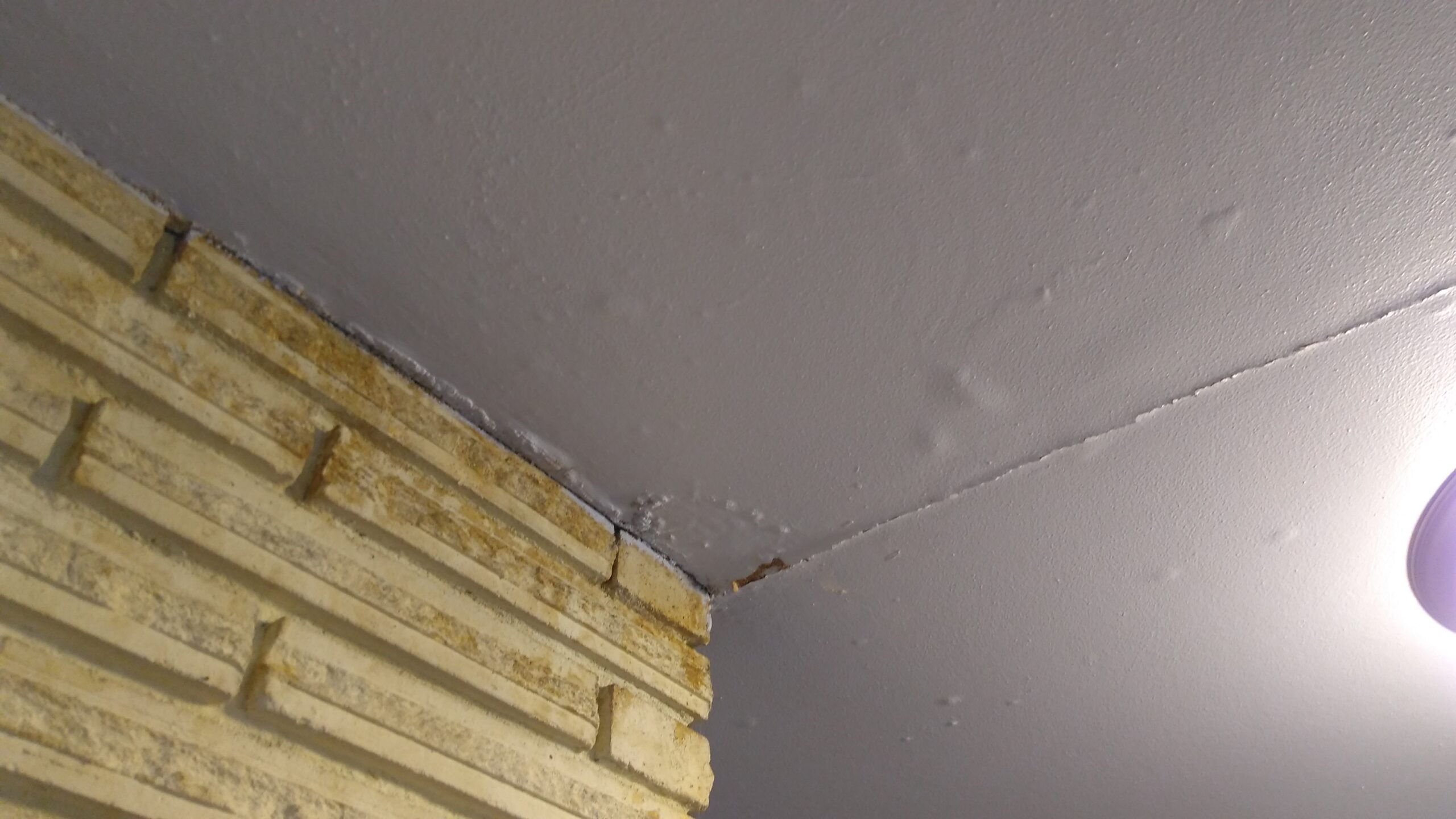
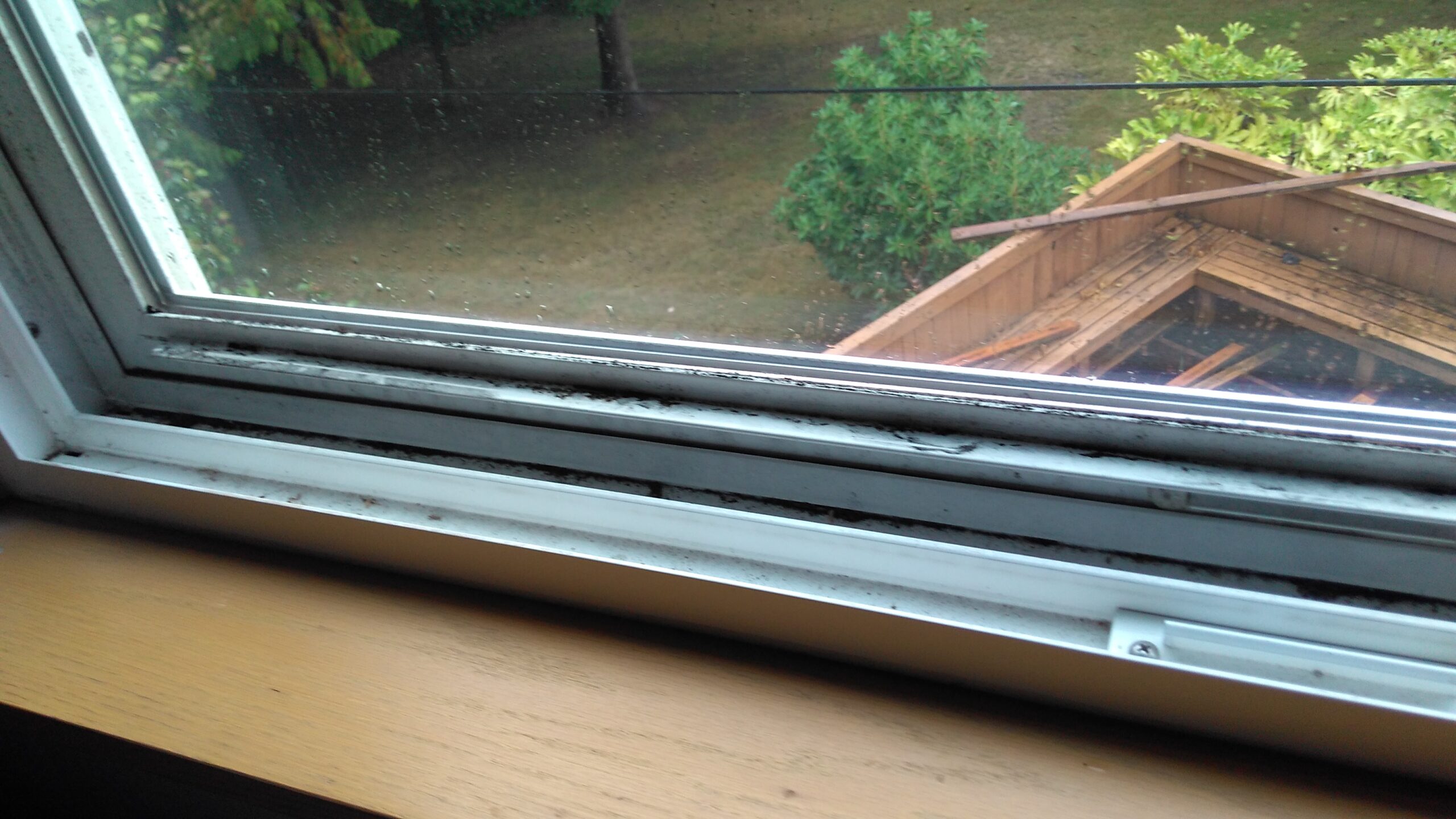
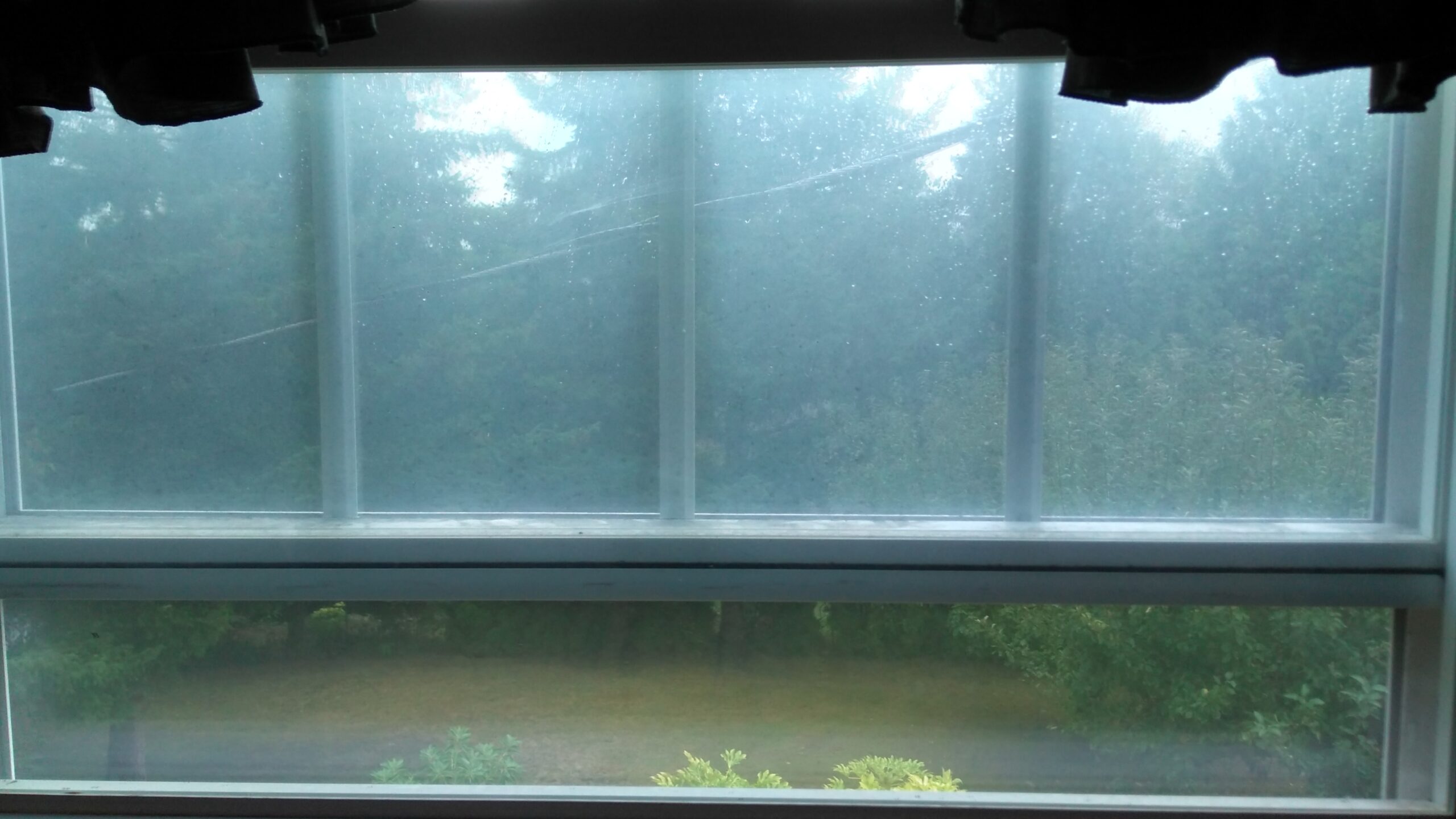
A Dozen Examples of Port Package Problems
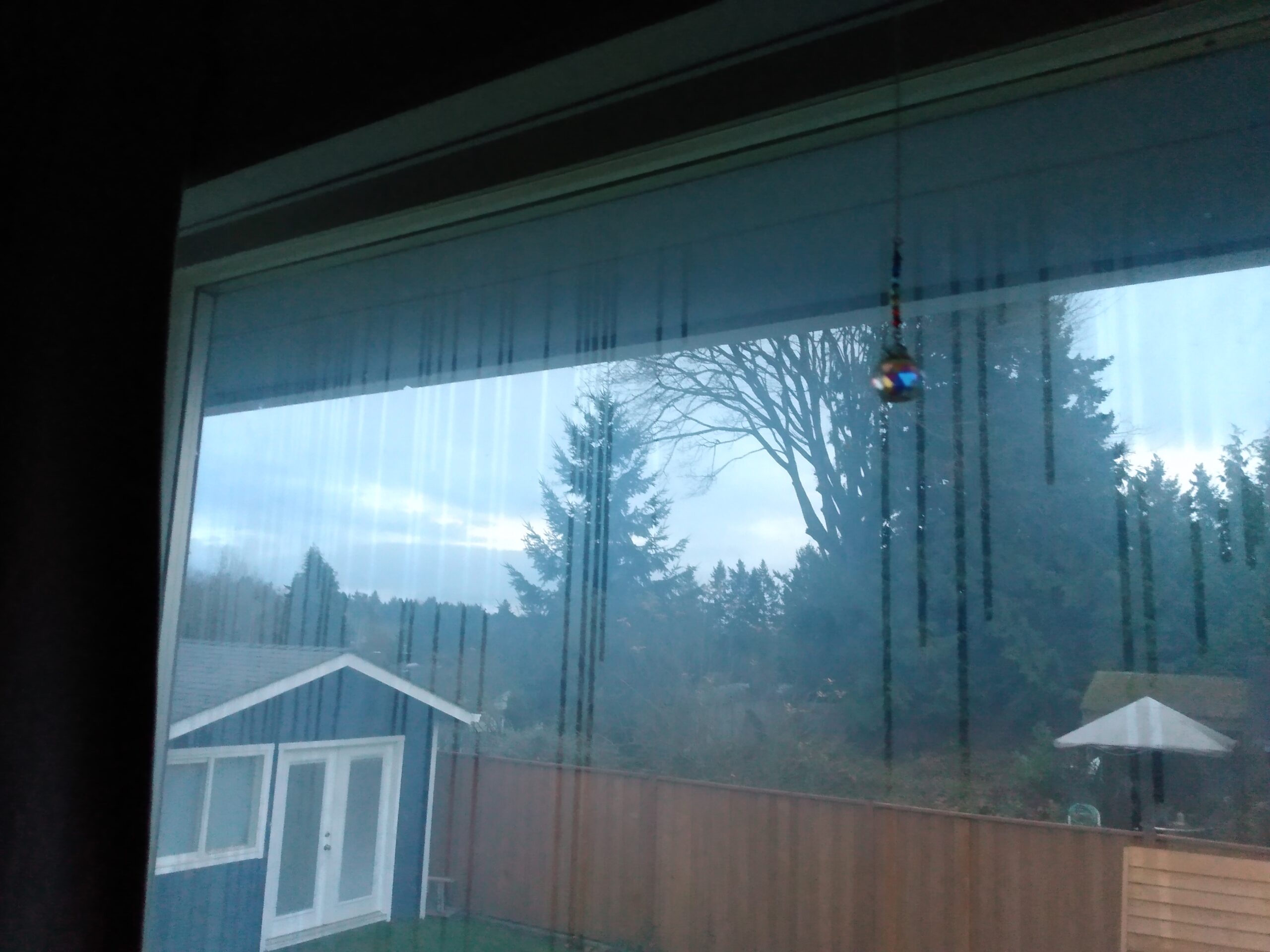
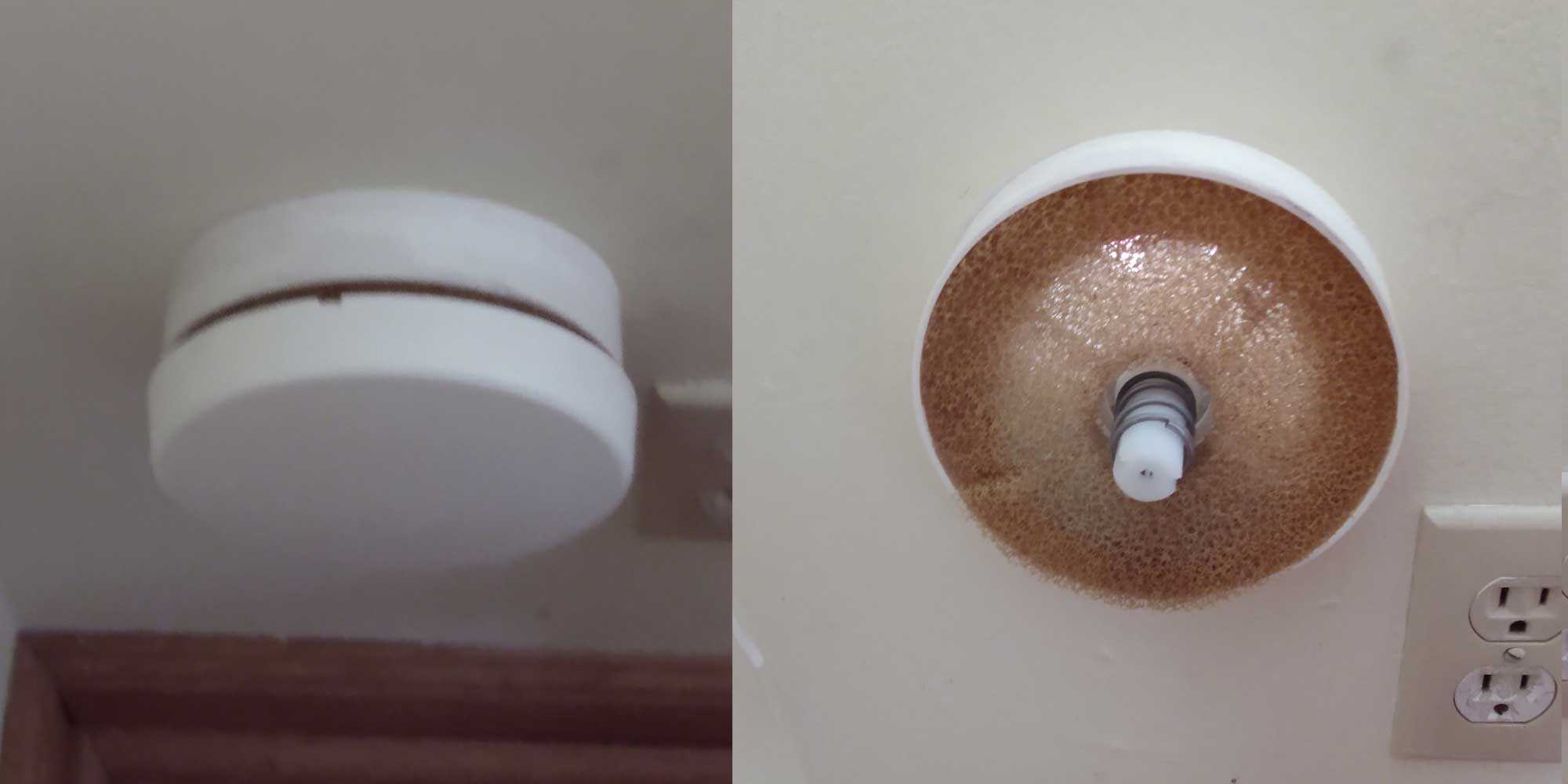
Here are some typical examples of Port Package Problems ranging from the ‘foggy windows’ and ‘blown seals’ to structural damage and disreputable installs. There’s a bonus item: ventilation. Bonus: Ventilation -
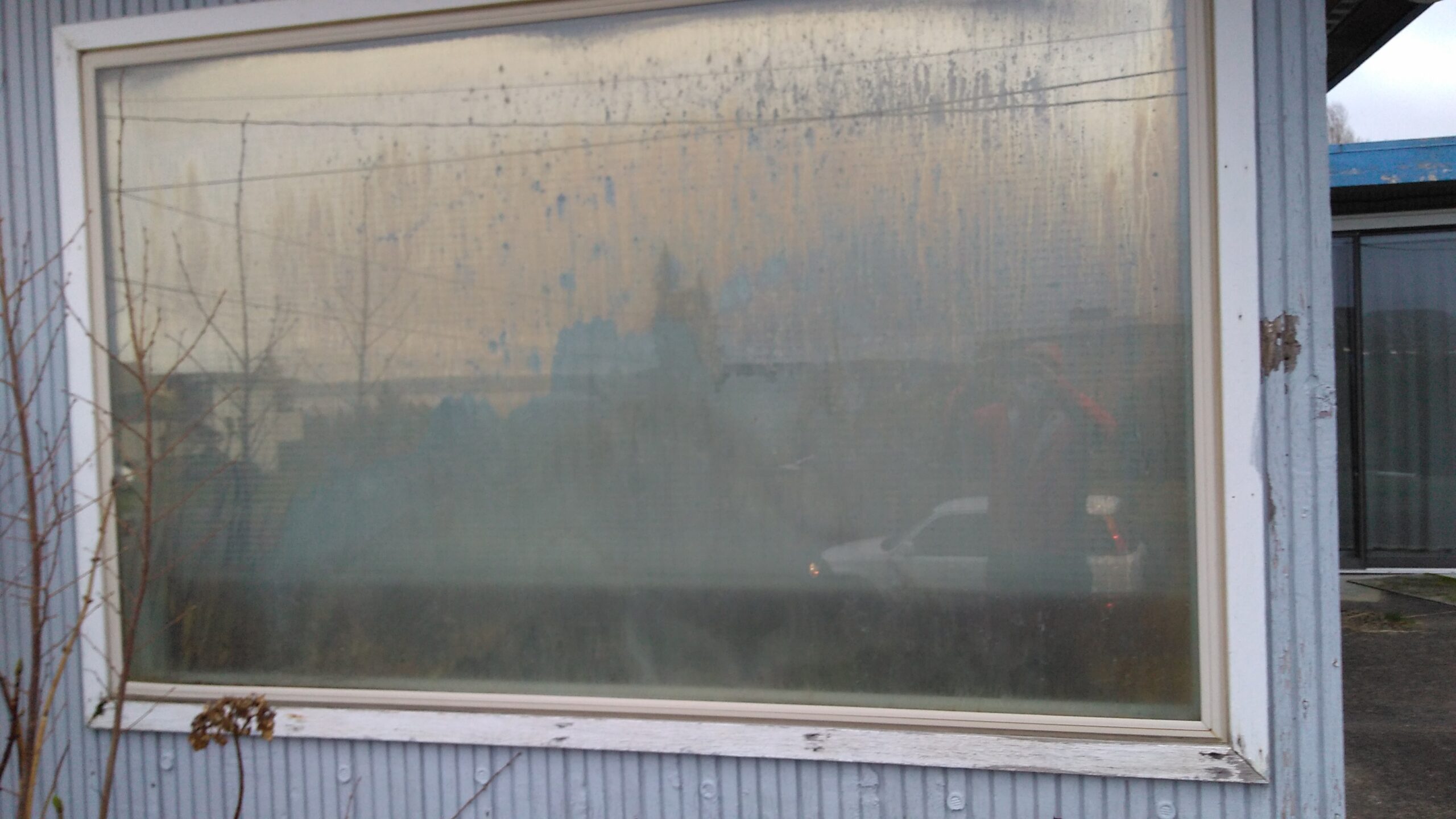
Pre-Third Runway Port Package problem: mold and condensation
The Port of Seattle sound insulated a few hundred homes before the Third Runway mandate of 1996 where the vast majority of single family homes were provided with Port Packages. Congress has recently provided grant funding for homes which were provided sound insulation before 1993. As of February 2024, the Port has not chosen to -
-
-
-