TagPort Of Seattle(2410)
-
 2012-02-07
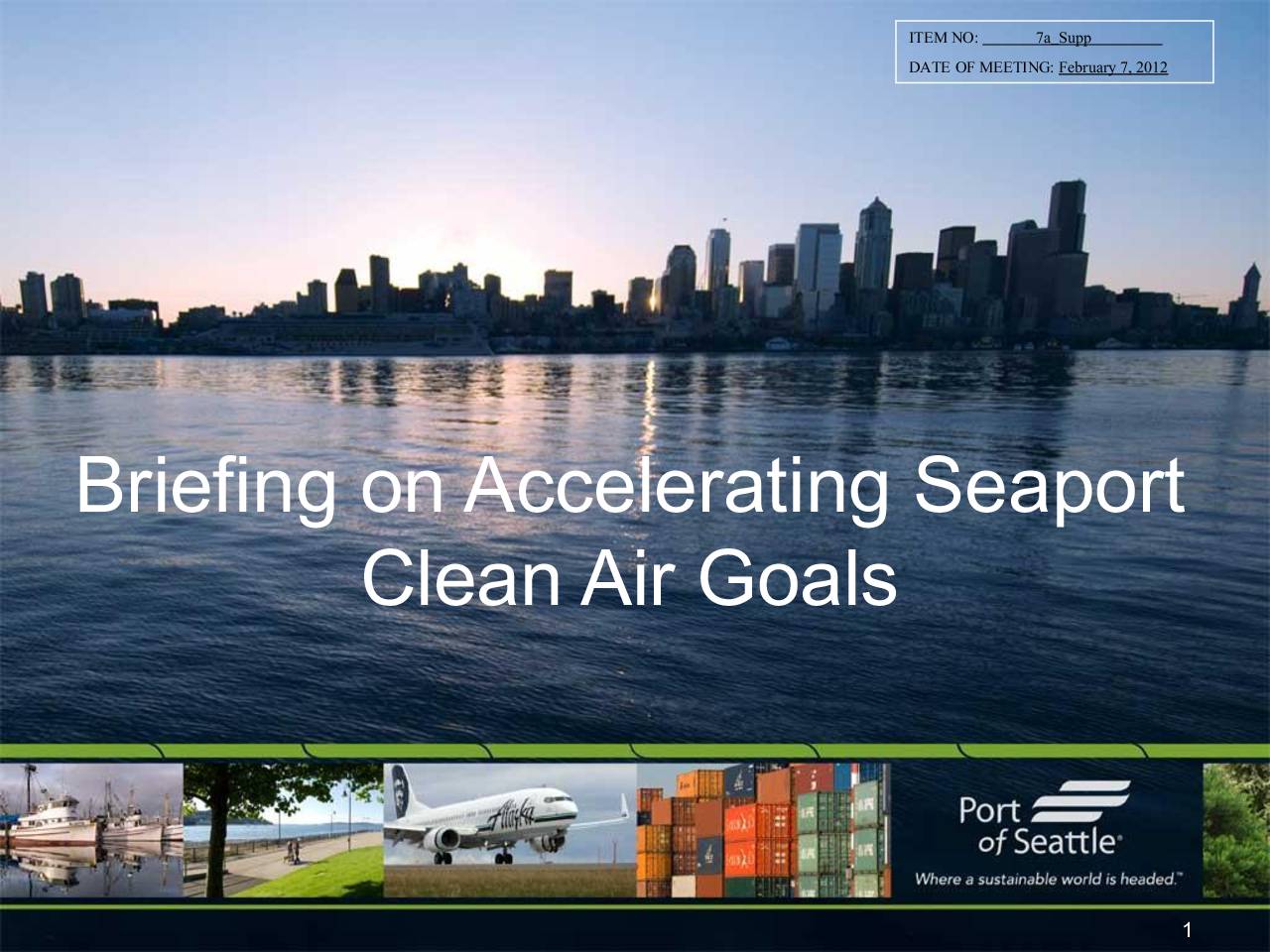
Briefing on accelerating seaport clean air goals
A February 2012 Port of Seattle briefing outlines plans to accelerate Seaport clean air goals to 2015, focusing on reducing diesel particulate emissions from trucks, ocean-going vessels, and cargo handling equipment. The document references a 2010 Puget Sound Clean Air Agency evaluation showing that diesel particulate matter accounts for 72% of air toxics in the Seattle Duwamish Valley, contributing to a total potential cancer risk of 450 per million residents. Draft recommendations and community outreach efforts are discussed as part of the strategy to meet the accelerated emissions reduction targets. -
 2012-01-25
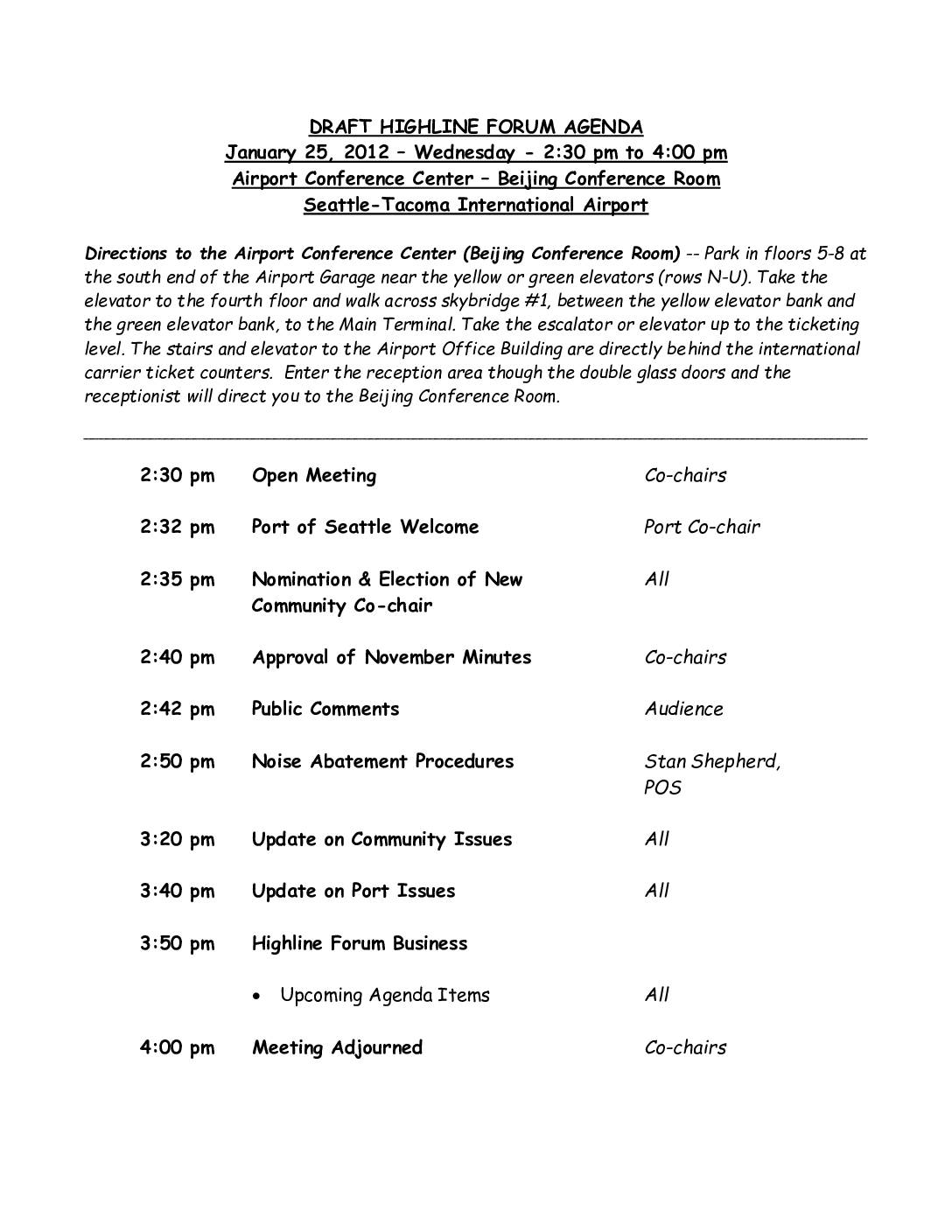
Highline Forum Draft Agenda, January 25, 2012
The Highline Forum held a public meeting on January 25, 2012, at the Seattle-Tacoma International Airport Conference Center, running from 2:30 to 4:00 pm. The agenda included a presentation on Noise Abatement Procedures by Stan Shepherd of the Port of Seattle, along with updates on community and port issues, election of a new Community Co-chair, and public comments. This draft agenda reflects the forum's ongoing role in addressing airport noise policy and community concerns related to Sea-Tac Airport operations. -
 2012-01-17
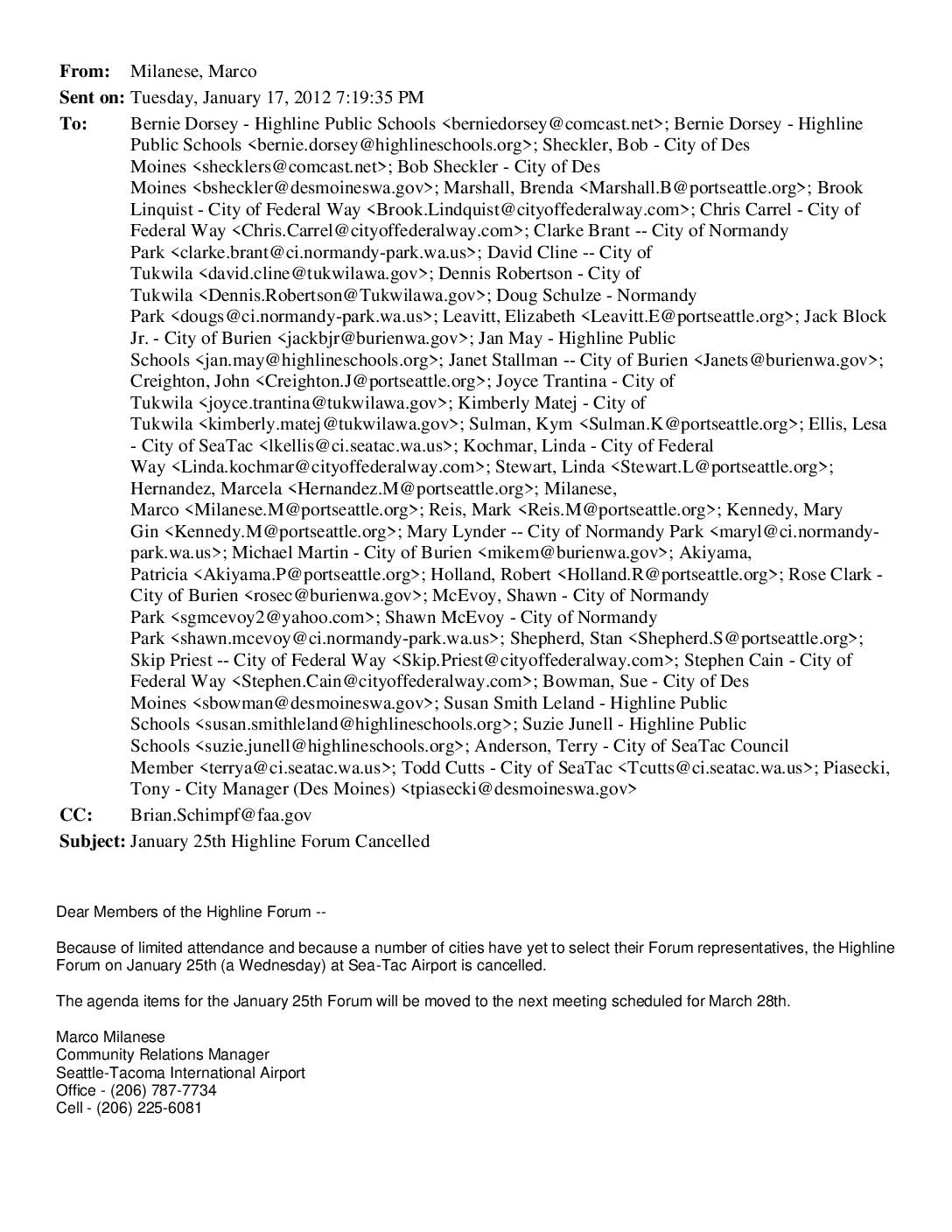
Highline Forum January 25, 2012 Meeting Cancellation Email
The Highline Forum meeting originally scheduled for January 25, 2012, at Sea-Tac Airport has been cancelled due to low expected attendance and several cities not yet having selected their Forum representatives. All agenda items planned for that meeting will be carried over to the next scheduled Forum on March 28, 2012. The cancellation notice was sent by Marco Milanese, Community Relations Manager at Seattle-Tacoma International Airport. -
 2011-12-31
Comprehensive annual financial report for the year ended December 31, 2011
This is the Port of Seattle's Comprehensive Annual Financial Report for the fiscal year ended December 31, 2011, prepared by the Port's Accounting and Financial Reporting Department. The report covers the financial activities of the Port of Seattle, a Washington State public agency that oversees Seattle-Tacoma International Airport, seaport operations, and marinas. It marks the Port's centennial year, commemorating 100 years of operations from 1911 to 2011. -
 2011-11-10
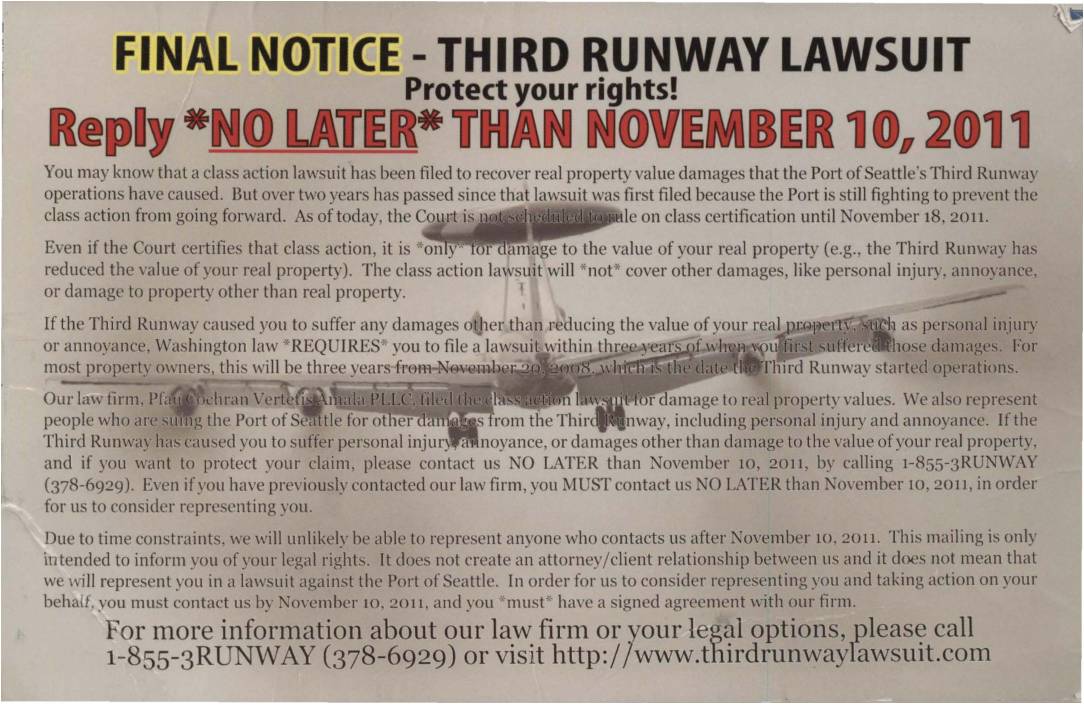
Final Notice: Third Runway Lawsuit — Pfau Cochran Vertetis Amala PLLC Mailer to Normandy Park Residents (November 10, 2011)
A 2011 legal notice from law firm Pfau Cochran Vertetis Amala PLLC informing Normandy Park and surrounding Seattle-area residents about a class action lawsuit against the Port of Seattle over damages caused by the airport's Third Runway operations. The notice warns that while the class action covers real property value losses, Washington law requires separate lawsuits to be filed within three years for other damages such as personal injury or annoyance. Residents were urged to contact the firm no later than November 10, 2011, to protect their legal rights. -
 2011-10-11
Annual stormwater monitoring report: Seattle-Tacoma International Airport, for the period July 1, 2010 through June 30, 2011
This report presents the annual stormwater monitoring results for Seattle-Tacoma International Airport (Sea-Tac) covering the period from July 1, 2010 through June 30, 2011, prepared by the Port of Seattle's Aviation Environmental Programs. It details the airport's storm drainage system, including drainage subbasins, outfall locations, and their connections to local waterways such as Miller Creek, Walker Creek, and Des Moines Creek. The report documents water quality sampling procedures and results from non-construction stormwater discharges across the airport's various drainage areas. -
 2011-06-01
Carbon footprint study for the Asia to North America intermodal trade
This 2011 study, prepared by Herbert Engineering Corp. for the Port of Seattle, examines the carbon footprint of intermodal freight shipping routes between Asia and North America, comparing emissions across major port regions including the Pacific Northwest, California, Southern East Coast, and Northern East Coast. It analyzes CO2 emissions from container ships, locomotives, and heavy-duty diesel vehicles across each leg of the supply chain. Note: this document concerns maritime and rail freight emissions and is not directly related to Sea-Tac Airport noise policy. -
 2011-05-03
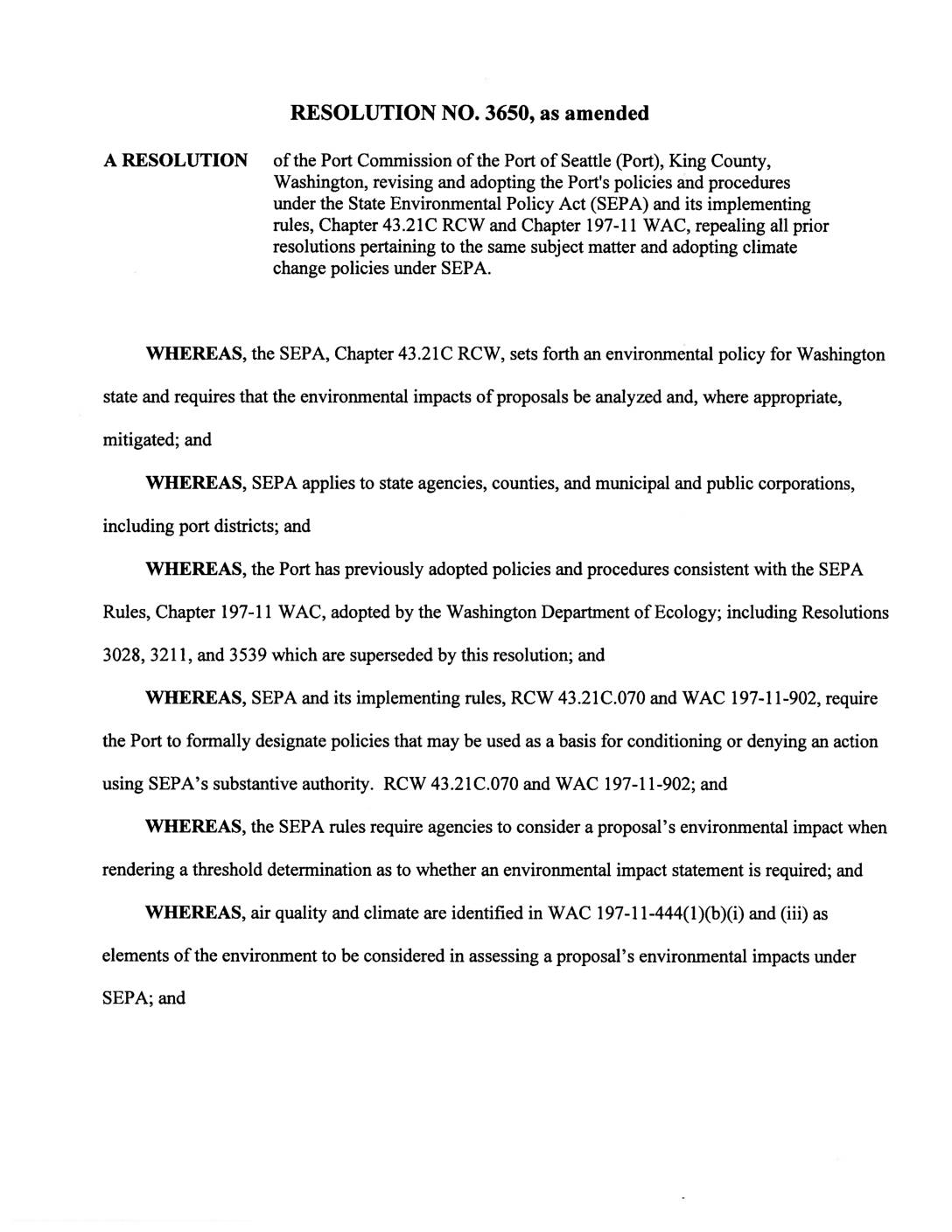
Resolution No. 3650, as amended
Resolution No. 3650 was adopted by the Port of Seattle Commission on May 3, 2011, updating the Port's policies and procedures under the State Environmental Policy Act (SEPA) to reflect changes in law and improve effectiveness. The resolution requires the Port to analyze and, where appropriate, mitigate the environmental impacts of its proposals, including consideration of greenhouse gas emissions and climate change. It supersedes all prior related resolutions and formally designates policies that may be used to condition or deny actions under SEPA's substantive authority. -
 2011-04-15
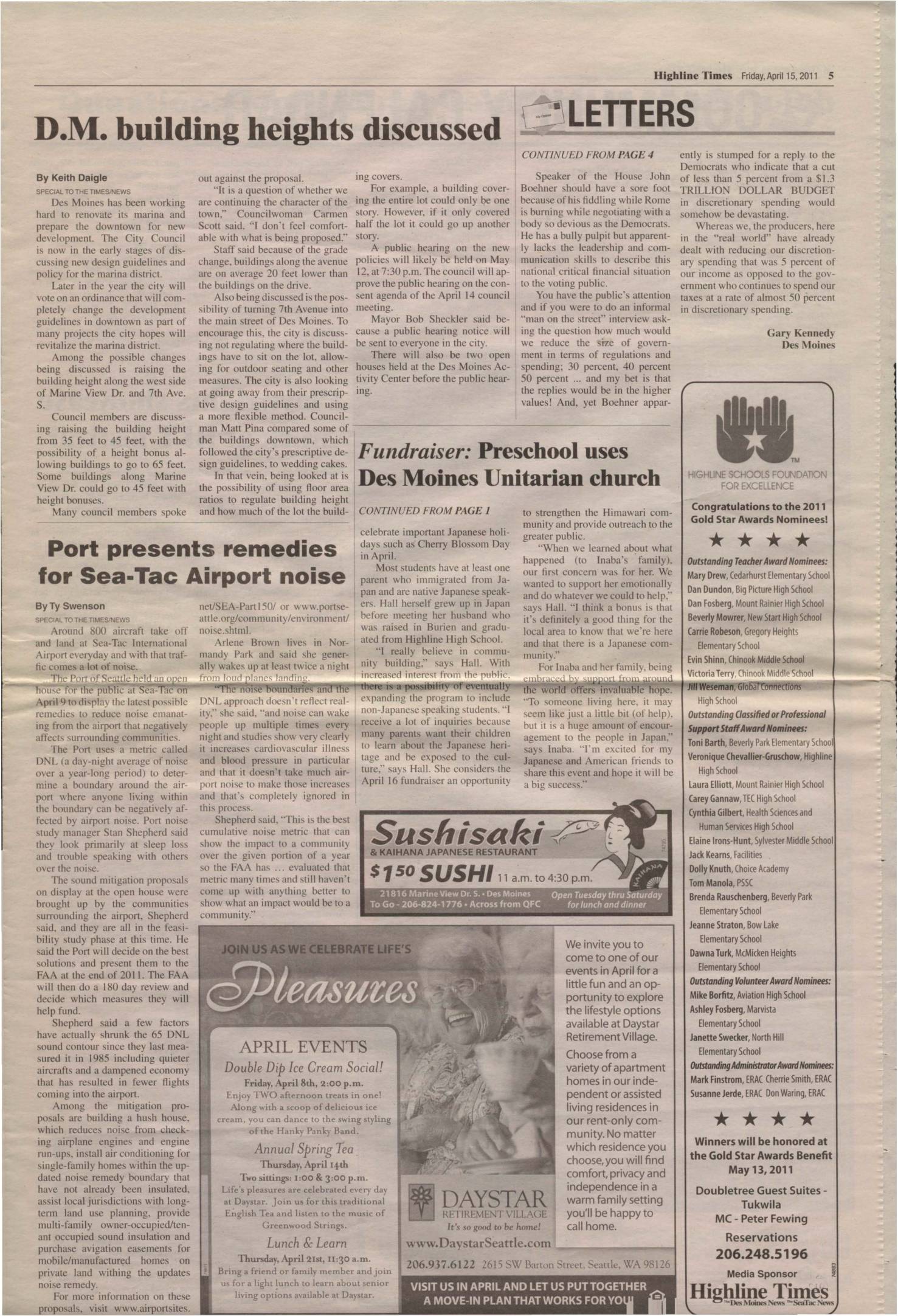
Port presents remedies for Sea-Tac Airport noise
The Port of Seattle held a public open house at Sea-Tac International Airport on April 9, 2011, to present feasibility-stage proposals for reducing airport noise affecting surrounding communities. Mitigation options under consideration included building a hush house to muffle engine run-ups, installing air conditioning in uninsulated single-family homes within the updated 65 DNL noise boundary, providing sound insulation for multi-family and mobile homes, and assisting local jurisdictions with long-term land-use planning. The Port planned to submit its recommended solutions to the FAA by the end of 2011, after which the FAA would conduct a 180-day review to determine which measures it would help fund. -
 2011-01-01
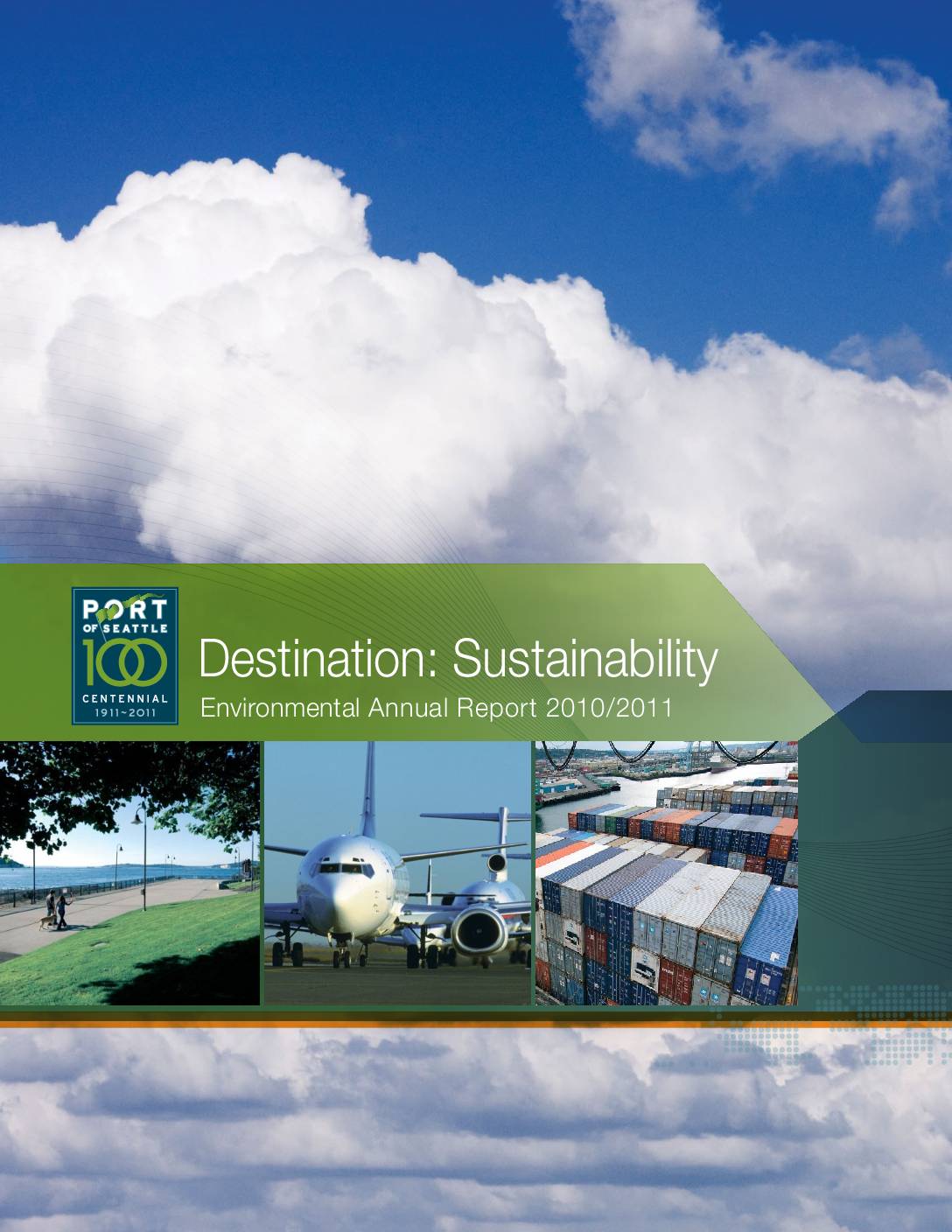
Destination: Sustainability — Environmental Annual Report 2010/2011
The Port of Seattle's 2010/2011 Environmental Annual Report, titled 'Destination: Sustainability,' marks the organization's centennial and outlines its environmental initiatives across air, land, and sea operations. The report covers topics including air quality, climate change, water quality, and operational improvements at Seattle-Tacoma International Airport, such as the addition of three parallel runways designed to reduce flight delays and improve weather-related operating efficiency. It reflects the Port's broader commitment to responsible, sustainable growth over its second century of operation.