TagMaritime(26)
-
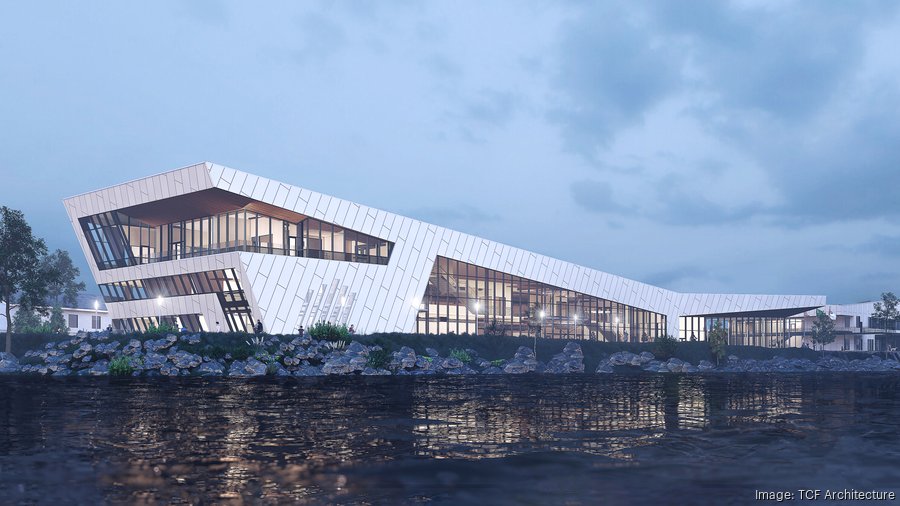
TCF Architecture Rendering of Waterfront Building — Port of Tacoma
A dusk/evening architectural rendering of a modern angular building with a white paneled roof situated on a rocky waterfront. The image bears a visible watermark crediting 'TCF Architecture' in the lower right corner. -
 2023-06-07
Samuel Kaplan — Global Trade & Supply Chain Center of Excellence, Highline College
This presentation by Samuel Kaplan, Director of the Center of Excellence for Global Trade & Supply Chain at Highline College, highlights the significance of the trade and logistics sector in Washington State, which employs more than 170,000 workers — surpassing aerospace and rivaling IT. It also outlines workforce supply and demand data for roles such as Freight Forwarder, noting average salaries of $51,000 in Washington and nearly 2,400 job openings statewide. The material is oriented toward connecting job seekers and students with education, training, and career opportunities in global trade and supply chain management. -
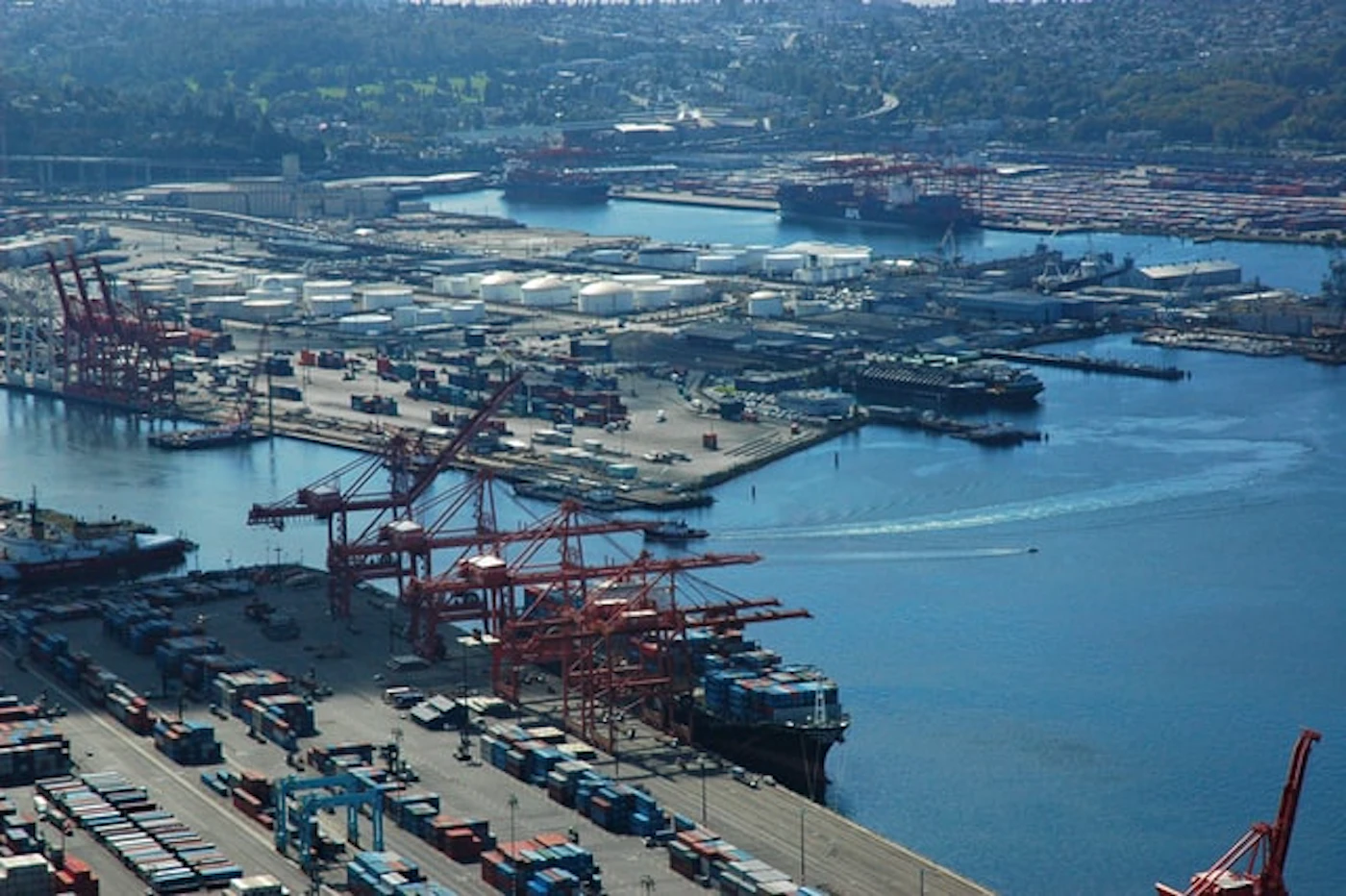
Aerial View of Port of Seattle Container Terminals and Cargo Ships
Aerial photograph of the Port of Seattle showing container terminals with red gantry cranes, stacked intermodal containers, and cargo ships docked along Elliott Bay. The industrial waterfront facility is visible with the broader Seattle urban area and green hillsides in the background. -
 2023-01-26
Port Of Seattle 2023-2027 Capital Improvement Program presentation to SAME
The Port of Seattle presented its 2023–2027 Capital Improvement Program on January 26, 2023, outlining planned infrastructure investments across its Aviation, Maritime, Economic Development, and NW Seaport Alliance divisions. The presentation covered recently completed projects, projects currently underway, and upcoming projects with consulting opportunities. The Port oversees Seattle-Tacoma International Airport — the 9th busiest airport in the United States — along with cruise terminals, marinas, and cargo facilities. -
 2023-01-01
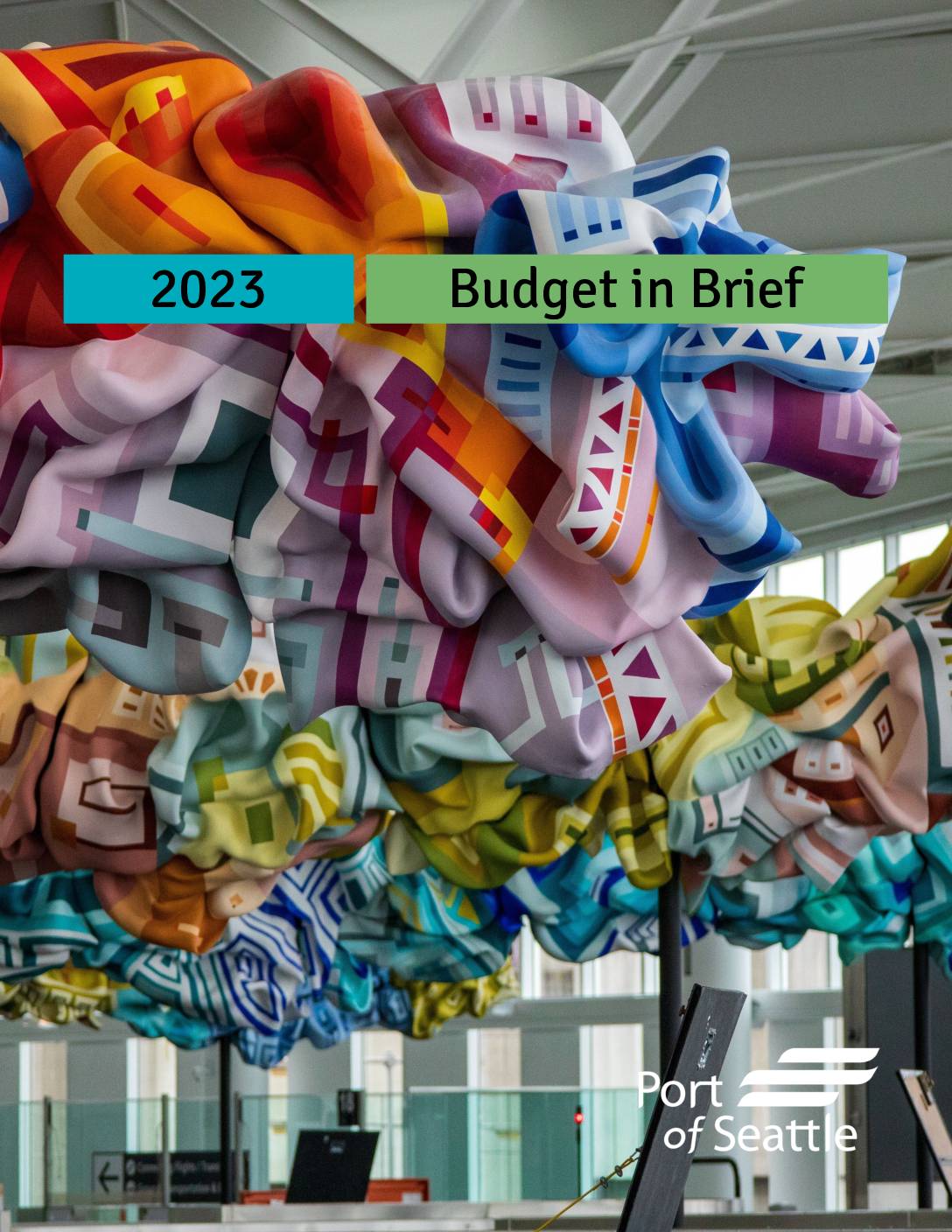
2023 budget in brief
The Port of Seattle's 2023 Budget in Brief outlines a $5.3 billion five-year capital plan covering aviation, maritime, and economic development, with the airport receiving $4.6 billion for safety, accessibility, and sustainability improvements at Seattle-Tacoma International Airport. The budget prioritizes workforce investment, community equity programs totaling $19.1 million, and environmental initiatives including decarbonization efforts aimed at eliminating carbon emissions from Port-owned sources by 2040. While the document focuses broadly on Port operations and finance, it does not specifically address SEA noise policy or noise mitigation programs. -
 2022-03-31
Port Of Seattle Q1 2022 financial performance report
The Port of Seattle's Q1 2022 Financial Performance Report, covering January through March 2022, shows the organization still recovering from COVID-19 impacts, with airport passenger volumes rebounding but running about 7.6% below 2019 levels. Total operating revenues reached $166.6 million, exceeding budget by $21 million, driven largely by federal concessionaire relief grants and stronger-than-expected parking revenue. The report also highlights record cruise activity, rising grain volumes, and continued community investment programs including environmental grants for urban restoration projects. -
 2021-12-31
Port Of Seattle 2021 financial performance report
The Port of Seattle's 2021 Financial Performance Report details the port's financial results as of December 31, 2021, covering revenues, expenses, and net operating income across its Aviation, Maritime, Economic Development, and Central Services divisions. Despite pandemic-related disruptions, total operating revenues reached $621.8 million, aided by federal relief funds, strong public parking and rental car performance, and a partial return of cruise ship activity. The report does not directly address Sea-Tac Airport noise policy, making it of limited relevance for noise-related research. -
 2020-10-30
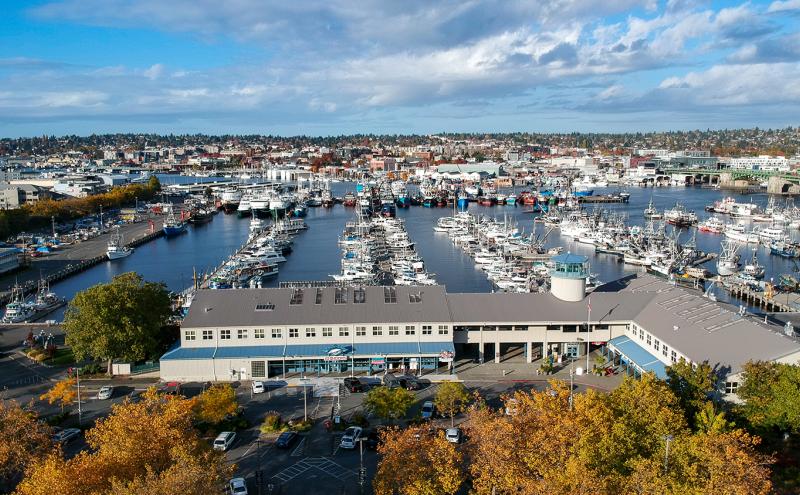
Aerial View of Fishermen’s Terminal, Seattle
Aerial photograph showing a large marina packed with commercial fishing vessels, featuring a waterfront building with blue trim and what appears to be a harbormaster or maritime facility. The autumn foliage, vessel density, and urban backdrop suggest a major Pacific Northwest fishing port, possibly Seattle's Fishermen's Terminal or a similar facility. -
 2018-12-11
Federal legislative agenda for 2019
The Port of Seattle's 2019 Federal Legislative Agenda outlines key policy priorities for both aviation and maritime operations, including efforts to address aircraft noise impacts on communities near Sea-Tac Airport. The agenda calls for increased FAA engagement with affected neighborhoods, expedited hiring of a regional noise ombudsman, and participation in a federally funded study examining the health impacts of overflight noise on Seattle-area residents. Additional aviation priorities include raising the federal Passenger Facility Charge cap, improving airport security screening, and expanding sustainable aviation fuel programs. -
 2018-12-11
Federal legislative agenda for 2019
This December 2018 Port of Seattle Commission presentation outlines the Port's federal legislative priorities for 2019, covering port-wide, aviation, and maritime issues. Key priorities include advocating for welcoming immigration policies for local immigrants and refugees, as well as strategic trade engagement to ensure tariffs and quotas are used only as a last resort. The agenda was presented for Commission adoption with plans to engage Congress and the Administration to advance these goals.