Notes
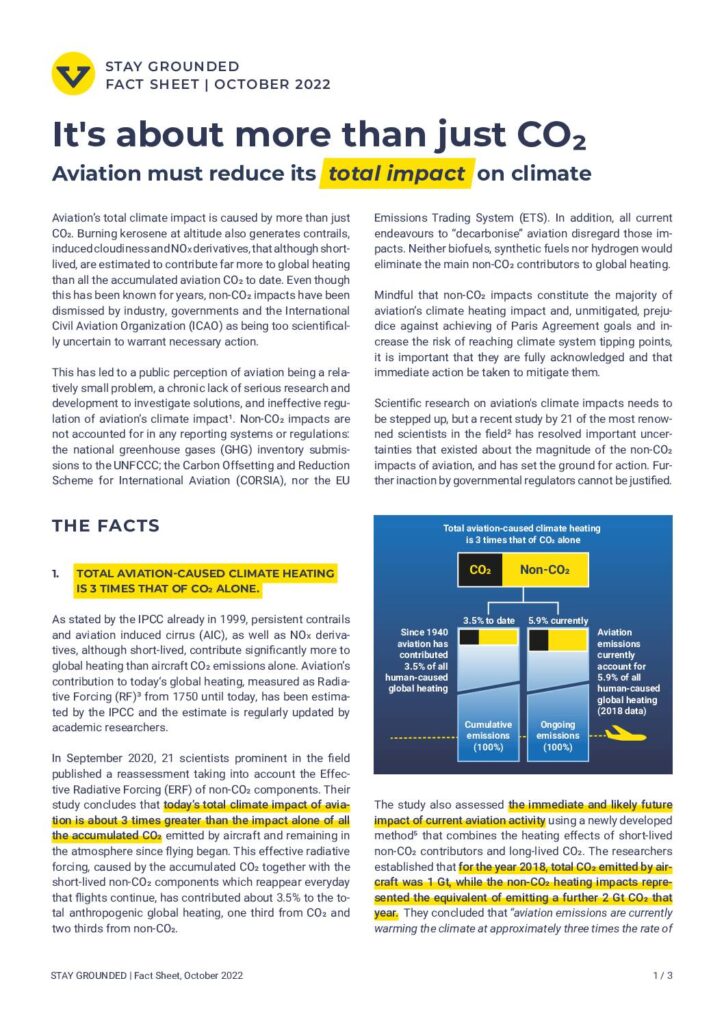
Stay Grounded fact sheet (October 2022) on aviation’s total climate impact beyond CO2, citing the Lee et al. 2020 study published in Atmospheric Environment. Documents that aviation’s non-CO2 effects — including persistent contrails, aviation-induced cirrus (AIC), and NOx derivatives — make total aviation climate heating approximately 3 times that of CO2 alone, with aviation accounting for 5.9% of all human-induced climate heating in 2018 (up from the industry-cited 2%). Covers Effective Radiative Forcing (ERF), CORSIA, EU ETS, ICAO, UNFCCC, Paris Agreement, contrail avoidance, low-aromatics kerosene, lean-burn NOx engines, and calls for reducing air traffic to pre-COVID levels, ending airport subsidies and tax exemptions, and substituting rail and renewably-powered ships.