TagBudget(117)
-
 2024-10-08
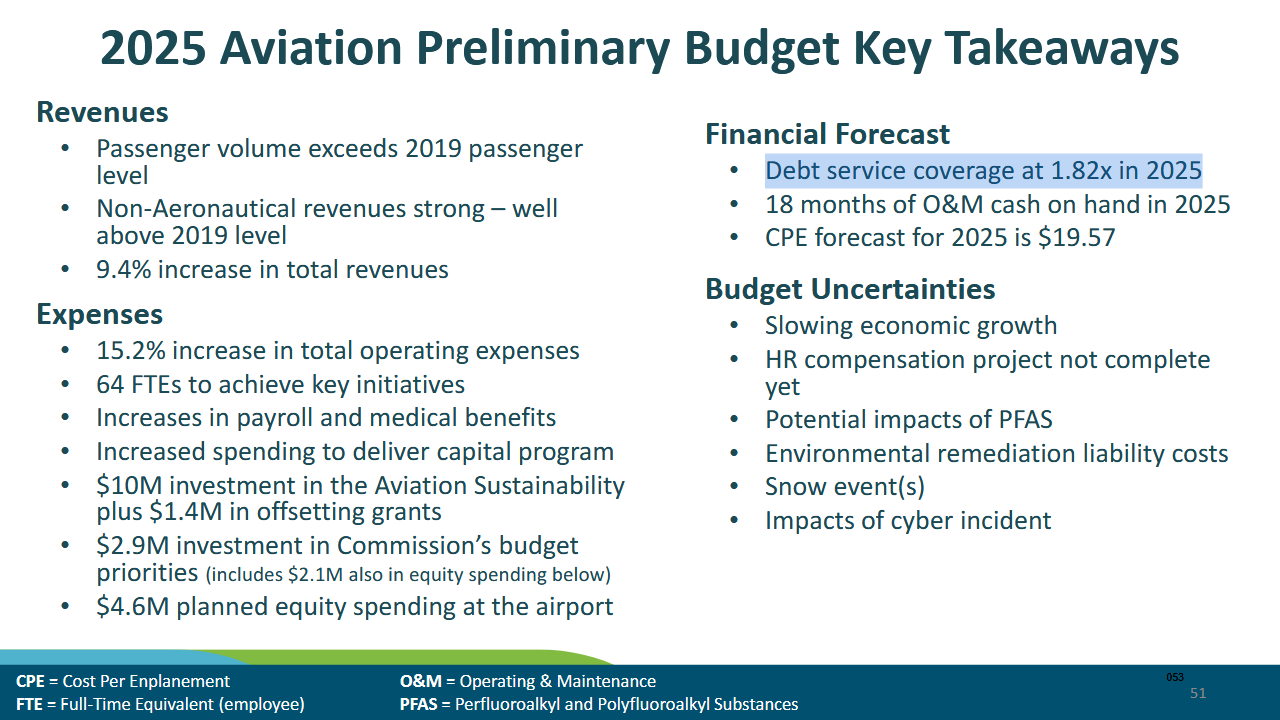
2025 Aviation Preliminary Budget Key Takeaways Slide
A budget summary slide for the 2025 Aviation Preliminary Budget, covering revenues (9.4% increase, passenger volume exceeding 2019 levels), expenses (15.2% increase in operating expenses, 64 new FTEs), financial forecasts (debt service coverage at 1.82x, CPE of $19.57), and budget uncertainties including PFAS impacts, environmental remediation liability costs, and cyber incident impacts. -
 2024-10-08
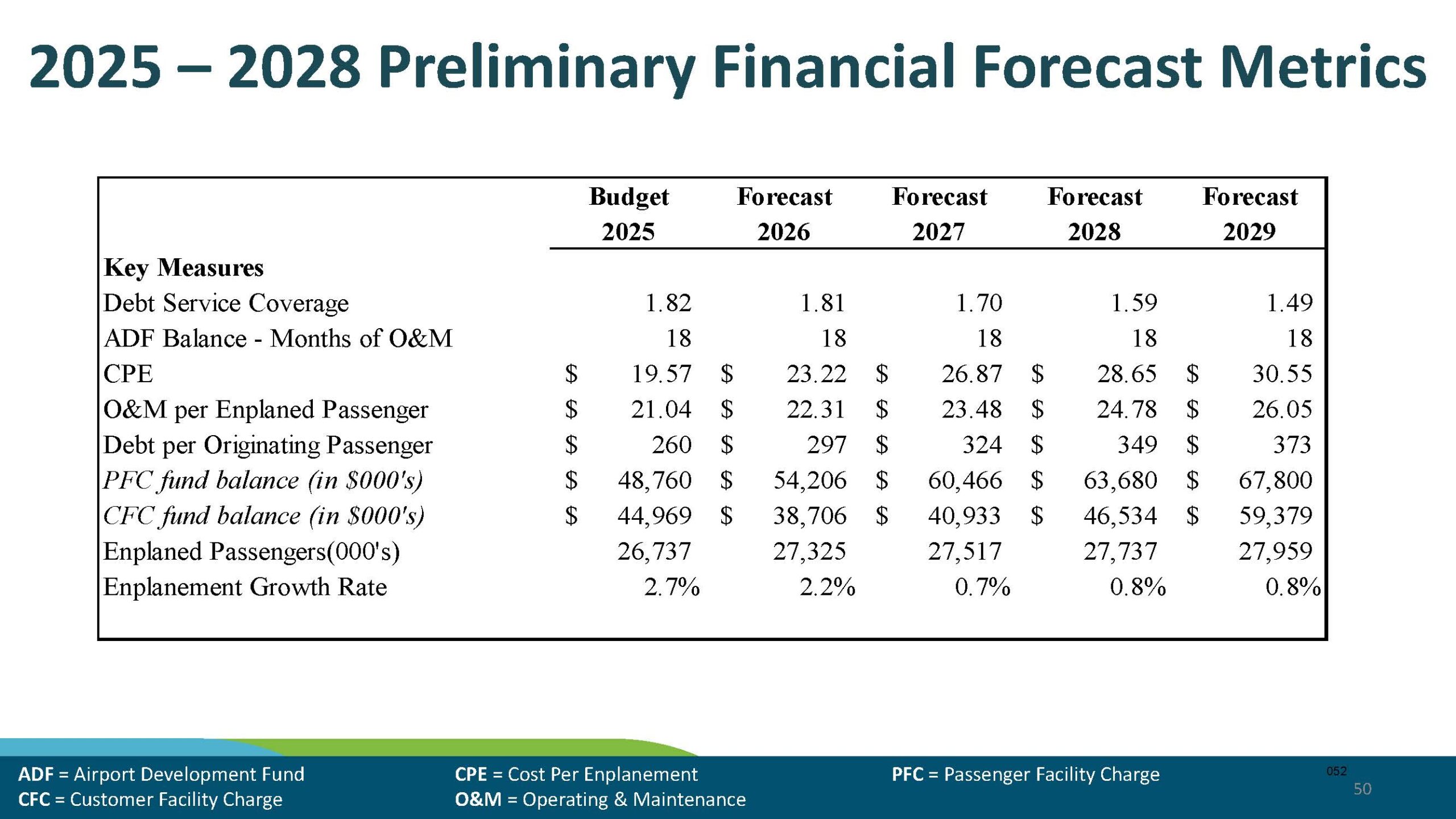
Sea-Tac Airport Financial Forecast Table: Budget 2025 Through 2029 — Debt Service Coverage, Cost Per Enplanement, and Passenger Projections (Page 52)
A financial forecast table from Seattle-Tacoma International Airport covering Budget 2025 through Forecast 2029, displaying key measures including Debt Service Coverage (declining from 1.82 to 1.49), Cost Per Enplanement (rising from $19.57 to $30.55), O&M per Enplaned Passenger, Debt per Originating Passenger, PFC and CFC fund balances, and enplaned passenger projections reaching approximately 27.9 million by 2029 with an enplanement growth rate of 0.8%. -
 2024-10-08
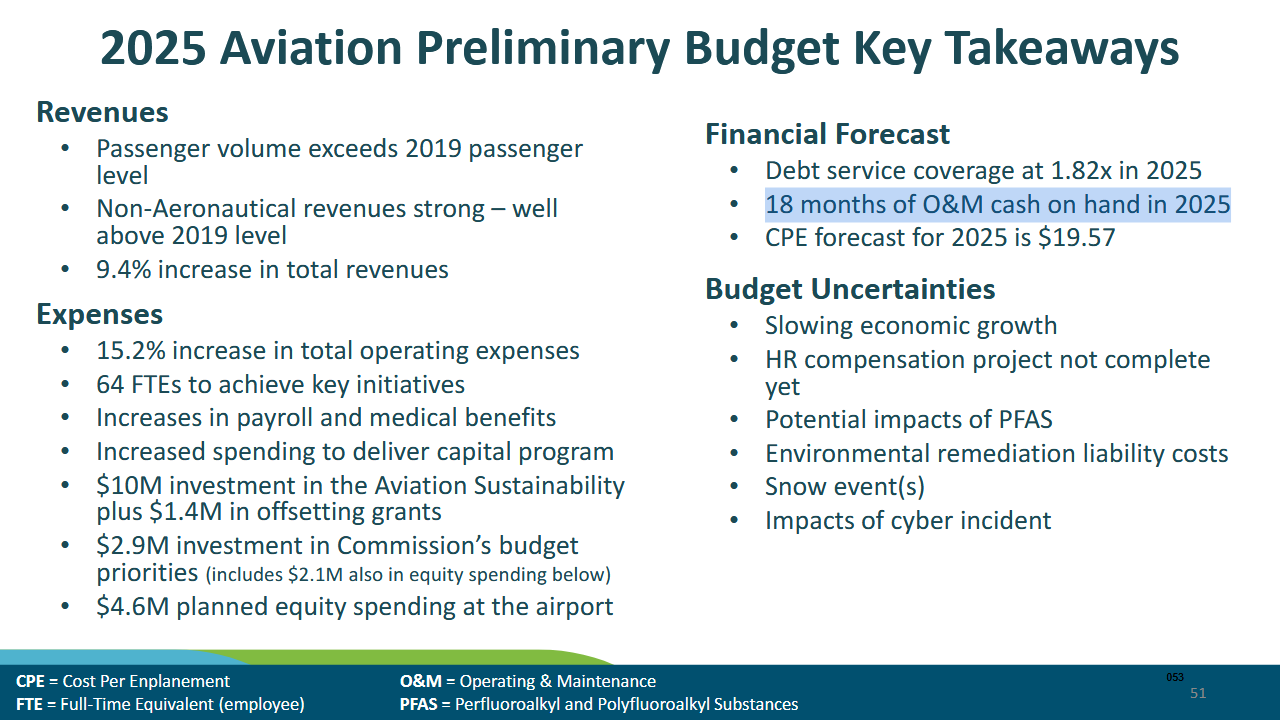
2025 Aviation Preliminary Budget Key Takeaways Slide
A budget presentation slide summarizing the 2025 Aviation Preliminary Budget, covering revenues (9.4% increase, passenger volume exceeding 2019 levels), expenses (15.2% increase in operating expenses, 64 new FTEs), financial forecast (debt service coverage at 1.82x, 18 months O&M cash on hand, CPE of $19.57), and budget uncertainties including PFAS impacts, environmental remediation liability costs, and cyber incident impacts. The slide number 053/51 suggests this is from a formal commission or port authority budget presentation. -
 2024-10-08
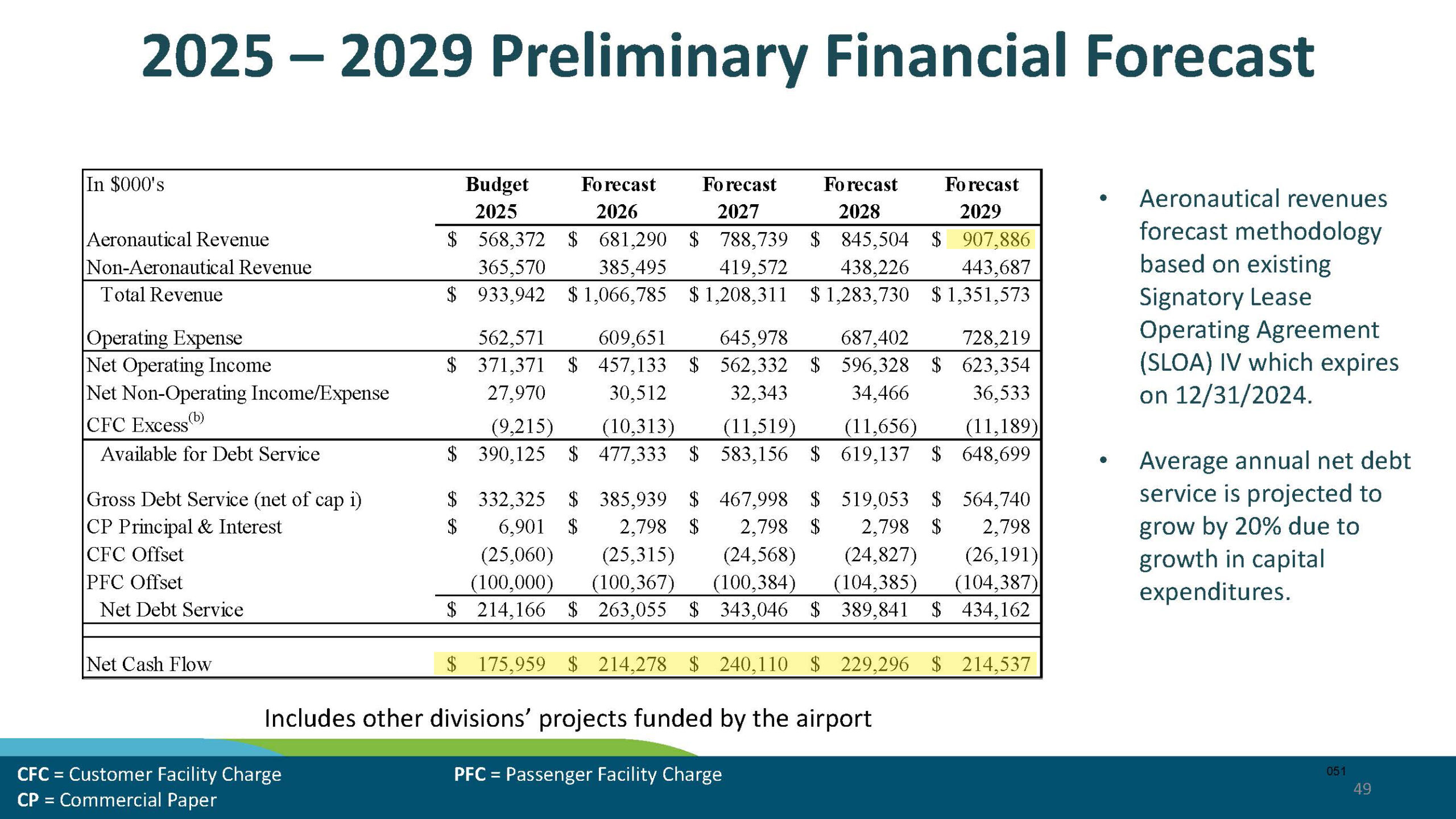
Sea-Tac Airport Aviation and Marina Budget Cash Flow Forecast 2025–2029
A financial forecast table for Seattle-Tacoma International Airport covering budget year 2025 and forecast years 2026–2029, showing aeronautical and non-aeronautical revenues, operating expenses, debt service, and net cash flow figures in thousands of dollars. Key notes indicate the aeronautical revenue methodology is based on the Signatory Lease Operating Agreement (SLOA) IV expiring 12/31/2024, and average annual net debt service is projected to grow by 20% due to capital expenditure growth. -
 2024-08-13
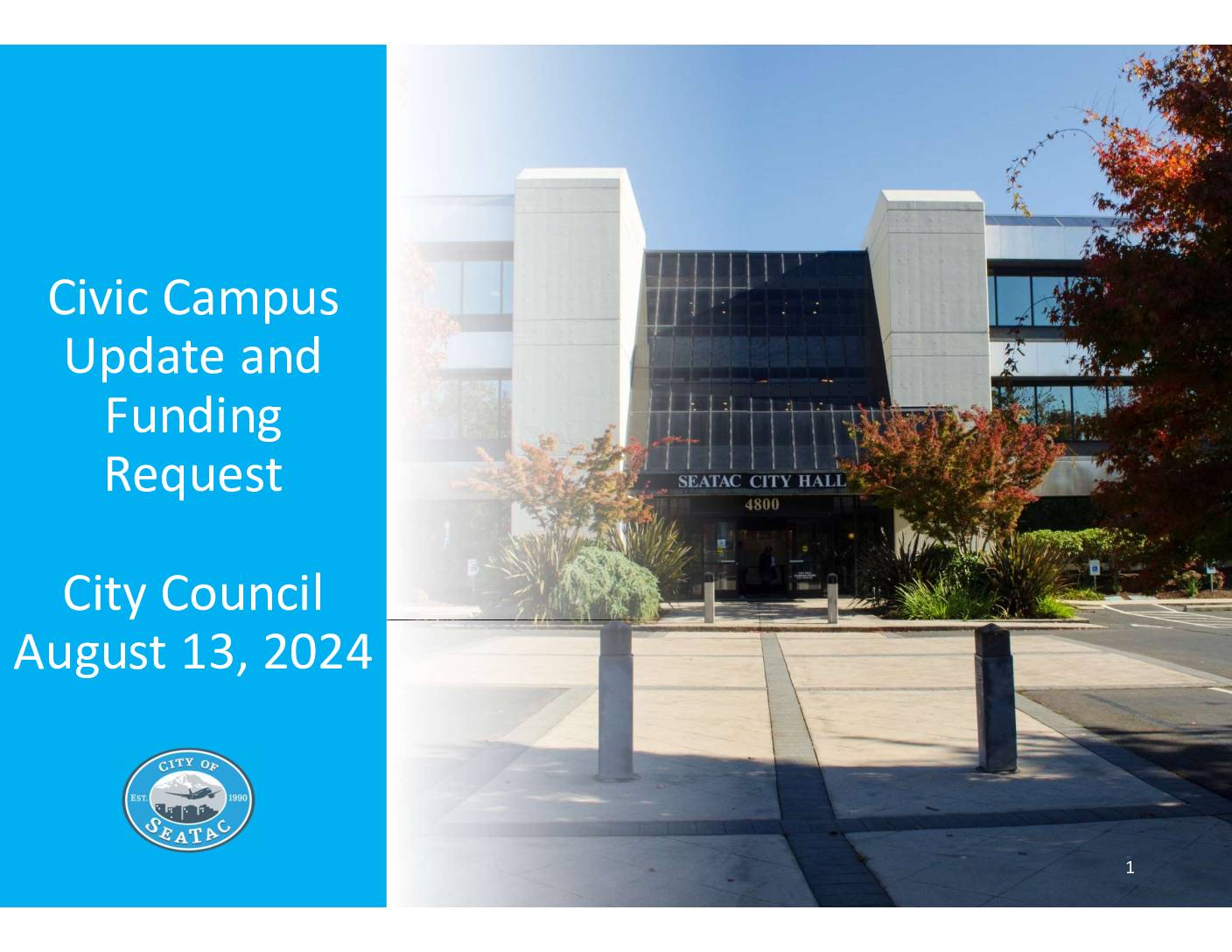
Civic Campus update and funding request
The City of SeaTac presented a Civic Campus update to City Council on August 13, 2024, requesting a $754,000 amendment to the 2023-2024 biennial budget to fund consulting services for the SeaTac Civic Center Project. The request also sought authorization for the Interim City Manager to execute consultant contracts to advance the project through a validation and feasibility phase. The project has been in development since 2020, with key milestones including architectural contracts, study sessions, and an owner's representative agreement with JLL in early 2024. -
 2024-07-25
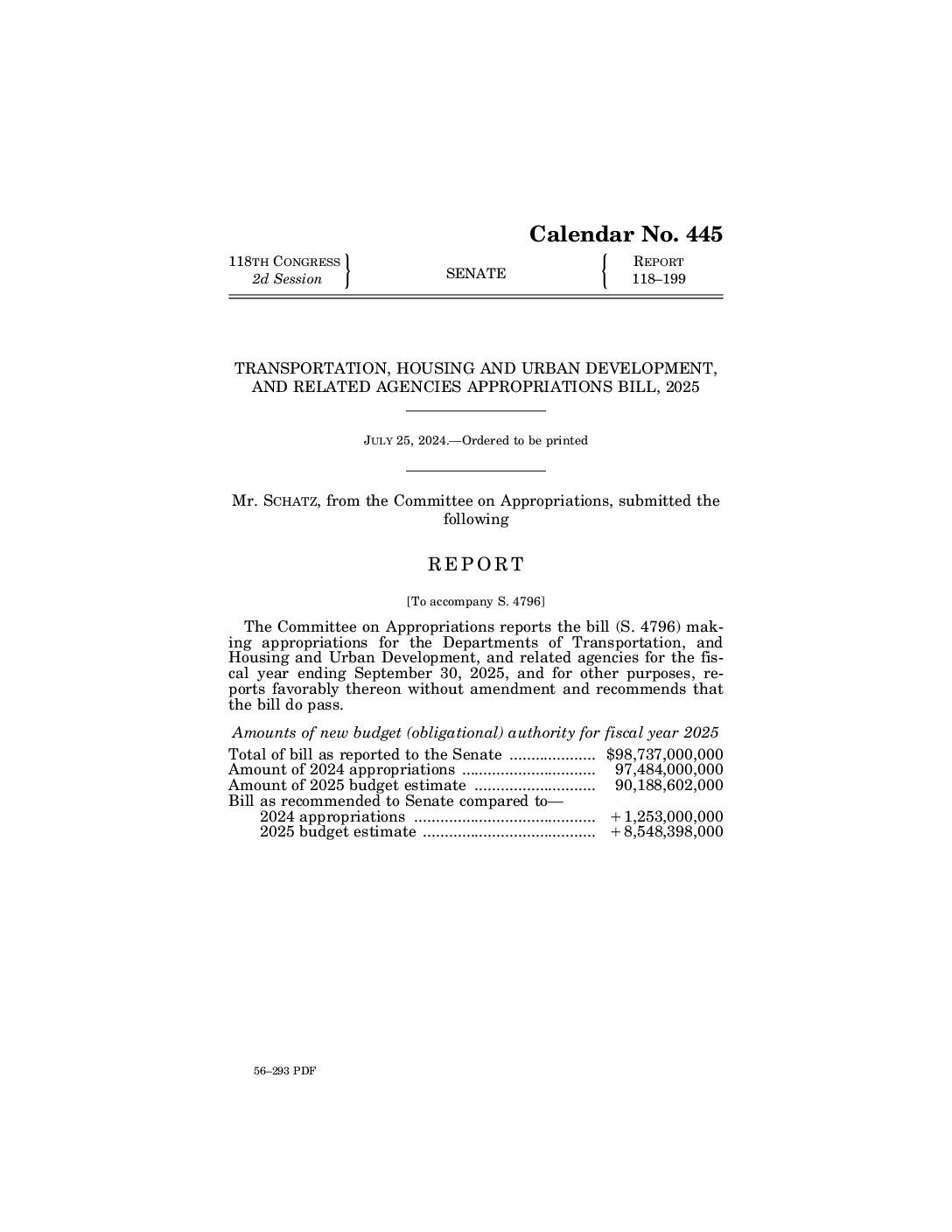
Transportation, Housing and Urban Development, and Related Agencies Appropriations Bill, 2025
This is a U.S. Senate Appropriations Committee report from July 2024 recommending passage of the Transportation, Housing and Urban Development, and Related Agencies Appropriations Bill for fiscal year 2025, totaling approximately $98.7 billion. The bill covers funding for federal agencies including the Federal Aviation Administration, Federal Highway Administration, Federal Transit Administration, and the Department of Housing and Urban Development, among others. It represents an increase of roughly $1.25 billion over 2024 appropriations levels. -
 2024-03-26
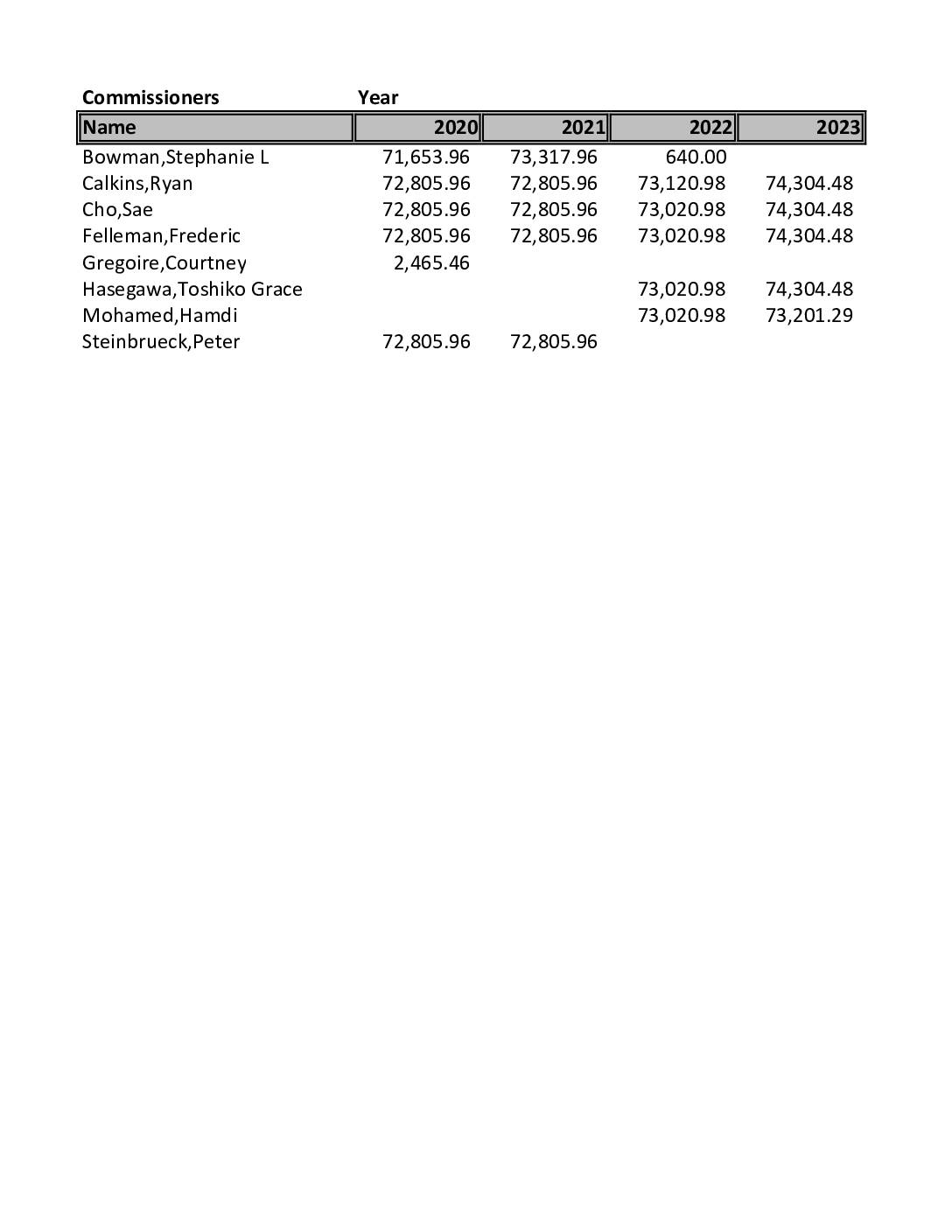
Port Of Seattle Commission Salaries, 2020–2023
This document lists annual compensation figures for Port of Seattle Commissioners from 2020 through 2023. Commissioners such as Ryan Calkins, Sae Cho, and Frederic Felleman received consistent salaries around $72,000–$74,000 per year, while others like Toshiko Grace Hasegawa and Hamdi Mohamed appear only in later years, reflecting mid-term appointments. Stephanie L. Bowman and Courtney Gregoire show partial-year or transitional pay amounts, indicating departures or arrivals during the covered period. -
 2024-03-07
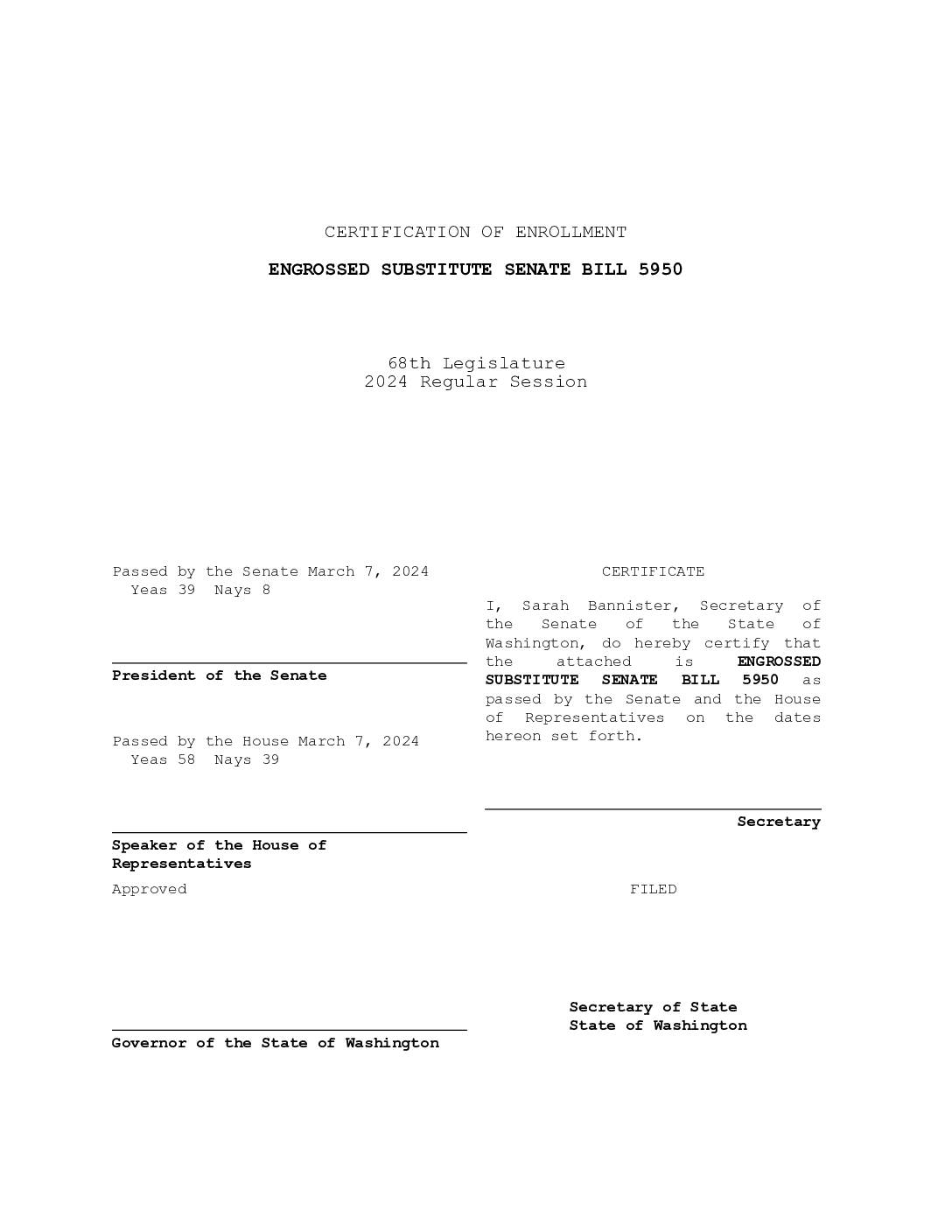
Engrossed Substitute Senate Bill 5950: Washington State Fiscal Matters Appropriations Act, 2024
Engrossed Substitute Senate Bill 5950, passed by the Washington State Legislature on March 7, 2024, is a fiscal appropriations bill that adopts a state budget for the biennium running from July 1, 2023, through June 30, 2025. The bill authorizes spending from various state funds for agency salaries, wages, and other specified purposes, while amending several existing statutes related to financial management. Note: This bill addresses general state fiscal matters and does not contain provisions specifically related to Sea-Tac Airport noise policy. -
 2024-03-03
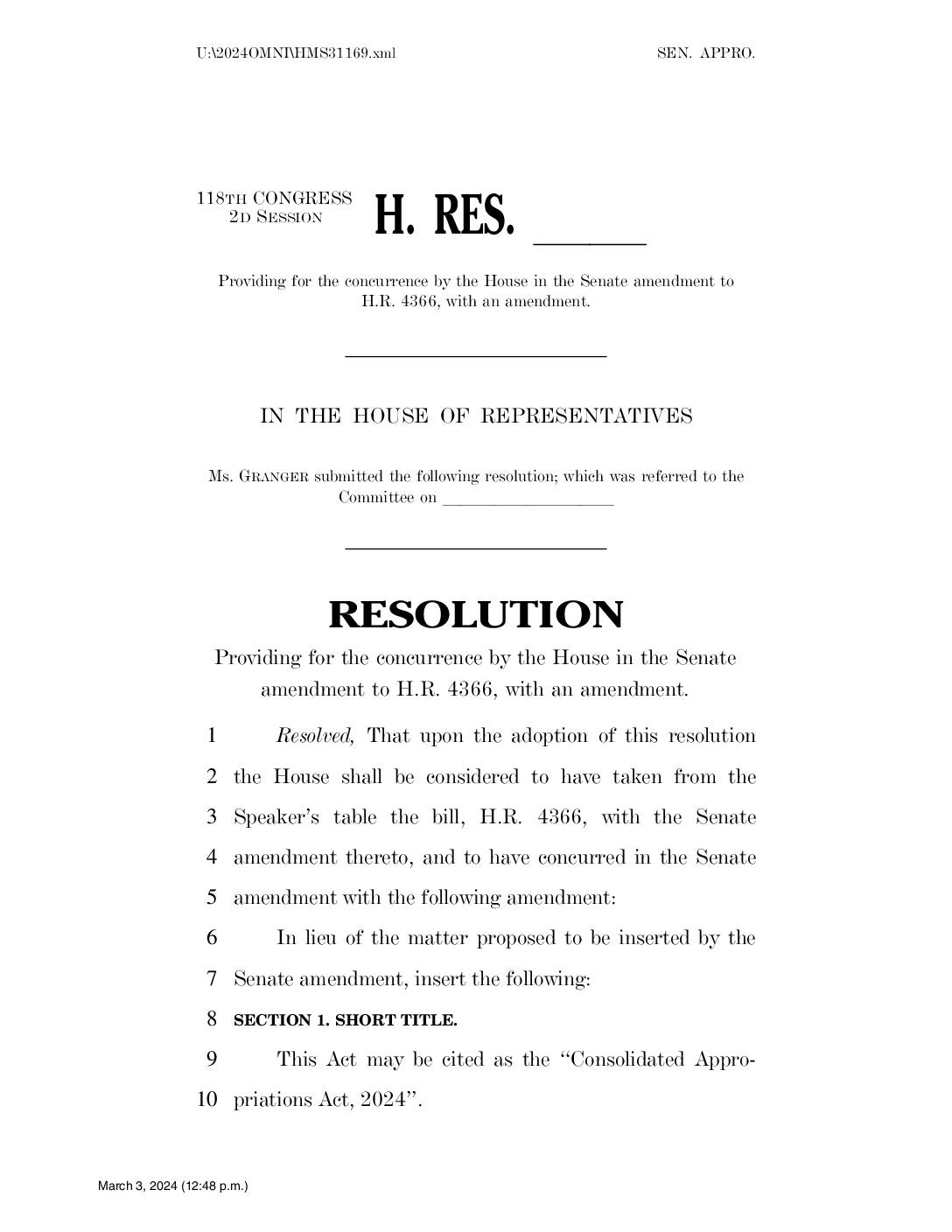
Consolidated Appropriations Act, 2024
The Consolidated Appropriations Act, 2024 is a federal government spending bill passed by the 118th Congress that funds multiple agencies and programs for the fiscal year ending September 30, 2024. The act is divided into divisions covering areas such as Military Construction, Veterans Affairs, Agriculture, Commerce, Justice, Energy, Transportation, and Housing, among others. This document is a House resolution providing for concurrence with Senate amendments to H.R. 4366. -
 2024-02-05
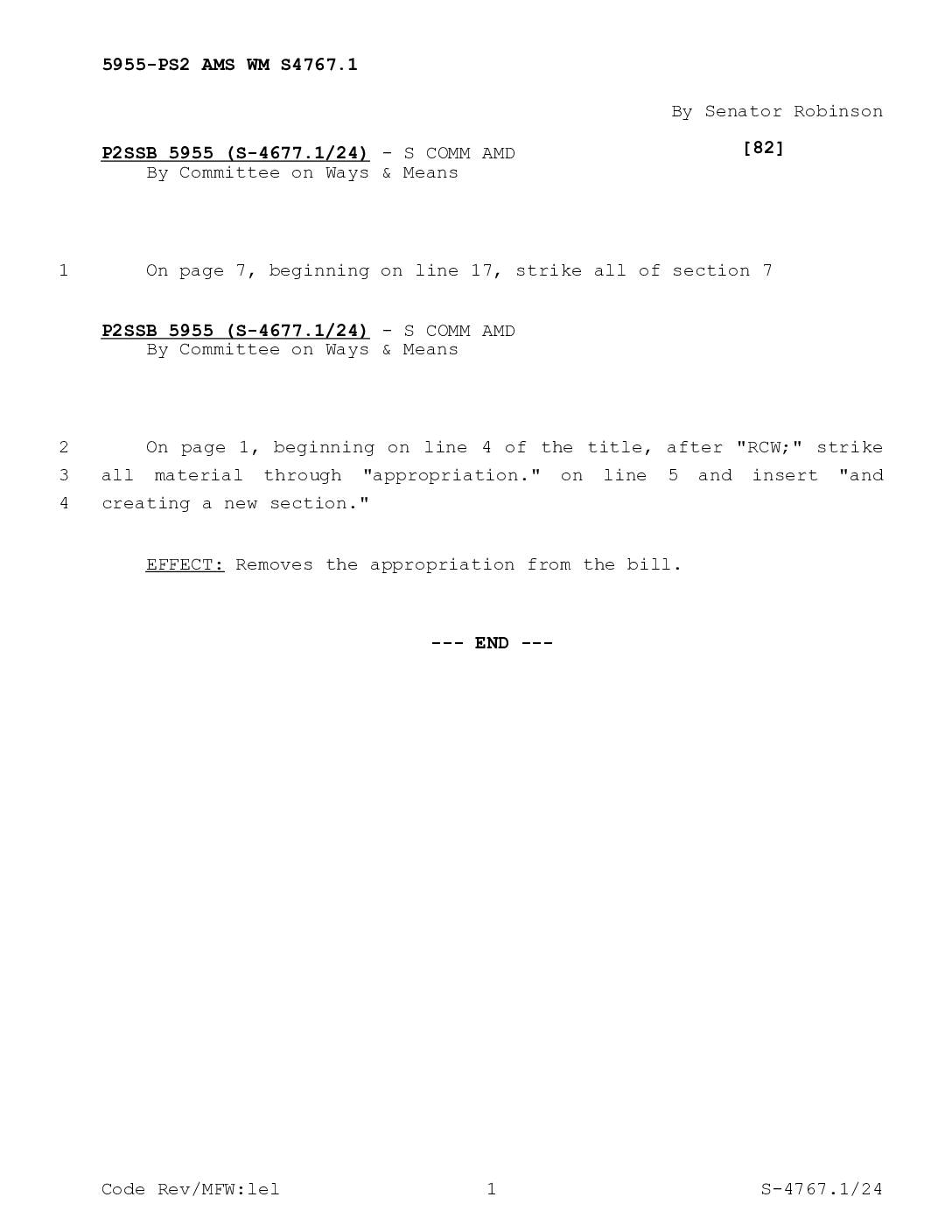
P2SSB 5955 (S-4677.1/24) – Senate committee amendment by Ways & Means
This Washington State Senate amendment to P2SSB 5955, introduced by Senator Robinson through the Committee on Ways & Means, removes an appropriation provision from the bill by striking Section 7 and updating the bill's title language accordingly. The amendment eliminates any dedicated funding allocation that was previously included in the legislation, leaving the bill to create a new section without an attached appropriation.