TagBudget(137)
-
 2018-11-13
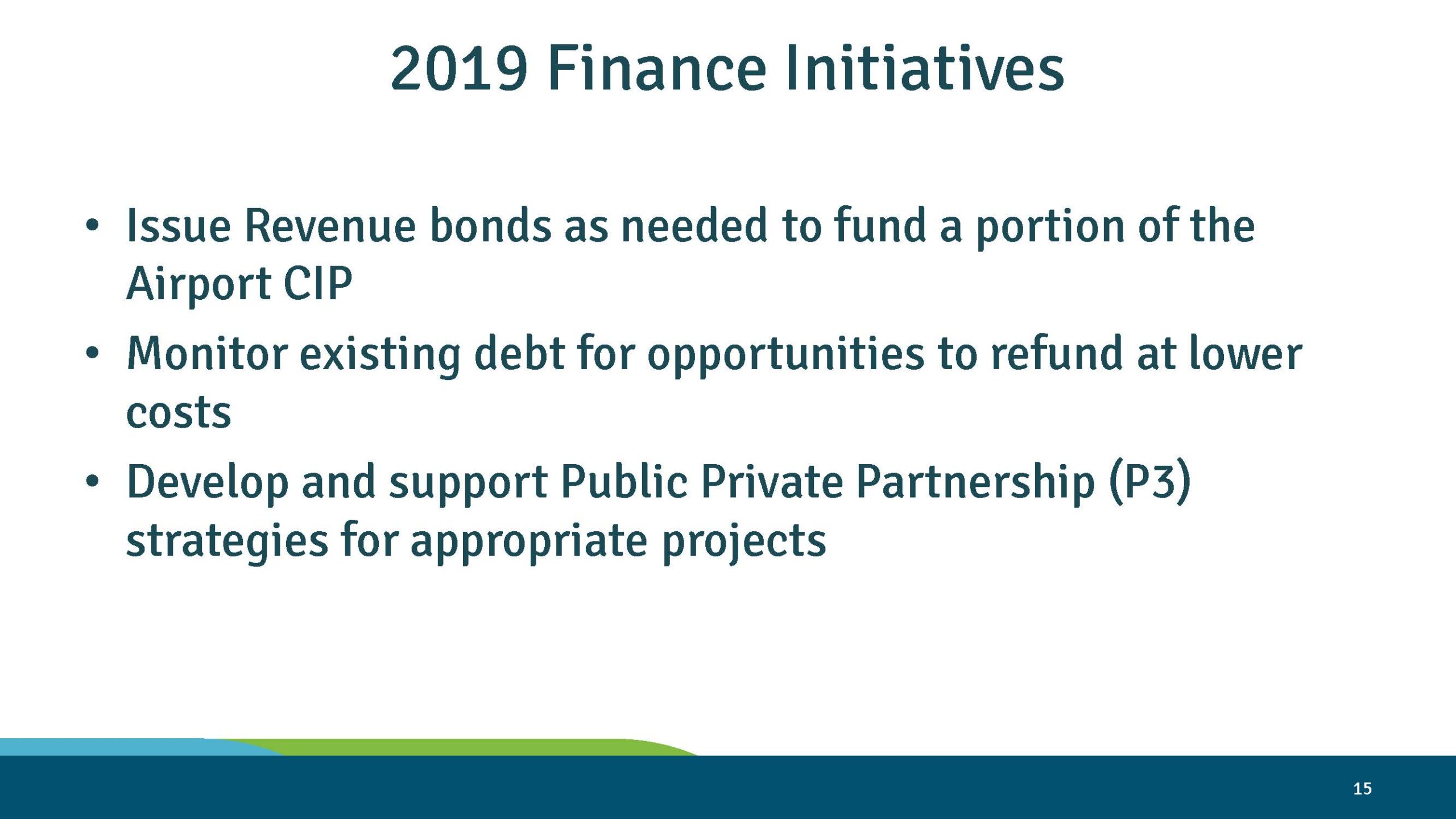
Port Of Seattle Draft Finance Plan 2019–2023 — 2019 Finance Initiatives (Slide 15, November 2018)
Slide 15 from a presentation outlining 2019 finance initiatives, including issuing revenue bonds to fund a portion of the Airport Capital Improvement Program (CIP), monitoring existing debt for refinancing opportunities, and developing Public Private Partnership (P3) strategies for appropriate projects. Context indicates this is related to Sea-Tac Airport financial planning. -
 2018-06-26
Aviation Division 2019 business plan and budget preview
The Port of Seattle's Aviation Division presented its 2019 Business Plan and Budget Preview on June 26, 2018, outlining the process for translating long-term strategic goals into annual budgets and staffing plans. The presentation covers strategic priorities, anticipated budget needs, and staffing requirements for 2019, all grounded in the Port's broader Century Agenda framework. The planning process spans multiple time horizons, from a 5–10 year vision down to annual implementation through business plans, budgets, and performance plans. -
 2018-03-27
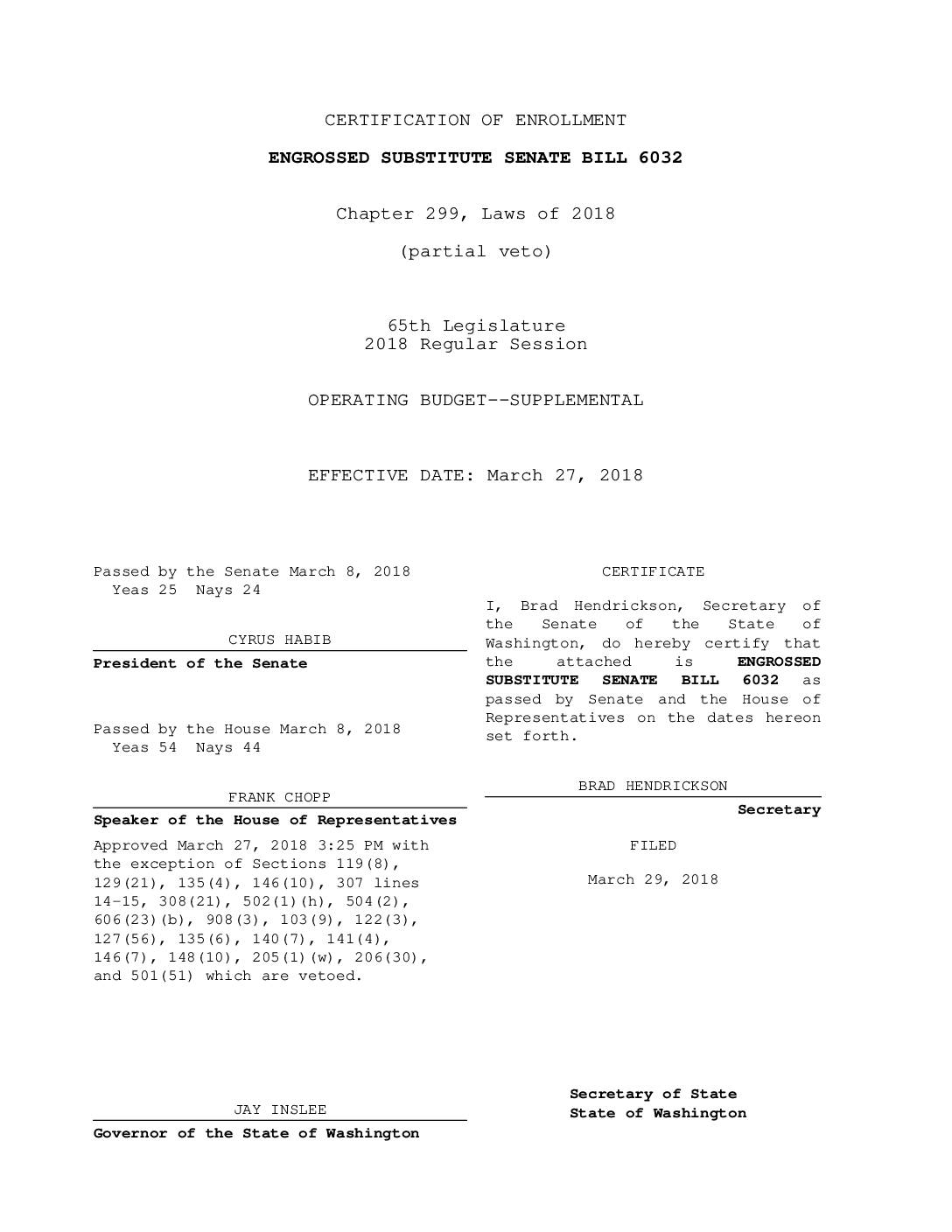
Engrossed Substitute Senate Bill 6032: Washington State 2018 Supplemental Operating Budget (Chapter 299, Laws of 2018)
Washington State 65th Legislature 2018 Regular Session Engrossed Substitute Senate Bill 6032 (ESSB 6032), Chapter 299 Laws of 2018, supplemental operating budget. Passed Senate and House on March 8, 2018 (25-24 and 54-44 respectively); signed by Governor Jay Inslee on March 27, 2018 with partial veto of sections including 119(8), 129(21), 135(4), 146(10), 307 lines -
 2018-03-27
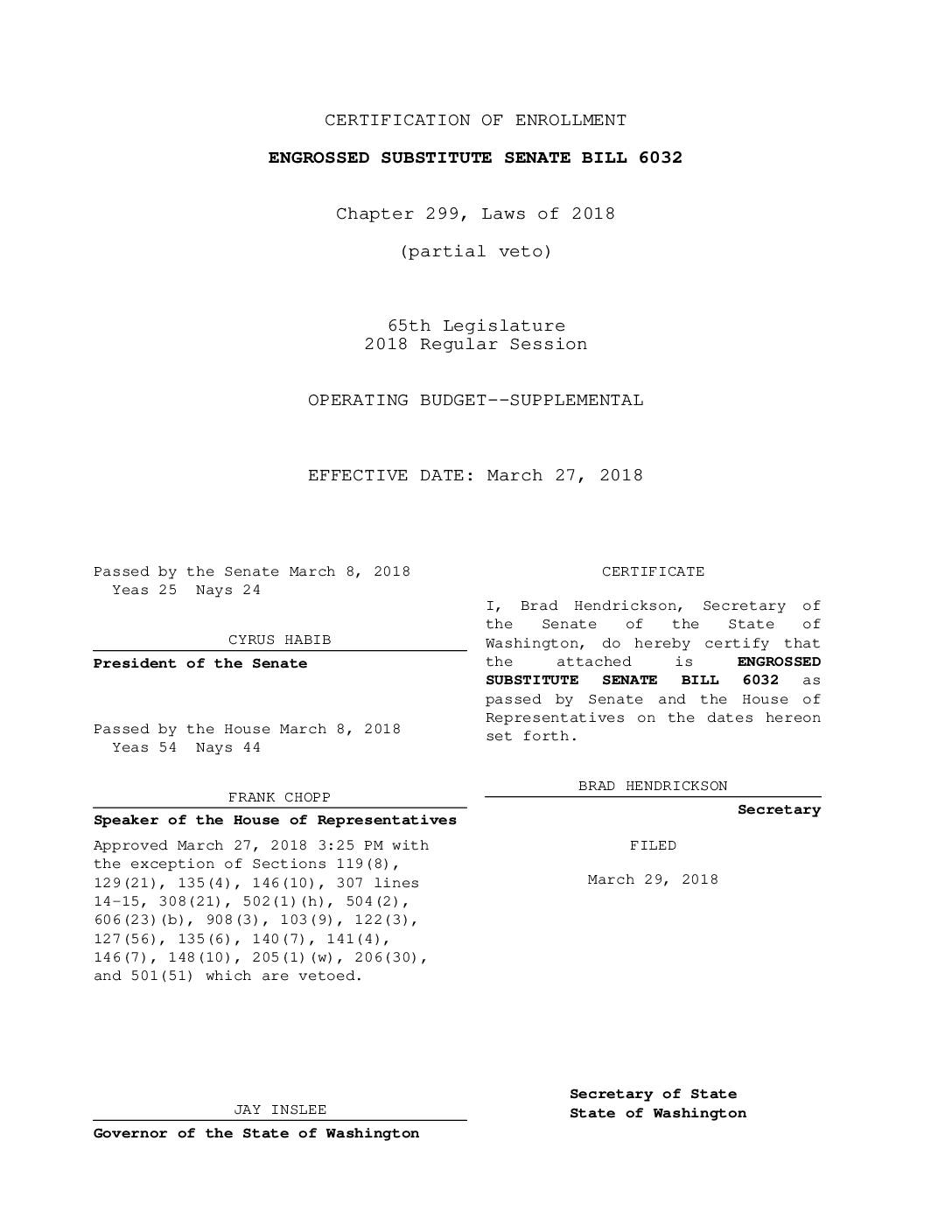
Engrossed Substitute Senate Bill 6032: Washington State 2018 Supplemental Operating Budget (Chapter 299, Laws of 2018)
Engrossed Substitute Senate Bill 6032, passed by the Washington State Legislature on March 8, 2018, and signed by Governor Jay Inslee on March 27, 2018, is a supplemental operating budget bill making appropriations and amendments to various state funds for the 2017-2019 fiscal biennium. The bill covers a wide range of general government expenditures, including funding for the House of Representatives, tax structure reform discussions, and rural health care planning. Governor Inslee approved the bill with a partial veto, striking down more than 20 specific sections. -
 2010-03-09
Port of Seattle 2009 financial performance
The Port of Seattle's 2009 financial performance report, presented March 9, 2010, shows that operating revenues fell to $448.9 million against a budget of $486.4 million, a shortfall of roughly $37.4 million. To address budget pressures, the Port implemented a $16 million savings plan that included employee furloughs, travel and training cuts, voluntary separations, layoffs, and changes to retiree medical benefits. Despite these measures, income after depreciation came in at $46.8 million, about $4.7 million below the budgeted target of $51.5 million. -
 2010-03-09
Port of Seattle 2009 financial performance
The Port of Seattle's 2009 financial performance report, presented March 9, 2010, shows that operating revenues fell to $448.9 million against a budget of $486.4 million, a shortfall of roughly $37.4 million. To address budget pressures, the Port implemented a $16 million savings plan that included employee furloughs, travel and training cuts, voluntary separations, layoffs, and changes to retiree medical benefits. Despite these measures, income after depreciation came in at $46.8 million, about $4.7 million below the budgeted target of $51.5 million. -
 2003-06-24
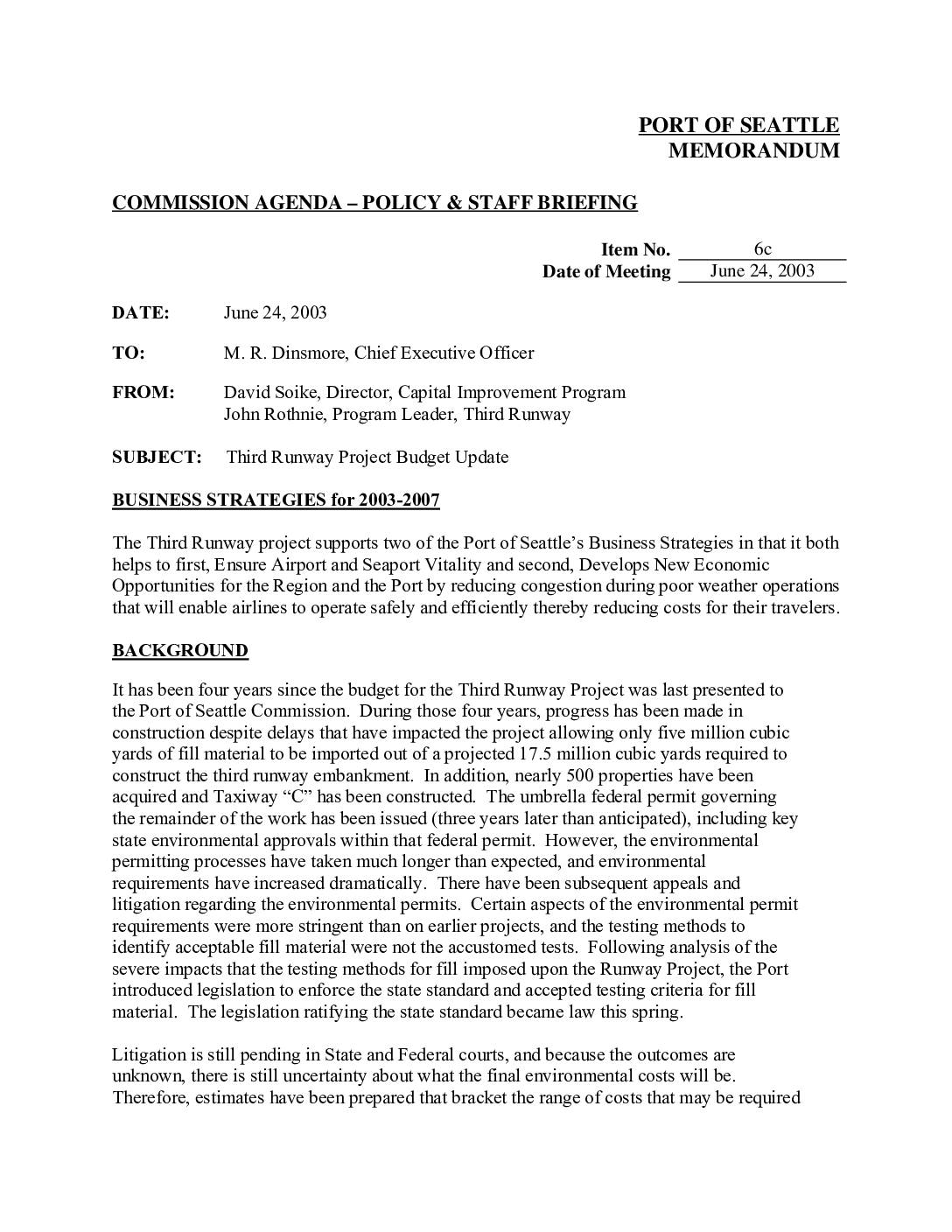
Third Runway project budget update
A 2003 Port of Seattle memo updates the Commission on the ballooning costs of the Sea-Tac Third Runway project, which had grown from an approved budget of $773 million to an estimated $1.1–1.15 billion due to environmental permitting delays, litigation, and stricter regulatory requirements. The project, intended to reduce airport congestion by allowing simultaneous landings on two runways during poor weather, was projected for completion in 2008 if construction contracts were advertised promptly. Key cost drivers included $151 million in additional environmental permit requirements, $55 million in delay costs, and $55 million in project scope additions.