TagStormwater(373)
-
 1999-01-14
EXH AR024885: Water Quality Datalog 55-2912-01(61) Miller DS Field Measurements & Flow Weighting Calc, Jan 14 1999
These are field records from a water quality sampling event conducted on January 14, 1999, at the Miller DS site near McD NC, documenting storm water measurements taken from a culvert. Samplers recorded water levels, flow rates, pH, temperature, and dissolved oxygen at 12 intervals throughout the morning. A flow-weighting calculation worksheet was used to determine subsample volumes, with a total storm flow of 122,400 units recorded from a 4x4.3 pipe. -
 1999-01-05
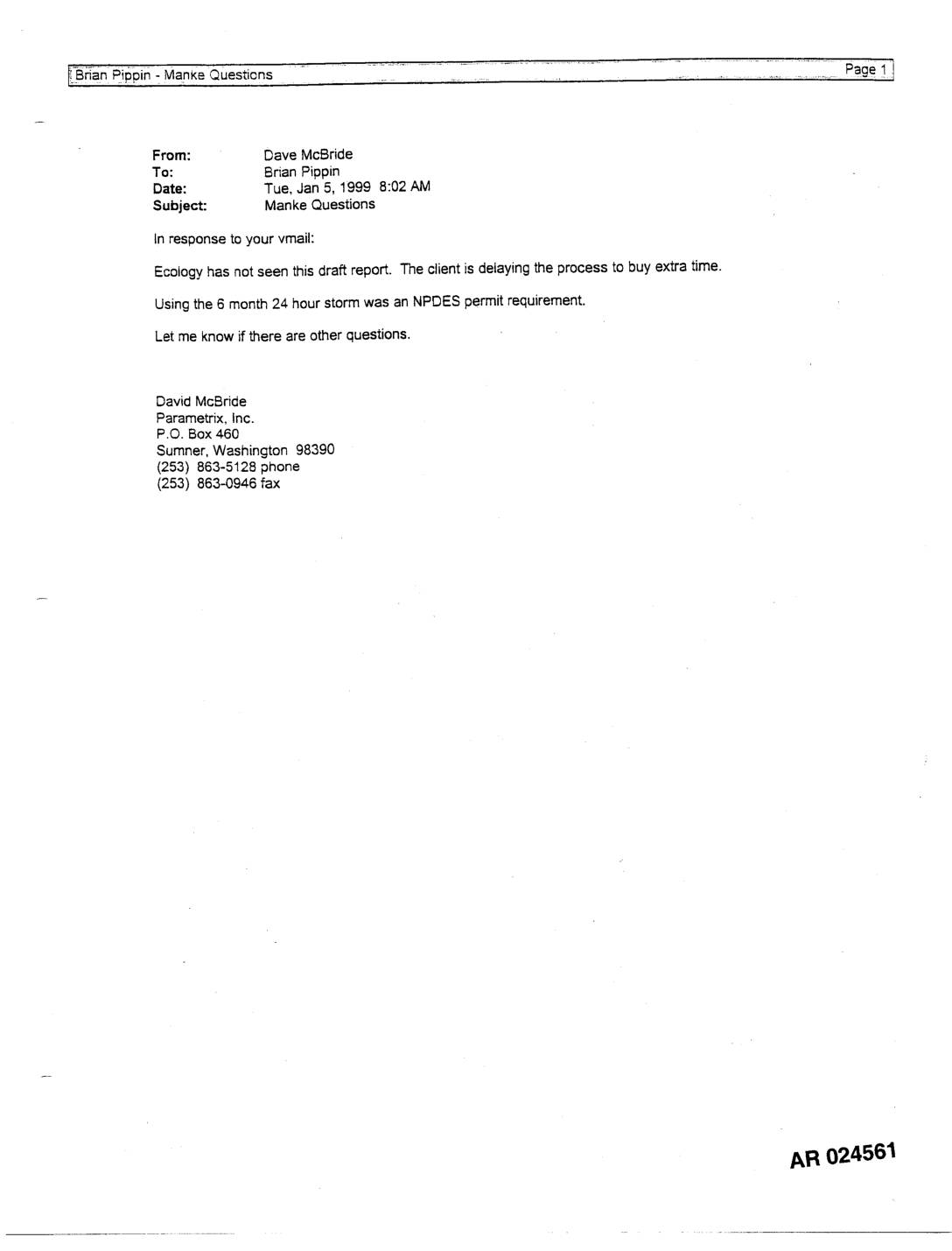
EXH AR024561: Email McBride to Pippin – Manke Questions
In this January 1999 email, Dave McBride of Parametrix, Inc. responds to questions from Brian Pippin about the Manke project, clarifying that the Washington State Department of Ecology had not yet reviewed the draft report and that the client was intentionally delaying the process to gain more time. He also notes that the use of a 6-month, 24-hour storm standard was a requirement of the NPDES permit. -
 1998-12-23
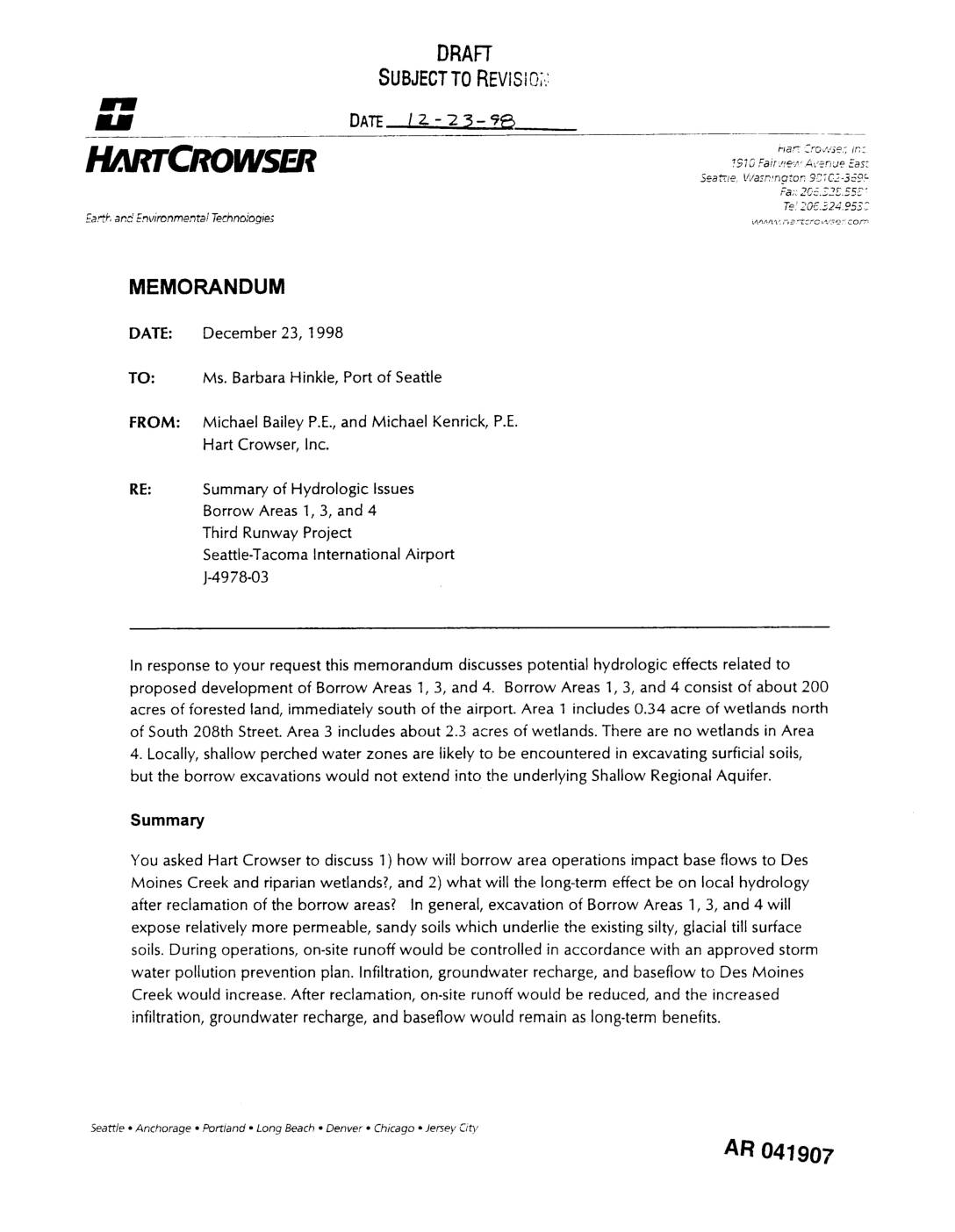
EXH AR041907: Memorandum — Summary of Hydrologic Issues, Borrow Areas 1, 3, and 4, Third Runway Project, Sea-Tac Airport
Hart Crowser memorandum (J-4978-03) dated December 23, 1998, from Michael Bailey P.E. and Michael Kenrick P.E. to Barbara Hinkle, Port Of Seattle, addressing hydrologic impacts of Borrow Areas 1, 3, and 4 for the Third Runway Project at Seattle-Tacoma International Airport. Discusses impacts on baseflow to Des Moines Creek and riparian wetlands, including runoff reduction, -
 1998-11-21
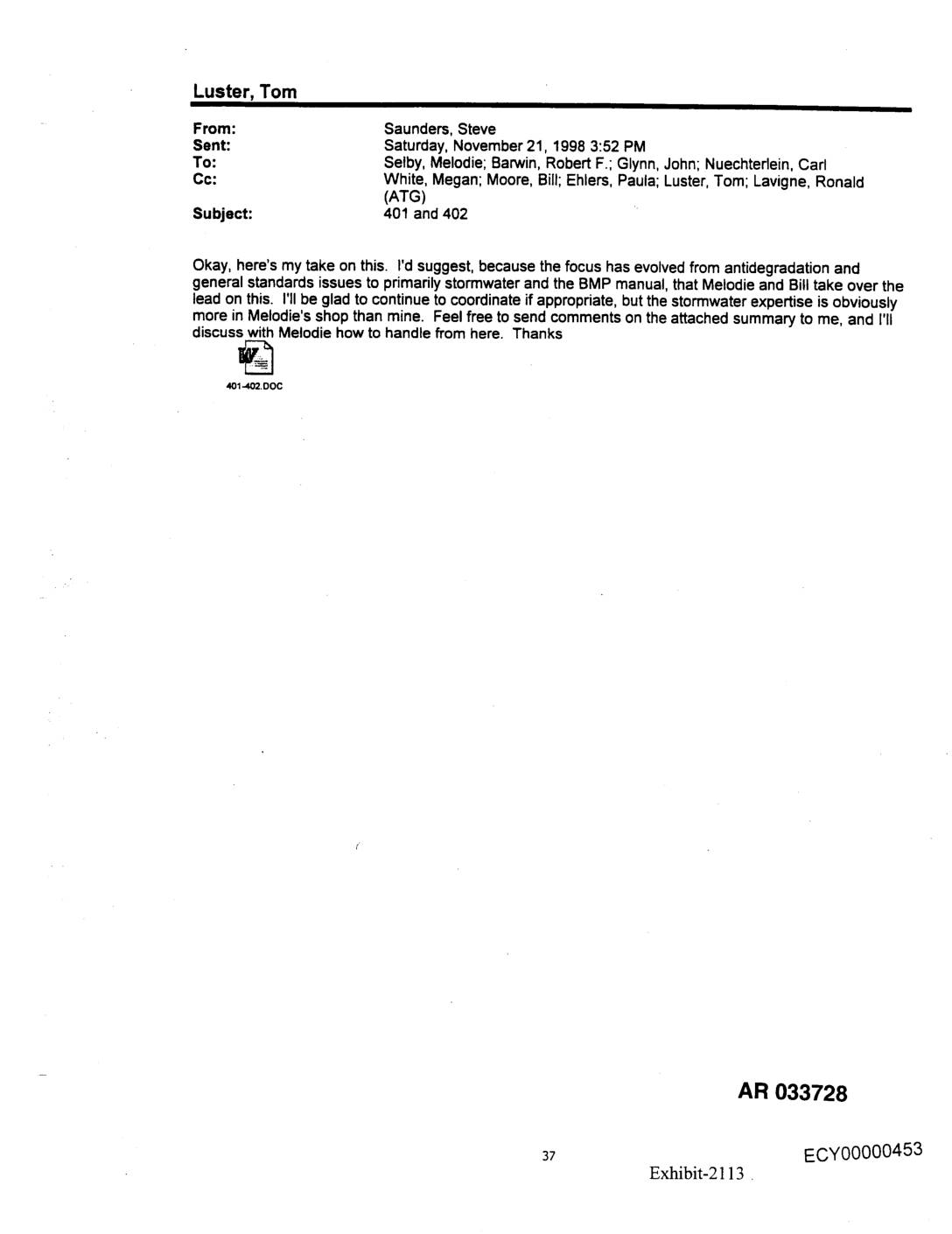
EXH AR033728: Ecology Water Quality Program — Relationship Between Clean Water Act Sections 401 and 402
Email from Steve Saunders (November 21, 1998) to Melodie Selby, Robert Barwin, John Glynn, Carl Nuechterlein, and others, recommending that Melodie Selby and Bill Moore take lead on CWA Sections 401 and 402 coordination due to stormwater and BMP manual focus. Attached is a Washington State Department of Ecology Water Quality Program summary memo analyzing -
 1998-11-01
Exhibit 2089: Annual Stormwater Monitoring Report for Seattle-Tacoma International Airport, June 1997–June 1998
Annual Stormwater Monitoring Report for Seattle-Tacoma International Airport (STIA) covering the period June 1, 1997 through June 30, 1998, prepared by Port of Seattle, received by Washington State Department of Ecology on December 1, 1998 (AR 033384). Report covers stormwater sampling results from airport subbasins including SDN2, SDS1, SDE4, and Taxi Yard; analytes include fats/oils/grease -
 1998-11-01
EXH AR022233: Stormwater Pollution Prevention Plan — STIA
This Stormwater Pollution Prevention Plan (SWPPP), prepared by the Port of Seattle for Seattle-Tacoma International Airport in November 1998 (with revisions through December 2001), outlines strategies and best management practices (BMPs) to prevent pollutants from contaminating stormwater runoff at Sea-Tac Airport. The plan covers a range of potential pollution sources including aircraft servicing, deicing operations, spills, construction sites, and vehicle maintenance, and describes the airport's drainage systems and inspection requirements under its NPDES permit. It serves as a regulatory compliance document ensuring that airport operations minimize their impact on local water quality. -
 1998-11-01
EXH 427: Annual Stormwater Monitoring Report STIA Jun 1 1997–Jun 30 1998
This November 1998 report presents the Annual Stormwater Monitoring Report for Seattle-Tacoma International Airport, covering the period from June 1, 1997 through June 30, 1998, prepared by the Port of Seattle. It documents stormwater sampling results from various airport subbasins, including measurements of pollutants such as metals, oils, grease, fecal coliforms, and deicing chemicals. The report also evaluates the performance of Best Management Practices (BMPs) implemented across the airport to manage and reduce stormwater contamination. -
 1998-11-01
EXH AR052594: Stormwater Pollution Prevention Plan — Seattle-Tacoma International Airport, Port Of Seattle
Stormwater Pollution Prevention Plan (SWPPP) for Seattle-Tacoma International Airport (Sea-Tac Airport), prepared by Port Of Seattle, originally November 1998 with Revision 1 (April 1999) and Revision 2 (December 2001). AR 052594. Covers drainage system description, potential pollution sources and Best Management Practices (BMPs) for aircraft servicing, ground anti-icing/deicing of roads and paved surfaces, snow storage, -
 1998-10-29
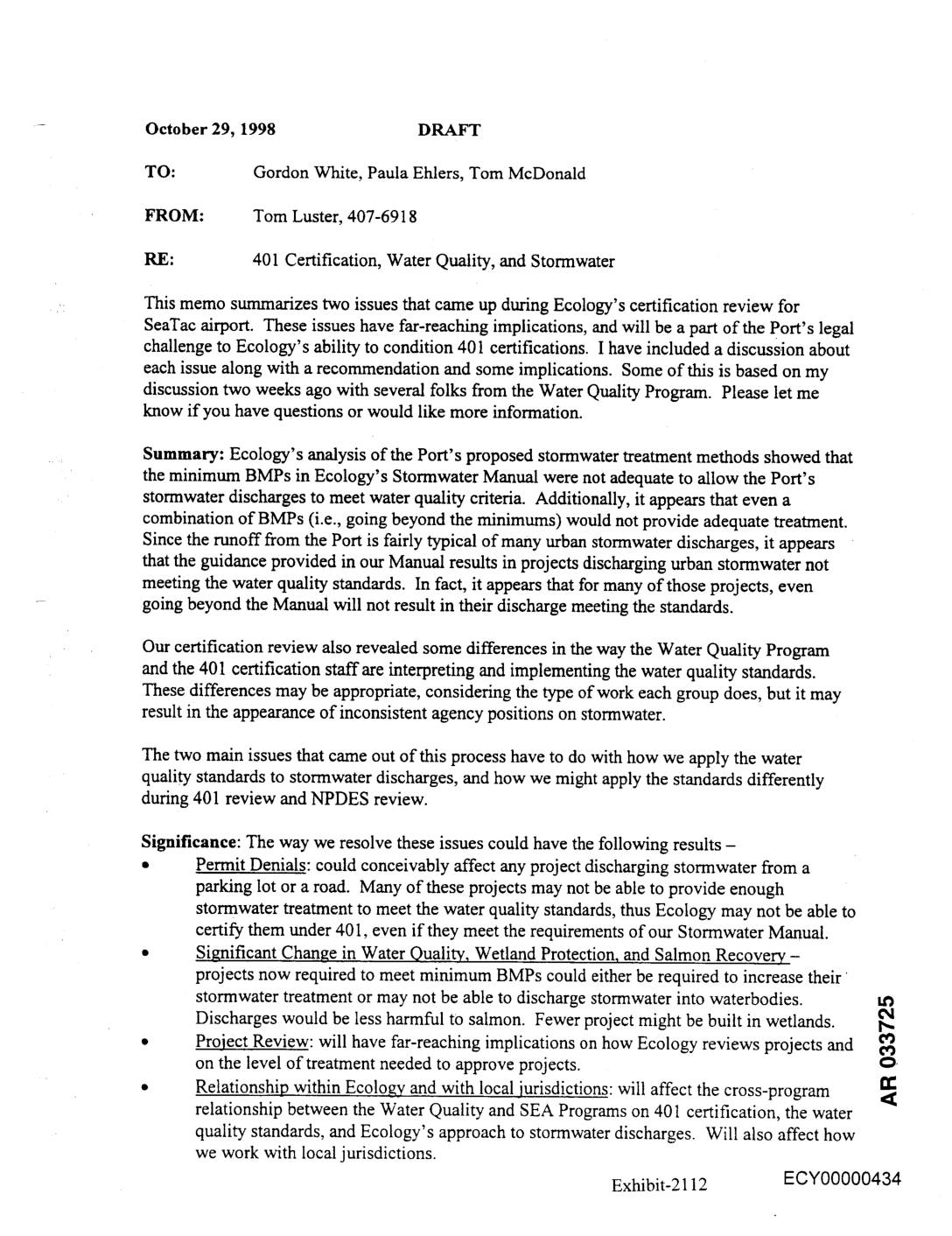
Exhibit 2112: Draft Memo on 401 Certification, Water Quality, and Stormwater — Sea-Tac Airport Review
Draft internal memo dated October 29, 1998 from Tom Luster to Gordon White, Paula Ehlers, and Tom McDonald at Washington State Department of Ecology (Exhibit 2112, AR 033725–033727). Addresses two issues arising from Ecology’s 401 certification review of Sea-Tac Airport (Port of Seattle): (1) whether WAC 173-201A-160(3) water quality standards require stormwater discharges to meet -
 1998-10-29
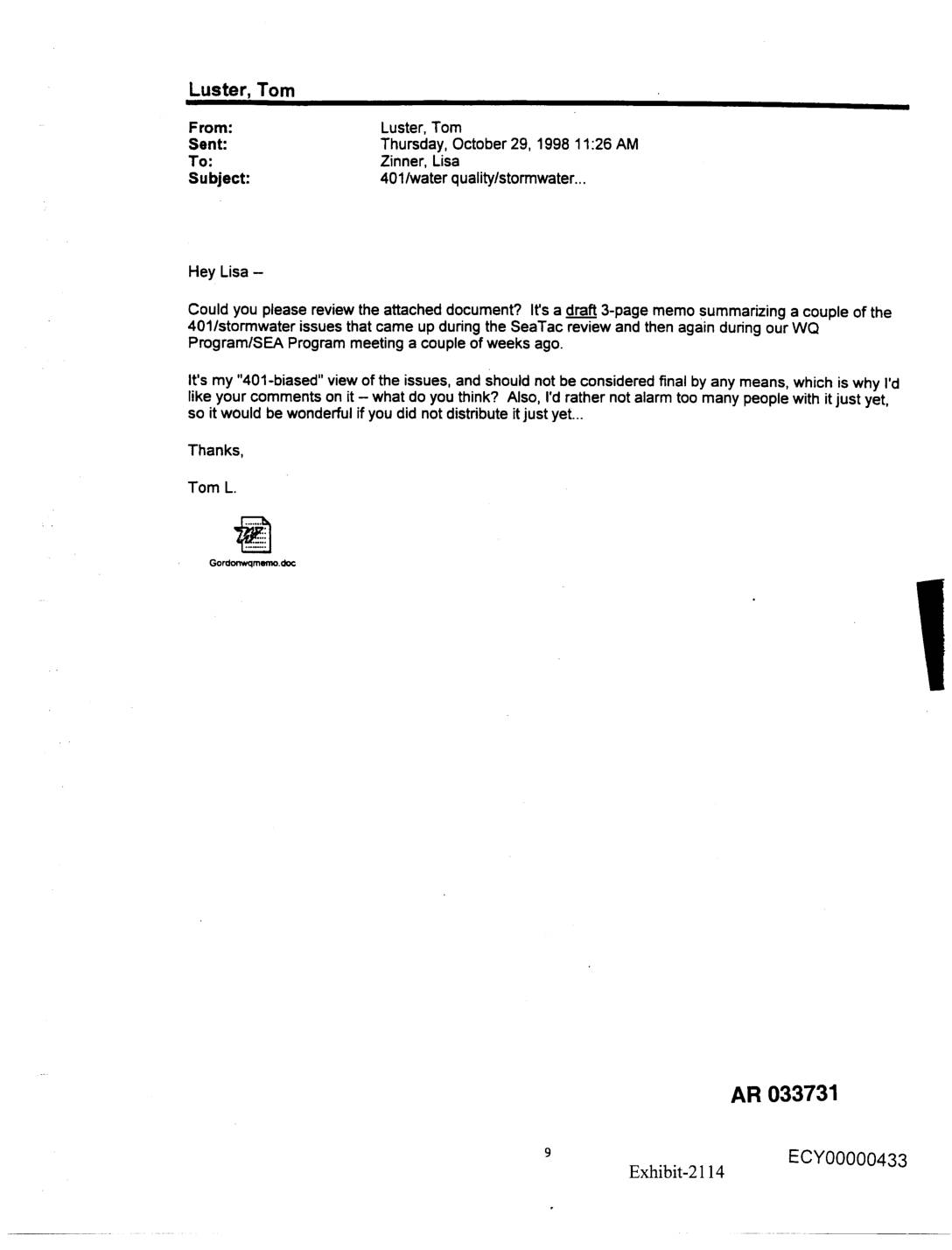
EXH AR033731: Email from Tom Luster to Lisa Zinner re 401/Water Quality/Stormwater Issues at Sea-Tac Airport Review
Email dated October 29, 1998 from Tom Luster to Lisa Zinner (Washington State Department of Ecology) requesting review of a draft 3-page memo summarizing 401/stormwater water quality issues that arose during the SeaTac airport review and a WQ Program/SEA Program meeting. Luster describes it as his ‘401-biased’ view and requests confidential review, asking Zinner not