TagSound Insulation(121)
-
Sound Insulation Repair and Replacement Pilot Program
The Sound Insulation Repair and Replacement Pilot Program was granted approval by the Port of Seattle Commission on February 27, 2024. This pilot program is to help assess products that were previously installed as part of the Sound Insulation Program and evaluate the current condition of those installations. The assessment was completed in December 2024. -
 2025-01-01
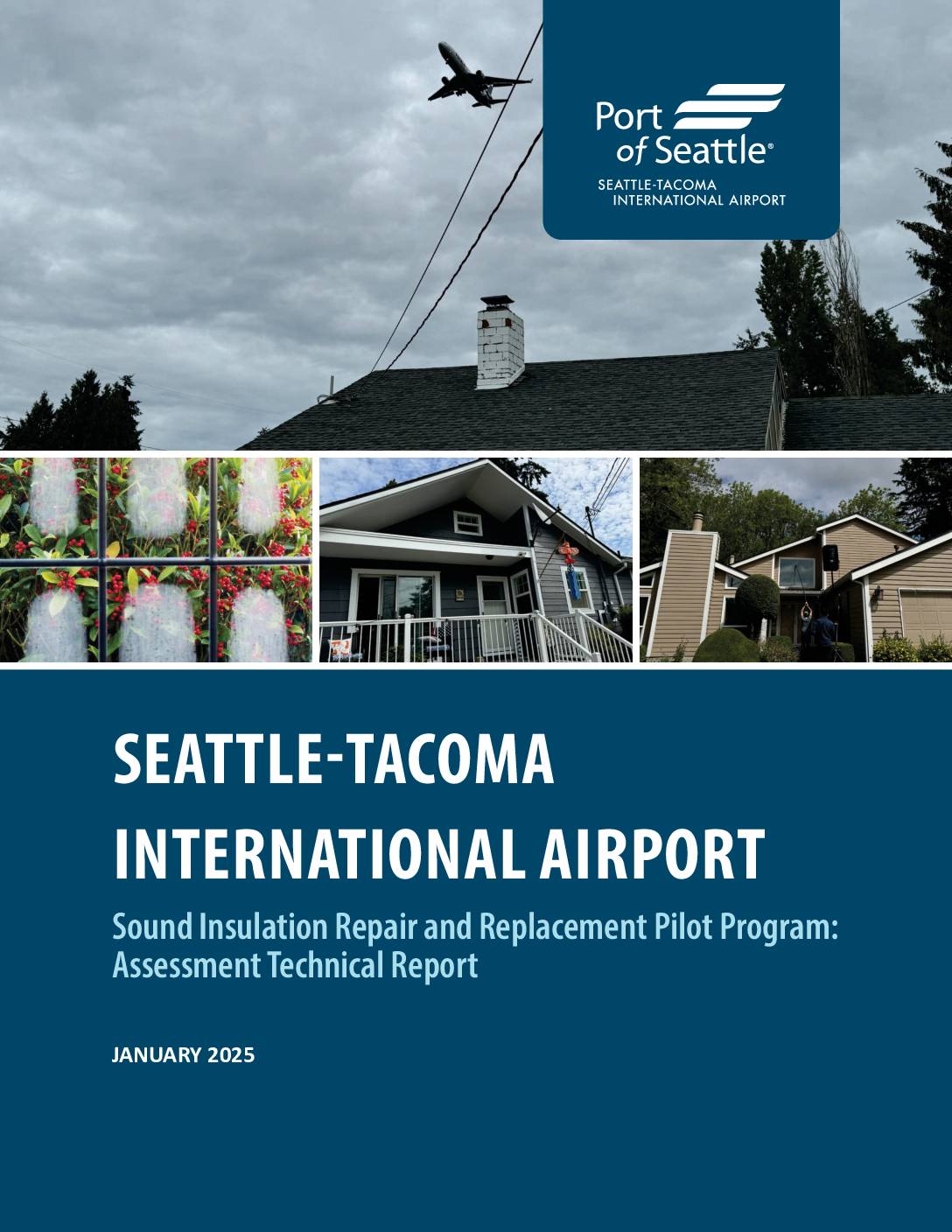
Seattle-Tacoma International Airport Sound Insulation Repair and Replacement Pilot Program: Assessment Technical Report
★ 32This January 2025 technical report, prepared by Environmental Science Associates for the Port of Seattle, documents a pilot program assessing the condition and effectiveness of sound insulation previously installed in homes near Seattle-Tacoma International Airport. The report covers resident surveys, research into the expected useful life of sound insulation building materials, acoustic testing methods, and test results from selected homes. It aims to inform future decisions about repairing or replacing aging noise-reduction treatments in affected neighborhoods. -
 2024-11-12
Here’s what we’re doing to address failing ‘Port packages’ near Sea-Tac
By Fred Felleman and Hamdi Mohamed Special to The Seattle Times The Seattle Tacoma International Airport is the nation’s fastest-growing airport of its size with over 400,000 flights carrying 50.8 million passengers in 2023. As a result, it continues to undergo extensive renovations that create jobs to build and operate the new facilities. Less obvious -
 2024-05-22
Sound Insulation Repair and Replacement Pilot Program Update
Seattle-Tacoma International Airport launched a Sound Insulation Repair and Replacement Pilot Program following Commission Order 2024-04, approved on February 27, 2024, with a total budget of $6.5 million — including $5 million reserved for design and construction. The program, funded by tax levy, aims to assess and repair aging sound insulation in nearby homes, incorporating equity guidelines for participation. The 2024 assessment timeline includes resident surveys, acoustic testing, and a final report, with design and construction work planned for 2025. -
 2024-05-16
Port Of Seattle Sound Insulation Repair and Replace Pilot Program Survey Notice
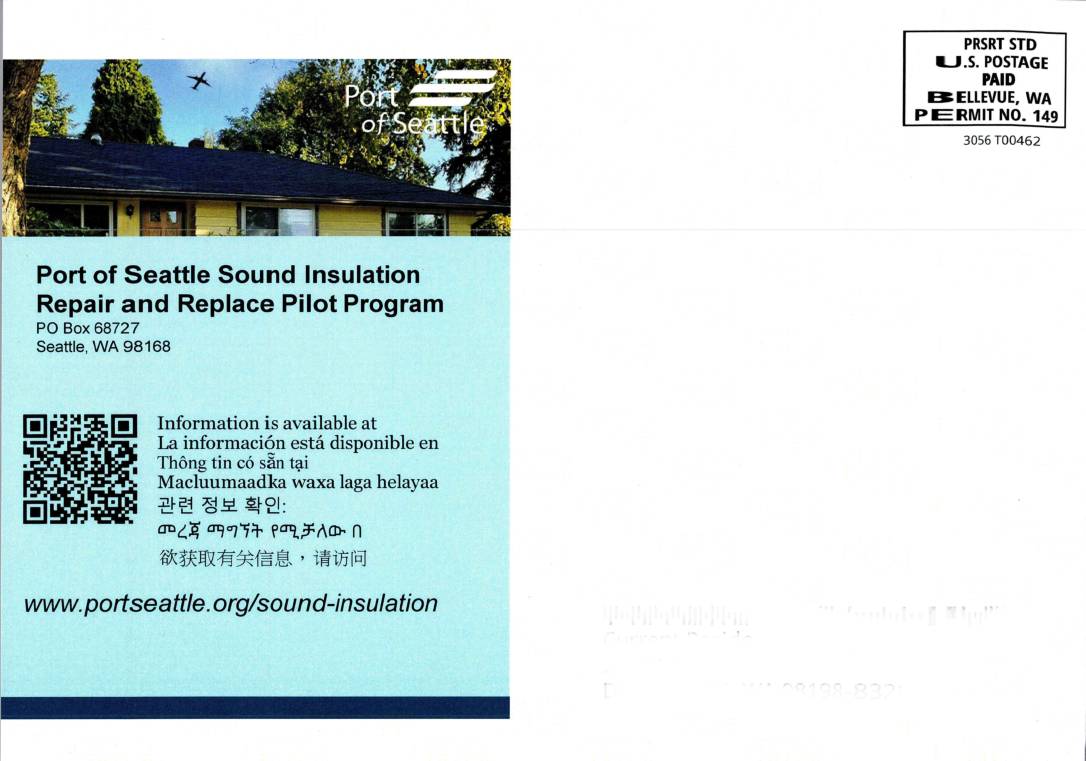
The Port of Seattle mailed this notice to residents near Sea-Tac Airport informing them about the Sound Insulation Repair and Replace Pilot Program, which aims to address aircraft noise in affected homes. Recipients were advised that a formal survey about the program would be mailed to them in early June. Program information and resources are available in multiple languages at www.portseattle.org/sound-insulation. -
 2024-05-02
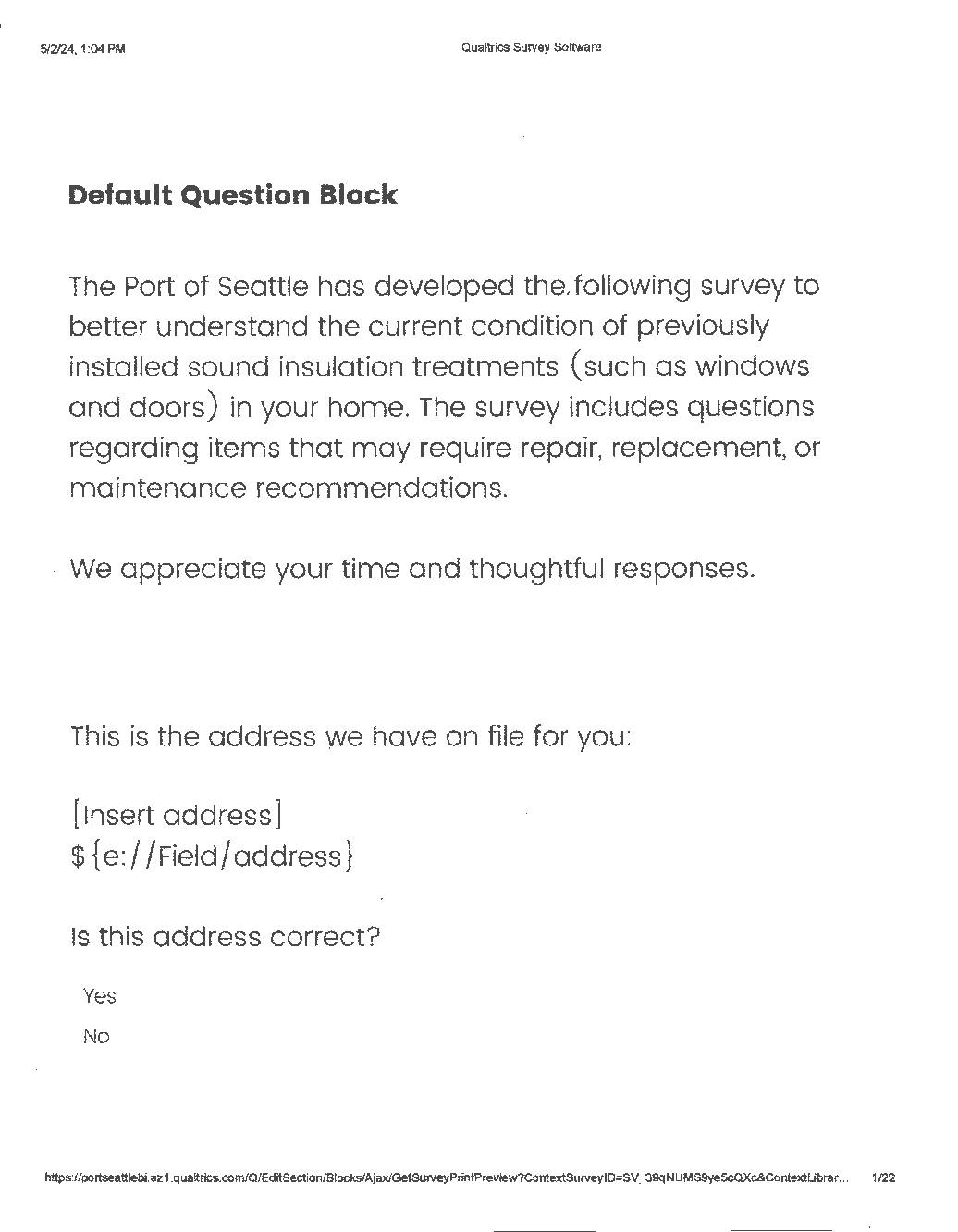
Port Of Seattle Sound Insulation Repair, Replacement, and Preventive Program (SIRRPP) Homeowner Condition Survey
The Port of Seattle developed this Qualtrics survey to assess the condition of sound insulation treatments — such as windows and doors — previously installed in homes near Seattle-Tacoma International Airport. Residents are asked to verify their address, confirm property ownership and length of residency, and answer detailed questions about their windows, including how many exist and whether they were installed by the Port. The survey aims to identify items that may need repair, replacement, or maintenance. -
 2024-03-03
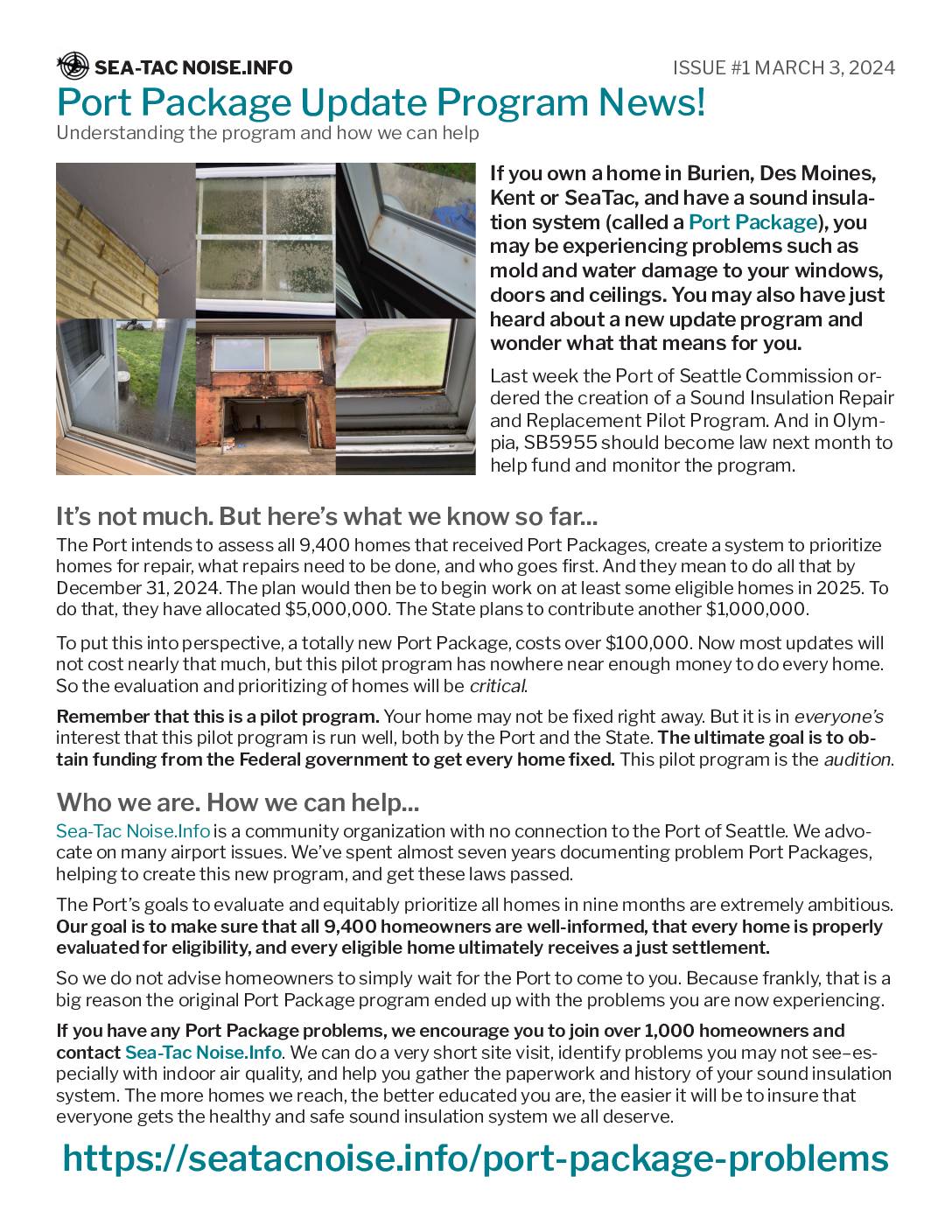
Port Package Update Program News! Issue #1
The Port of Seattle launched a Sound Insulation Repair and Replacement Pilot Program in February 2024, aimed at addressing mold, water damage, and other problems affecting the roughly 9,400 homes in Burien, Des Moines, Kent, and SeaTac that received Port-funded sound insulation systems. With $6 million in combined Port and State funding, the program will assess and prioritize homes for repair, with work expected to begin on some homes in 2025, though the ultimate goal is securing federal funding to fix all eligible homes. Community organization Sea-Tac Noise.Info is encouraging homeowners to proactively document their issues and connect with the program rather than waiting to be contacted by the Port. -
 2024-02-27
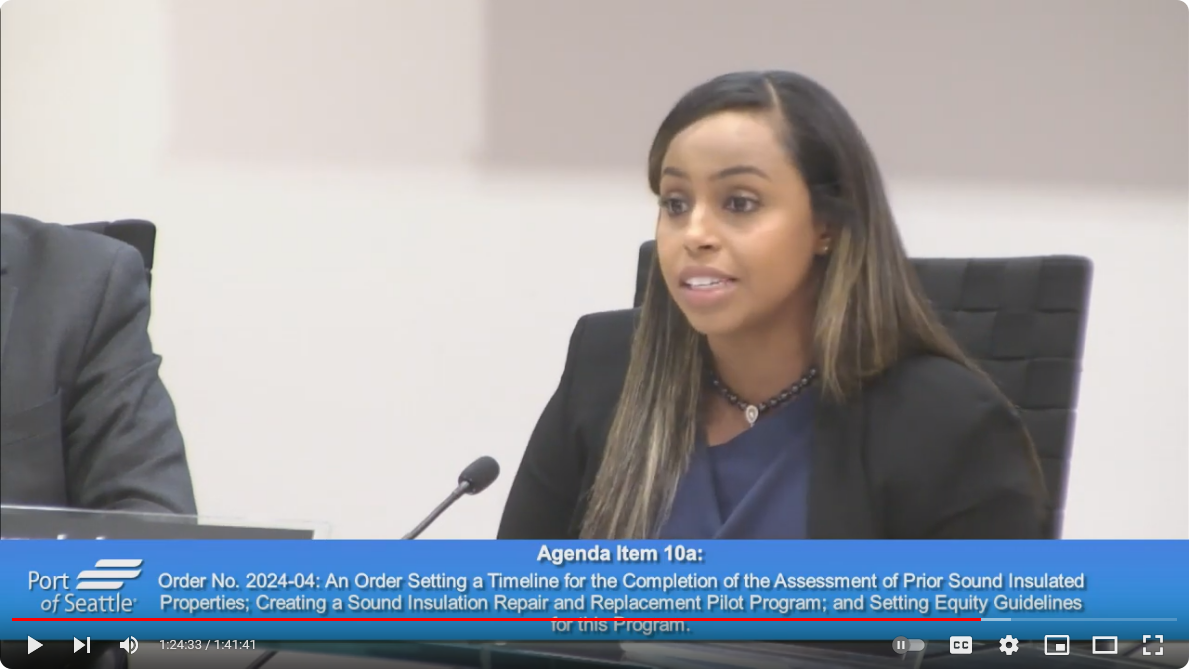
Port Of Seattle Commission Meeting: Order No. 2024-04 Sound Insulation Repair and Replacement Pilot Program
A Port of Seattle Commission meeting is shown at timestamp 1:24:33 of 1:41:41, addressing Agenda Item 10a: Order No. 2024-04, which sets a timeline for completing the assessment of prior sound-insulated properties, creates a Sound Insulation Repair and Replacement Pilot Program, and establishes equity guidelines for the program. A commissioner or staff member is speaking at the dais. -
 2024-02-27
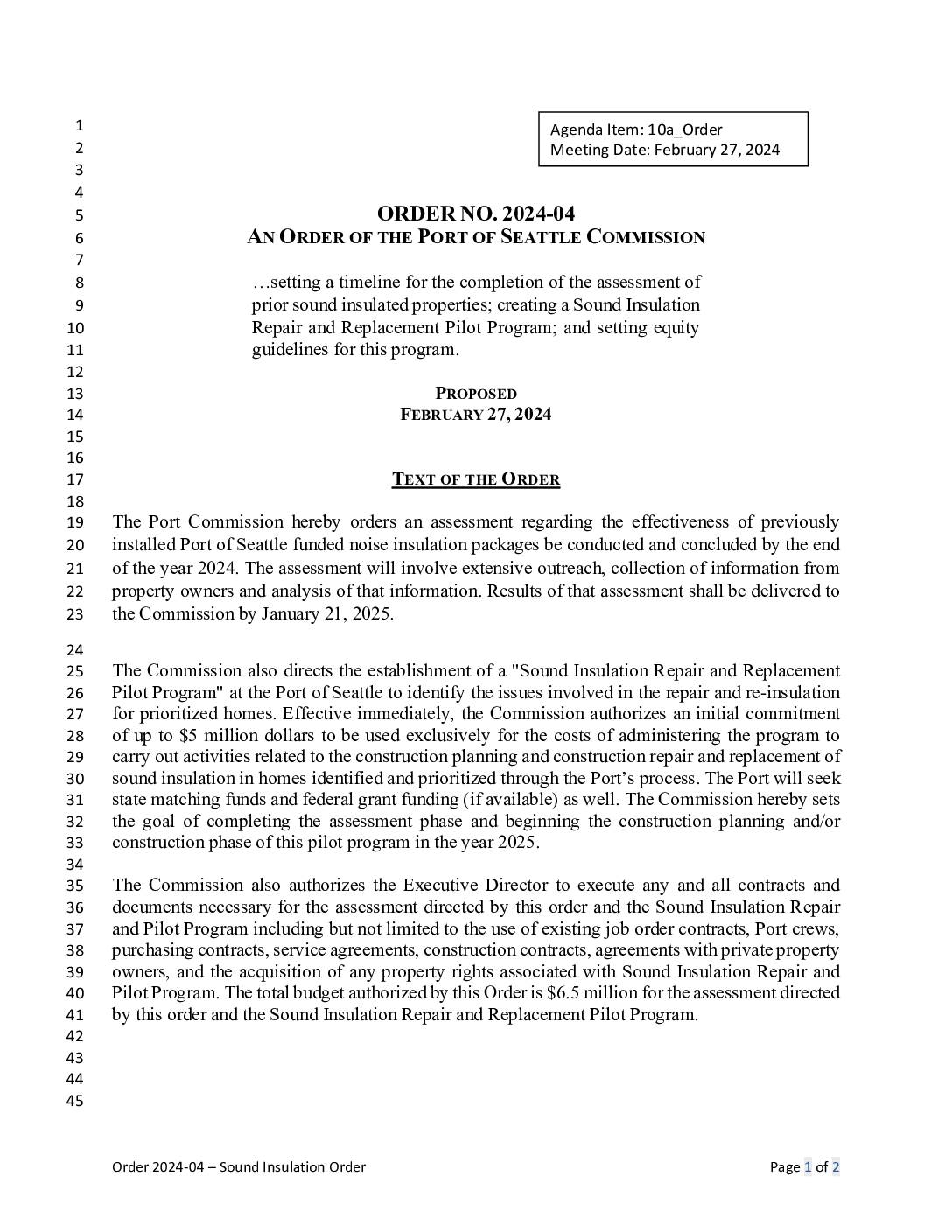
Order No. 2024-04: Sound Insulation Repair and Replacement Pilot Program
★ 32Taken from February 27, 2024 Port Commission Meeting Agenda -
 2024-02-26
Five Typical Examples of Port Package Damage
These images document window condition issues including fogging between glass panes, condensation buildup, mold growth, and deteriorating frames and seals. The photos show evidence of moisture intrusion and seal failure in residential windows, with visible mold, rust stains, and dirt accumulation along window tracks and sills. Such conditions are commonly associated with prolonged exposure to noise-related vibration and humidity in properties near high-traffic areas like airports.