TagSea-Tac Airport(1835)
-
 2019-05-01
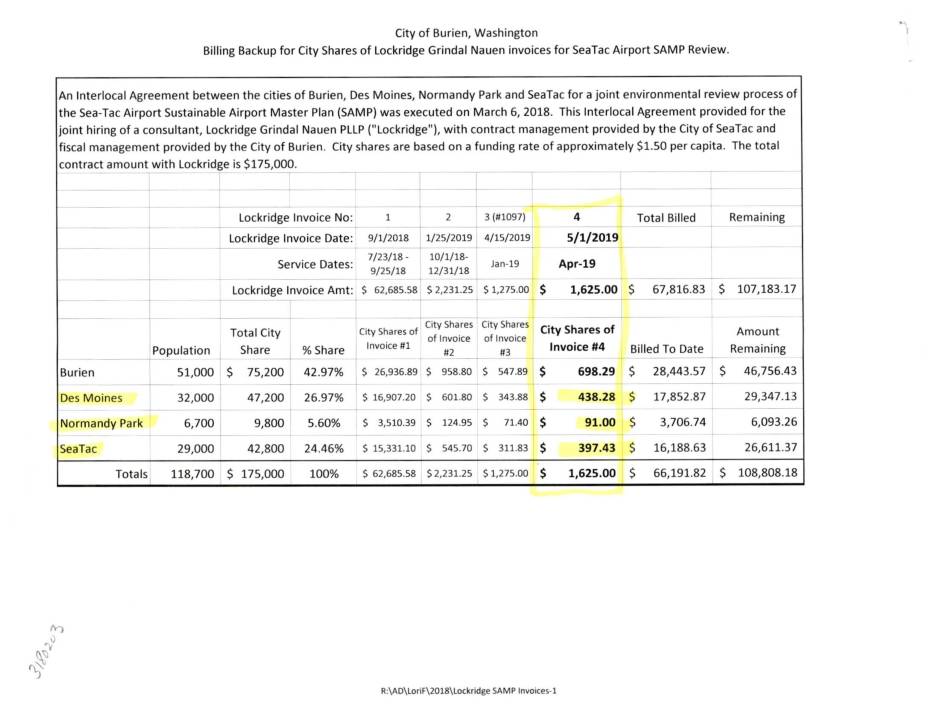
Billing Backup for City Shares of Lockridge Grindal Nauen Invoices for Sea-Tac Airport SAMP Review
This document details billing records for the City of Burien, Washington, related to a joint environmental review of the Sea-Tac Airport Sustainable Airport Master Plan (SAMP). Four cities — Burien, Des Moines, Normandy Park, and SeaTac — shared costs for hiring law firm Lockridge Grindal Nauen PLLP under a March 2018 Interlocal Agreement, with expenses divided based on each city's population at approximately $1.50 per capita. The total contract was $175,000, and the fourth invoice (dated May 1, 2019) covered April 2019 legal work totaling $1,625.00, including document review and environmental assessment modeling. -
 2019-04-30
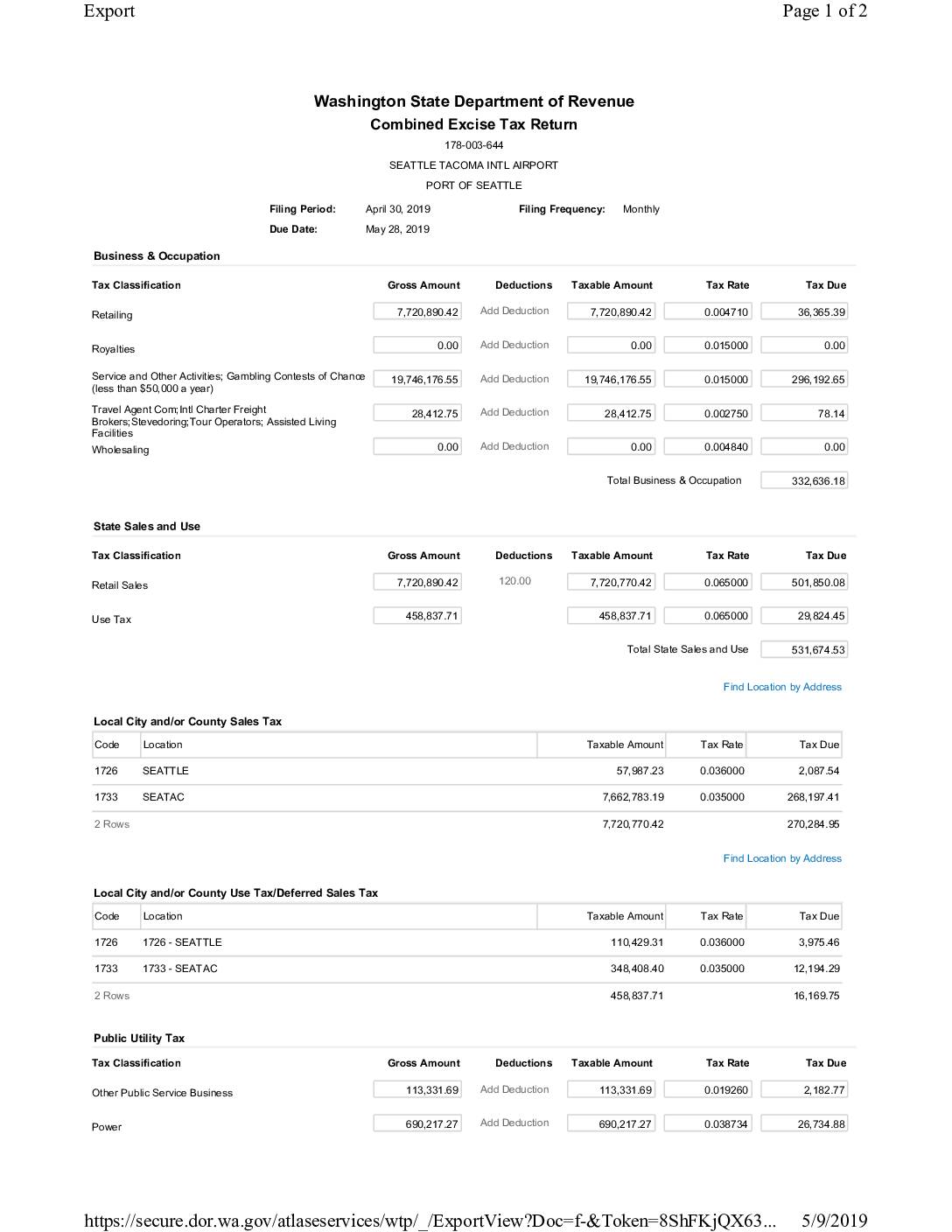
Port Of Seattle: Combined Excise Tax Return — Seattle Tacoma International Airport, April 2019
This document is a Washington State Combined Excise Tax Return filed by the Port of Seattle for Seattle-Tacoma International Airport, covering the period ending April 30, 2019, with a due date of May 28, 2019. It details Business & Occupation taxes, state and local sales and use taxes, and public utility taxes across multiple categories, resulting in a total tax payment of $1,190,228.40. The return was prepared by Bonnie McArthur and submitted on May 9, 2019, via ACH Debit/E-Check. -
 2019-04-17
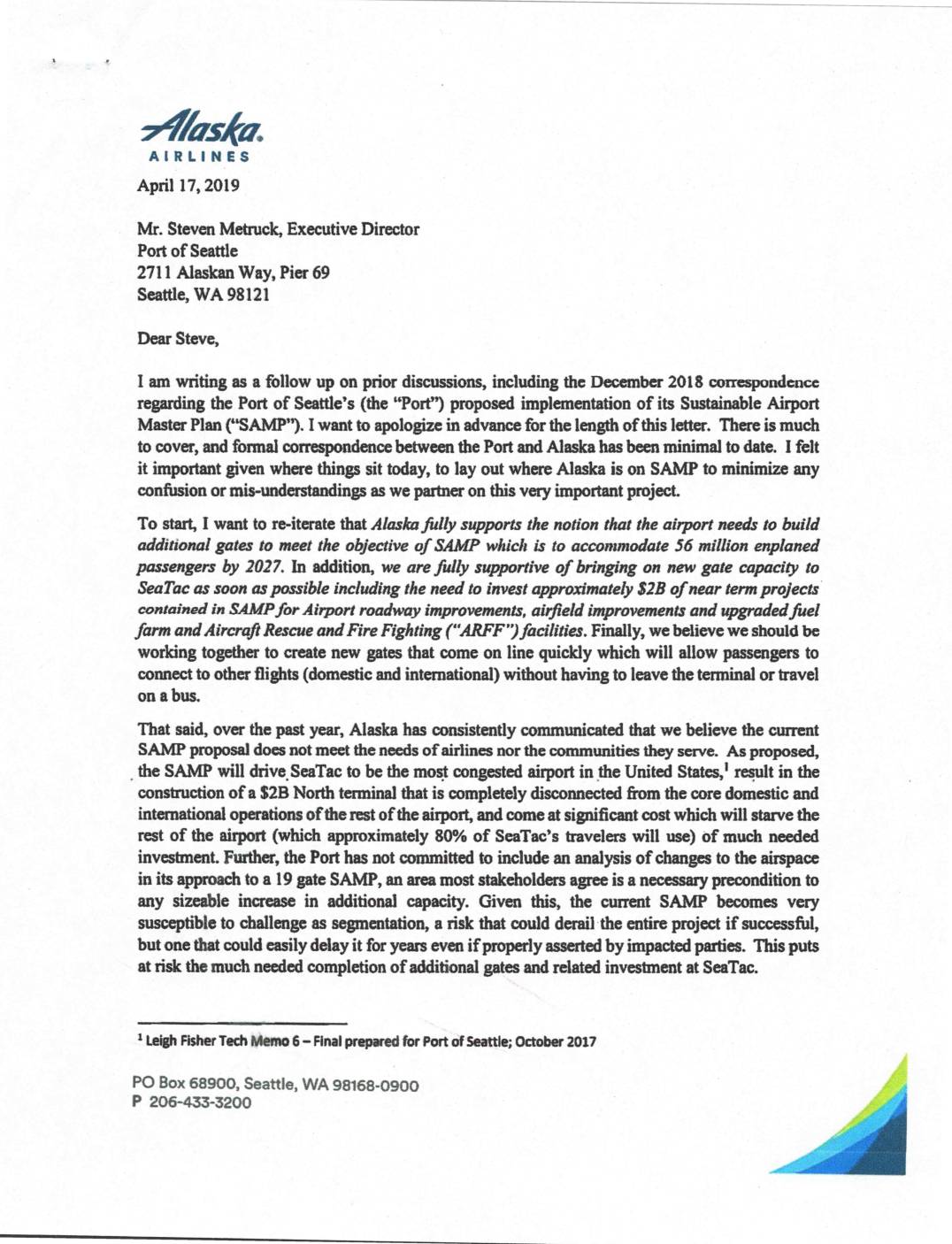
Alaska Airlines letter to Port Of Seattle regarding Sustainable Airport Master Plan
In an April 2019 letter to the Port of Seattle's Executive Director, Alaska Airlines expressed support for SeaTac airport expansion but raised serious concerns about the Sustainable Airport Master Plan (SAMP), arguing that the proposed 19-gate north terminal is disconnected from the main terminal, more gates than needed, and would leave 80% of travelers underserved. Alaska's independent consultants concluded that only 10 additional gates are necessary to meet projected 2027 passenger demand, and the airline proposed a phased 10-gate alternative as a less costly and less environmentally impactful solution. The letter urged the Port to include Alaska's alternative in the formal NEPA environmental review process to ensure a more legally defensible and balanced approach to airport development. -
 2019-04-15
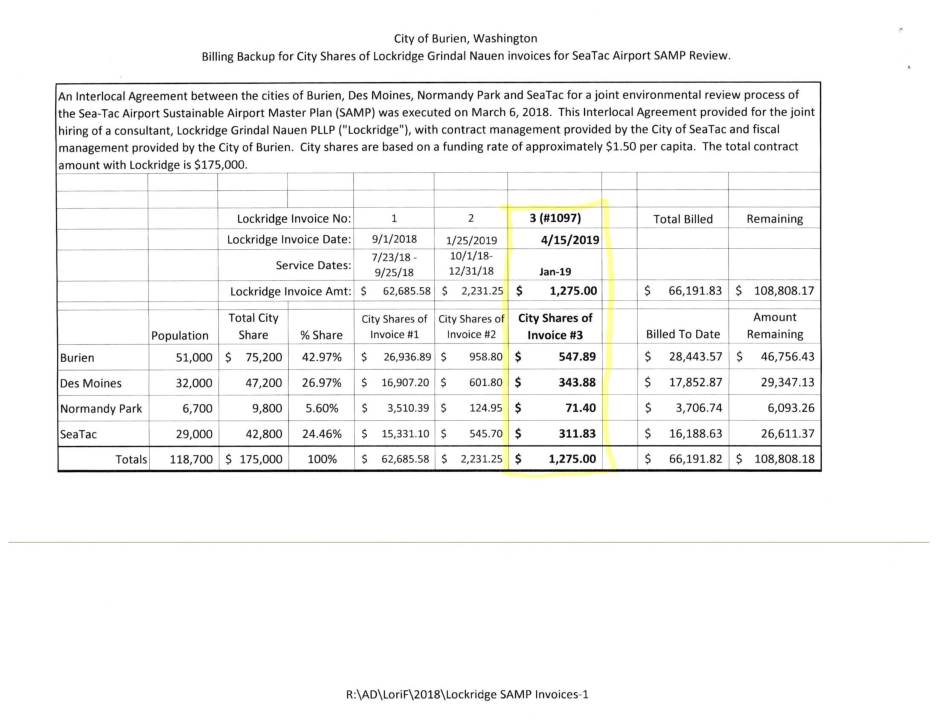
Billing Backup for City Shares of Lockridge Grindal Nauen Invoices for Sea-Tac Airport SAMP Review
The City of Burien, Washington maintained billing records for a joint environmental review of the Sea-Tac Airport Sustainable Airport Master Plan (SAMP), shared among the cities of Burien, Des Moines, Normandy Park, and SeaTac under a 2018 Interlocal Agreement. The cities hired law firm Lockridge Grindal Nauen PLLP for consulting services, with costs split based on a rate of approximately $1.50 per capita, totaling a $175,000 contract. By April 2019, three invoices had been processed totaling roughly $66,192, leaving approximately $108,808 remaining on the contract. -
 2019-04-15
Billing Backup for City Shares of Lockridge Grindal Nauen Invoices for Sea-Tac Airport SAMP Review
The City of Burien, Washington maintained billing records for a joint environmental review of the Sea-Tac Airport Sustainable Airport Master Plan (SAMP), shared among the cities of Burien, Des Moines, Normandy Park, and SeaTac under a 2018 Interlocal Agreement. The cities hired law firm Lockridge Grindal Nauen PLLP for consulting services, with costs split based on a rate of approximately $1.50 per capita, totaling a $175,000 contract. By April 2019, three invoices had been processed totaling roughly $66,192, leaving approximately $108,808 remaining on the contract. -
 2019-04-15
City of Burien Billing Backup for City Shares of Lockridge Grindal Nauen Invoices for Sea-Tac Airport SAMP Review
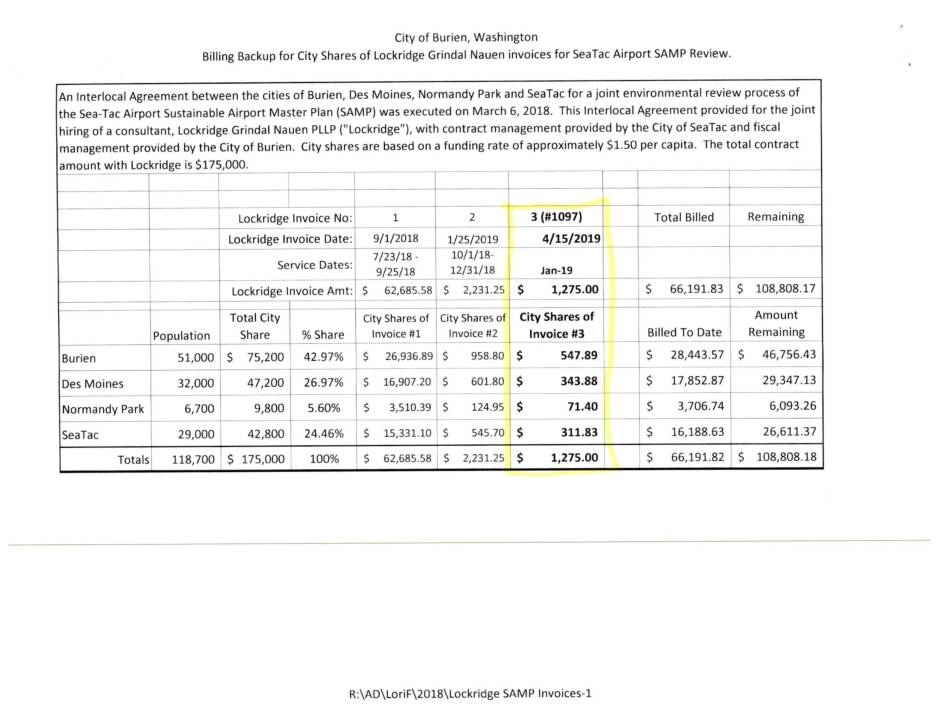
The City of Burien, Washington maintained billing records for a shared consultant contract with Lockridge Grindal Nauen PLLP to review the Sea-Tac Airport Sustainable Airport Master Plan (SAMP). Four cities — Burien, Des Moines, Normandy Park, and SeaTac — split the $175,000 contract cost based on population, paying approximately $1.50 per capita. As of Invoice #3 (April 15, 2019), a total of roughly $66,192 had been billed, with about $108,808 remaining on the contract. -
 2019-04-15
City of Burien Billing Backup for City Shares of Lockridge Grindal Nauen Invoices for Sea-Tac Airport SAMP Review
The City of Burien, Washington maintained billing records for a shared consultant contract with Lockridge Grindal Nauen PLLP to review the Sea-Tac Airport Sustainable Airport Master Plan (SAMP). Four cities — Burien, Des Moines, Normandy Park, and SeaTac — split the $175,000 contract cost based on population, paying approximately $1.50 per capita. As of Invoice #3 (April 15, 2019), a total of roughly $66,192 had been billed, with about $108,808 remaining on the contract. -
 2019-04-15
Billing Backup for City Shares of Lockridge Grindal Nauen Invoices for Sea-Tac Airport SAMP Review
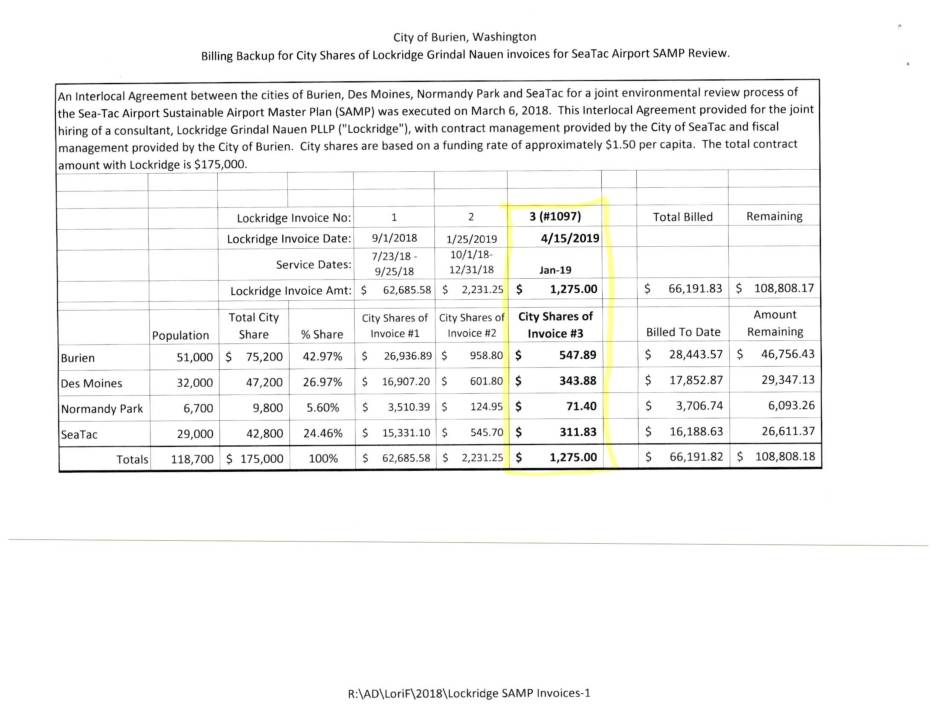
The City of Burien, Washington maintained billing records for a shared environmental review of the Sea-Tac Airport Sustainable Airport Master Plan (SAMP), managed under an Interlocal Agreement signed March 6, 2018, among Burien, Des Moines, Normandy Park, and SeaTac. The cities jointly hired law firm Lockridge Grindal Nauen PLLP for consulting services, with costs split among the four cities based on a per-capita rate of approximately $1.50, against a total contract value of $175,000. By April 2019, three invoices totaling $66,191.83 had been billed, leaving a remaining balance of approximately $108,808. -
 2019-04-15
Billing Backup for City Shares of Lockridge Grindal Nauen Invoices for Sea-Tac Airport SAMP Review
The City of Burien, Washington maintained billing records for a shared environmental review of the Sea-Tac Airport Sustainable Airport Master Plan (SAMP), managed under an Interlocal Agreement signed March 6, 2018, among Burien, Des Moines, Normandy Park, and SeaTac. The cities jointly hired law firm Lockridge Grindal Nauen PLLP for consulting services, with costs split among the four cities based on a per-capita rate of approximately $1.50, against a total contract value of $175,000. By April 2019, three invoices totaling $66,191.83 had been billed, leaving a remaining balance of approximately $108,808. -
 2019-04-01
Beacon Hill Community Noise Team Fact Sheet
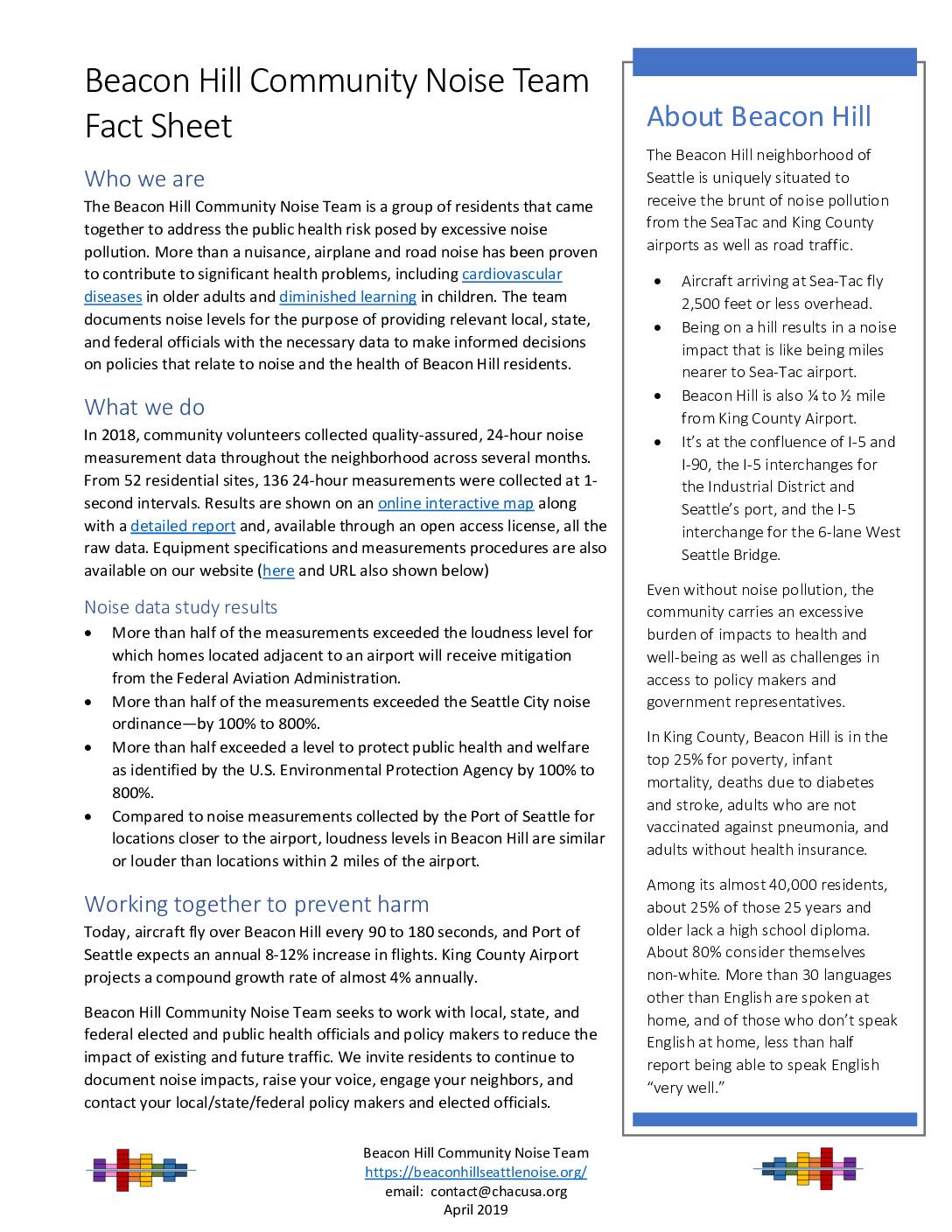
The Beacon Hill Community Noise Team is a Seattle resident group that documented excessive noise pollution from Sea-Tac and King County airports, as well as road traffic, across 52 neighborhood sites in 2018. Their measurements found that more than half of recorded noise levels exceeded FAA mitigation thresholds, Seattle city ordinances, and EPA public health standards by up to 800%. The group is calling on local, state, and federal officials to take action, citing compounding health and socioeconomic burdens already faced by Beacon Hill's nearly 40,000 residents.