TagNextGen(65)
-
 2018-03-31
The noise impact of the FAA’s NextGen program on the Vashon Island Community and what we plan to do about it
A presentation by David Goebel addressing the noise impact of the FAA’s NextGen program on Vashon Island. The document covers airport flow fundamentals, conventional RADAR vs NextGen RNAV approaches, and action items for addressing the noise issue. -
 2018-03-19
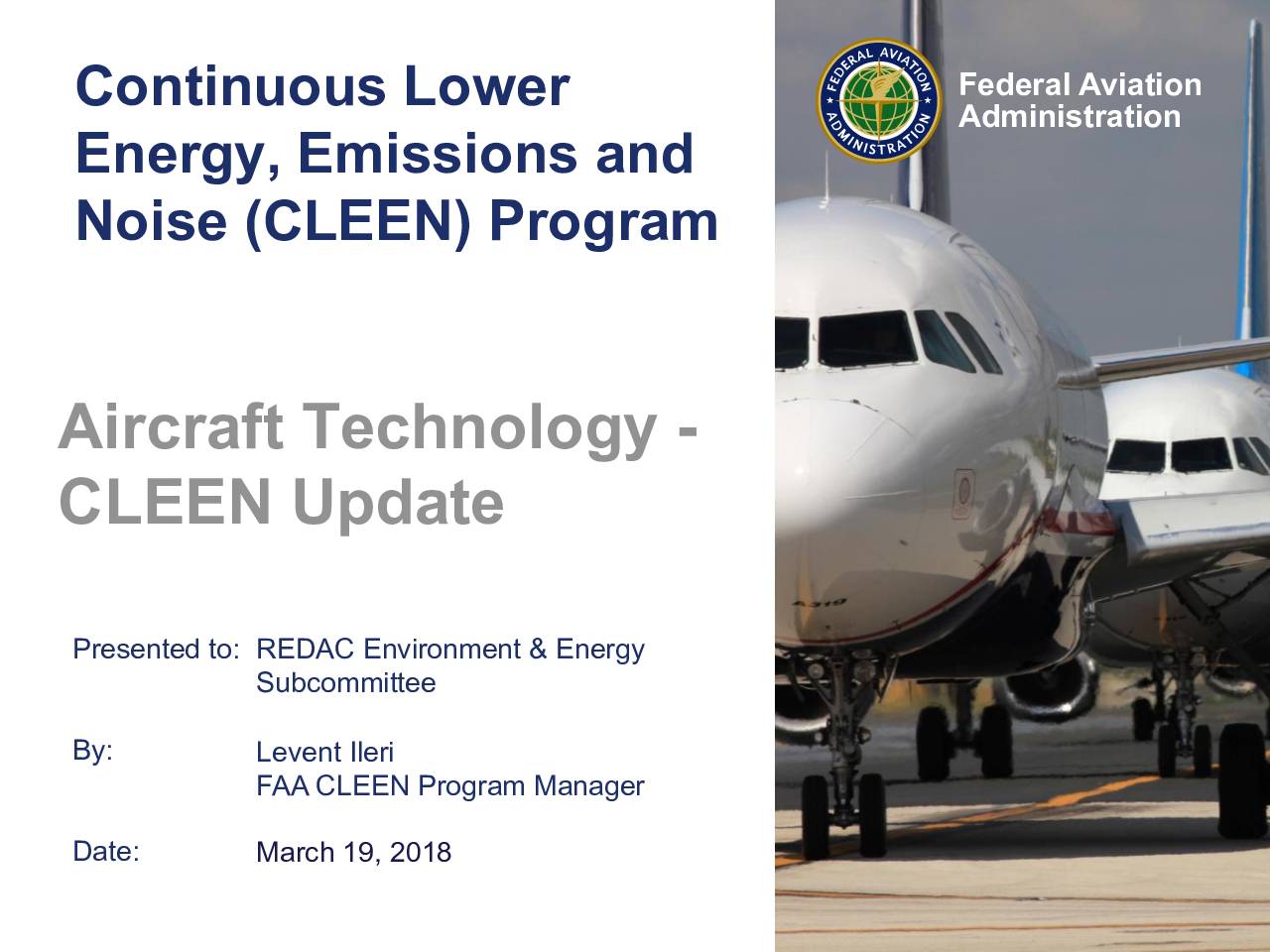
Continuous Lower Energy, Emissions and Noise (CLEEN) Program: Aircraft Technology Update
The FAA's Continuous Lower Energy, Emissions and Noise (CLEEN) program is a public-private partnership aimed at reducing aircraft fuel burn, emissions, and noise through new engine and aircraft technologies and alternative jet fuels. Running in three phases from 2010 through 2025, the program sets increasingly ambitious targets, including up to a 75% reduction in NOx emissions and a 40% reduction in fuel burn by 2026. These advancements are relevant to communities near busy airports like Sea-Tac, as the program's noise reduction goals include a 25 dB cumulative reduction relative to Stage 5 standards. -
Washington Post: Inspector general’s report says the FAA has bungled a $36 billion project
…the fourth inspector general’s critique in as many years of a program known as NextGen, on which more than $7 billion in federal funds has already been spent. -
 2018-01-30
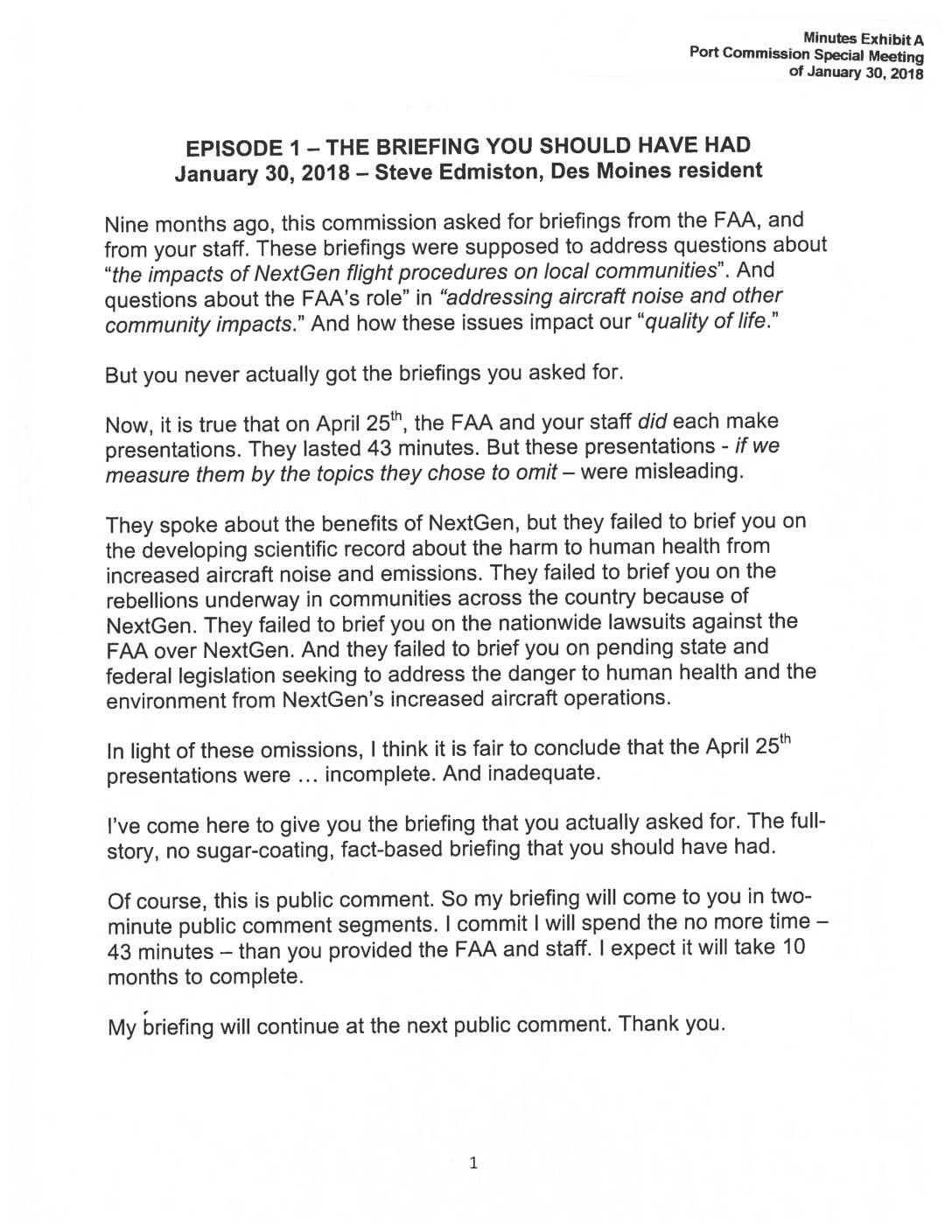
Episode 1 – The briefing you should have had
In January 2018, Des Moines resident and filmmaker Steve Edmiston addressed the Port of Seattle Commission, arguing that a prior FAA briefing on NextGen flight procedures omitted critical information about health harms from aircraft noise, nationwide community opposition, lawsuits against the FAA, and related legislation. Edmiston announced a project to deliver the full, fact-based briefing the Commission originally requested, presenting his information in two-minute public comment segments over an estimated 10 months. His goal was to push the Port to move beyond what he called 'selective environmentalism' and make better-informed decisions about the human and environmental costs of expanded flight operations at SeaTac Airport. -
 2017-11-05
The Noise Impact of the FAA’s NextGen Program on Vashon Island
This November 2017 presentation by David Goebel examines how the FAA's NextGen modernization program—specifically the new 'HAWKZ' RNAV flight procedure—has increased aircraft noise over Vashon Island, located west of Seattle-Tacoma International Airport. It explains why so many arriving flights are routed over the island despite SeaTac's runways running north-south, compares the old radar-based approach with the new GPS-guided one, and discusses the real-world altitude impacts residents have experienced. The presentation also covers community response options and what other affected neighborhoods have done to push back against similar NextGen-related noise increases. -
 2017-08-29
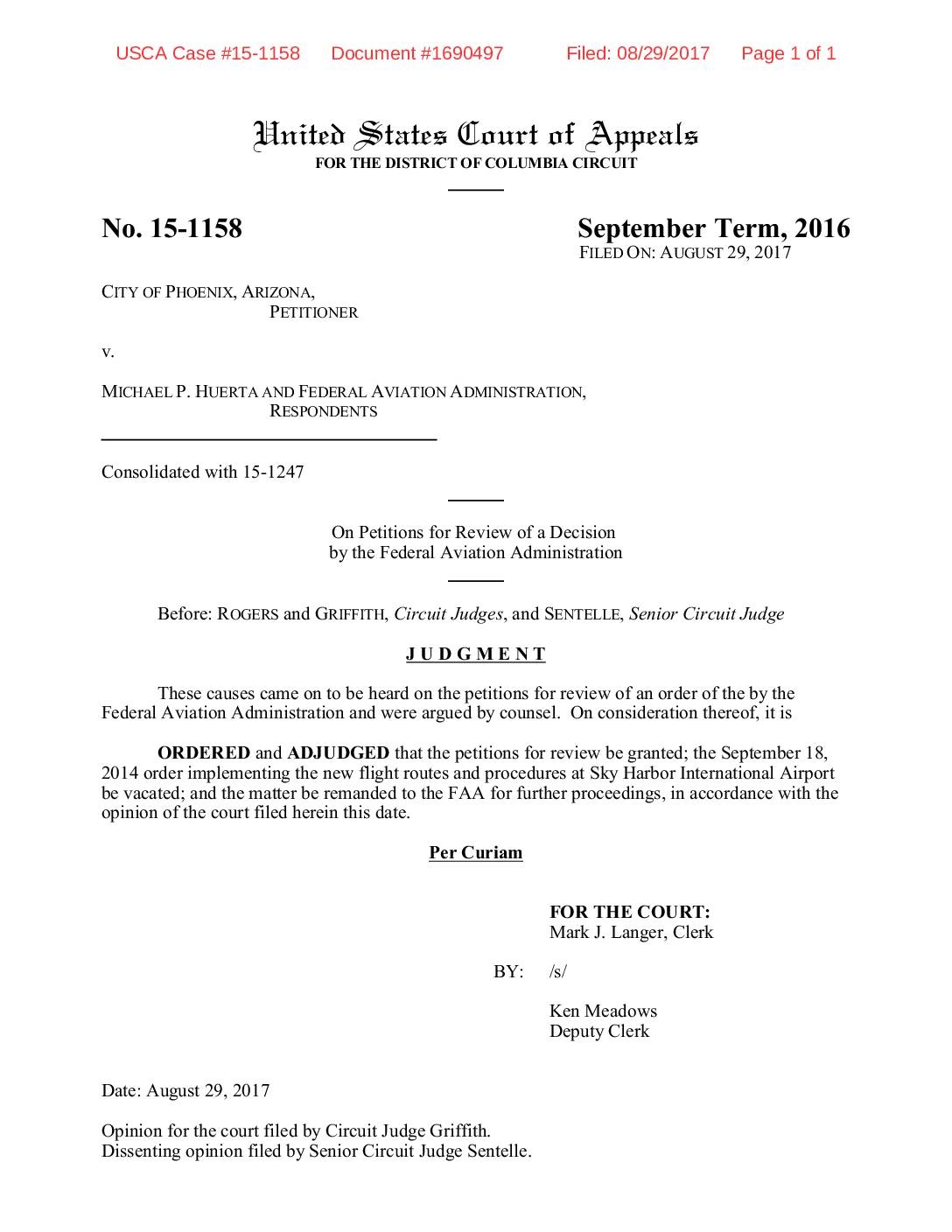
City of Phoenix, Arizona v. Michael P. Huerta and Federal Aviation Administration: Judgment of the U.S. Court of Appeals for the D.C. Circuit
A federal appeals court ruled in favor of the City of Phoenix, vacating a 2014 FAA order that had implemented new flight routes and procedures at Sky Harbor International Airport. The court found the FAA's order flawed and sent the matter back to the agency for further review. The case highlights how municipalities can successfully challenge FAA flight path decisions that impact communities near airports. -
 2017-08-29
City of Phoenix v. Huerta and Federal Aviation Administration: U.S. Court of Appeals, D.C. Circuit Opinion (No. 15-1158)
A federal appeals court ruled in 2017 that the FAA acted arbitrarily when it changed flight routes at Phoenix Sky Harbor International Airport in 2014 without adequately consulting city officials or thoroughly reviewing environmental impacts. The new routes increased air traffic over historic neighborhoods and public parks by 300%, yet the FAA conducted consultations only with low-level employees who lacked the authority to speak on the city's behalf. The case highlights the legal obligations federal agencies have to meaningfully engage local governments and assess noise impacts before implementing major flight path changes. -
2017-06-08
FAA calls for comment on proposed use of Runway 34
for use by turboprop planes The Federal Aviation Administration (FAA) is conducting an analysis under the National Environmental Policy Act (NEPA) to determine the environmental effects of a westerly heading for turboprop aircraft departing from Runway 34 at Seattle-Tacoma International Airport (SEA). The heading would only be used when the airport is landing and departing -
 2017-05-24
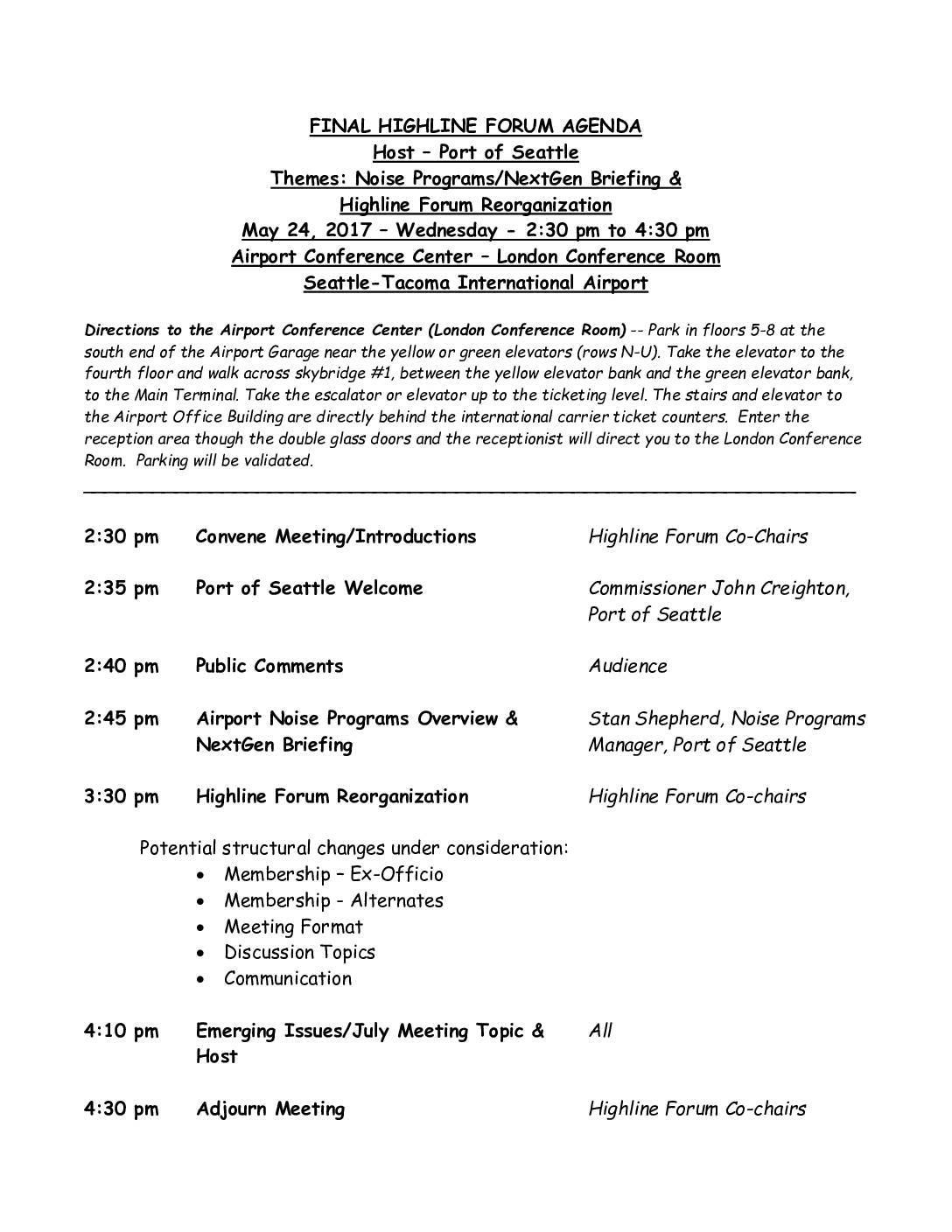
Final Highline Forum agenda: Noise Programs/NextGen Briefing & Highline Forum Reorganization
The Highline Forum held a public meeting on May 24, 2017, at Seattle-Tacoma International Airport, hosted by the Port of Seattle. The two-hour session covered an overview of the airport's noise programs and a NextGen briefing presented by Noise Programs Manager Stan Shepherd, followed by a discussion of potential structural changes to the Forum itself, including membership rules, meeting format, and communication practices. The meeting was open to public comment and concluded with planning for the next Forum session in July. -
 2017-05-02
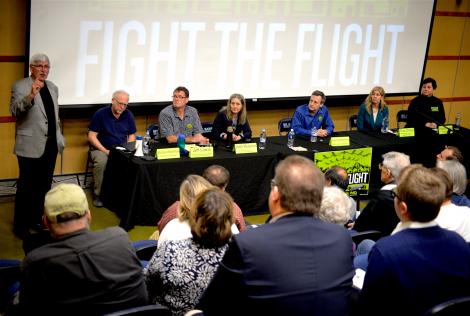
Airport noise and health impacts? Not going to fly with concerned citizens
05/02/2017 By Lindsay Peyton Gasps emanated from the crowd gathered at the Quiet Skies Puget Sound community forum when lawyer Steve Edmiston projected one of the first slides of his presentation. He showed a map published by the Environmental Projection Agency, followed by an alarming statistic, placing Des Moines’ Mount Rainier High School in the