TagNextGen(65)
-
 2012-11-01
Finding of No Significant Impact (FONSI) and Record of Decision (ROD) for the Implementation of RNAV/RNP Procedures at Seattle-Tacoma International Airport (Greener Skies over Seattle)
In November 2012, the Federal Aviation Administration (FAA) issued a Finding of No Significant Impact (FONSI) and Record of Decision (ROD) approving new satellite-based navigation procedures at Seattle-Tacoma International Airport (Sea-Tac) under the 'Greener Skies over Seattle' initiative. The new procedures, developed with Alaska Airlines, Boeing, and the Port of Seattle, use advanced RNAV/RNP technology to guide arriving aircraft along more precise, optimized descent paths, reducing fuel burn and environmental impact. The FAA determined that these airspace changes would not result in significant environmental harm or any physical airport development. -
 2012-07-02
FAA NextGen for airports
This Federal Aviation Administration document describes how the NextGen air traffic modernization program benefits both general aviation and commercial airports through improved GPS-based approach procedures, ADS-B surveillance technology, and more efficient departure queue management systems. Key upgrades include WAAS/LPV approaches that allow aircraft to land in low-visibility conditions without expensive ground equipment, and surface surveillance tools to better track aircraft and vehicles on the ground. The document also outlines plans to optimize airspace procedures across 21 metropolitan areas to reduce delays and improve safety. -
 2009-10-01
Traffic flow management in the National Airspace System
This October 2009 FAA Air Traffic Organization document explains the terms, techniques, and programs used to manage the flow of air traffic across the National Airspace System. It covers topics such as ground delay programs, ground stops, severe weather avoidance, rerouting strategies, and coordination tools used by traffic management specialists. While focused on national-level airspace operations rather than airport-specific noise policy, it provides useful background on how flight scheduling and routing decisions are made system-wide. -
 2009-08-30
Seattle Times: Quieter skies ahead: Seattle at forefront of high-tech plan to change airplane traffic
The new technology steers air traffic on autopilot along a smoothly descending, satellite-guided path, avoiding the stair-step approach and constant interplay with air traffic controllers now required to bring in planes. -
 1988-04-01
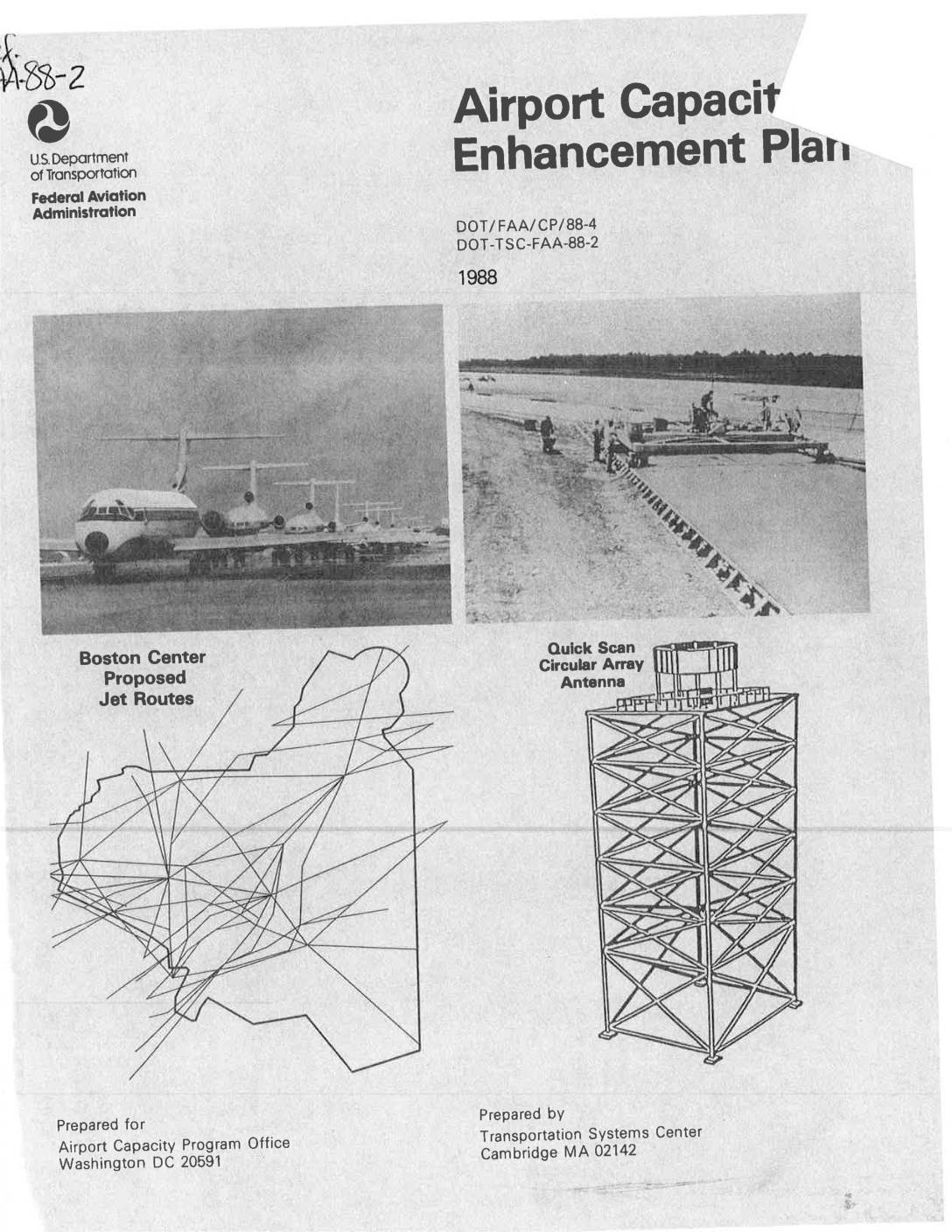
Airport Capacity Enhancement Plan 1988
This 1988 Federal Aviation Administration report outlines the Airport Capacity Enhancement Plan, which aimed to increase airport capacity and efficiency across the U.S. air system without compromising passenger safety or environmental impact. It identifies causes of capacity and delay problems, forecasts the effects of growing air traffic over the following decade, and describes FAA projects targeting four key areas: airport development, airspace control procedures, equipment and systems upgrades, and capacity planning studies. Note that while this document addresses national airport capacity issues broadly, it does not specifically focus on Sea-Tac Airport noise policy.