TagLandrum & Brown(52)
-
 2024-10-01
Seattle-Tacoma International Airport Environmental Assessment for the SAMP Near-Term Projects: Chapter 2 — Alternatives
This draft Environmental Assessment chapter from October 2024 outlines the process used to evaluate alternatives to proposed construction and expansion projects at Seattle-Tacoma International Airport (SEA). Using a two-step screening process, planners assessed public suggestions — such as building a new airport, using high-speed rail, or limiting growth — against the project's core purpose of serving 56 million annual passengers at an optimal level of service, rejecting most suggestions as unfeasible or insufficient. A No Action Alternative is also included, which assumes none of the proposed improvements would be built, though several independent projects already underway or planned by 2032 would still proceed. -
 2024-10-01
Seattle-Tacoma International Airport Environmental Assessment for the Sustainable Airport Master Plan Near-Term Projects: Chapter 1, Introduction and Purpose & Need
The Port of Seattle is preparing an Environmental Assessment for 31 near-term improvement projects at Seattle-Tacoma International Airport (SEA), covering upgrades to taxiways, runways, terminals, and support facilities. The projects, expected to be operational by 2032, aim to reduce crowding, long lines, and flight delays that have grown as passenger demand has increased. The Federal Aviation Administration (FAA) will review the findings to determine whether the projects will significantly impact the surrounding environment, potentially affecting noise levels for nearby communities. -
 2024-10-01
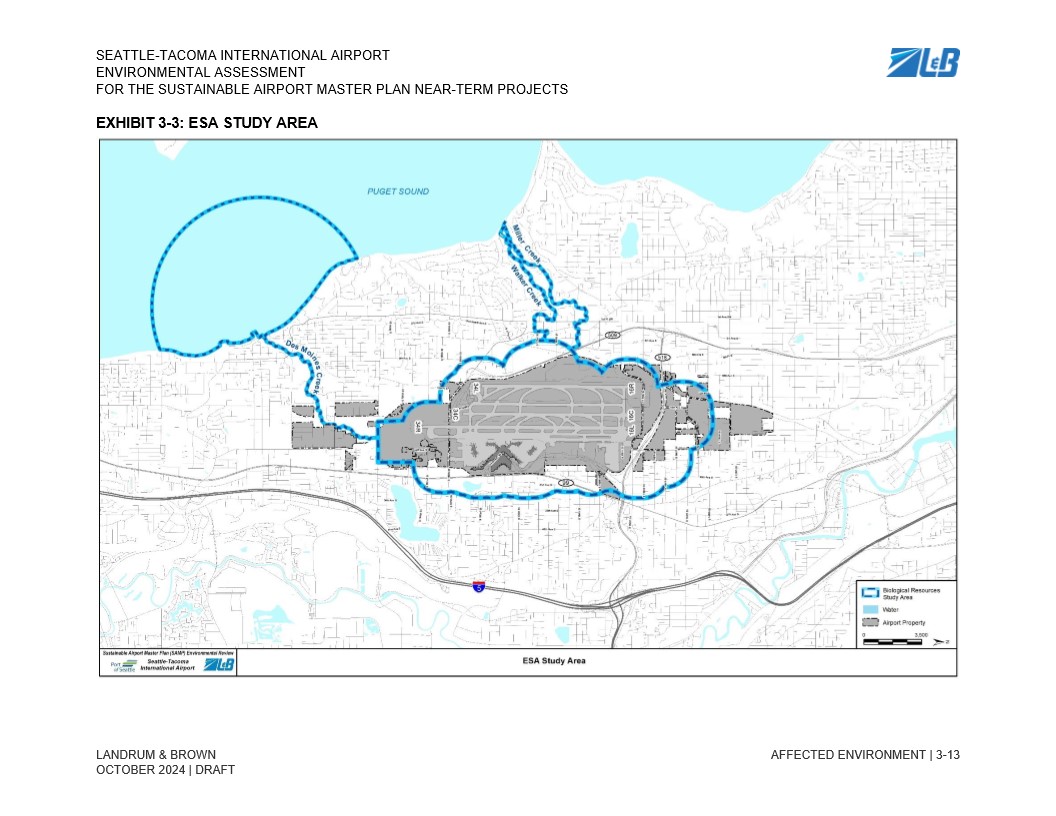
SAMP Exhibit 3-3 Area of Potential Effects (APE) Water
Exhibit 3-3 from the Seattle-Tacoma International Airport Environmental Assessment for the Sustainable Airport Master Plan (SAMP) Near-Term Projects, prepared by Landrum & Brown, dated October 2024 (Draft). The map depicts the Biological Resources ESA Study Area boundary (shown in blue dashed line) surrounding the airport property, extending to Puget Sound to the west and encompassing nearby waterways including Miller Creek and Walker Creek. -
 2024-10-01
Seattle-Tacoma International Airport Environmental Assessment for the Sustainable Airport Master Plan Near-Term Projects: Chapter 7 References
This document is the References section of the Environmental Assessment for Seattle-Tacoma International Airport's Sustainable Airport Master Plan Near-Term Projects, prepared by Landrum & Brown in October 2024. It lists the sources cited across four chapters, including federal regulations, FAA advisory circulars, technical memoranda, city and county planning documents, and environmental studies used to evaluate the airport's proposed near-term development projects. Key references cover topics such as air quality, greenhouse gas emissions, stormwater management, facility requirements, and land use planning for the communities surrounding Sea-Tac Airport. -
 2024-10-01
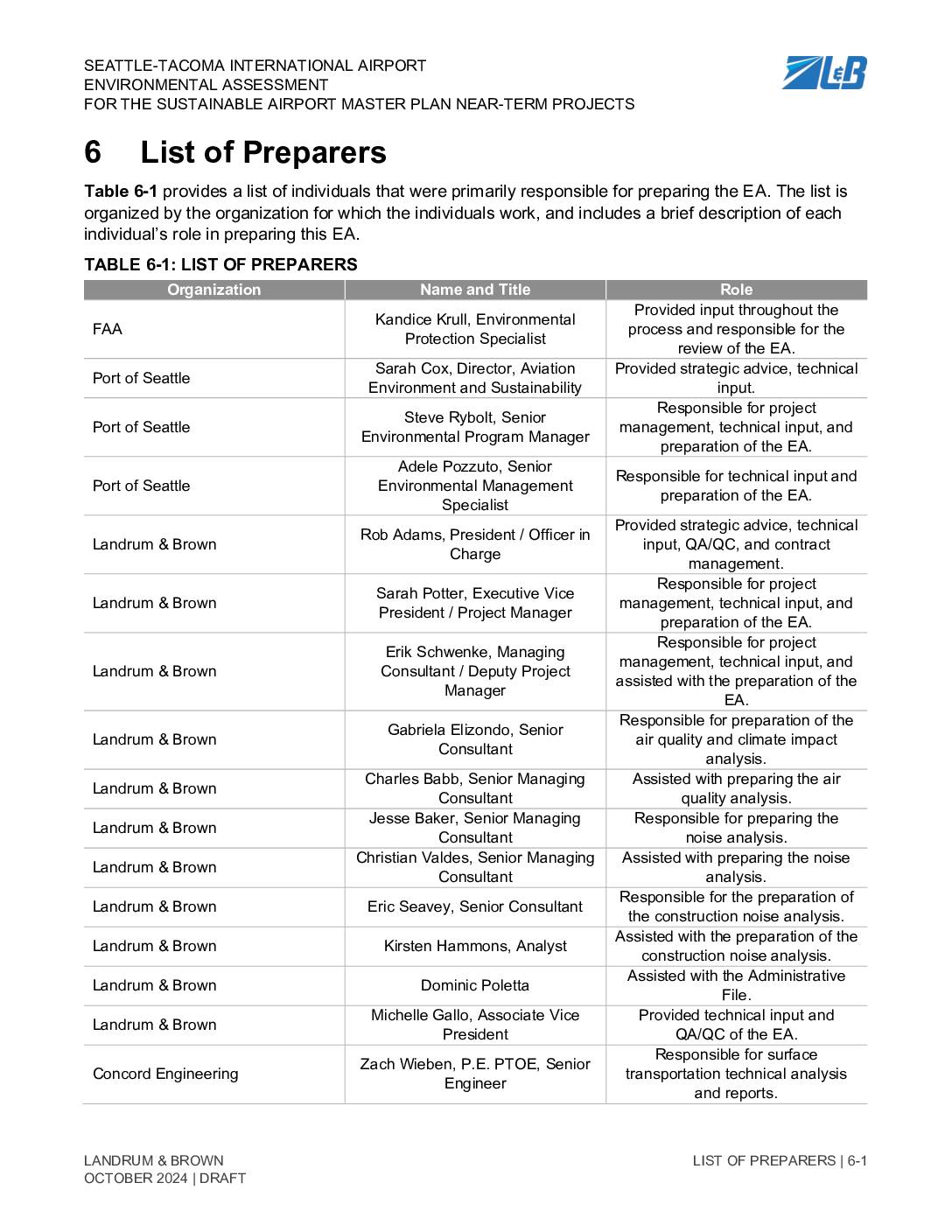
Seattle-Tacoma International Airport Environmental Assessment for the Sustainable Airport Master Plan Near-Term Projects: Chapter 6 — List of Preparers
This section of the Seattle-Tacoma International Airport Environmental Assessment lists the individuals and organizations responsible for preparing the document, including staff from the FAA, Port of Seattle, and several consulting firms. The team covered a wide range of technical areas, with specialists handling noise analysis, air quality, surface transportation, wetlands, cultural resources, and public engagement. The assessment was produced in October 2024 as a draft under the airport's Sustainable Airport Master Plan for near-term projects. -
 2024-06-01
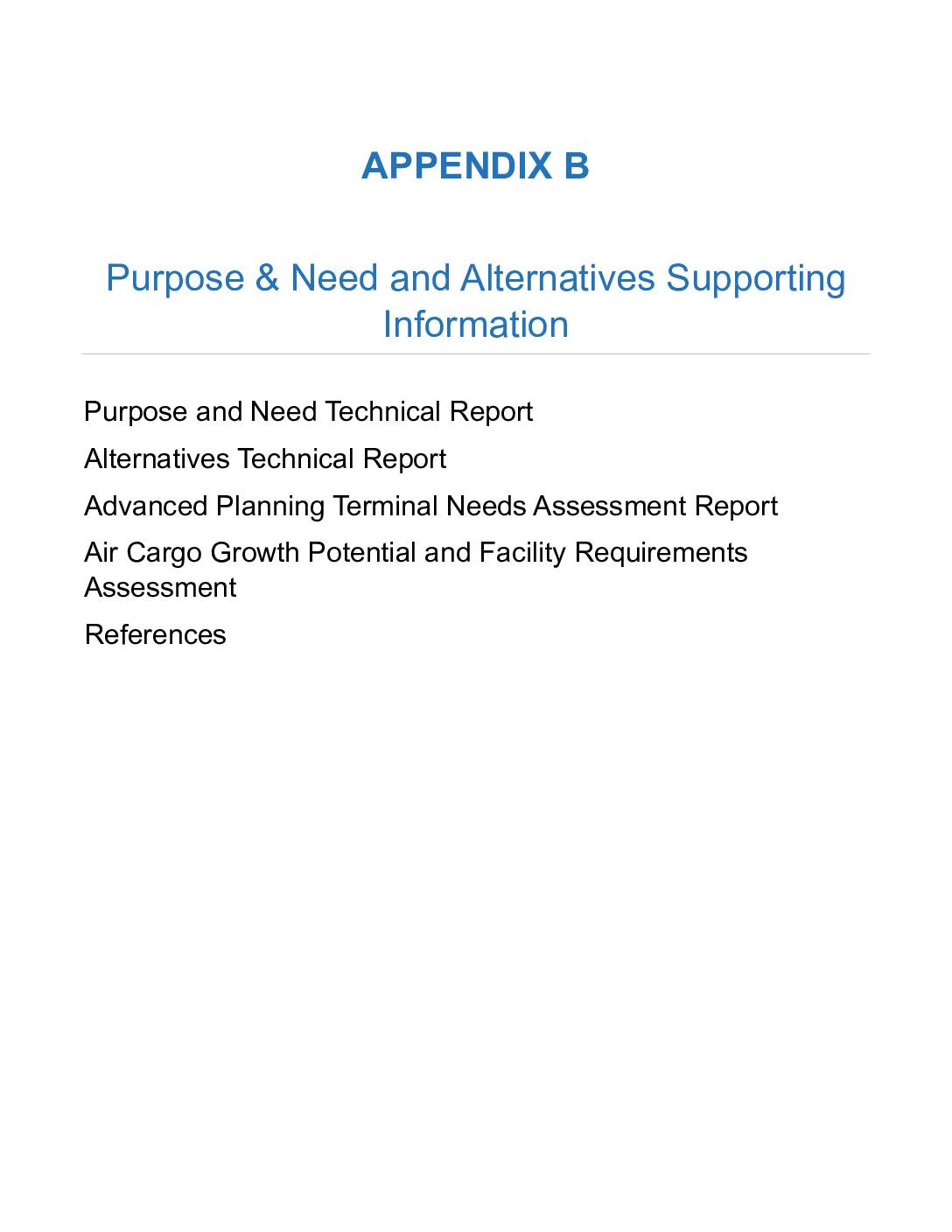
Appendix B: SAMP – Near-Term Projects: Purpose and Need Technical Report
This technical report, prepared by Landrum & Brown for the Port of Seattle in June 2024, outlines the purpose and need for near-term construction and improvement projects identified in the Sustainable Airport Master Plan for Seattle-Tacoma International Airport. It is part of a broader set of supporting documents that also covers alternatives analysis, terminal needs, and air cargo facility requirements. The report provides the foundational justification for planned airport development decisions. -
 2024-06-01
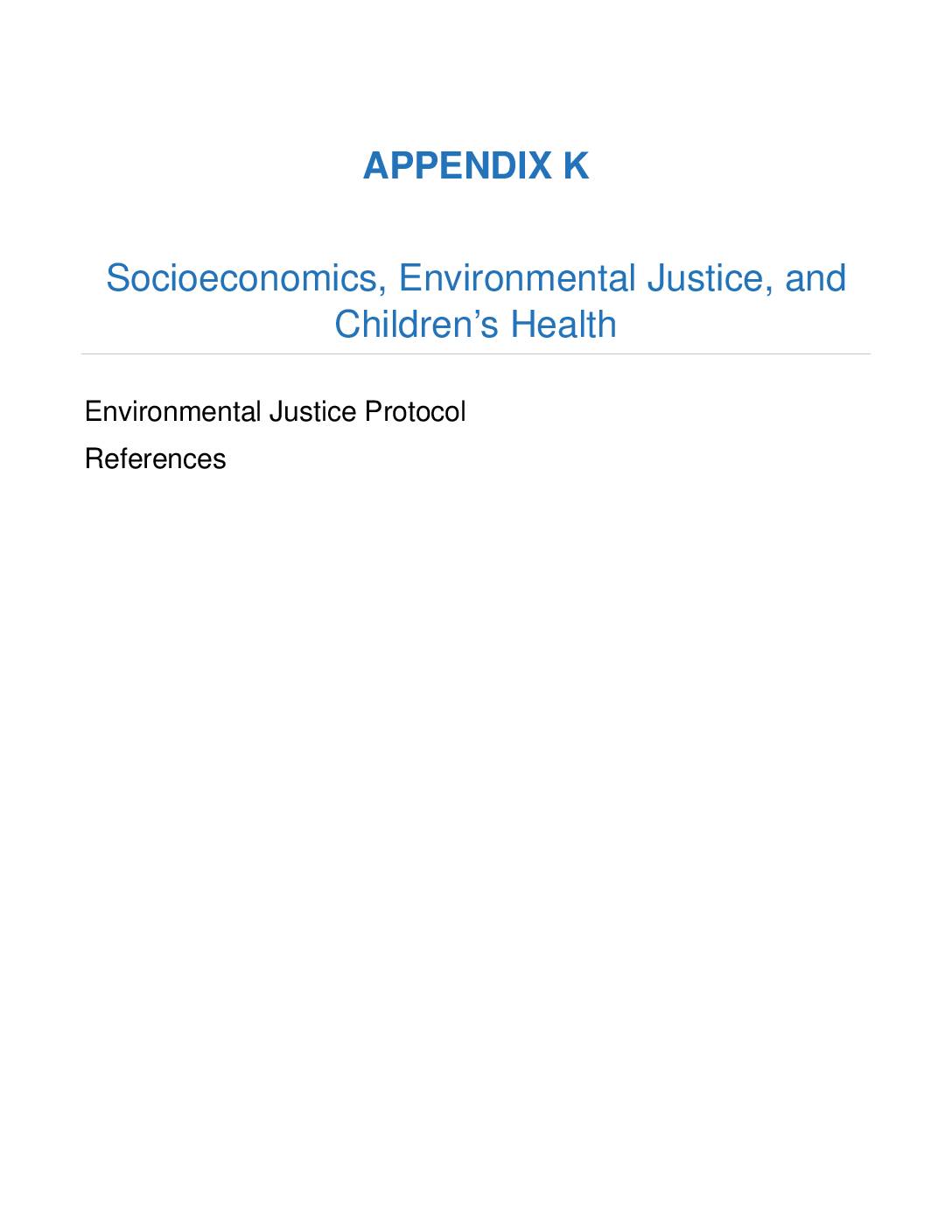
Environmental Justice Protocol: Seattle-Tacoma International Airport
This document is an Environmental Justice Protocol prepared by Landrum & Brown, Incorporated for the Federal Aviation Administration and the Port of Seattle in June 2024. It addresses socioeconomics, environmental justice, and children's health considerations related to Seattle-Tacoma International Airport. The protocol provides a framework for evaluating how airport-related impacts may affect minority, low-income, and other vulnerable populations in surrounding communities. -
 2024-06-01
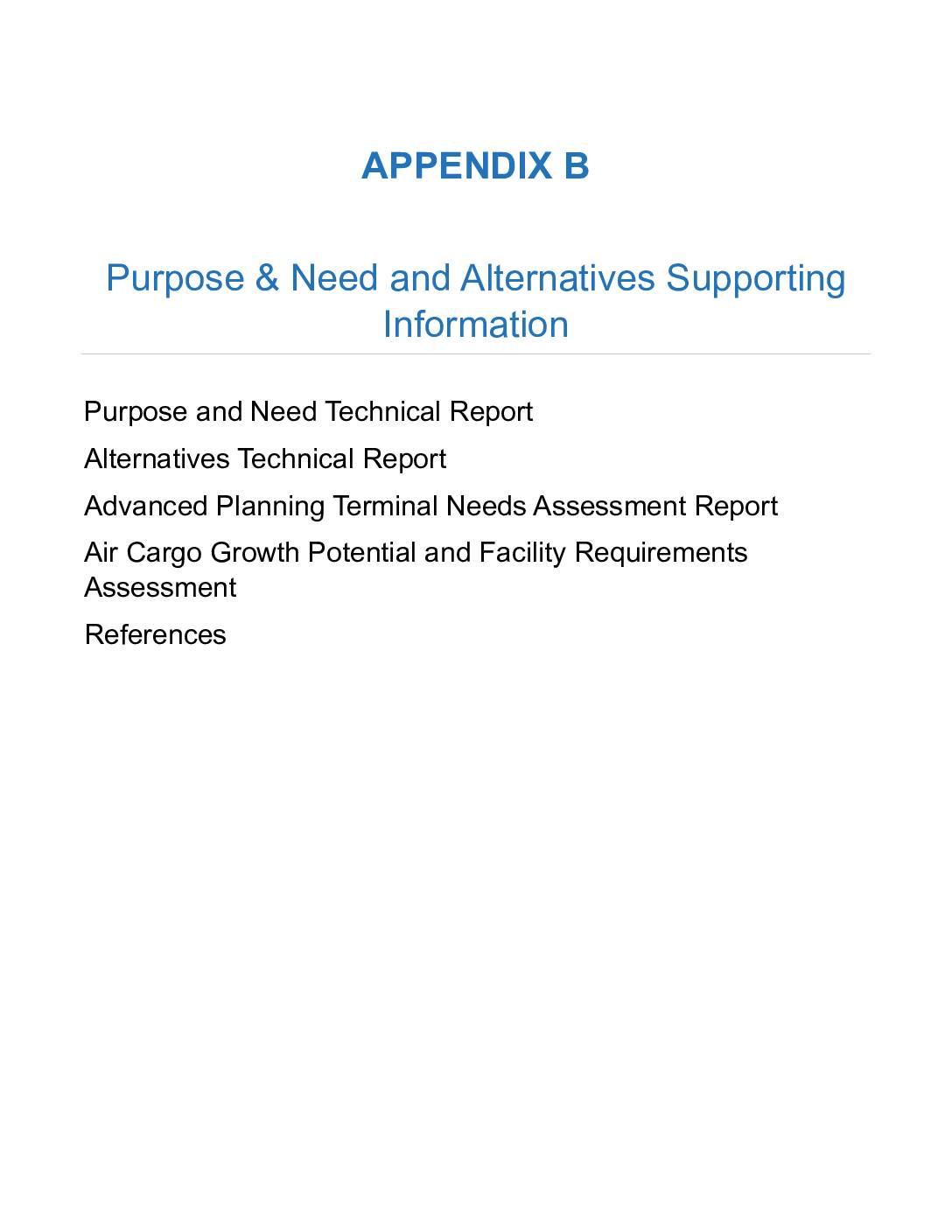
Purpose and Need Technical Report: Sustainable Airport Master Plan – Near-Term Projects
This technical report, prepared by Landrum & Brown for the Port of Seattle in June 2024, outlines the purpose and need for near-term capital projects identified in Sea-Tac Airport's Sustainable Airport Master Plan. It is part of a broader set of supporting documents that also covers alternatives analysis, terminal needs assessment, and air cargo facility requirements. The report provides the foundational justification for proposed airport improvements and infrastructure expansions at Seattle-Tacoma International Airport. -
 2024-06-01
Purpose and Need Technical Report: Sustainable Airport Master Plan – Near-Term Projects
This technical report, prepared by Landrum & Brown for the Port of Seattle in June 2024, outlines the purpose and need for near-term construction and improvement projects identified in Sea-Tac Airport's Sustainable Airport Master Plan. It is part of a broader set of supporting documents that also covers alternatives analysis, terminal needs assessment, and air cargo facility requirements. The report provides the foundational justification for proposed airport development decisions and infrastructure changes. -
 2024-05-06
Resume of Vincent Mestre, P.E.
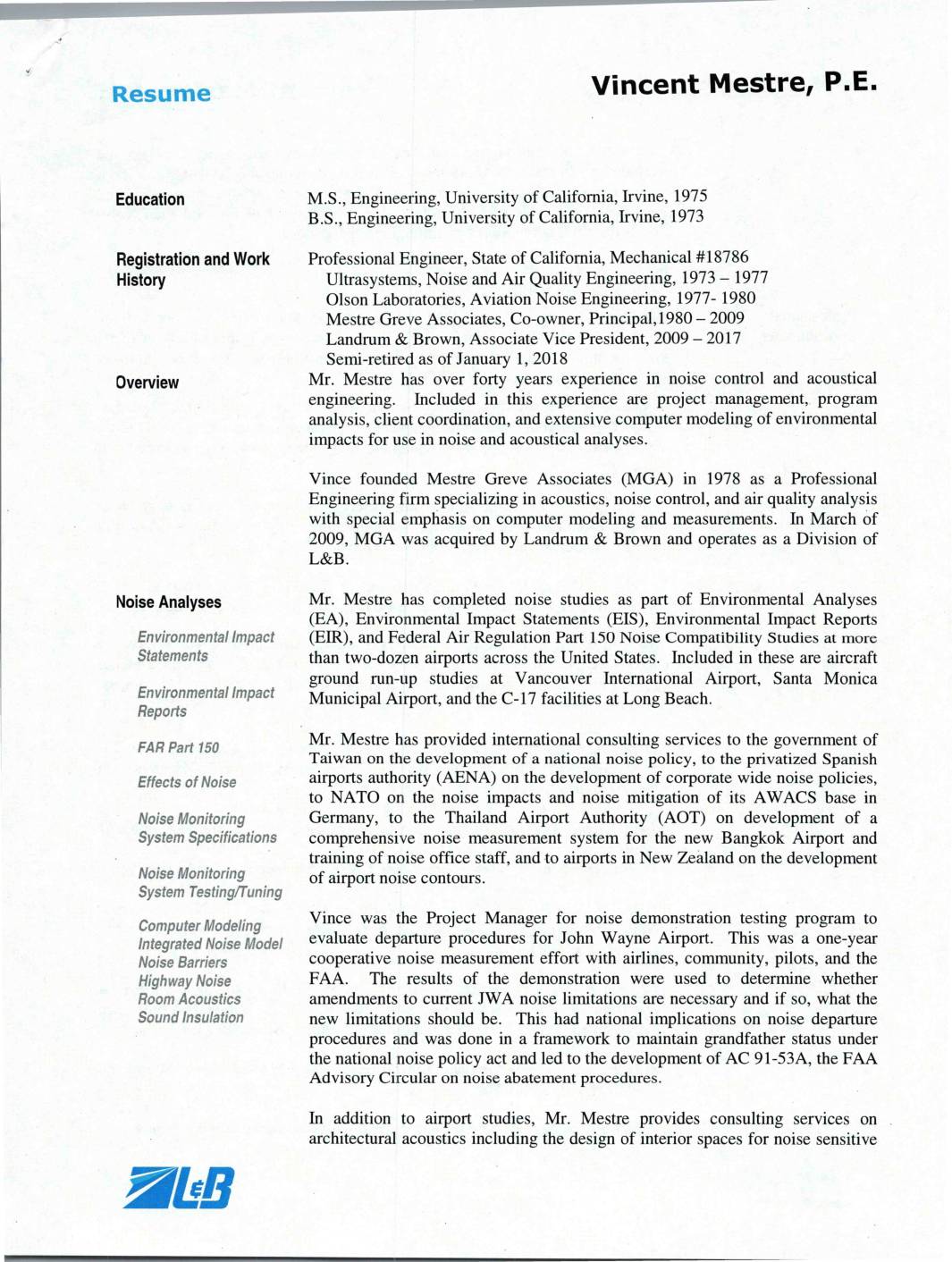
Vincent Mestre is a California-licensed Professional Engineer with over 40 years of experience in noise control and acoustical engineering, specializing in airport noise studies, environmental impact analyses, and computer modeling. He founded Mestre Greve Associates in 1978, later joined Landrum & Brown, and has conducted noise compatibility studies at more than two dozen U.S. airports, including international consulting work for governments and airport authorities worldwide. His published research and leadership roles in professional organizations have contributed to shaping national and international airport noise policy and monitoring standards.