TagFill Dirt(72)
-
 2001-10-23
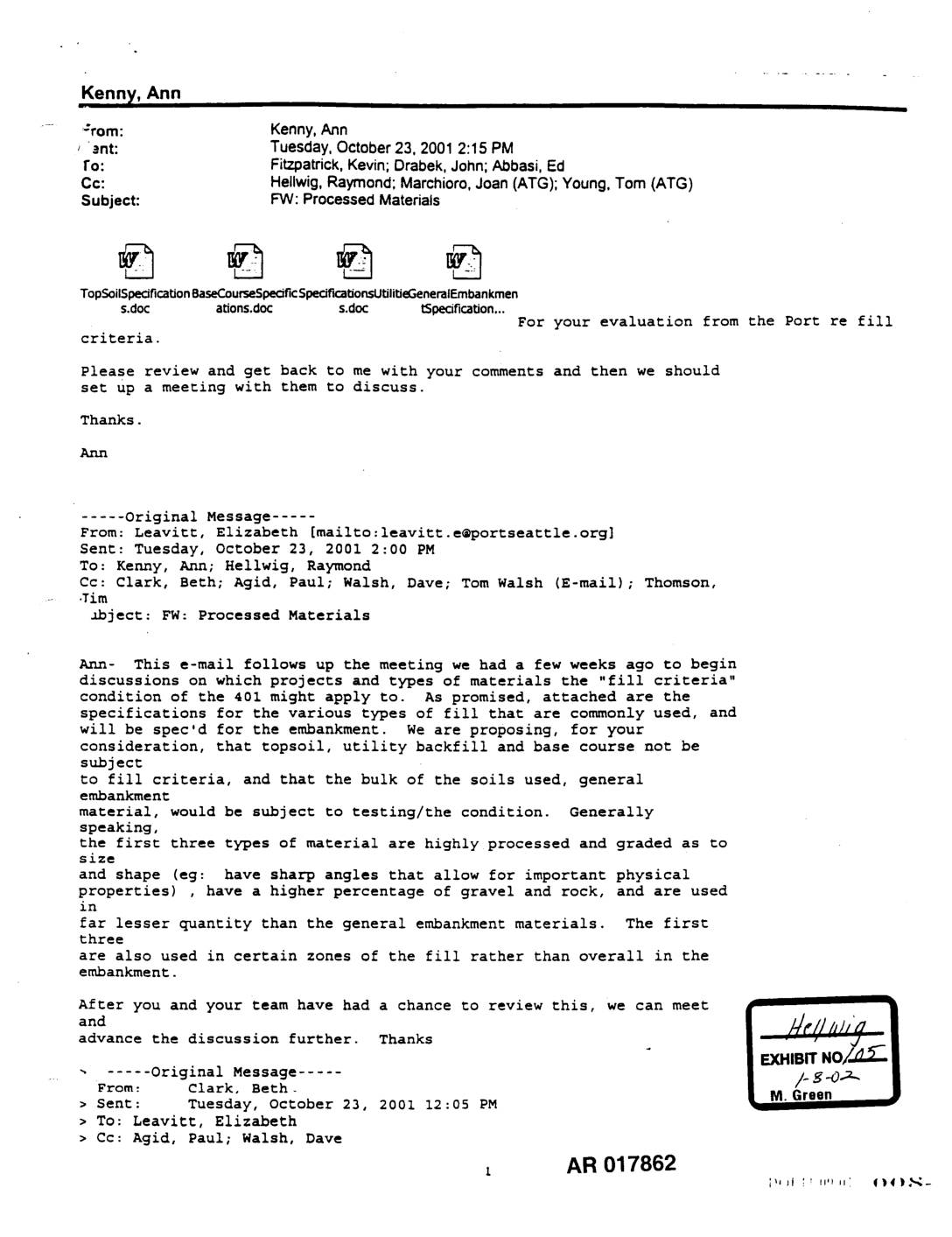
EXH AR017862: Email Chain — Port Of Seattle Processed Materials Fill Criteria for Third Runway Embankment Specifications
Email chain dated October 23, 2001 between Ann Kenny, Elizabeth Leavitt (Port Of Seattle), Beth Clark, Raymond Hellwig, Kevin Fitzpatrick, John Drabek, Ed Abbasi, Joan Marchioro, Tom Young, Paul Agid, Dave Walsh, and Tim Thomson regarding fill criteria under Condition E of the 401 certification for the Third Runway Embankment. Port Of Seattle proposes that -
 2001-10-23
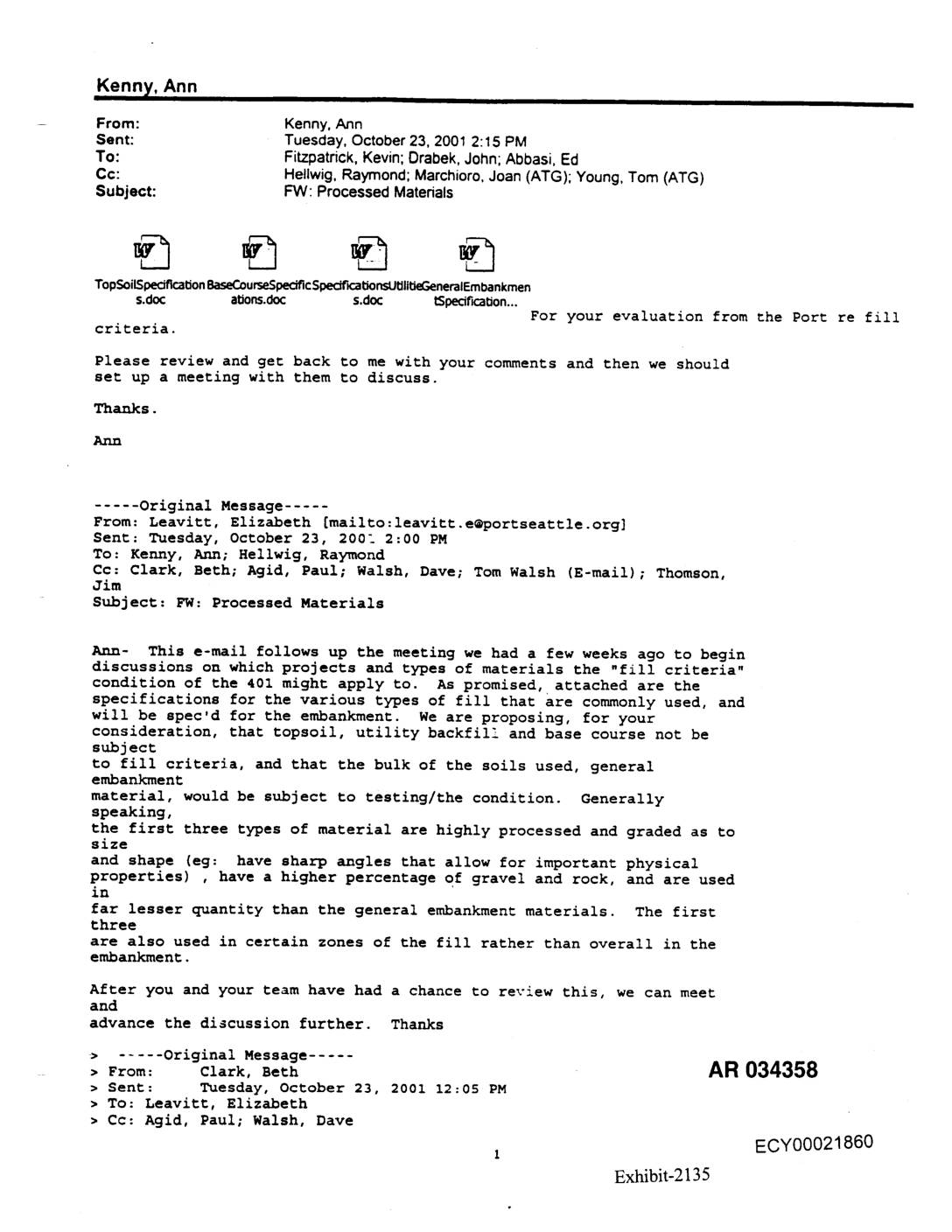
Exhibit 2135: Port Of Seattle Fill Criteria — Processed Materials Specifications for Third Runway Embankment
Email chain dated October 23, 2001 among Ann Kenny (Ecology), Kevin Fitzpatrick, John Drabek, Ed Abbasi, Raymond Hellwig, Joan Marchioro, Tom Young (ATG), Elizabeth Leavitt (Port Of Seattle), Beth Clark, Paul Agid, Dave Walsh, and Jim Thomson regarding fill criteria under Condition E of the 401 certification for the Third Runway Embankment. Port Of Seattle -
 2001-10-13
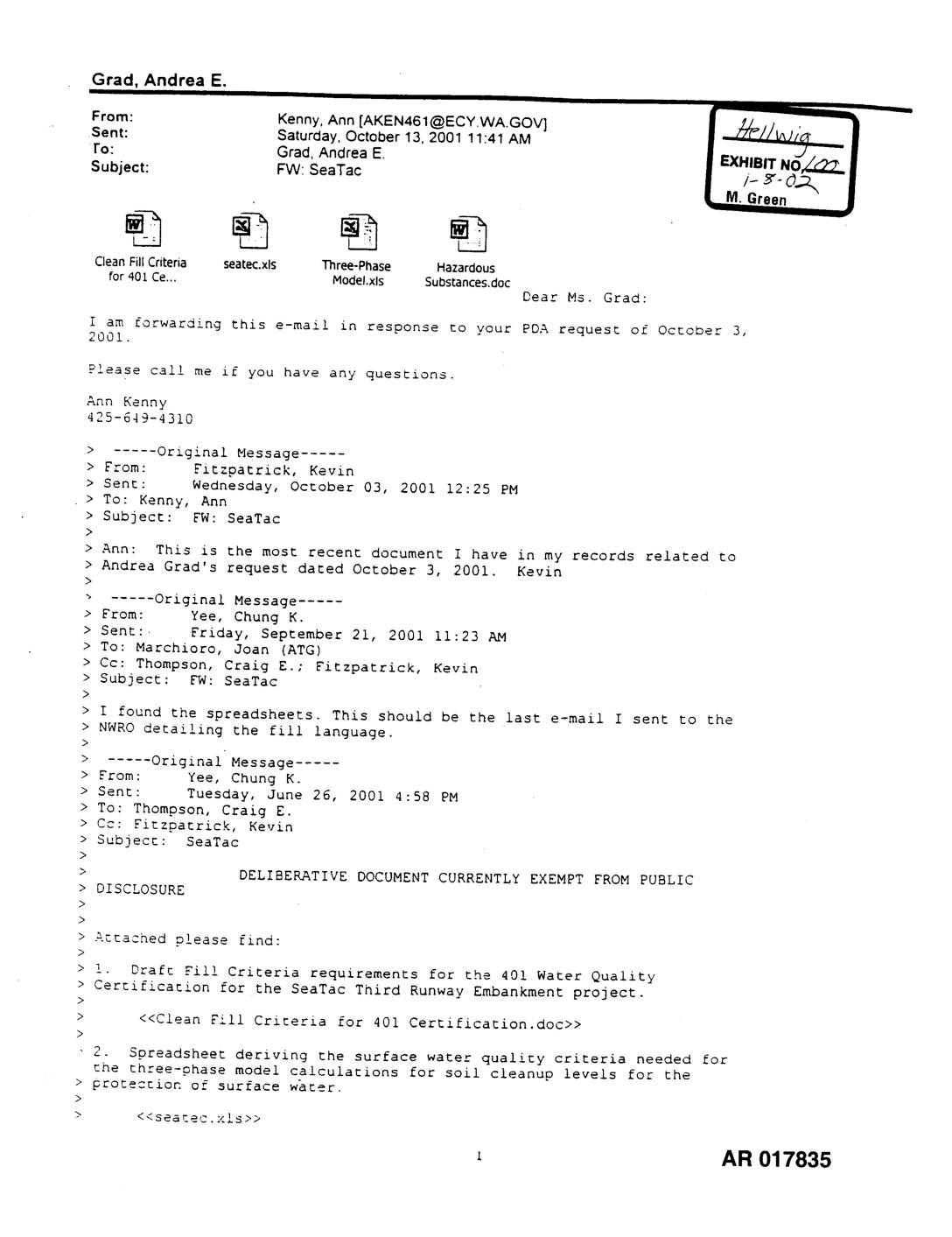
EXH AR017835: Ecology Email Chain re Sea-Tac Third Runway Fill Criteria and Draft 401 Water Quality Certification Conditions
Email chain forwarded by Ann Kenny (Ecology, 425-649-4310) to Andrea Grad in response to a Public Disclosure Act (PDA) request dated October 3, 2001, regarding the SeaTac Third Runway Embankment project. Originated from Chung K. Yee (Ecology) to Craig E. Thompson and Kevin Fitzpatrick on June 26, 2001, marked ‘Deliberative Document Currently Exempt from Public -
 2001-09-28
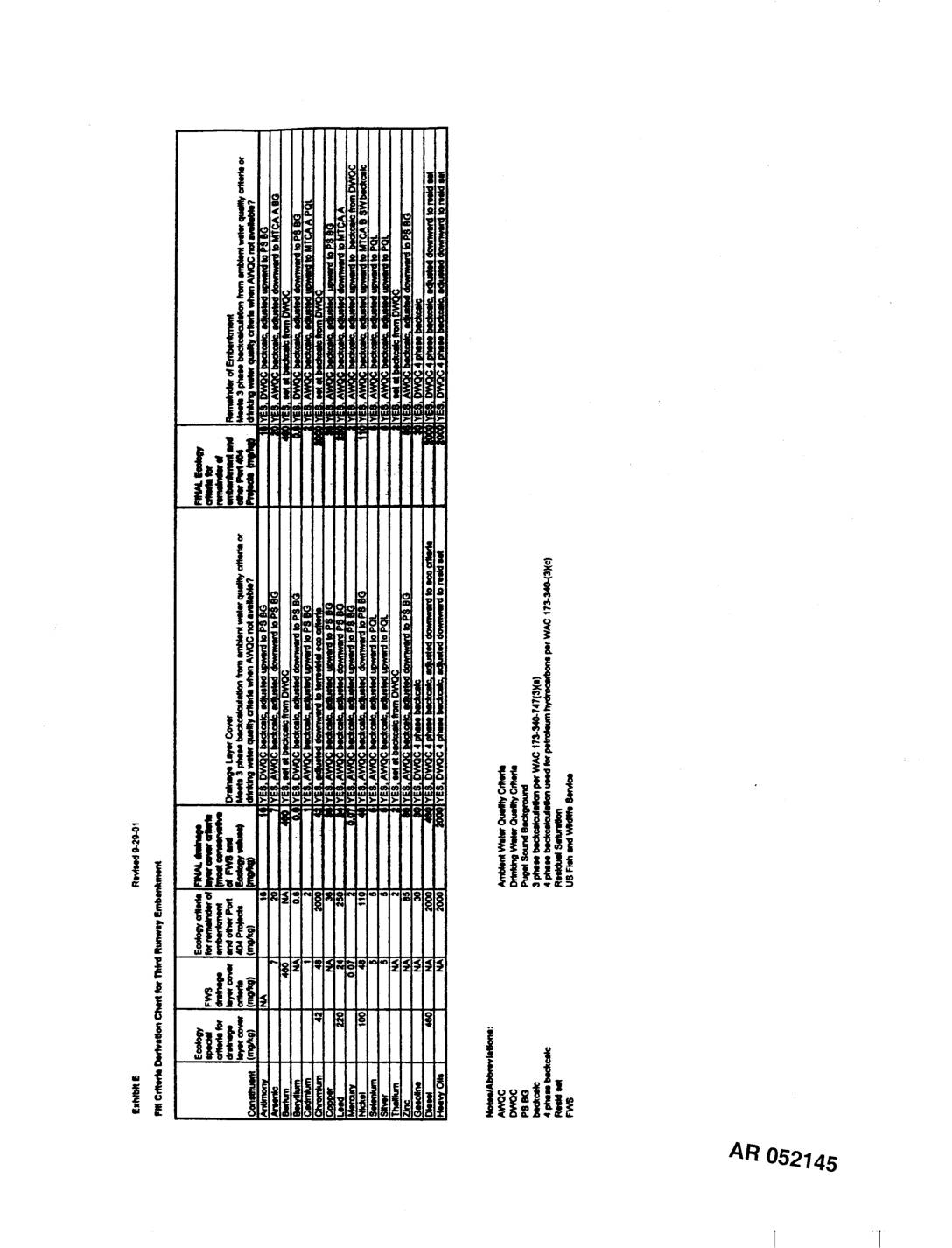
EXH AR052145: Fill Criteria Derivation Chart for Third Runway Embankment
Fill Criteria Derivation Chart (Exhibit E) for Third Runway Embankment at Sea-Tac Airport, revised 9-28-01. Charts fill dirt criteria for constituents including antimony, arsenic, barium, beryllium, chromium, copper, lead, mercury, selenium, silver, thallium, diesel, and heavy oils against Ecology criteria, FWS drainage layer cover values, and FINAL drainage layer cover values. References WAC 173-340-747(3)(a) and -
 2001-09-21
EXH AR051257: Subsurface Conditions Data Report, Phase 5 Fill and Subgrade Improvement, Third Runway Embankment, Sea-Tac International Airport
Hart Crowser, Inc. subsurface conditions data report (project 4978-28) prepared for HNTB, dated September 21, 2001, covering Phase 5 Fill and Subgrade Improvement for the Third Runway Embankment at Sea-Tac International Airport, SeaTac, Washington. Report authored by Carsten Becker (E.I.T., Senior Staff Geotechnical Engineer) and Michael J. Bailey (P.E., Project Manager). Covers geologic and hydrogeologic -
 2001-09-08
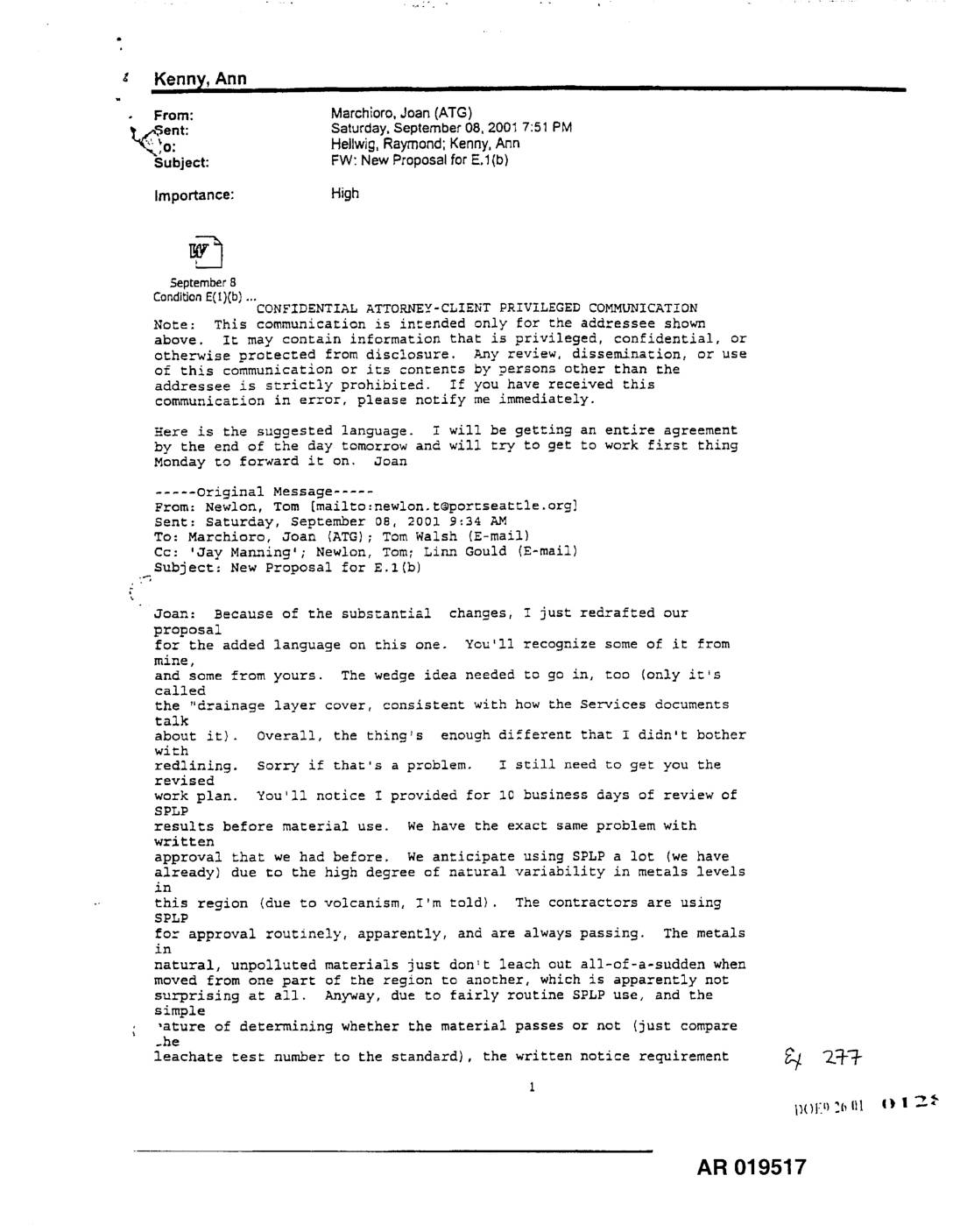
EXH 277: Email Chain – Proposed Language Condition E(1)(b) Third Runway Fill Criteria SPLP Testing Drainage Layer Cover
In September 2001, representatives from the Port of Seattle and the Washington Attorney General's office exchanged emails negotiating the language of Condition E(1)(b), which governs fill material criteria for an embankment construction project. The proposed language would allow the Port to use a 'drainage layer cover' design and to demonstrate fill suitability through Synthetic Precipitation Leaching Procedure (SPLP) testing as an alternative to standard fill limitations. Under the proposal, SPLP test results would be submitted to the Washington Department of Ecology at least ten business days before any fill placement. -
 2001-08-10
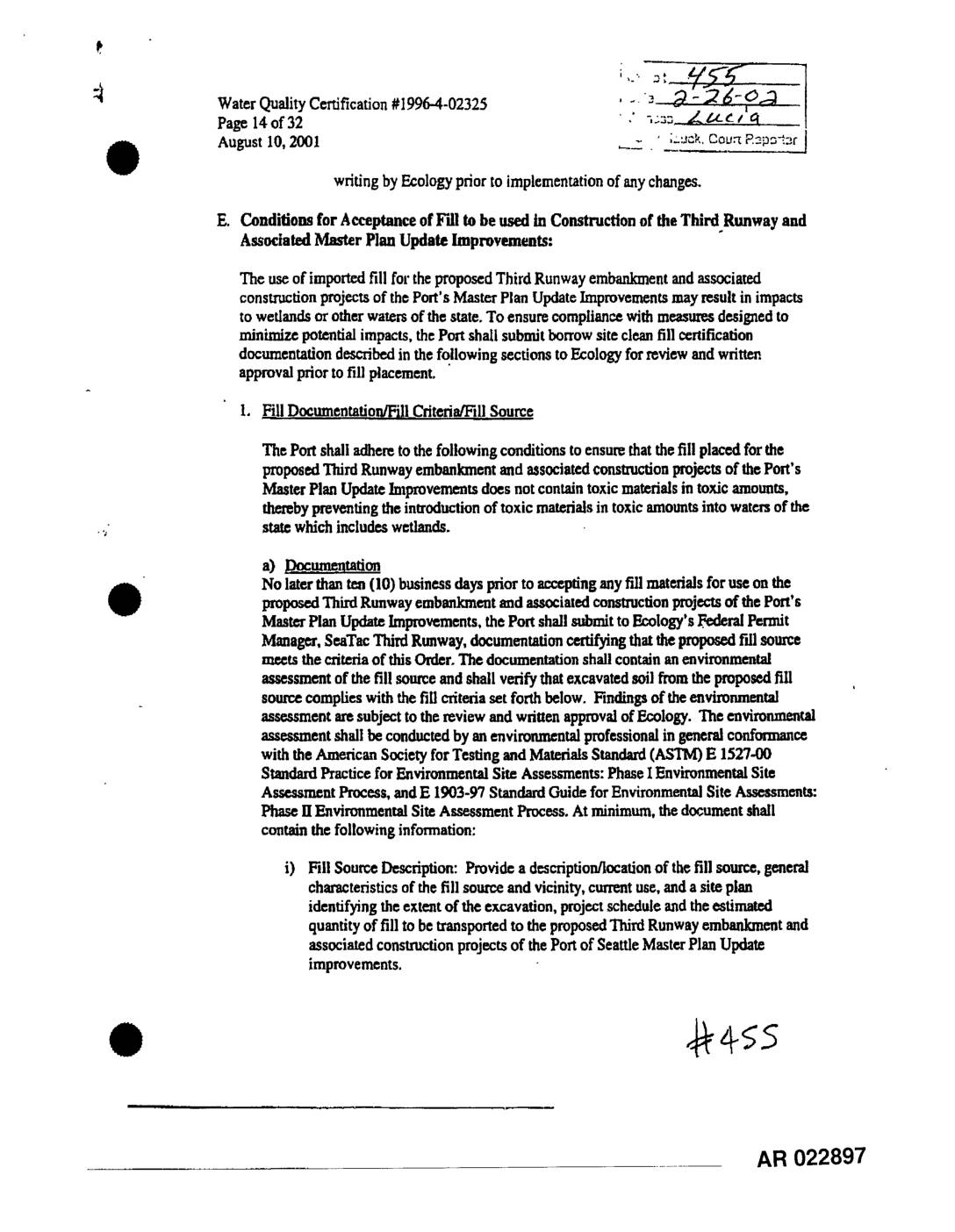
EXH 455: Water Quality Cert #1996-4-02325 Fill Acceptance Conditions Third Runway Embankment pp.14–16
This document outlines Washington State Department of Ecology conditions for accepting imported fill material used in construction of Sea-Tac Airport's Third Runway and associated Master Plan improvements. It requires the Port of Seattle to submit environmental assessments of fill sources — including records reviews, site reconnaissance, and soil sampling for hazardous substances such as arsenic, lead, and mercury — at least ten business days before placing any fill. Specific contamination limits (e.g., arsenic at 20 mg/kg, lead at 220/250 mg/kg) and minimum sampling schedules based on fill volume are established to prevent toxic materials from entering state waters and wetlands. -
 2001-08-08
Exhibit 1271: Port Of Seattle Sea-Tac Third Runway Embankment Fill Modeling Report
Pacific Groundwater Group (Seattle, WA, project JE0105) prepared this embankment fill modeling report for Port Of Seattle regarding the Sea-Tac Airport Third Runway construction, dated August 8, 2001. The report addresses groundwater and fill modeling associated with the Third Runway embankment fill at Sea-Tac Airport. Document marked ‘Superceded’ and received by Foster Pepper & Shefelman -
 2001-07-30
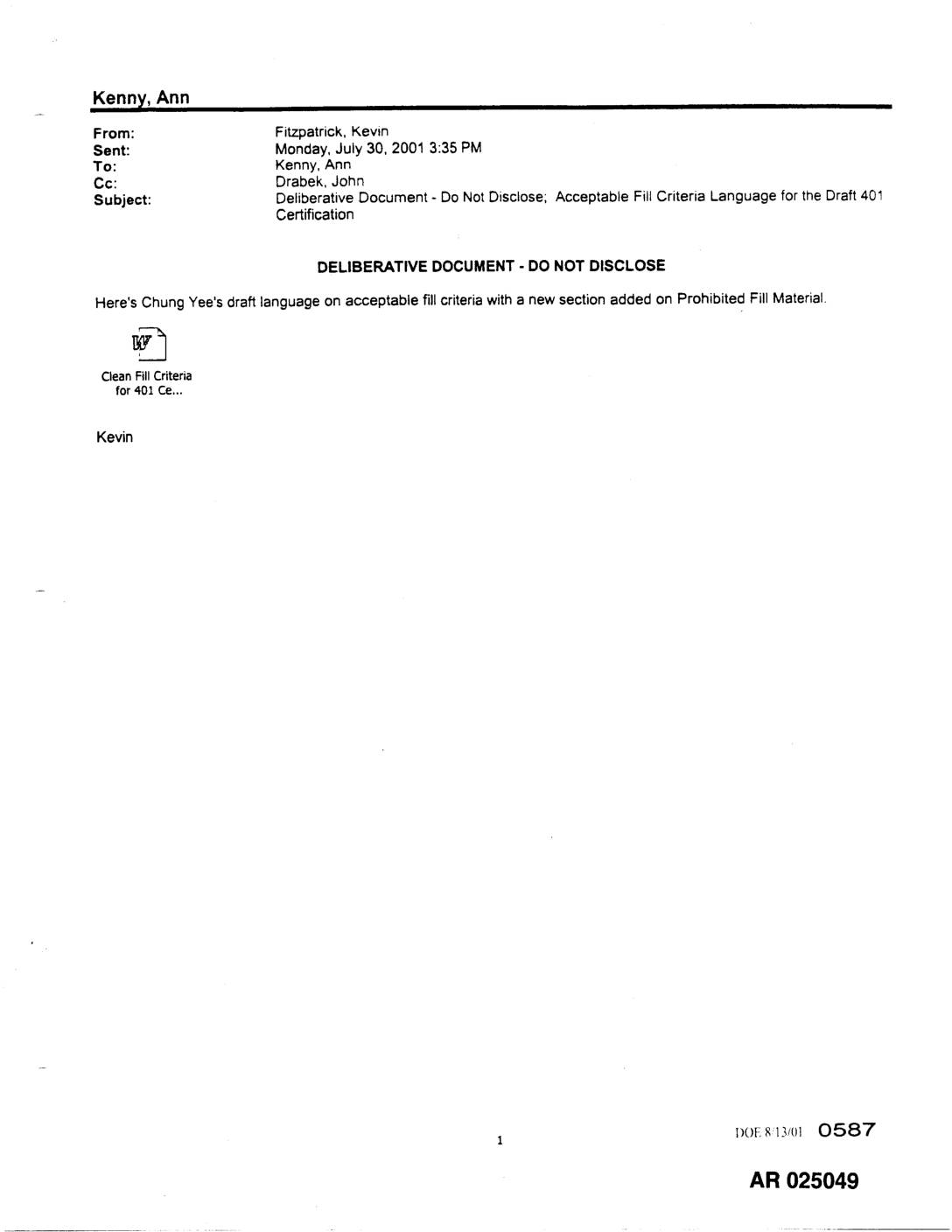
EXH AR025049: Draft 401 Certification — Acceptable Fill Criteria & Prohibited Fill Material Language (July 30, 2001)
This July 2001 draft document outlines clean fill criteria for the Port of Seattle's Third Runway construction project at Sea-Tac Airport, requiring the Port to submit environmental assessment documentation to the Washington Department of Ecology before placing any fill material. It specifies that fill may only come from state-certified borrow pits, contractor-certified construction sites, or Port-owned properties, while prohibiting the use of any contaminated or remediated soils. The document details testing and sampling requirements, including review of contamination records and analysis of hazardous substances, to ensure that no toxic materials are introduced into wetlands or state waters during construction. -
 2001-07-10
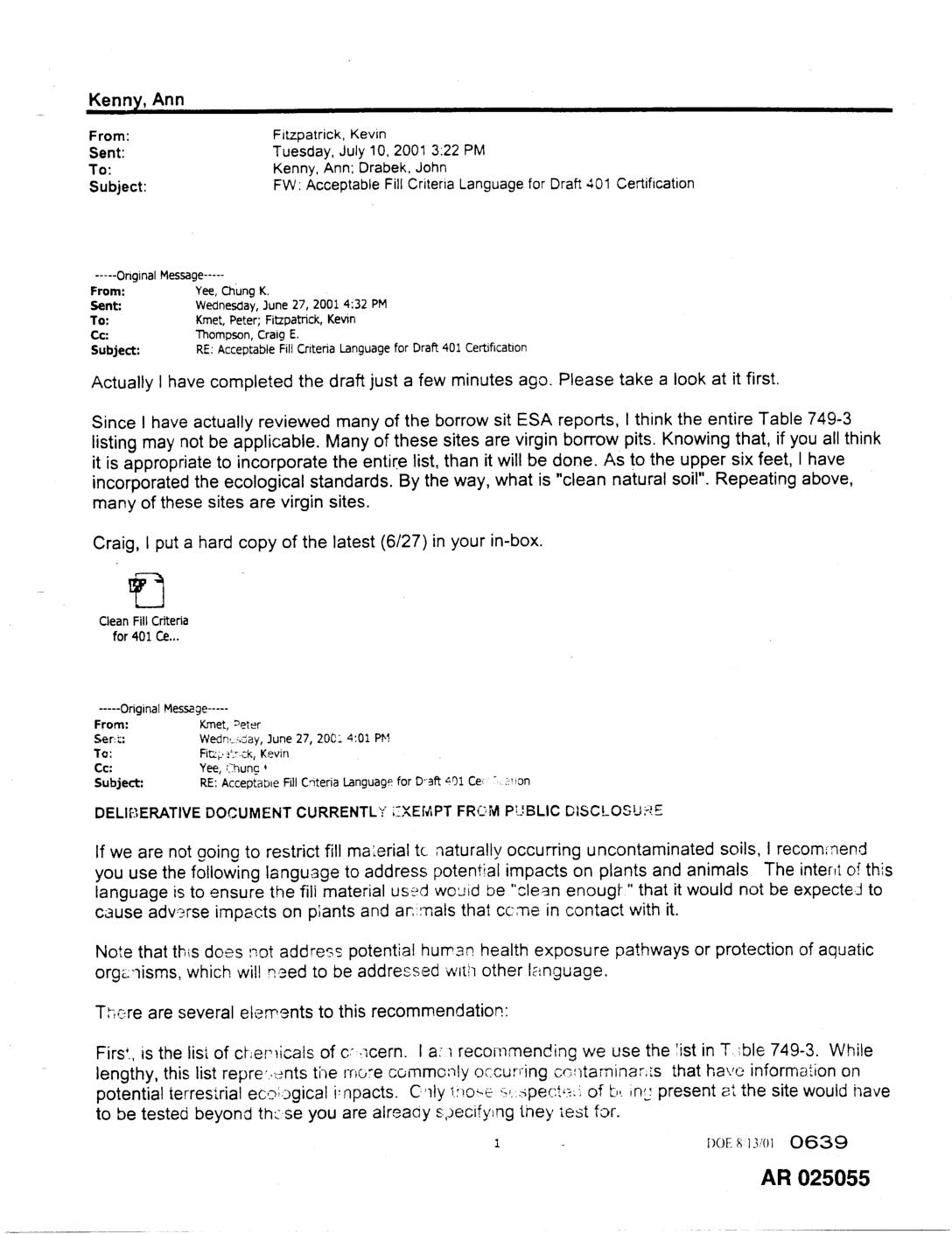
EXH AR025055: Email Chain — Acceptable Fill Criteria Language Draft 401 Certification STIA Third Runway
This document is an email chain from June-July 2001 between Washington State Department of Ecology staff discussing acceptable fill material criteria for the Seattle-Tacoma International Airport Third Runway project. Officials debated whether to restrict fill to naturally occurring uncontaminated soils or to allow other materials subject to contamination testing standards, with recommendations including requiring the top six feet of fill to be clean natural soil and using Table 749-3 screening values to protect plants and animals. The discussion also addressed whether the state's Model Toxics Control Act (MTCA) standards should apply, including requirements for contaminant testing, groundwater monitoring, and terrestrial ecological evaluation.