TagAIP(61)
-
 2021-02-22
Letter to FAA Administrator Dickson on FY21 Sound Insulation Program Report Language
Letter dated February 22, 2021 from Representatives Adam Smith (WA-09) and Katherine Clark (MA-05) to FAA Administrator Stephen Dickson urging swift implementation of the FY21 House Appropriations Report provision on the FAA sound insulation program. The letter addresses Airport Improvement Program (AIP) regulations barring airports from applying for federal funds for the same project more -
 2021-02-22
Letter to FAA Administrator Dickson on FY21 Sound Insulation Program Report Language
Letter dated February 22, 2021 from Representatives Adam Smith (WA-09) and Katherine Clark (MA-05) to FAA Administrator Stephen Dickson urging swift implementation of the FY21 House Appropriations Report provision on the FAA sound insulation program. The letter addresses Airport Improvement Program (AIP) regulations barring airports from applying for federal funds for the same project more -
 2020-12-17
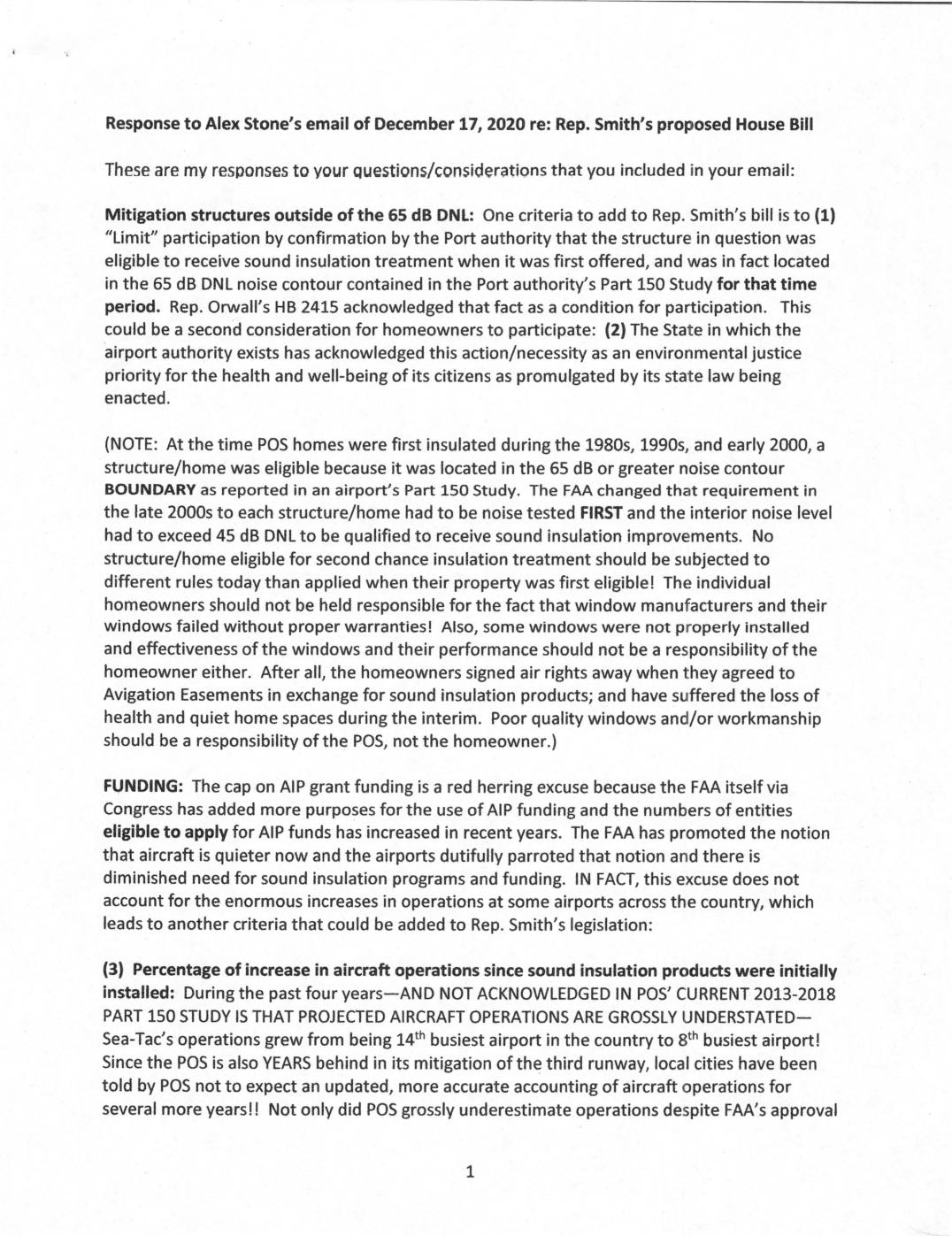
Response to Alex Stone’s email of December 17, 2020 re: Rep. Smith’s proposed House Bill
This document is a detailed response regarding a proposed Washington State house bill on airport sound insulation, arguing that homeowners near Sea-Tac Airport who received faulty or inadequate noise insulation in the 1980s–2000s should qualify for a second round of repairs at no fault of their own. The author contends that poor contractor quality, a bankrupt window manufacturer, and dramatically increased flight operations have left many residents without the noise protection they were promised in exchange for signing away air rights. Key recommendations include limiting eligibility to homes originally certified under the 65 dB DNL noise contour, using certified engineers to assess repair needs, and tying funding criteria to documented increases in aircraft operations over time. -
 2019-09-03
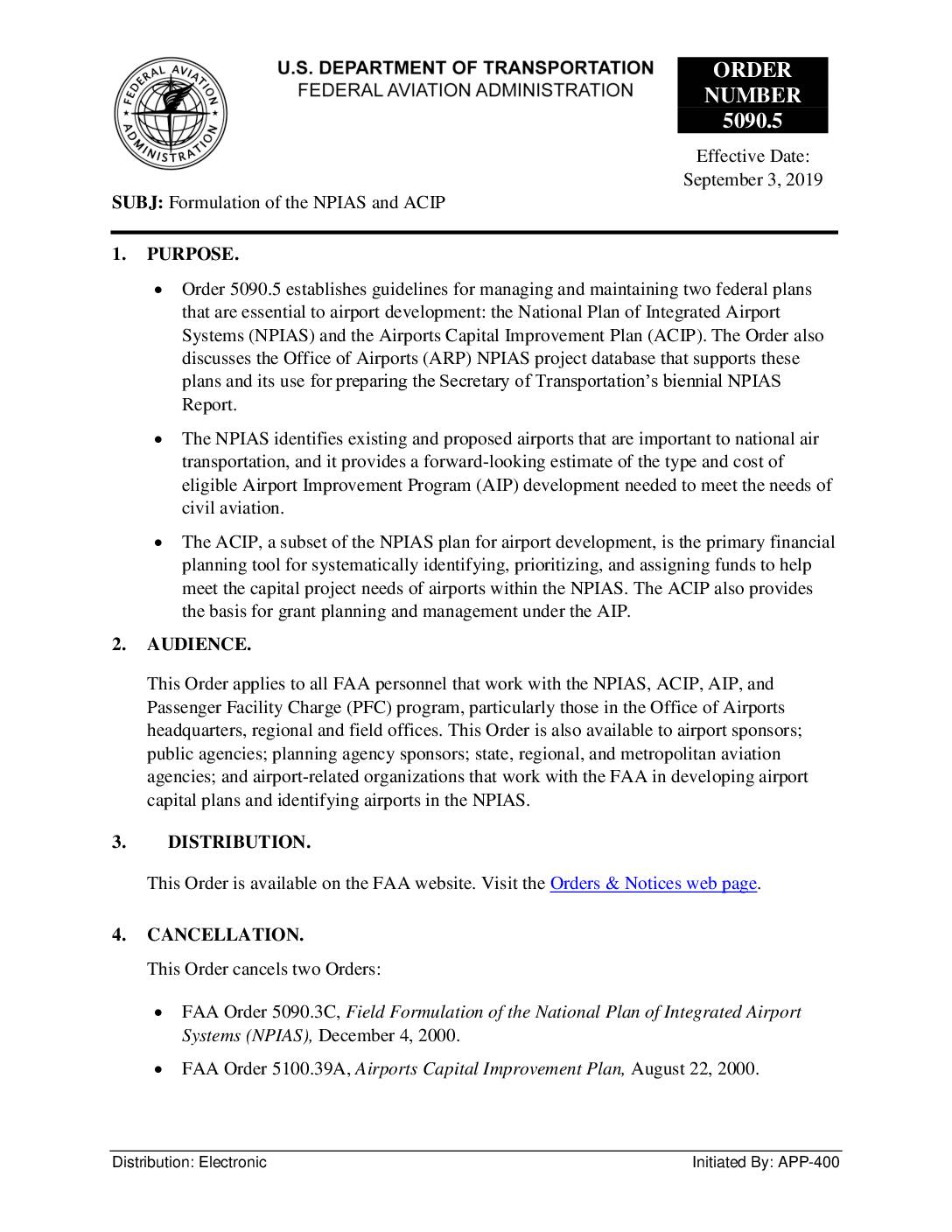
Formulation of the NPIAS and ACIP
FAA Order 5090.5, effective September 3, 2019, establishes guidelines for managing the National Plan of Integrated Airport Systems (NPIAS) and the Airports Capital Improvement Plan (ACIP), which together identify airports important to national air transportation and prioritize federal funding for airport development projects. The order serves as a financial planning tool for systematically assigning Airport Improvement Program (AIP) funds to qualifying airports across the country. Note that this document addresses broad national airport capital planning policy and does not contain specific provisions related to Sea-Tac Airport noise mitigation or local noise policy. -
 2019-06-01
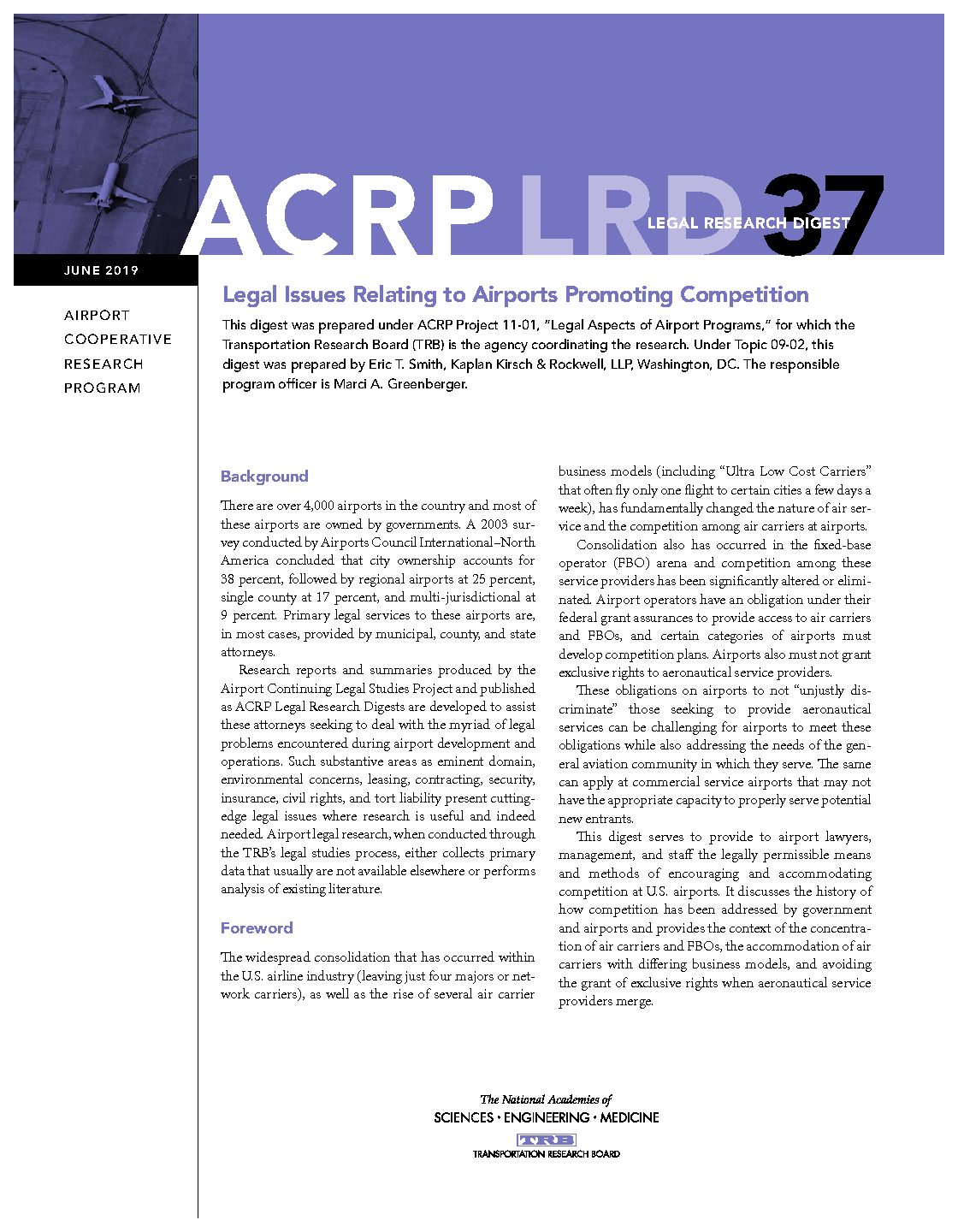
ACRP Legal Research Digest 37: Legal Issues Relating to Airports Promoting Competition
This 2019 legal research digest examines how U.S. airports can legally encourage competition among airlines and fixed-base operators (FBOs) while complying with federal grant requirements. It covers the impact of airline industry consolidation, the rules airports must follow to avoid unfair discrimination or granting exclusive rights, and practical strategies for accommodating carriers with different business models. -
 2019-05-01
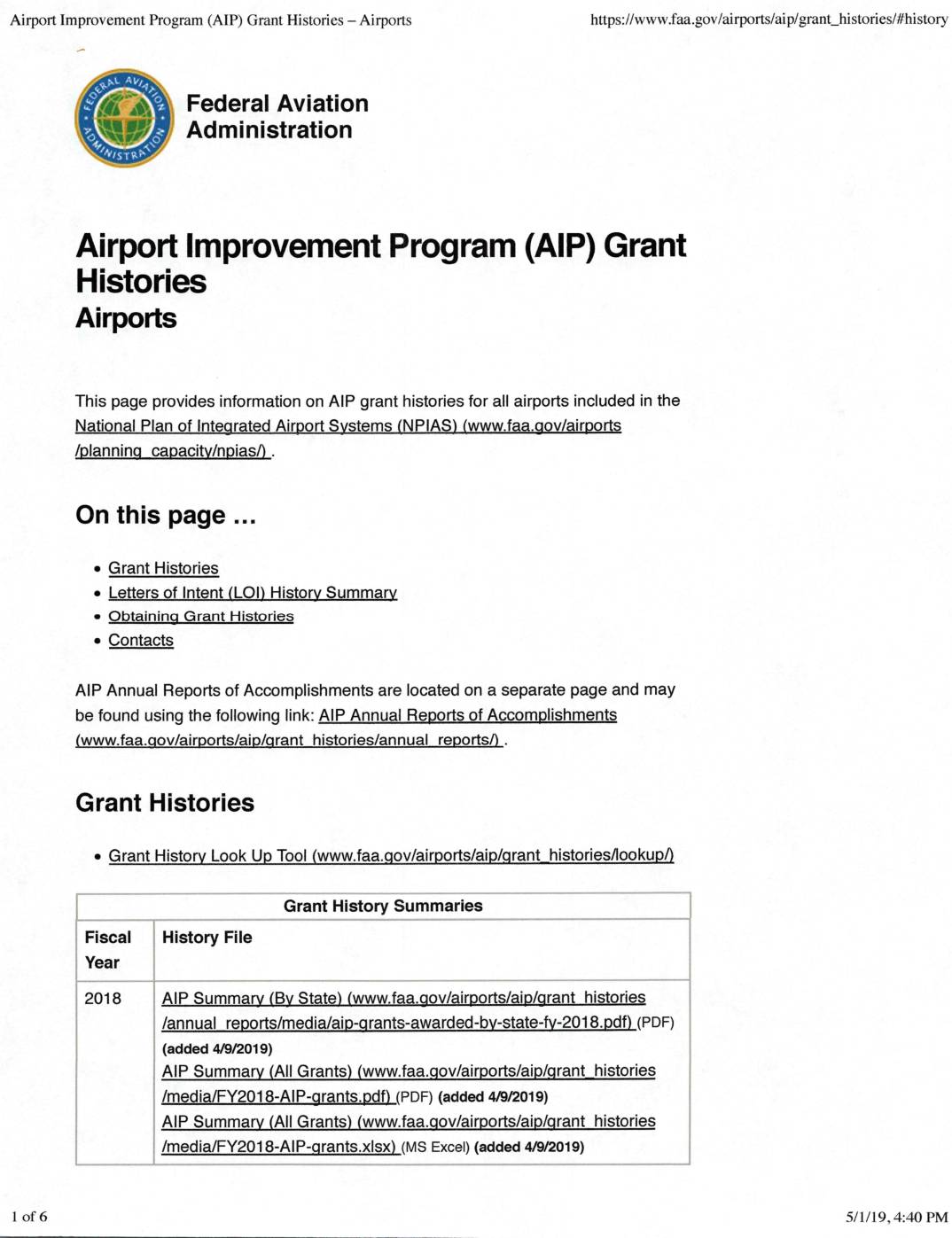
Airport Improvement Program (AIP) grant histories – airports
The FAA's Airport Improvement Program (AIP) Grant Histories page provides access to annual summaries of federal airport grants dating back to 2006, organized by fiscal year and available in both PDF and MS Excel formats. Users can look up grant histories for individual airports included in the National Plan of Integrated Airport Systems (NPIAS) using an online tool. While this resource covers AIP funding across all U.S. airports, it may be referenced when researching federal grants awarded to Seattle-Tacoma International Airport for noise mitigation and other improvement projects. -
Airport Improvement Program
The Airport Improvement Program (AIP) provides grants to public agencies — and, in some cases, to private owners and entities — for the planning and development of public-use airports that are included in the National Plan of Integrated Airport Systems (NPIAS). See the AIP Glossary for a description of AIP-related terms. Grant History Look Up -
Airline Pilots Magazine: Investing On The Ground To Improve Aviation Safety
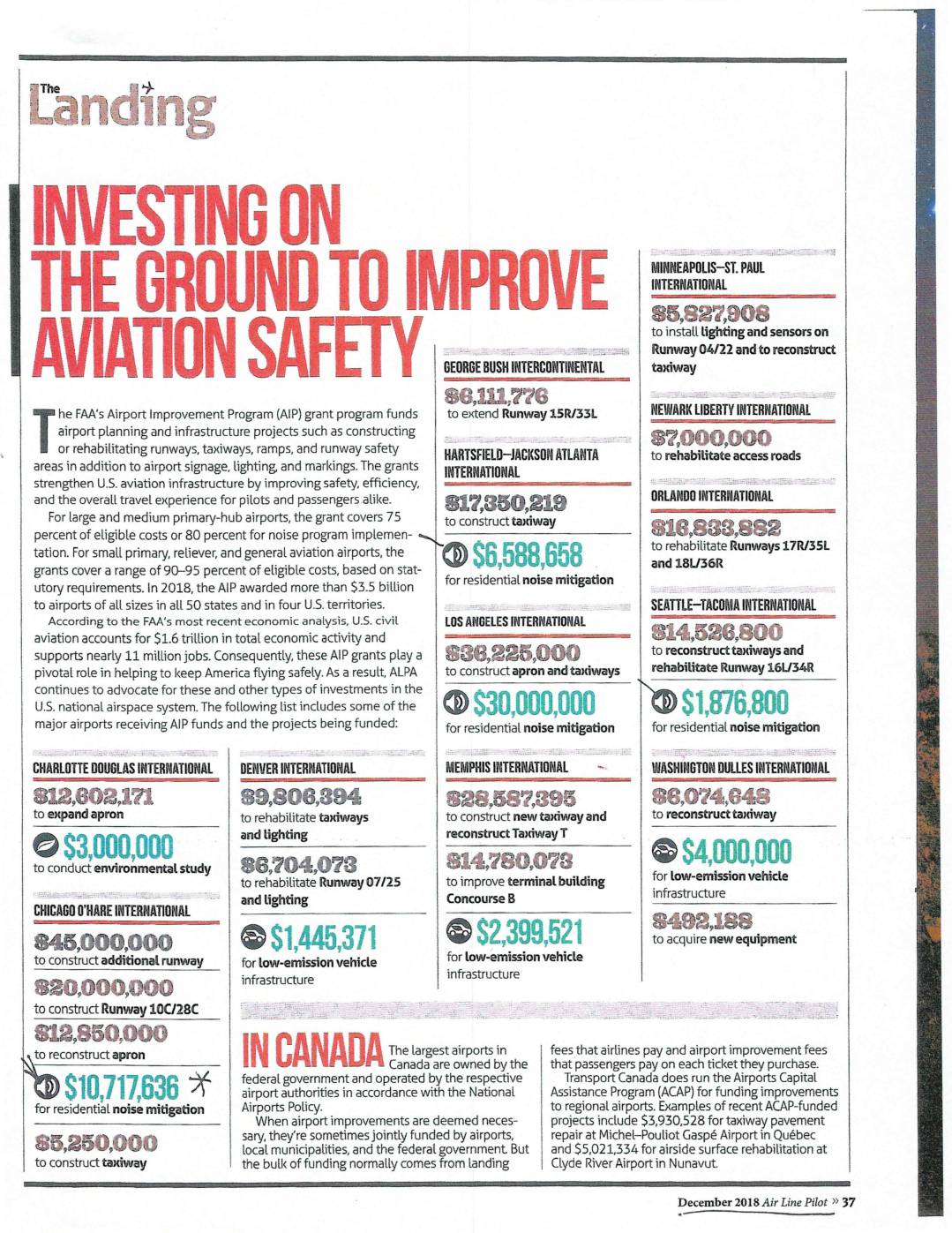
The FAA’s Airport Improvement Program (AIP) provides grants that fund airport planning and infrastructure projects such as constructing or rehabilitating runways, taxiways, ramps, and runway safety areas in addition to airport signage, lighting, and markings. The grants strengthen U.S. aviation infrastructure by improving safety, efficiency, and the overall travel experience for pilots and passengers alike. -
 2018-12-01
Investing on the ground to improve aviation safety
A December 2018 article from Air Line Pilot magazine highlights FAA Airport Improvement Program (AIP) grants awarded to major U.S. airports, including $14,526,800 to Seattle-Tacoma International Airport to reconstruct taxiways and rehabilitate Runway 16L/34R, plus $1,876,800 for residential noise mitigation. The AIP program funds infrastructure projects such as runways, taxiways, signage, and lighting, covering 75–95 percent of eligible costs depending on airport size. In 2018, the program distributed more than $3.5 billion to airports across all 50 states and four U.S. territories. -
 2016-10-11
Airport noise insulation project
This October 2016 Port of Seattle briefing presents the Airport Noise Insulation Project for Sea-Tac Airport, outlining how a federally guided noise study (known as a Part 150) is used to identify noise and land-use conflicts in surrounding communities. The project aims to provide sound insulation to eligible homeowners in high-noise areas, with approved mitigation measures qualifying for 80% federal Airport Improvement Program (AIP) grant funding. The briefing covers project elements, homeowner eligibility requirements, community benefits, and associated costs.