TagKing County Council(46)
-
 1976-09-01
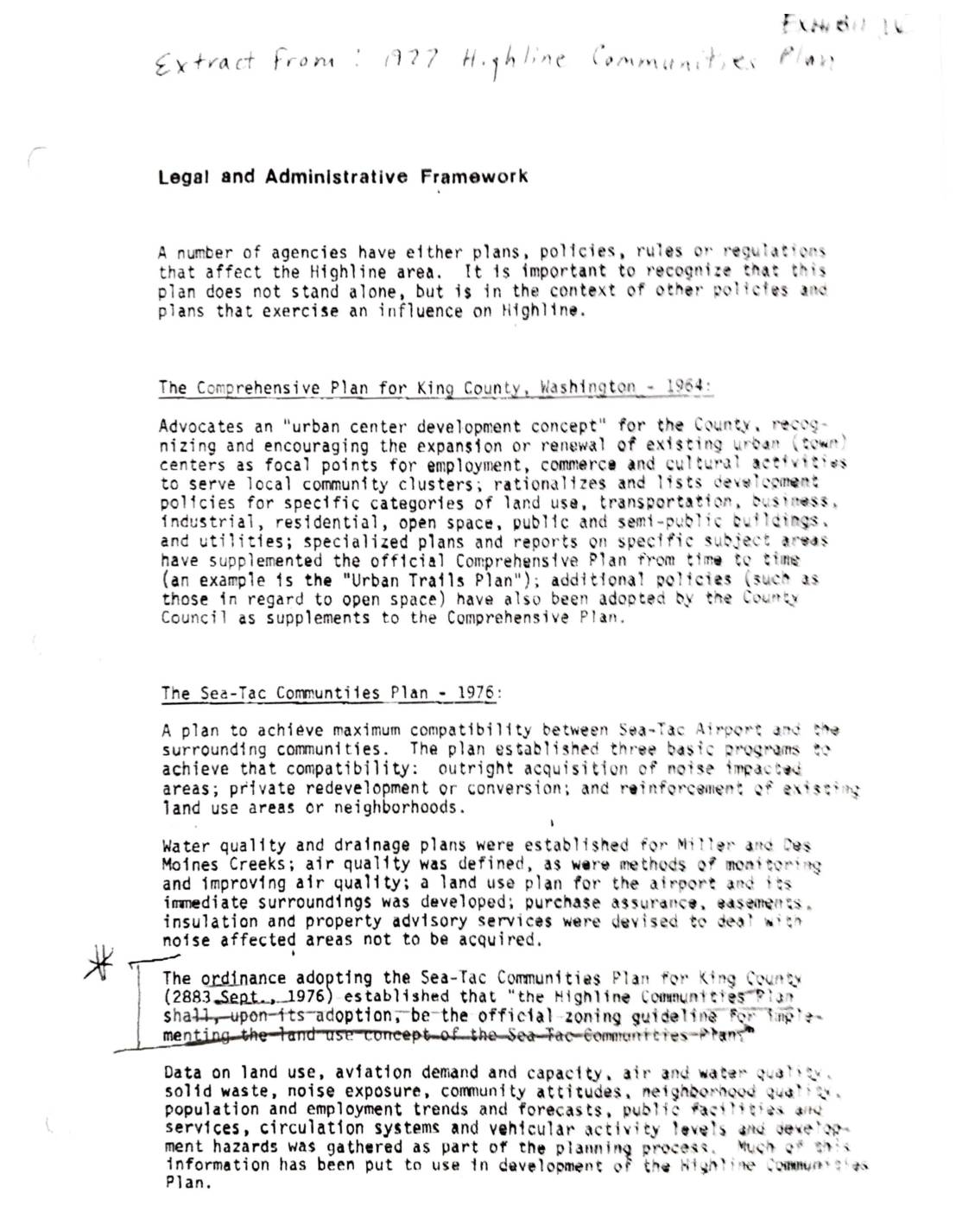
Exhibit 16: Highline Communities Plan — Legal and Administrative Framework, Committee Members, and Forward Thrust Fund Reallocation Request (1976–1977)
This document contains materials from the 1977 Highline Communities Plan, outlining the legal and administrative framework governing the Highline area near Sea-Tac Airport in King County, Washington. It references key planning documents including the 1964 King County Comprehensive Plan and the 1976 Sea-Tac Communities Plan, which sought to balance airport operations with surrounding residential communities through noise mitigation measures such as property acquisition, insulation programs, and land use controls. A 1976 memo from the Highline Communities Plan Committee also requests that Forward Thrust funds not be reallocated until the Highline Communities Plan was formally adopted. -
 1976-03-18
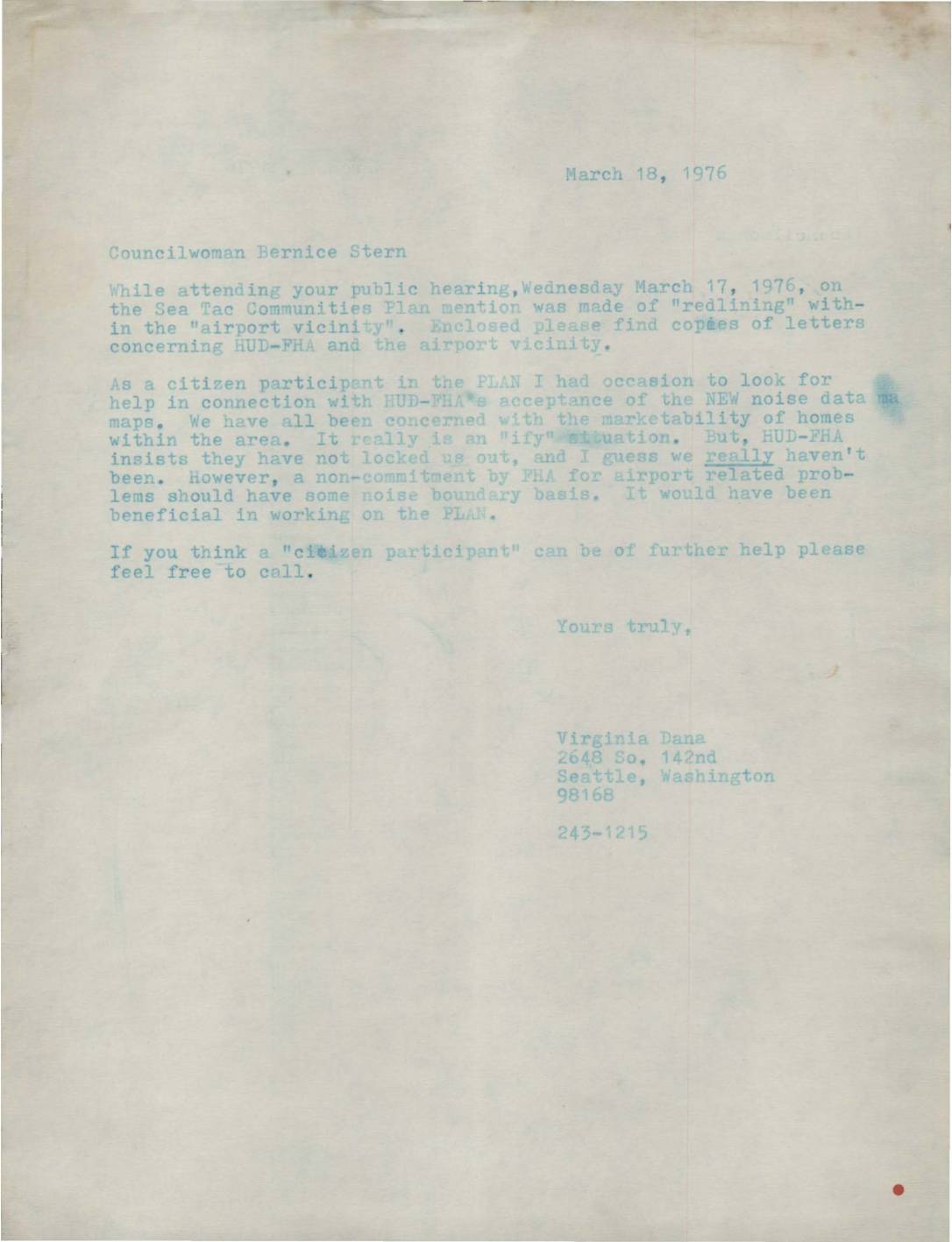
Letter from Virginia Dana to Councilwoman Bernice Stern regarding Sea Tac Communities Plan and redlining
In a March 1976 letter to Councilwoman Bernice Stern, Seattle resident Virginia Dana raises concerns about 'redlining' and FHA mortgage commitments affecting homeowners near Sea-Tac Airport, citing the impact of noise maps and inconsistent land acquisition policies on property marketability. Dana, a citizen participant in the Sea Tac Communities Plan, also submits a statement praising the collaborative community planning effort and urging the Port of Seattle and King County to formally adopt the Plan without delay. She calls for continued monitoring of airport noise programs and stresses that residents who engaged in good faith throughout the process deserve a finalized, implemented plan. -
 1975-05-20
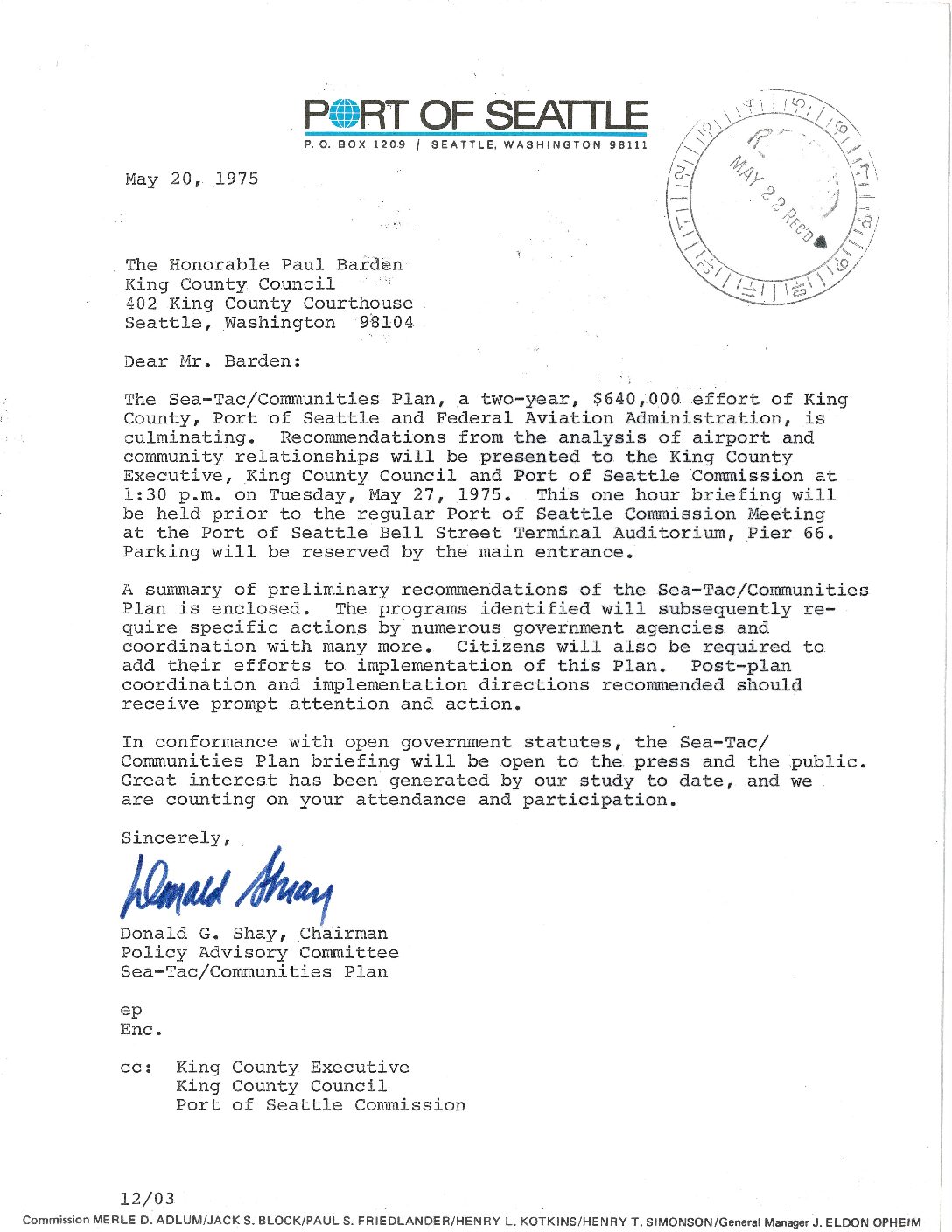
Sea-Tac/Communities Plan briefing invitation and summary of key recommendations
A 1975 letter from the Port of Seattle invites King County Council member Paul Barden to a briefing on the Sea-Tac/Communities Plan, a two-year, $640,000 study examining the relationship between Seattle-Tacoma International Airport and surrounding communities. The accompanying summary outlines key recommendations, including that the Port of Seattle assume primary responsibility for a comprehensive noise remedy program involving property acquisition, noise insulation, and avigation easements, while King County take the lead on land use changes and infrastructure improvements in affected areas. The plan also calls for both agencies to seek changes in federal and state legislation to expand funding and expand the scope of noise abatement programs. -
 1973-10-22
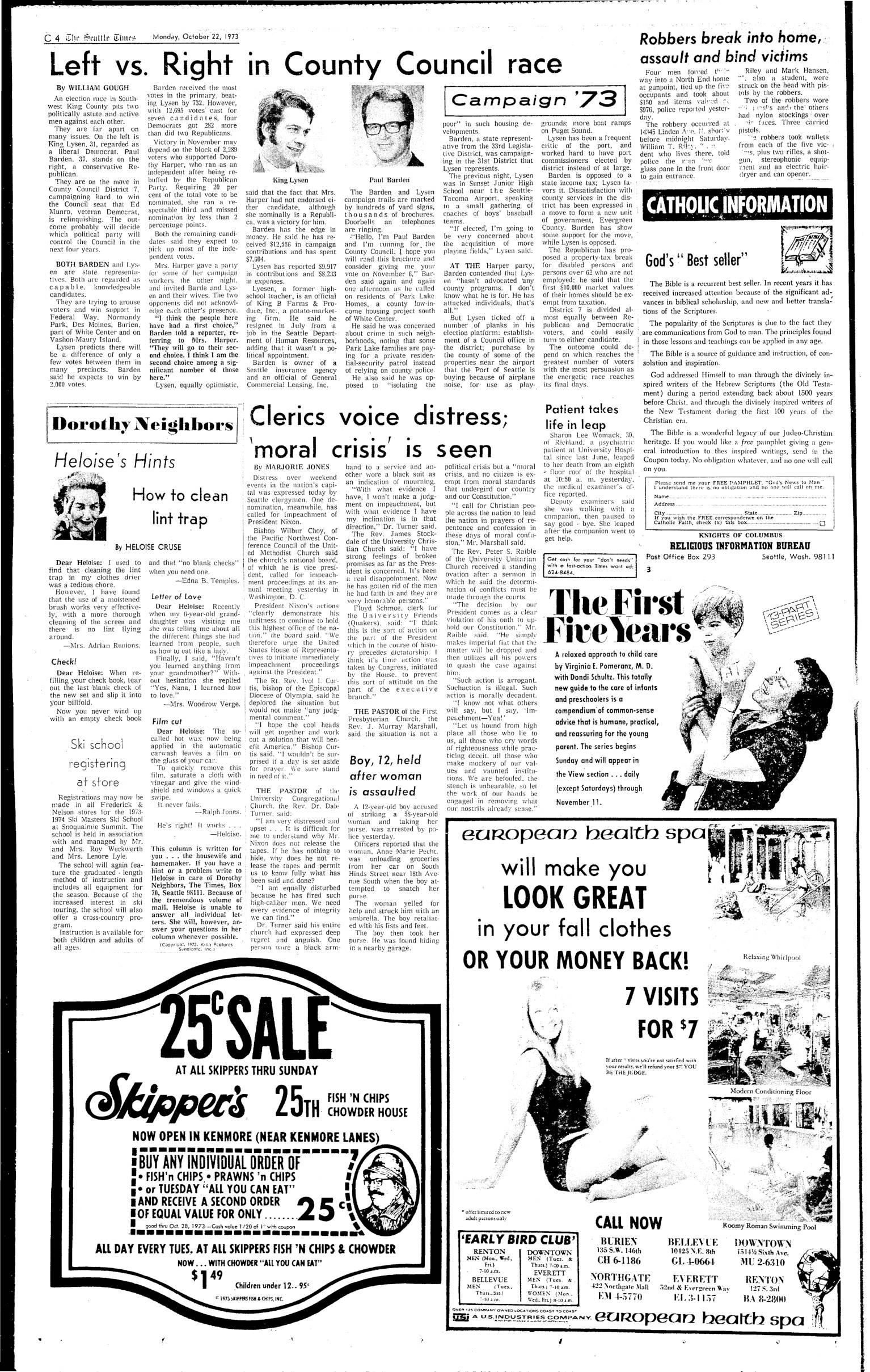
Left vs. Right in County Council race
A 1973 Seattle Times article covers a King County Council race between Democratic incumbent King Lysen and Republican challenger Paul Barden, with both candidates divided on county issues including noise concerns near Seattle-Tacoma Airport. Lysen, representing County Council District 7, expressed concern about residents near the airport and the impact of county policies on property values and noise levels in the Puget Sound region. The race was expected to be closely contested, with the outcome likely to influence county policy on development and noise management near Sea-Tac. -
 1972-11-27
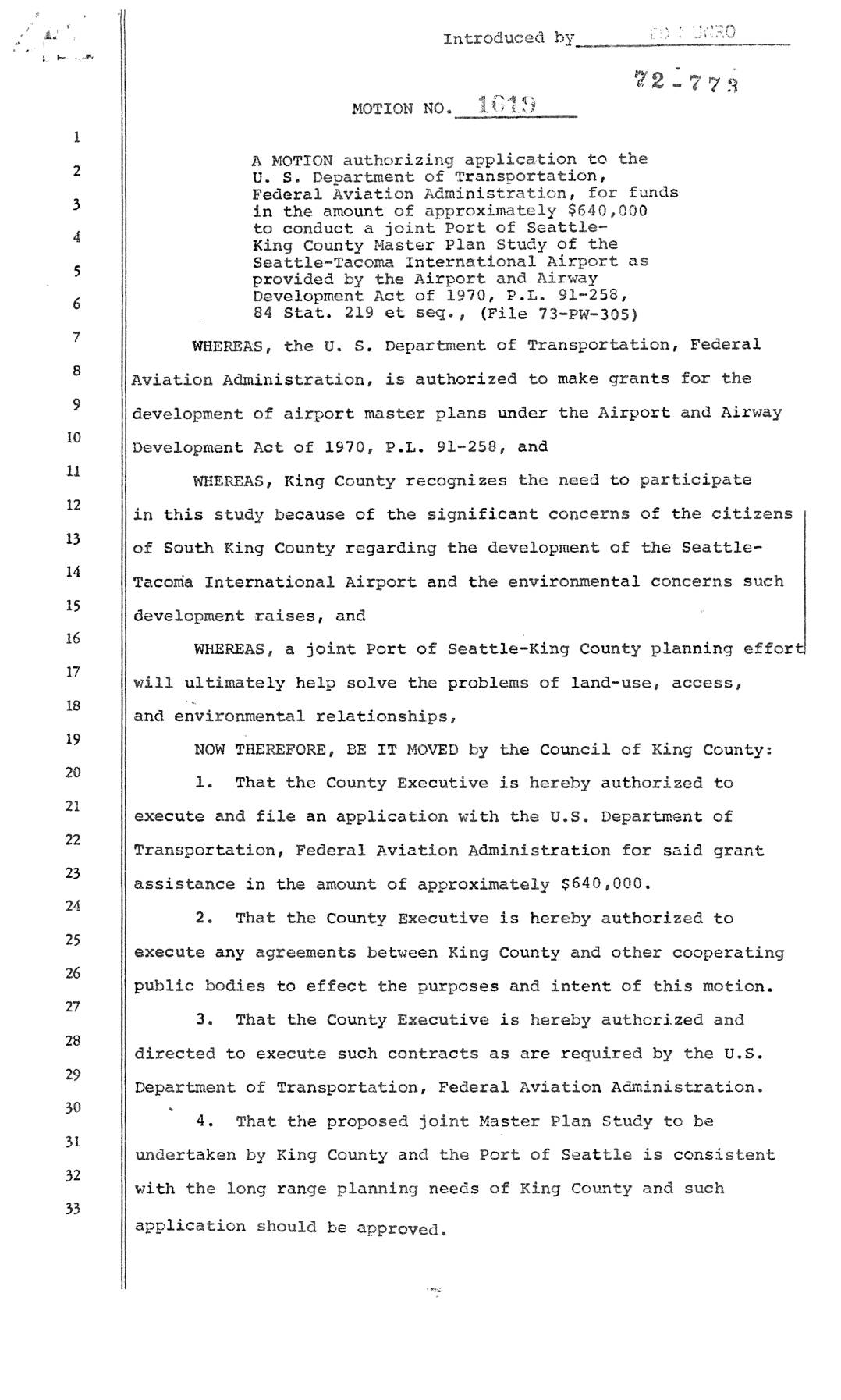
Motion No. 1019: Authorizing Application for Federal Aviation Administration Grant for Joint Port Of Seattle–King County Master Plan Study of Seattle-Tacoma International Airport
In November 1972, the King County Council passed Motion No. 1019, authorizing the County Executive to apply for approximately $640,000 in federal grant funding from the U.S. Department of Transportation's Federal Aviation Administration. The funds were intended to support a joint Port of Seattle–King County Master Plan Study of Seattle-Tacoma International Airport, prompted by citizen concerns in South King County about airport expansion and its environmental impacts. The motion also authorized the County Executive to enter into agreements with other public bodies and execute any contracts required by the FAA to carry out the study. -
 1972-11-06
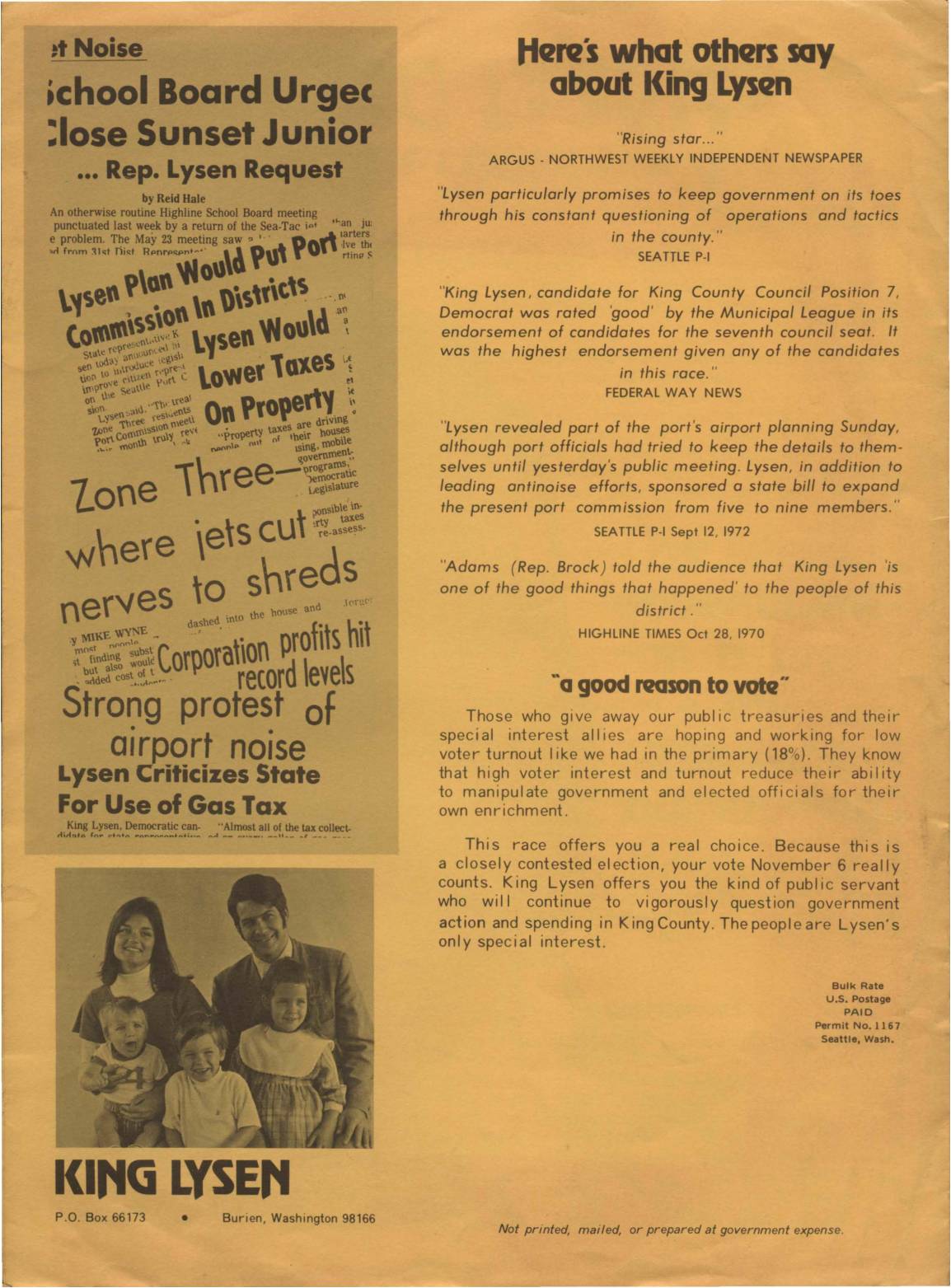
King Lysen for King County Council Position 7 campaign mailer
This is a campaign mailer for King Lysen, a Democratic candidate for King County Council Position 7 in the early 1970s, highlighting his record of challenging government spending and operations in King County, Washington. Lysen was notably active in anti-noise efforts related to Sea-Tac Airport, including revealing port airport planning details to the public and sponsoring a state bill to expand the port commission from five to nine members. The mailer compiles endorsements from outlets such as the Seattle Post-Intelligencer, the Argus, and the Federal Way News, emphasizing his reputation as a government watchdog and advocate for residents affected by airport noise.