Stories
Everything you need to know about airport communities from the front page of STNI. Get it in your inbox by subscribing!
-
 2026-07-15
FAA Approval of Noise Compatibility Program 14 CFR Part 150 Dane County Regional Airport, Madison, Wisconsin
Department of Transportation Federal Aviation Administration Federal Aviation Administration, DOT. Notice. The Federal Aviation Administration (FAA) announces its findings on the noise compatibility program submitted by the Dane County for Dane County Regional Airport (MSN). On December 21, 2023, the FAA determined that the noise exposure maps (NEMs) submitted by Dane County were in -
2026-07-15
Port Commission Meeting July 14, 2026 Postgame
Asking for Airport 101. Or at least, another 30 days. Highlights of today’s meeting agenda were the introduction of the budget calendar, our request for a 30 day extension to the SAMP NTP DEIS Public Comment Period, and the latest (but surely most entertaining) problem with the International Arrivals Facility. Public Comment began with a -
 2026-07-14
Airport Growth Community Open House
Presentation Slides Comment Extension Period Presentation Slides As Sea-Tac International Airport continues to grow, Burien, Des Moines, and SeaTac are working together to advocate for a more collaborative approach to airport expansion planning — one that fully considers the health, environmental, transportation, and quality-of-life impacts on neighboring communities. Join us at a Community Open House on Tuesday, July -
 2026-07-11
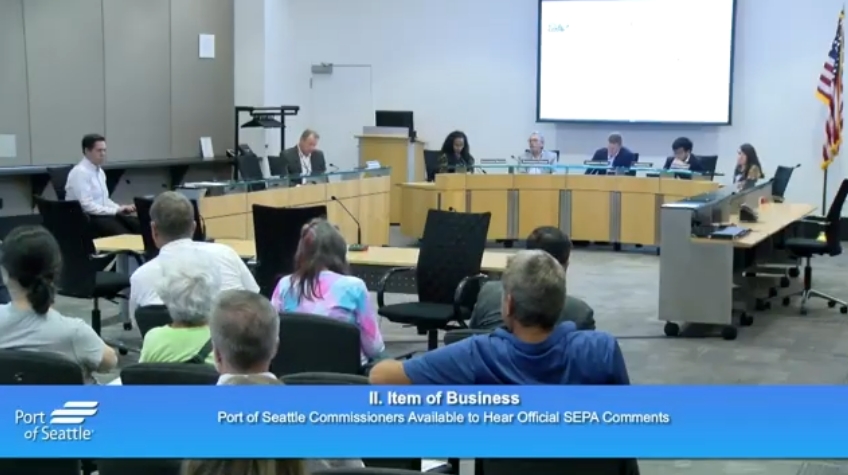
Port of Seattle Commission Meeting July 9, 2026 Postgame
SAMP NTP DEIS Listening Session The Commission convened a special meeting in response to community concerns regarding the SAMP Near-Term Projects Draft Environmental Impact Statement. The idea seems to have originated as demand for a public hearing to review the draft under state law. The Port responded positively but without specifying a format. STNI wrote -
 2026-07-08
Ep #37 Dear City Managers
What if the solution to decades of airport noise and community impacts has been hiding in plain sight all along? In this open letter to city managers across airport communities, we revisit a landmark yet largely forgotten document: the Sea-Tac Communities Plan of 1976. Built on the Port of Seattle's promise — *"As we do better, you'll do better"* — this collaborative plan was supposed to be the long-term answer for neighborhoods living under the flight path. So why has it been reduced to little more than an expensive property buyout program? The answer reveals a critical gap that neither elected officials nor community advocates can fill alone. Real, lasting solutions require sustained professional commitment to airport community planning — something that should have been established 50 years ago. If you work in city management, this episode speaks directly to you and the unique role only you can play in finally delivering on that broken promise. -
 2026-06-30
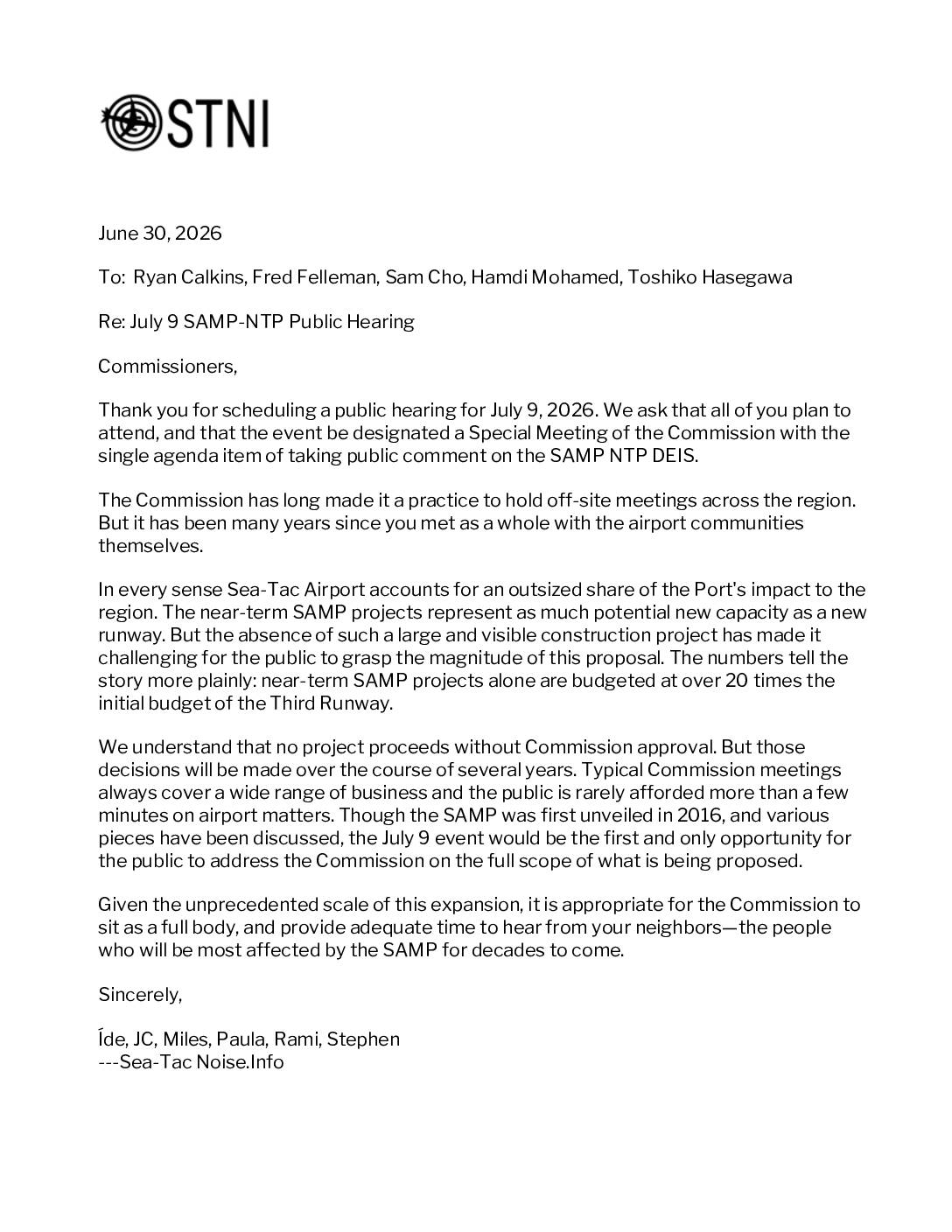
A letter to the Port of Seattle Commission – make July 9 a special meeting
Port staff have said there will be some form of listening session at the airport on July 9, in the same room that Port Commission meetings are held, and recorded, as are all Commission meetings. But thus far there has been no confirmation that any of the Commissioners will be in attendance. We sent this -
2026-06-28
Ep #36 Orphans
**Discover why environmental progress stalled for airport communities while cars got cleaner** Ever wonder why your car's emissions have dramatically improved over decades, but aviation seems stuck in the past? In this eye-opening episode of The Airport Communities Podcast, we explore the fascinating tale of two environmental paths that diverged after 1970. While Washington Senator Scoop Jackson spearheaded NEPA—one of the largest expansions of environmental policy in American history—and California secured game-changing carve-outs in the Clean Air Act that led to massive air quality improvements, aviation somehow got left behind. Despite Boeing being headquartered in Washington, aviation environmental standards never caught up. UW Meteorologist Cliff Mass delivers some stark perspective: those two annual flights to Europe generate more greenhouse gases than most people produce in their entire homes over a year. Meanwhile, Boeing's monopoly status has eliminated market incentives for cleaner technology. This wasn't an oversight—it was intentional. Today, every airport community continues paying the price for decisions made decades ago that exempted aviation from automotive-level engineering standards. -
 2026-06-23
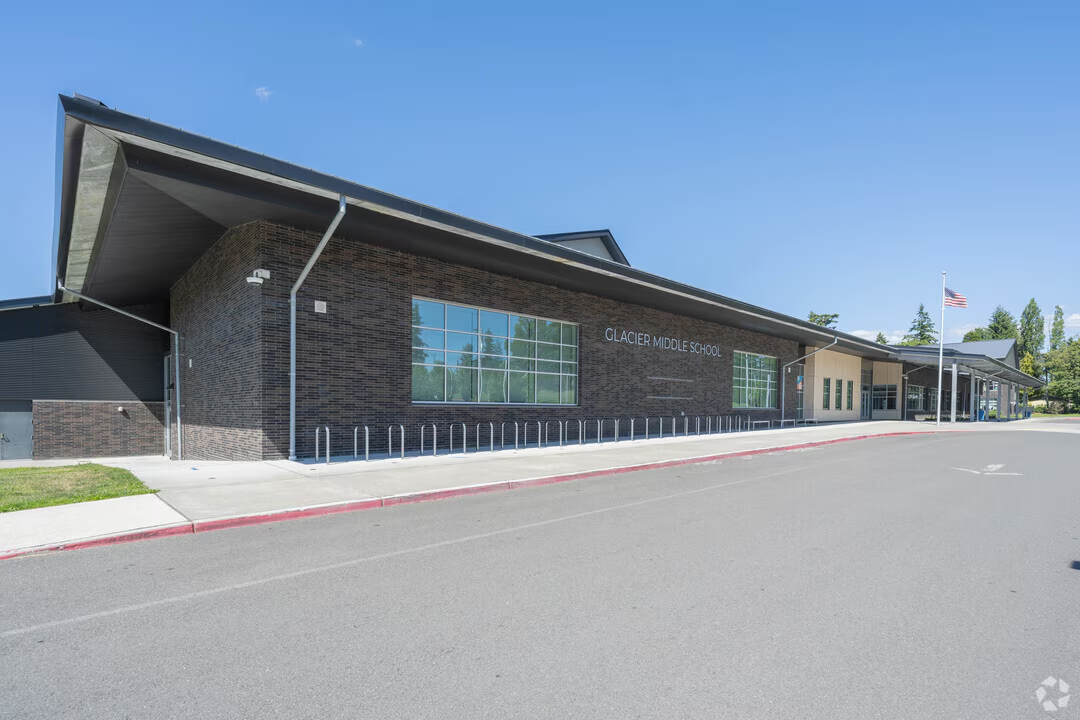
Port of Seattle Glacier Middle School Open House
Attending a Port of Seattle open house can feel like going through the motions — and that's exactly the point. After visiting the first of four SAMP open houses at Glacier Middle School, we're giving you an honest preview of what to expect: low turnout, recycled poster boards, and out-of-town consultants who fly in, answer questions, and fly right back out. But here's what matters most: if you're frustrated about airport expansion, noise, and public health impacts, you're likely directing your anger at the wrong people. Port staff don't set policy. The real accountability gap lies with your elected officials — city councilmembers and Port Commissioners — who have had decades to monitor and respond to expansion plans that were effectively decided before the Third Runway even opened. We'll tell you exactly who deserves your attention, why these open houses primarily serve the Port's FAA checkbox requirements, and what a more effective strategy for community advocacy actually looks like. -
2026-06-17
Burien City Council Meeting June 15, 2026
No experts in the room Port government relations manager Dave Kaplan gave the city council background on the SAMP SEPA/EIS process and then took some sharp questions. He would be the first to say that he is not an airport expert. He is paid to take flack for the Empire. But he said some things -
2026-06-14
Ep #35 Emergency! Try something different… (Part 1/3 Keep Sleepy Time Sacred!)
As the 2026 Sustainable Airport Master Plan public comment period moves ahead, focus more on the worst aspects of opens, activists face the same challenges tackled in 2018, but with less preparation and smaller budgets. Rather than drowning in thousands of SAMP pages, this episode reveals a powerful shortcut: use the extensive work already completed by hundreds of concerned residents and professionals. This isn't just about avoiding wheel reinvention; it's about standing on the shoulders of previous advocates to make stronger, more informed public comments that actually address systemic community impacts.