TagWashington Aviation System Plan(25)
-
 2009-07-01
Washington Aviation System Plan, Chapter 4: Regional Activity
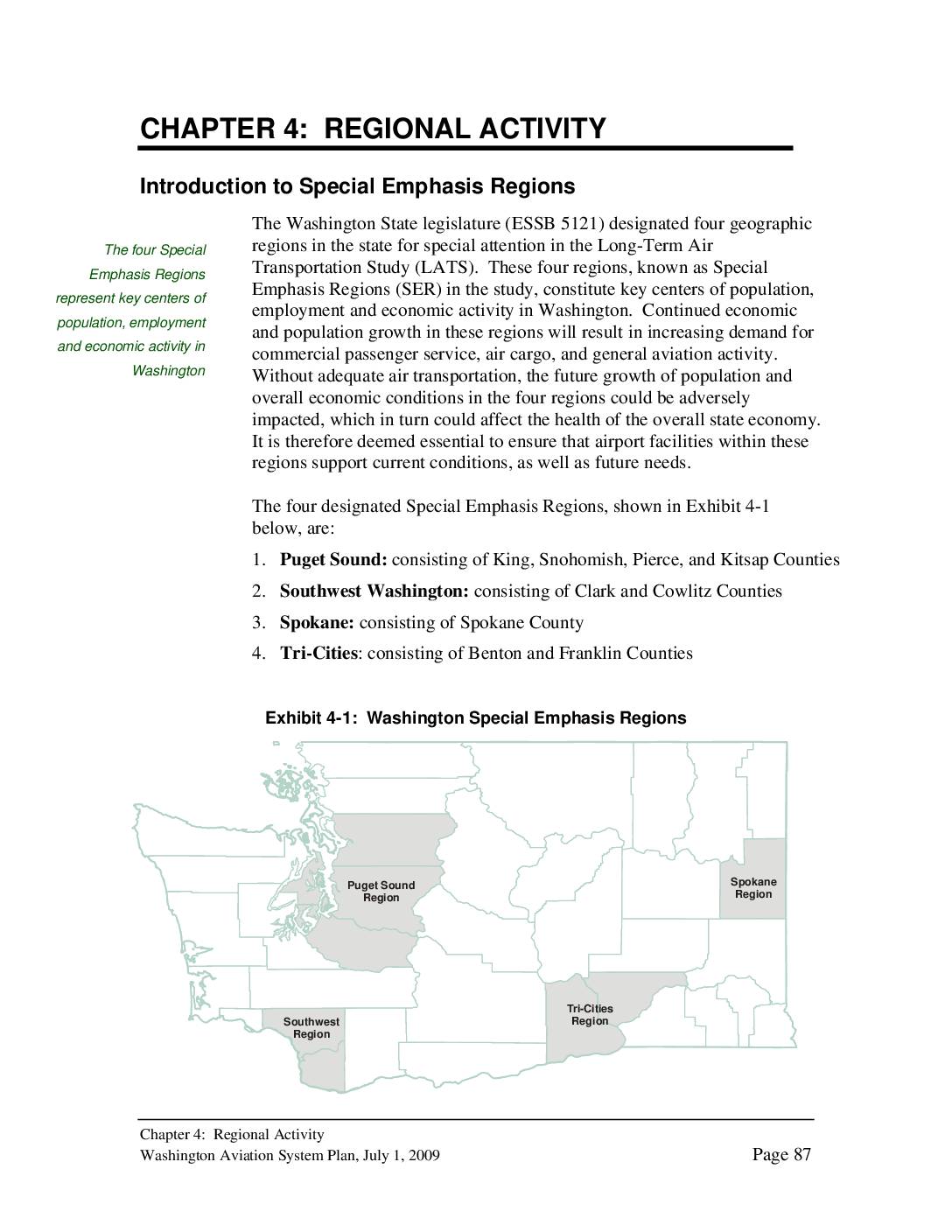
The Washington Aviation System Plan identifies four Special Emphasis Regions in the state, with the Puget Sound region — encompassing King, Snohomish, Pierce, and Kitsap Counties — standing out as the busiest aviation area. The region is home to Seattle-Tacoma International Airport, the state's primary commercial airport, along with 27 other public-use airports serving commercial, general aviation, and seaplane operations. As of 2005, the Puget Sound region housed approximately 55 percent of Washington's total population, driving significant demand for air service and making adequate airport capacity a key economic priority. -
 2009-07-01
Chapter 5: Aviation Trends — Washington Aviation System Plan
This chapter from Washington State's 2009 Aviation System Plan examines commercial aviation trends affecting the state's airports, set against a turbulent national backdrop. U.S. major airlines suffered $27 billion in cumulative operating losses between 2001 and 2005 due to post-9/11 demand drops, soaring fuel costs, and intense competition from low-cost carriers, before returning to profitability in 2006. In response, legacy carriers restructured costs, reduced domestic capacity, and leaned more heavily on regional airline partners, contributing to rising passenger load factors across the industry. -
 2009-07-01
Washington Aviation System Plan: Chapter 6: System Performance
The Washington Aviation System Plan outlines performance objectives for public-use airports across Washington State, covering operational standards such as pavement condition, runway safety areas, and obstacle clearance. Airports are evaluated against these goals based on their classification level, ranging from Commercial Service to Seaplane Bases, with requirements tailored to each category's role and facilities. All airports, regardless of classification, are expected to maintain up-to-date planning documents and land use compatibility protections to ensure long-term safety and viability. -
 2009-07-01
Washington Aviation System Plan, Chapter 7: Activity Forecast
This 2009 Washington Aviation System Plan chapter presents long-term forecasts of passenger traffic at Washington State airports through 2030, with Sea-Tac projected to grow from roughly 14.6 million to 26.6 million enplanements—an 82% increase. Sea-Tac is expected to continue dominating statewide air travel, accounting for 85% of all passenger enplanements in 2030. The forecasts were developed to help the state and FAA identify future capacity constraints and plan necessary airport infrastructure improvements. -
 2005-10-21
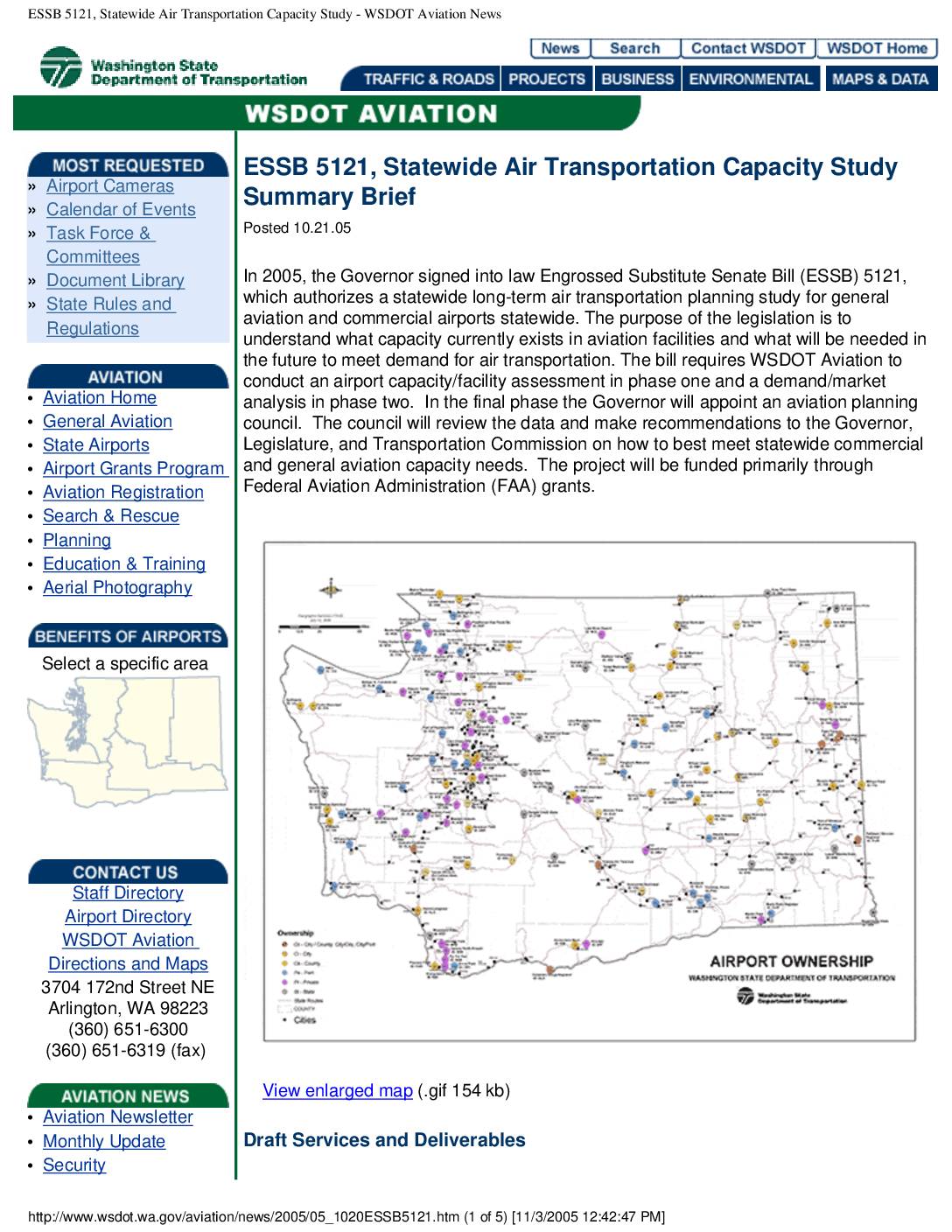
ESSB 5121, Statewide air transportation capacity study summary brief
In 2005, Washington State passed ESSB 5121, directing the Washington State Department of Transportation (WSDOT) to conduct a multi-phase statewide air transportation capacity study covering both commercial and general aviation airports. The study required an assessment of existing airport facilities and capacity (Phase 1, due July 2006), followed by a 25-year demand and market forecast analysis with focused attention on the Puget Sound region (Phase 2, due July 2007). A 10-member Governor-appointed aviation planning council would then review the findings and make recommendations on how to meet the state's long-term aviation capacity needs, including identifying sites for future airport facilities.