TagThird Runway(1084)
-
 1999-02-23
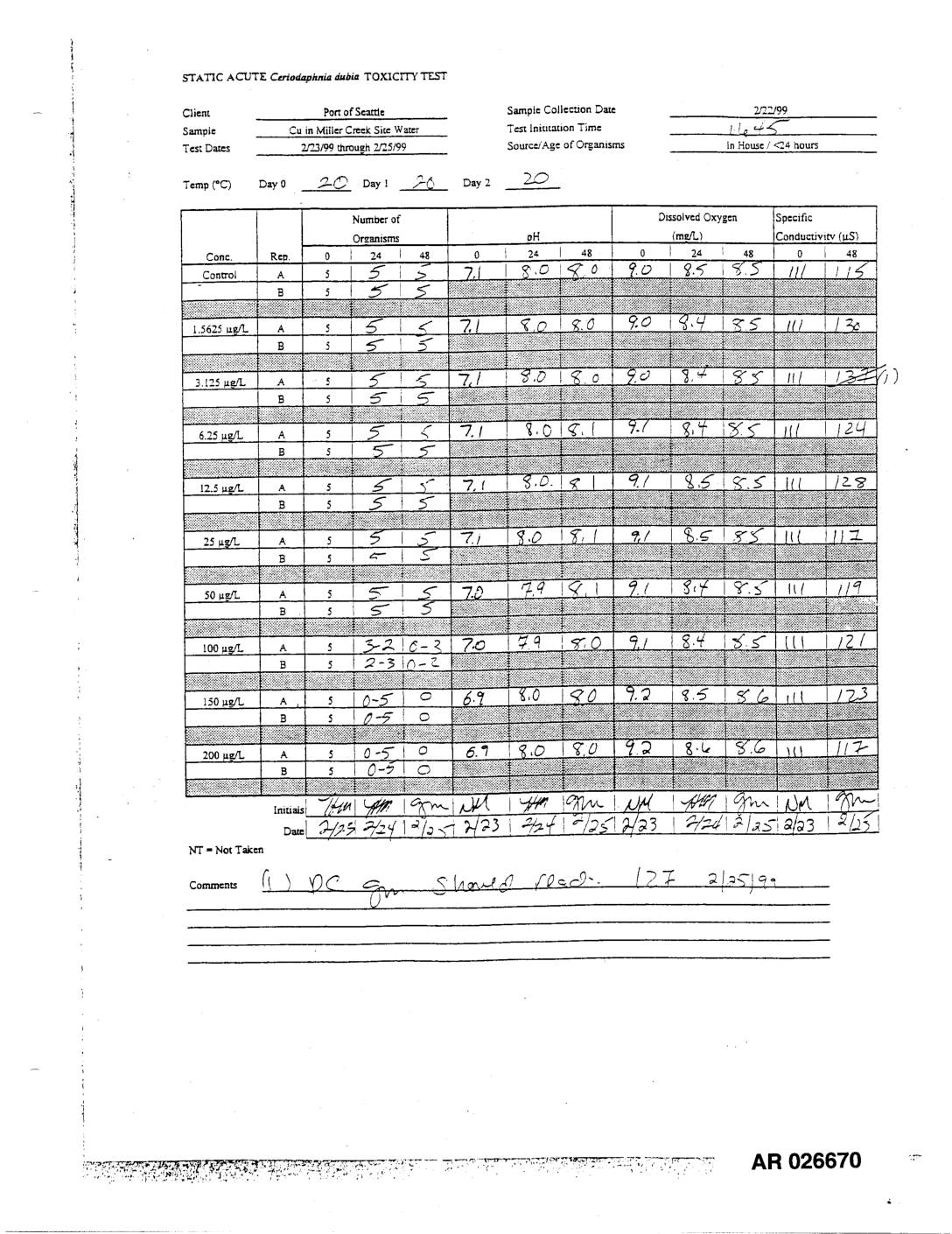
EXH AR026670: Static Acute Ceriodaphnia dubia Toxicity Test — Cu, Miller Creek Site Water, Feb 1999
This document presents results from a 48-hour acute toxicity test conducted in February 1999 for the Port of Seattle, exposing water fleas (Ceriodaphnia dubia) to copper-contaminated water collected from Miller Creek. The test found that all organisms survived at concentrations up to 50 micrograms per liter, while complete mortality occurred at concentrations of 100 micrograms per liter and above. Water quality parameters including pH, dissolved oxygen, and specific conductivity were monitored throughout the test period. -
 1999-02-16
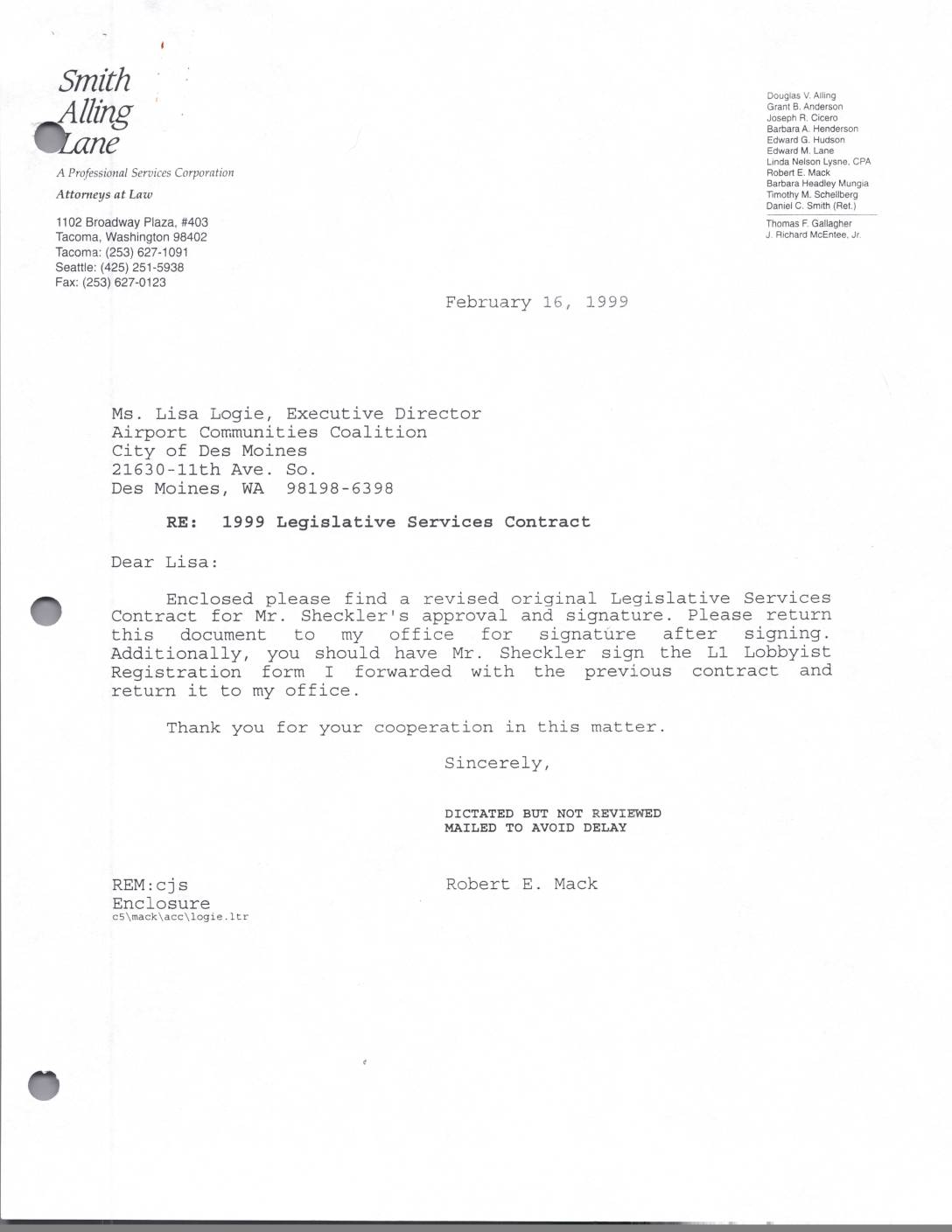
1999 Legislative Services Contract: ACC and Smith Alling Lane
Cover letter dated February 16, 1999 from Robert E. Mack of Smith Alling Lane P.S. (Tacoma, WA) to Lisa Logie, Executive Director of the Airport Communities Coalition (ACC), transmitting a revised 1999 Legislative Services Contract for signature by Robert Sheckler, Chair of the ACC Executive Committee, along with an L1 Lobbyist Registration form. The contract, -
 1999-01-14
EXH AR024885: Water Quality Datalog 55-2912-01(61) Miller DS Field Measurements & Flow Weighting Calc, Jan 14 1999
These are field records from a water quality sampling event conducted on January 14, 1999, at the Miller DS site near McD NC, documenting storm water measurements taken from a culvert. Samplers recorded water levels, flow rates, pH, temperature, and dissolved oxygen at 12 intervals throughout the morning. A flow-weighting calculation worksheet was used to determine subsample volumes, with a total storm flow of 122,400 units recorded from a 4x4.3 pipe. -
 1999-01-08
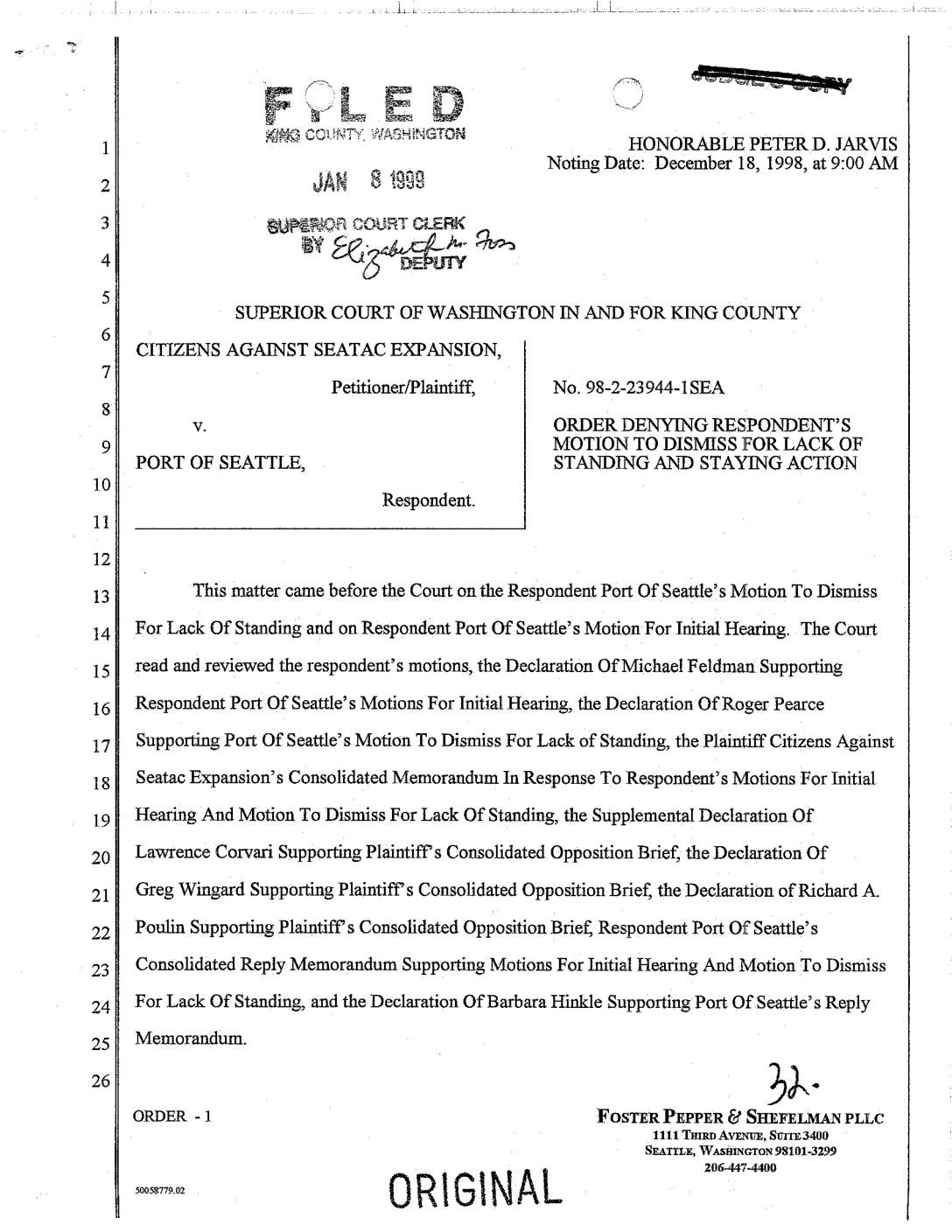
Order Denying Respondent Port Of Seattle’s Motion to Dismiss for Lack of Standing and Staying Action
In January 1999, the King County Superior Court denied the Port of Seattle's motion to dismiss a lawsuit brought by Citizens Against SeaTac Expansion, ruling that a potential injury from wetland filling near the airport could not be ruled out. The case centered on the Port's plan to fill wetlands in Auburn as part of its Master Plan Update, which included construction of a proposed third air carrier runway at Seattle-Tacoma International Airport. The court stayed all further proceedings until the U.S. Army Corps of Engineers issued a final decision on the Port's wetland-filling permit under Section 404 of the Clean Water Act. -
 1999-01-06
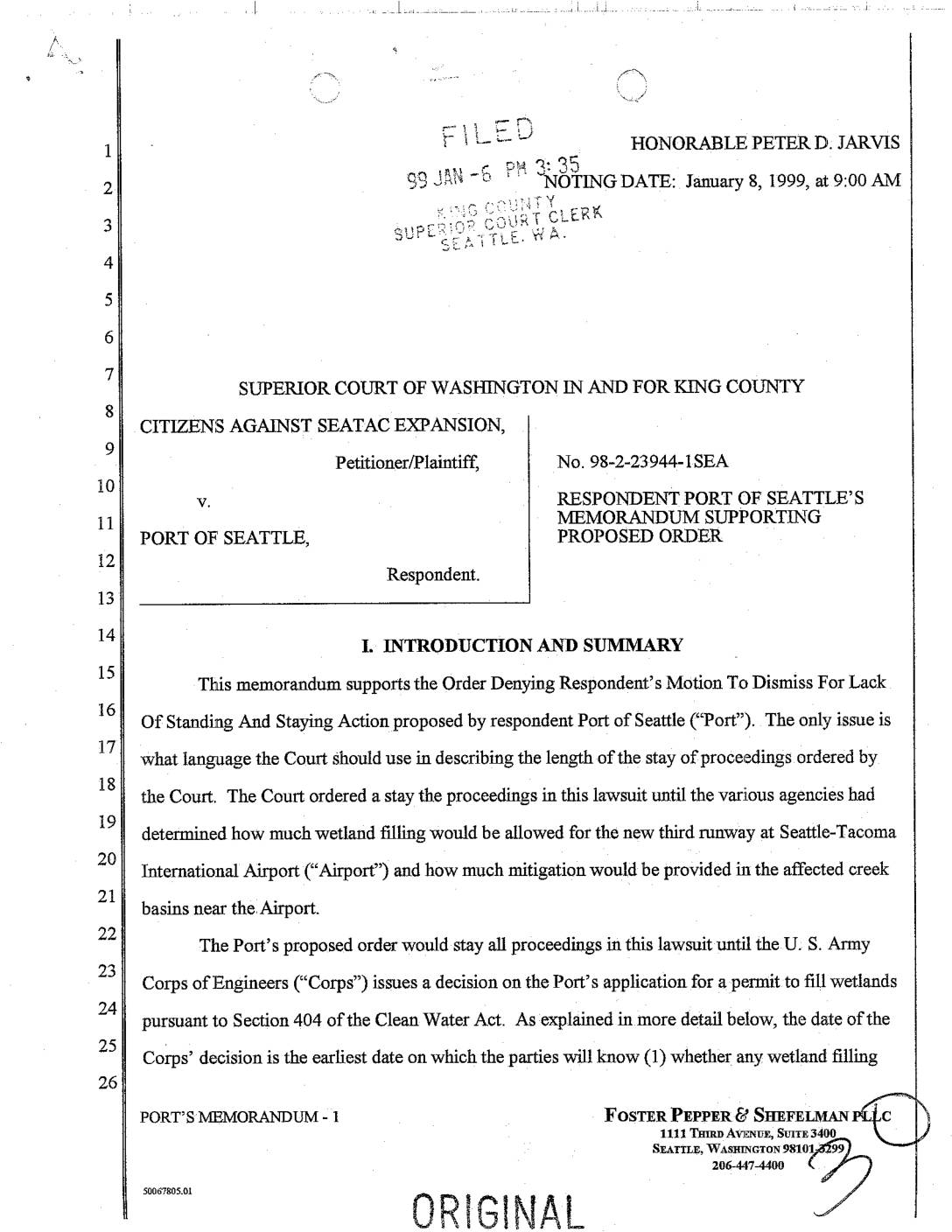
Port Of Seattle’s Memorandum Supporting Proposed Order: CASE v. Port Of Seattle (No. 98-2-23944-1 SEA)
In January 1999, the Port of Seattle filed a legal memorandum in King County Superior Court supporting a proposed order to stay (pause) a lawsuit brought by Citizens Against SeaTac Expansion (CASE) regarding the expansion of Seattle-Tacoma International Airport. The central dispute concerned the construction of a proposed third runway and the filling of nearby wetlands, with the Port arguing that court proceedings should be paused until the U.S. Army Corps of Engineers issued a final decision on the Port's wetland-fill permit under Section 404 of the Clean Water Act. The two parties disagreed on the exact language defining how long the stay should last, with the Port seeking a clear end date tied to the Corps' permit decision and CASE proposing broader conditions related to Port environmental decisions. -
 1999-01-05
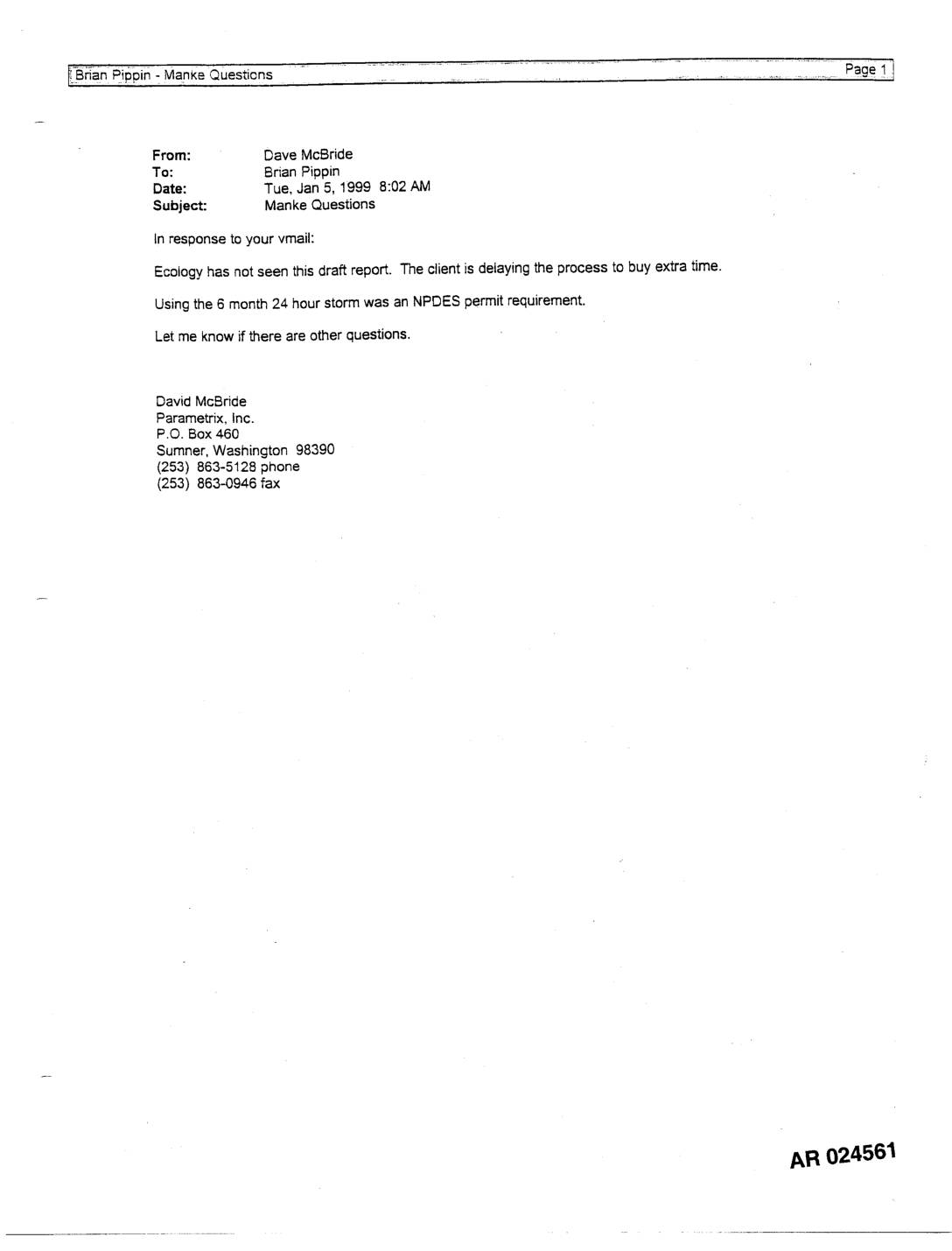
EXH AR024561: Email McBride to Pippin – Manke Questions
In this January 1999 email, Dave McBride of Parametrix, Inc. responds to questions from Brian Pippin about the Manke project, clarifying that the Washington State Department of Ecology had not yet reviewed the draft report and that the client was intentionally delaying the process to gain more time. He also notes that the use of a 6-month, 24-hour storm standard was a requirement of the NPDES permit. -
 1999-01-01
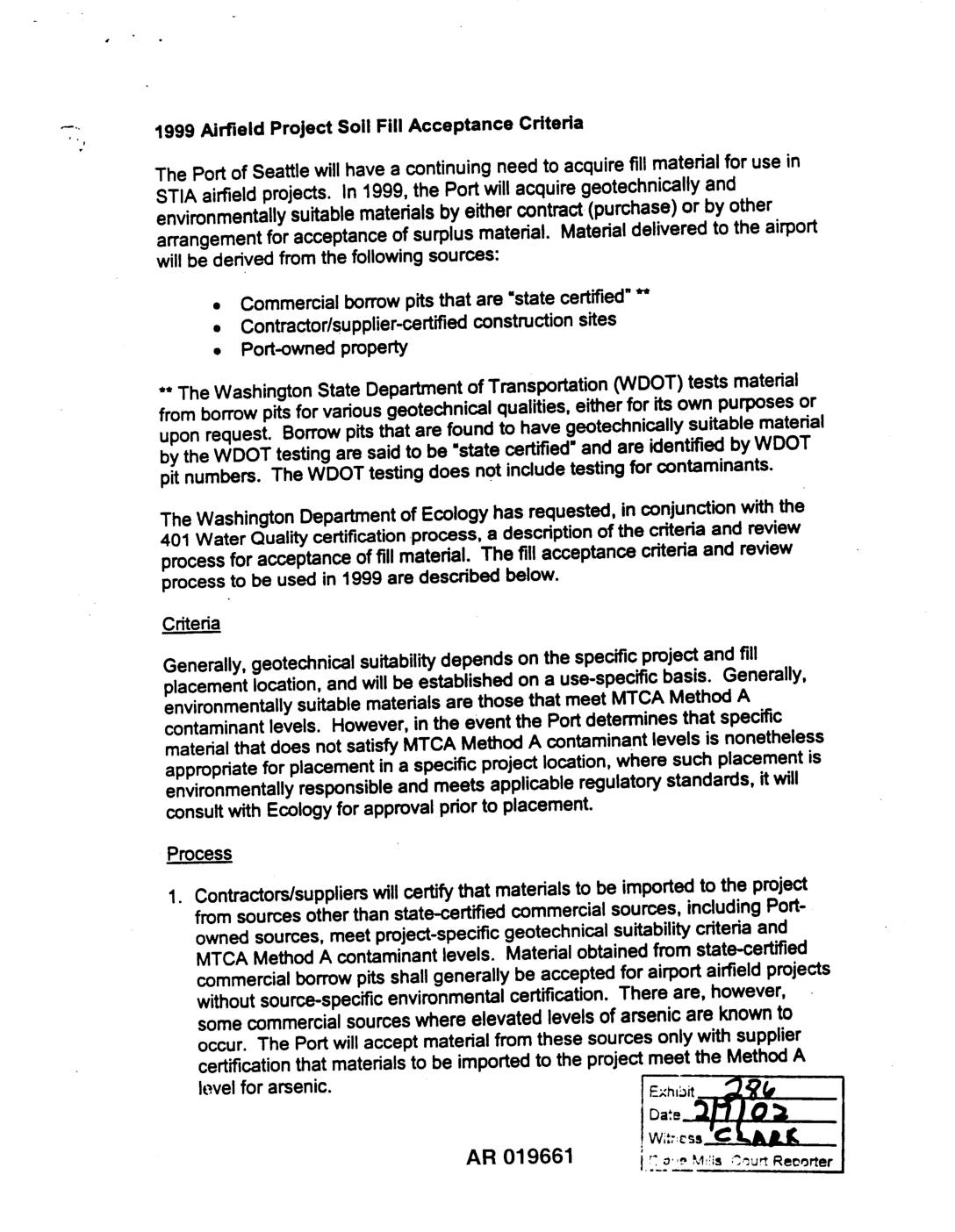
EXH 286: 1999 Airfield Project Soil Fill Acceptance Criteria
This 1999 Port of Seattle document outlines the criteria and review process for accepting soil fill material used in Sea-Tac International Airport (STIA) airfield construction projects. Fill material must come from approved sources—such as state-certified commercial borrow pits, contractor-certified construction sites, or Port-owned property—and generally must meet Washington State MTCA Method A environmental contamination standards. Contractors and suppliers are required to certify the quality of their materials, and independent soil technicians monitor all deliveries to ensure only safe, suitable fill is placed on airport grounds. -
 1998-12-30
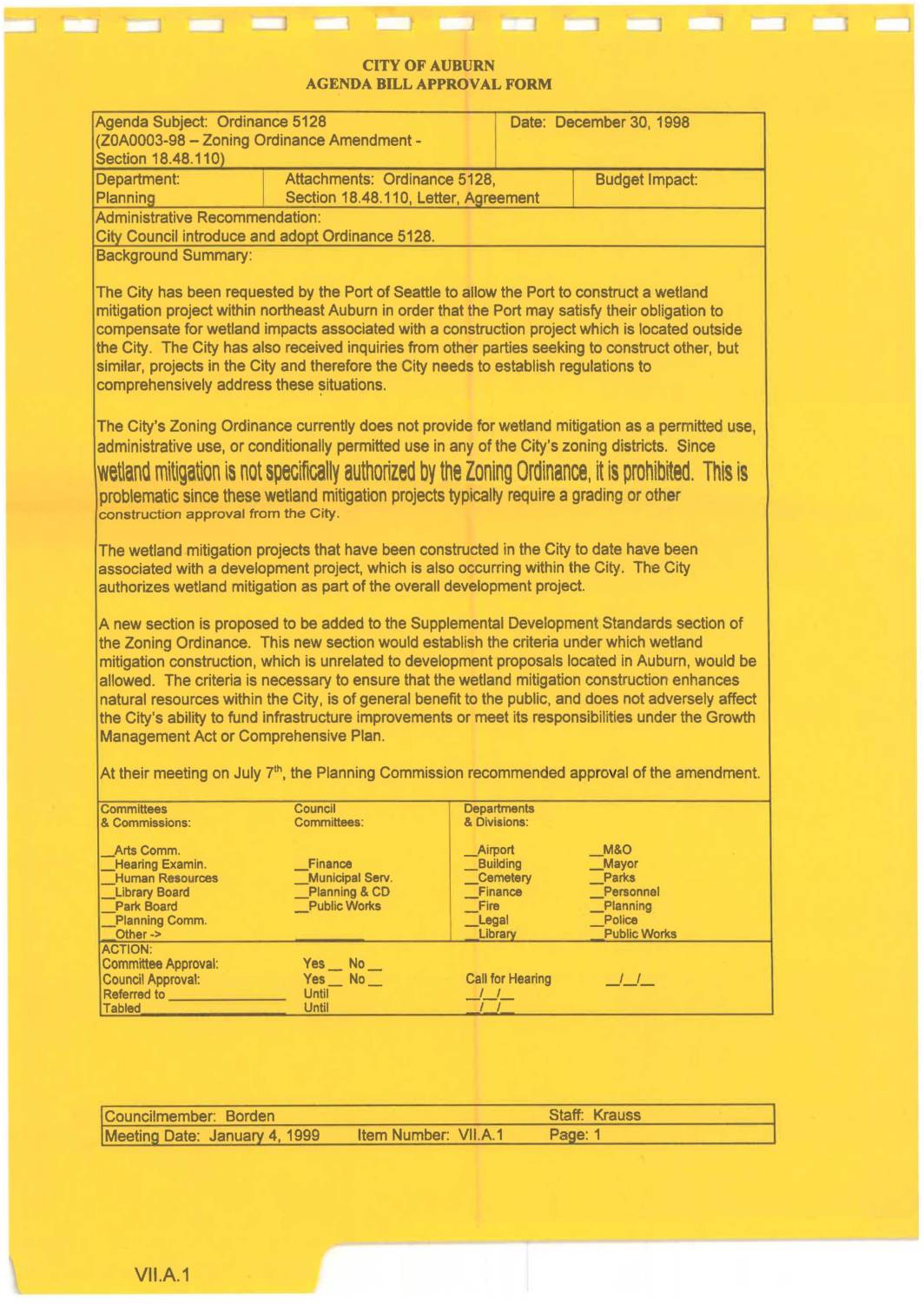
Auburn City Council Ordinance 5128 – Wetland
The City of Auburn agenda bill requesting City Council adoption of Ordinance 5128, which amends the Zoning Ordinance to add Section 18.48.110 establishing criteria for wetland mitigation construction unrelated to development projects within Auburn. The amendment was prompted by a request from the Port of Seattle to construct a wetland mitigation project in northeast Auburn -
 1998-12-23
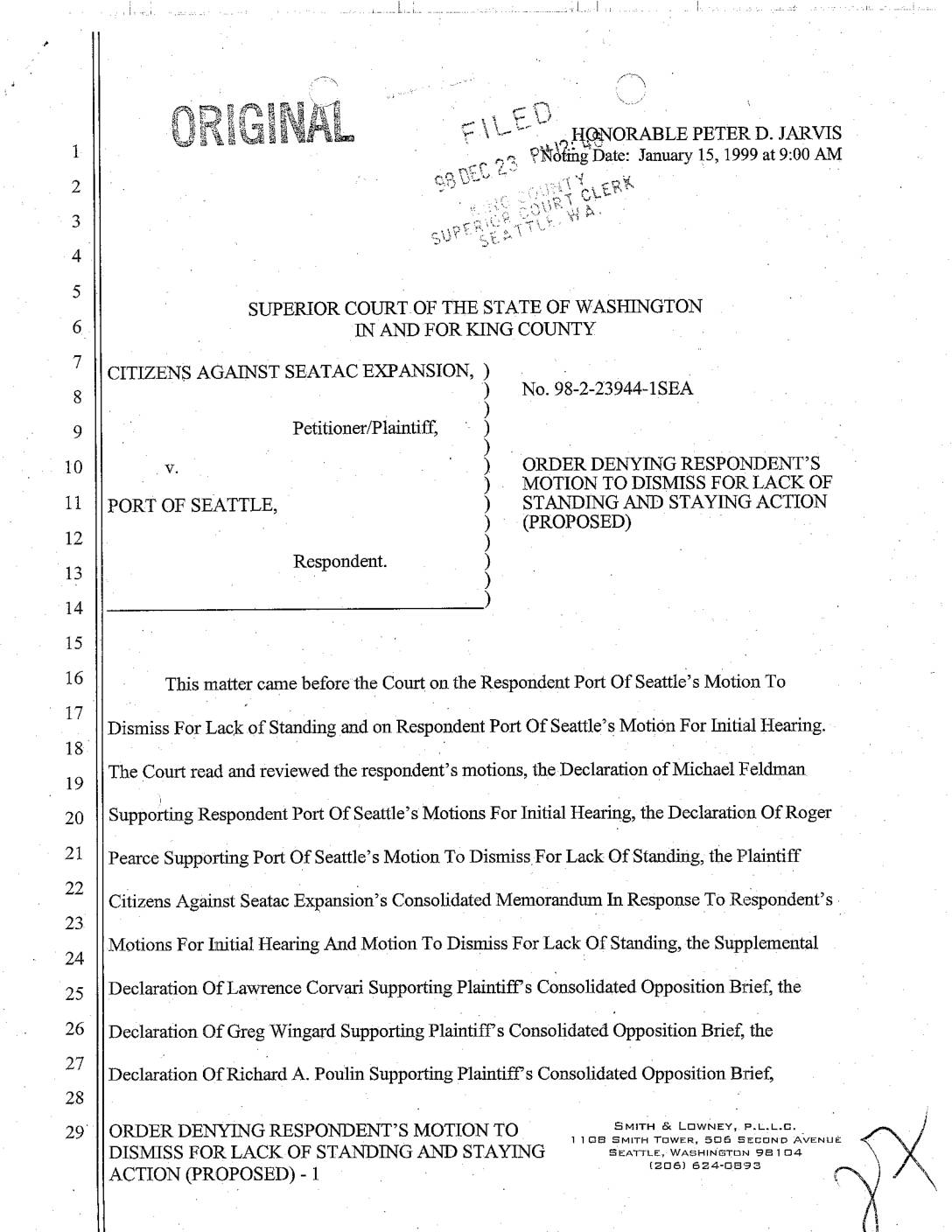
Order Denying Port Of Seattle’s Motion to Dismiss for Lack of Standing and Staying Action
In a December 1998 ruling, King County Superior Court Judge Peter D. Jarvis denied the Port of Seattle's motion to dismiss a lawsuit filed by Citizens Against SeaTac Expansion, finding that the group had legal standing to challenge the Port's environmental decision regarding replacement wetlands in Auburn. The court determined that this decision was interrelated to the broader Seattle-Tacoma International Airport Master Plan Update, including the proposed Third Runway. While rejecting dismissal, the court stayed all proceedings until the Port completed all required environmental reviews under SEPA and Sections 401 and 404 of the Clean Water Act. -
 1998-12-23
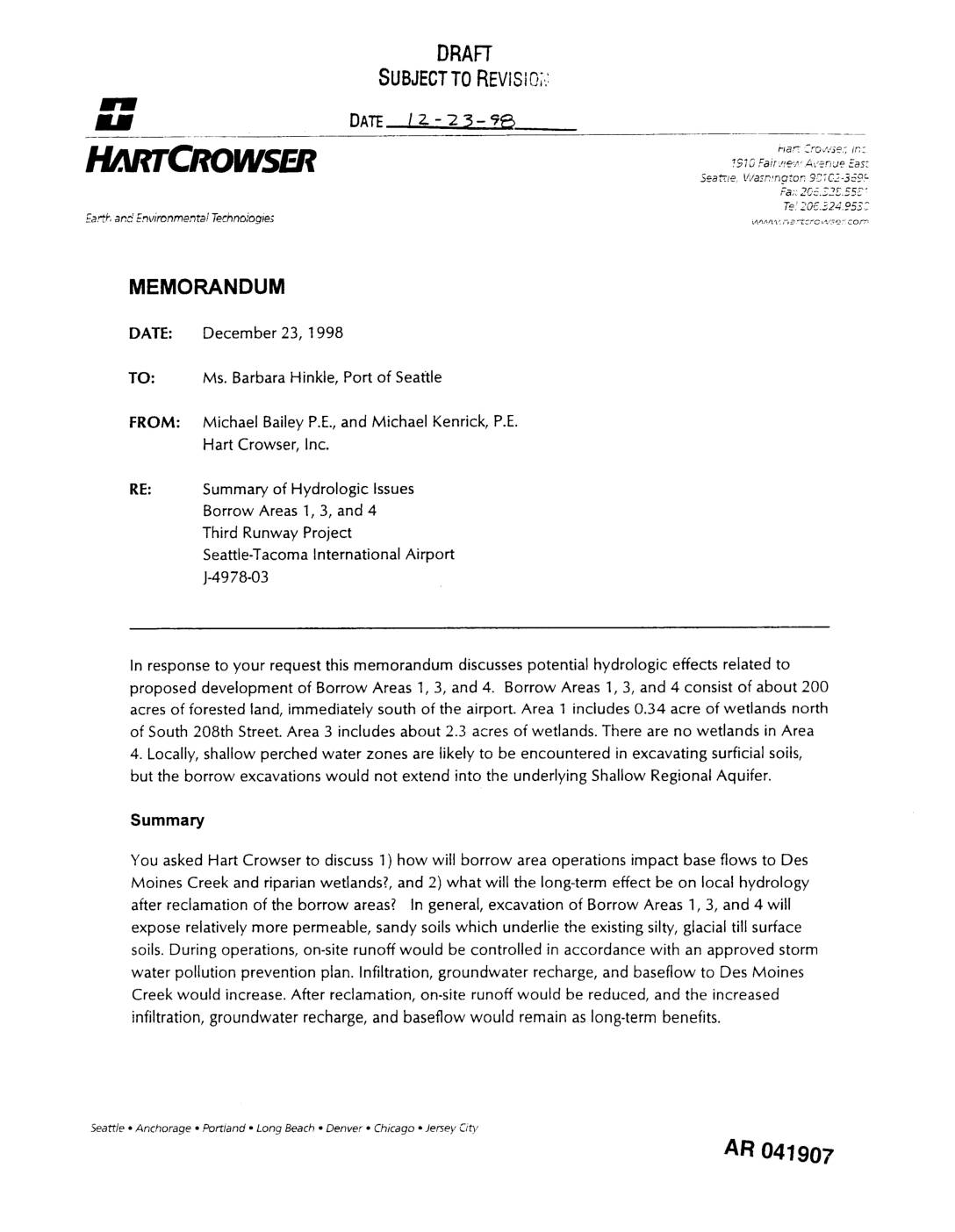
EXH AR041907: Memorandum — Summary of Hydrologic Issues, Borrow Areas 1, 3, and 4, Third Runway Project, Sea-Tac Airport
Hart Crowser memorandum (J-4978-03) dated December 23, 1998, from Michael Bailey P.E. and Michael Kenrick P.E. to Barbara Hinkle, Port Of Seattle, addressing hydrologic impacts of Borrow Areas 1, 3, and 4 for the Third Runway Project at Seattle-Tacoma International Airport. Discusses impacts on baseflow to Des Moines Creek and riparian wetlands, including runoff reduction,