TagStormwater(373)
-
 2001-07-01
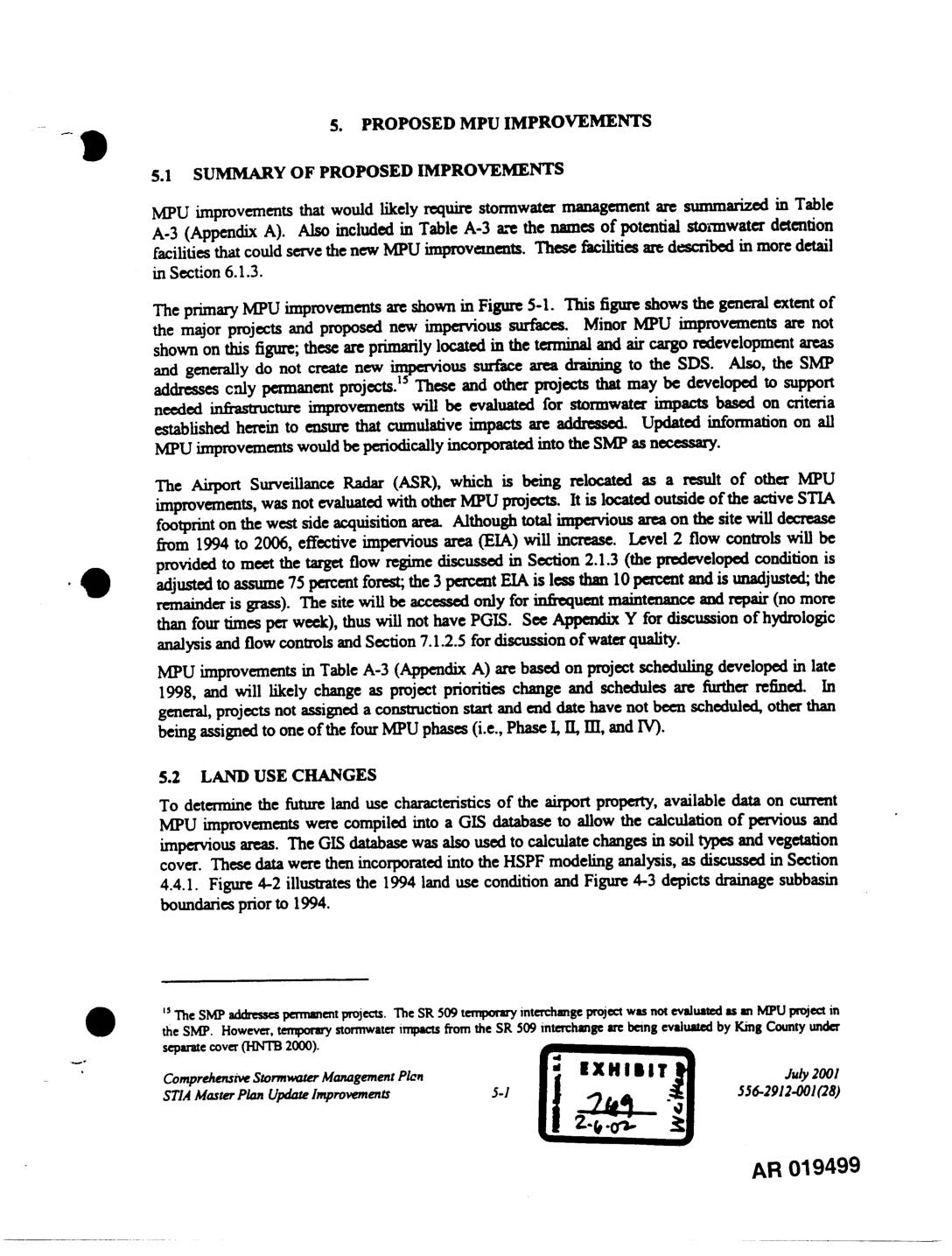
EXH AR019499: Proposed MPU Improvements — STIA Comprehensive Stormwater Mgmt Plan §5
This section of Sea-Tac International Airport's Comprehensive Stormwater Management Plan outlines proposed Master Plan Update (MPU) improvements and their likely stormwater management requirements. It describes how land use changes — including increases in impervious surfaces across various airport development phases — were analyzed using GIS and hydrologic modeling to assess drainage impacts. The document also notes that projects such as the relocated Airport Surveillance Radar required specific flow controls to manage stormwater runoff on the west side acquisition area. -
 2001-07-01
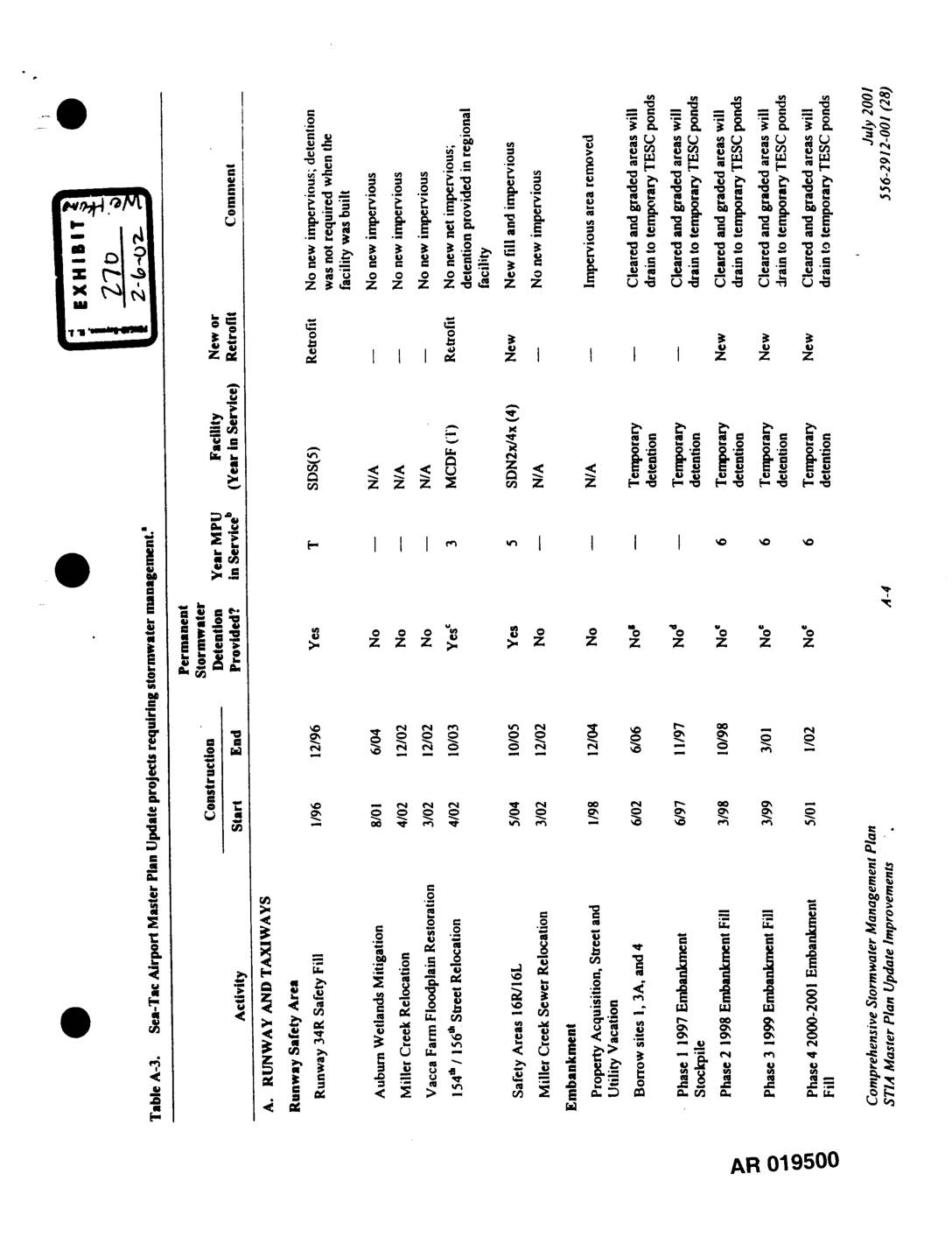
EXH 270: STIA Master Plan Update — Table A-3, Projects Requiring Stormwater Management
This document is Table A-3 from the Sea-Tac Airport Master Plan Update, outlining construction projects that require stormwater management. It details activities such as runway safety improvements, taxiway construction, terminal expansions, and embankment work, noting for each whether permanent stormwater detention was provided, the construction timeline, and the type of drainage facility used. Projects are categorized as either new or retrofit stormwater installations, with comments describing impervious surface impacts and drainage routing to temporary or permanent detention facilities. -
 2001-07-01
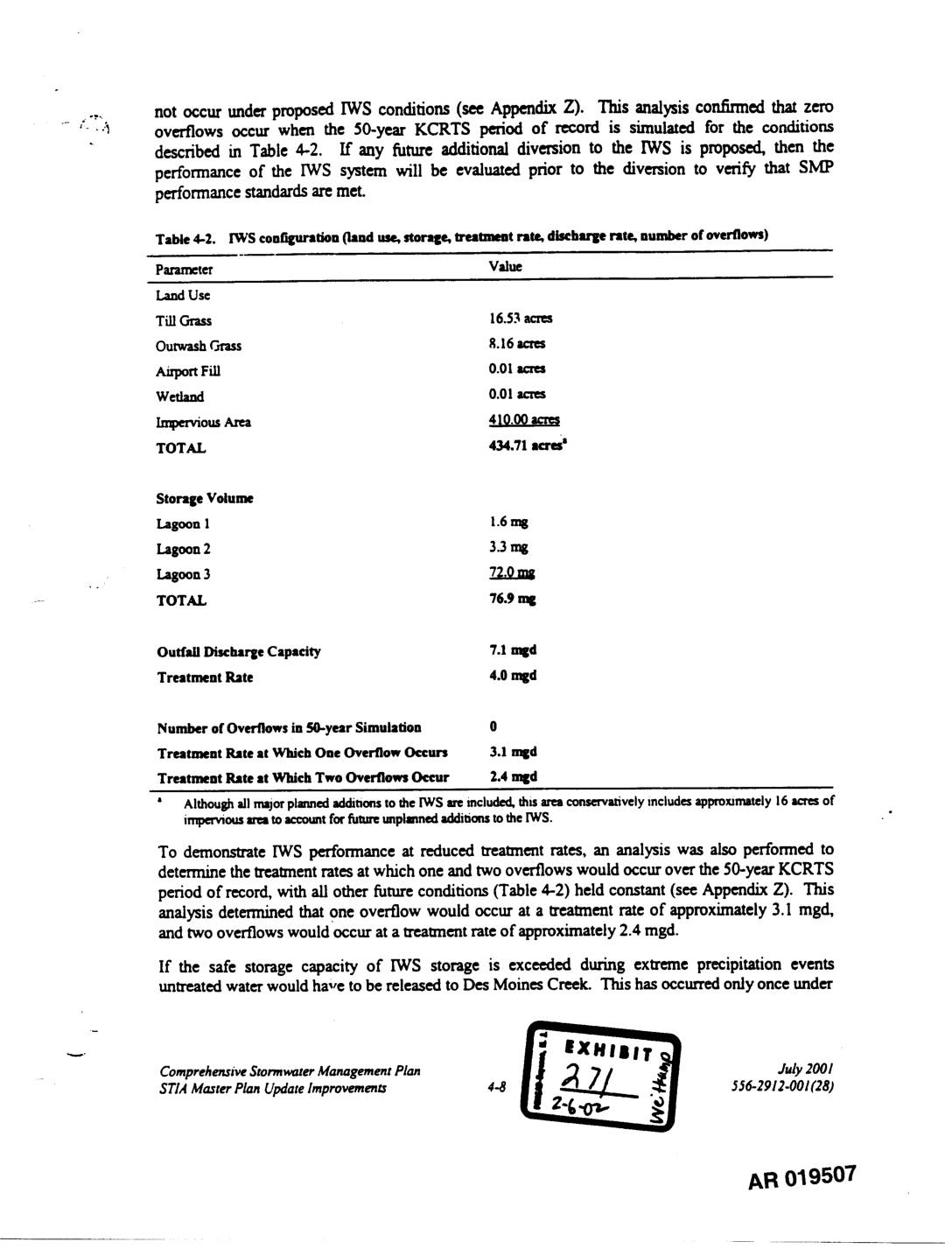
EXH 271: Comprehensive Stormwater Management Plan — IWS Config & Overflow Analysis (Table 4-2)
This document describes the Integrated Water System (IWS) stormwater management configuration at Seattle-Tacoma International Airport (Sea-Tac), detailing storage lagoons totaling 76.9 million gallons and a treatment rate of 4.0 million gallons per day across approximately 435 acres. Simulations over a 50-year period confirmed zero overflow events under proposed conditions, with overflows only beginning to occur if treatment rates dropped below 3.1 million gallons per day. The system experienced only one historical overflow during an extreme rain-on-snow event in December 1996–January 1997, with no petroleum hydrocarbons detected downstream. -
 2001-07-01
EXH AR010824: Port Of Seattle Memo Opposing ACC’s Motion for Stay — Declaration of Paul S. Fendt, Volume 2 of 3 (SMP Volume 3)
Port Of Seattle memo opposing Airport Communities Coalition (ACC) motion for stay in PCHB No. 01-133, Volume 2 of 3, containing Declaration of Paul S. Fendt and SMP Volume 3 materials. Includes preface to the Comprehensive Stormwater Management Plan (SMP) for Seattle-Tacoma International Airport Master Plan Update Improvements, July 2001, with replacement pages developed in -
 2001-06-28
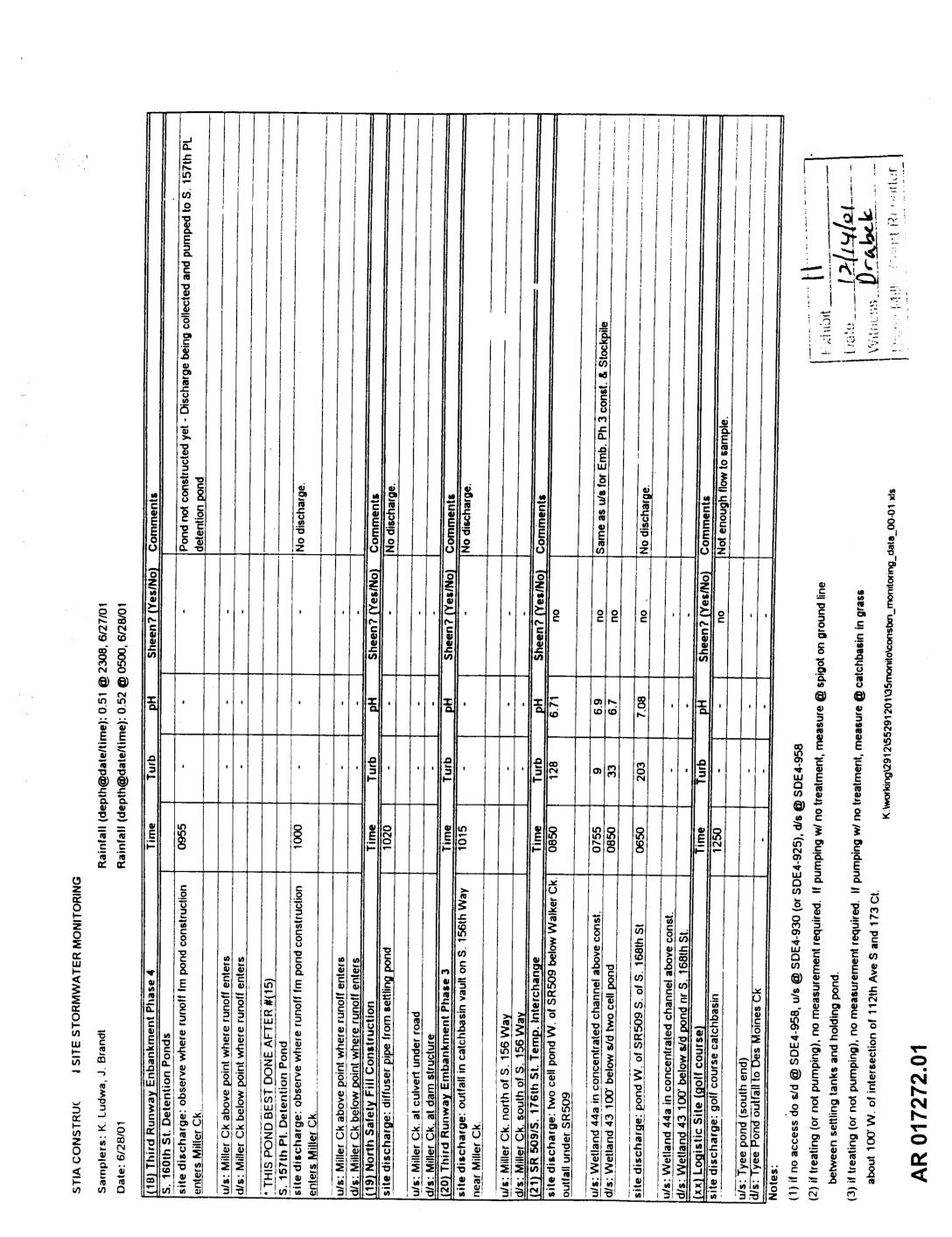
EXH AR017272: STIA Construction Site Stormwater Monitoring Report
STIA construction site stormwater monitoring report dated 6/28/01, sampled by K. Ludwa and J. Brandt. Documents monitoring of multiple construction sites including Third Runway Embankment Phase 4, S. 160th St. Detention Ponds, S. 157th Pl. Detention Pond, North Safety Fill Construction, Third Runway Embankment Phase 3, North Runway Embankment Phase 3, Wetland 44a, Lonistic Site -
 2001-06-28
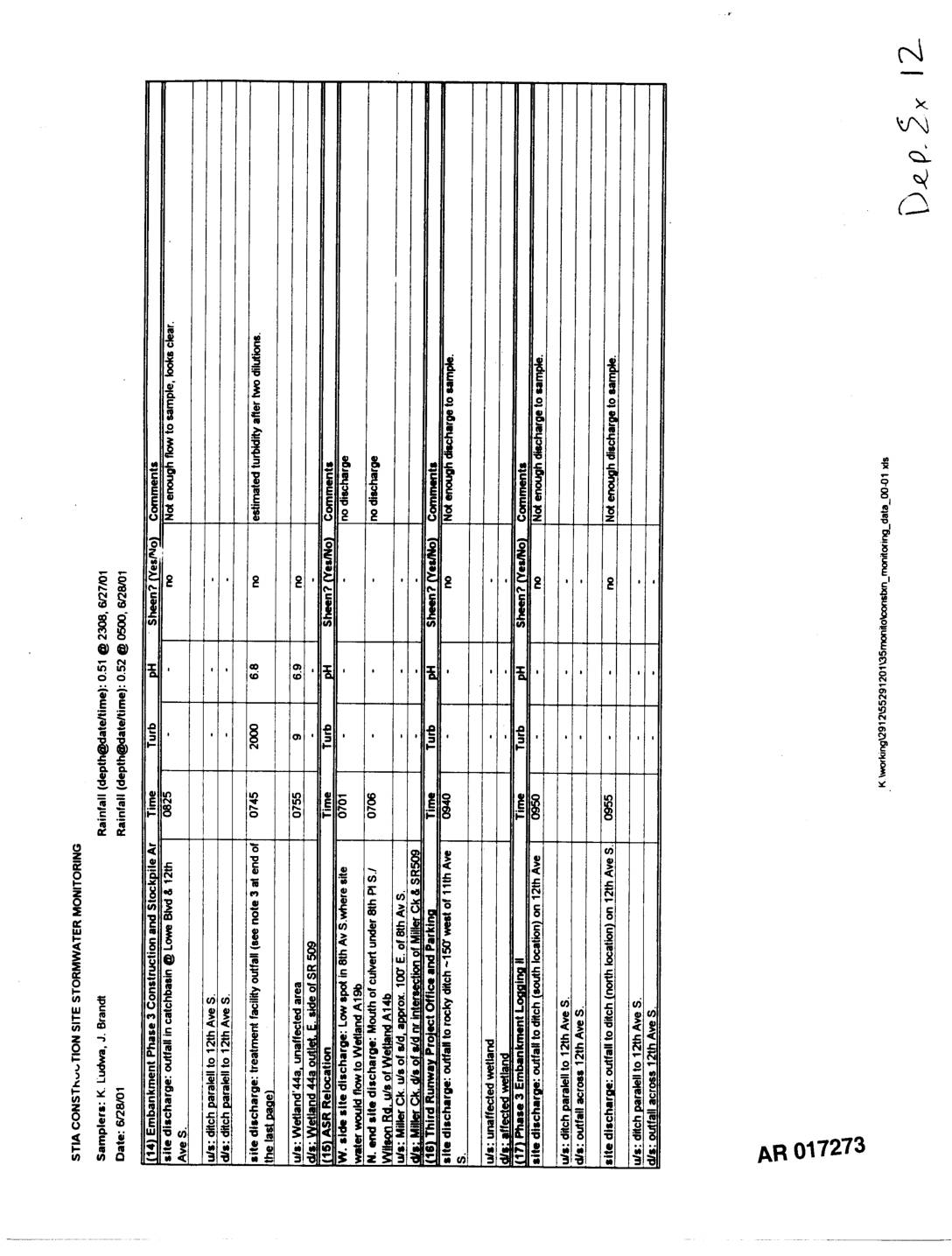
EXH AR017273: STIA Construction Site Stormwater Monitoring Report, 6/28/01
STIA construction site stormwater monitoring log dated 6/28/2001, samplers K. Ludwa and J. Brandt. Documents field observations for Phase 3 Embankment Construction, ASR Relocation, and Third Runway Project Office and Parking areas near Lowe Blvd & 12th Ave S, 8th Ave S, Miller Creek, SR509, Wilson Rd, and 12th Ave S. Records pH, turbidity, sheen -
 2001-06-25
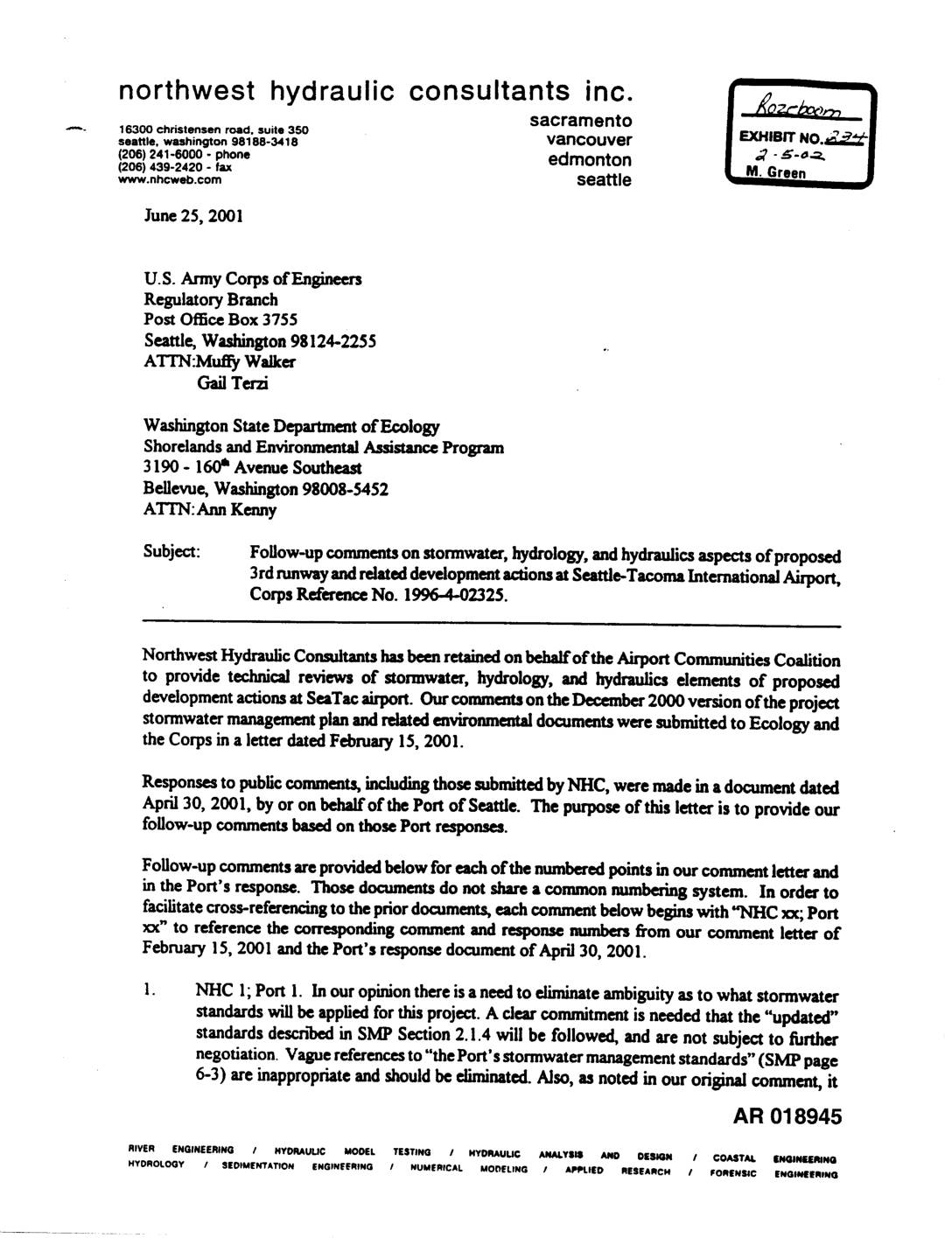
EXH 234: NHC Follow-Up Comments Stormwater Hydrology Hydraulics Proposed Third Runway STIA Corps Ref. 1996-4-02325
Northwest Hydraulic Consultants submitted follow-up technical comments to the U.S. Army Corps of Engineers and Washington State Department of Ecology regarding stormwater, hydrology, and hydraulics concerns related to the proposed third runway at Seattle-Tacoma International Airport. The letter, written on behalf of the Airport Communities Coalition, challenges the Port of Seattle's responses to earlier criticisms, raising unresolved issues about stormwater management standards, independent design review, cost estimates for detention facilities, and the accuracy of hydrological modeling. Key concerns include ambiguity in which stormwater standards will apply, inadequate quality assurance processes, and inconsistencies in the project's Stormwater Management Plan. -
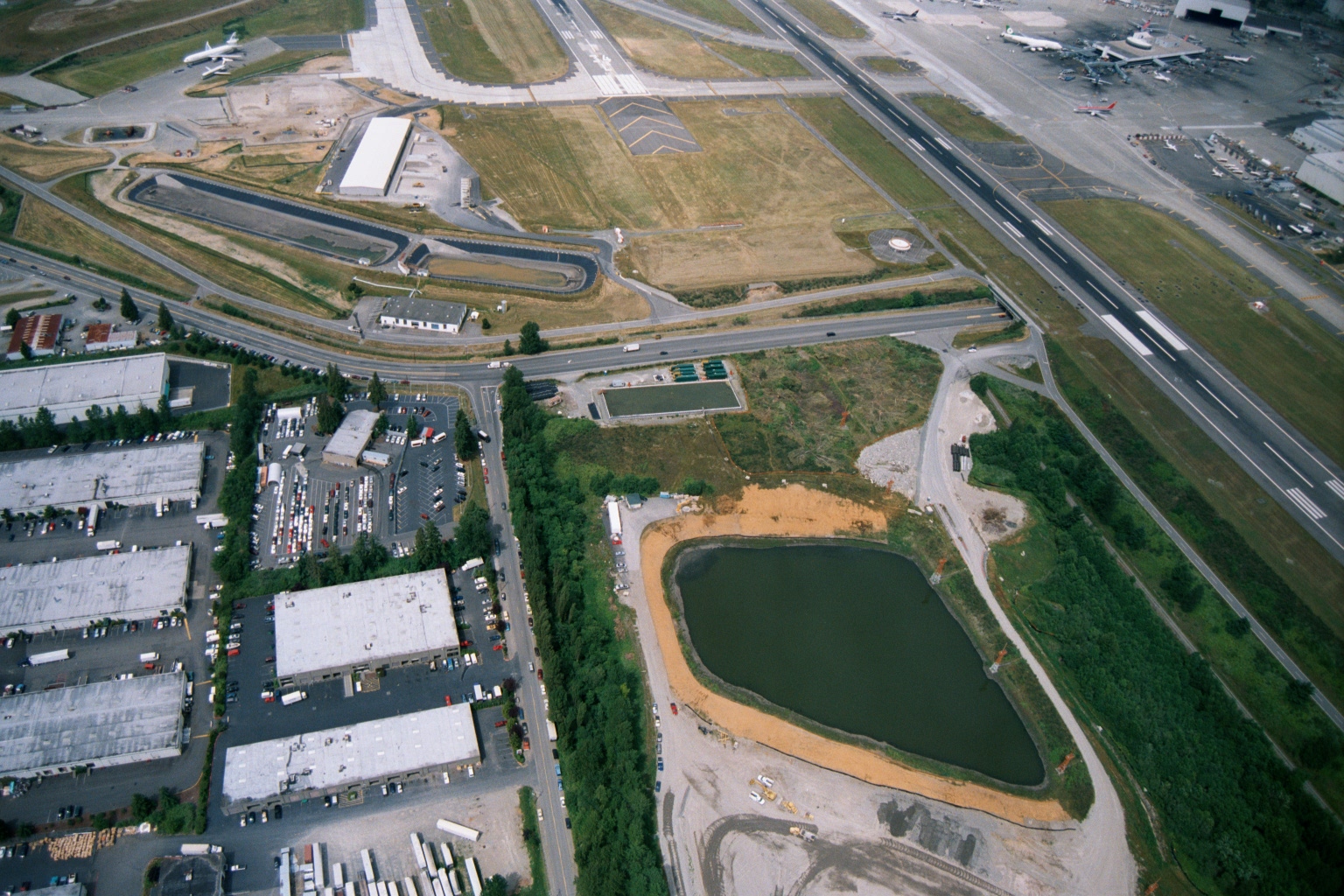
Sea-Tac Airport Perimeter Aerial View with Stormwater Retention Pond
Aerial photograph showing the southern or western perimeter of a major commercial airport, with runways, taxiways, and terminal gates visible alongside an industrial/warehouse district. A newly constructed stormwater retention pond with exposed sandy berms is prominent in the mid-ground, consistent with airport drainage or environmental mitigation infrastructure. -
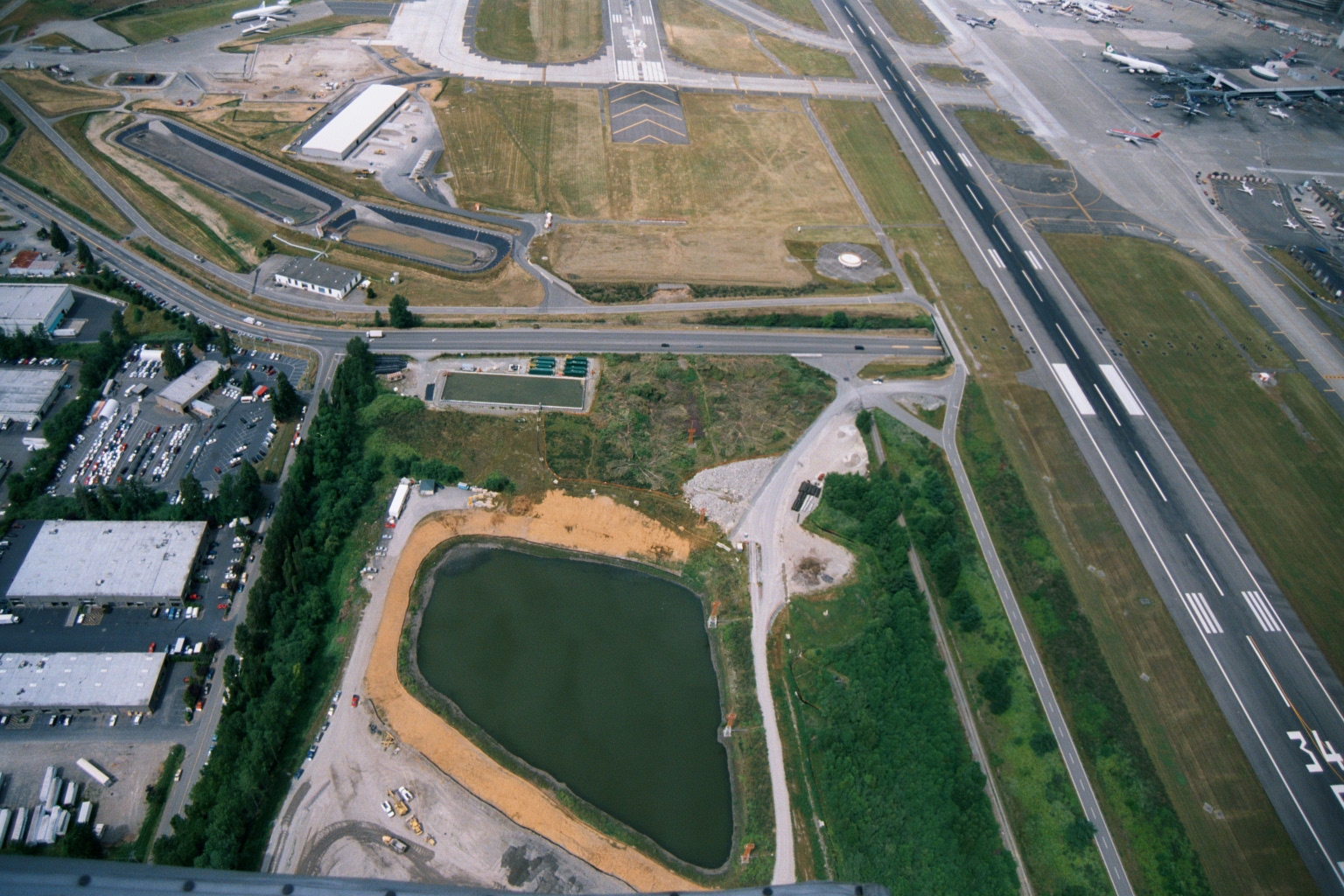
Sea-Tac Airport Aerial View With Runway 34 Threshold and Stormwater Retention Pond Under Construction
Aerial photograph showing Seattle-Tacoma International Airport infrastructure, including a runway threshold marked '34' visible in the lower right, active aircraft at gates on the right side, and a large stormwater retention pond under construction in the foreground with exposed sandy soil. The image likely documents environmental mitigation or drainage infrastructure development adjacent to airport operations. -
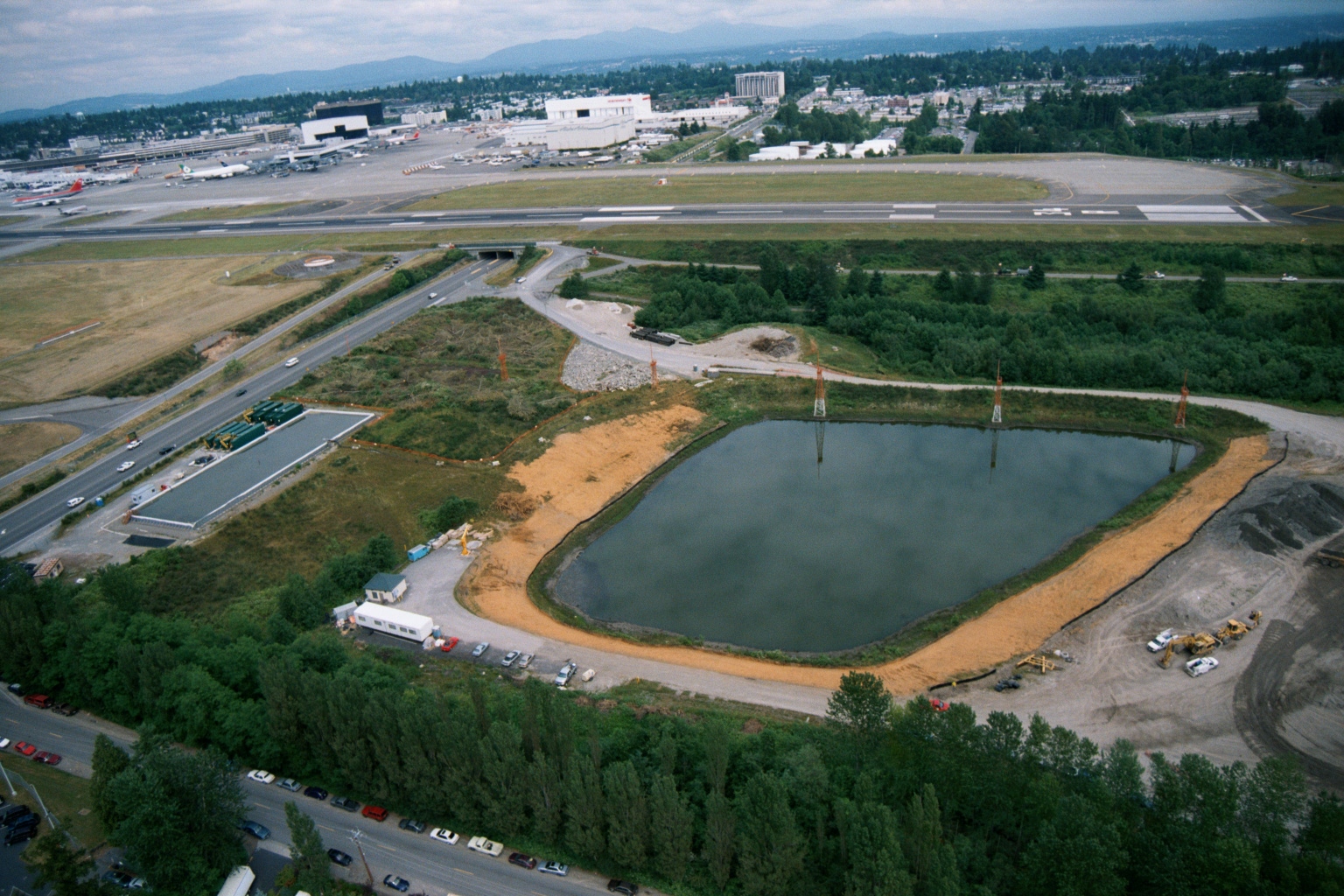 2001-06-22
Aerial View of Stormwater Detention Pond Under Construction Near Sea-Tac Airport
Aerial photograph showing a large engineered stormwater or detention pond under active construction adjacent to what appears to be Sea-Tac Airport, with a runway, terminal buildings, and aircraft visible in the background. Construction equipment, temporary structures, and disturbed soils are visible around the pond perimeter, suggesting this documents infrastructure development in the airport vicinity.