TagSEPA(232)
-
 2026-05-22
Appendix I: Natural Resources & Energy Supply — Bonneville Power Administration 2024–2028 Strategic Plan
The Bonneville Power Administration's 2024–2028 Strategic Plan outlines the agency's goals for delivering reliable, affordable electricity and high-voltage transmission across the Pacific Northwest. The plan focuses on workforce investment, updating power products and rate structures, expanding transmission infrastructure, and addressing growing risks such as drought conditions, extreme heat, and cybersecurity threats. Note: This document concerns regional energy supply policy and is not directly related to Sea-Tac Airport noise policy. -
 2026-05-22
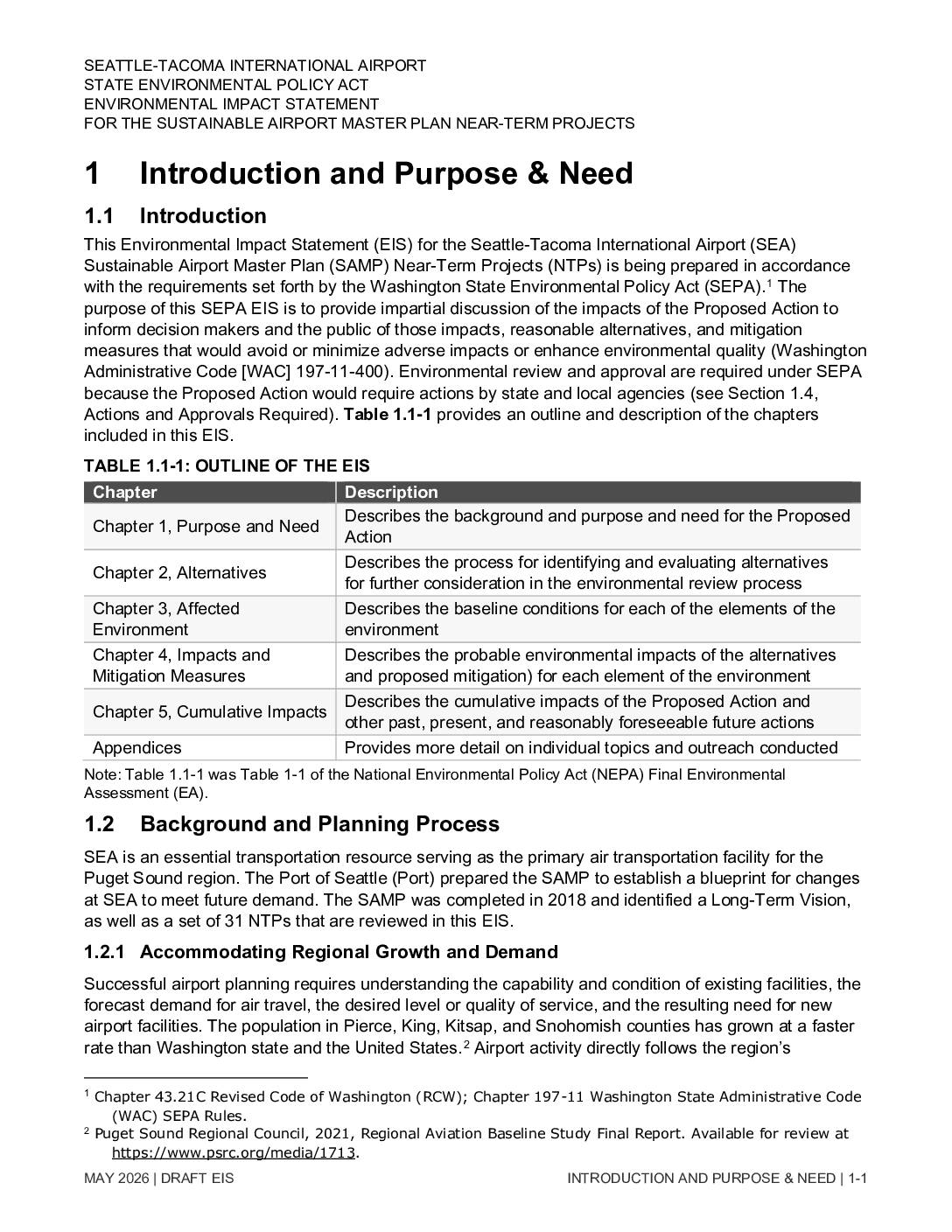
SAMP Near-Term Projects Draft EIS: Chapter 1, Introduction and Purpose & Need
The Port of Seattle is preparing an Environmental Impact Statement (EIS) under Washington State's Environmental Policy Act (SEPA) for 31 near-term construction and improvement projects at Seattle-Tacoma International Airport (SEA). These projects, drawn from the airport's 2018 Sustainable Airport Master Plan, aim to improve passenger facilities, safety, efficiency, and airport access ahead of a projected 2032 completion date. The review follows a completed federal environmental assessment and addresses the region's growing air travel demand while evaluating potential environmental impacts and mitigation measures. -
2026 05 26 rm 11b presentation SAMP ntp draft SEPA EIS page 16
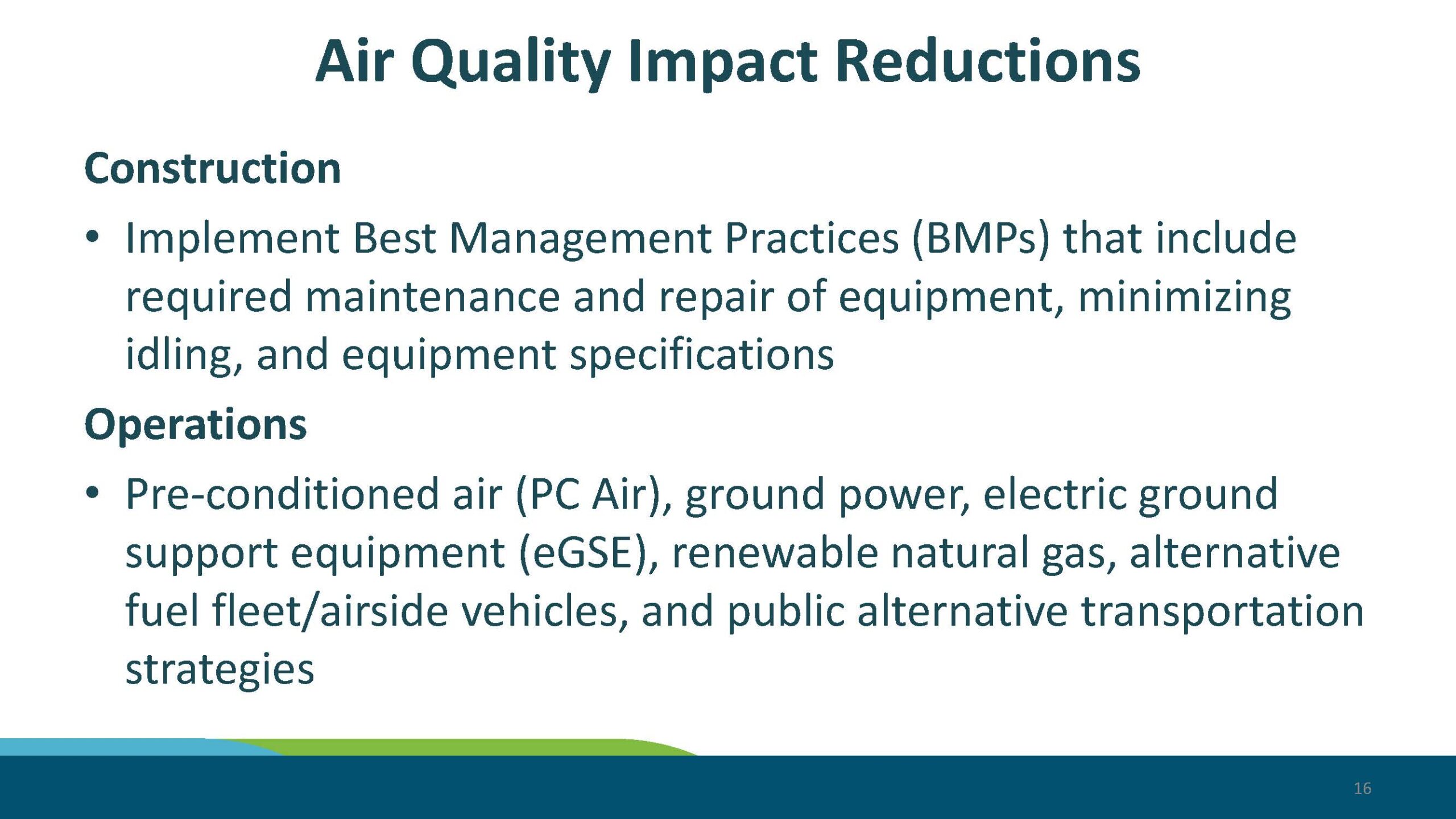
A presentation slide titled 'Air Quality Impact Reductions' outlining mitigation strategies for construction (implementing Best Management Practices including equipment maintenance, minimizing idling, and equipment specifications) and operations (pre-conditioned air, electric ground support equipment, renewable natural gas, alternative fuel vehicles, and public alternative transportation strategies). The slide is numbered 16, suggesting it is part of a larger environmental impact or planning presentation, potentially related to airport development. -
2026 05 26 rm 11b presentation SAMP ntp draft SEPA EIS page 15
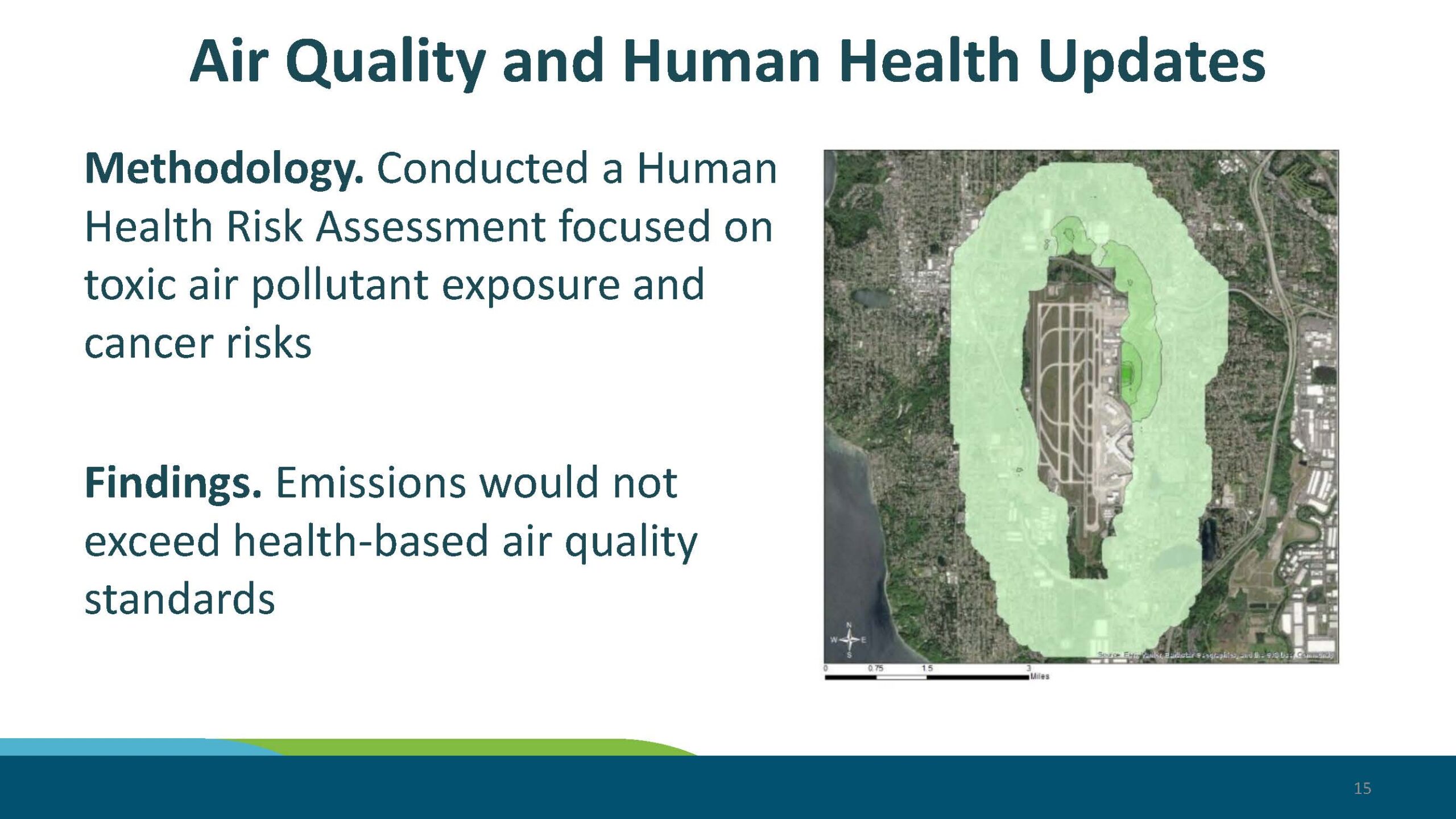
Slide 15 from a Sea-Tac Airport environmental review presentation summarizes a Human Health Risk Assessment focused on toxic air pollutant exposure and cancer risks. The findings state that emissions would not exceed health-based air quality standards, accompanied by an aerial map showing modeled pollutant dispersion contours overlaid on Seattle-Tacoma International Airport and surrounding communities. -
2026 05 26 rm 11b presentation SAMP ntp draft SEPA EIS page 14
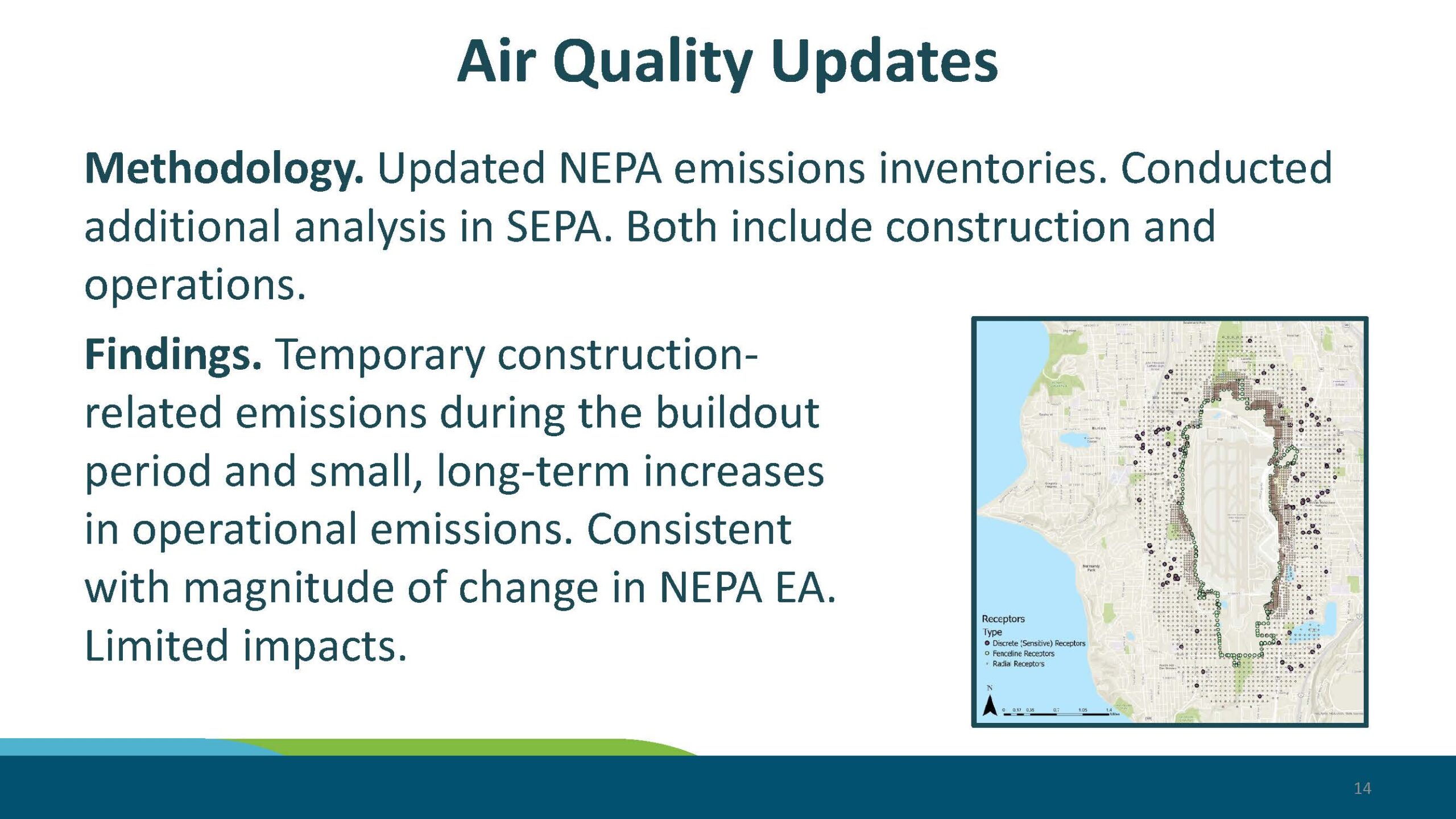
Presentation slide titled 'Air Quality Updates' describing methodology and findings for NEPA emissions inventories and SEPA analysis covering construction and operations phases. Findings note temporary construction-related emissions during the buildout period and small long-term increases in operational emissions, characterized as limited impacts consistent with the NEPA EA; accompanied by a map showing Discrete (Sensitive), Fenceline, and Radial Receptors along what appears to be a corridor in the Seattle/Sea-Tac area. -
2026 05 26 rm 11b presentation SAMP ntp draft SEPA EIS page 13
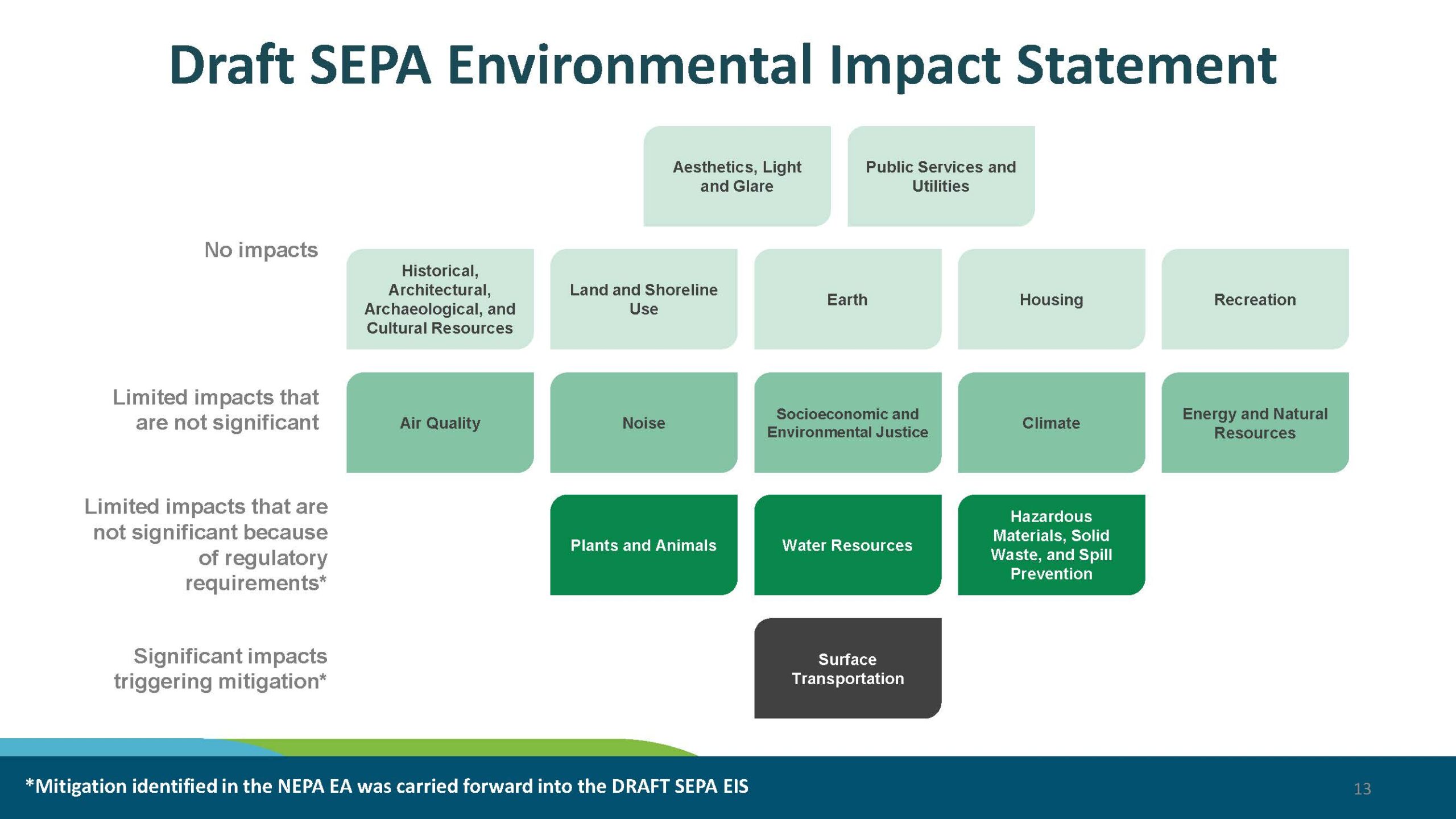
A presentation slide titled 'Draft SEPA Environmental Impact Statement' categorizes environmental impact areas into four tiers: no impacts (e.g., Historical/Cultural Resources, Earth, Housing, Recreation); limited impacts that are not significant (e.g., Air Quality, Noise, Climate); limited impacts not significant due to regulatory requirements (Plants and Animals, Water Resources, Hazardous Materials/Solid Waste/Spill Prevention); and significant impacts triggering mitigation (Surface Transportation). A footer note states that mitigation identified in the NEPA EA was carried forward into the Draft SEPA EIS. -
2026 05 26 rm 11b presentation SAMP ntp draft SEPA EIS page 22
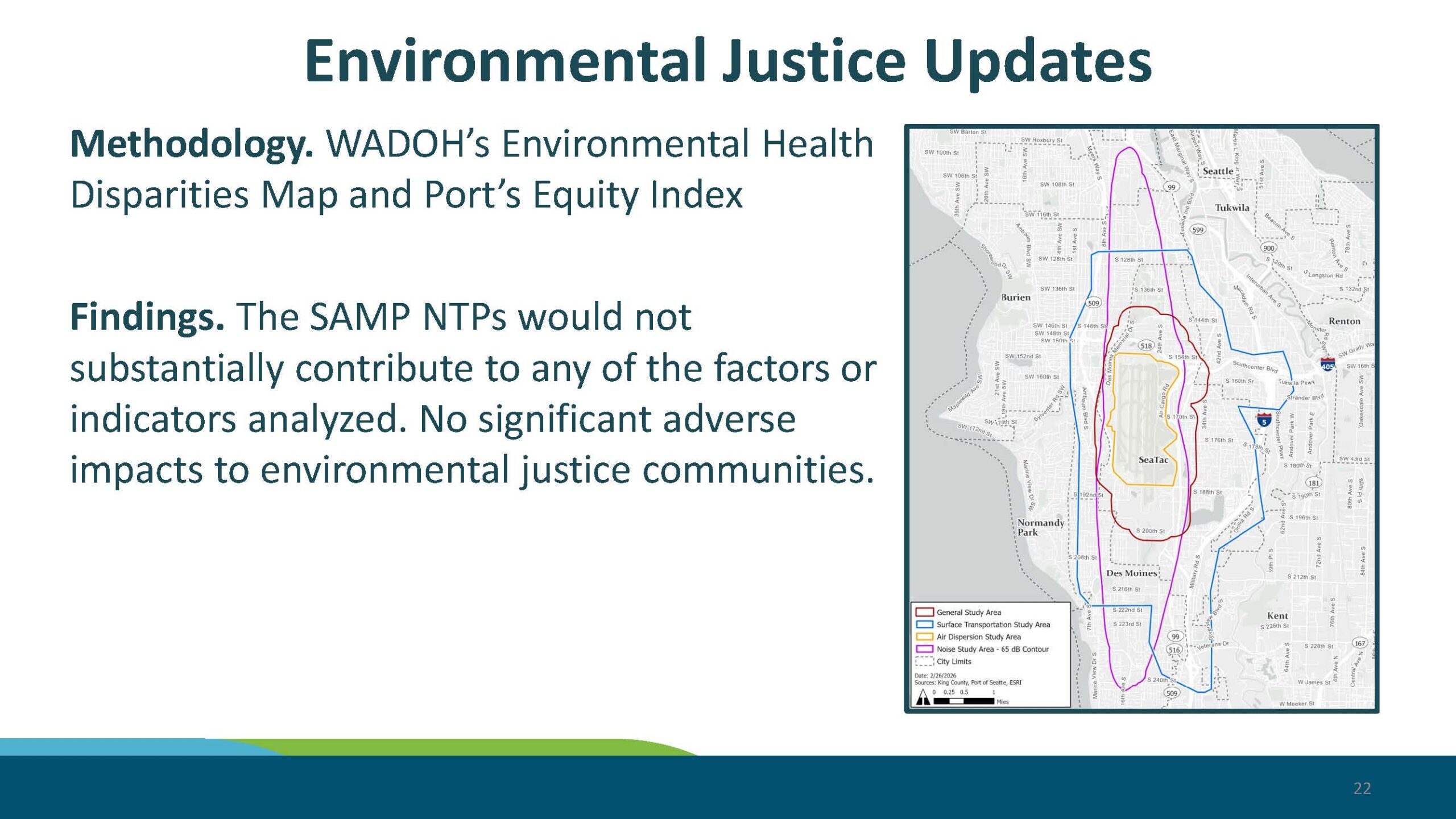
Slide 22 from a Port of Seattle presentation on the Sea-Tac Airport Master Plan (SAMP) Near-Term Projects (NTPs), summarizing Environmental Justice findings using WADOH's Environmental Health Disparities Map and the Port's Equity Index. The findings conclude that the SAMP NTPs would not substantially contribute to any analyzed factors and pose no significant adverse impacts to environmental justice communities, accompanied by a study area map covering SeaTac, Burien, Des Moines, Normandy Park, and surrounding cities. -
2026 05 26 rm 11b presentation SAMP ntp draft SEPA EIS page 21
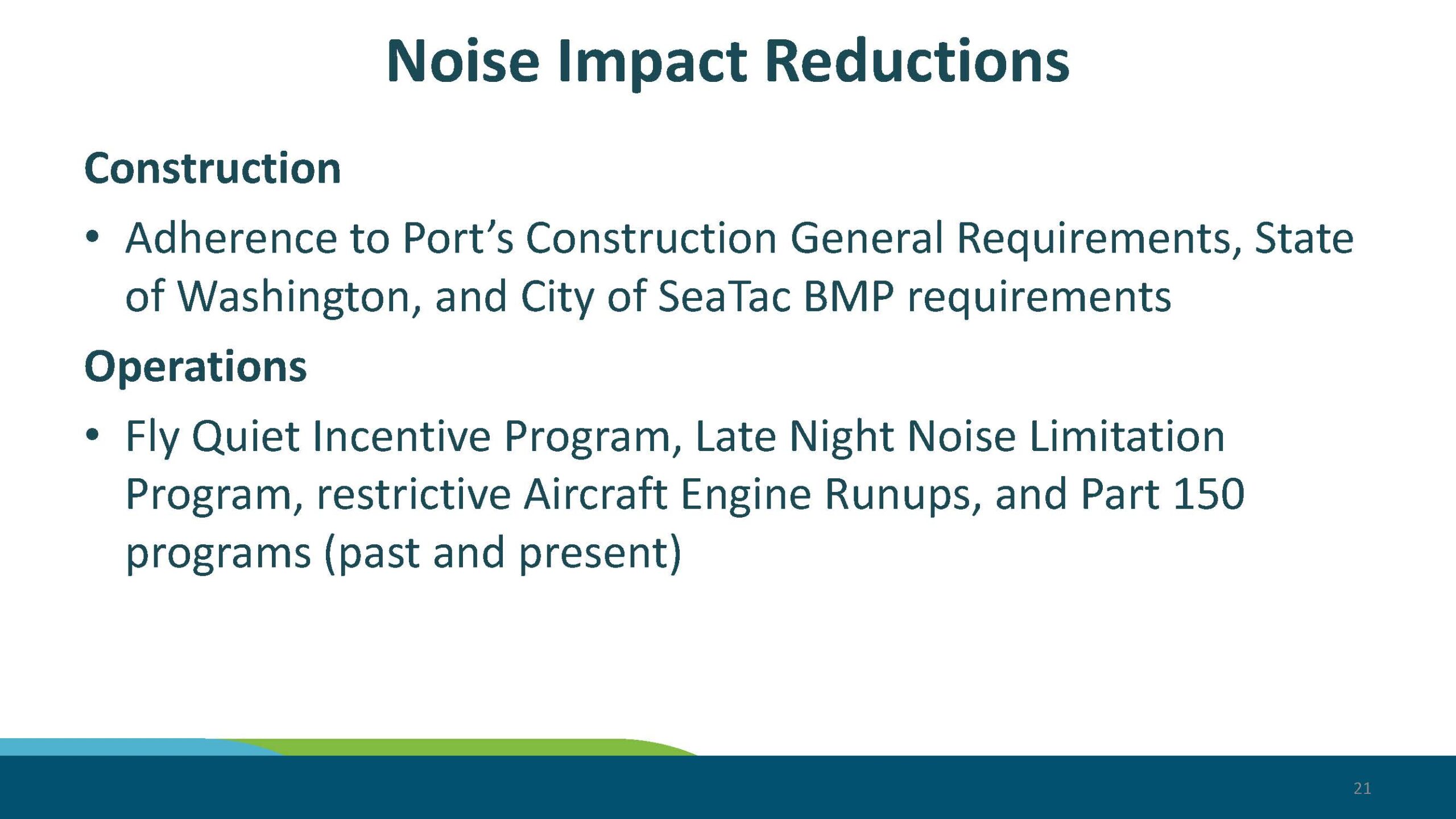
Slide 21 from a Sea-Tac Airport presentation outlines noise impact reduction measures, covering Construction (adherence to Port's Construction General Requirements, State of Washington, and City of SeaTac BMP requirements) and Operations (Fly Quiet Incentive Program, Late Night Noise Limitation Program, restrictive Aircraft Engine Runups, and Part 150 programs past and present). -
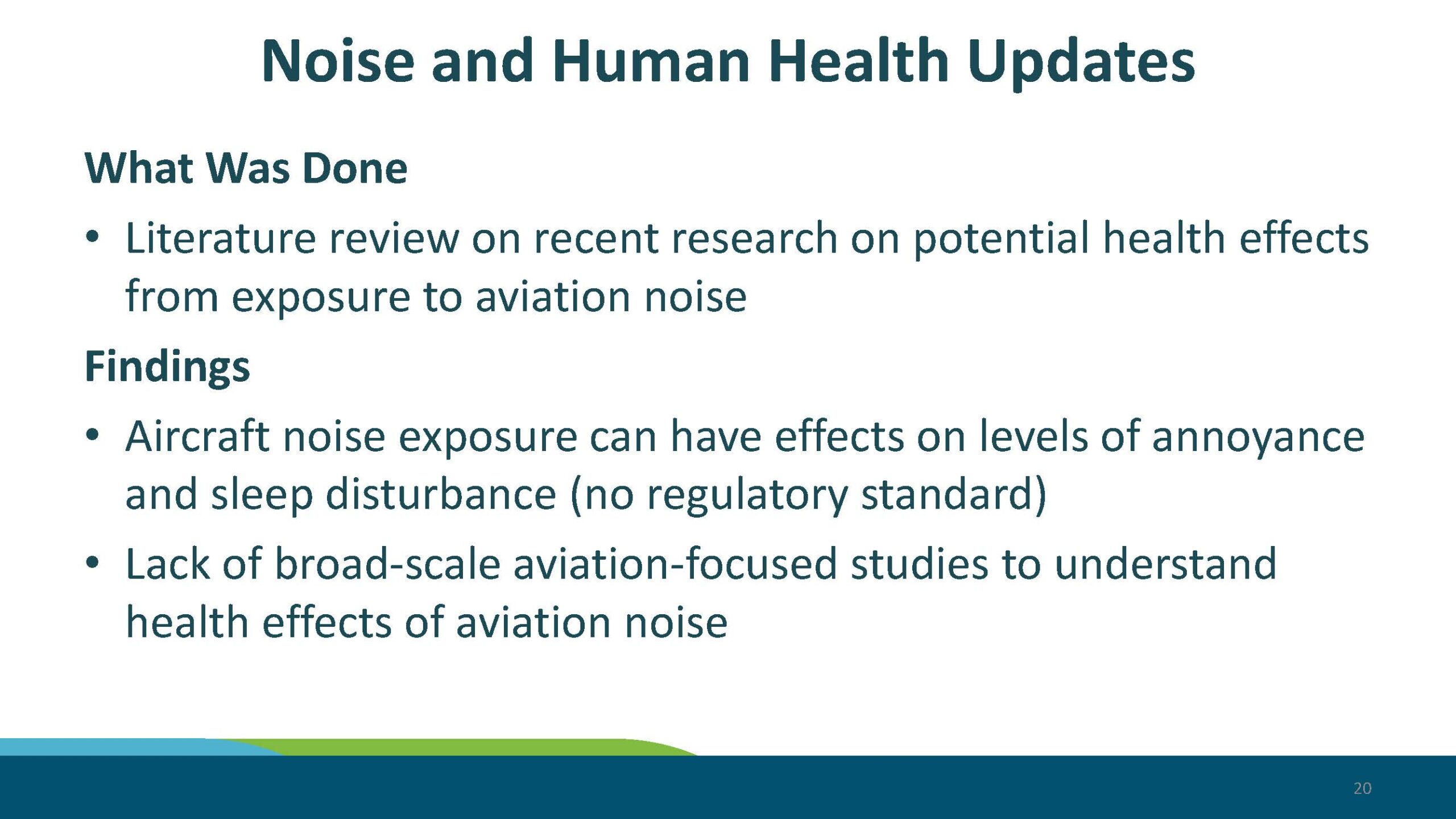
2026 05 26 rm 11b presentation SAMP ntp draft SEPA EIS page 20
Slide 20 from a Sea-Tac Airport presentation summarizing a literature review on aviation noise and human health. Key findings note that aircraft noise exposure can affect annoyance and sleep disturbance (with no regulatory standard) and that broad-scale aviation-focused health studies are lacking. -
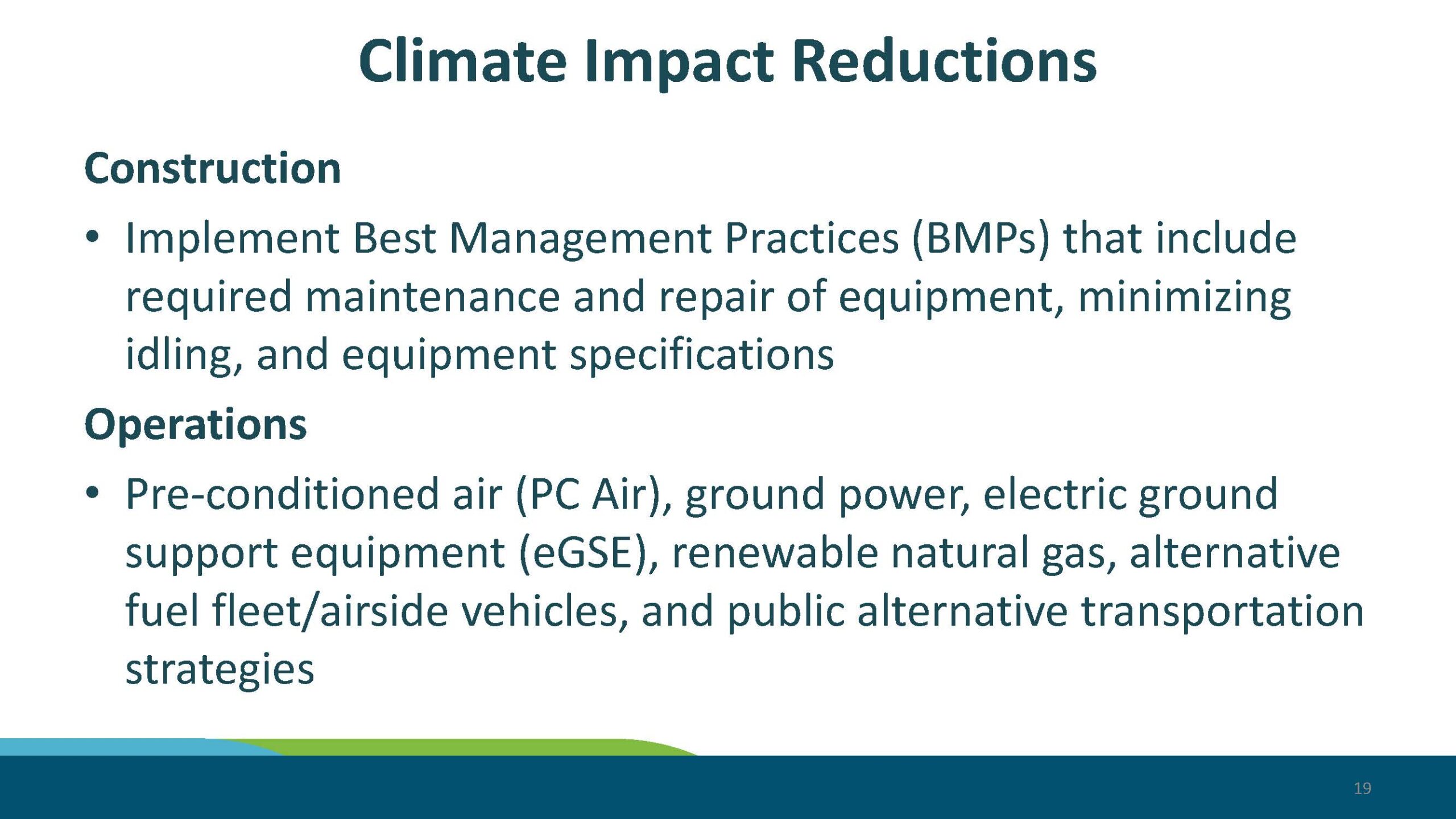
2026 05 26 rm 11b presentation SAMP ntp draft SEPA EIS page 19
A presentation slide titled 'Climate Impact Reductions' outlining two categories of greenhouse gas mitigation measures: Construction (implementing Best Management Practices including equipment maintenance, minimizing idling, and equipment specifications) and Operations (pre-conditioned air, ground power, electric ground support equipment, renewable natural gas, alternative fuel vehicles, and public alternative transportation strategies). No specific organization logo or date is visible, though the slide numbering (19) and subject matter are consistent with an airport environmental or EIS presentation context.