TagPort Of Seattle(2349)
-
 2019-08-20
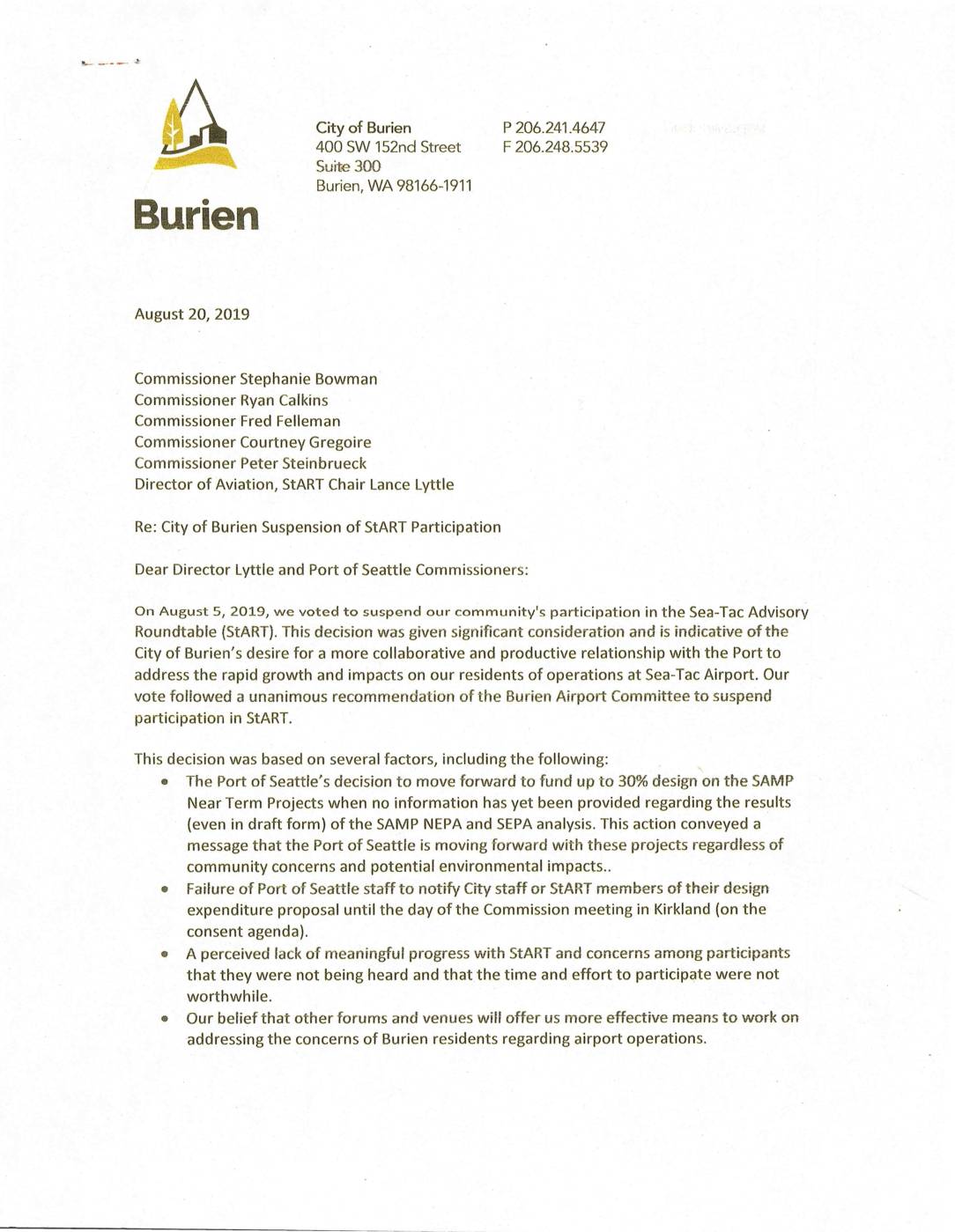
City of Burien suspension of StART participation
In August 2019, the City of Burien formally suspended its participation in the Sea-Tac Advisory Roundtable (StART), citing the Port of Seattle's decision to advance airport expansion designs before completing required environmental reviews, a lack of transparency, and a feeling that community concerns were being ignored. The letter raises serious questions about noise abatement, slow sound insulation programs, air quality impacts extending miles beyond the airport, and the exclusion of nighttime engine run-up mitigation measures recommended as far back as 1996. Burien called on the Port to engage in an honest discussion about how much airport growth is sustainable given the health and quality-of-life impacts on surrounding communities. -
 2019-08-19
A Day in the Life of an Environmental Intern
Ever wondered what happens during an internship at the Port of Seattle? Sophia Cassam, an intern at Sea-Tac Airport, shares her experience working for the Port’s Environmental team. (Sponsored Post) *** Hello! I’m Sophia, the Port of Seattle Environmental Intern at Sea-Tac Airport. I study Urban Planning at the University of Washington, where I focus -
 2019-08-19
City of Burien Letter to Port Of Seattle Executive Director and Commissioners Regarding Sea-Tac Airport Noise and Community Impacts
In August 2019, the City of Burien sent a formal letter to the Port of Seattle's Executive Director and Commissioners raising nine pointed questions about Sea-Tac Airport's noise policies and community health impacts. The city challenged the Port's failure to conduct updated noise studies across all runways since 2002, slow implementation of sound insulation programs, and lack of transparency in the StART community committee process. Burien concluded by calling for an honest public dialogue about whether continued airport growth is sustainable given the environmental and quality-of-life consequences for neighboring residents. -
2019-08-19
City of Burien Letter to Port Of Seattle Executive Director and Commissioners Regarding Sea-Tac Airport Noise and Community Impacts
In August 2019, the City of Burien sent a formal letter to the Port of Seattle's Executive Director and Commissioners raising nine pointed questions about Sea-Tac Airport's noise policies and community health impacts. The city challenged the Port's failure to conduct updated noise studies across all runways since 2002, slow implementation of sound insulation programs, and lack of transparency in the StART community committee process. Burien concluded by calling for an honest public dialogue about whether continued airport growth is sustainable given the environmental and quality-of-life consequences for neighboring residents. -
 2019-08-13
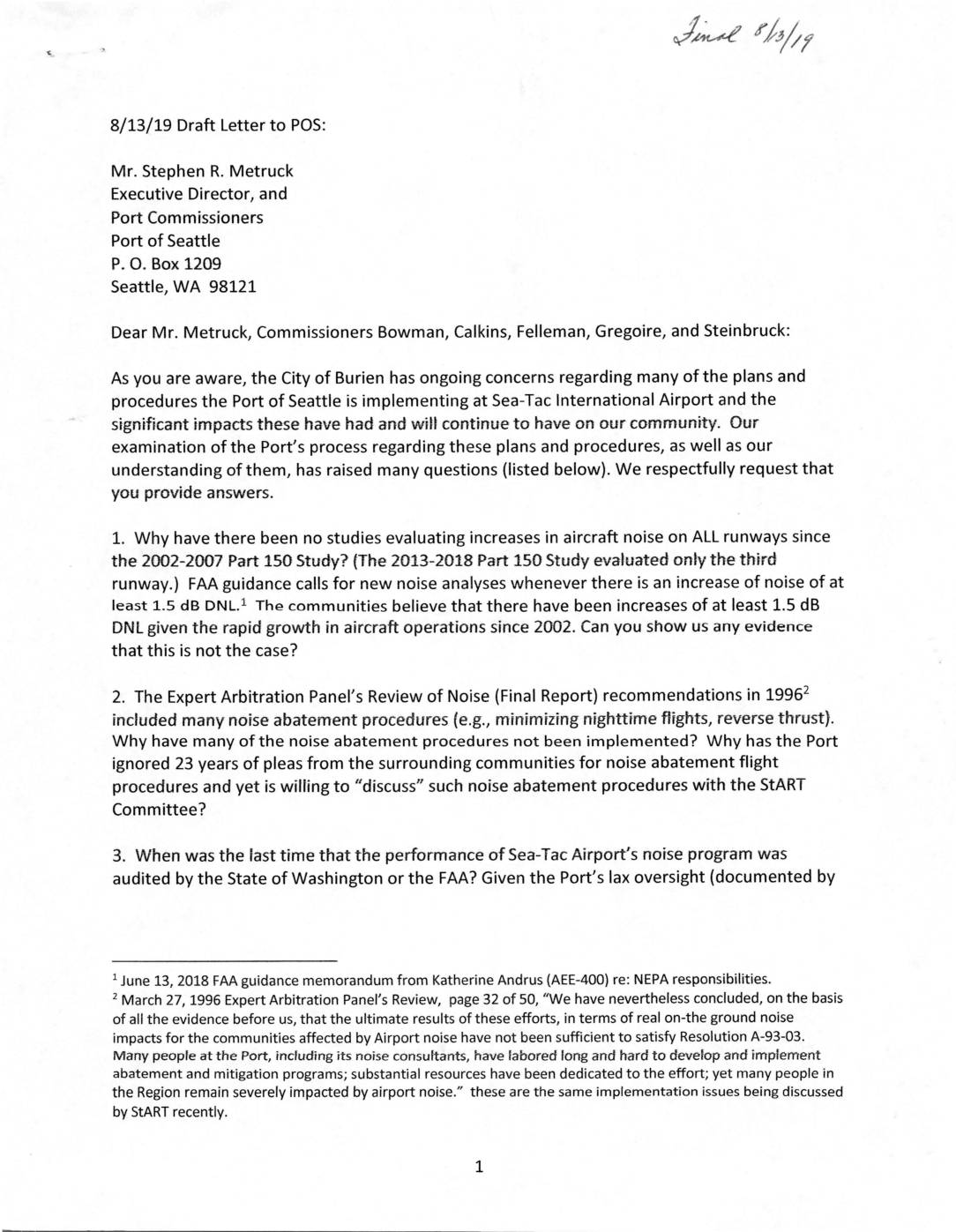
Draft letter to Port Of Seattle regarding Sea-Tac Airport noise and community impacts
In August 2019, the Burien City Council sent a formal letter to the Port of Seattle's Executive Director and Commissioners raising nine pointed questions about Sea-Tac Airport's noise management failures, including the lack of updated noise studies since 2002, slow implementation of sound insulation for affected homes, unaddressed air quality concerns, and the exclusion of meaningful community input. The letter argues that the Port has prioritized airport expansion and profits over the health and quality of life of surrounding residents for more than 20 years. The Council calls for an honest, open dialogue about how much airport growth is truly sustainable given its ongoing environmental and community impacts. -
 2019-08-07
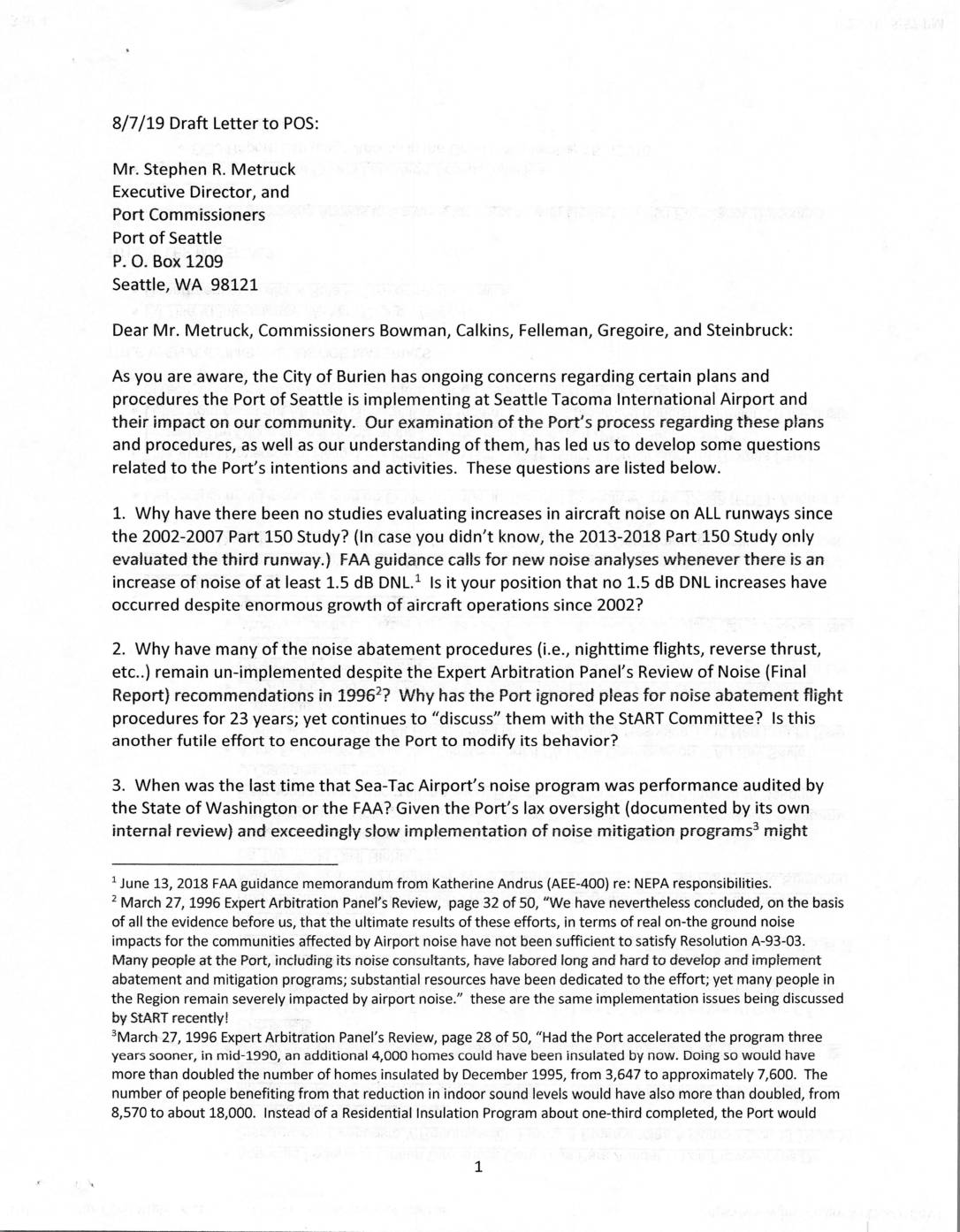
Draft letter to Port Of Seattle regarding Sea-Tac Airport noise and community impact concerns
In August 2019, the City of Burien sent a draft letter to the Port of Seattle raising eight pointed questions about Seattle-Tacoma International Airport's handling of aircraft noise, air quality, and community impact. The letter challenges the Port's failure to conduct comprehensive noise studies since 2002, its slow implementation of sound insulation programs, and its prioritization of airport expansion planning over legally recommended noise mitigation measures. Burien officials conclude that the Port has not treated compatibility with surrounding communities as a genuine priority, citing decades of unaddressed recommendations dating back to a 1996 Expert Arbitration Panel report. -
 2019-07-31
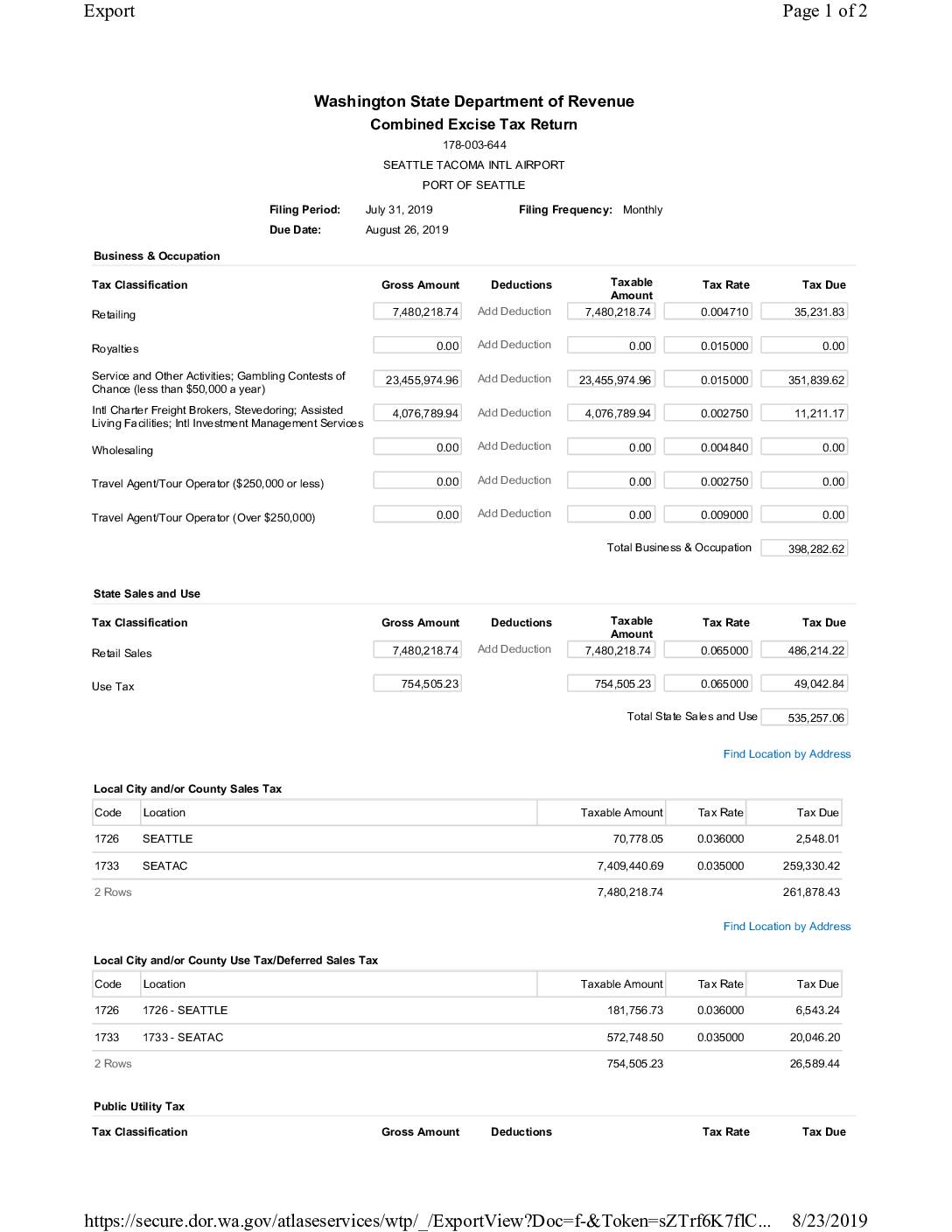
Combined Excise Tax Return: Seattle Tacoma Intl Airport, Port Of Seattle — July 2019
This document is a Washington State Combined Excise Tax Return filed by the Port of Seattle for Seattle-Tacoma International Airport, covering the period ending July 31, 2019. It reports Business & Occupation, State Sales and Use, Local Sales and Use, and Public Utility taxes across multiple classifications, resulting in a total tax liability of $1,348,574.66. The return was submitted on August 23, 2019, by Bonnie McArthur and paid via ACH debit with an effective date of August 26, 2019. -
 2019-07-31
Seattle-Tacoma International Airport (Sea-Tac) Part 150 study
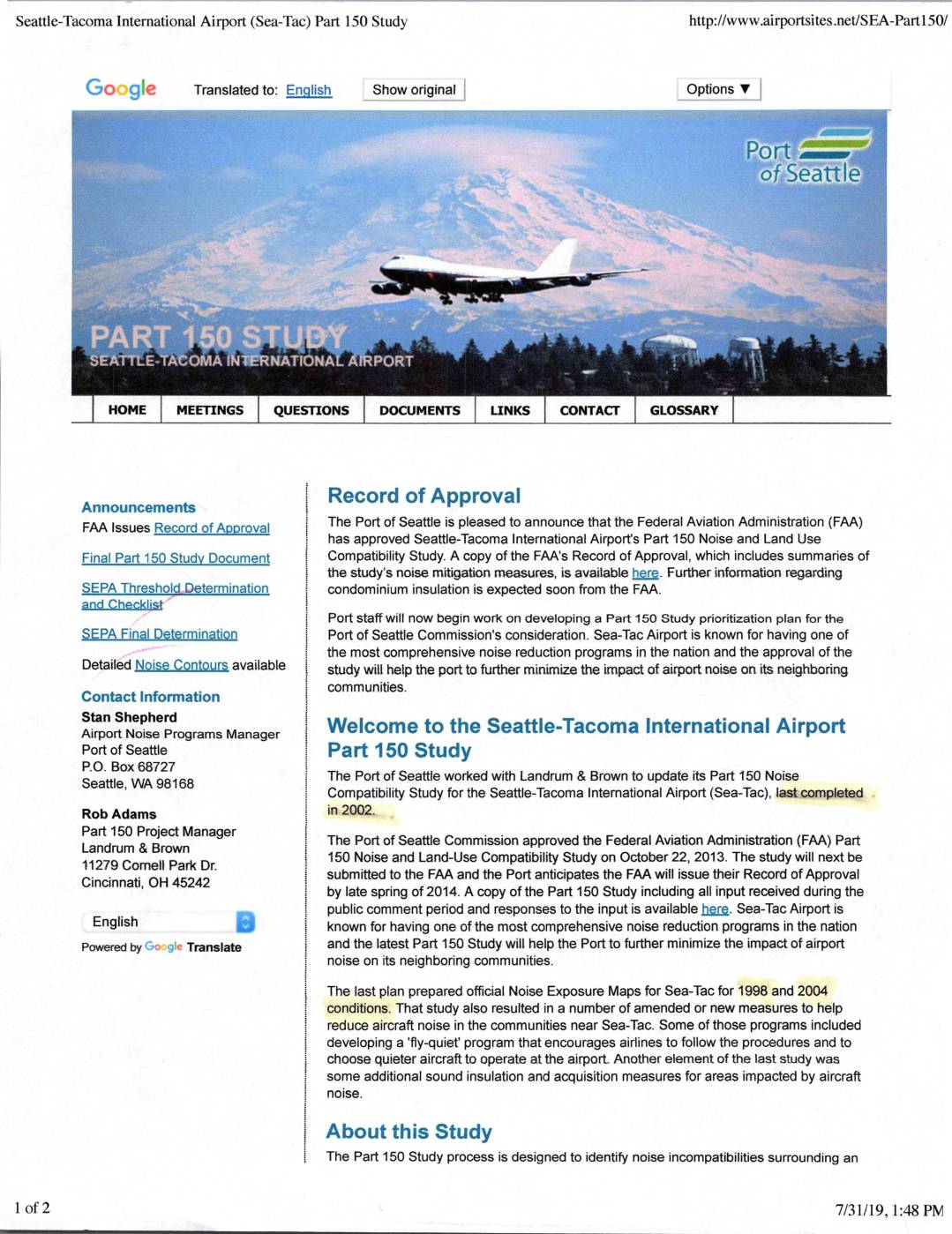
The Seattle-Tacoma International Airport (Sea-Tac) Part 150 Noise and Land Use Compatibility Study, approved by the Port of Seattle Commission in October 2013 and later by the FAA, aims to identify and reduce aircraft noise impacts on surrounding communities. The study developed noise exposure maps for 2013 and projected 2018 conditions, evaluated air traffic control procedures, and considered land use controls to limit noise-sensitive development in high-noise areas. Sea-Tac is recognized for having one of the most comprehensive airport noise reduction programs in the nation, with measures including a 'fly-quiet' program and sound insulation assistance for affected residents. -
 2019-07-31
Highline Forum agenda: Part 150 and South King County Fund
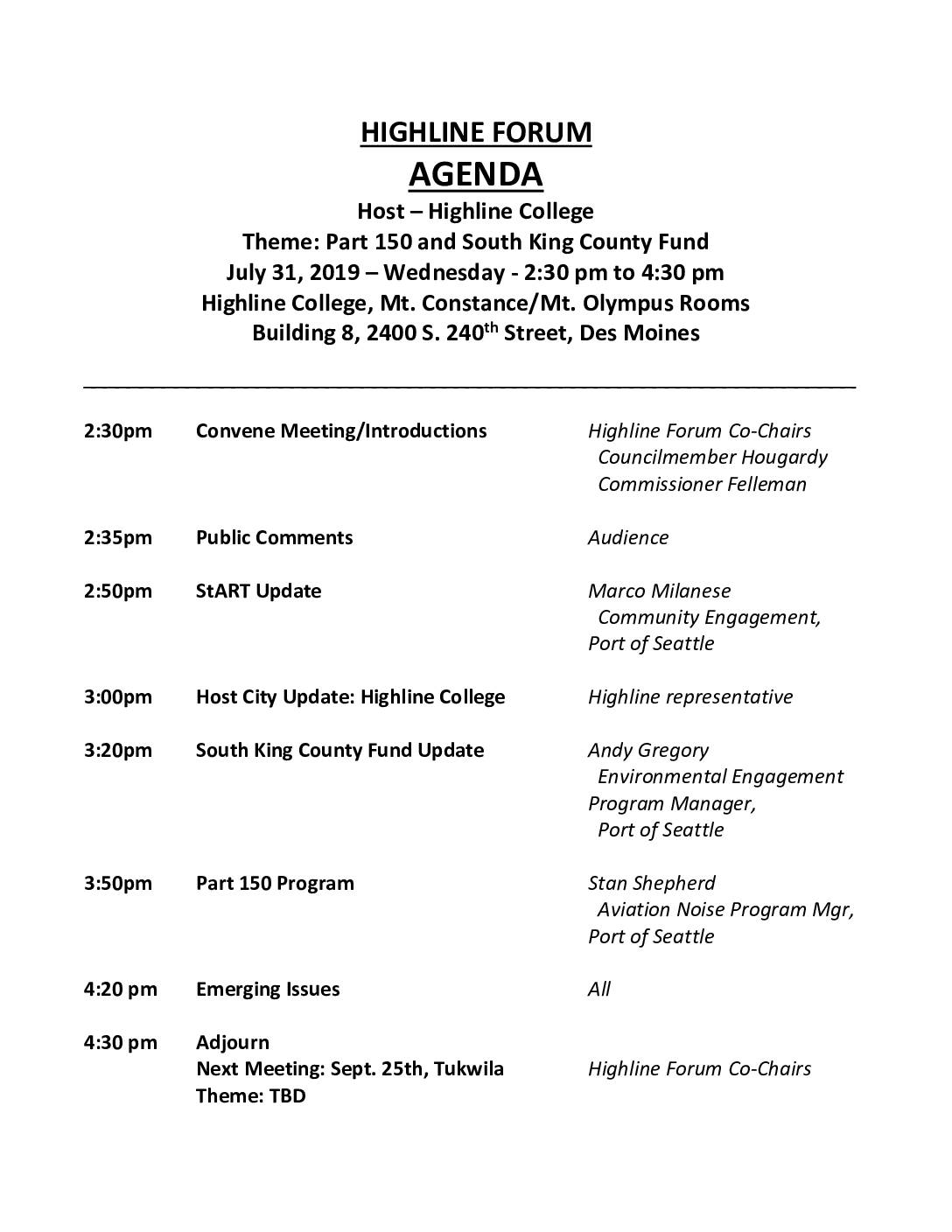
The Highline Forum held a public meeting on July 31, 2019, at Highline College in Des Moines, Washington, focusing on the FAA Part 150 Aviation Noise Program and the South King County Fund, both related to managing aircraft noise impacts around Seattle-Tacoma International Airport. Port of Seattle staff presented updates on community engagement, environmental funding, and noise mitigation efforts, with additional time for public comment and discussion of emerging issues. The forum also announced two upcoming 2019 meetings scheduled for September 25 in Tukwila and November 20 in Des Moines. -
 2019-07-31
Sound mitigation briefing: Highline Forum
This July 2019 briefing presented to the Highline Forum outlines Sea-Tac Airport's sound mitigation efforts under the FAA's Part 150 program, a voluntary federal framework that helps airports address noise and land use conflicts while qualifying for up to 80% federal grant funding. Sea-Tac's program, which began in 1985 and has undergone three updates (most recently in 2014), has involved extensive public outreach including workshops, city council presentations, and community forums. The briefing highlights that Sea-Tac Airport has been actively working to reduce aviation noise impacts on surrounding communities for more than 30 years.