TagAirport Improvement Program(54)
-
 2024-10-22
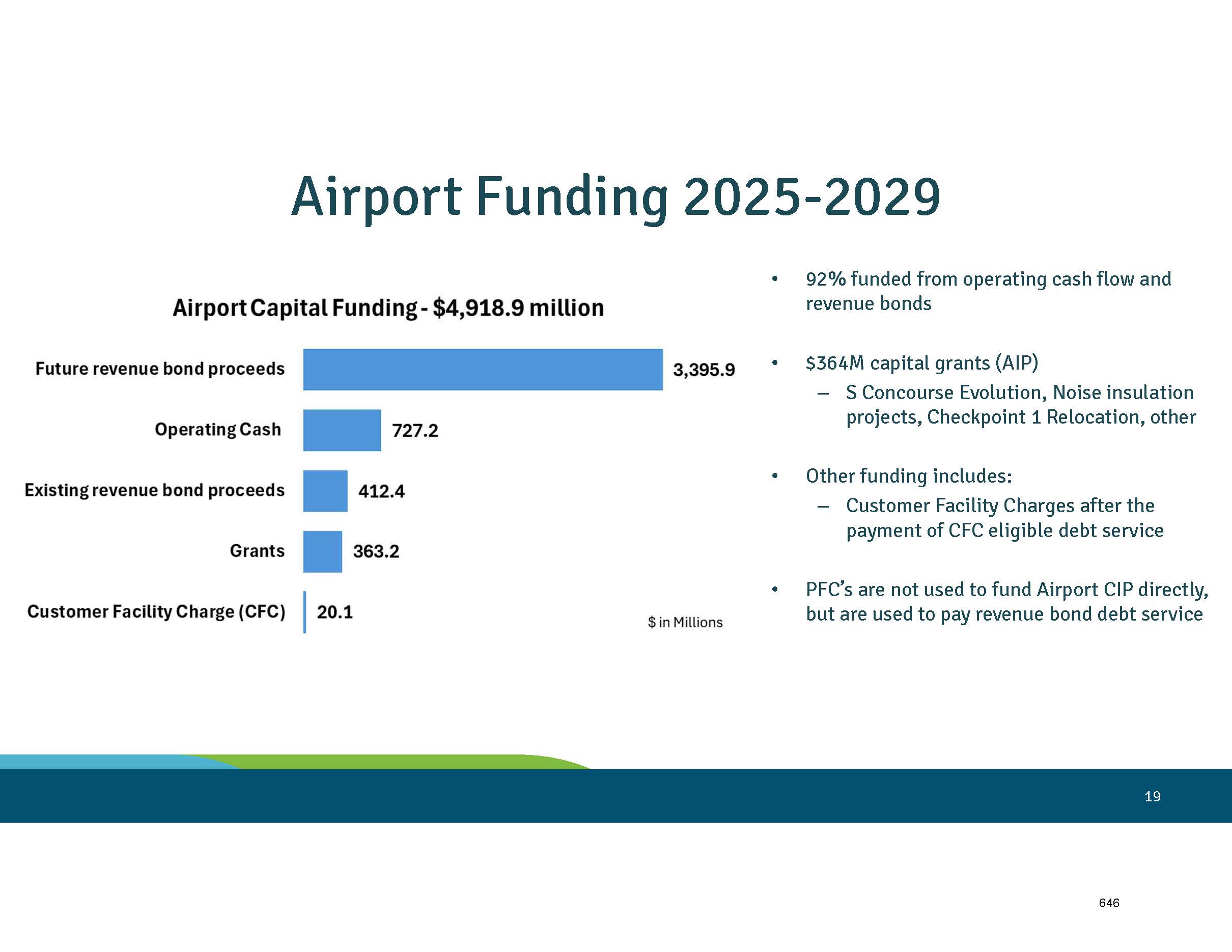
Sea-Tac Airport Capital Funding Breakdown 2025–2029 — Draft Plan of Finance (Page 21)
A presentation slide showing the Airport Capital Funding breakdown of $4,918.9 million for 2025–2029, with the largest source being Future Revenue Bond Proceeds at $3,395.9 million. The slide notes that 92% is funded from operating cash flow and revenue bonds, with $364M in capital grants (AIP) allocated to projects including S Concourse Evolution, Noise Insulation projects, and Checkpoint 1 Relocation. -
 2024-05-18
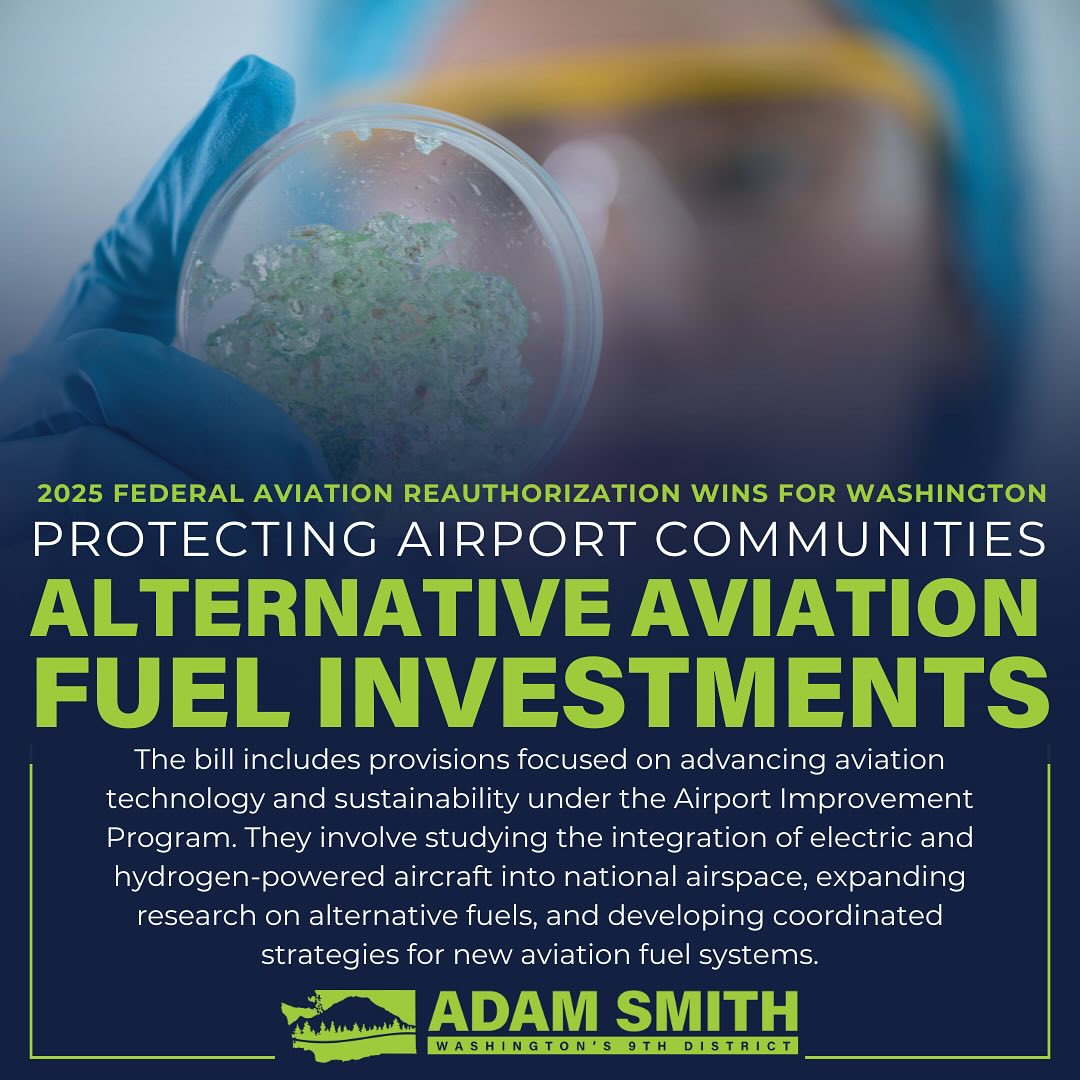
2025 Federal Aviation Reauthorization Wins for Washington – Alternative Aviation Fuel Investments
Promotional graphic from U.S. Representative Adam Smith (Washington's 9th District) highlighting provisions in the 2025 Federal Aviation Reauthorization bill focused on alternative aviation fuel investments, including study of electric and hydrogen-powered aircraft integration, expanded alternative fuel research, and coordinated strategies for new aviation fuel systems under the Airport Improvement Program. -
 2024-05-13
National Plan of Integrated Airport Systems (NPIAS) 2019–2023
The FAA's National Plan of Integrated Airport Systems (NPIAS) 2019–2023 is a report to Congress that outlines the federal government's framework for developing and maintaining a national network of airports eligible for federal funding. It covers planned airport infrastructure investments across the United States over a five-year period. While the report addresses airports nationwide, it does not specifically focus on noise policy or Sea-Tac Airport. -
 2024-05-13
National Plan of Integrated Airport Systems (2021-2025): Appendix A – List of NPIAS airports with activity and development estimate
This document is Appendix A of the FAA's National Plan of Integrated Airport Systems (NPIAS) for 2021-2025, which lists airports across the U.S. along with their ownership, category, and 5-year development cost estimates for federally eligible improvements. It defines key terms such as airport categories (Commercial Service, Reliever, and General Aviation), hub classifications based on passenger enplanements, and based aircraft counts. The data was primarily compiled in 2019 and does not reflect changes in airline activity due to the COVID-19 pandemic. -
 2024-01-17
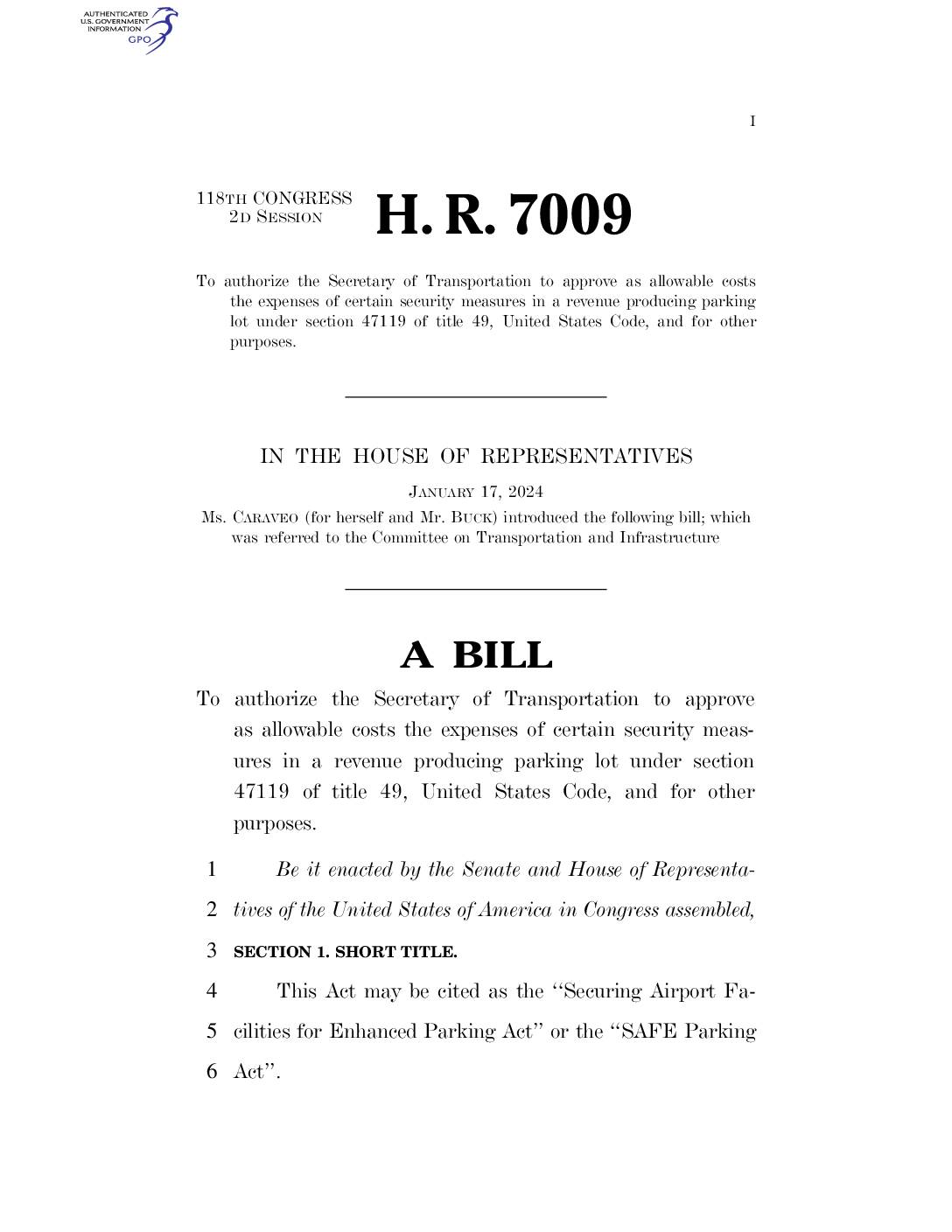
H.R. 7009 – Securing Airport Facilities for Enhanced Parking Act (SAFE Parking Act)
H.R. 7009, the SAFE Parking Act, is a bill introduced in January 2024 that would allow the U.S. Secretary of Transportation to approve federal funding for security improvements in airport revenue-generating parking lots, including CCTV systems, physical barriers, alarm systems, and crime-tracking analytical tools. The authority granted under the bill would expire on December 31, 2025, at which point the Comptroller General would be required to submit a report to Congress on how the funds were used and recommendations for updating the broader airport improvement program. -
 2023-11-15
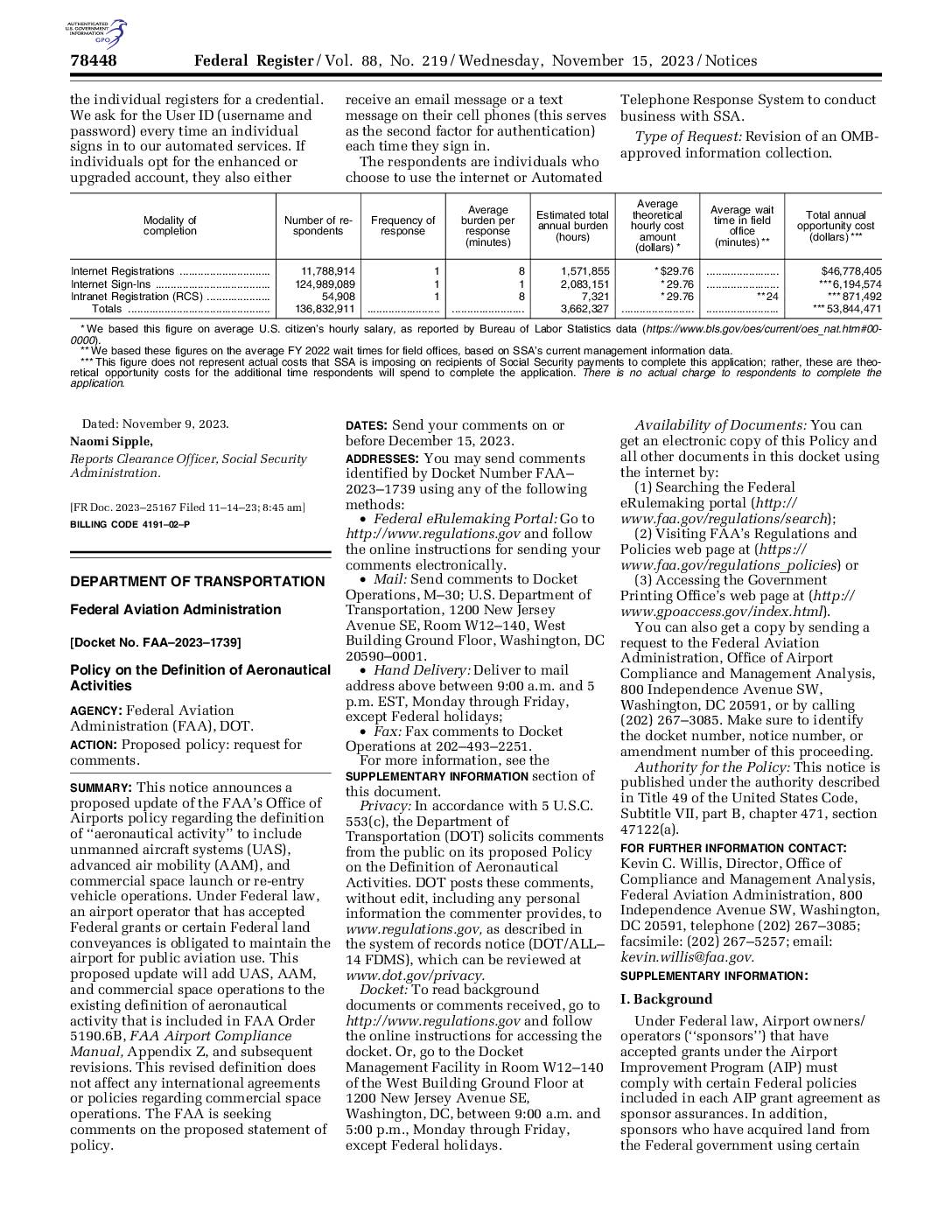
Federal Register Policy on Definition of Aeronautical Activities
★ 32The FAA proposed updating its definition of 'aeronautical activity' to include unmanned aircraft systems (UAS), advanced air mobility (AAM), and commercial space launch operations, meaning federally obligated airports must provide non-discriminatory access to these emerging technologies. The policy clarifies that while these new operations qualify for airport access, the FAA retains authority to assess safety risks and set conditions for accommodating them. Recreational UAS, model aircraft, and model rockets are explicitly excluded from the updated definition. -
 2023-07-01
Airport Law Digest: 2023 Mid-Year Update
The Kaplan Kirsch & Rockwell Airport Law Digest 2023 Mid-Year Update covers key developments in U.S. airport law and policy from the first half of 2023, including proposed FAA reauthorization legislation that would affect airport funding, land use approvals, and grant assurances. Both the House and Senate introduced bills that would increase Airport Improvement Program grants to $4 billion annually and clarify the FAA's limited role in airport land use decisions. The digest also summarizes recent litigation, federal rules, and regulatory guidance relevant to airport operators and legal professionals. -
 2023-04-17
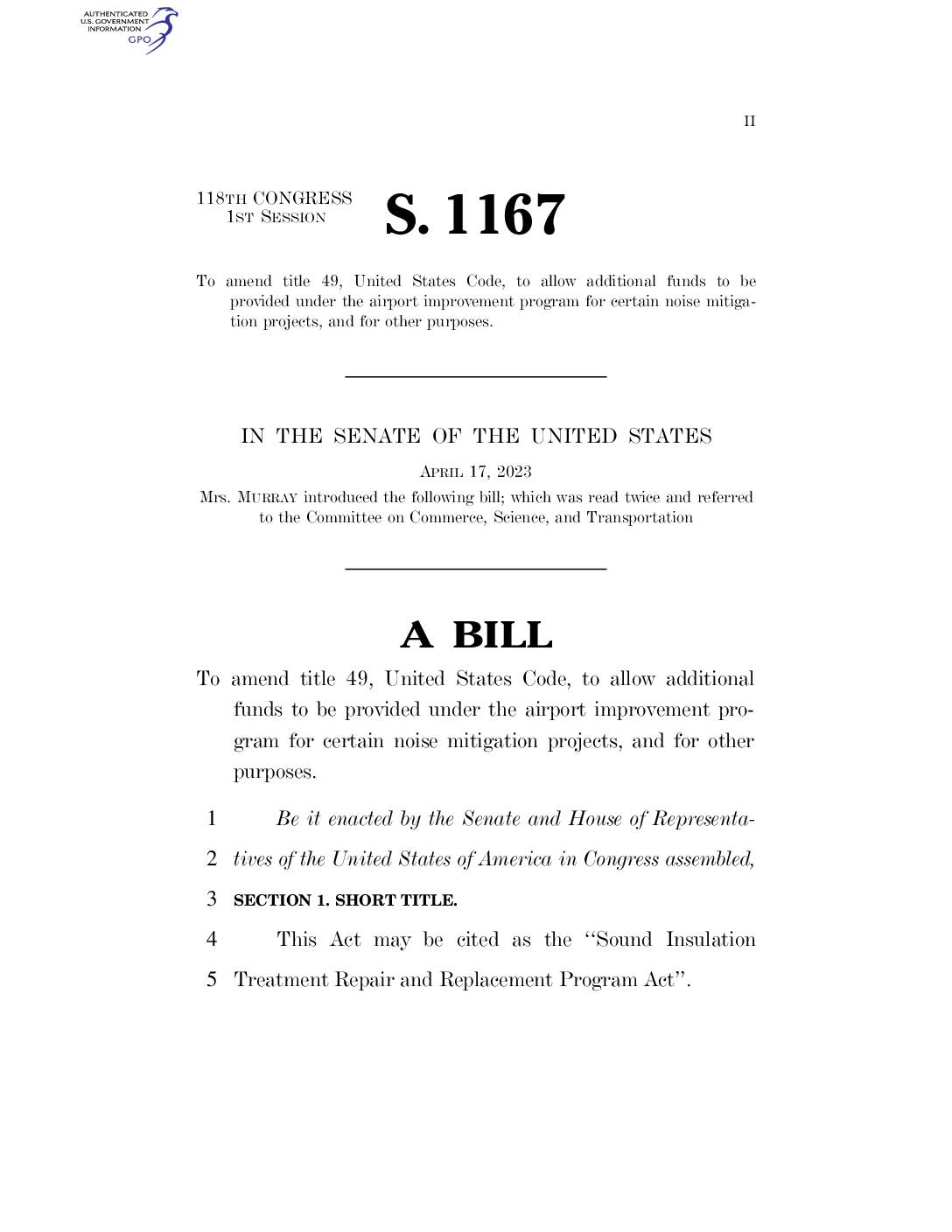
Sound Insulation Treatment Repair and Replacement Program Act (S. 1167)
Senate Bill 1167, introduced by Sen. Patty Murray in April 2023, would allow airports to receive additional federal funding to repair or replace sound insulation previously installed in nearby homes under the Airport Improvement Program. The bill provides a one-time waiver allowing airports to seek new federal assistance for sound insulation projects without prior government costs counting against them, provided the homes fall within the DNL 65 noise threshold or the original insulation caused physical damage. This legislation is particularly relevant to communities around Sea-Tac Airport, where aging soundproofing materials and ongoing aircraft noise concerns have prompted calls for updated noise mitigation support. -
2023-04-10
Port Package Update Letter – Spring 2023
Greetings, As always, this is behind schedule. However, in addition to the the usual procrastination, things change all the time. Sorry, but for newcomers we always start with some background. If you’ve heard all this, just skip down… Your original Port Package was almost certainly financed through FAA funding called the Airport Improvement Program (AIP). -
 2023-04-06
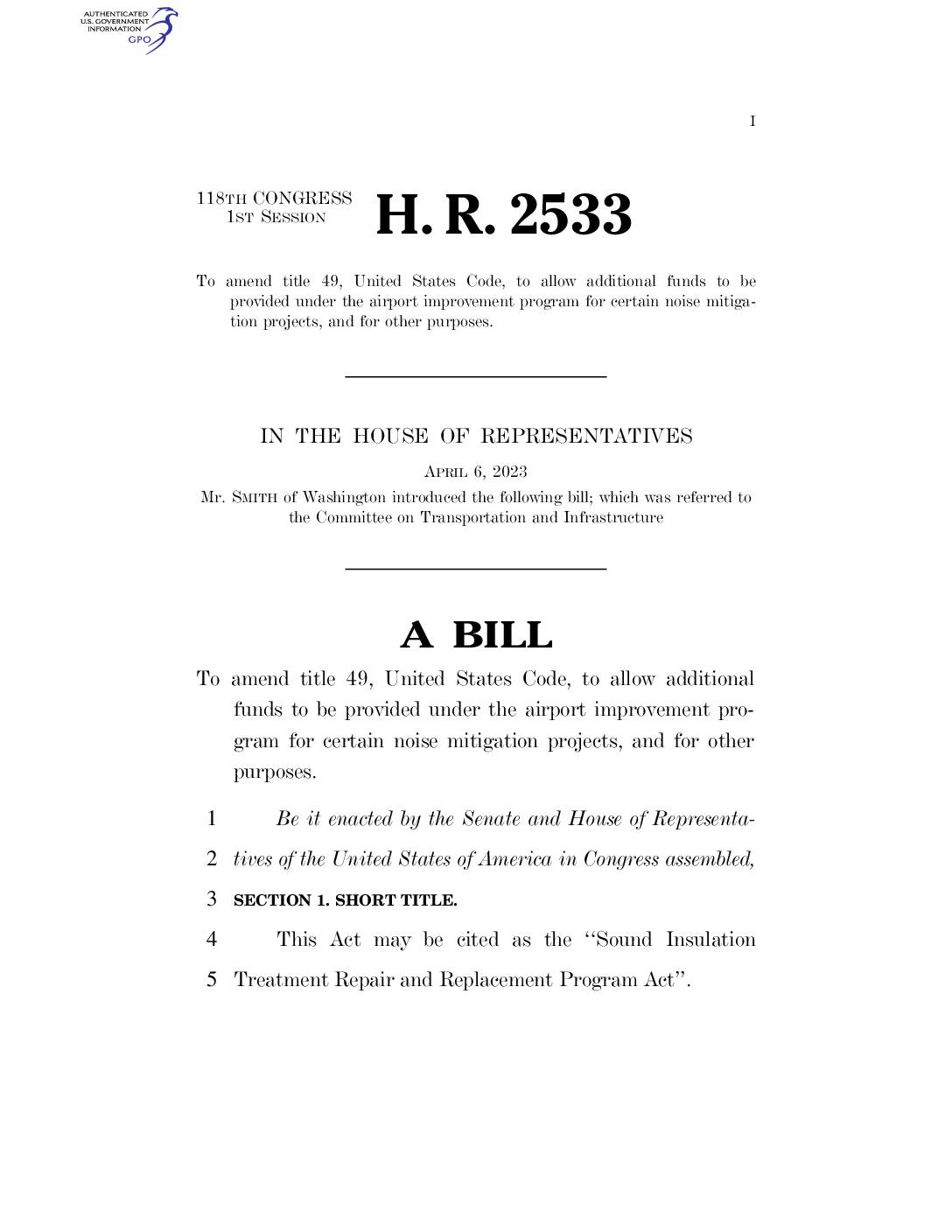
H.R. 2533 – Sound Insulation Treatment Repair and Replacement Program Act
H.R. 2533, the Sound Insulation Treatment Repair and Replacement Program Act, was introduced in April 2023 to allow airports to receive additional federal funding to repair or replace previously installed sound insulation in homes affected by aircraft noise. The bill allows the Secretary of Transportation to grant a one-time waiver so that prior government spending on a home's soundproofing does not count against the allowable project cost for new work. Homes are eligible if they fall within the FAA's DNL 65 noise standard or if an FAA-certified auditor determines that the original soundproofing caused physical damage to the residence.