TagStART(508)
-
 2025-01-01
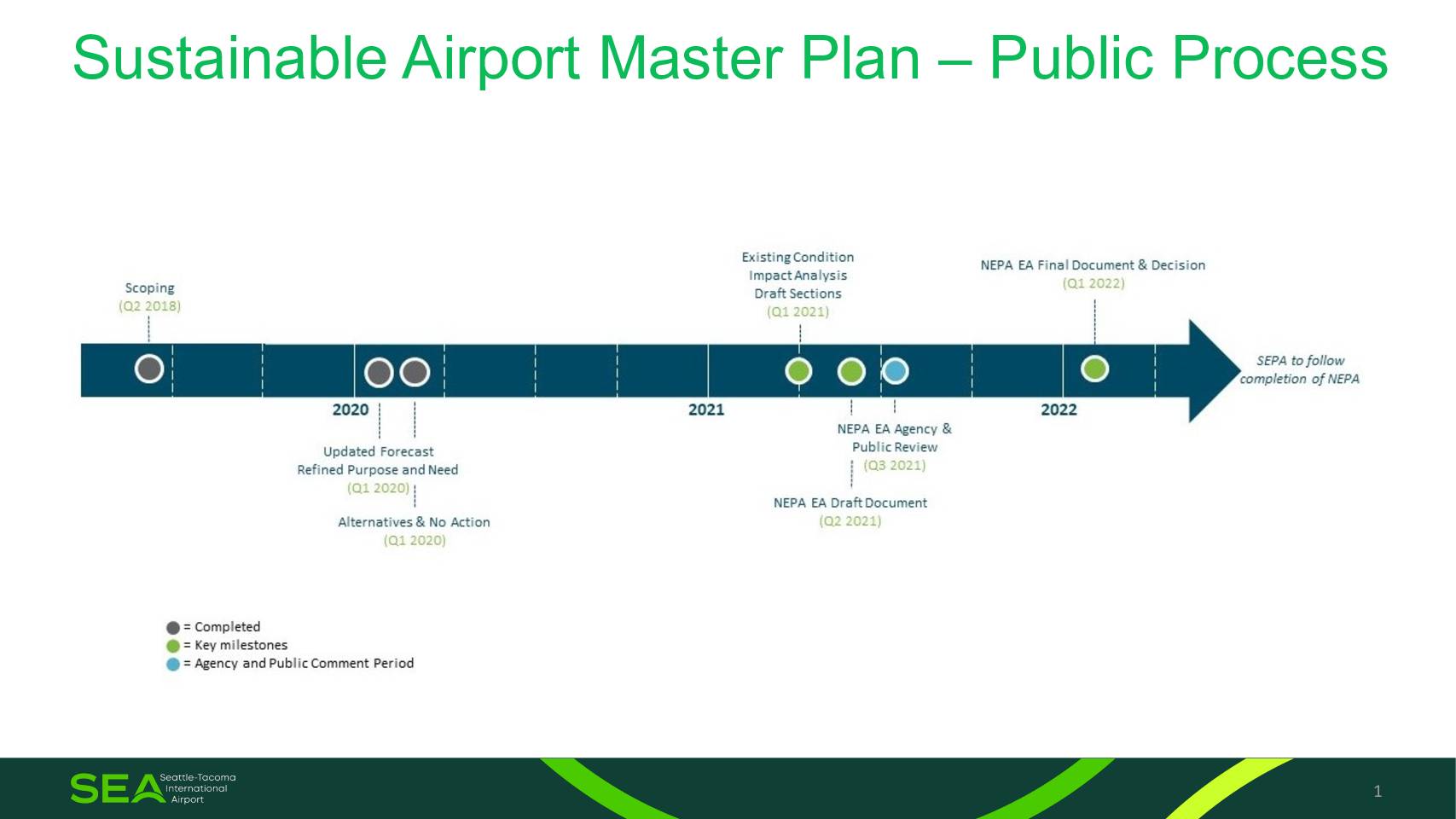
Sustainable Airport Master Plan – public process
This document outlines the public process timeline for Seattle-Tacoma International Airport's Sustainable Airport Master Plan, spanning from initial scoping in Q2 2018 through a projected NEPA Environmental Assessment final decision in Q1 2022. Key milestones include updated forecasts and alternatives analysis in early 2020, draft impact analysis sections in Q1 2021, and a public agency review period in Q3 2021. A State Environmental Policy Act (SEPA) review is scheduled to follow the completion of the federal NEPA process. -
 2025-01-01
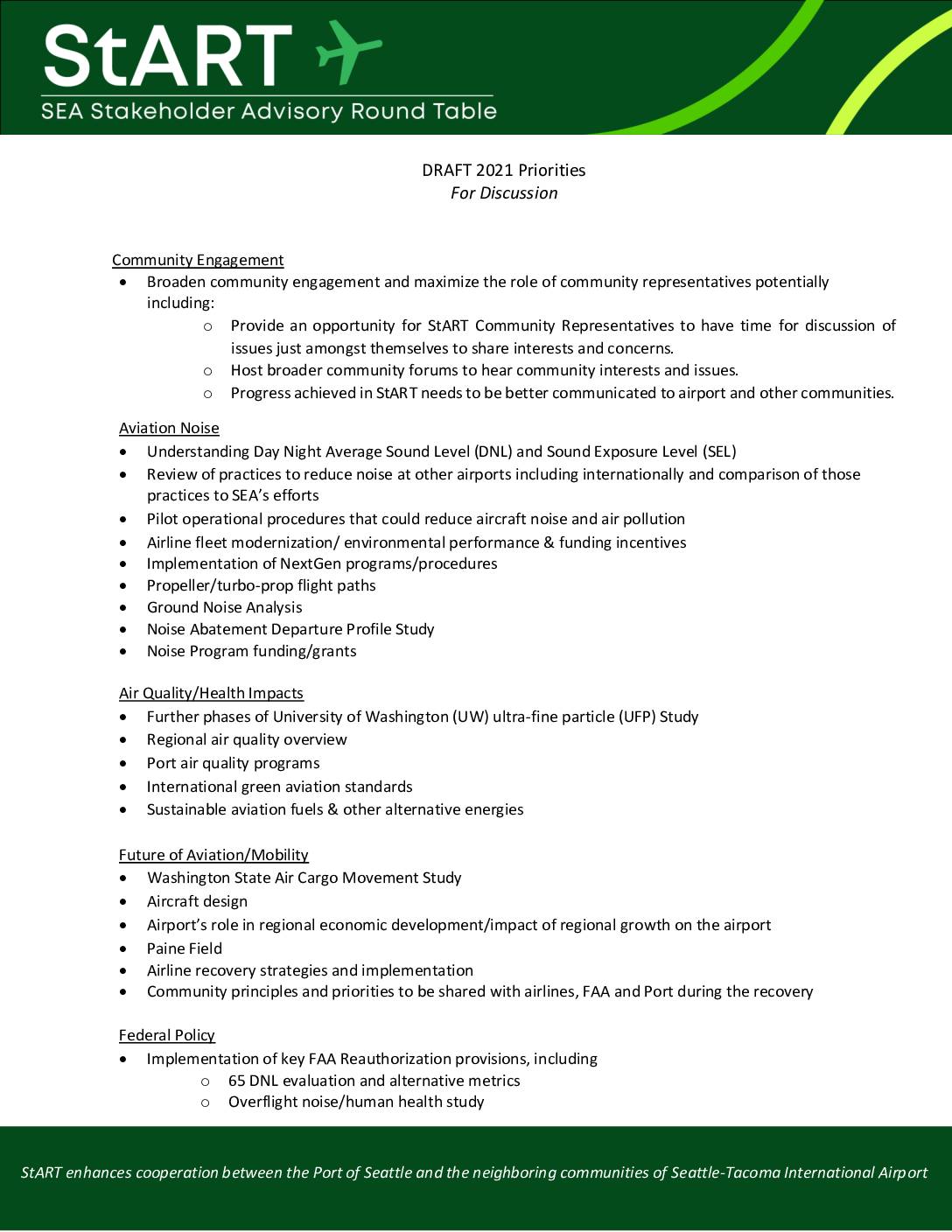
StART draft 2021 priorities for discussion
This document outlines the SEA Stakeholder Advisory Round Table (StART) draft priorities for 2021, covering key areas such as aviation noise reduction, air quality and health impacts, the future of aviation, and federal policy. It includes plans to study noise metrics, pilot new operational procedures, advance sustainable aviation fuels, and push for legislation protecting airport communities from noise and particle emissions. Also highlighted are completed 2019/20 priorities, including noise monitoring reviews, runway use agreements, and advocacy for FAA noise program funding. -
 2025-01-01
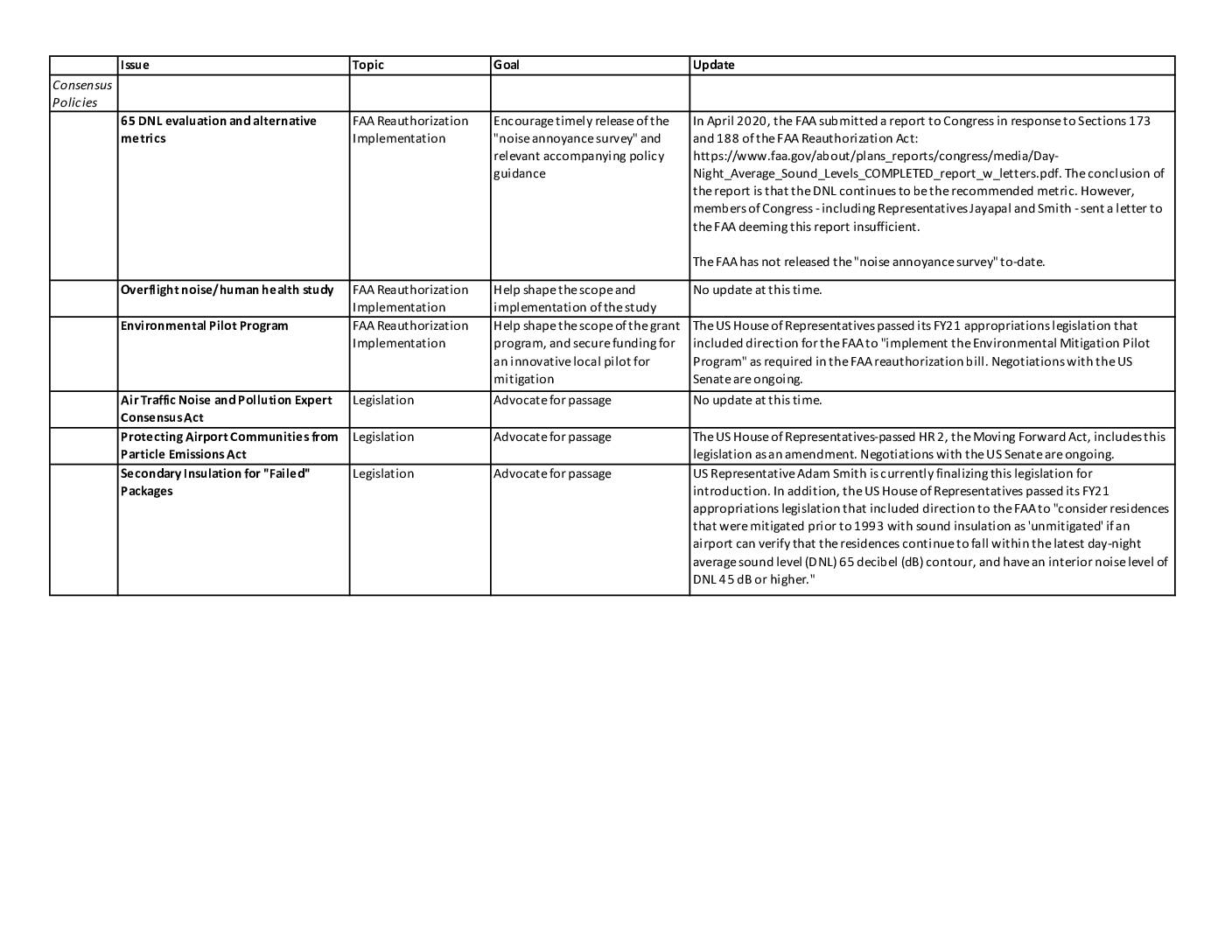
Consensus policies issue tracker and legislative update
This document provides a status update on various Sea-Tac Airport (SEA) noise and environmental policy efforts, covering FAA Reauthorization implementation, pending legislation, and local StART Noise Working Group initiatives. Key updates include the FAA's reaffirmation of the DNL metric despite Congressional pushback, ongoing House-Senate negotiations on noise funding and particle emissions legislation, and active GAO community noise impact studies. Several local noise mitigation efforts—such as the Late Night Noise Limitation Program, Runway Use Plan, and Noise Abatement Departure Profiles—are listed as ongoing, while newer potential additions address sustainable aviation fuels and aircraft modernization incentives. -
 2025-01-01
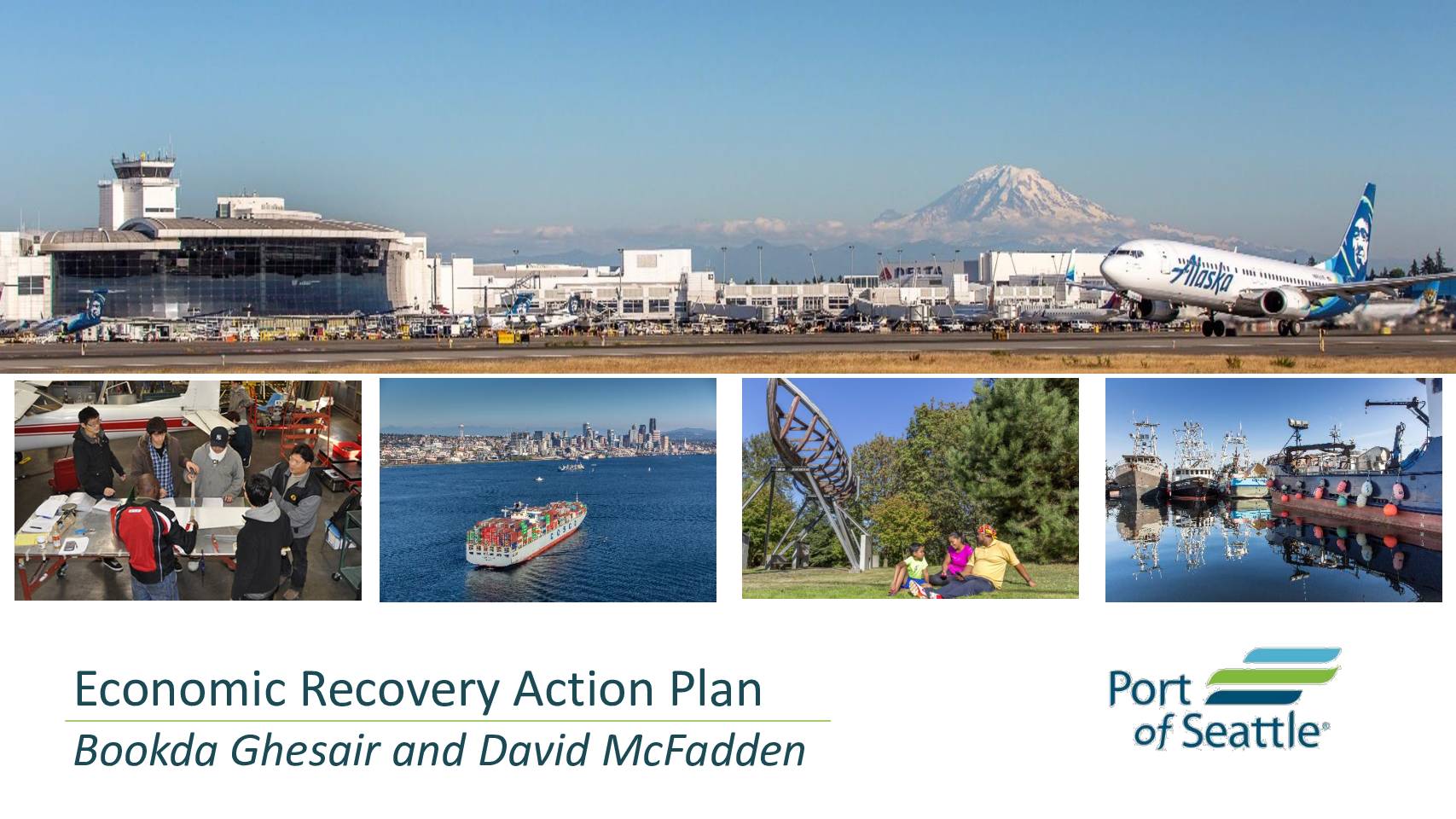
Economic Recovery Action Plan
The Port of Seattle's Economic Recovery Action Plan, presented by Bookda Ghesair and David McFadden, outlines early actions taken in response to the economic crisis affecting port operations. The plan, developed under Commission Recovery Motion 2020-06, focuses on protecting Port employees' health and safety, supporting tenants and concessionaires through rent and fee relief, prioritizing economic development and community investment programs, and maximizing partnerships to leverage funding and impact. -
 2025-01-01
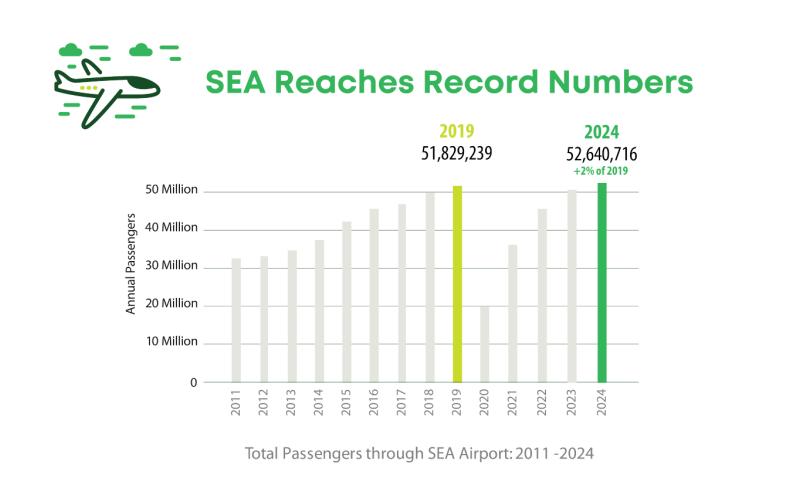
StART Update-2025 SEA Reaches Record Passenger Numbers 2019 v 2024
Bar chart published by Seattle-Tacoma International Airport (SEA) showing annual passenger counts from 2011 to 2024. The 2024 total of 52,640,716 passengers surpassed the previous record of 51,829,239 set in 2019, representing a 2% increase over the pre-pandemic peak. -
 2025-01-01
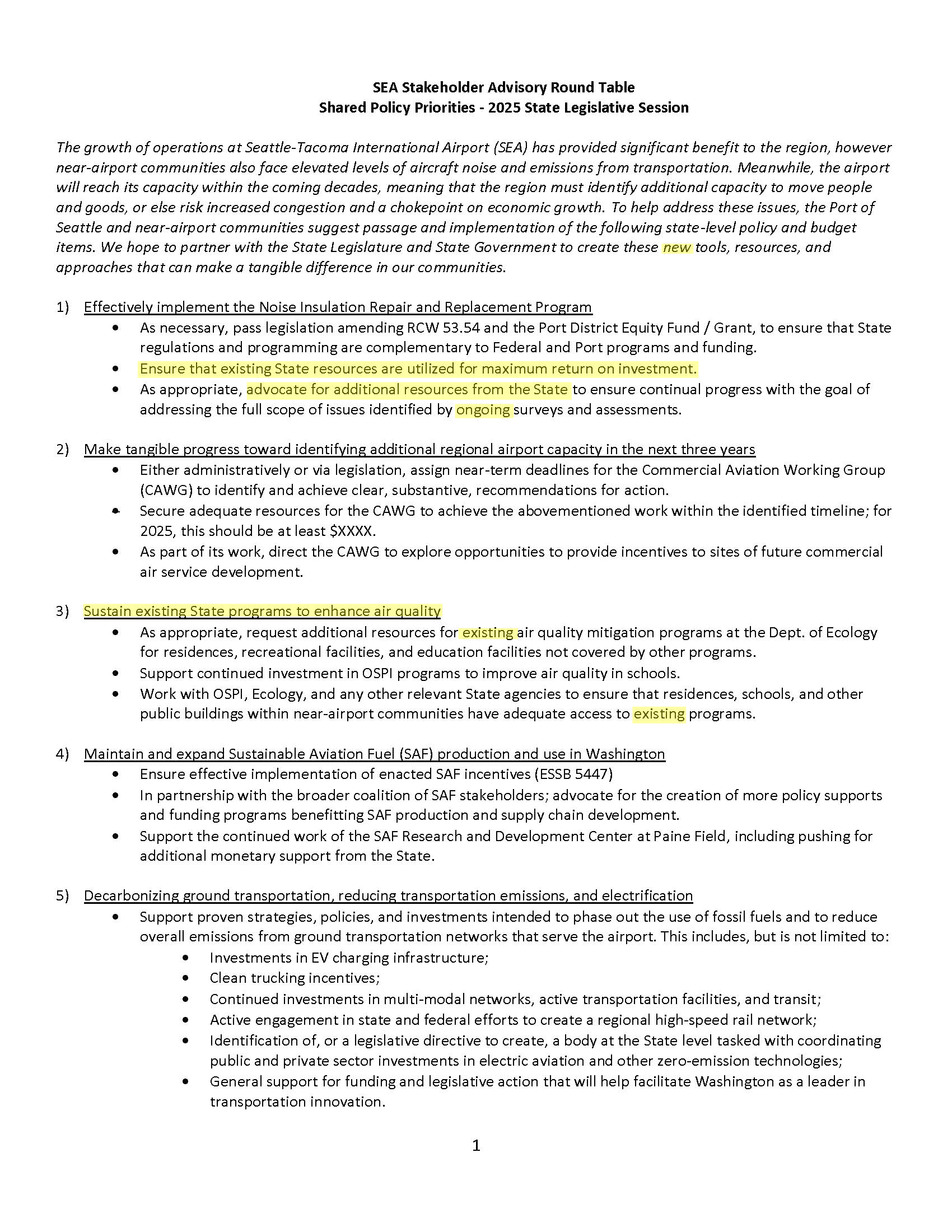
2025 StART State Leg Priorities 10.17
A policy document from the SEA Stakeholder Advisory Round Table outlining shared priorities for the 2025 Washington State Legislative Session, including noise insulation repair, regional airport capacity, air quality programs, Sustainable Aviation Fuel production, and ground transportation decarbonization near Seattle-Tacoma International Airport. -
 2024-12-20
Impacts of the November 2024 elections on StART policy priorities
A Port of Seattle presentation examines how the November 2024 elections, which resulted in full Republican control of the White House, Senate, and House, may affect key aviation policy priorities including aircraft noise insulation funding, the FAA Noise Policy Review, and Sustainable Aviation Fuel incentives. While programs like the FAA's Aircraft Noise Advisory Committee are expected to continue, staff transitions and a preference for budget cuts could slow progress. Funding for noise-related and environmental programs faces uncertainty as many Inflation Reduction Act provisions may be rolled back under the new administration. -
 2024-12-18
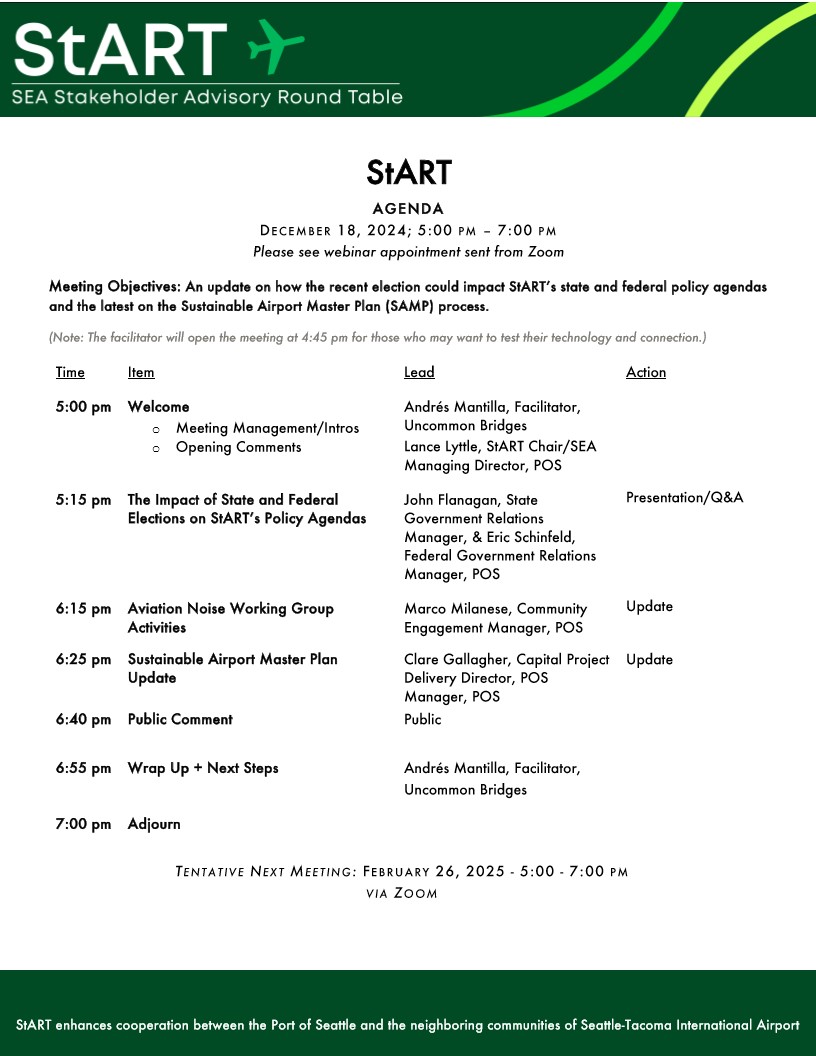
StART December 18, 2024
The Impact of State and Federal Elections on StART’s Policy Agendas Aviation Noise Working Group Activities Sustainable Airport Master Plan Update -
 2024-12-18
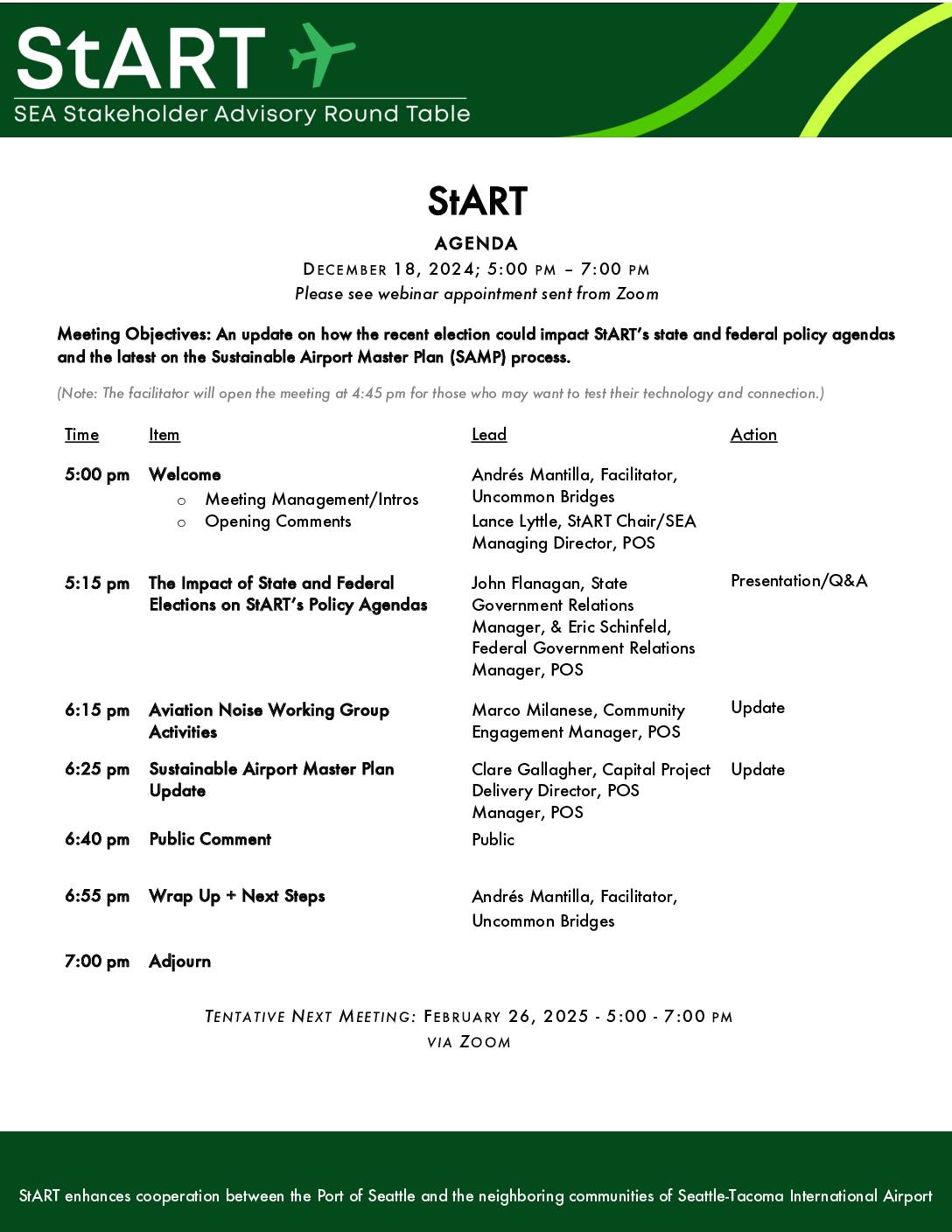
StART agenda December 18, 2024
The SEA Stakeholder Advisory Round Table (StART) held a meeting on December 18, 2024, focused on two main topics: how recent state and federal elections may affect StART's policy agendas, and an update on the Sustainable Airport Master Plan (SAMP) process. The agenda also included an Aviation Noise Working Group update and a public comment period. The next tentative meeting was scheduled for February 26, 2025, via Zoom. -
2024-12-18
StART Meeting Agenda — December 18, 2024
Agenda for the SEA Stakeholder Advisory Round Table (StART) meeting held December 18, 2024, 5:00–7:00 PM via Zoom. Topics include the impact of state and federal elections on StART's policy agendas, Aviation Noise Working Group activities, and a Sustainable Airport Master Plan (SAMP) update, led by Port of Seattle (POS) staff and facilitated by Andrés Mantilla of Uncommon Bridges.