TagSEPA(293)
-
 1997-05-01
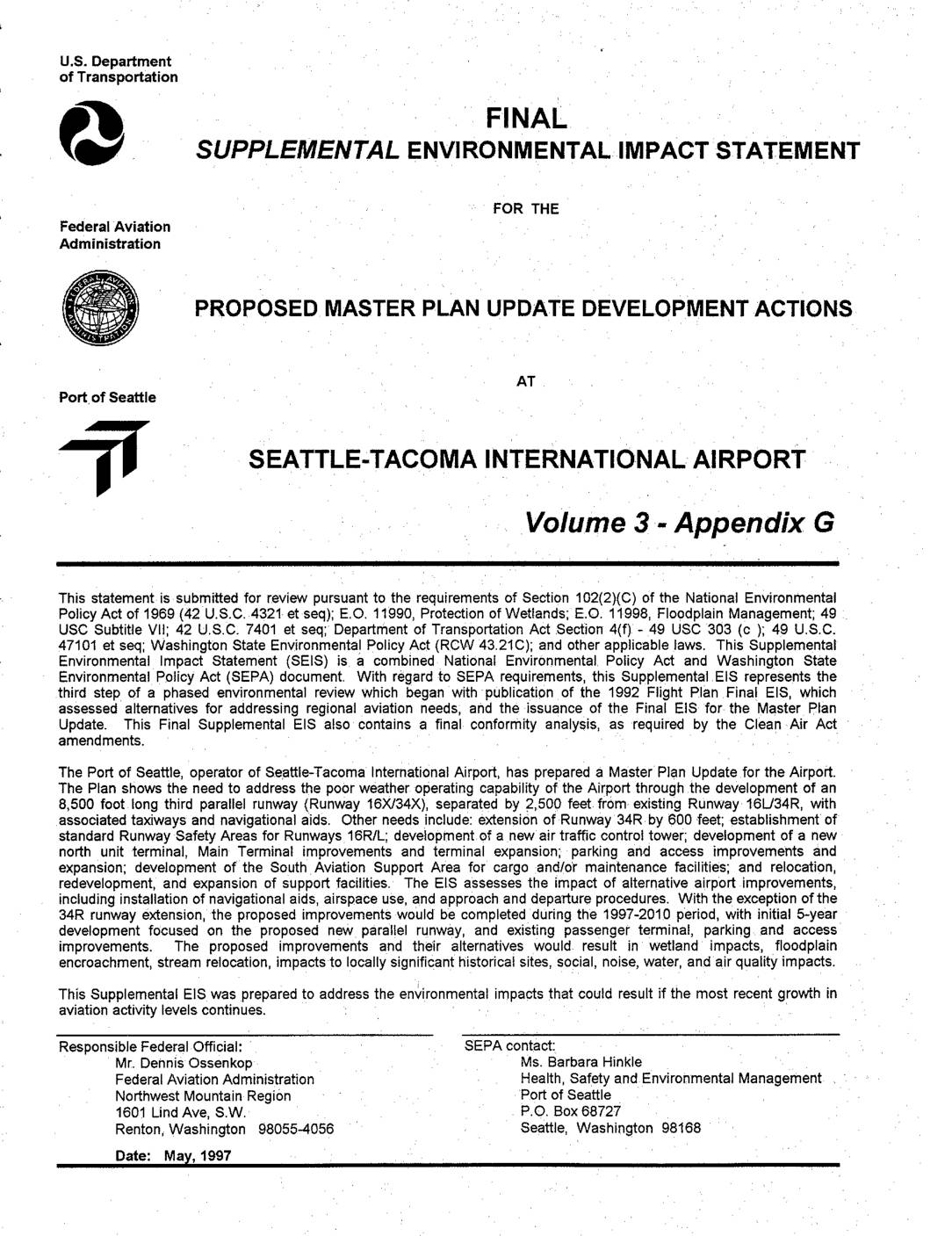
Final Supplemental Environmental Impact Statement for the Proposed Master Plan Update Development Actions at Seattle-Tacoma International Airport — Volume 3, Appendix G: Public and Agency Comments on the February 1997 Draft Supplemental EIS
This 1997 Final Supplemental Environmental Impact Statement (SEIS) evaluates the environmental effects of proposed expansion projects at Seattle-Tacoma International Airport, including the construction of a new 8,500-foot third parallel runway, terminal improvements, parking expansions, and cargo facilities. The document addresses a range of potential impacts such as noise, air and water quality, wetlands, and floodplains resulting from increased aviation activity. It was prepared jointly under federal (NEPA) and Washington State (SEPA) environmental review requirements by the Port of Seattle and the Federal Aviation Administration. -
 1995-03-20
Sea-Tac International Airport Hotel draft environmental impact statement
This March 1995 Draft Environmental Impact Statement, prepared by Kato & Warren, Inc. for the Port of Seattle, evaluates the proposed construction of a 16-story, 384-room hotel on a 77,000-square-foot site at Sea-Tac International Airport, located between the 'D' Concourse and the airport entry drives. The hotel, which would include 10,000 square feet of meeting rooms plus a restaurant and lounge, was to be connected to the terminal and parking garage via pedestrian skybridges on land then occupied by a United Airlines office building. The document was issued for public comment under Washington State's Environmental Policy Act (SEPA), with responses due by April 20, 1995. -
 1980-08-01
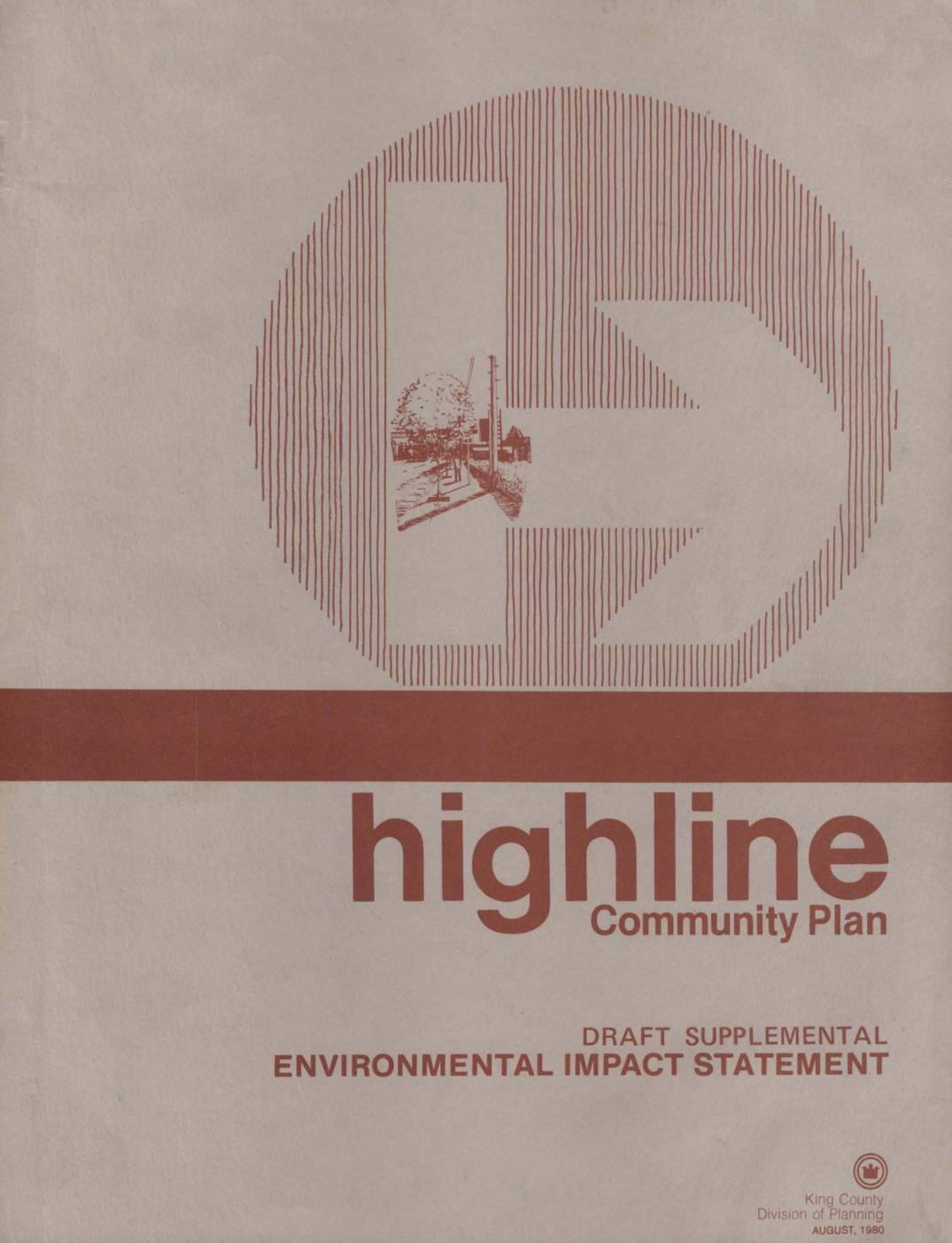
Highline Community Plan: Draft Supplemental Environmental Impact Statement
This August 1980 Draft Supplemental Environmental Impact Statement from King County's Division of Planning outlines proposed zoning changes for the Highline Community Plan, covering areas surrounding Seattle-Tacoma International Airport including White Center, Burien, and nearby neighborhoods. The document maps land proposed for rezoning across multiple subareas, with changes including downzones to single-family residential, conversions to multi-family or mixed use, and designations of land for potential future rezones. It serves as a planning tool to guide land use decisions in communities directly affected by airport noise and related impacts.