TagSAF(31)
Content concerning a variety of biomass replacements and/or blends for commercial Jet-A fuel. These are referred to broadly as Sustainable Aviation Fuel.
-
 2026-01-09 01:38
WA commits $20M to green aviation as Walla Walla fuel plant progresses
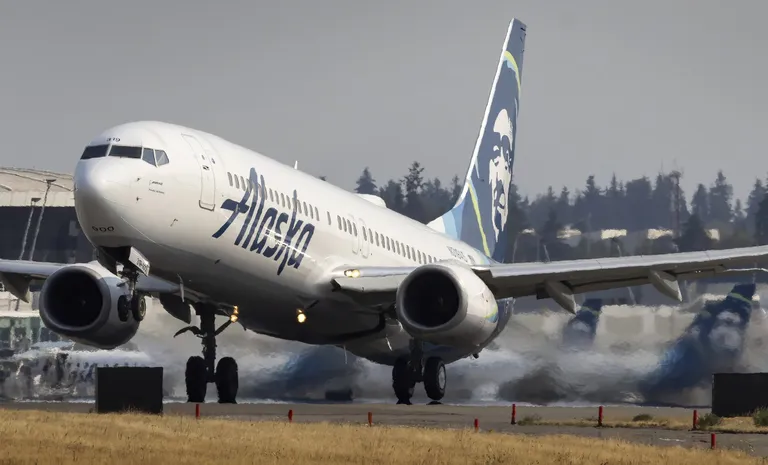
A Boeing 737 takes off at Seattle-Tacoma International Airport. On Thursday, Washington leaders launched a nonprofit committed to sustainable aviation fuel, which promises to reduce aviation carbon emissions by 80%… (Ellen M. Banner / The Seattle Times, 2024)More By Lauren Rosenblatt Seattle Times business reporter MUKILTEO — Washington hopes to be a leader in producing -
 2026-01-08 12:06
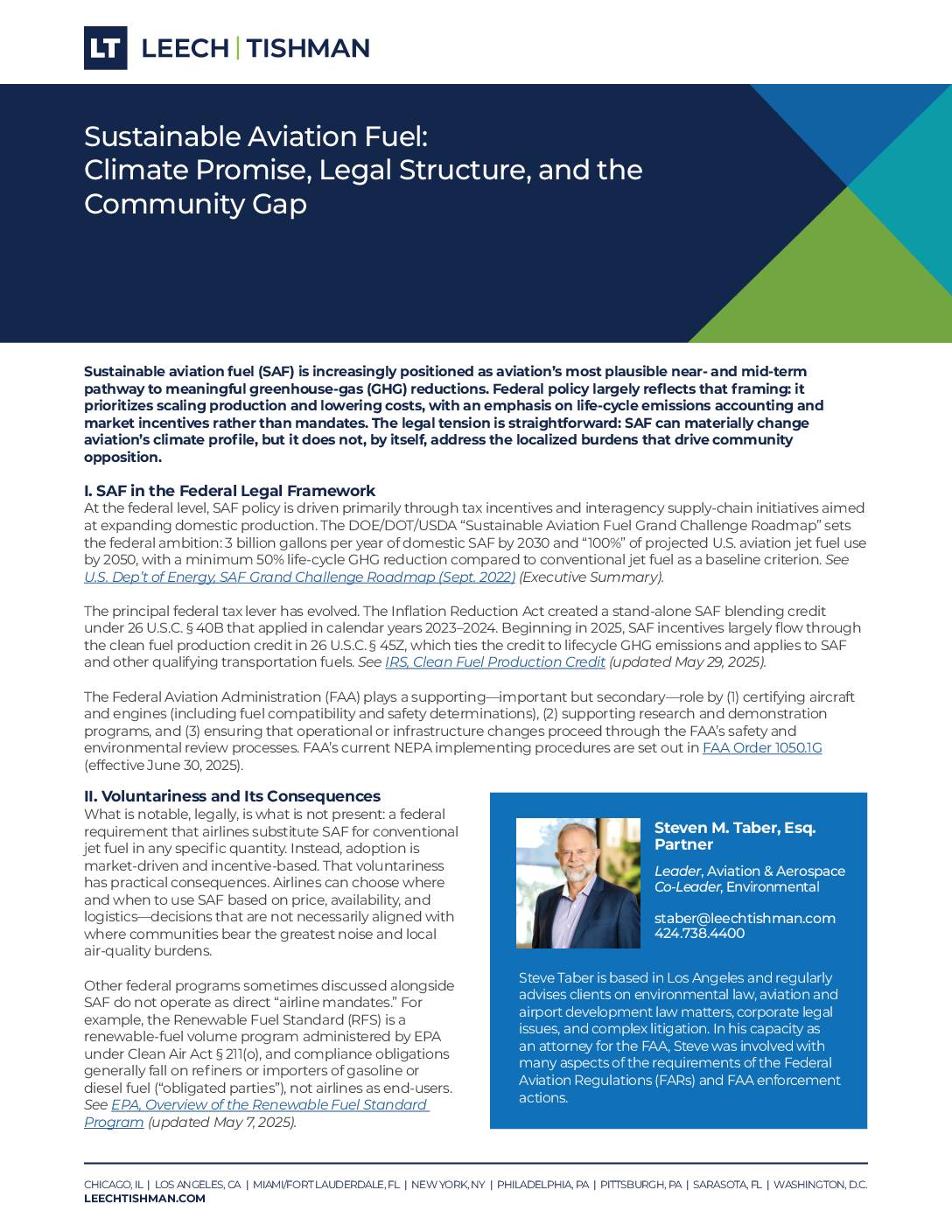
Sustainable Aviation Fuel: Climate Promise, Legal Structure, and the Community Gap
Legal analysis from Steve Taber @ Leech Tishman examining how Sustainable Aviation Fuel (SAF) addresses climate goals through federal tax incentives and production targets, while highlighting the gap between SAF’s global climate benefits and local community impacts like noise and air quality that remain unaddressed. -
 2025-07-24 23:57
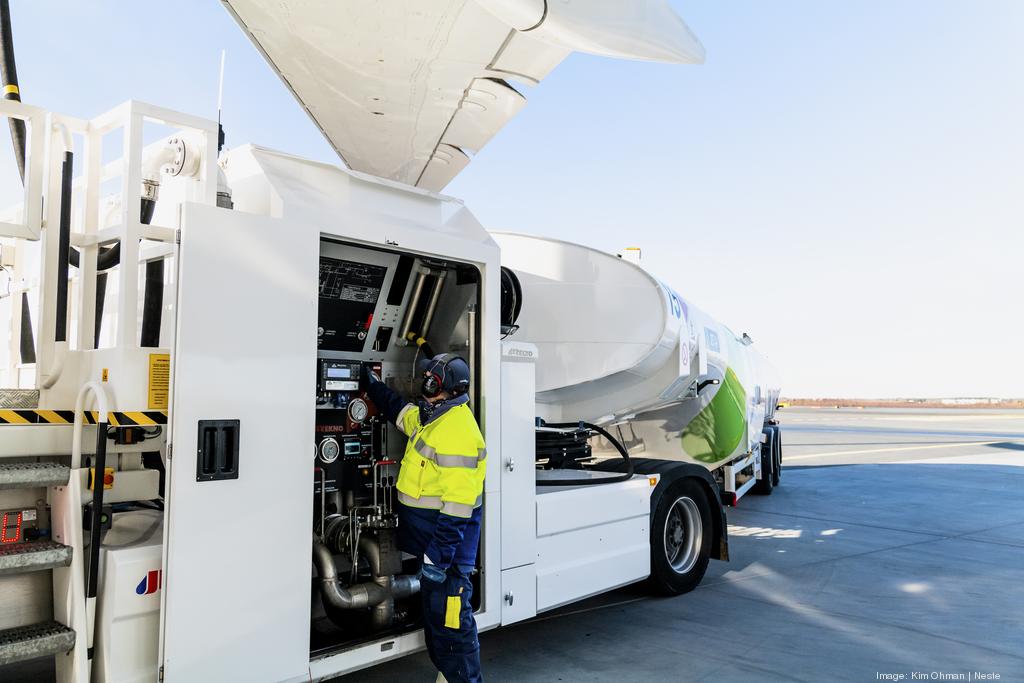
Sustainable jet fuel company plans multibillion-dollar plant in Longview
By Nick Pasion – Reporter, Puget Sound Business Journal Story Highlights Northwest Advanced Bio-Fuels plans 200-acre sustainable aviation fuel facility in Longview. Company mitigates financial risk through insurance underwriter partnership for funding. Facility expected to produce 60 million gallons of SAF annually. A sustainable aviation fuel company is eyeing a site on the Columbia River in Cowlitz -
 2025-07-23 01:45
Greenhouse gas accounting procedures may overlook bio-derived aviation fuel
by University of Illinois at Urbana-Champaign edited by Sadie Harley, reviewed by Andrew Zinin Editors’ notes Credit: Pixabay/CC0 Public Domain Low carbon fuel policies are intended to reduce greenhouse gas (GHG) emissions from transportation. However, rigid carbon intensity (CI) accounting procedures in current policies may limit CI responsiveness across candidate sites and facilities. Work published in the journal ACS Sustainable Resource -
 2025-02-21 20:31
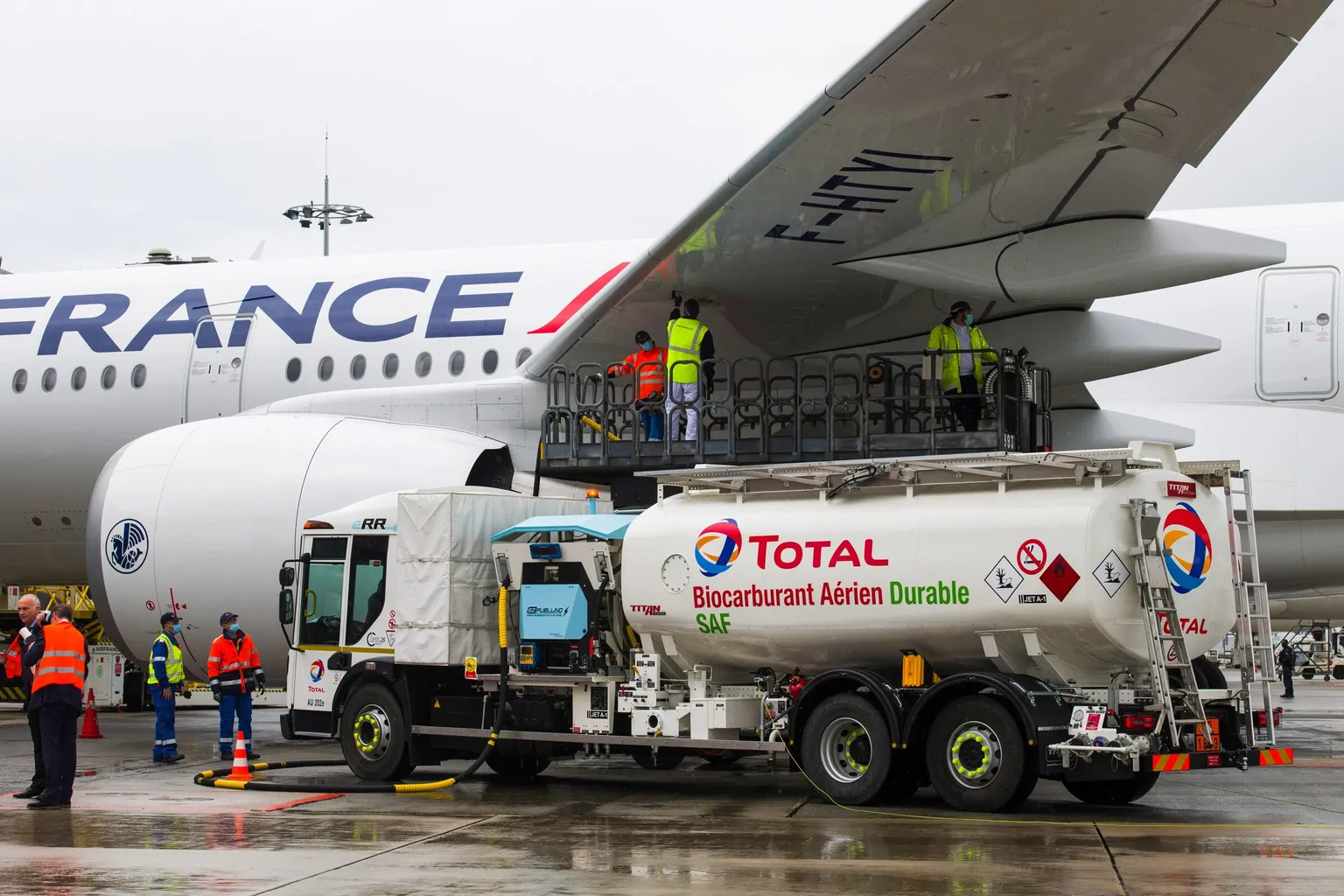
State backs green aviation fuel plant as industry struggles to cut emissions
By Dominic Gates Seattle Times aerospace reporter Washington state has awarded a new $1.5 million grant for a planned sustainable aviation fuels and renewable diesel production facility projected to open in 2029 at Wallula Gap on the Columbia River. That’s a very small portion of the funding required to complete the facility being developed by -
 2025-01-10 00:00
DOE Announces $1.67 Billion to Montana Renewables to Significantly Expand US Sustainable Aviation Fuel Production
Montana Renewables will expand its renewable fuels facility to scale up sustainable aviation fuel (SAF) production. Office of Energy Dominance Financing January 10, 2025 As part of the Biden-Harris administration’s Investing in America agenda, the Department of Energy’s (DOE) Loan Programs Office (LPO) announced today the closing of a $1.67 billion ($1.44 billion of principal -
 2024-07-27 16:41
Green aviation solutions have yet to take off as climate restrictions loom
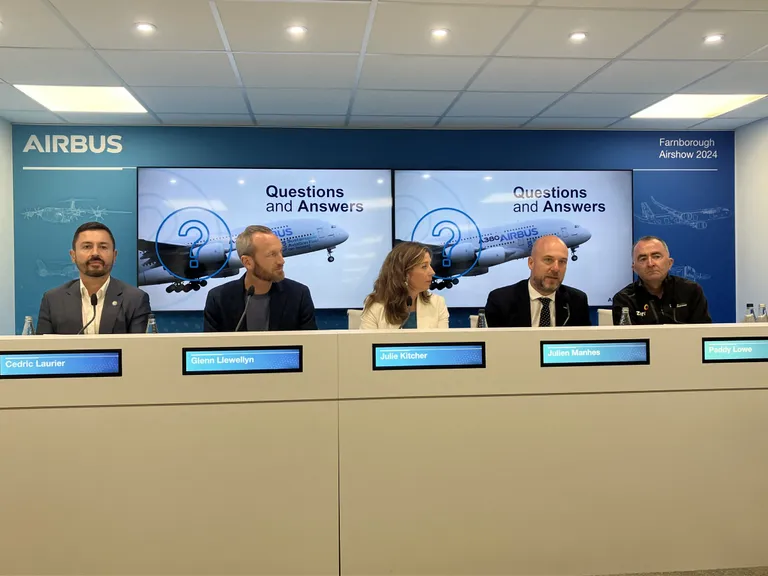
Airbus officials hold a panel on sustainable aviation on Wednesday at the Farnborough Air Show. (Dominic Gates / The Seattle Times) By Dominic Gates Seattle Times aerospace reporter FARNBOROUGH, England — The aviation industry has preached for years that low-carbon sustainable aviation fuel, or SAF, will be key to making the airline business carbon neutral. -
 2024-06-26 23:02
McKinsey Making Net-Zero Aviation Possible
net zero within the sector by 2050 and to comply with a 1.5°C target. The Mission Possible Partnership At current emissions levels, staying within the global carbon budget for 1.5°C might slip out of reach in this decade. Yet efforts to slow climate change by reducing greenhouse gas (GHG) emissions run into a central challenge: some of the biggest emitters of greenhouse gases into the atmosphere — transportation sectors like aviation, shipping and trucking, and heavy industries like steel, aluminium, cement/concrete, and chemicals manufacturing — are the hardest to abate. Transitioning these industries to climate-neutral energy sources requires complex, costly, and sometimes immature technologies, as well as direct collaboration across the whole value chain, including companies, suppliers, customers, banks, institutional investors, and governments. Catalysing these changes is the goal of the Mission Possible Partnership (MPP), an alliance of climate leaders focused on supercharging efforts to decarbonise these industries. Our objective is to propel a committed community of CEOs from carbon-intensive industries, together with their financiers, customers, and suppliers, to agree and, more importantly, to act on the essential decisions required for decarbonising heavy industry and transport. Led by the Energy Transitions Commission, the Rocky Mountain Institute, the We Mean Business Coalition, and the World Economic Forum, MPP will orchestrate high-ambition disruption through net-zero industry platforms for seven of the world’s most hard-to-abate sectors: aviation, shipping, trucking, steel, aluminium, cement/concrete, and chemicals. The foundation of MPP’s approach: Sector Transition Strategies Transitioning heavy industry and transport to net-zero GHG emissions by 2050… -
 2024-06-23 21:33
FORBES MONEY MARKETS Is Europe’s 2050 Sustainable Aviation Fuel Quota Unsustainable?
Europe's airlines have been queuing up to buy sustainable aviation fuels (SAFs). However, the European industry will most likely fail in meeting the EU's 2050 quota target, because the target itself is not very realistic, according to the boss of the company operating one of Europe's largest airports. -
 2024-06-05 21:44
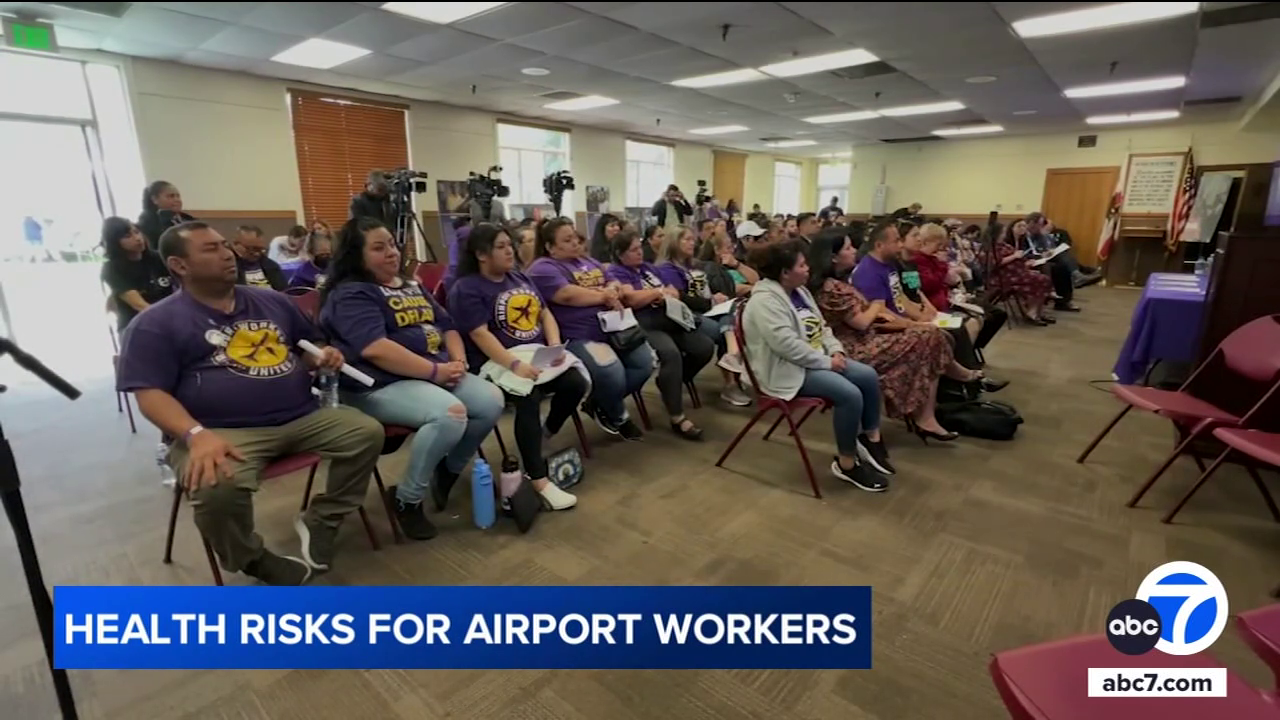
Airport workers asking Sacramento to mandate airlines report jet fuel emissions
Sid Garcia Wednesday, June 5, 2024 12:57PM A new study has detailed the health effects of jet fuel emissions on airport workers and people living near an airport or flight path. A new study has detailed the health effects of jet fuel emissions on airport workers and people living near an airport or flight path.