TagEIS(25)
-
 2022-08-02 15:23
Environmental Impact Statement Final 1996 Volume 7 Appendix T
This is a reproduction of a library book that was digitized by Google as part of an ongoing effort to preserve the information in books and make it universally accessible. https://books.google.com https://books.google.com/books?id=rq01AQAAMAAJ U.S. Department of Transportation FINAL ENVIRONMENTAL IMPACT STATEMENT for OTTON LIBRARY Aviation PROPOSED MASTER PLAN UPDATE DEVELOPMENT ACTIONS stration F A A - W A - NORTH WESTERN UNIVERSITY T t at Seattle SEATTLE -TACOMA INTERNATIONAL AIRPORT VOLUME 7 OF 7 F r z APPENDIX T This statement is submitted for review pursuant to the requirements of Section 102( 2 ) ( C ) of the National Environmental Policy Act of 1969 (42 U.S.C. 4321 et seq ); E.O. 11990, Protection of Wetlands; E.O. 11998 , Floodplain Management; the USC Subtitle VII ; 42 U.S.C. 7401 et seq; 49 U.S.C. 47101 et seq; Washington State Environmental Policy Act (RCW 43.21C ); and other applicable laws. The proposed action will impact the 100 -year floodplain as indicated on the Federal Emergency Management Agency's Flood Insurance Rate Map. This Environmental Impact Statement (EIS) is a combined National Environmental Policy Act and Washington State Environmental Policy Act (SEPA) document. With regard io SEPA requirements, this EIS represents the second step of a phased environmental review which began with publication of the 1992 Flight Plan Final Els, which assessed alternatives for addressing regional aviation needs. This Final Eis also contains the draft conformity statement, as required by the Clean Air Act amendments. The Port of Seattle, operator of Seattle -Tacoma International Airport,… -
 2020-09-01 14:04
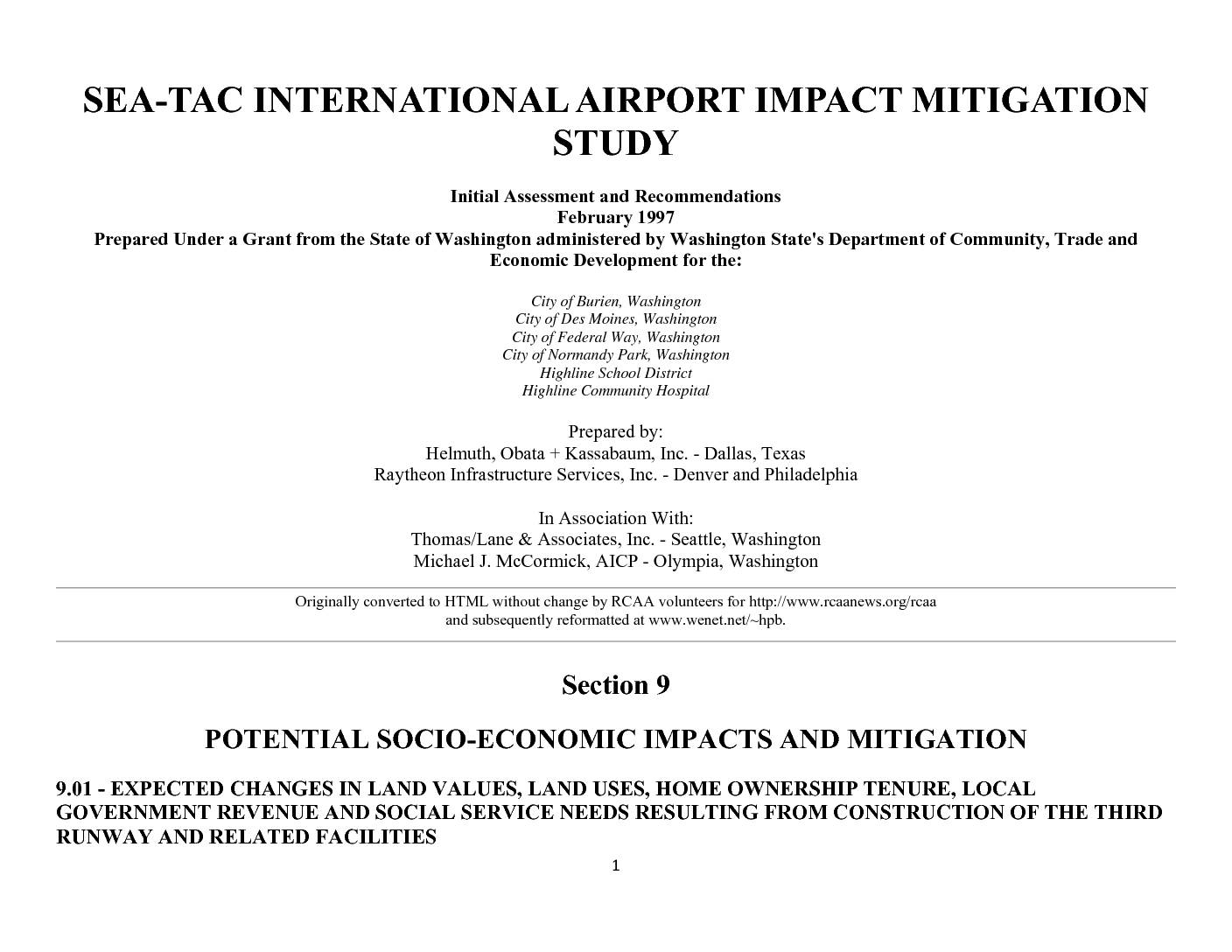
Sea-Tac International Airport Impact Mitigation Study – summary from RCAA
Initial Assessment and Recommendations February 1997 Prepared Under a Grant from the State of Washington administered by Washington State’s Department of Community, Trade and Economic Development for the: City of Burien, Washington City of Des Moines, Washington City of Federal Way, Washington City of Normandy Park, Washington Highline School District Highline Community Hospital Prepared by: -
 2020-07-29 17:39
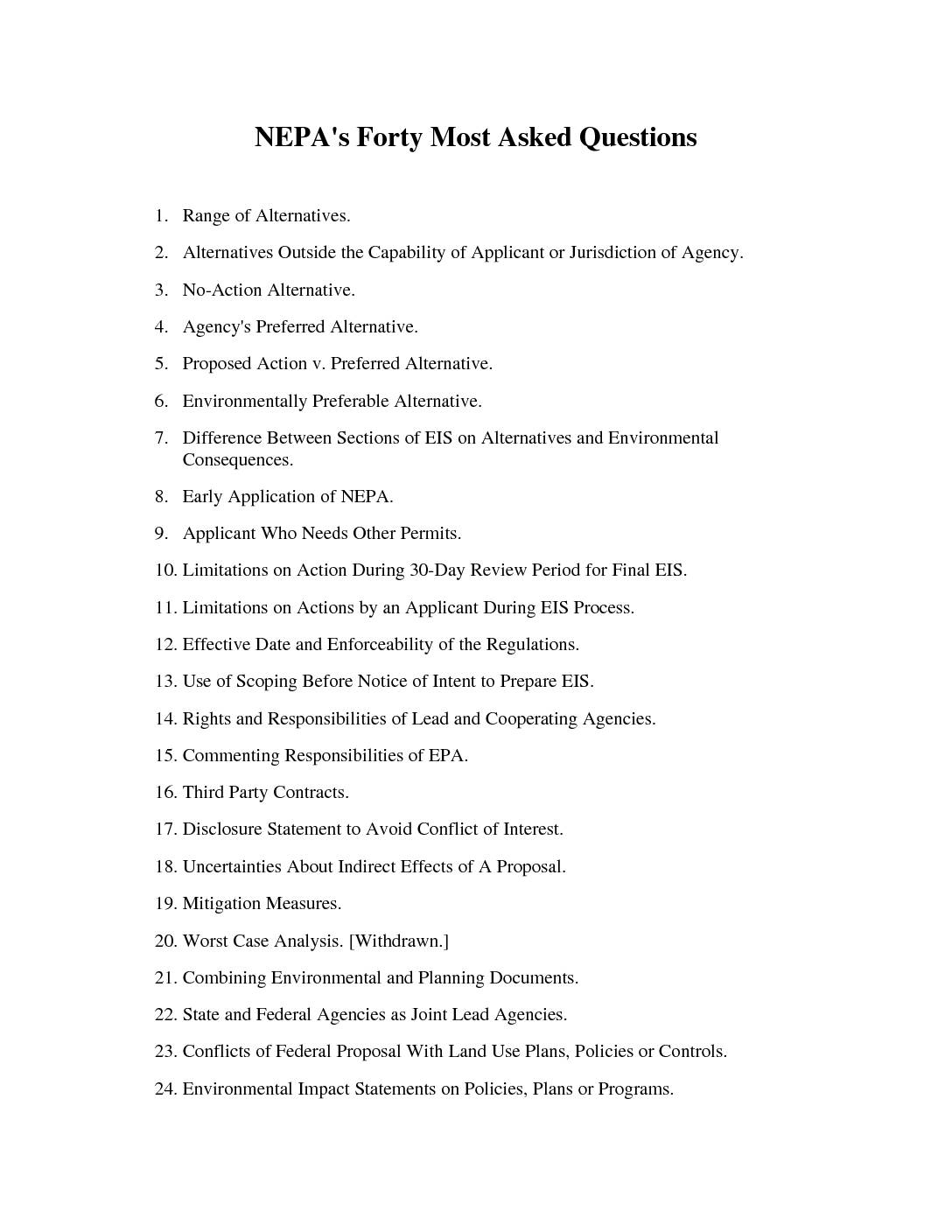
NEPA Forty Most Asked Questions
2. Alternatives Outside the Capability of Applicant or Jurisdiction of Agency. 3. No-Action Alternative. 4. Agency's Preferred Alternative. 5. Proposed Action v. Preferred Alternative. 6. Environmentally Preferable Alternative. 7. Difference Between Sections of EIS on Alternatives and Environmental Consequences. 8. Early Application of NEPA. 9. Applicant Who Needs Other Permits. 10. Limitations on Action During 30-Day Review Period for Final EIS. 11. Limitations on Actions by an Applicant During EIS Process. 12. Effective Date and Enforceability of the Regulations. 13. Use of Scoping Before Notice of Intent to Prepare EIS. 14. Rights and Responsibilities of Lead and Cooperating Agencies. 15. Commenting Responsibilities of EPA. 16. Third Party Contracts. 17. Disclosure Statement to Avoid Conflict of Interest. 18. Uncertainties About Indirect Effects of A Proposal. 19. Mitigation Measures. 20. Worst Case Analysis. [Withdrawn.] 21. Combining Environmental and Planning Documents. 22. State and Federal Agencies as Joint Lead Agencies. 23. Conflicts of Federal Proposal With Land Use Plans, Policies or Controls. 24. Environmental Impact Statements on Policies, Plans or Programs. 25. Appendices and Incorporation by Reference. 26. Index and Keyword Index in EISs. 27. List of Preparers. 28. Advance or Xerox Copies of EIS. 29. Responses to Comments. 30. Adoption of EISs. 31. Application of Regulations to Independent Regulatory Agencies. 32. Supplements to Old EISs. 33. Referrals. 34. Records of Decision. 35. Time Required for the NEPA Process. 36. Environmental Assessments (EA). 37. Findings of No Significant Impact (FONSI). 38. Public Availability of EAs v. FONSIs. 39. Mitigation Measures Imposed in EAs… -
 2013-10-23 00:00
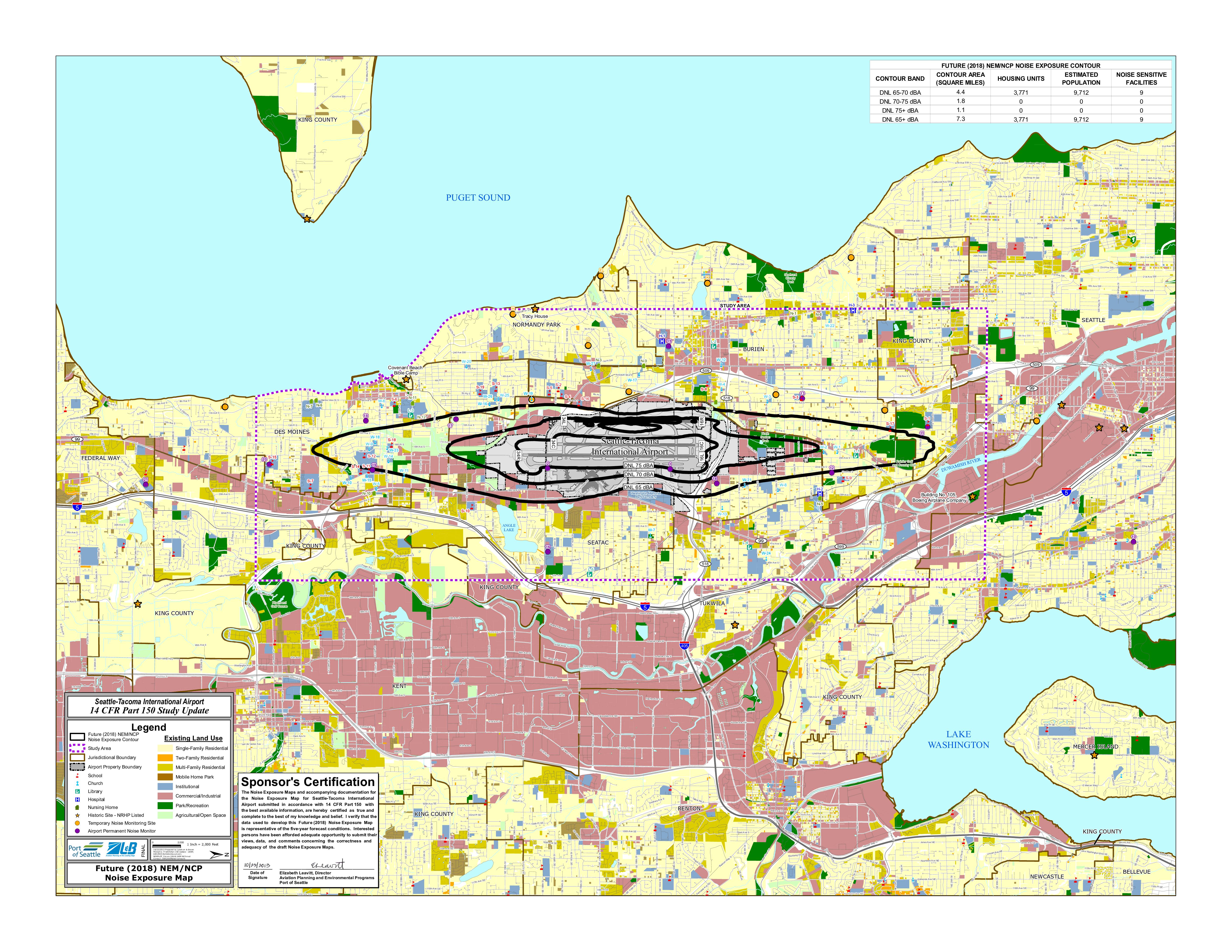
Part 150 Study 2013 – 2018 predicted noise boundary
S 112th St68th Ave S Seward Park Trl SW H oll y S t Sperry Dr SW th St Edgecliff D r SW Glend ale Wa y S N 3 8th St S 1 th Pl S 2 th Pl SE 8th St S W eb ste r S t S 36th Pl 2nd Ave SW Williams Ave N SE 8th Pl S 1 th St S 1 nd St S 265th Pl 32nd Pl S 77th Ave SE S 2 th St SE 8th Pl 9th Pl S S C hic ag o S t S 126th St SE Carr Rd Ne wc as tle W ay Olson Pl SW Mi nk ler Bl vd SE rd Pl Washington Ave S S 1 th St Island Dr S SW 4th St S 1 th St 36th Ave S Mon ster Rd SW SW Normandy Rd 27th Ave S 116th Pl SE SW 8th St Avalon Dr Lind Ave NW S 2 nd St 106th Ave SE S M yrt le St 2nd Ave S SE 4th St Riverview Blvd S Houser Way N S 1 th St S 1 th St 15th Ave S Lakehurst Ln S D on ov an St Utah Ave S Atlas Pl SW S 2 th St S 1 th St 4th Ave SW Cam elot Dr S R ya n S t S Norfolk St SW 0th St S 1 th Pl SE 4th St SW Br an do n S t Fo… -
 1997-03-09 00:00
Why The Port Of Seattle’s Third Runway EIS Fails To Adequately Examine Impacts To Wetlands And Prescribes Inadequate Mitigation
Please place these ln Arlene's mailbox. Thanks. Al 3-1-97 5:21pm p. 1 of 7 Date: 3-1-97 Page 1 of 7 " .. / ~ .. ...,. -·--· ~tHrt THE POF:T OF SEA1TI.E'S 3F.D F.IJlH•]AY EIS FAILS ADEC!fJATEL':.( TO EXAl·fWE B·fPACTS TO ~·)ETLANDS AUD PP.ESCF:IBES m ADEC!fJATE l·HTICJATIOU The FAA Must Comply With Federal Requirements for the Protection of Wetlands Every federal agency is obligated "to minimize the destruction loss or degradation of Vetlands, and to preserve and enhance the natural and beneficial valu~s of wetlands in carrying out the agency's responsibilities for ... providing Federally undertaken, financed, or assisted construction and improvements." 1 Federal agencies, including the FAA, are prohibited from providing funding or other assistance for the construction of projects in wetlands unless they find ·· ( 1) that there is no practicable altemative to such construction, and (2) that the proposed action includes all practicable measures to minimize harm to wetlands which may result from such use." 2 Each of the Master Plan l:"pdate ''Vith Project" proposed alternatives would affect existing wetlands. 3 "Impacts on these wetlands would include: placement of fill material, dredging. removal of existing vegetation, and changes in hydrologic regimes as a result of increase impervious surf ace area and storm water management system restructuring." 4 Section 404 of the Clean Vater Act requires that anyone proposing to discharge dredged or fill material into navigable waters must first obtain a permit from the U.S. Army Corps of Engineers ('Corps'). 5 "Navigable waters" are defined as… -
 1997-02-06 19:09
Sea-Tac International Airport Impact Mitigation Study (HOK)
The Helmuth, Obata Kassabaum study, referred to as ‘HOK’, began as an individual community grant application by the City of Burien. Understandably it became associated with the ACC (plaintiffs in lawsuits attempting to stop the Third Runway) and a response to the defects of the Third Runway EIS. However, this was an independent effort, put -
 1996-10-01 00:00
Memorandum Of Agreement Air Quality Monitoring 1996
-
 1996-02-01 18:37
Sea-Tac Airport Final EIS, Feb. 1996, Vol. 1 of 7
This statement is submitted for review pursuant to the requirements of Section 102(2)(C) of the National Environmental Policy Act of 1969 (42 U.S.C. 4321 et seq); E.O. 11990, Protection of Wetlands; E.O. 11998, Floodplain Management; the USC Subtitle VII; 42 U.S.C. 7401 et seq; 49 U.S.C. 47101 et seq; Washington State Environmental Policy Act (RCW 43.210); and other applicable laws. The proposed action will impact the 100-year floodplain as indicated on the Federal Emergency Management Agency's Flood Insurance Rate Map. This Environmental Impact Statement (EIS) is a combined National Environmental Policy Act and Washington State Environmental Policy Act (SEPA) docunient. With regard to SEPA requirements, this EIS represents the second step of a phased environmental review which began with publication d the 1992 Flight Plan Final EIS, which assessed alternatives for addressing regional aviation needs. This Final EIS also contains the draft conformity statement, as required by the Clean Air Act amendments. The Port of Seattle, operator of Seattle-Tacoma International Airport, has prepared a Master Plan Update for the Airport. The Plan shows the need to address the poor weather operating capability of the Airport through the development of a third parallel runway (Runway 16W34X) with a length of up to 8.500 feet, separated by 2,500 feet from existing Runway 16U34R, with associated taxiways and navigational aids. Other development needs include: extension of Runway 34R by 600 feet; establishment of standard Runway Safety Areas for Runways 16Rl34L and 16U34R; development of a new air traff~c control tower; development of a… -
 1996-02-01 00:00
Sea-Tac Airport Final EIS, Feb. 1996, Vol. 3 of 7
This statement is submitted for review pursuant to the requirements of Section 102(2)(C) of the National Environmental -' , Policy Act of 1969 (42 U.S.C. 4321 et seq); E.O. 11990, Protection of Wetlands; E.O. 11998, Floodplain Management; the " '49 USC Subtitle VII; 42 U.S.C. 7401 et seq; 49 U.S.C. 47101 et seq; Washington State Environmental Policy Act (RCW * , ' 43.21C); and other applicable laws. The proposed action will impact the 100-year floodplain as indicated on the Federal Emergency Management Agency's Flood Insurance Rate Map. This Environmental Impact Statement (EIS) is a combined National Environmental Policy Act and Washington State Environmental Policy Act (SEPA) document. With regard to SEPA requirements, this EIS represents the second step of a phased environmental review which began with publication of the 1992 Flight Plan Final EIS, which assessed alternatives for addressing regional aviation needs. This Final EIS also contains the draft conformity statement, as required by the Clean Air Act amendments. The Port of Seattle, operator of Seattle-Tacoma International Airport, has prepared a Master Plan Update for the Airport. The Plan shows the need to address the poor weather operating capability of the Airport through the development of a third parallel runway (Runway 16X134X) with a length of up to 8,500 feet, separated by 2,500 feet from existing Runway 16U34R, with associated taxiways and navigational aids. Other development needs include: extension of Runway 34R by 600 feet; establishment of standard Runway Safety Areas for Runways 16W34L and 16L/34R; development of a new… -
 1996-02-01 00:00
Sea-Tac Airport Final EIS, Feb. 1996, Vol. 4 of 7
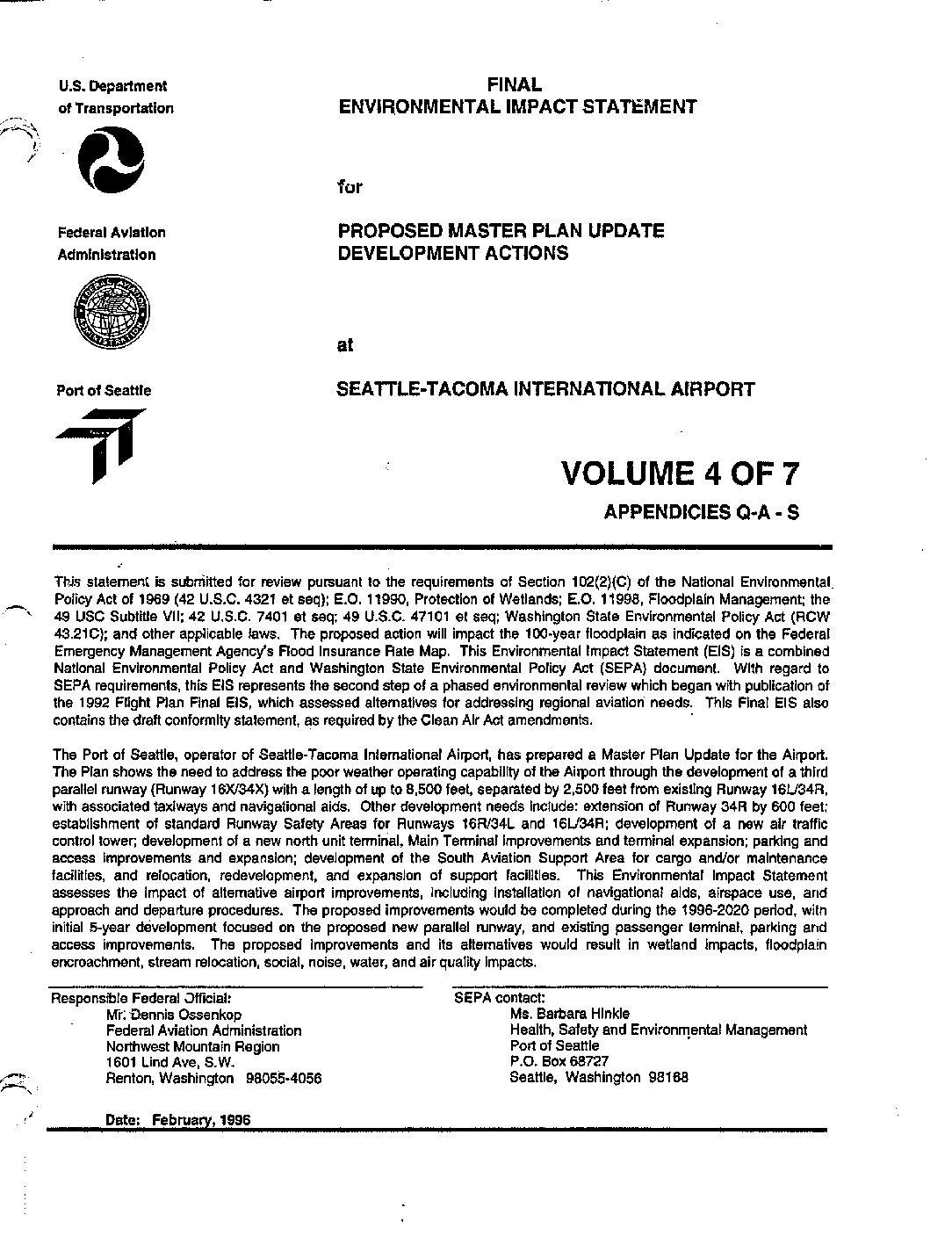
This statement is submitted for review pursuant to the requirements of Section 102(2)(C) of the National Environmental. Policy Act of 1969 (42 U.S.C. 4321 et seq); E.O. 11990, Protection of Wetlands; E.O. 11998, Floodplain Management; the - 49 USC Subtitle VII; 42 U.S.C. 7401 et seq; 49 U.S.C. 47101 et seq; Washington State Environmental Policy Act (RCW 43.21C); and other applicable laws. The proposed action will impact the 100-year floodplain as indicated on the Federal Emergency Management Agency's Flood Insurance Rate Map. This Environmental Impact Statement (EIS) is a combined National Environmental Policy Act and Washington State Environmental Policy Act (SEPA) document. With regard to SEPA requirements, this EIS represents the second step of a phased environmental review which began with publication of the 1992 Flight Plan Final EIS, which assessed alternatives for addressing regional aviation needs. This Final EIS also contains the draft conformity statement, as required by the Clean Air Act amendments. The Port of Seattle, operator of Seattle-Tacoma International Airport, has prepared a Master Plan Update for the Airport. The Plan shows the need to address the poor weather operating capability of the Airport through the development of a third parallel runway (Runway 16W34X) with a length of up to 8,500 feet, separated by 2,500 feet from existlng Runway 16L/34R, with associated taxiways and navigational aids. Other development needs include: extension of Runway 34R by 600 feet; establishment of standard Runway Safety Areas for Runways 16FU34L and 16U34R; development of a new air traffic control tower; development…