TagAirport Impacted Communities Act(13)
-
 2019-08-20
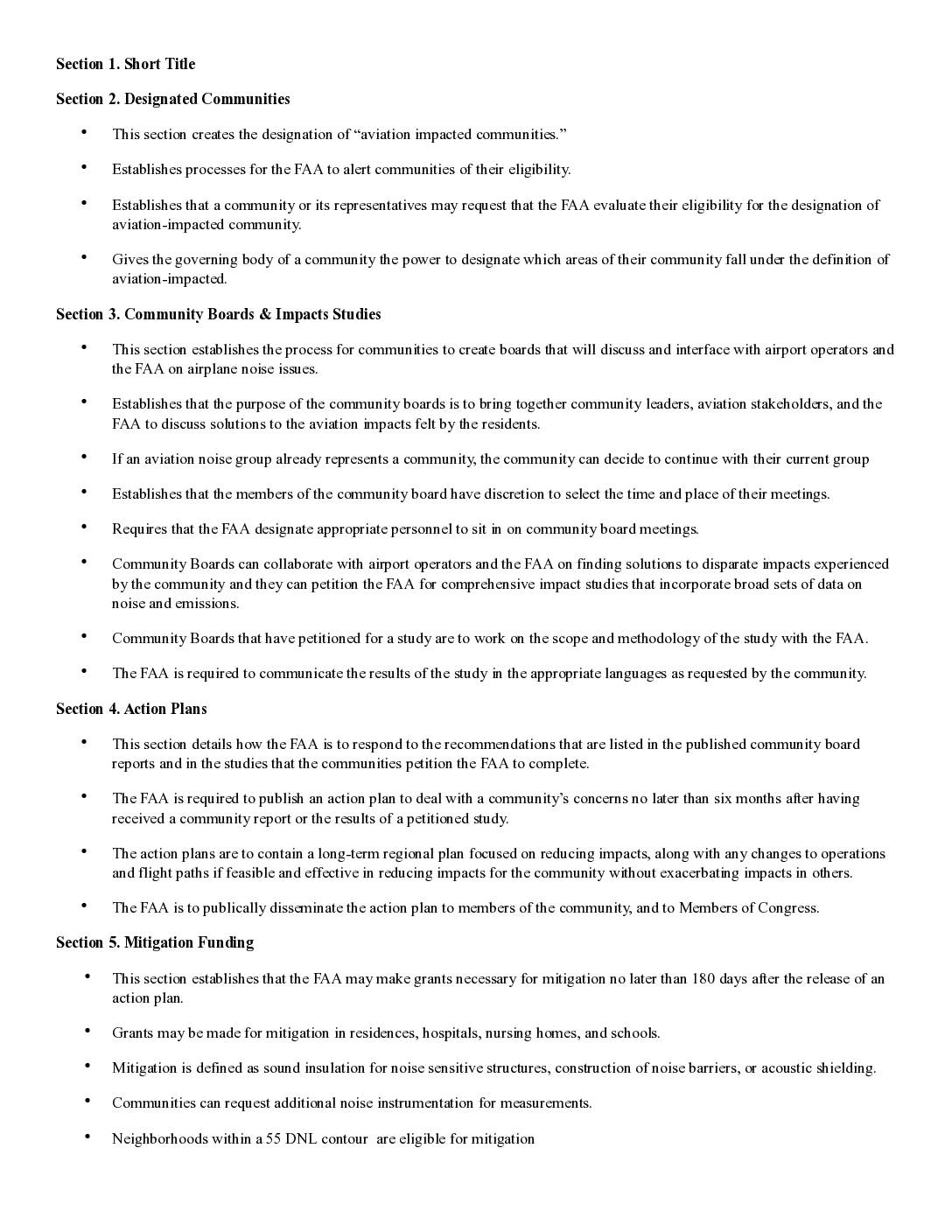
Airport Impacted Communities Act: Section-by-Section Summary
This legislative summary outlines a proposed bill aimed at protecting communities affected by airport noise and aviation emissions. It establishes a formal designation for 'aviation-impacted communities' located within one mile of low-flying commercial or cargo jet routes, creates local community boards to engage with the FAA and airport operators, and requires the FAA to develop action plans and provide mitigation funding — such as sound insulation and noise barriers — for affected residences, schools, hospitals, and nursing homes. -
 2019-08-18
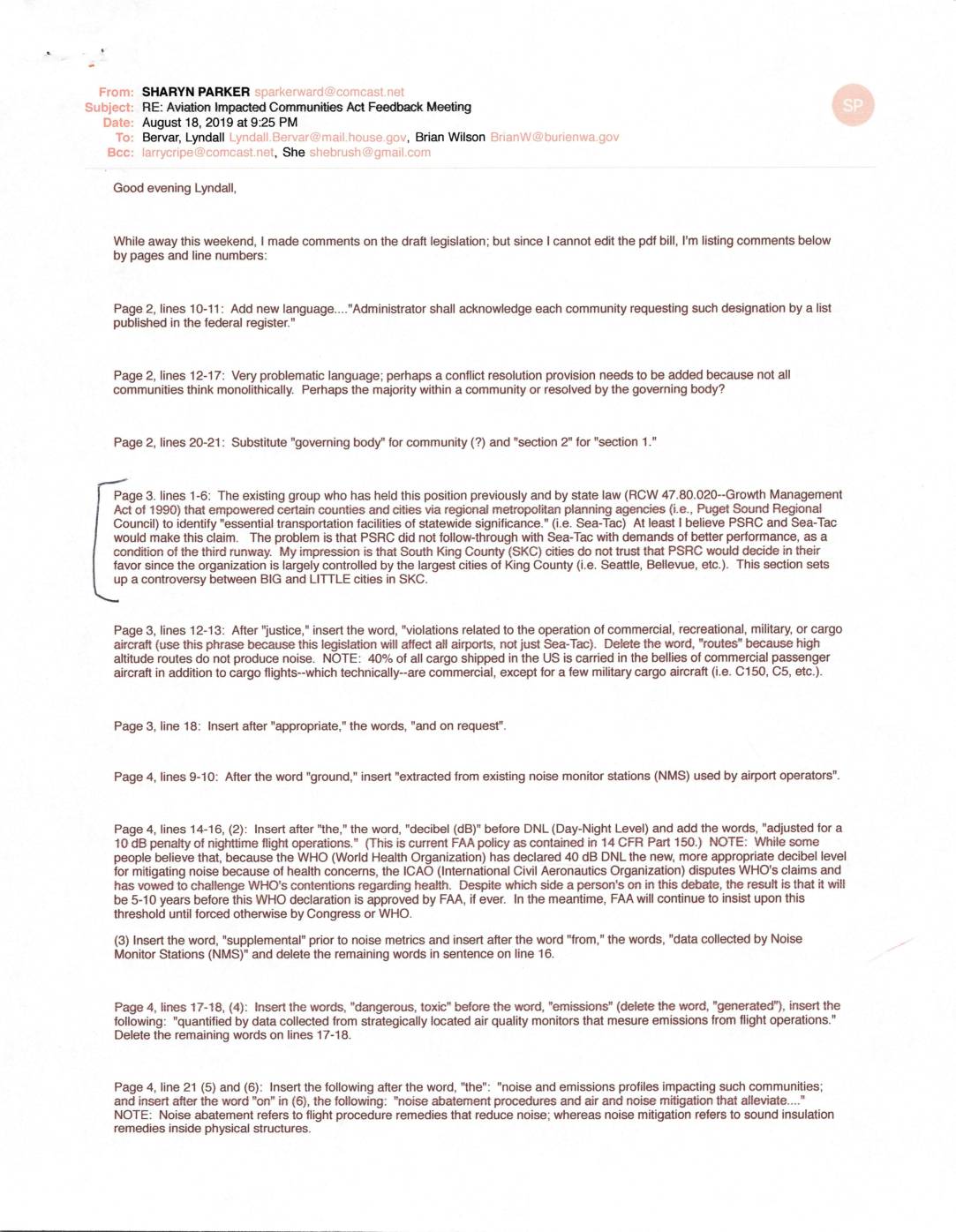
RE: Aviation Impacted Communities Act feedback meeting
In August 2019, Sharyn Parker of the Burien Airport Committee and Quiet Skies Coalition submitted detailed feedback on draft Aviation Impacted Communities Act legislation, proposing specific language changes to strengthen noise and emissions protections for communities around Sea-Tac Airport. Her comments addressed technical issues such as decibel measurement standards, the use of Noise Monitor Stations, air quality monitoring gaps, and the limitations of the FAA's 65 dB DNL noise threshold. The email thread also includes input from other stakeholders raising concerns about loopholes in the bill's definitions and the need to broaden aircraft classifications beyond 'jets' to include turboprops and other aircraft types. -
 1985-01-25
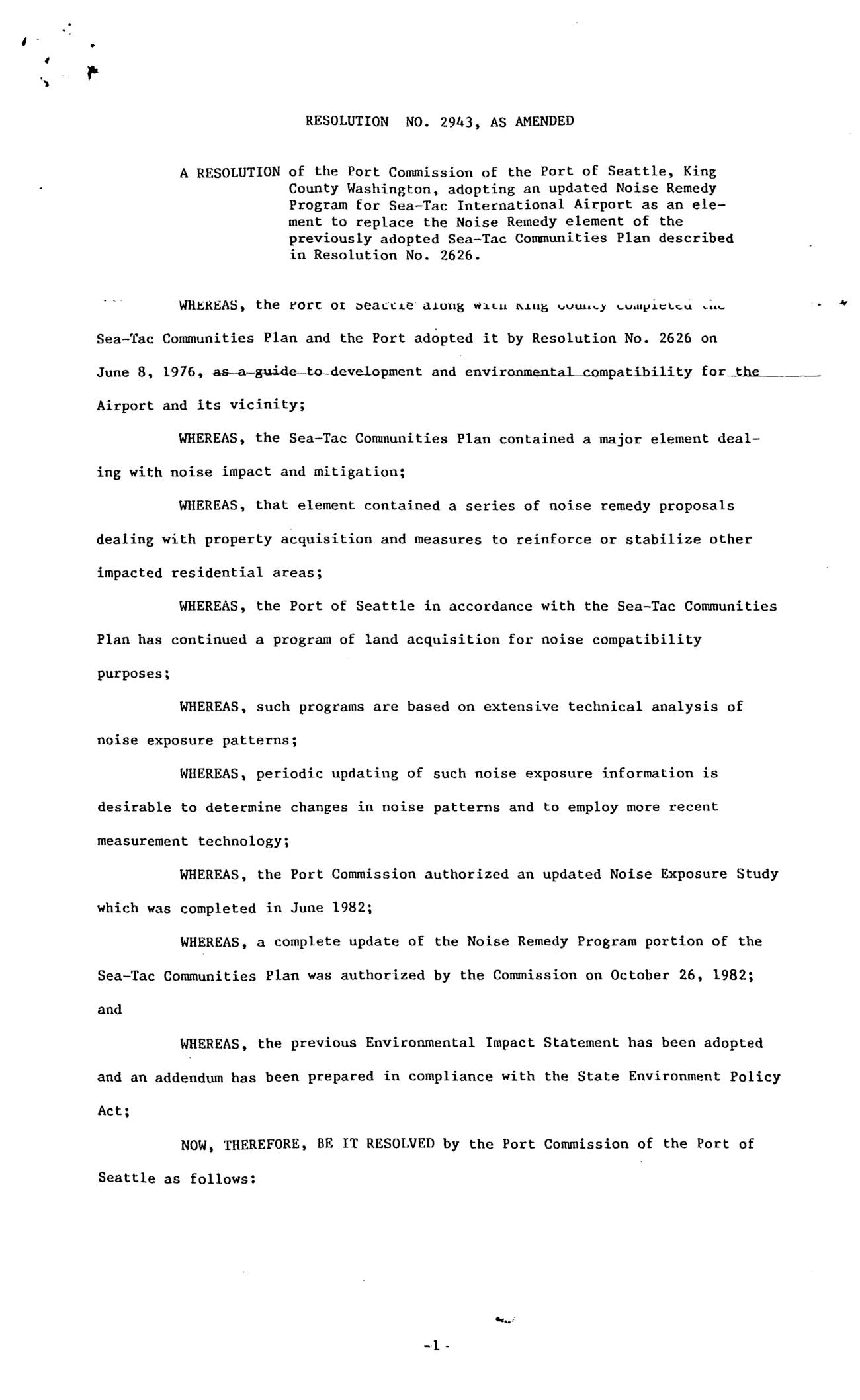
Resolution No. 2943 – Updated Noise Remedy Program
★ 32Resolution No. 2943 was adopted by the Port Commission of the Port of Seattle to update the Noise Remedy Program for Sea-Tac International Airport, replacing the earlier noise remedy element from the 1976 Sea-Tac Communities Plan. The resolution authorizes property acquisition in high-noise areas, implementation of nine noise abatement measures, and a Demonstration Project (budgeted at up to $1 million) to test alternatives to acquisition such as noise insulation and transaction assistance for affected homeowners. Priority for remedies is given based on noise intensity, length of residency, and financial hardship, with annual progress reports required to guide ongoing program evaluation.