TagAir Quality Monitors(111)
-
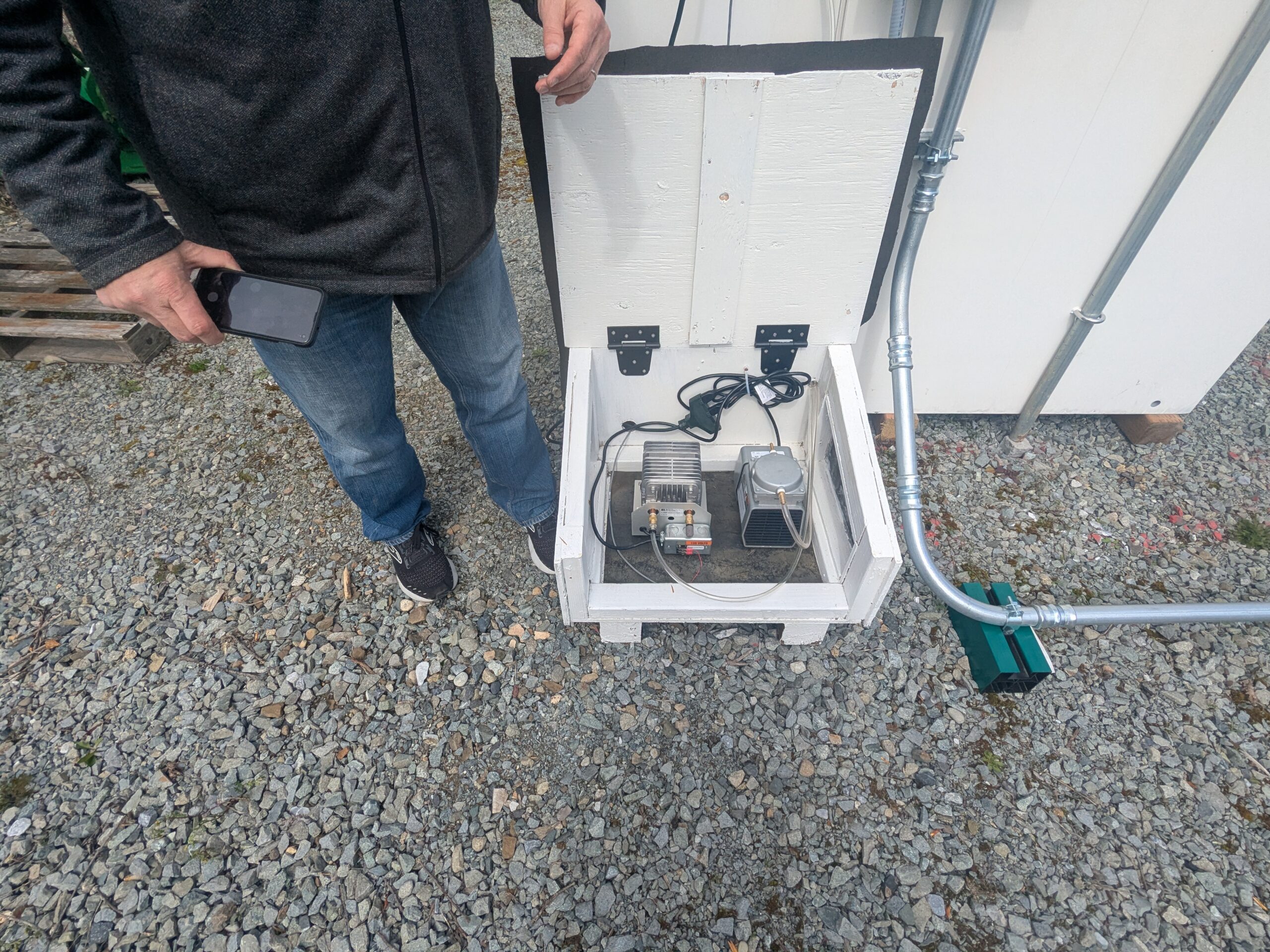
Outdoor noise monitoring equipment enclosure
A white wooden enclosure box is opened to reveal what appears to be air pump or compressor equipment with electrical connections, situated on a gravel surface. Metal conduit runs from the enclosure to a nearby structure, with a green sensor or junction box visible at the end of the conduit — consistent with noise monitoring station infrastructure. -
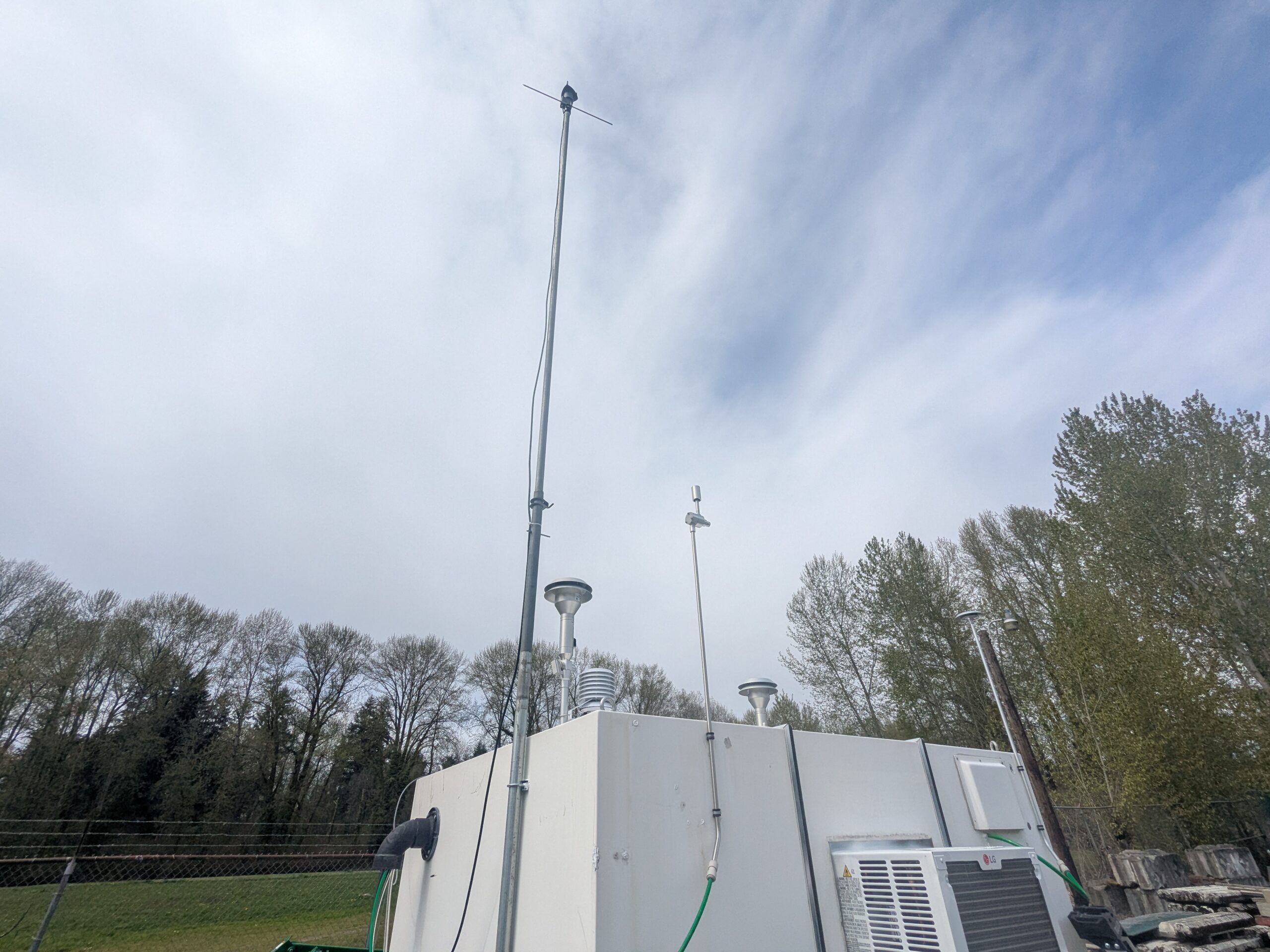
Air quality or environmental monitoring station with antenna mast
A white equipment enclosure or monitoring shelter fitted with air sampling inlet stacks, a tall antenna mast with a wind vane or lightning rod at its apex, a smaller communications antenna, and an LG air conditioning unit. The setup is consistent with an ambient air quality or meteorological monitoring station, surrounded by trees and a chain-link fence. -
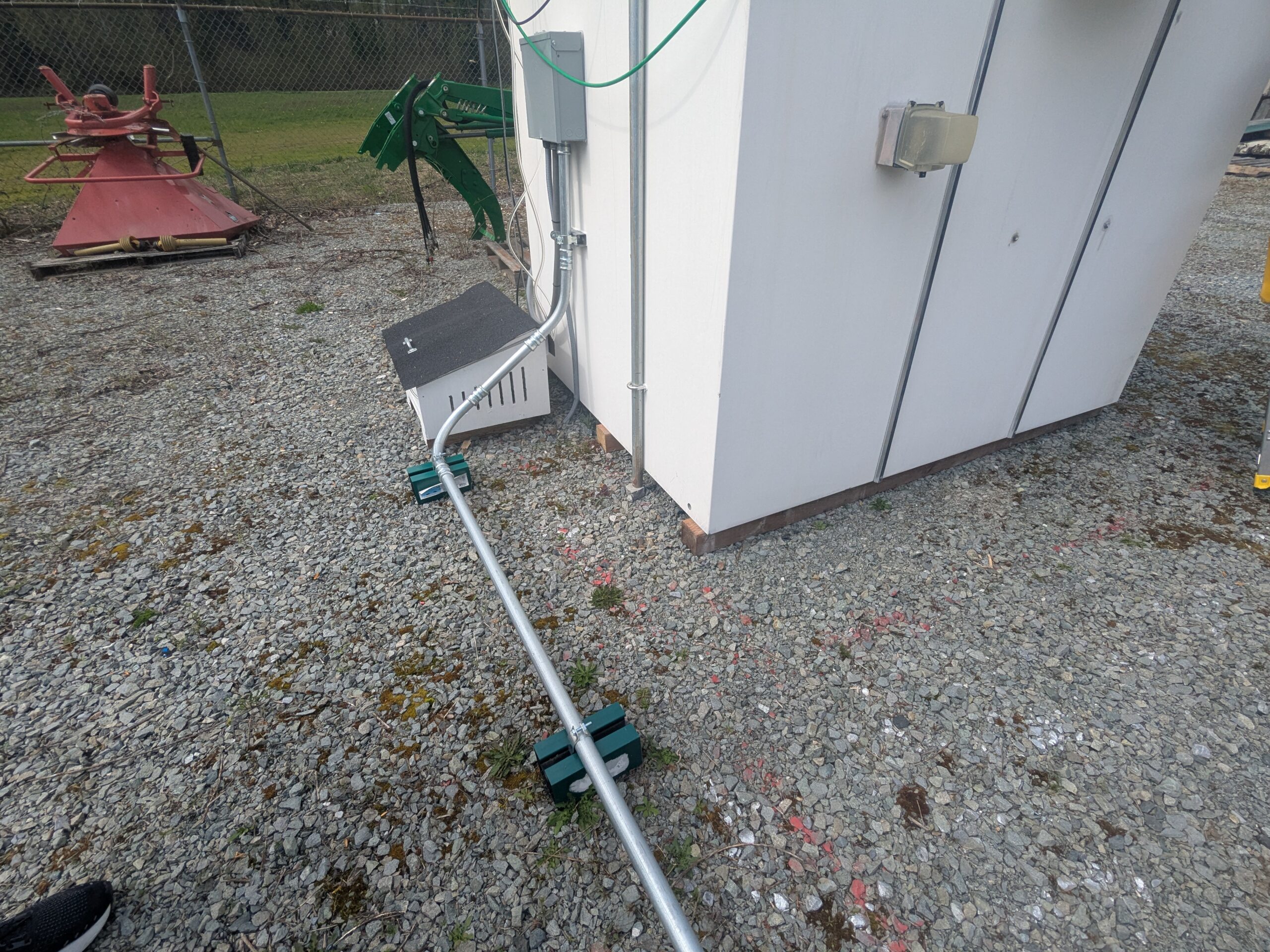
Conduit run with weighted supports near portable building
A metallic electrical conduit run is secured along a gravel surface using green-colored weighted pipe supports, leading from a junction box into a small white portable or modular building. Additional electrical infrastructure, including a wall-mounted enclosure and conduit riser, is visible on the exterior of the building. -
-
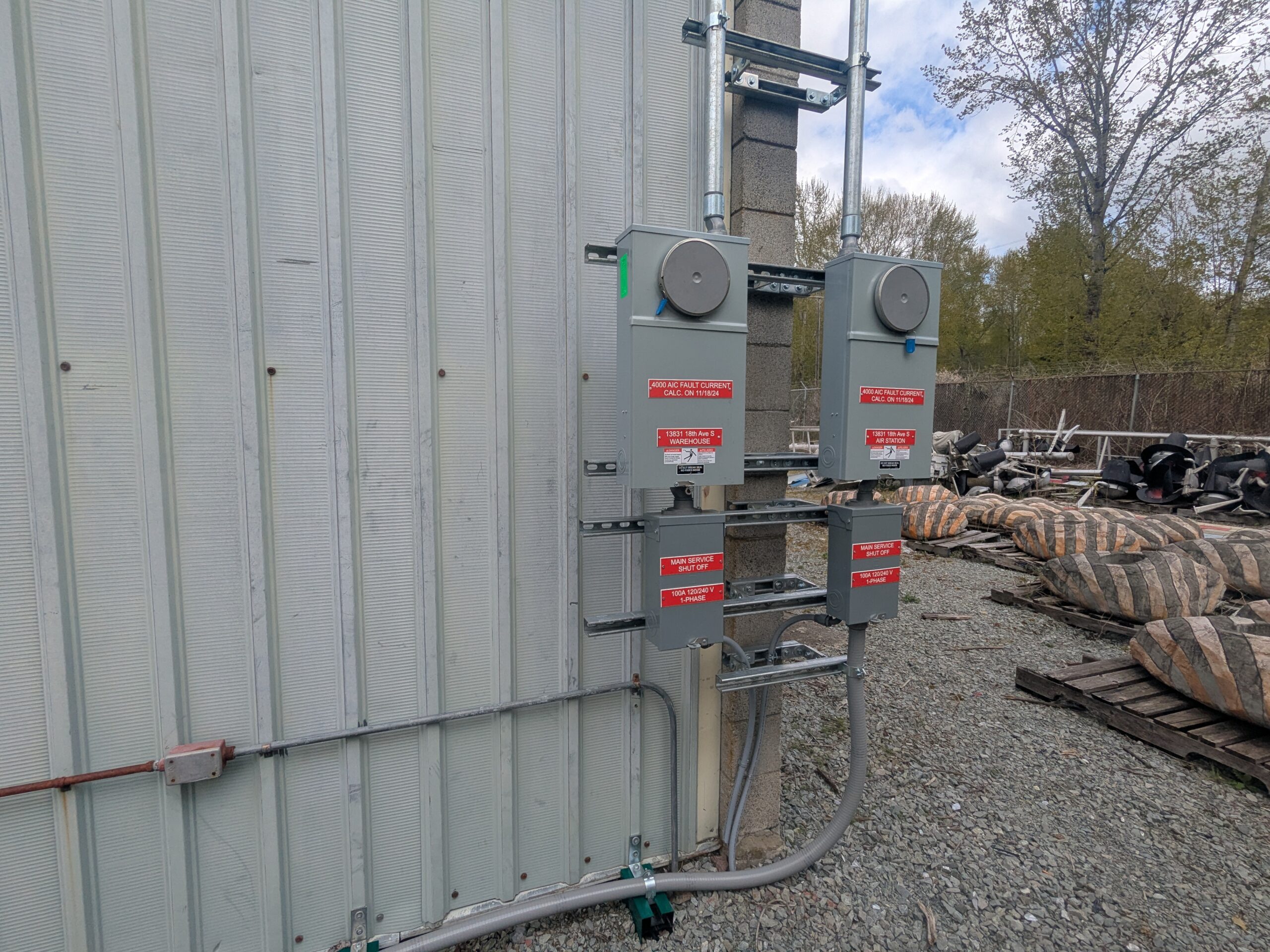
Electrical Service Meters – 13631 18th Ave S, Air Station and Warehouse
Two exterior electrical meter/disconnect assemblies mounted on a corrugated metal building wall at 13631 18th Ave S. Labels identify the left unit as serving the 'Warehouse' and the right as the 'Air Station,' both rated 100A 120/240V 1-Phase with a Main Service Shut Off, and both bearing a '4000 AIC Fault Current Calc. on 11/18/24' sticker. -
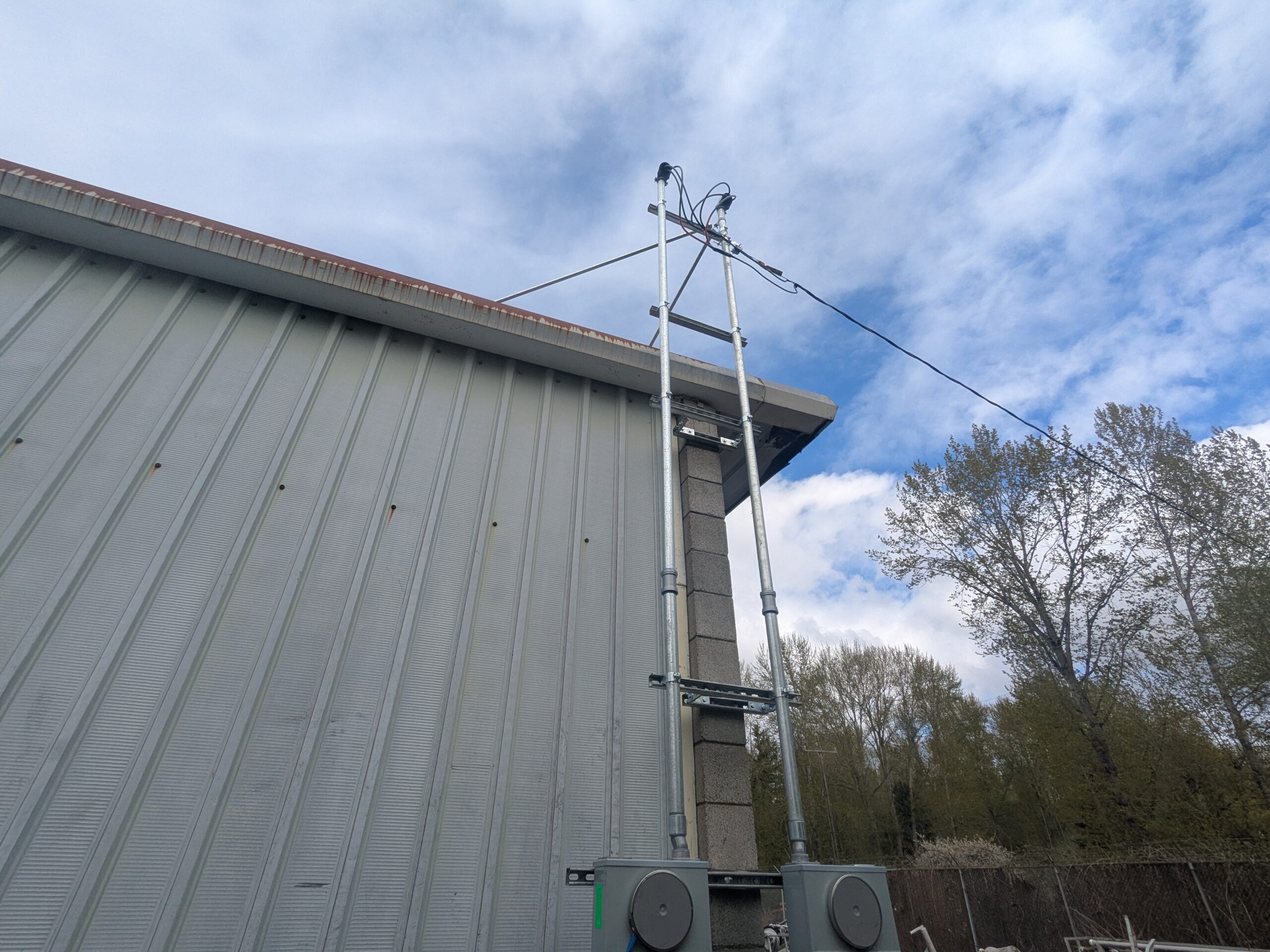
Exterior antenna/sensor mast mounted on metal building wall
A galvanized steel mast with cross-bracing and guy wires is mounted on the exterior wall of a corrugated metal building, with what appears to be monitoring equipment (possibly acoustic or meteorological sensors) at the top. Gray electrical enclosures are visible at the base of the installation. -
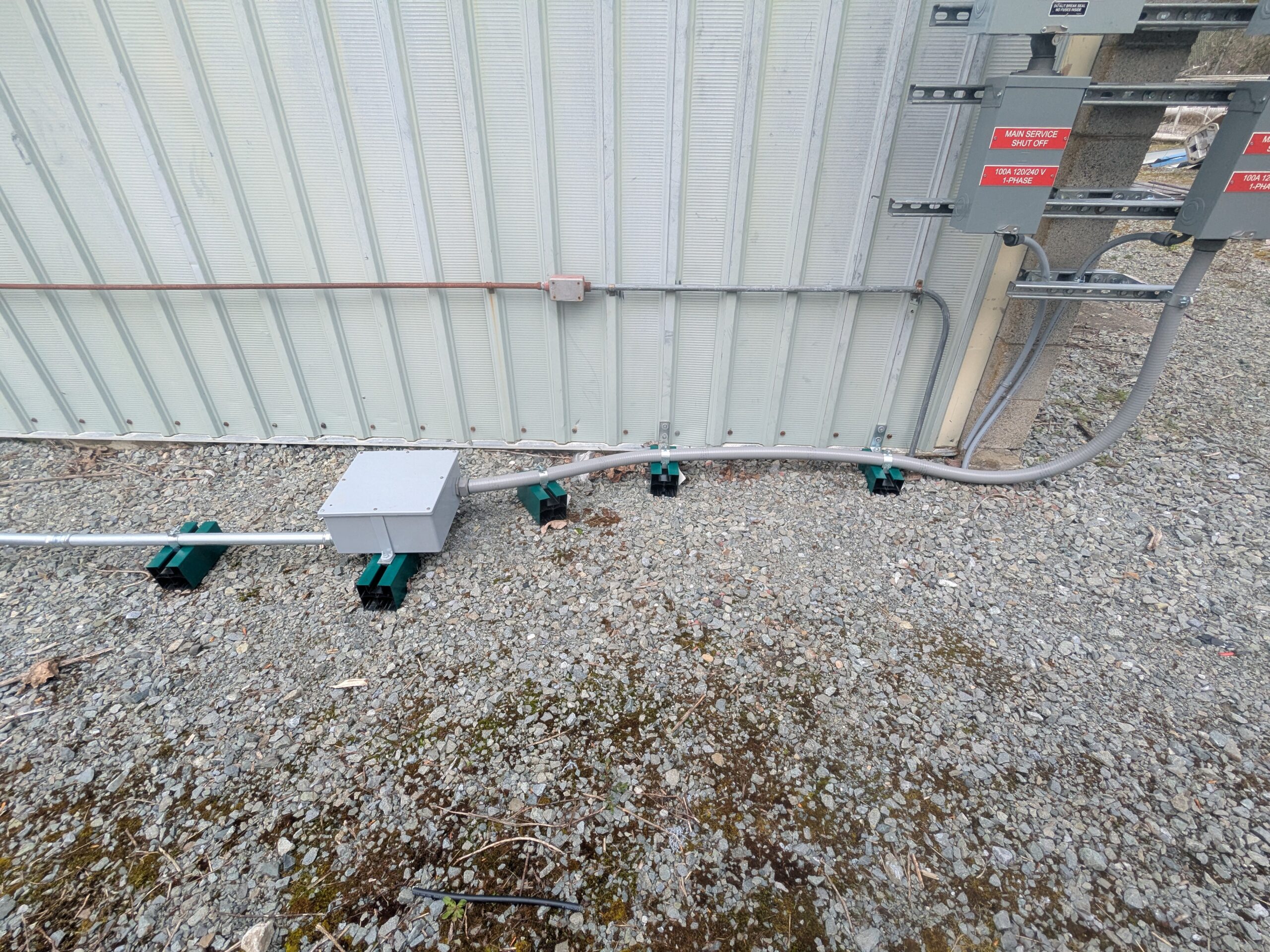
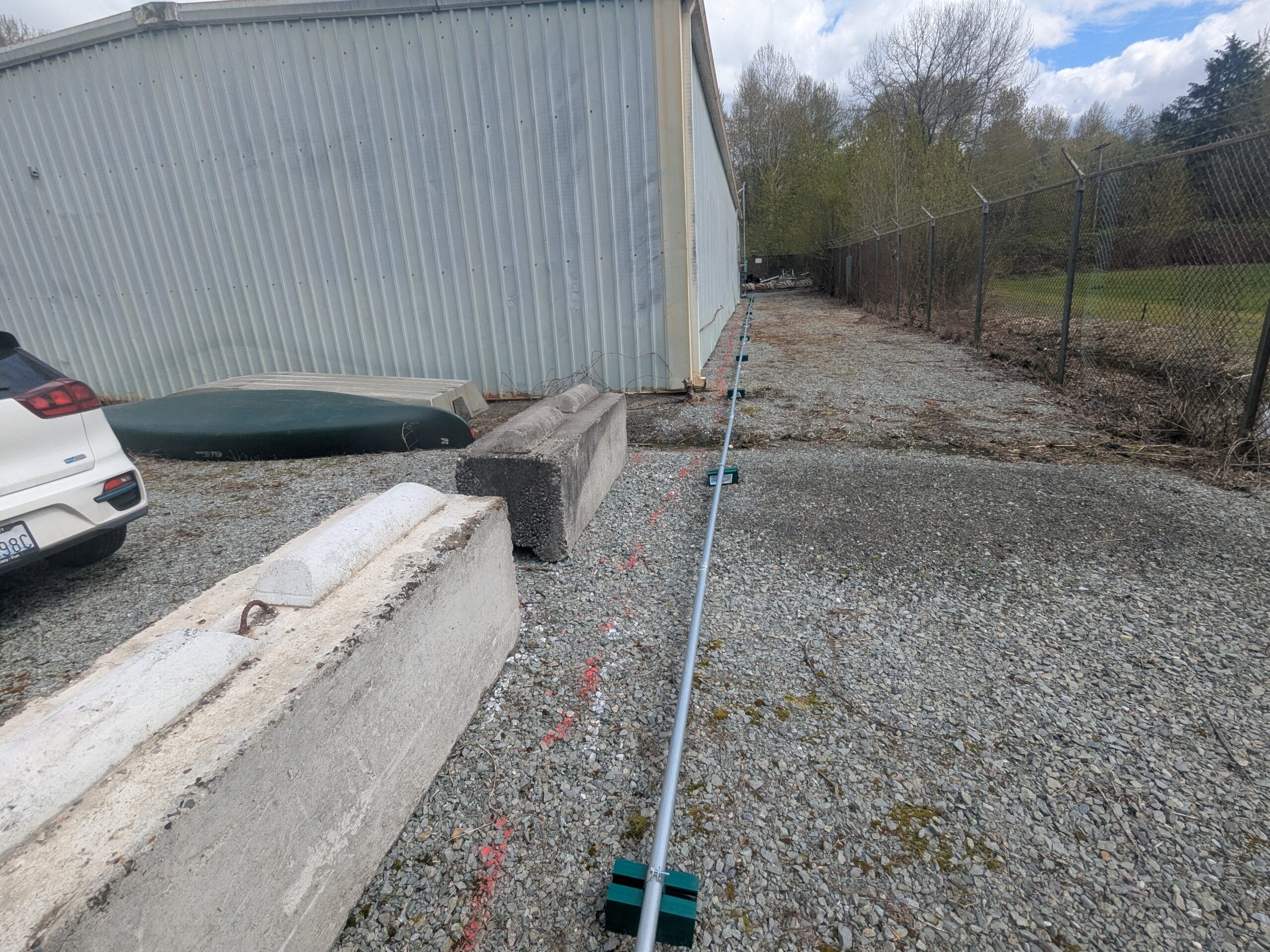
Electrical conduit installation at metal building exterior
Exterior electrical installation showing EMT conduit runs supported by green conduit supports on gravel, connecting to a junction box and terminating at a service panel labeled 'Main Service Shut Off, 100A 120/240V 1-Phase.' A bare copper grounding conductor runs along the building's corrugated metal wall. -
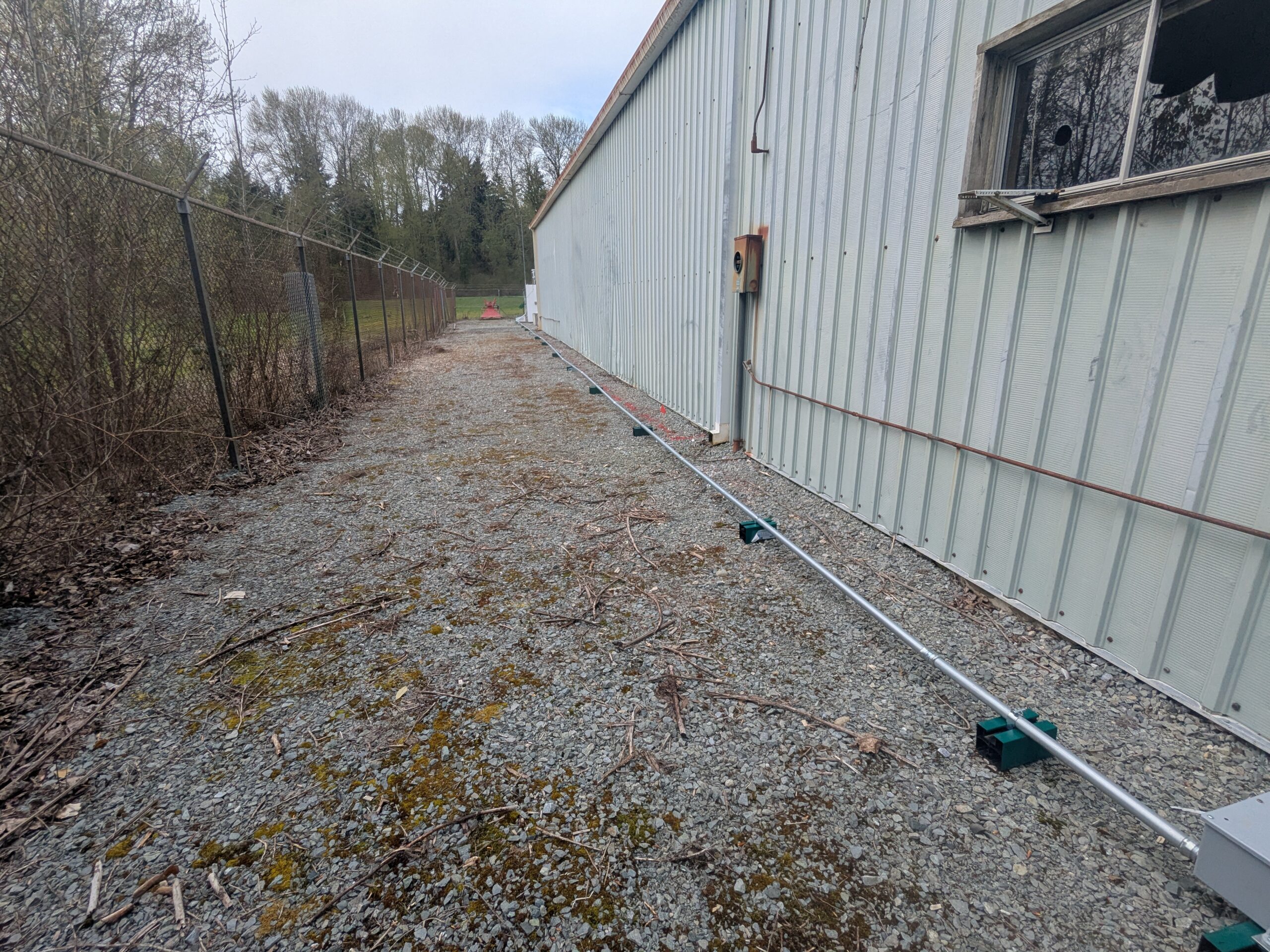
-
2025-04-01
PSCAA Ultra Fine Particulate (UFP), SMPS Monitoring web page
Under Construction! Notes: – Particles are counted at 1 or 2.5 minutes per scan of the full size bin range – To select an earlier date, select a time button – SeaTac North monitoring began early April 2025 Other notes: – Data have been smoothed in both dimensions, with a gaussian filter. – There are -
 2025-03-21
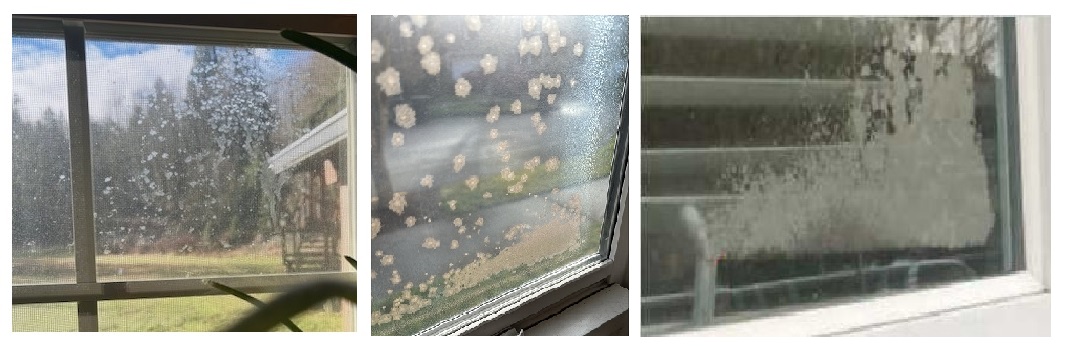
Window Condensation and Moisture Issues
Three images showing window condensation and moisture problems, including water droplets on glass surfaces and what appears to be mold or moisture damage on window frames and glass panels.