TagStART(508)
-
 2020-05-27
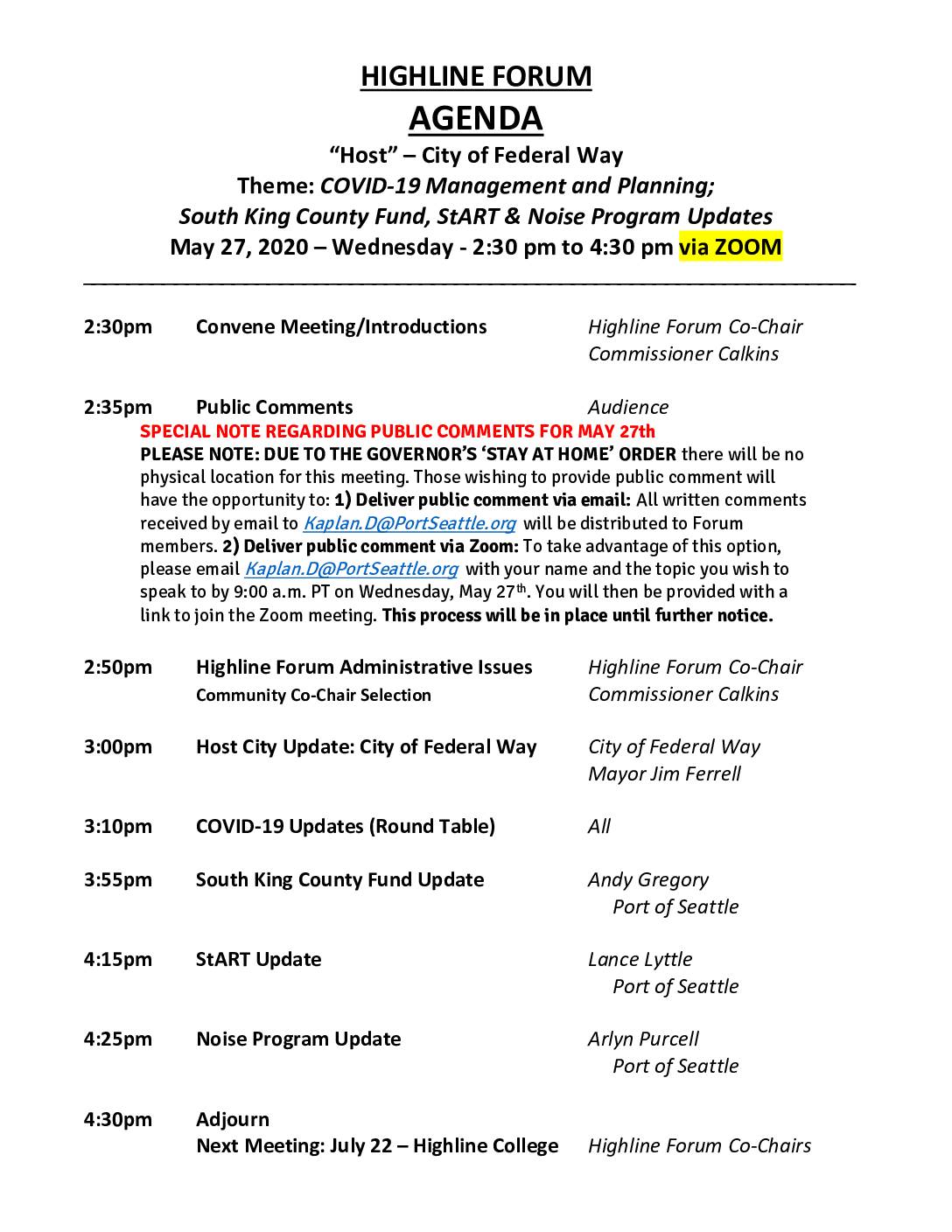
Highline Forum agenda: COVID-19 management and planning; South King County Fund, StART & Noise Program updates
The Highline Forum held its May 27, 2020 meeting virtually via Zoom, hosted by the City of Federal Way, focusing on COVID-19 management and planning alongside updates on the South King County Fund, the StART program, and the Port of Seattle's Noise Program. The April 2020 meeting had been cancelled due to COVID-19, and subsequent 2020 meetings were also shifted to virtual formats. The agenda included presentations by Port of Seattle representatives on noise and airport-related programs affecting South King County communities near Seattle-Tacoma International Airport. -
 2020-05-16
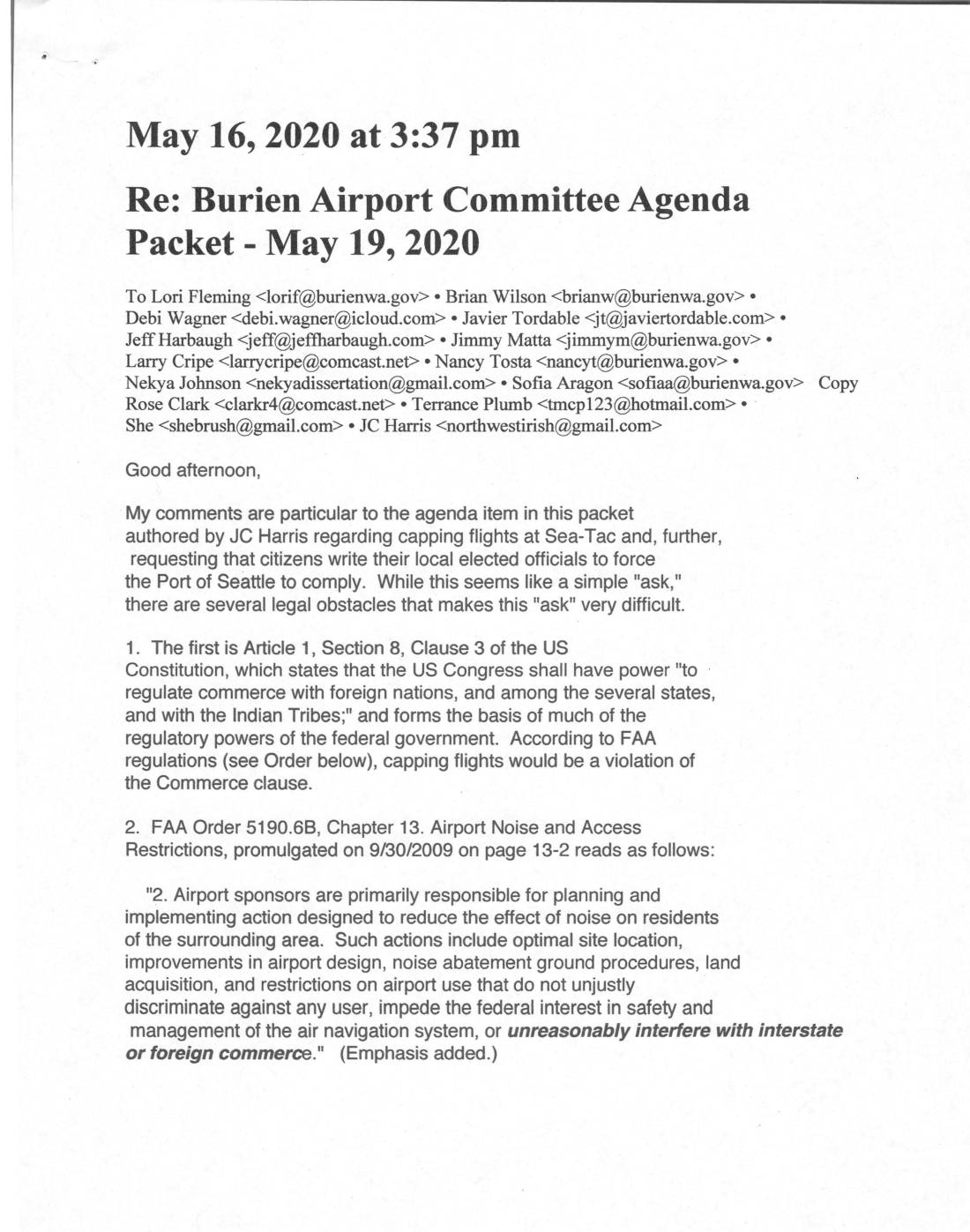
Re: Burien Airport Committee agenda packet – May 19, 2020
This document contains correspondence related to Sea-Tac Airport noise and flight operations concerns, including a legal analysis explaining why capping flights would face significant obstacles under the U.S. Commerce Clause and FAA regulations, along with alternative approaches such as Part 161 Studies and state emissions legislation. It also includes a letter from the cities of Burien and Des Moines outlining conditions for rejoining the Sea-Tac Airport Round Table (StART), demanding meeting recordings, reversal of a $10 million design expenditure made without proper environmental review, and responses to outstanding written concerns that had gone unanswered by the Port of Seattle. -
 2020-05-11
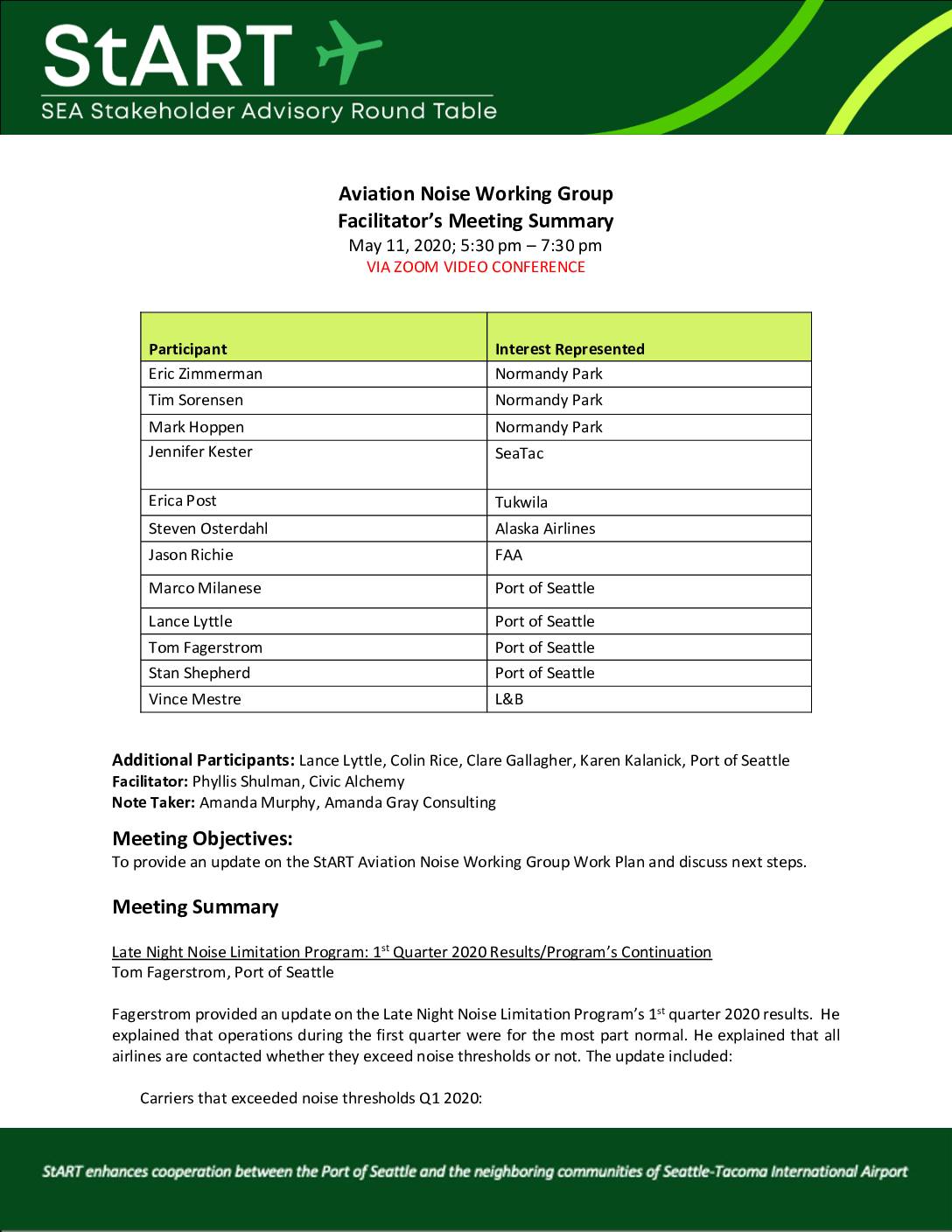
Aviation Noise Working Group facilitator’s meeting summary
This document summarizes a May 11, 2020 virtual meeting of the StART Aviation Noise Working Group, which oversees efforts to reduce aircraft noise around Seattle-Tacoma International Airport. Key updates included a significant drop in nighttime flight operations due to COVID-19, continued progress on the Runway Use Plan limiting third-runway landings between midnight and 5 a.m., and the temporary pause of several noise studies due to pandemic-related constraints. The group also reviewed ongoing initiatives such as the A320 aircraft whistle-noise retrofit effort, a glide slope adjustment project for Runway 34R, and a new monthly public reporting system called PlaneNoise. -
 2020-04-22
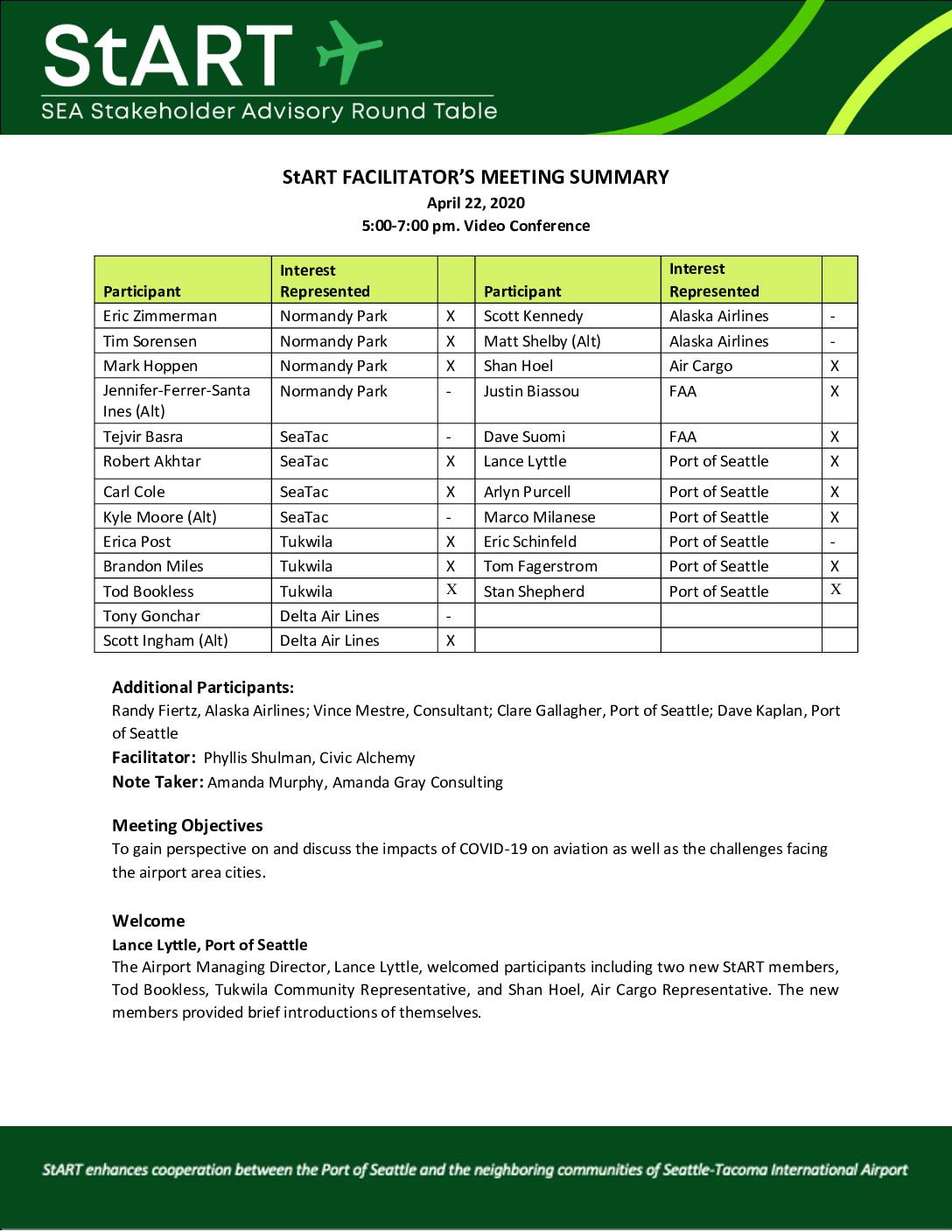
StART facilitator’s meeting summary, April 22, 2020
This April 2020 meeting summary from the SEA Stakeholder Advisory Round Table (StART) covers discussions about the impact of COVID-19 on Seattle-Tacoma International Airport (SEA) and neighboring cities including SeaTac, Tukwila, and Normandy Park. Airport Managing Director Lance Lyttle reported a 90-95% drop in travelers, hundreds of canceled flights, and a $195 million federal relief grant, while city representatives described significant revenue losses and emergency community support measures. Representatives from Alaska Airlines and Delta Air Lines also shared that their operations were down 70-80%, with federal funds being used to sustain employee salaries through September. -
 2020-04-22
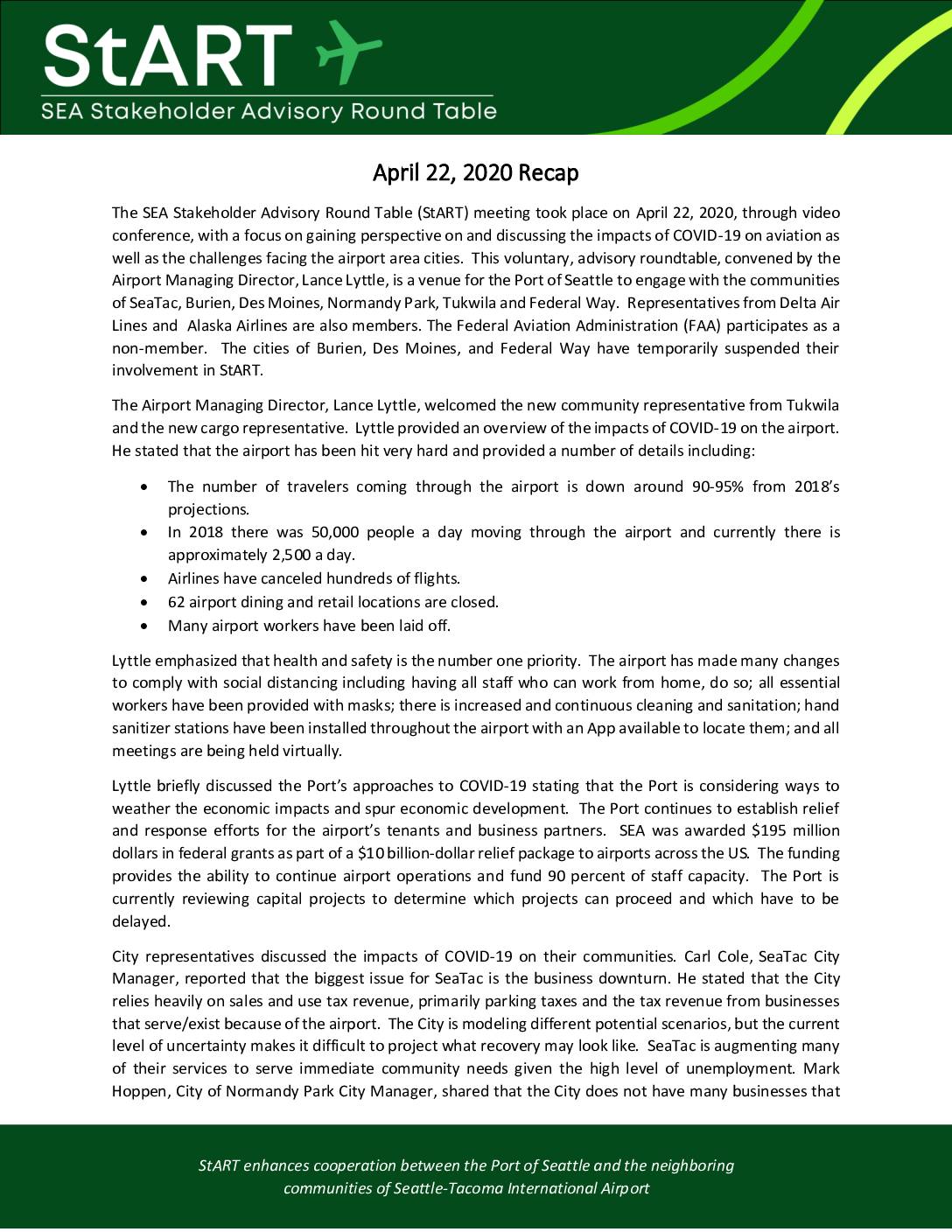
StART April 22, 2020 recap
The April 22, 2020 StART (SEA Stakeholder Advisory Round Table) meeting focused on the severe impacts of COVID-19 on Seattle-Tacoma International Airport and surrounding communities, with passenger traffic down 90-95% and dozens of retail locations closed. City representatives from SeaTac, Normandy Park, and Tukwila described significant tax revenue losses and budget pressures, while airline and FAA representatives reported dramatic reductions in flights and grounded aircraft. A noise consultant noted that the crisis could accelerate the retirement of older, noisier aircraft as airlines shift toward more fuel-efficient fleets when operations resume. -
 2020-04-22
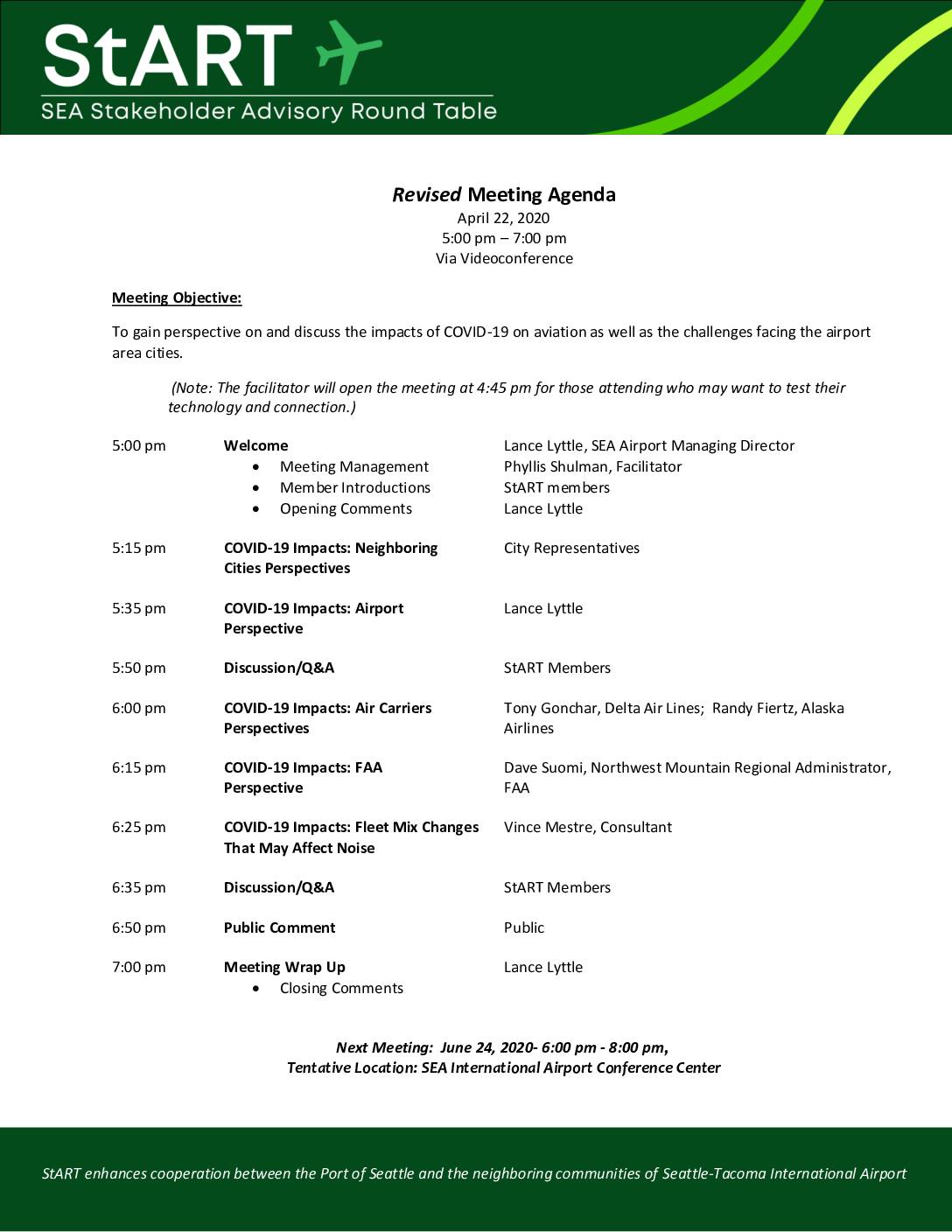
StART revised meeting agenda, April 22, 2020
This is the revised agenda for a StART (SEA Stakeholder Advisory Round Table) meeting held via videoconference on April 22, 2020, focused on the impacts of COVID-19 on aviation and the challenges facing communities surrounding Seattle-Tacoma International Airport. The two-hour session featured presentations from airport leadership, neighboring city representatives, Delta and Alaska Airlines, the FAA, and a noise consultant discussing potential fleet mix changes affecting noise levels. The meeting was part of an ongoing effort to foster cooperation between the Port of Seattle and neighboring communities around Sea-Tac Airport. -
 2020-04-21
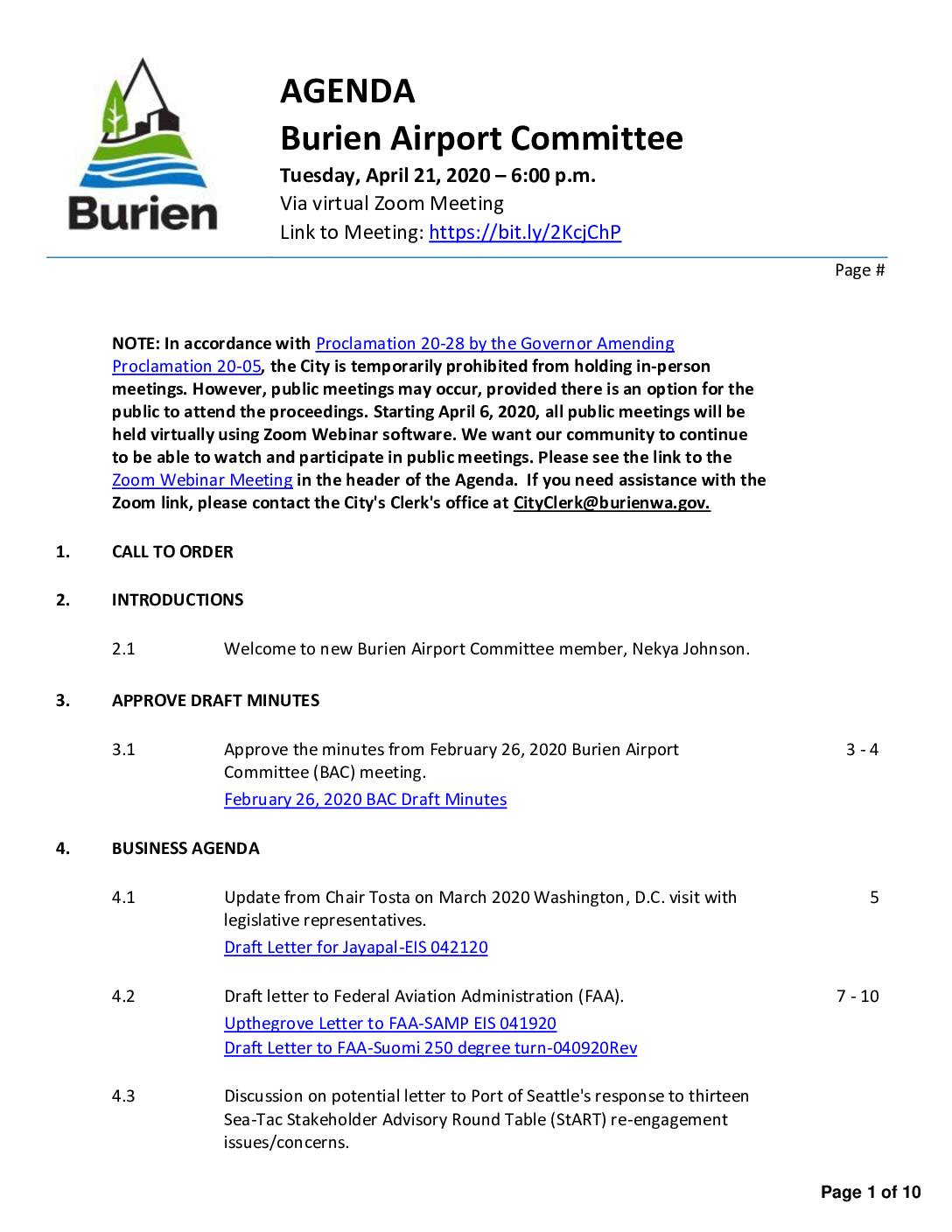
Burien Airport Committee agenda, April 21, 2020
The Burien Airport Committee held a virtual meeting on April 21, 2020, discussing key aviation issues including a draft letter to the FAA regarding the Sustainable Airport Master Plan (SAMP) Environmental Impact Statement and concerns about aircraft flight patterns over Burien. The committee also reviewed updates from a March 2020 Washington, D.C. legislative visit, discussed engagement with the Sea-Tac Stakeholder Advisory Round Table (StART), and considered inviting an FAA Community Ombudsperson to a future meeting. Draft minutes from the February 26, 2020 meeting were also presented for approval, reflecting ongoing efforts by the City of Burien to address cumulative noise and air traffic impacts from Sea-Tac Airport on surrounding communities. -
 2020-03-17
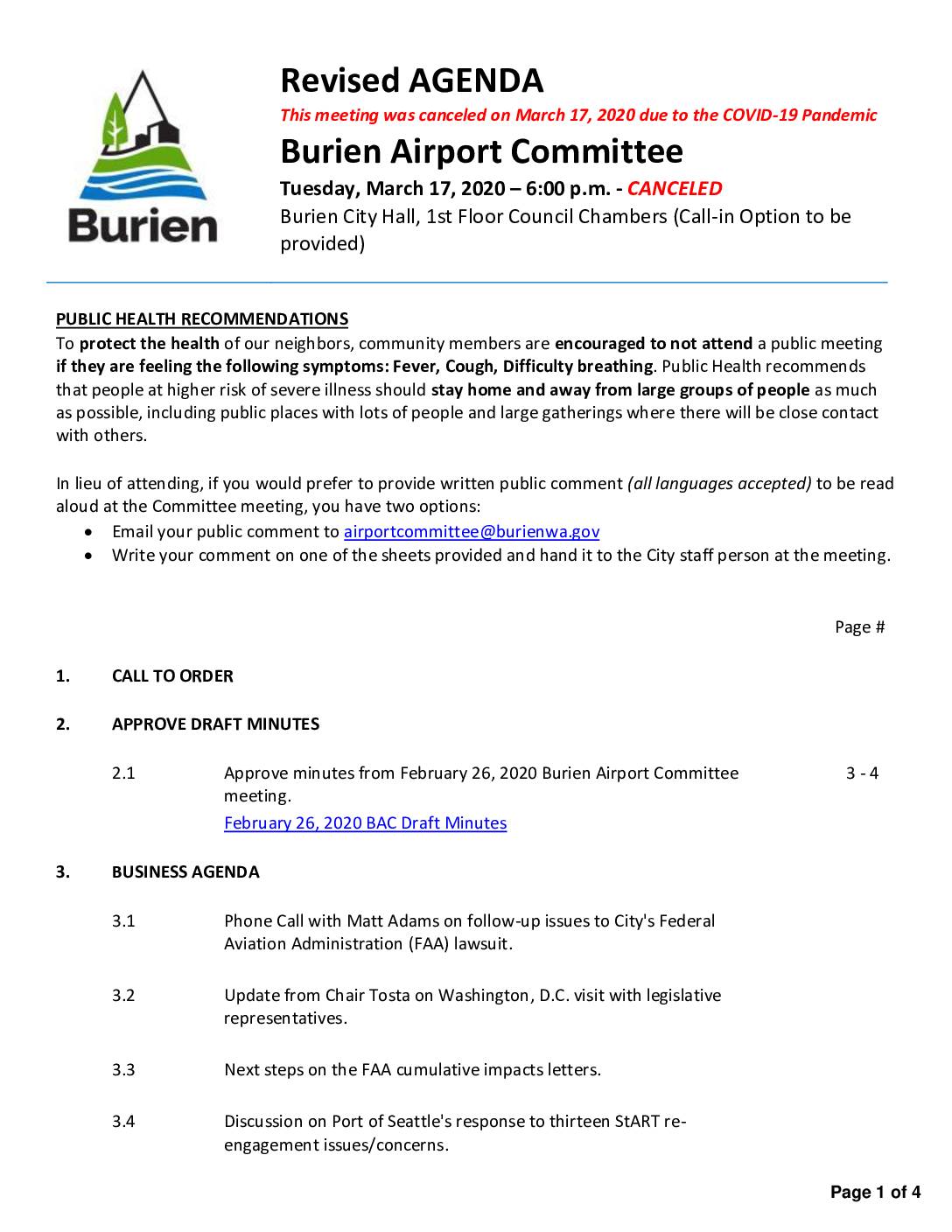
Burien Airport Committee revised agenda and February 26, 2020 draft minutes
The Burien Airport Committee had a meeting scheduled for March 17, 2020 that was canceled due to the COVID-19 pandemic. Key topics on the agenda included a follow-up phone call with the city's FAA lawsuit attorney Matt Adams, an update on a Washington D.C. legislative visit, and discussion of the Port of Seattle's response to community concerns about airport impacts. Draft minutes from the February 26, 2020 meeting document earlier discussions about challenging FAA flight path decisions over Burien and addressing cumulative noise and growth impacts on surrounding communities through the Seattle-Tacoma Airport's Sustainable Airport Master Plan (SAMP) Environmental Impact Statement process. -
 2020-03-09
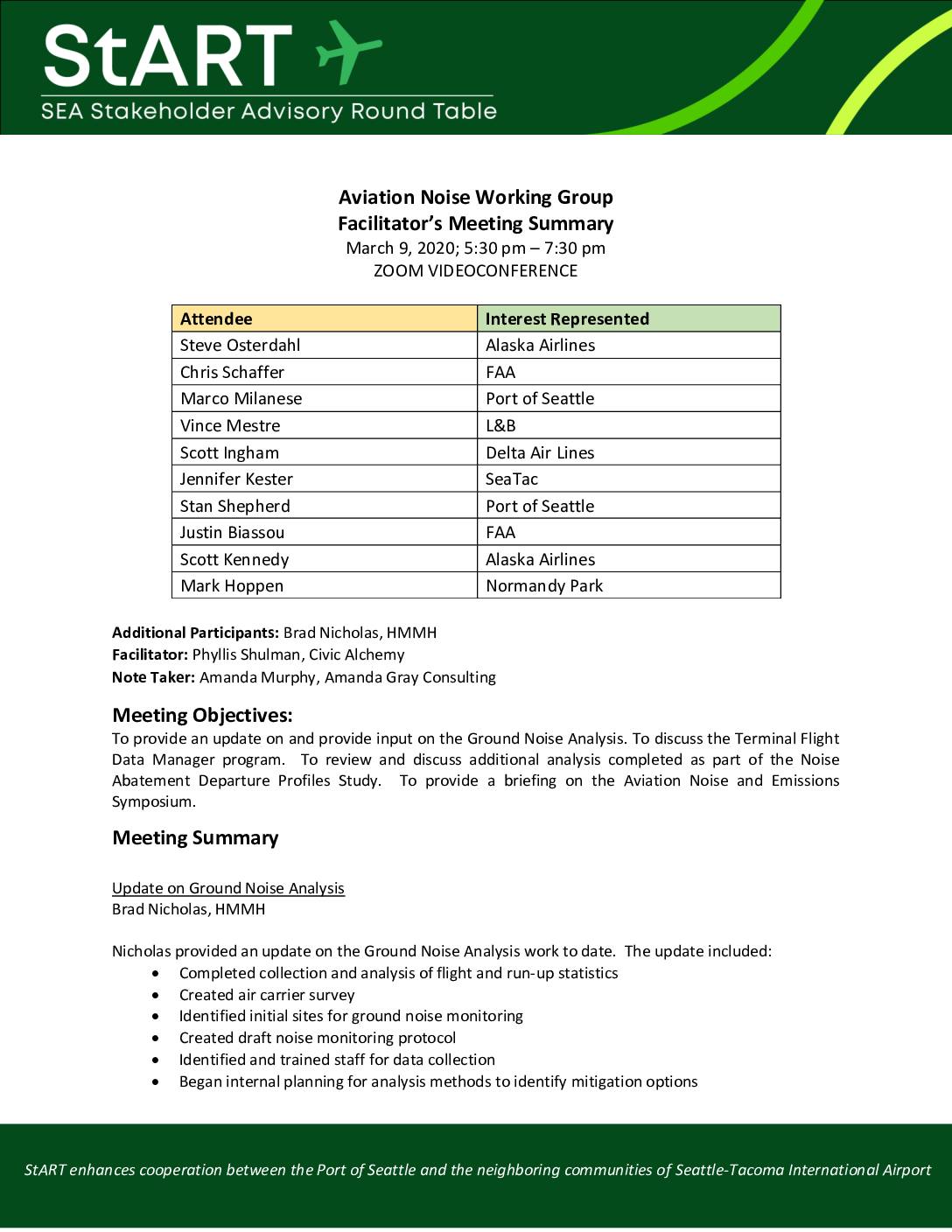
Aviation Noise Working Group facilitator’s meeting summary, March 9, 2020
This document summarizes a March 9, 2020 Aviation Noise Working Group meeting held via Zoom videoconference, involving representatives from the Port of Seattle, FAA, Alaska Airlines, Delta Air Lines, and local communities. The meeting covered an update on a Ground Noise Analysis study at Seattle-Tacoma International Airport, including plans to temporarily monitor noise from aircraft taxiing, engine run-ups, reverse thrust, and ground equipment at five sites over five days. Additional agenda items included discussion of the Terminal Flight Data Manager program, the Noise Abatement Departure Profiles Study, and an upcoming Aviation Noise and Emissions Symposium. -
 2020-03-01
2019 StART annual report
The 2019 StART Annual Report documents the activities of the Sea-Tac Stakeholder Advisory Round Table, a collaborative body that facilitates cooperation between the Port of Seattle and communities neighboring Seattle-Tacoma International Airport. The report covers 2019 membership, meeting summaries, and the work of two specialized groups focused on aviation noise and federal policy advocacy. Key accomplishments include revisions to operating procedures and the development of action agendas aimed at addressing aircraft noise impacts on surrounding neighborhoods.