TagConstruction(153)
-
 2000-06-01
EXH AR045402: Preliminary Stability and Settlement Analyses — Subgrade Improvements, MSE Wall Support, Third Runway Project
Hart Crowser report (J-4978-22) prepared for HNTB, June 2000, analyzing preliminary stability and settlement for subgrade improvements supporting Mechanically Stabilized Earth (MSE) walls at the Sea-Tac Airport Third Runway Project. Covers three MSE wall locations — North Safety Area, West MSE Wall, South MSE Wall — with analysis of subgrade improvement alternatives including overexcavation and -
 1999-06-15
EXH AR042490: Temporary Impacts to Wetlands During Third Runway Embankment Construction
Technical memorandum prepared by HNTB Corporation for the Port of Seattle and Parametrix, Inc. (June 15, 1999) analyzing temporary wetland impacts during Seattle-Tacoma International Airport Third Runway embankment construction. AR 042490. Covers storm water management during construction, temporary fill in wetlands west of runway embankment toe, impacts to Wetland 37 (Miller Creek basin) and Wetland -
 1999-03-17
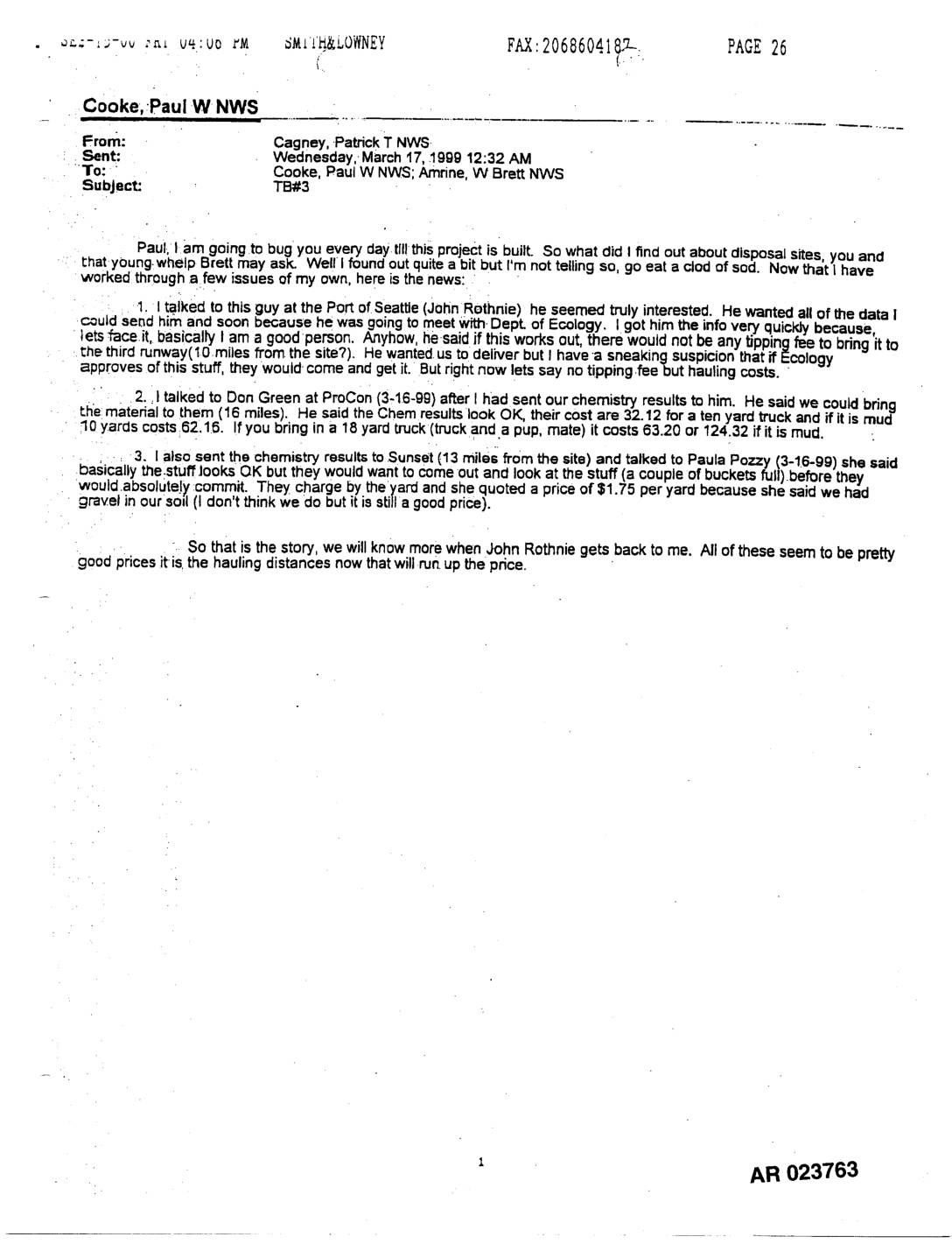
EXH AR023763: Internal Email – Third Runway Excavation Material Disposal Site Options
A March 1999 internal email from Patrick Cagney of the U.S. Army Corps of Engineers discusses potential disposal sites for excavated soil material related to a construction project near Seattle. Three options were identified: the Port of Seattle's third runway project (no tipping fee, hauling costs only), ProCon at 16 miles away (costs ranging from $32–$124 depending on truck size and material wetness), and Sunset at 13 miles away ($1.75 per yard). The email notes that hauling distances would be the primary cost driver across all options. -
 1998-01-22
EXH AR025788: Geotechnical Design Recommendations Phase 1 Embankment Construction Third Runway STIA
This January 1998 geotechnical engineering report by AGI Technologies provides design recommendations for Phase 1 embankment construction related to the Third Runway Project at Seattle-Tacoma International Airport. The report covers site conditions including subsurface soil layers and groundwater, as well as design concepts addressing embankment stability, settlement, and drainage. It was prepared for HNTB Corporation as part of the engineering groundwork for the airport's runway expansion. -
 1997-05-01
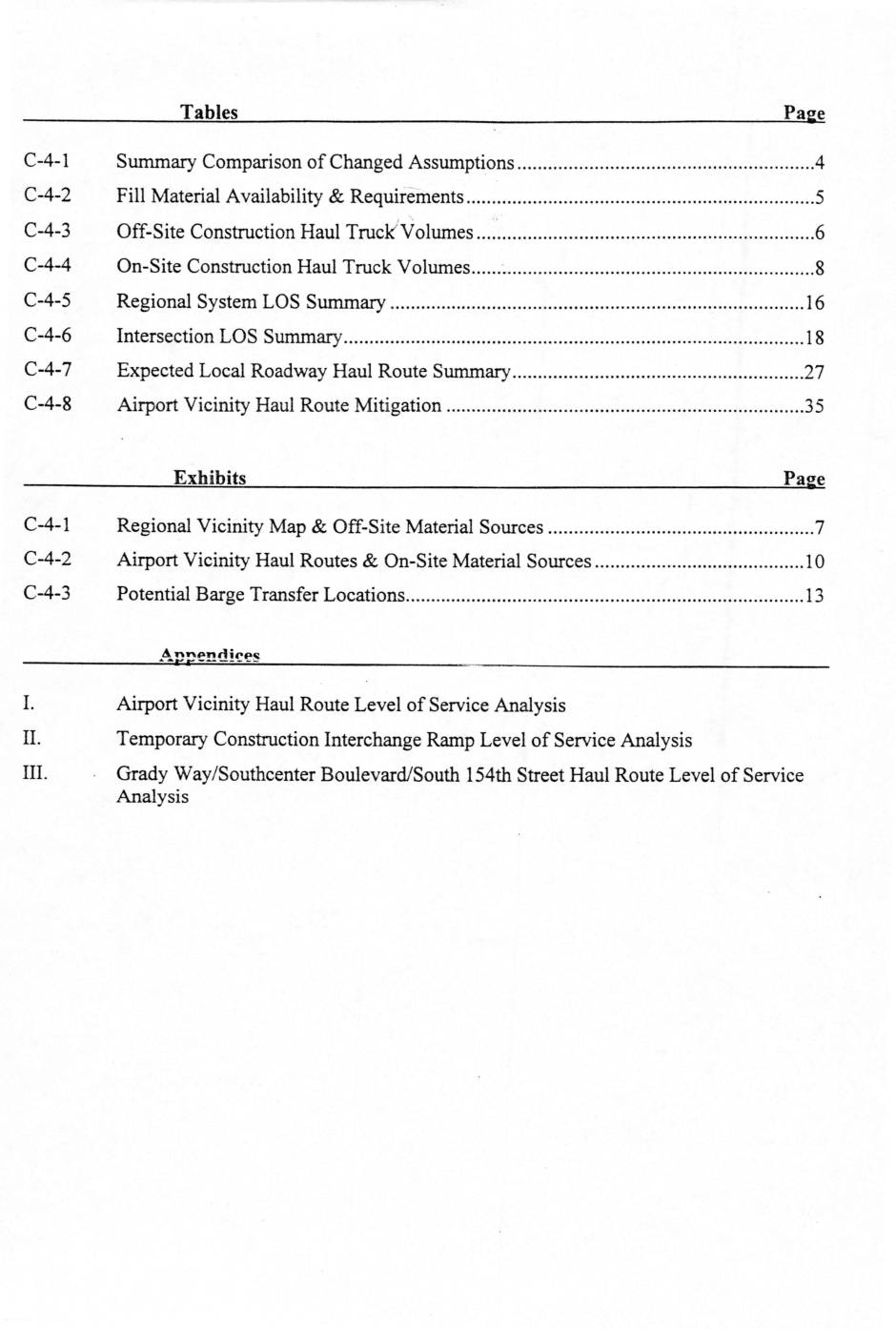
Appendix C-4: Construction Impacts Report — Seattle-Tacoma International Airport Final Supplemental Environmental Impact Statement
This technical report supplements the Final Environmental Impact Statement for Seattle-Tacoma International Airport's Master Plan Update, focusing on construction impacts related to the proposed Third Runway and associated projects. It analyzes fill material requirements estimated at 17.25 million cubic yards, haul routes, and truck traffic volumes, noting that the construction timeline was extended from three to five years, which reduced the number of average daily truck trips compared to earlier estimates. The report examines both on-site and off-site material sources and assesses potential traffic congestion impacts on regional roadways during the construction period. -
 1993-01-01
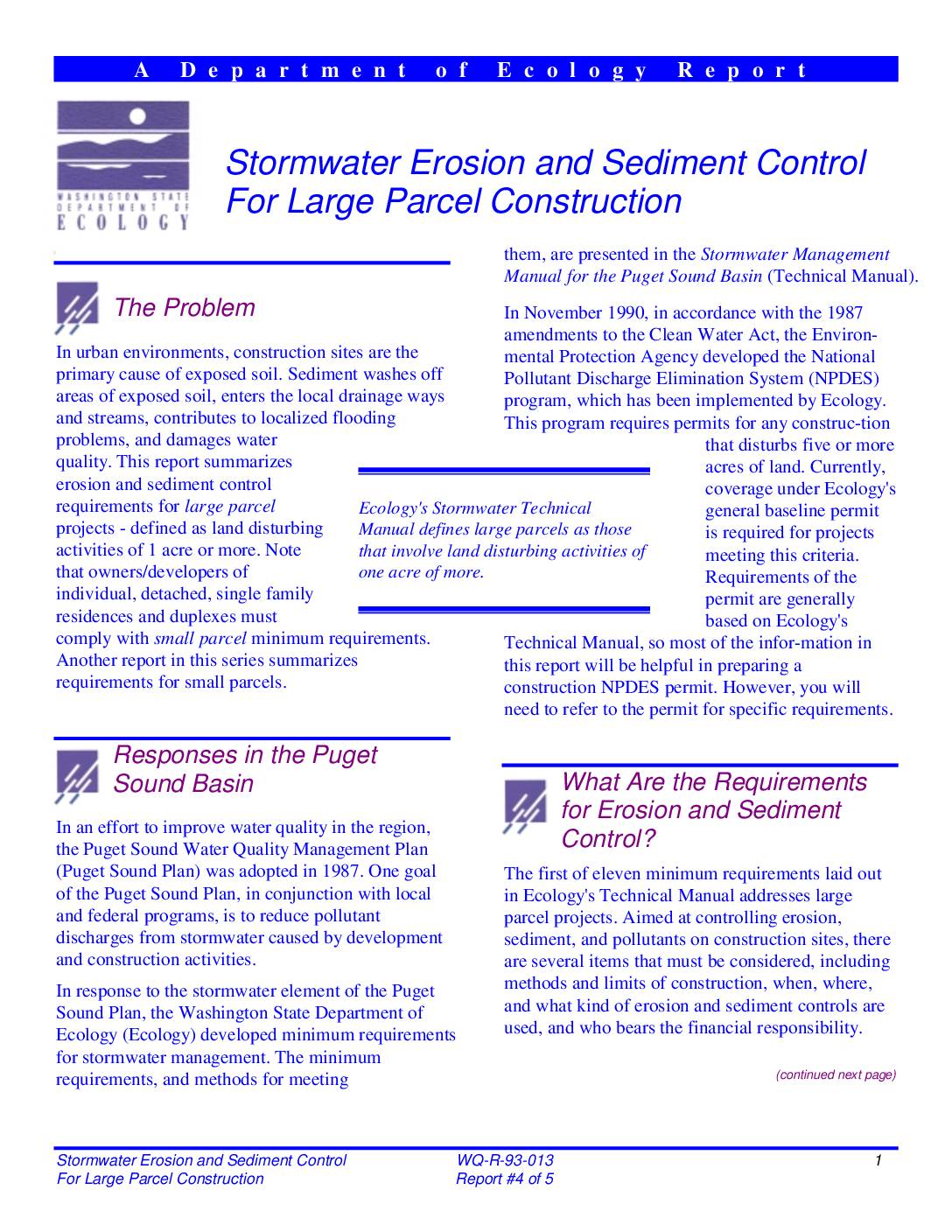
Stormwater erosion and sediment control for large parcel construction
This Washington State Department of Ecology report outlines stormwater erosion and sediment control requirements for large construction projects involving one or more acres of disturbed land in the Puget Sound Basin. It describes best management practices (BMPs) such as covering exposed soil, trapping sediment onsite, and protecting adjacent properties from runoff and sediment. Developers are required to create an erosion and sediment control plan and are financially responsible for its implementation. -
 1991-01-01
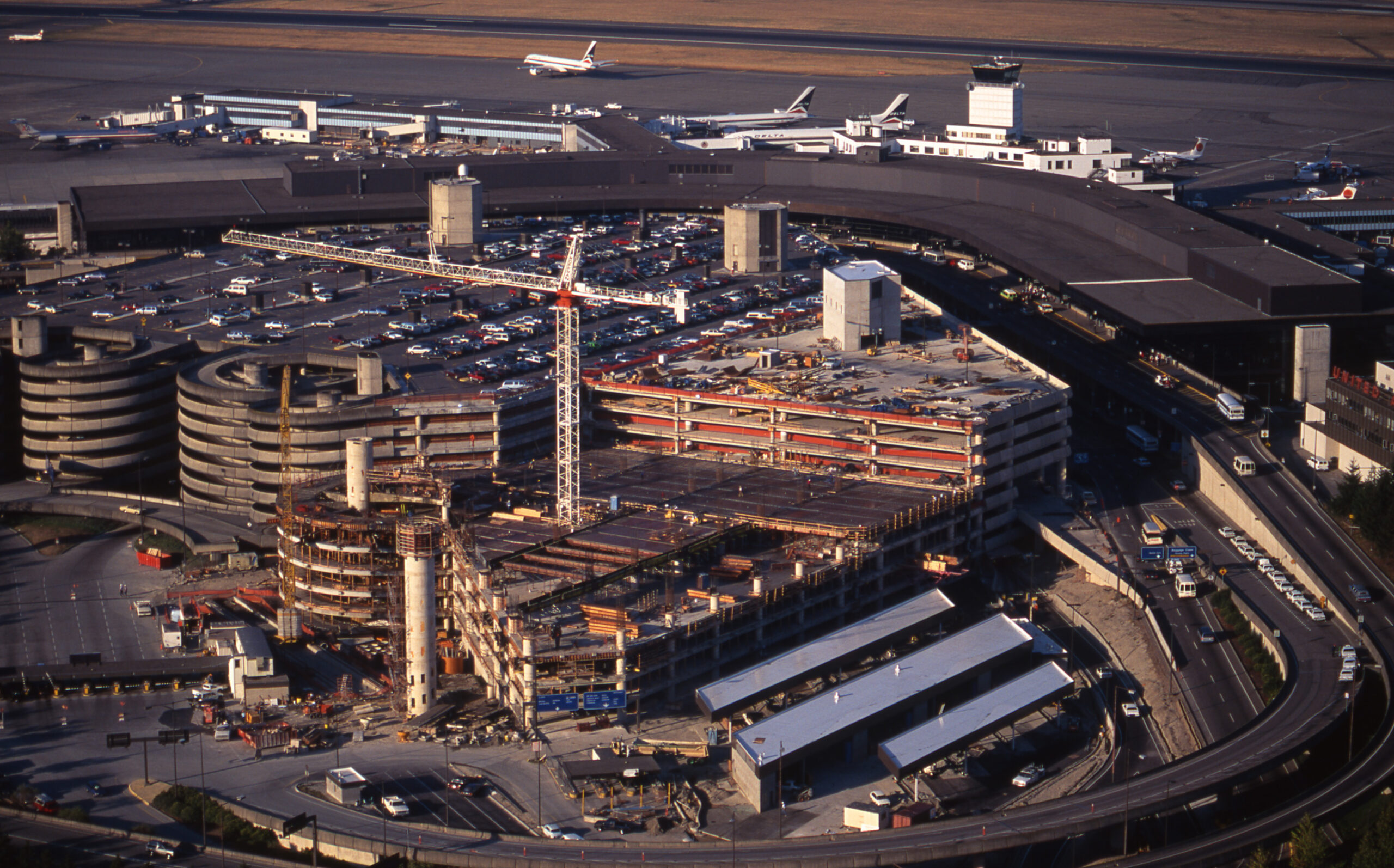
Sea-Tac Airport Terminal and Parking Garage Construction, 1991
An aerial photograph shows active construction of a multi-story parking garage and terminal expansion at Seattle-Tacoma International Airport, with a tower crane visible on site. The existing curved terminal building, a spiral parking structure, aircraft at gates, and the air traffic control tower are visible in the background. -
 1978-08-13
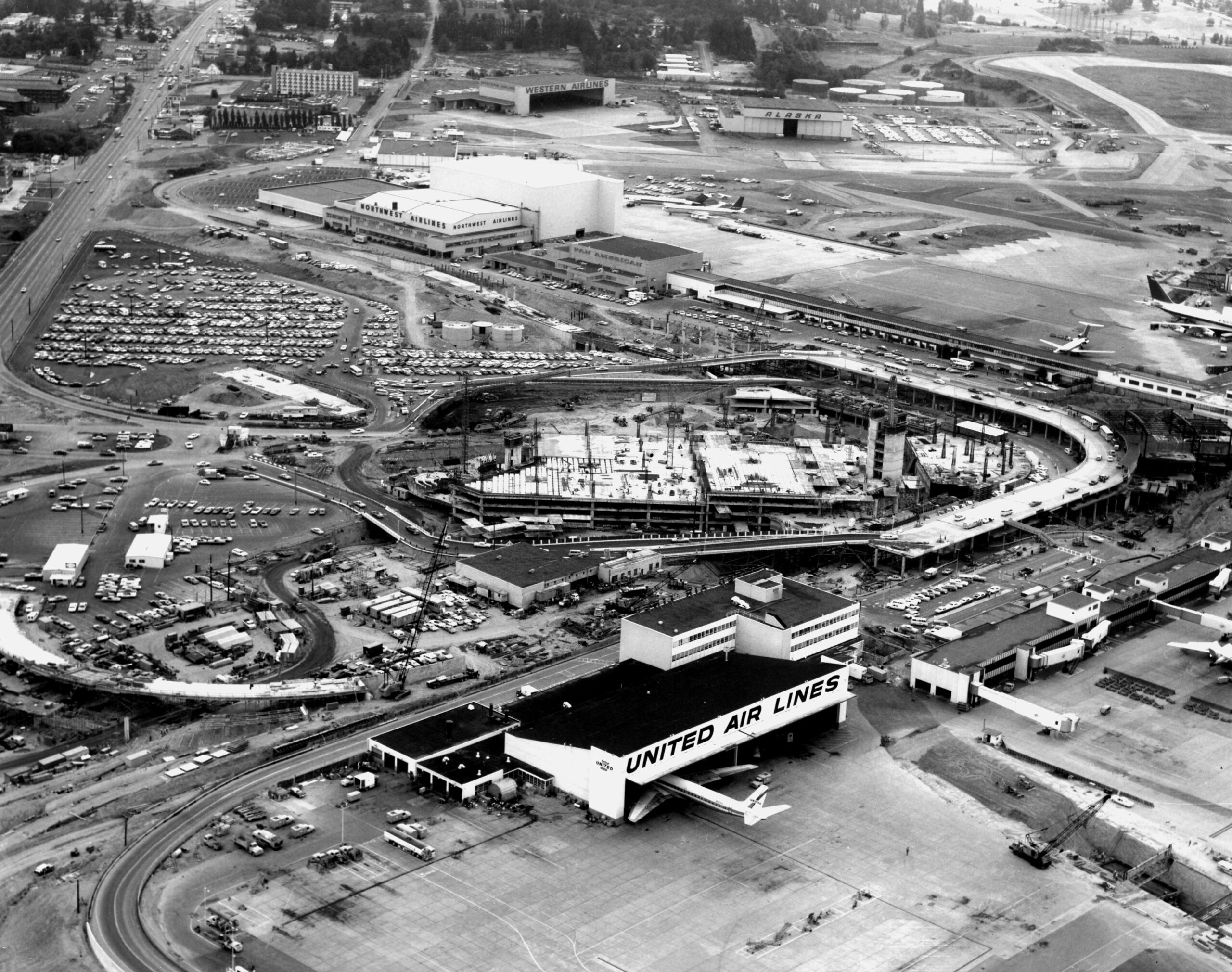
Sea-Tac Airport Aerial View During Central Terminal Construction
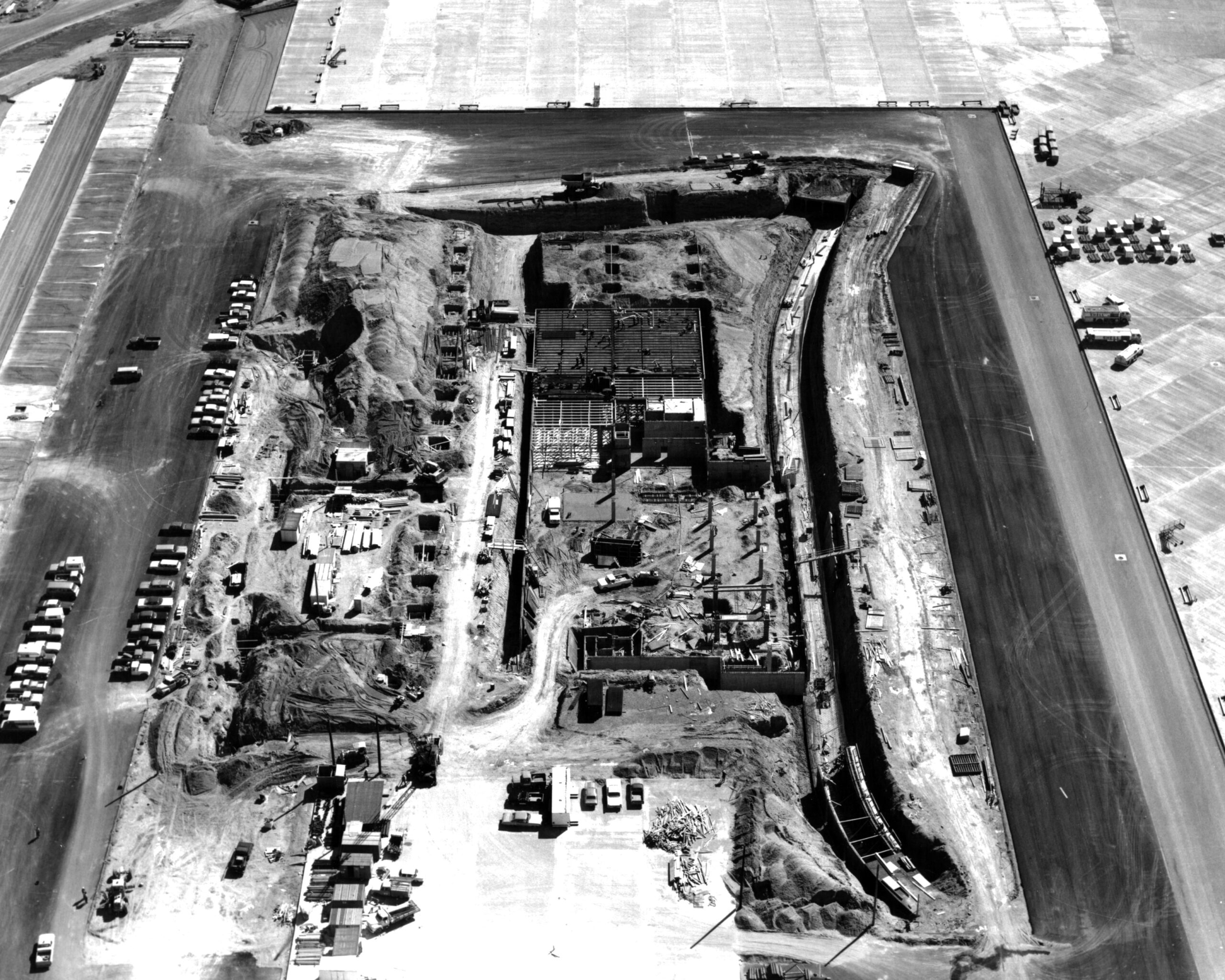
Aerial photograph of Seattle-Tacoma International Airport during a major construction phase, showing the new central terminal under construction (circular/horseshoe structure). Visible airline facilities include United Air Lines (foreground), Northwest Airlines, Western Airlines, and Alaska Airlines hangars, along with extensive parking areas and tarmac operations. -
-
 1970-01-01
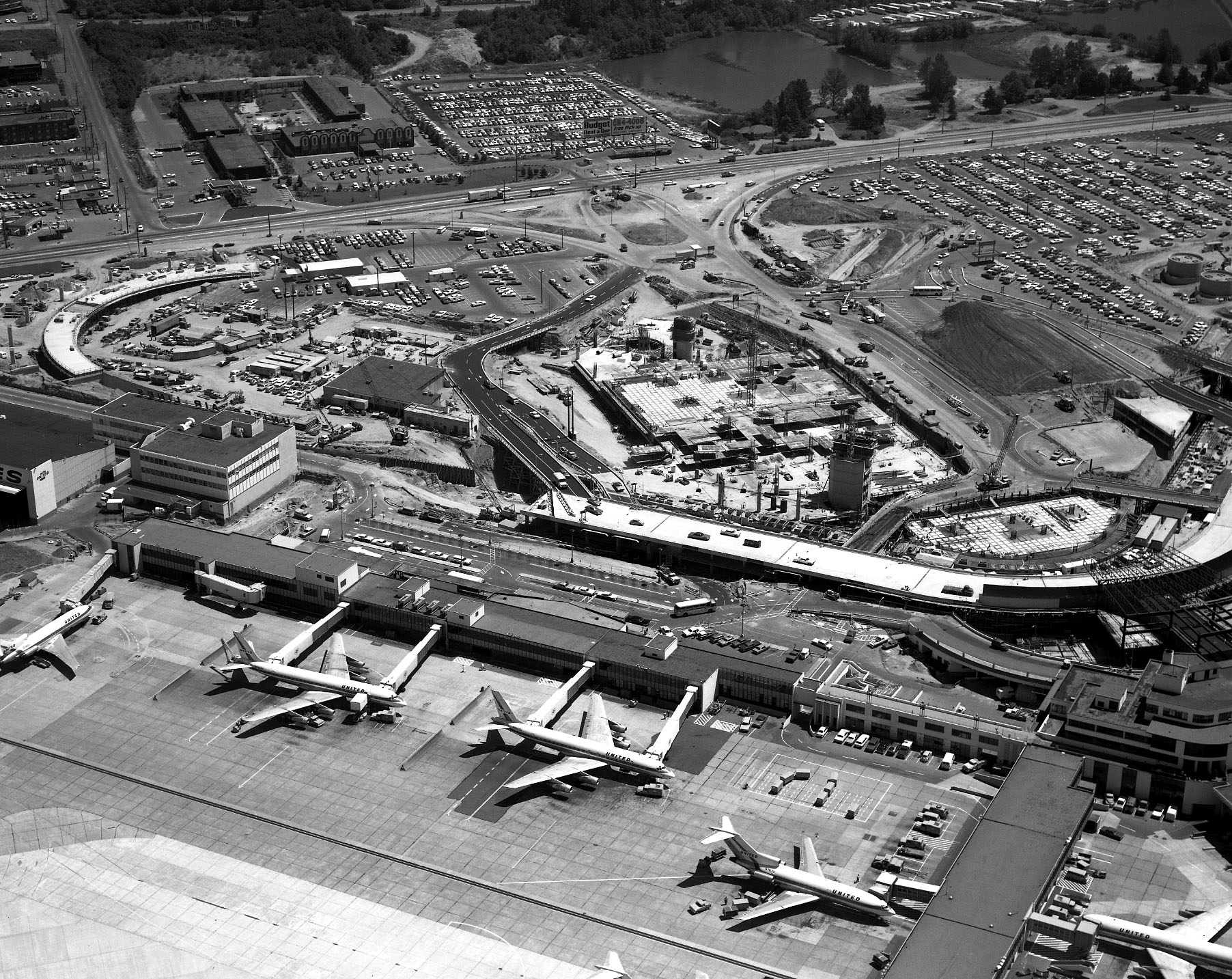
Sea-Tac Airport Aerial View with United Airlines Gates and Terminal Construction
Black-and-white aerial photograph showing Sea-Tac Airport's existing terminal with multiple United Airlines jet aircraft (visible 'UNITED' livery on fuselages) parked at gates, alongside a large active construction project underway immediately north of the terminal. Extensive parking lots, access roads, and surrounding commercial development are visible in the background.