TagPort Of Seattle(2410)
-
 2002-10-20
EXH AR012668: Declaration of Joseph Brascher — PCHB 01-133, ACC v. Ecology and Port Of Seattle
Declaration of Joseph Brascher of Aqua Terra Consultants in PCHB case 01-133, Airport Communities Coalition (ACC) v. Department of Ecology and Port Of Seattle. Brascher describes his expertise in surface and groundwater modeling using HSPF, SWMM, MODFLOW, and other hydrologic software packages. Aqua Terra acted as subconsultant to Parametrix, Inc. for the Low Flow Analysis -
 2002-10-04
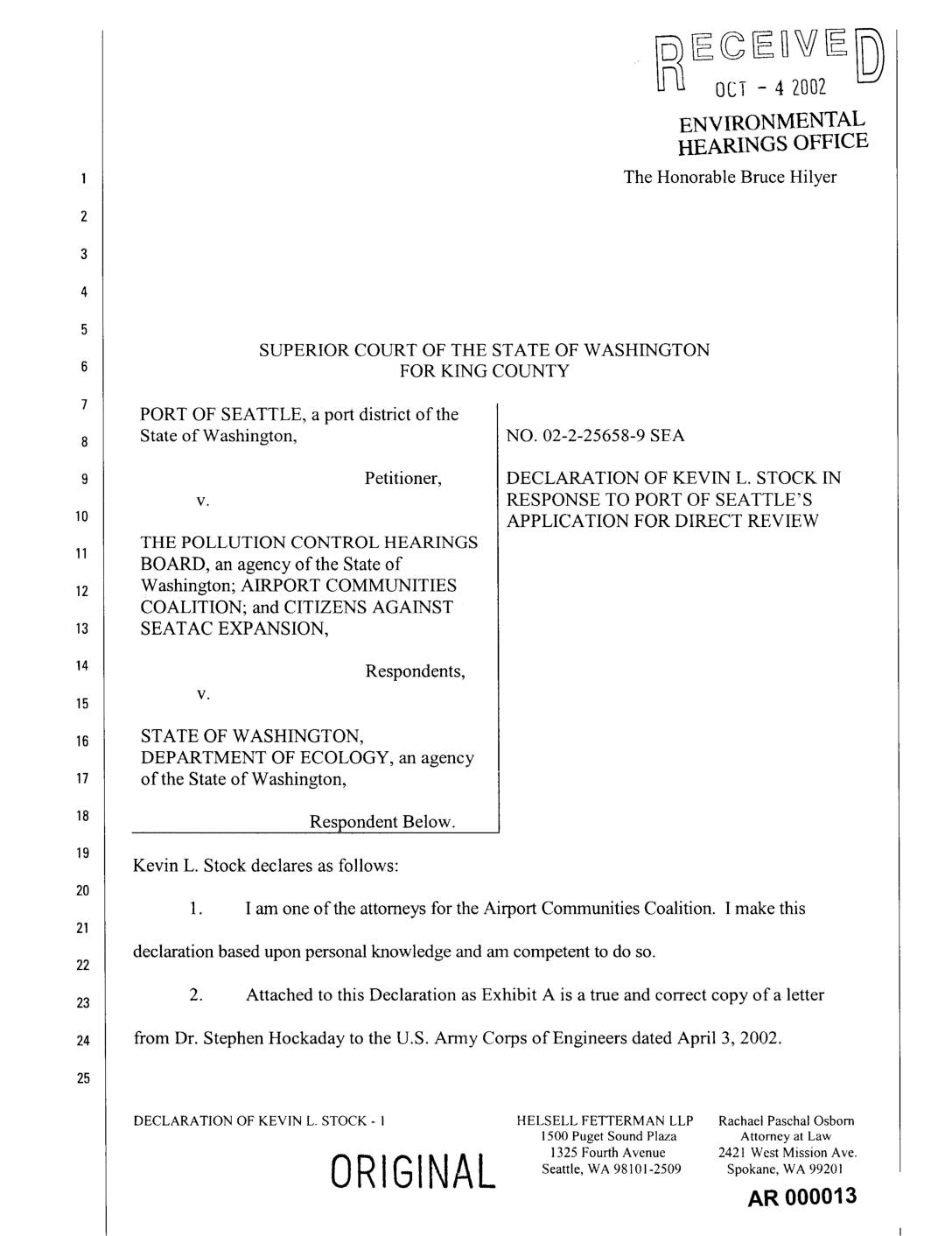
PCHB Doc 13: Declaration of Kevin L. Stock in Response to Port Of Seattle’s Application for Direct Review
Declaration of Kevin L. Stock, attorney for Airport Communities Coalition (ACC), filed October 4, 2002, in King County Superior Court case No. 02-2-25658-9 SEA, Port of Seattle v. Pollution Control Hearings Board (PCHB), ACC, and Citizens Against SeaTac Expansion (CASE). Lists Exhibits A–L attached to the declaration, including seven letters from Dr. Stephen Hockaday to -
 2002-09-27
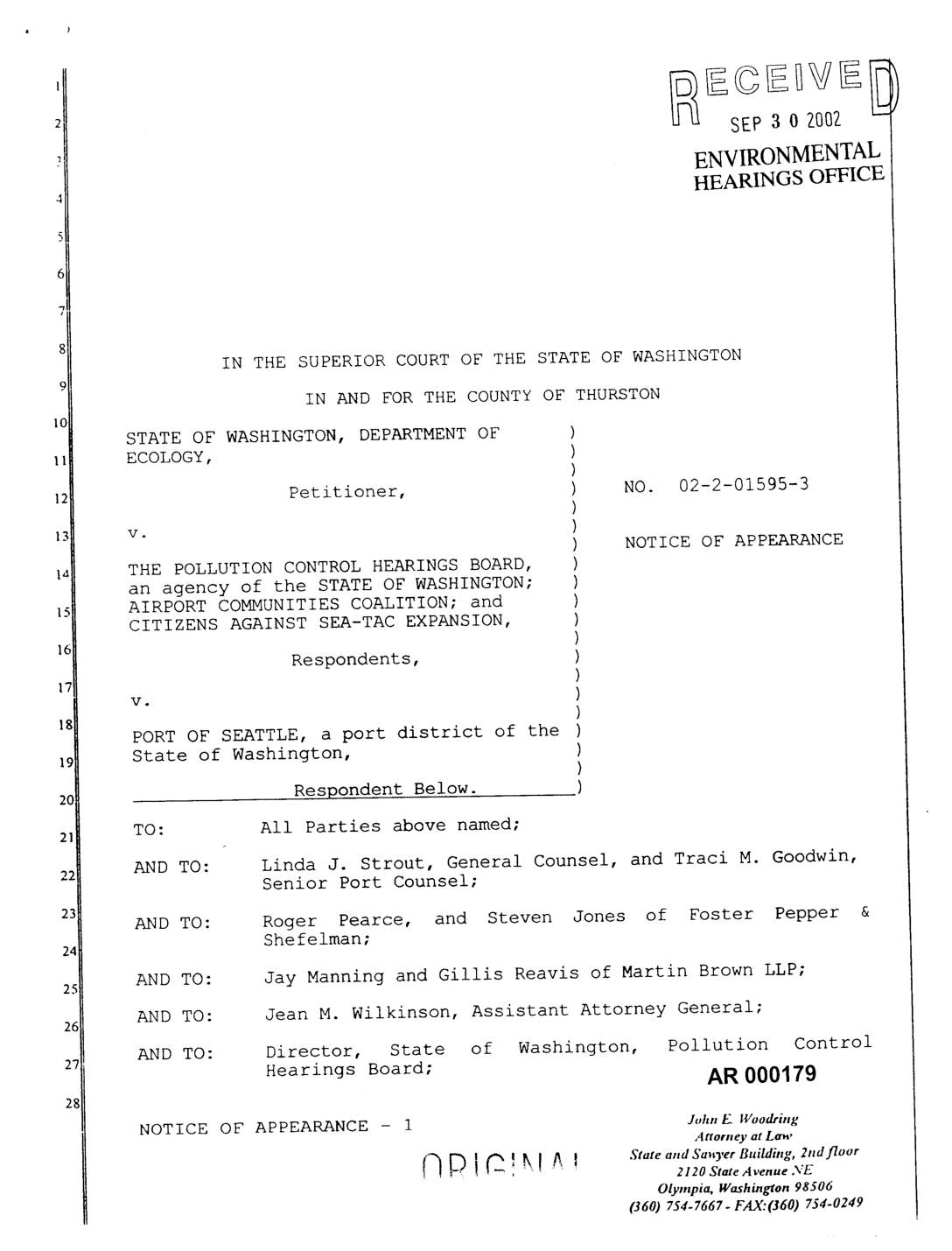
AR 000179: Notice of Appearance — ACC in Ecology v. Pollution Control Hearings Board et al.
Notice of Appearance filed by attorney John E. Woodring (WSBA# 6781) on behalf of petitioner Airport Communities Coalition (ACC) in Thurston County Superior Court case No. 02-2-01595-3, State of Washington Department of Ecology v. Pollution Control Hearings Board, Airport Communities Coalition, Citizens Against Sea-Tac Expansion (CASE), and Port Of Seattle. Served on multiple parties including -
 2002-09-19
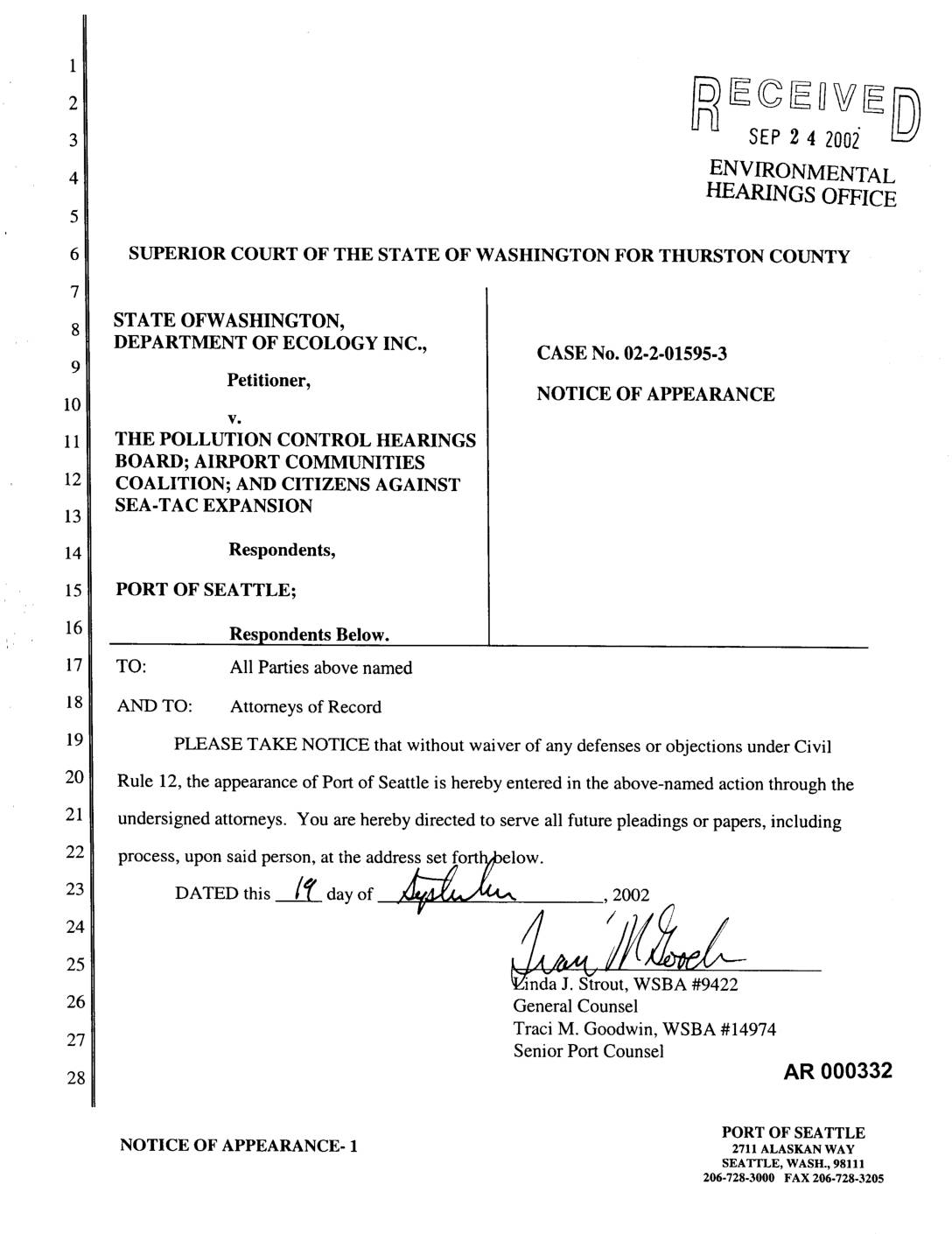
EXH AR000332: Port Of Seattle Notice of Appearance and Certificate of Service — Case No. 02-2-01595-3
Port Of Seattle Notice of Appearance filed September 19, 2002 in Superior Court of Washington for Thurston County, Case No. 02-2-01595-3, State of Washington Department of Ecology v. Pollution Control Hearings Board, Airport Communities Coalition, and Citizens Against Sea-Tac Expansion. Signed by Linda J. Strout (WSBA #9422) and Traci M. Goodwin (WSBA #14974). Accompanied by -
 2002-09-19
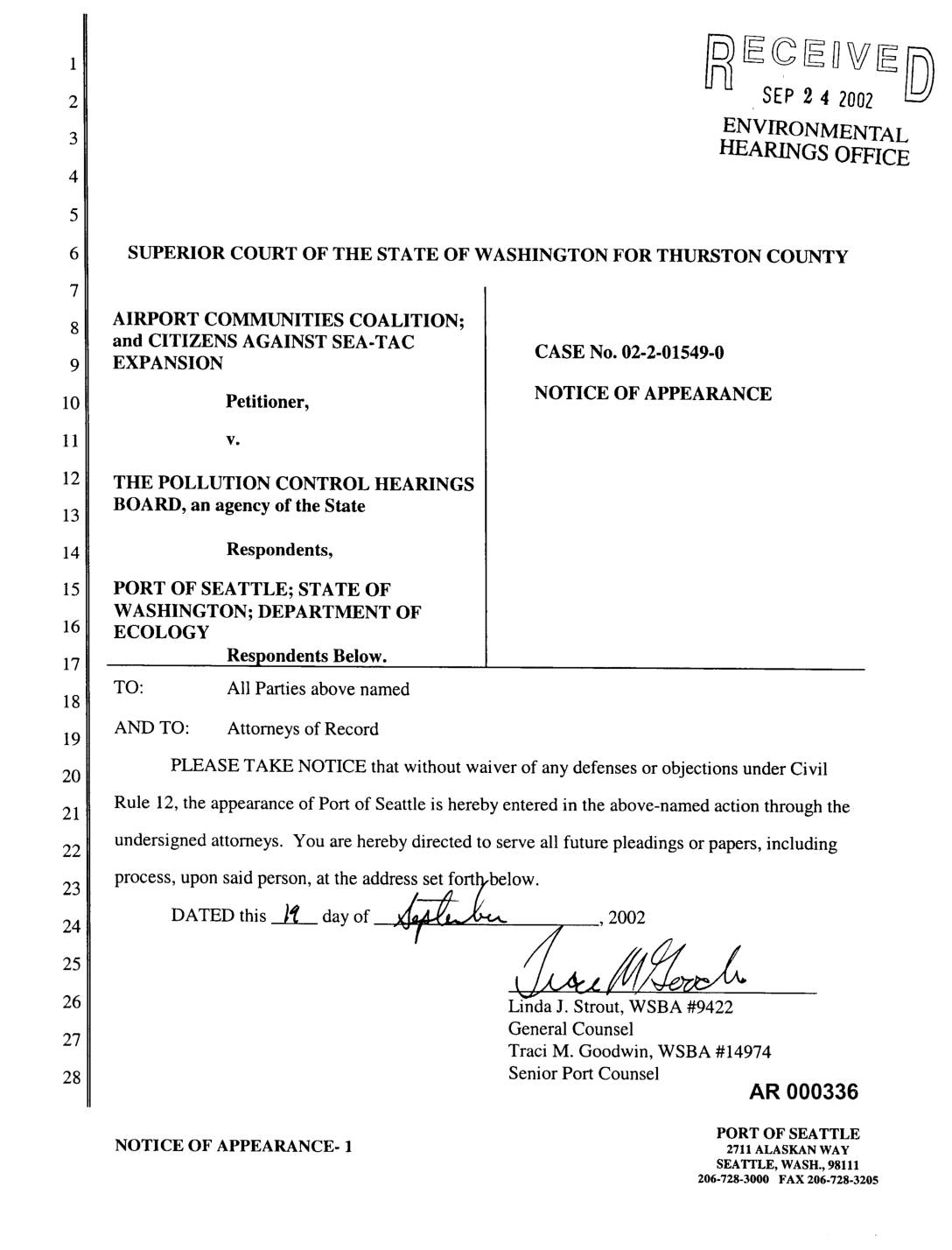
EXH AR000336: Port Of Seattle Notice of Appearance — ACC and CASE v. Pollution Control Hearings Board, Case No. 02-2-01549-0
Port Of Seattle Notice of Appearance filed September 19, 2002 in Thurston County Superior Court, Case No. 02-2-01549-0, entering appearance through General Counsel Linda J. Strout (WSBA #9422) and Senior Port Counsel Traci M. Goodwin (WSBA #14974). Petitioners are Airport Communities Coalition (ACC) and Citizens Against Sea-Tac Expansion (CASE); respondents include the Pollution Control Hearings -
 2002-09-17
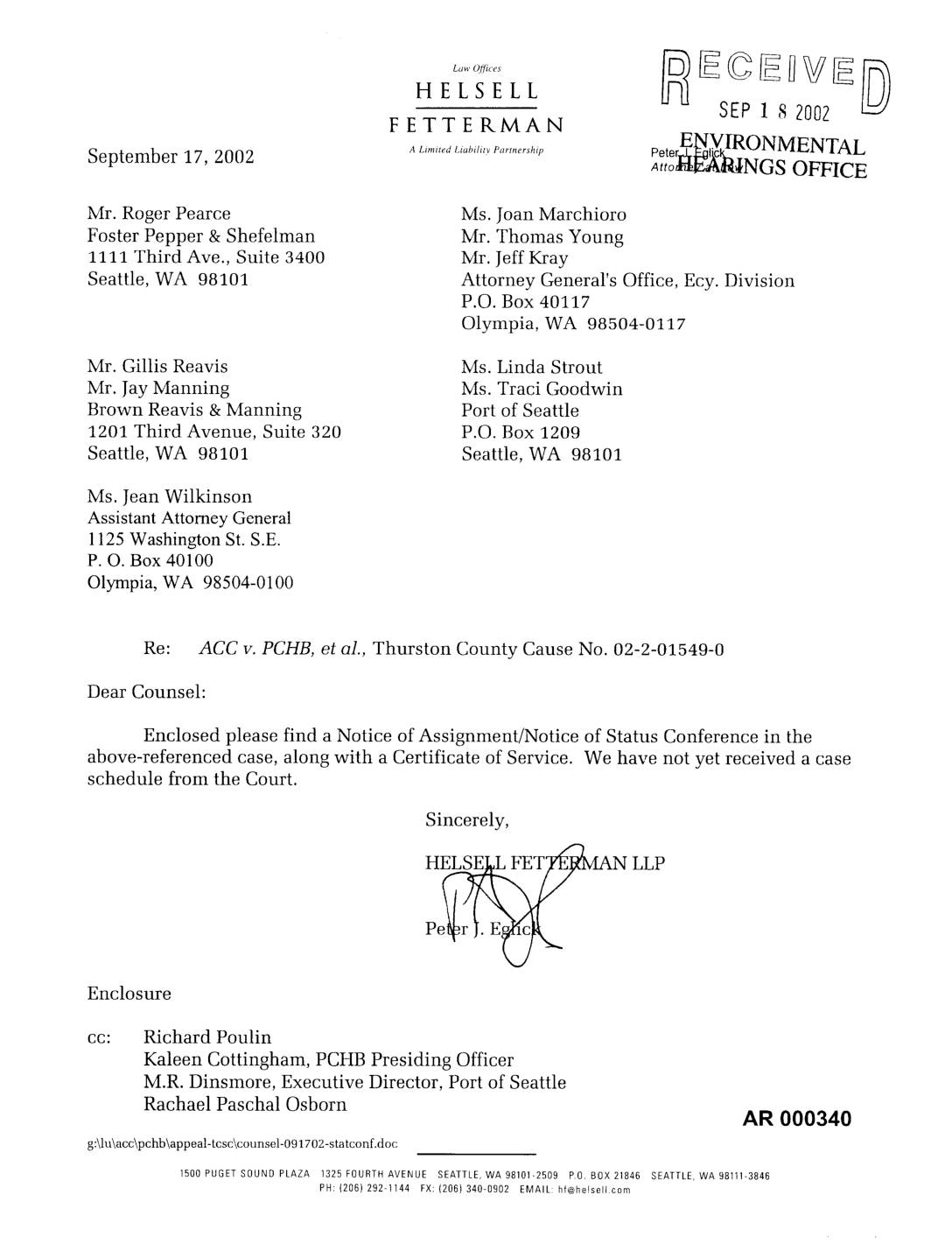
EXH AR000340: ACC v. PCHB — Notice of Assignment and Status Conference, Thurston County Cause No. 02-2-01549-0
Cover letter dated September 17, 2002 from Peter J. Eglick of Helsell Fetterman LLP to multiple counsel including Roger Pearce (Foster Pepper & Shefelman), Joan Marchioro, Thomas Young, Jeff Kray (Attorney General’s Office, Ecology Division), Gillis Reavis, Jay Manning (Brown Reavis & Manning), Linda Strout, Traci Goodwin (Port Of Seattle), and Jean Wilkinson (Assistant Attorney -
 2002-09-17
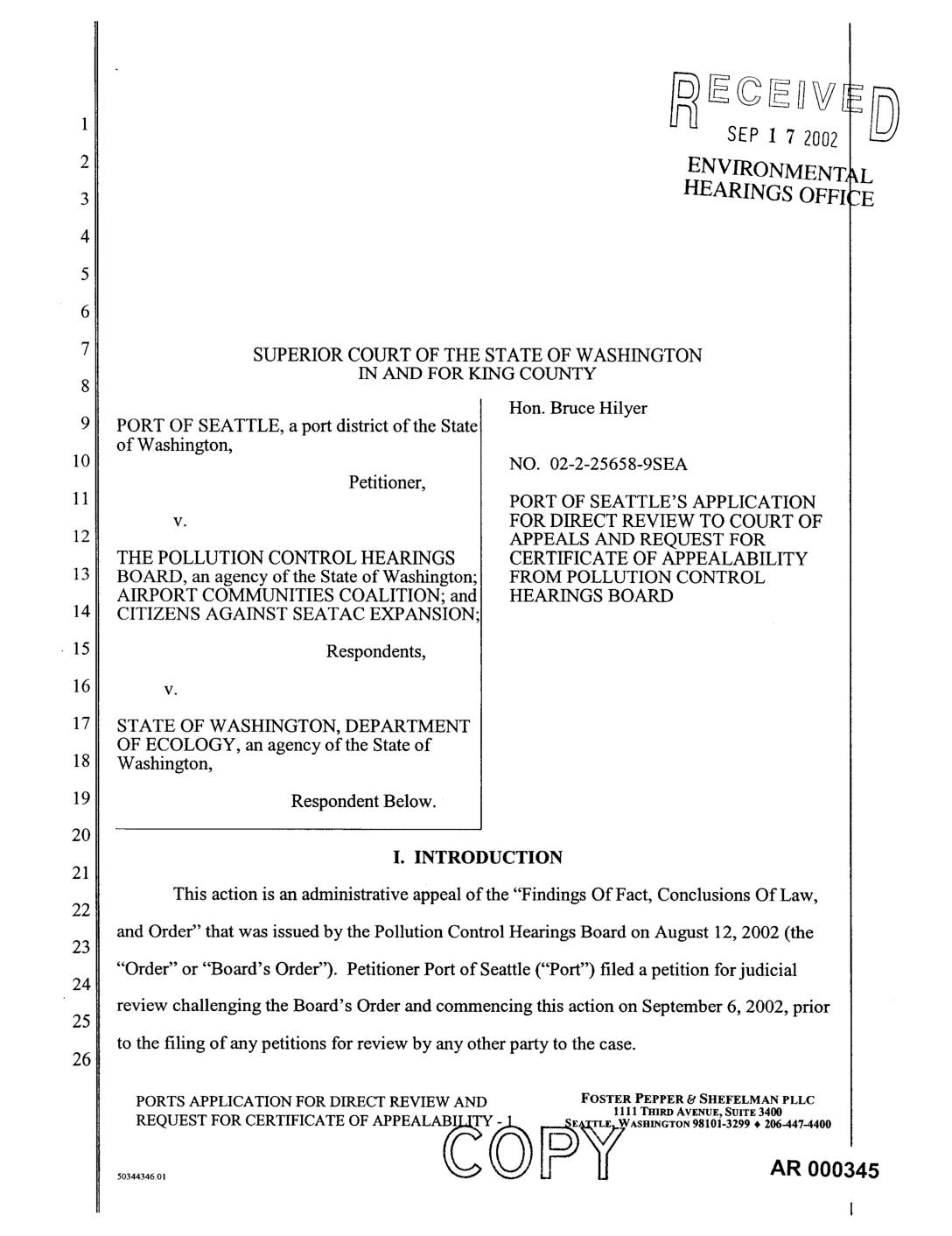
PCHB Doc 345: Port Of Seattle Application for Direct Review to Court of Appeals and Request for Certificate of Appealability from Pollution Control Hearings Board
Port Of Seattle application filed in King County Superior Court (Case No. 02-2-25658-9SEA) before Judge Bruce Hilyer, seeking direct review by Washington Court of Appeals Division One of the Pollution Control Hearings Board (PCHB) August 12, 2002 Order affirming Ecology’s 401 Certification (Clean Water Act 33 U.S.C. § 1341) for the Sea-Tac Airport Master Plan -
 2002-09-16
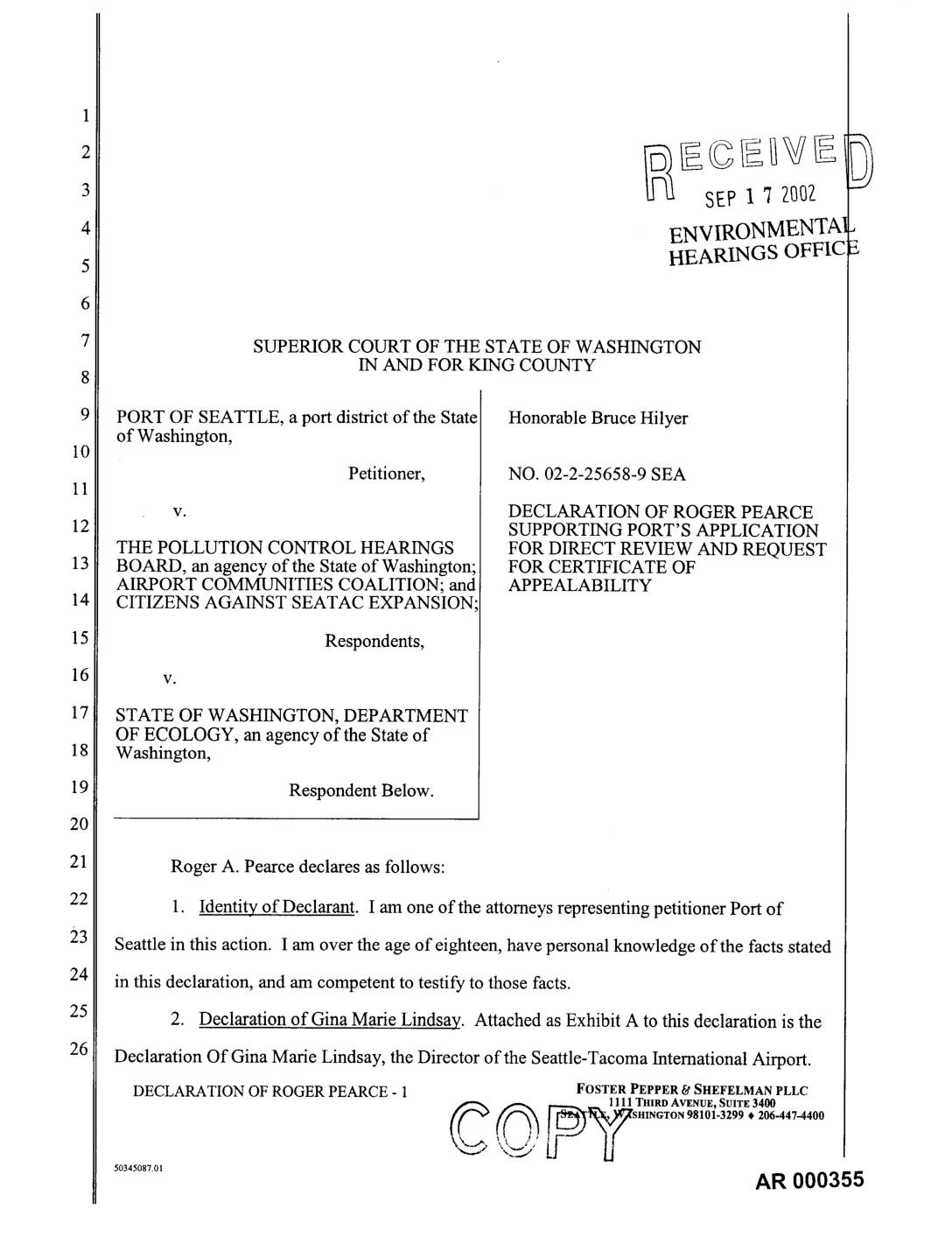
EXH AR000355: Declaration of Roger Pearce Supporting Port Of Seattle’s Application for Direct Review and Request for Certificate of Appealability
Declaration by Roger A. Pearce, attorney at Foster Pepper & Shefelman PLLC, supporting Port Of Seattle’s application for direct review and request for certificate of appealability in King County Superior Court Case No. 02-2-25658-9 SEA before Hon. Bruce Hilyer. Filed against the Pollution Control Hearings Board (PCHB), Airport Communities Coalition (ACC), Citizens Against Sea-Tac Expansion -
 2002-09-12
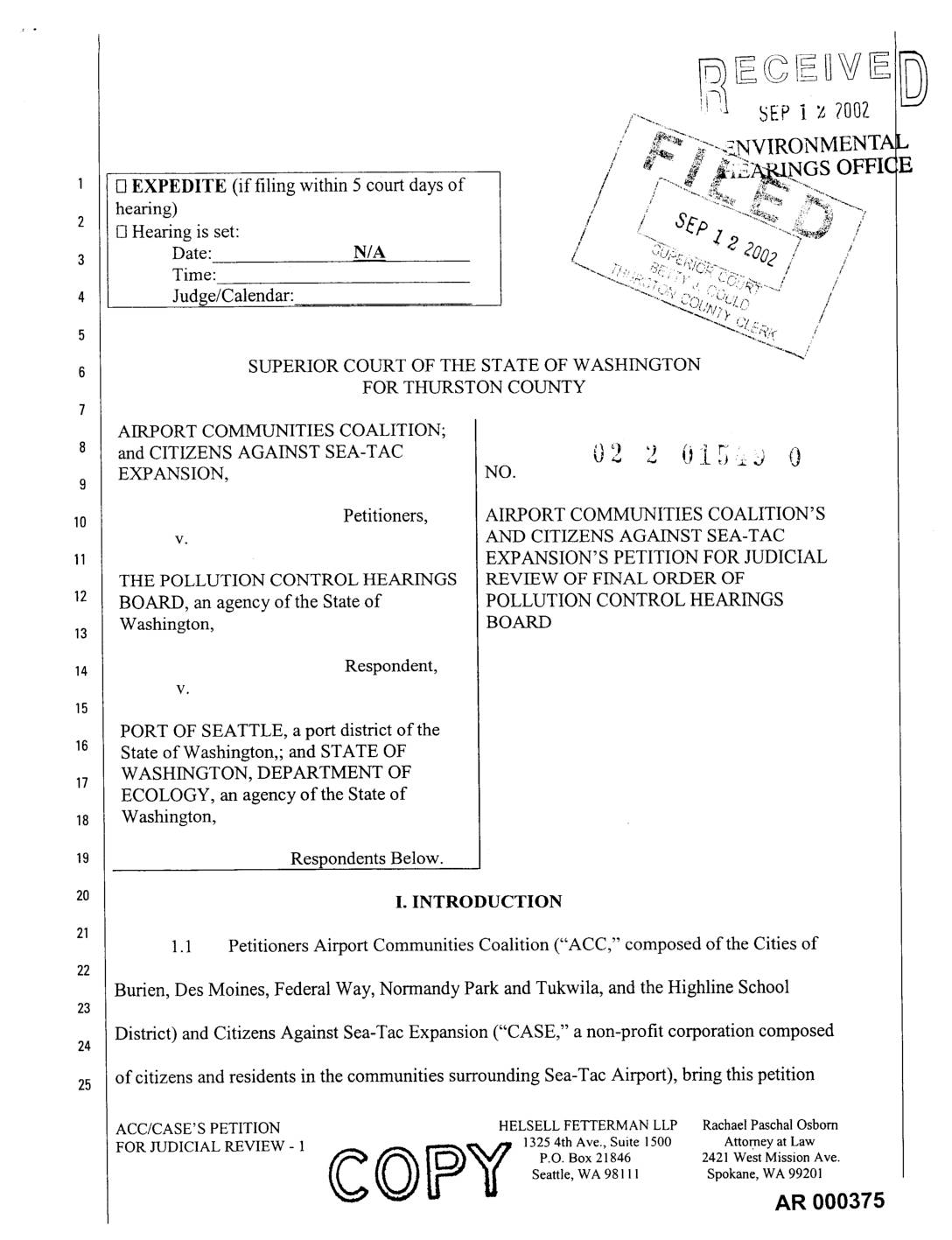
EXH AR000375: ACC and CASE Petition for Judicial Review of Final Order of Pollution Control Hearings Board
ACC (Airport Communities Coalition, composed of Cities of Burien, Des Moines, Federal Way, Normandy Park, Tukwila, and Highline School District) and CASE (Citizens Against Sea-Tac Expansion) petition for judicial review filed in Thurston County Superior Court under Administrative Procedure Act Chapter 34.05 RCW. Challenges PCHB No. 01-160 final Order of August 12, 2002 (finalized September -
 2002-09-12
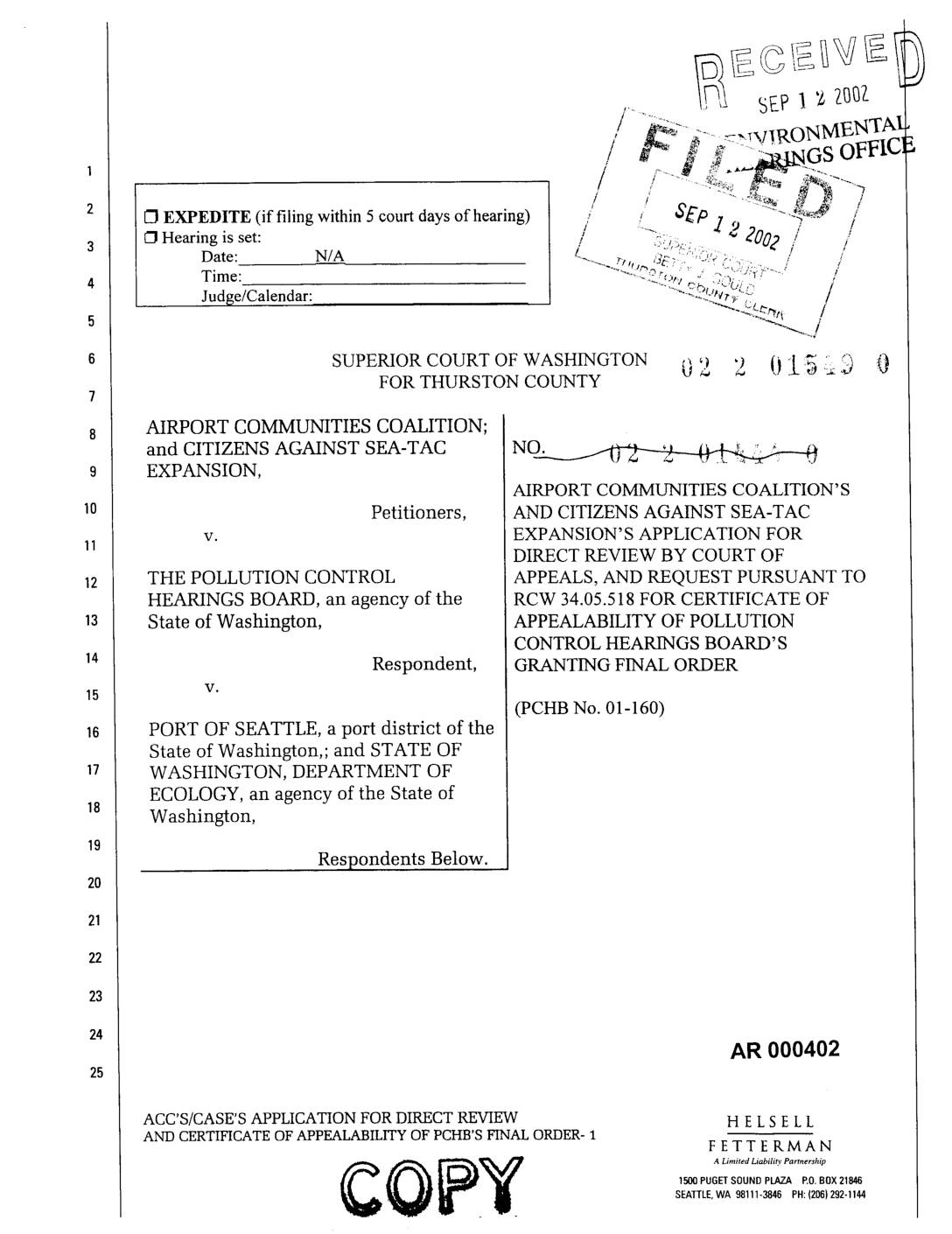
PCHB Doc 402: ACC and CASE Application for Direct Review and Certificate of Appealability of PCHB’s Final Order
Filed September 12, 2002 in Superior Court of Washington for Thurston County, this is ACC (Airport Communities Coalition) and CASE (Citizens Against Sea-Tac Expansion) application for direct review by Washington Court of Appeals Division II of the Pollution Control Hearings Board (PCHB) Final Order (PCHB No. 01-160) issued August 12, 2002, in Airport Communities Coalition