Notes
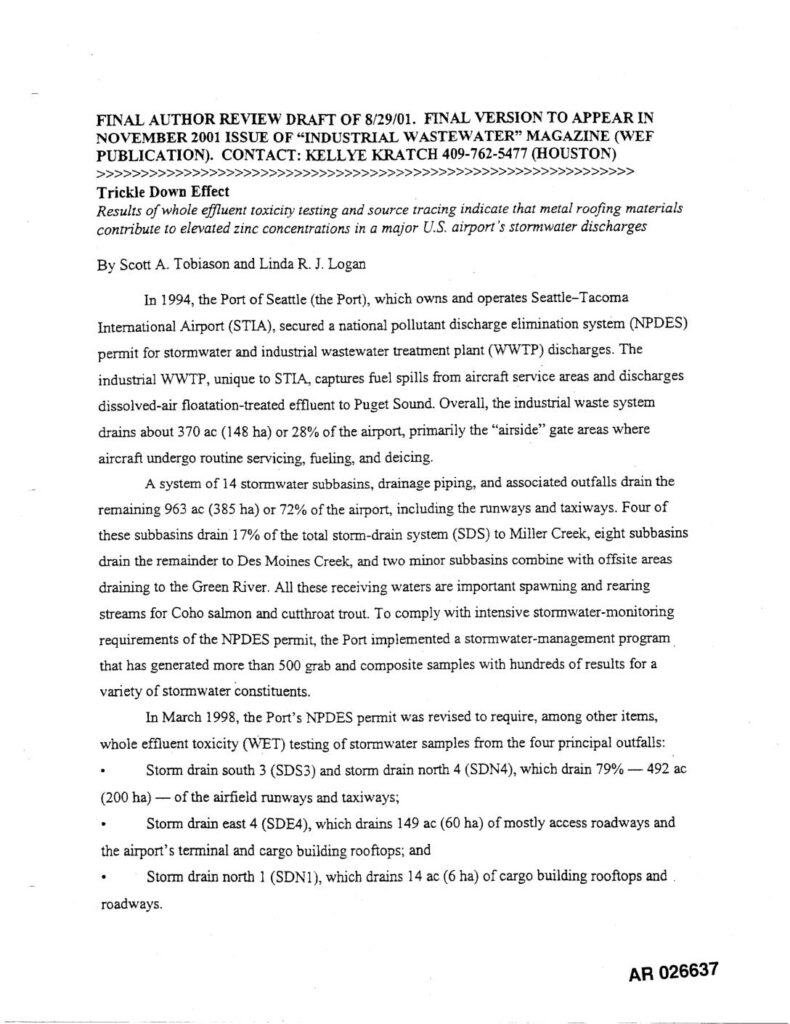
Article by Scott A. Tobiason and Linda R. J. Logan, published in Industrial Wastewater magazine (WEF), November 2001, documenting whole effluent toxicity (WET) testing and source-tracing at Seattle-Tacoma International Airport (STIA) stormwater outfalls. Covers NPDES permit requirements, zinc contamination traced to uncoated galvanized metal roofing on cargo buildings draining to outfall SDN1, with testing of Daphnia pulex and Pimephales promelas. Discusses Miller Creek, Des Moines Creek, and Puget Sound as receiving waters for salmon and cutthroat trout. Source-tracing identified SDN1 as toxic; SDS3 and SDN4 met Washington State Department of Ecology performance standards. Involves chelation testing, LC50, NOEC, LOEC analysis, and EPA Method 1669 clean techniques. Administrative Record document AR026637, filed in PCHB Third Runway EIS proceedings.