TagSea-Tac Airport(1835)
-
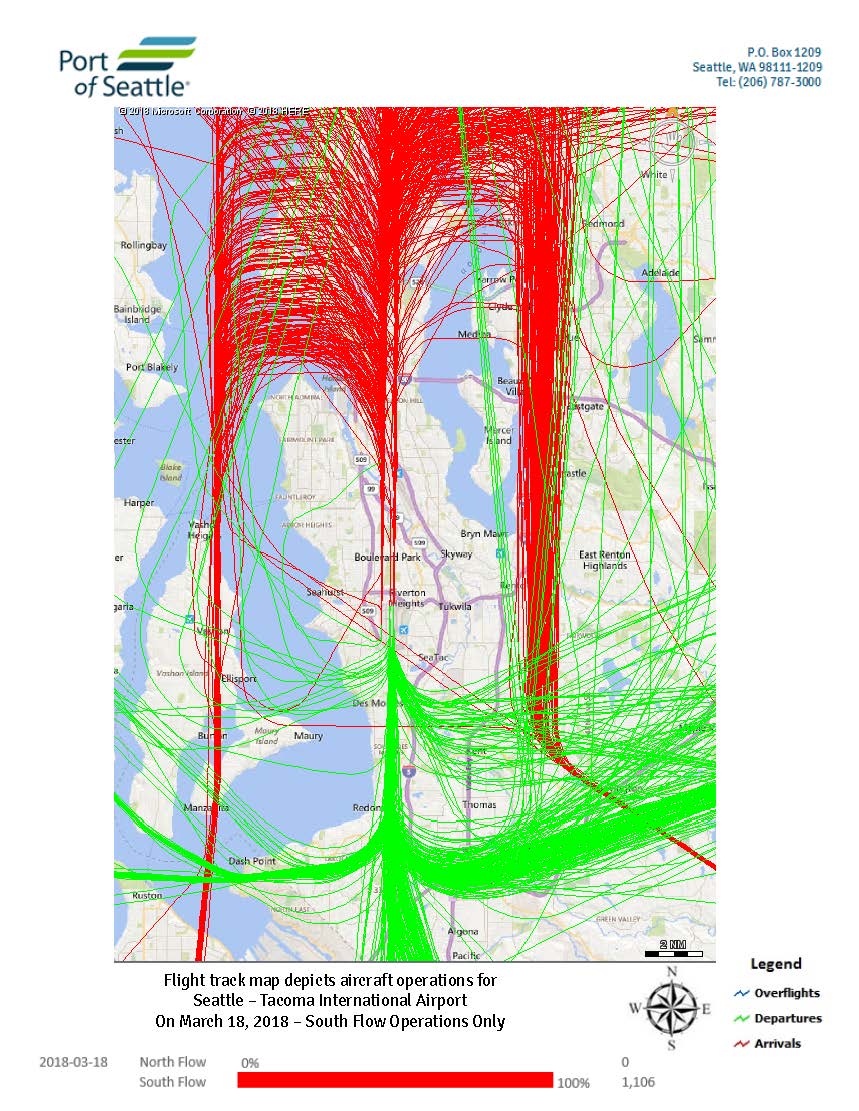
18-120 DailyFTMbyFlow_Page_27
A Port of Seattle flight track map depicting aircraft operations at Seattle-Tacoma International Airport on March 18, 2018, showing 100% South Flow operations with 1,106 total operations. Green lines represent departures, red lines represent arrivals, and blue lines represent overflights, with tracks fanning out from the airport toward Puget Sound and the greater Seattle-Tacoma region. -
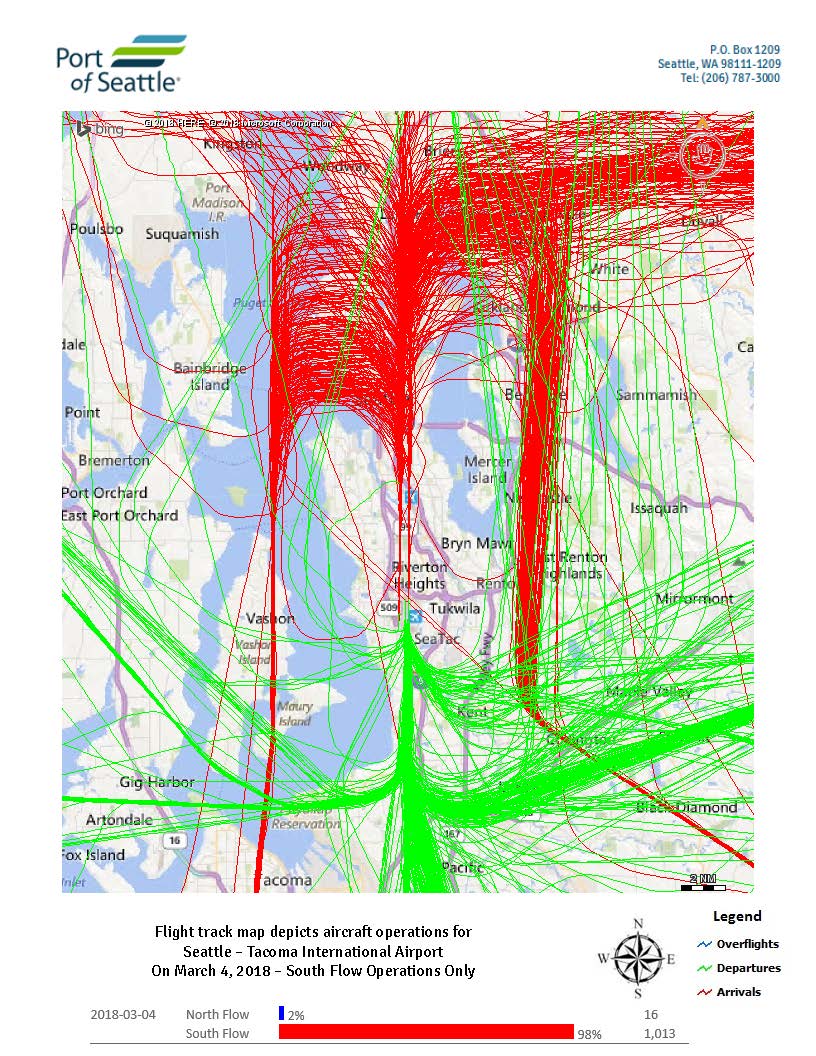
18-120 DailyFTMbyFlow_Page_07
Flight track map produced by the Port of Seattle depicting all aircraft operations at Seattle-Tacoma International Airport on March 4, 2018 under South Flow conditions only. The map shows 1,013 South Flow operations (98%) and 16 North Flow operations (2%), with red tracks indicating arrivals, green tracks indicating departures, and blue tracks indicating overflights. -
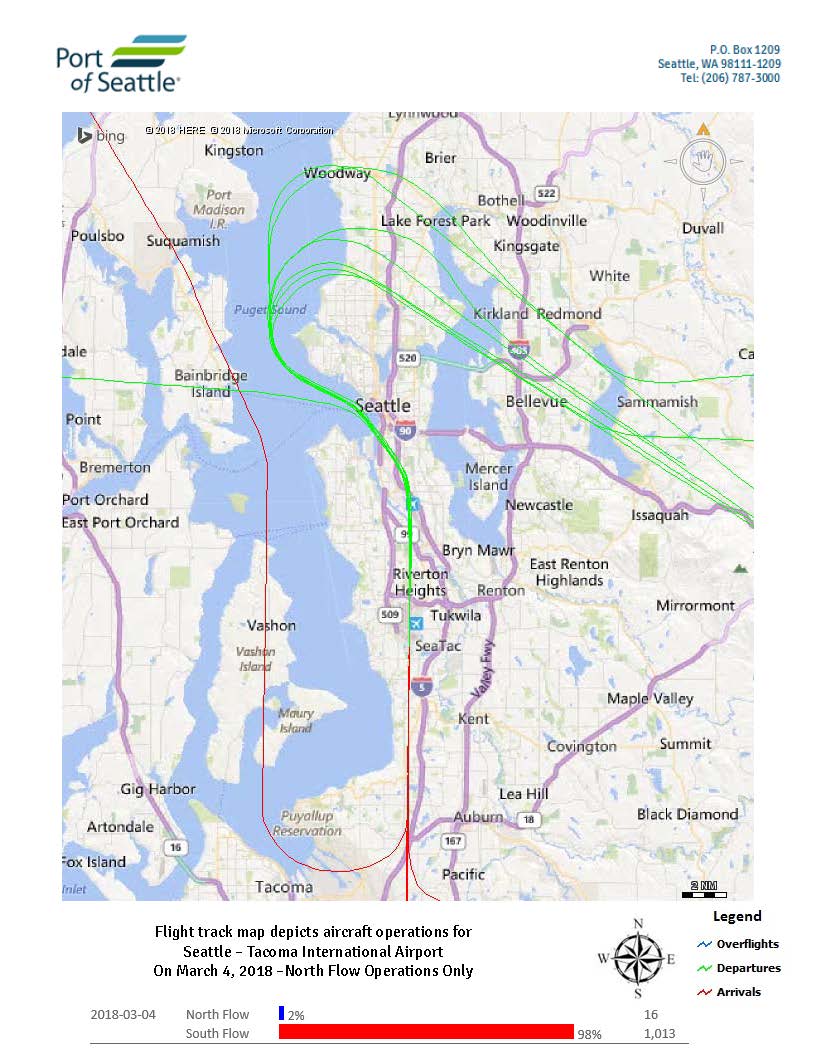
18-120 DailyFTMbyFlow_Page_06
Port of Seattle flight track map depicting aircraft operations at Seattle-Tacoma International Airport on March 4, 2018 under North Flow Operations Only. The map shows 16 north flow operations (2%) and 1,013 south flow operations (98%), with green tracks indicating departures, red tracks indicating arrivals, and blue tracks indicating overflights over the greater Seattle-Tacoma region. -
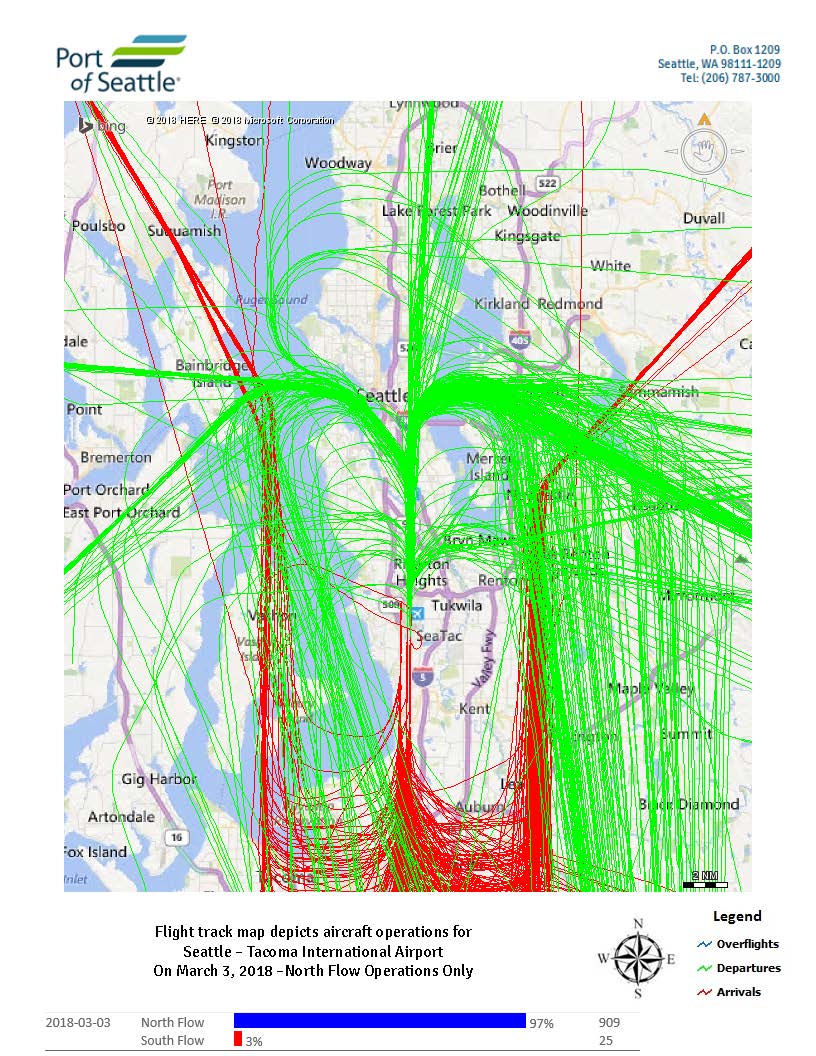
18-120 DailyFTMbyFlow_Page_05
Port of Seattle flight track map depicting aircraft operations at Seattle-Tacoma International Airport on March 3, 2018, showing North Flow operations only. Green lines indicate departures, red lines indicate arrivals, and blue/purple lines indicate overflights; North Flow accounted for 97% of operations (909 flights) versus 3% South Flow (25 flights). -
18-120 DailyFTMbyFlow_Page_04
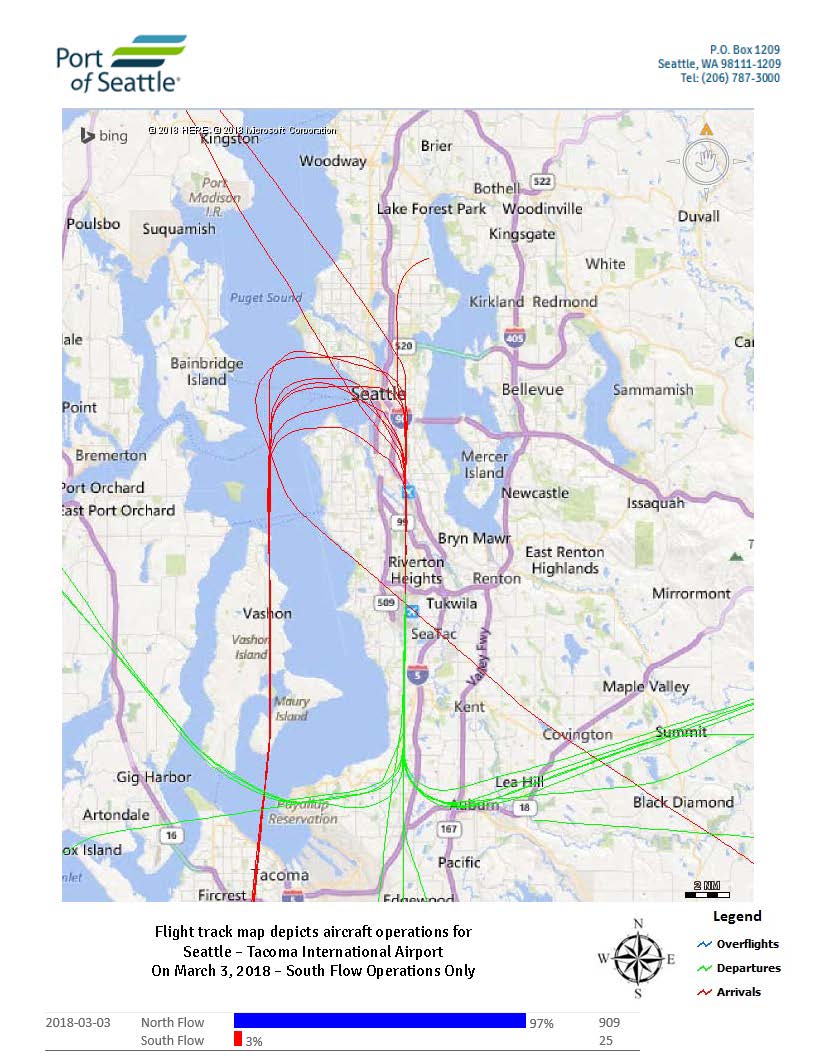
Port of Seattle flight track map depicting aircraft operations at Seattle-Tacoma International Airport on March 3, 2018, showing South Flow operations only (3%, 25 flights) alongside the dominant North Flow operations (97%, 909 flights). The map distinguishes overflights, departures (green), and arrivals (red) over the greater Seattle-Tacoma region. -
18-120 DailyFTMbyFlow_Page_03
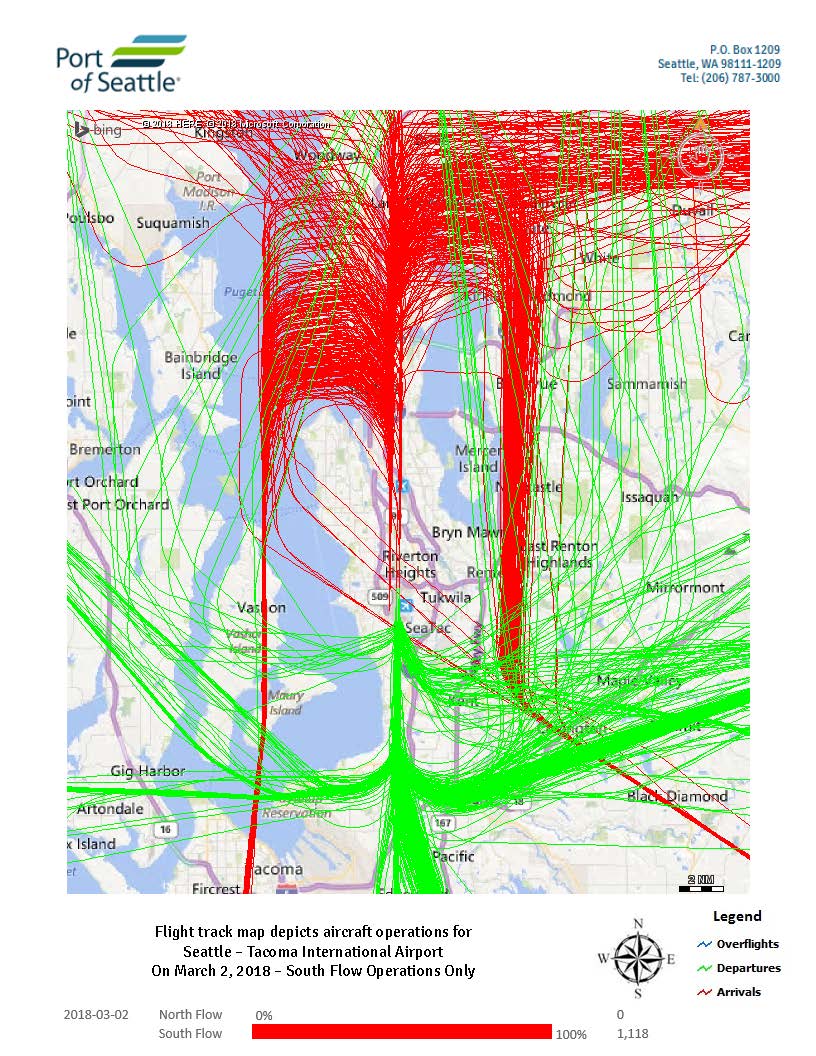
Port of Seattle flight track map depicting aircraft operations at Seattle-Tacoma International Airport on March 2, 2018, showing South Flow Operations Only (100%, 1,118 operations). Green lines represent departures, red lines represent arrivals, and blue lines represent overflights, with tracks concentrated along the north-south runway axis over Puget Sound and surrounding communities. -
18-120 DailyFTMbyFlow_Page_02
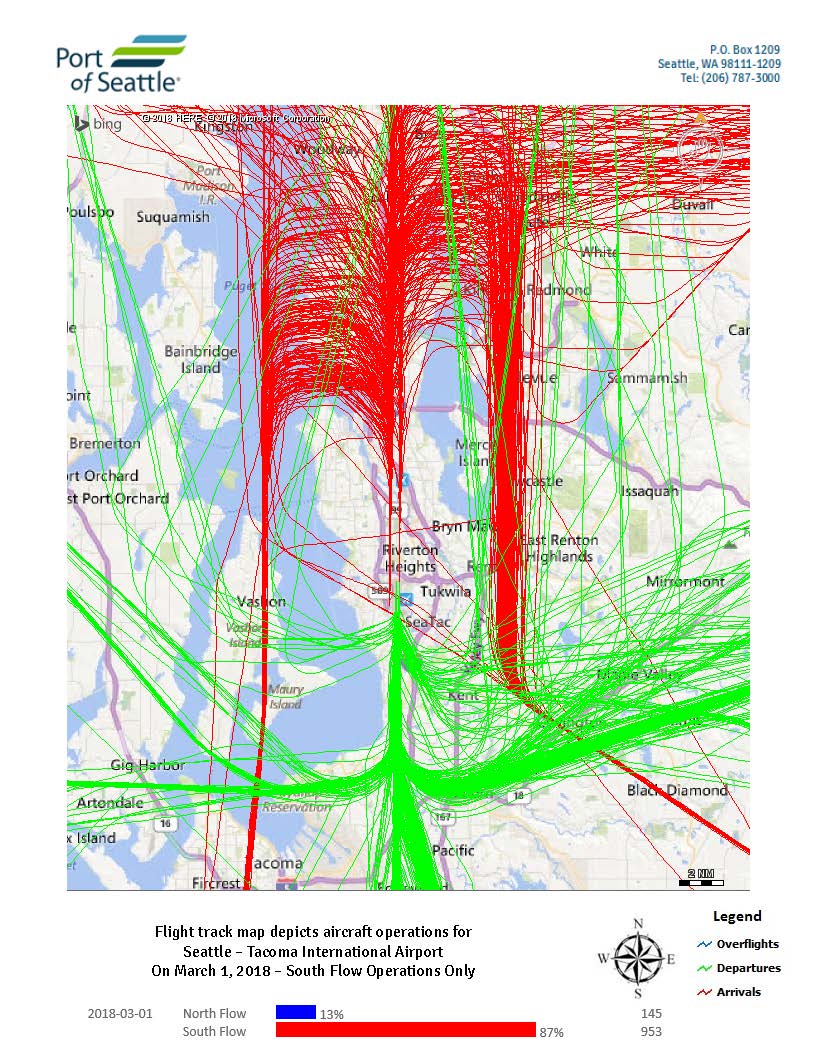
A Port of Seattle letterhead document showing a Bing Maps-based flight track visualization centered on the Seattle/Puget Sound region, with green lines depicting aircraft flight paths converging toward Sea-Tac Airport and red lines indicating other tracks or boundaries. The Port of Seattle logo and P.O. Box 1209, Seattle, WA 98111-1209 contact information are visible in the header. -
18-120 DailyFTMbyFlow_Page_01
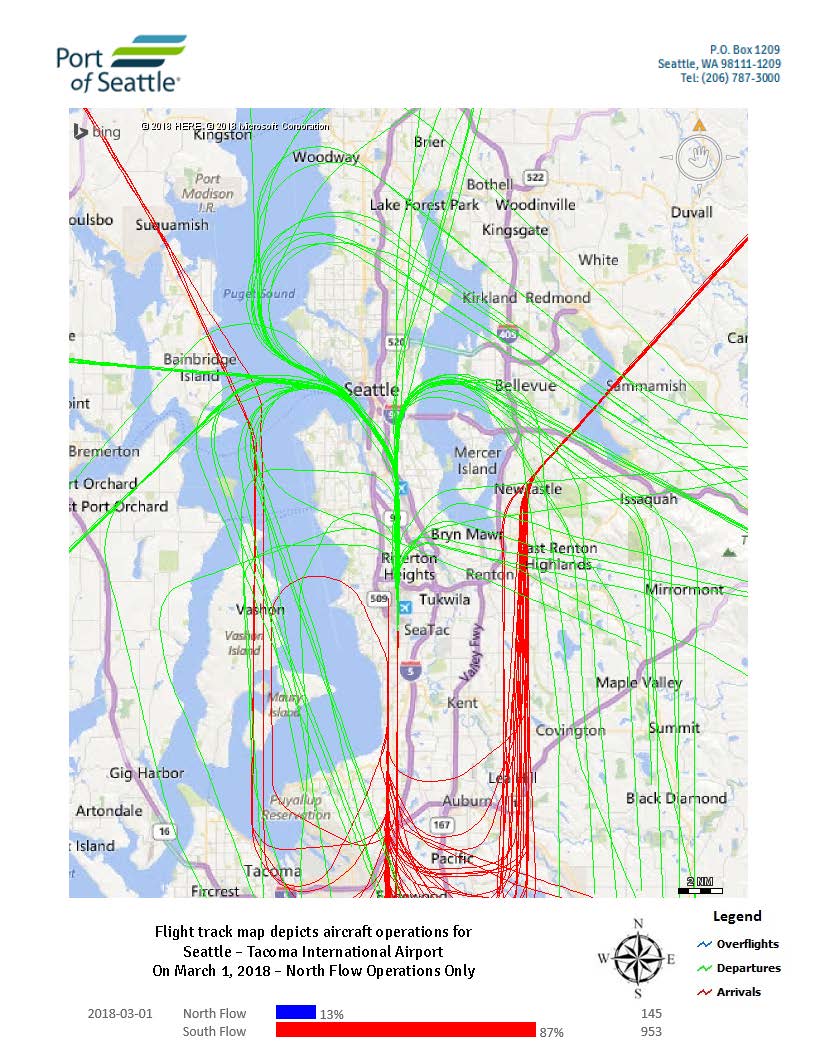
Port of Seattle flight track map showing aircraft operations at Seattle-Tacoma International Airport on March 1, 2018, during South Flow operations only. The map displays arrivals (red), departures (green), and overflights (blue) with South Flow accounting for 87% of operations (953 flights) and North Flow 13% (145 flights). -
18-120 DailyFTMbyFlow_Page_10
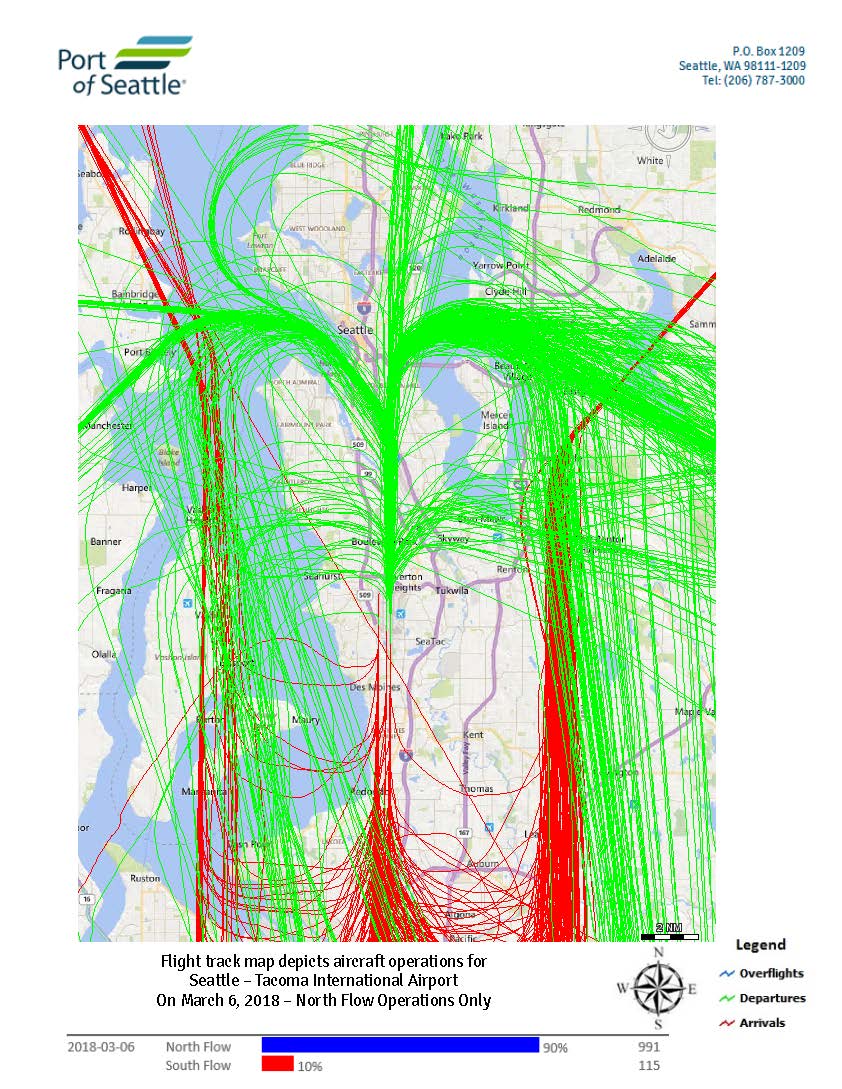
Port of Seattle flight track map depicting aircraft operations at Seattle–Tacoma International Airport on March 6, 2018, showing North Flow Operations Only. On that date, North Flow accounted for 90% of operations (991 flights) and South Flow 10% (115 flights), with departure tracks shown in green and arrival tracks in red. -
18-120 DailyFTMbyFlow_Page_09
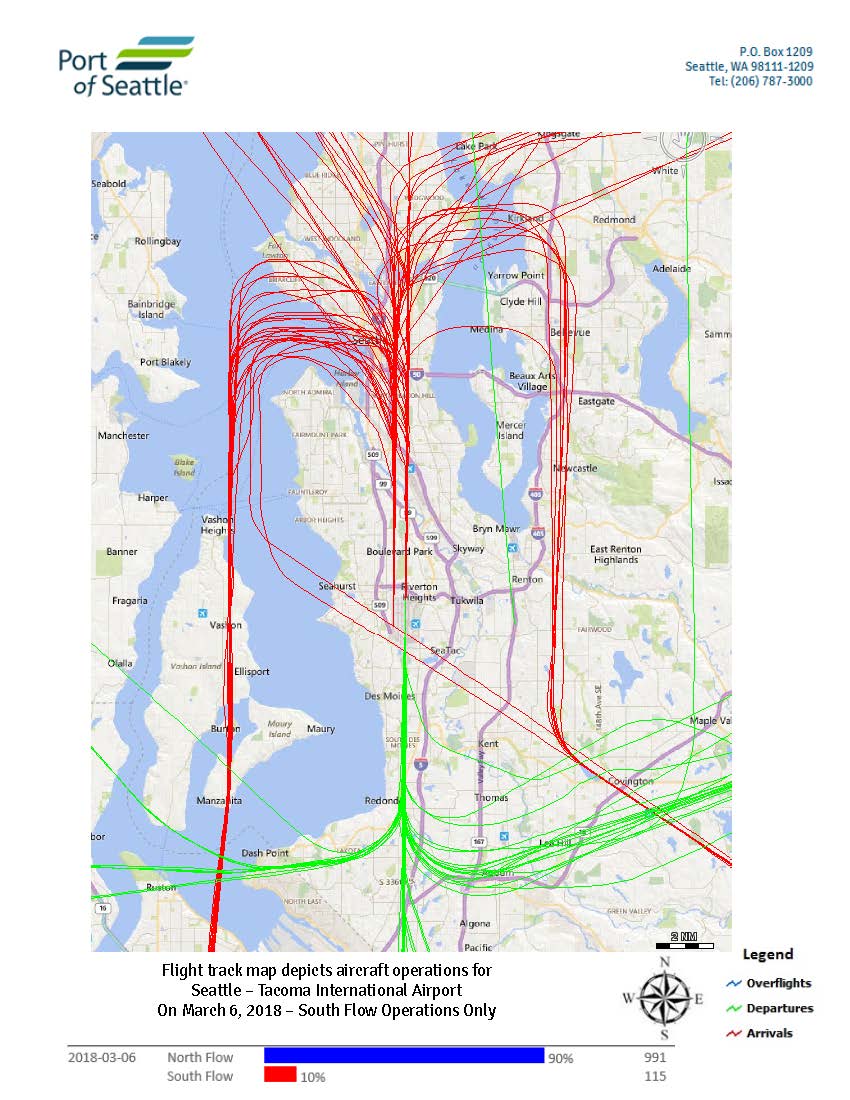
Port of Seattle flight track map depicting aircraft operations at Seattle-Tacoma International Airport on March 6, 2018, showing South Flow operations only. The map indicates arrivals (red), departures (green), and overflights (blue), with South Flow comprising 10% (115 operations) and North Flow comprising 90% (991 operations) of that day's traffic.